Key Takeaways
1. Hunger Amidst Plenty: America's Unforgivable Paradox
While hunger anywhere on the planet is horrid and preventable, having it in America is truly unforgivable.
A Stark Contradiction. The United States, the wealthiest and most agriculturally abundant nation in history, faces a severe and growing hunger problem. This paradox is not due to scarcity, but a systemic failure to ensure access to the abundance that exists. In 2006, 35.5 million Americans, including 12.6 million children, experienced "food insecurity," meaning they struggled to afford enough food.
Growing Crisis. The problem has worsened significantly, with a 4-million-person increase in food-insecure Americans since 1999. The most severe form of food insecurity, what was once called "hunger," rose by 44% in just seven years, affecting 11.1 million people. This crisis extends beyond inner cities to suburbs nationwide, impacting diverse demographics.
Political Inaction. Despite universal theoretical consensus against hunger, political will is lacking. Entrenched ideological divisions, the influence of big money, media passivity, and partisan posturing prevent substantive solutions. The author argues that hunger is "Exhibit A" of America's broken political system, demonstrating an inability to solve even basic, universally condemned problems.
2. The Hidden Costs of Hunger: A Burden on All Americans
The cost burden of hunger in the United States is a minimum of $90 billion annually.
Economic Drain. Hunger is not just a moral issue; it's an immense economic burden on the entire nation. This $90 billion annual cost translates to $300 per person or $800 per household annually, and a staggering $22,000 lifetime tax for every American. These costs stem from increased healthcare spending, reduced productivity, and compromised educational performance.
Lifelong Impairment. Hunger harms individuals at every stage of life, from prenatal development to old age.
- Pregnant women: Undernourishment leads to low birthweight babies and developmental delays.
- Children: Suffer poorer overall health, more frequent illnesses, higher hospitalization rates, and impaired cognitive development, leading to missed school days and reduced learning capacity.
- Adults: Experience higher rates of depression, stress, and mental illness, making it harder to find and keep jobs.
- Seniors: Struggle with inadequate nutrition on fixed incomes, exacerbating health issues.
Poverty's Vicious Cycle. Hunger makes escaping poverty nearly impossible. It saps energy, hinders concentration, and fuels despair, trapping individuals and families in a cycle of deprivation. Addressing hunger is a fundamental step toward breaking this cycle and fostering a healthier, more productive society.
3. Policy, Not Charity, Ended Starvation: A History Lesson
If hunger is, in fact, a new metaphor for looking at the problems of abject poverty, it is the most basic one.
Historical Context. Widespread hunger in America emerged with the Industrial Revolution, as people moved to cities and lost the ability to grow their own food. The Great Depression saw famine-like conditions, with people foraging for food and relief agencies overwhelmed. This era highlighted that hunger was not due to food scarcity, but lack of access.
Government Intervention. The New Deal and post-WWII policies, like the first Food Stamp Program (1938) and the National School Lunch Program (1946), began to address systemic hunger. However, it was the "rediscovery" of severe malnutrition in the 1960s, spurred by activists like Robert Kennedy and media like CBS's "Hunger in America," that galvanized significant federal action.
Nixon's Legacy. Surprisingly, President Richard Nixon, initially skeptical, responded to public outrage by expanding the Food Stamp Program, eliminating purchase requirements, and creating the WIC program. These bipartisan efforts in the 1970s dramatically reduced starvation and food insecurity. This historical success proves that government policy, not just charity, is capable of solving large-scale social problems.
4. The Federal Safety Net: Essential but Tattered and Inefficient
The Food Stamp Program, the bulwark of the current nutrition safety net, is not only a lifeline to tens of millions of struggling Americans, it is a huge boon to the American economy.
A Vital Lifeline. The Food Stamp Program (now SNAP), along with WIC and school meals, forms America's crucial nutrition safety net. It prevents mass starvation and boosts the economy, with every $5 in new food stamp spending generating $9.20 in community spending. These programs are essential for millions, with 71% of people in poverty receiving food stamps in 2007, a vast improvement from 1% in 1964.
Bureaucratic Hurdles. Despite its importance, the safety net is riddled with inefficiencies and stigma.
- Low Participation: Only 65% of eligible people received food stamps in 2005, with many deterred by complex applications and long waits.
- Inadequate Benefits: The average monthly benefit was $95.64 per person in 2007, often running out before the month ends.
- Degrading Requirements: Some states require finger imaging, treating applicants like criminals, despite no evidence of fraud reduction and clear evidence of deterring legitimate applicants.
- Stigma: School meal programs, especially breakfast, suffer from low participation due to the stigma associated with receiving free or reduced-price meals.
Fragmented System. The existence of fifteen different USDA nutrition programs, each with unique eligibility rules and application processes, creates a confusing and inaccessible system. Modernizing and streamlining these programs is crucial to ensure they reach all who need them effectively.
5. The Food Stamp Challenge: A Stark Revelation of Inadequacy
I learned that it's one thing to speak, write, research, and think about what it's like to use food stamp benefits, but it's another thing entirely to actually live on them.
Personal Experience. The author's participation in the Food Stamp Challenge, living on $28.30 for a week (equivalent to $1.30 per meal), revealed the profound difficulties faced by low-income families. This experience highlighted the constant planning, limited choices, and emotional toll of food insecurity.
Beyond the Numbers. The challenge underscored that food insecurity is not just a bureaucratic term but a deeply physical and psychological feeling. The fear of not having enough food, the inability to afford nutritious options, and the constant obsession with meal planning are debilitating. The author, despite having sufficient calories, felt short-tempered and irritable, craving basic items like juice and fresh fruit.
Unrealistic Expectations. Critics often suggest that food stamp recipients could eat better with more careful shopping or cooking. However, the challenge exposed the unrealistic nature of these expectations for busy, low-income individuals who often lack:
- Time for extensive shopping and cooking from scratch.
- Access to bulk purchasing or large storage spaces.
- Transportation to multiple stores for sale items.
- The luxury of choosing nutritious over cheap, filling foods.
The experience reinforced that while food stamps prevent starvation, the benefits are often too meager to ensure a truly nutritious and dignified diet.
6. Hunger and Obesity: Two Sides of the Same Malnutrition Coin
Today, instead of hunger, the central nutritional problem facing the poor, indeed all Americans, is not too little food but, rather too much—or at least too many calories.
Debunking the Myth. Right-wing think tanks often claim that widespread obesity disproves the existence of hunger in America. However, the author argues that hunger and obesity are often co-occurring problems, both stemming from malnutrition. While some hungry people lose weight, many others gain it due to poor dietary choices forced by limited budgets.
How Hunger Causes Obesity:
- Cost of Food: Nutritious foods (fresh produce, lean meats) are often more expensive than high-carbohydrate, high-fat, high-sodium processed foods.
- Food Deserts: Low-income neighborhoods frequently lack access to supermarkets and fresh produce, relying instead on convenience stores and fast-food outlets.
- Irregular Eating: Hungry individuals may overcompensate by eating larger portions when food is available, and physiological changes can make the body more efficient at storing fat during periods of deprivation.
- Lack of Resources: Poor individuals often cannot afford gym memberships or live in areas with safe spaces for exercise.
A Vicious Cycle. This combination of factors leads to a diet high in empty calories, contributing to obesity and related health issues like diabetes. The medical profession's lack of focus on nutrition further exacerbates this problem. Addressing hunger by improving access to affordable, nutritious food is a critical step in combating the obesity epidemic among low-income Americans.
7. The New Gilded Age: Extreme Inequality Fuels Widespread Poverty
The last time America had this much inequality of wealth was in 1929.
Unprecedented Disparity. America is experiencing a "New Gilded Age" characterized by extreme wealth inequality, reminiscent of 1929. The wealthiest 1% of Americans have seen their incomes skyrocket, while the poor and middle class face stagnant wages and rising costs. In 2005, the top 3 million individuals had roughly the same combined income as the bottom 166 million Americans.
Systemic Disadvantage. This disparity is not merely a result of free-market forces but a direct consequence of skewed economic, social, and fiscal policies.
- Tax Cuts for the Rich: Wealthy individuals benefit from massive tax cuts and the proposed elimination of estate taxes, while the working poor face scrutiny over tax credits.
- Corporate Welfare: Big businesses receive billions in subsidies and tax breaks, often with no binding commitments to job creation, while simultaneously opposing minimum wage increases.
- Stagnant Wages: The federal minimum wage has failed to keep pace with inflation, leaving full-time workers below the poverty line.
- Soaring Costs: Housing, healthcare, fuel, and childcare costs are skyrocketing, making it impossible for many working families to meet basic needs.
Erosion of Hope. This growing inequality crushes the American dream, making upward mobility increasingly difficult for the poor and even the middle class. When hard work is not rewarded, and the system appears rigged, the fundamental engine of economic growth—hope—is undermined, threatening the nation's long-term stability.
8. Welfare Reform: A Politicized Narrative Masking Complex Realities
In short, welfare reform has helped more families achieve independence than the Left will acknowledge, but has sent far more families to soup kitchens, food pantries, and homeless shelters than the Right will admit.
Misunderstood Impact. The 1996 welfare reform, which replaced AFDC with TANF, is often hailed as an unqualified success due to dramatic reductions in welfare rolls. However, both liberals and conservatives misrepresent its true impact. While some families found jobs, many moved into low-wage work, or were sanctioned off rolls without employment, leading to increased poverty and homelessness after 2001.
Shifting Funding. Welfare reform did not cut overall funding for the poor but shifted it from direct welfare payments to work-support activities like the Earned Income Tax Credit (EITC). This change, coupled with a strong economy in the late 1990s, initially saw poverty rates decline. However, the block grant structure of TANF meant funding remained fixed, failing to expand during economic downturns.
Unfinished Business. The reform's true effectiveness remains unassessed, particularly regarding long-term self-sufficiency. The focus on reducing caseloads often overshadowed the quality of jobs obtained or the fate of those who "disappeared" from the system. The latest round of welfare reform in 2005 further tightened work requirements and imposed penalties on states, exacerbating challenges for vulnerable families without adequate support for job training or childcare.
9. The Poverty Trap: Systemic Barriers Block Upward Mobility
In the greatest irony of all, it would actually be irresponsible for parents to leave welfare for work, if that move left them with less ability to feed, clothe, and house their children.
Perverse Incentives. Poverty is often a trap, not merely a result of individual irresponsibility. Government policies frequently create perverse incentives that discourage self-sufficiency. For example, families can lose vital benefits like food stamps or medical aid if their combined income or savings slightly exceed arbitrary limits, effectively punishing them for working more or saving for the future.
Interconnected Challenges. A web of mutually reinforcing negative conditions keeps people in poverty:
- Transportation: Inadequate public transport means car breakdowns can lead to job loss.
- Justice System: Limited economic opportunities can push individuals into crime, and incarceration records then block legitimate employment.
- Healthcare: Lack of affordable healthcare means untreated health issues limit work options.
- Education: Underperforming schools in low-income areas hinder educational attainment, a key pathway out of poverty.
Double Standards. Society applies different standards to the rich and poor. Wealthy individuals receive massive tax breaks and corporate welfare with no work requirements, while poor families face stringent rules and finger imaging for minimal benefits. This hypocrisy undermines the message of personal responsibility and perpetuates a cycle of political disempowerment for low-income Americans.
10. The Charity Myth: Well-Intentioned but Insufficient and Distracting
But trying to end hunger with food drives is like trying to fill the Grand Canyon with a teaspoon.
The Illusion of Solution. Americans often prefer to believe that private charity can solve hunger, but this is a dangerous myth. While the 40,000+ food pantries and soup kitchens nationwide perform vital work, they cannot adequately feed 35.5 million people or enable self-reliance. Their efforts, though heroic, barely scratch the surface, providing only a small fraction of the meals needed annually.
Inefficient and Humiliating. The charitable food system is inherently inefficient and often degrading:
- Logistical Overhead: It involves multiple layers of collection, storage, and distribution, often duplicating efforts and incurring significant costs.
- Limited Choice: Recipients often receive pre-selected, nutritionally inadequate food, with little choice.
- Stigma: Obtaining charitable food is frequently a humiliating experience, involving long waits and intrusive questioning.
- Insufficient Supply: Many agencies are forced to ration food or turn people away due to lack of resources.
Distracting from Systemic Change. The focus on charity diverts attention and resources from advocating for fundamental government and economic reforms. Politicians often praise charities to shirk their own responsibility, and some charities, dependent on corporate donors, avoid challenging policies that contribute to hunger. While charity is a necessary stopgap, it should supplement, not replace, a robust government safety net.
11. Media's Blind Spot: Hunger Ignored Except for Superficial Stories
I don't know which is worse, a press that is censored, or one that doesn't need to be.
Systemic Neglect. The mainstream media largely ignores domestic hunger and poverty, except for occasional, often superficial, holiday-themed charity stories or sensationalized events. This neglect is a stark contrast to the intensive coverage of economic indicators, celebrity scandals, or international crises. In 2003, a 13% rise in food insecurity received no coverage from major networks or newspapers, while an expanding economy was front-page news.
Biased Coverage. Media outlets, influenced by advertisers of luxury products and staffed by individuals earning well above poverty wages, often exhibit a class bias. They tend to focus on the wealthy and famous, or frame poverty issues through a lens of individual failure rather than systemic problems. This perpetuates harmful stereotypes and prevents a nuanced understanding of hunger's root causes.
Historical Contrast. In the late 1960s, media, notably CBS's "Hunger in America" documentary, played a crucial role in exposing widespread malnutrition and galvanizing political action. This hard-hitting, Emmy-winning journalism directly led to the creation of the modern nutrition safety net. Today, such daring, in-depth reporting on domestic hunger is rare, and when it does occur, it often emphasizes individual charity over governmental solutions.
12. A Bold, Affordable Plan: Ending Hunger Through Collective Action
A very good president put the US on a trajectory to the moon. A truly great president would end hunger in America.
A National Goal. The author proposes a bold plan to end hunger among children and seniors within five years, and all hunger in America within ten. This requires transcending partisanship and uniting Americans around a common, achievable goal. The investment is affordable, costing less than agribusiness subsidies, three months of the Iraq War, or 6% of the Bush tax cuts.
Comprehensive Solutions:
- Modernized Safety Net: Combine existing federal nutrition programs into a streamlined "American Family Food, Opportunity, and Responsibility" (AFFORd) program, making it an entitlement for families up to 185% of the poverty line. This would simplify access, reduce bureaucracy, and increase food purchasing power.
- Universal School Meals: Provide free, in-classroom breakfasts and lunches to all children, eliminating stigma and improving educational outcomes.
- State Incentives: Reward states for actually reducing hunger and food insecurity, moving beyond mere process improvements.
- Progressive Faith-Based Initiatives: Partner with faith-based and secular nonprofits, providing resources and technical assistance, while strictly prohibiting proselytizing or discrimination.
- Empowered Food Charities: Transform food pantries into "supermarket-style, customer choice" models that offer dignity, choice, and connections to self-sufficiency services.
- Business Accountability: Pressure businesses to pay living wages, provide benefits, and limit executive-to-worker pay disparities.
- Community Food Systems: Bolster local food production and marketing, including urban farms and farmers' markets, making nutritious food affordable and accessible.
- New War on Poverty: Implement an "Aspiration Empowerment Agenda" focusing on asset development (e.g., IDAs, Kids Accounts), affordable healthcare/housing/childcare, and robust job training programs.
Grassroots Movement. Achieving these goals requires a powerful, broad-based grassroots movement led by low-income Americans, supported by allies across all sectors. By demanding accountability from elected officials and challenging the status quo, Americans can once again solve a major problem and restore hope for a better future.
Last updated:
Review Summary
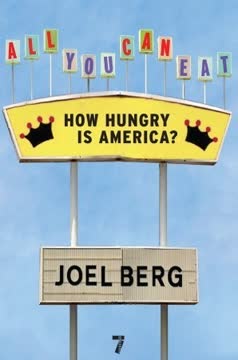
All You Can Eat examines hunger and food insecurity in America through extensive data and policy analysis. Readers praise Berg's comprehensive research, myth-busting approach, and passionate advocacy, noting his critique of government programs, charities, and the Farm Bill. Many appreciate his practical solutions and innovative prescriptions, though some find the book overly dense with statistics and repetitive. Critics note a left-leaning bias and government-focused solutions. The book reveals systemic issues affecting the food insecure, including bureaucratic barriers and limited access to healthy food. Overall, reviewers recommend it as informative and eye-opening despite occasional shortcomings.





