

Key Takeaways
Make your purpose the center, not a dating tactic
Build a life beyond dating. The book’s central claim is that a man becomes more attractive when he has work he cares about, a social life, and the ability to be alone. The author calls this being a “high-value male ”: someone whose time is occupied by his goals rather than spent chasing approval. Purpose, in this account, can bring fulfillment and confidence as well as money or status. The author recounts that when he was young, women responded to his looks, but his eager, childish manner could turn them off. He concludes that charisma matters alongside appearance and resources.
Keep purpose genuinely yours. The book urges readers to try different pursuits, learn from people already succeeding, and build skills over time. It also warns that intense focus can shrink a person’s social life, so it recommends making room to socialize. Its larger point is that dating should add to a life, not serve as the life’s main source of meaning.
What's compelling is the shift from chasing approval to building competence and autonomy. That aligns with self-determination theory, which treats autonomy, competence, and connection as basic ingredients of well-being. A meaningful pursuit can support the first two, while a healthy social life protects the third. The caveat is that the book often treats purpose chiefly as a way to raise sexual appeal. That framing risks turning a worthwhile life into another performance for an audience. Purpose is more durable when its value remains even if it impresses nobody.
Build genuine confidence instead of performing a high-value persona
Improve substance before image. The author distinguishes a high-value lifestyle from pretending to be busy. He recommends improving fitness, finances, social skills, and charisma, while arguing that looks and resources may open a door but cannot sustain attraction on their own. He calls “game” the strategies used to create or maintain attraction. His preferred male approach is less a script than a way of life: pursue a purpose, show romantic interest, and move on when interest is not returned.
Four approaches, four trade-offs. The book contrasts friendship that hides romantic intent, provider-style courtship built around spending, the purpose-centered high-value approach, and direct declarations of sexual intent. The author favors the third, while conceding that faking busyness is only a temporary substitute. He also warns that over-focusing on work can erode social ease.
The useful distinction is between earned confidence and impression management. Skills, health, and financial stability can increase a person’s sense of agency; a manufactured image can instead make every interaction feel like a test the performer might fail. The book’s own advice is less consistent when it endorses pretending to be busy before genuine purpose develops. A stronger interpretation is to practice self-respect without inventing a persona. Confidence need not mean dominance, and being sincere need not mean disclosing everything immediately.
Set limits on flaky effort without staging punishment
Protect time and money. The author calls a perceived challenge to a man’s confidence or boundaries a “shit test.” Examples include teasing, lateness, or uncertainty about making plans. He recommends responding calmly, not pleading, and leaving when someone repeatedly fails to follow through. He also advocates inexpensive early dates and a three-date rule: if sex has not happened by the third date, stop investing in conventional dates and reassess whether the other person is interested.
Keep boundaries proportionate. These recommendations sit beside more tactical proposals, such as delaying replies or making a person wait to increase uncertainty. The book’s useful distinction is between making a request, observing the response, and choosing whether to continue. A boundary describes what one will do; it is not a device for making another person anxious or compliant.
A clear limit can prevent resentment: repeated cancellations, costly dates without shared interest, or one-sided effort are valid reasons to step back. In behavioral terms, consistent boundaries make expectations legible. The trouble starts when ordinary behavior is interpreted as a hidden test, or when distance is used to provoke pursuit. That creates a self-sealing theory: any response can be labeled evidence of attraction or failure. A better standard is observable reciprocity, discussed plainly, rather than guessing at motives.
Look for reciprocal interest, not hidden meanings in every signal
Notice what is returned. The book recommends watching for “IOI,” or indicators of interest, such as repeated eye contact, a person choosing to stand nearby, or initiating conversation. It favors meeting people through activities one already enjoys, rather than treating every night out as a search mission. In online dating, the author reads detailed replies and questions as stronger interest than one-word answers. When someone will not help arrange a meeting, he advises making one clear invitation and then stepping back.
A lens, not a diagnosis. The author also sorts women into four types: materialistic, relationship-seeking, attention-seeking, and “alpha-seeking.” These are his categories, not a demonstrated taxonomy. He uses them to explain different dating behavior, but real people may have mixed motives, change their minds, or simply communicate differently.
Reciprocity is a more dependable guide than mind-reading. A pattern of mutual questions, initiative, and follow-through can help distinguish genuine engagement from a conversation one person is carrying alone. Still, a glance or friendly exchange is ambiguous, not a promise of attraction. The book’s categories may feel clarifying because they simplify uncertainty, but they can also encourage readers to fit individuals into prefabricated motives. Curiosity and a respectful invitation leave room for a person to answer for themselves.
Keep early dates simple, but drop arbitrary timing games
Avoid turning dates into auditions. The author favors a simple first date, often a drink, over an expensive restaurant meant to impress. He advises against bragging about money, possessions, or other partners, and recommends asking questions rather than dominating the conversation. He suggests a brief call to arrange plans and confirming the details on the day. These practices aim to limit wasted time and avoid making courtship feel like a sales pitch.
Timing rules are not laws. The book also prescribes waiting 7 to 10 days before calling after a first date, delaying replies, and limiting dates to once a week. Elsewhere it says to respond more quickly when interest is high. Those shifting rules reveal the limits of scripts: the right pace depends on mutual preference, schedules, and clear communication, not a universal countdown.
Low-cost plans and attentive conversation are useful because they reduce pressure and make compatibility easier to notice. Communication research often distinguishes responsiveness, showing that a person has heard and understood, from sheer message frequency. A delayed reply does not reliably signal confidence, and a prompt one does not prove neediness. The book’s practical instincts are strongest when they encourage modest plans and genuine listening. Its precise timing rules are weakest, since they replace judgment with a clock and can reward needless uncertainty.
Treat hesitation as a boundary, never as a seduction test
Composure is not consent. The book recommends maintaining a calm, confident “masculine frame,” meaning a steady, assertive demeanor. In its account of physical escalation, the author describes making gradual advances and pausing when a woman stops him, then trying again after conversation. He interprets some refusals as tests or hesitation to be overcome. That interpretation is unsafe: a pause, a refusal, or uncertainty should not be treated as a challenge to pass.
Ask and listen. Attraction does not create entitlement to touch or sex, and prior interest does not guarantee present agreement. A respectful approach is to check in, accept a no without bargaining, and continue only when consent is clear and freely given. The book is right that pressure and visible frustration can make an encounter uncomfortable, but patience means respecting a boundary, not waiting for an opening to override it.
The distinction between confidence and coercion is essential here. Emotional steadiness can help a person hear a boundary without reacting defensively; it cannot turn refusal into consent. Consent is specific to the activity and moment, and it can be withdrawn. The book’s “test” interpretation risks teaching readers to discount the very information they need to act ethically. A confident response to uncertainty is to pause and ask, not to treat persistence as proof of masculinity.
Make casual dating ethical by stating what you can offer
Align expectations early. Much of the book concerns casual sex and dating several people at once, which it calls maintaining a “rotation.” The author recommends organizing dates and schedules, and says not to promise exclusivity while seeing others. He argues that partners may develop different expectations over time and that someone is free to leave if they want a committed relationship and the other person does not.
Do not sell a false future. The book also advises readers to keep a partner hopeful about a possible relationship or to imply career progress in order to continue having sex. That is not simply strategic dating; it withholds information that may matter to the other person’s choices. Casual relationships can be fair when expectations are candid, boundaries are mutual, and everyone can make an informed decision about continuing.
The strongest ethical principle in this section is that no one owes a relationship, and no one should promise one merely to preserve access to sex. The same principle requires honesty about intentions. Deception undermines informed choice, while clear expectations let people decide whether a casual arrangement suits them. The book’s adversarial framing treats partners as competing negotiators, but mutual disclosure is not a concession of power. It is what makes a voluntary arrangement genuinely mutual.
End mismatched relationships cleanly, then return to your own life
Recover without bargaining. When a relationship ends, the author recommends against pleading or chasing. His no-contact advice means stopping communication after a breakup, while returning attention to work, friends, and activities that may have faded during the relationship. He also tells readers to leave relationships marked by ongoing disrespect. These steps can create space to reflect and rebuild routines, regardless of whether an ex returns.
Separate recovery from leverage. The book sometimes presents silence, pullbacks, and reduced attention as ways to make a partner pursue validation or regain control. It describes “blue pill” men as unaware of its claims about female nature, “purple pill” men as accepting those claims while seeking companionship, and “red pill” men as rejecting monogamy. These labels summarize the author’s worldview, not established facts about women or relationships.
Returning to friendships and personal routines can restore perspective after a breakup, and ending a harmful relationship can be an act of self-protection. No contact may also be useful when continued communication prolongs distress, but using silence to provoke an ex turns recovery into a tactic. The book’s most limiting premise is its broad claim that women are incapable of genuine love. Personal disappointment can feel like evidence, but anecdotes cannot establish a rule about an entire gender.
Analysis
This book offers a vivid, tightly repeated prescription: become purposeful, less dependent on romantic approval, and more willing to leave relationships that do not meet your standards. That message can help readers who confuse devotion with self-abandonment. Its strongest practical ideas are ordinary but valuable: invest in a life outside dating, notice whether effort is mutual, keep early plans manageable, and do not promise commitment you do not want.
The difficulty is that these ideas are embedded in an adversarial theory of dating. The author often treats women’s actions as tests, casts men and women as competing for control, and presents broad claims about female nature as settled truth. The text relies heavily on personal anecdotes and asserted rules, not evidence that the proposed gender categories or age-based predictions apply generally. It also contradicts itself: genuine purpose is said to matter more than scripts, yet readers are urged to fake busyness, delay contact, and manufacture uncertainty. These moves may secure attention, but they can also undermine the trust and ease that support intimacy.
The most serious problem is the treatment of sexual hesitation as a test. A refusal or pause is not a puzzle to solve through persistence. Respectful dating requires clear consent and honest communication, not a performance of dominance. The book is most useful when read as a record of one author’s dating philosophy, with its workable advice on self-respect separated from its stereotypes and manipulative tactics. Its central insight survives that separation: build a life that remains worthwhile whether or not a particular person chooses to join it.
Review Summary
Alpha Male Strategies receives mostly positive reviews, with readers praising its practical advice on dating and understanding female nature. Many appreciate the author's no-nonsense approach and find the book helpful for improving confidence and success with women. Critics note grammatical errors and a potentially misogynistic tone. Some readers view it as essential for understanding modern dating dynamics, while others caution against its extreme views. Overall, the book is seen as a valuable resource for men seeking to enhance their dating skills and self-improvement.
People Also Read










Glossary
high-value male
Purpose-driven, self-directed manThe author’s ideal of a man whose life centers on purpose, self-improvement, and limited dependence on romantic attention. He associates this identity with confidence, social options, and being selective about relationships. The book sometimes describes it as a genuine lifestyle and sometimes as an image to perform, a tension that matters when interpreting its advice.
game
Attraction-building dating tacticsThe author’s term for strategies used to create or maintain attraction. In the book, game includes how a man approaches, communicates, plans dates, handles perceived tests, and manages his availability. The author argues that these tactics work best when they reflect a genuinely purposeful life, although he also supplies scripts and timing rules.
masculine frame
Calm, assertive demeanorThe author’s label for a composed, self-assured way of acting, especially during disagreement or dating. He links it to leadership, confidence, and not reacting emotionally to provocation. The book treats this as a gendered ideal and sometimes equates emotional expression with weakness, a claim that should be distinguished from the practical value of staying calm.
shit test
Perceived challenge to boundariesThe author’s slang for behavior he interprets as testing a man’s confidence, status, or willingness to hold a boundary. Examples in the book include teasing, lateness, and difficulty arranging a date. These behaviors may have many explanations, so the term describes the author’s interpretation rather than an objectively verifiable test.
IOI
Indicator of interestAn abbreviation for “indicator of interest,” meaning a behavior the author reads as a sign that someone may welcome an approach. Examples include repeated eye contact, choosing to stand nearby, or initiating conversation. Such cues can suggest interest but are not consent, a commitment, or a reliable substitute for asking respectfully.
rotation
Several concurrent dating partnersThe author’s term for a group of people a man dates or has sex with at the same time. He recommends organizing the group by level of interest and whether sex has occurred, and managing dates with a calendar and budget. A rotation does not itself establish whether everyone knows about the arrangement or agrees to it.
red pill
Rejecting monogamous assumptionsA label the author borrows from The Matrix and uses for men who accept his claims about female nature and choose not to pursue monogamy. He contrasts this with “blue pill” men, whom he describes as unaware, and “purple pill” men, who accept his claims but still seek companionship. These labels express the book’s ideology, not research-backed categories.
three-date rule
Limit before reassessing datingThe author’s guideline to stop investing in conventional dates if sex has not occurred by the third date, then reassess the connection or invite the woman to a private setting. It reflects the book’s aim of limiting time and financial investment. It is not a universal measure of attraction, compatibility, or appropriate sexual timing.
FAQ
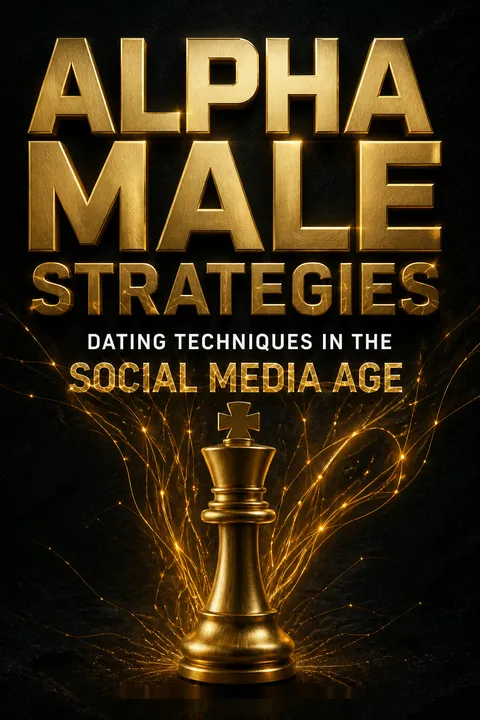
What's "Alpha Male Strategies: Dating Techniques In The Social Media Age" about?
- Focus on dating strategies: The book provides dating strategies for men in the social media age, emphasizing the importance of being a high-value male.
- Understanding female nature: It explores concepts like feminism, the blue pill, purple pill, and red pill, which relate to understanding female nature and societal influences.
- Self-improvement and purpose: The book stresses the importance of self-improvement and finding one's purpose as a means to attract women.
- Lifestyle over strategies: It advocates for adopting a lifestyle that naturally attracts women rather than relying solely on dating strategies.
Why should I read "Alpha Male Strategies: Dating Techniques In The Social Media Age"?
- Modern dating insights: It offers insights into the challenges of dating in the social media age, where women have more options and are more selective.
- Self-improvement focus: The book emphasizes self-improvement and finding one's purpose, which can lead to personal growth and increased attractiveness.
- Understanding dynamics: It provides a deeper understanding of male and female dynamics, helping men navigate relationships more effectively.
- Practical advice: The book offers practical advice on how to maintain a masculine frame, handle rejection, and build a rotation of women.
What are the key takeaways of "Alpha Male Strategies: Dating Techniques In The Social Media Age"?
- High-value male: Being a high-value male involves focusing on one's purpose and not being overly available to women.
- Self-improvement: Improving finances, physique, and social skills are crucial for attracting quality women.
- Understanding female strategies: Recognizing and countering female strategies like shit tests and attention-seeking behavior is essential.
- Lifestyle approach: Adopting a lifestyle that naturally attracts women is more effective than relying solely on dating strategies.
What are the best quotes from "Alpha Male Strategies: Dating Techniques In The Social Media Age" and what do they mean?
- "Purpose fixes everything": This quote emphasizes the importance of having a purpose in life, which can lead to personal fulfillment and increased attractiveness.
- "Women date up": This highlights the idea that women are generally attracted to men who they perceive as having higher value or status.
- "If you treat her like a celebrity, she's going to treat you like a fan": This warns against putting women on a pedestal, which can lead to a loss of respect and attraction.
- "Men have to stop playing by one set of rules while women lie, cheat and manipulate their way to getting whatever they want": This suggests that men should be aware of female manipulation and adopt strategies to level the playing field.
How does "Alpha Male Strategies" define a high-value male?
- Purpose-driven: A high-value male is primarily focused on his passion and purpose in life, which makes him less available and more attractive.
- Social abundance: He lives a life of social abundance, meaning he has a wide social circle and is not overly reliant on any one woman.
- Confidence and independence: He exudes confidence and independence, which naturally attracts women who are looking for a challenge.
- Not needy: A high-value male is not needy or desperate for female attention, which signals to women that he has other options.
What is the significance of the "red pill" in "Alpha Male Strategies"?
- Understanding female nature: The red pill represents a full understanding of female nature and the societal influences that affect relationships.
- Avoiding monogamy: Red pill men often choose not to enter into monogamous relationships because they understand the limitations and risks involved.
- Awareness of manipulation: It involves being aware of female manipulation tactics and not falling victim to them.
- Focus on self: Red pill men focus on self-improvement and personal growth rather than seeking validation from women.
How does "Alpha Male Strategies" suggest handling rejection?
- Abundance mindset: The book emphasizes having an abundance mindset, which means not being overly affected by rejection because there are always other opportunities.
- Deflecting rejection: It suggests deflecting rejection by attributing it to the woman's insecurities rather than taking it personally.
- Persistence: Building a rotation of women requires persistence and the understanding that rejection is a natural part of the process.
- Self-improvement: Continuous self-improvement can increase confidence and reduce the impact of rejection.
What role does self-improvement play in "Alpha Male Strategies"?
- Attracting quality women: Self-improvement in areas like finances, physique, and social skills is crucial for attracting high-quality women.
- Confidence boost: Improving oneself leads to increased confidence, which is attractive to women and helps in maintaining a masculine frame.
- Long-term benefits: Self-improvement is not just about attracting women but also about achieving personal fulfillment and success in life.
- Foundation for strategies: It serves as the foundation for the dating strategies discussed in the book, making them more effective.
How does "Alpha Male Strategies" address the concept of "shit tests"?
- Testing value: Shit tests are subconscious tests women use to gauge a man's value and confidence.
- Passing tests: High-value men naturally pass these tests due to their abundance mindset and confidence.
- Maintaining frame: The book advises maintaining a masculine frame and not reacting emotionally to shit tests.
- Understanding purpose: Recognizing that shit tests are a natural part of dating can help men remain calm and assertive.
What is the "three-date rule" in "Alpha Male Strategies"?
- Setting boundaries: The three-date rule involves setting boundaries by not taking women out on dates past the third date if they haven't shown interest in progressing the relationship.
- Avoiding time-wasters: It helps avoid women who are only interested in free dates and attention without any intention of a romantic relationship.
- Testing interest: The rule serves as a test of the woman's interest level and willingness to invest in the relationship.
- Maintaining self-respect: It encourages men to maintain self-respect by not over-investing in women who are not reciprocating interest.
How does "Alpha Male Strategies" suggest building and maintaining a rotation of women?
- Balancing attention: It involves balancing non-sexual attention and strategy to keep multiple women interested without over-investing in any one of them.
- Scheduling and budgeting: Managing a schedule and budget is crucial to avoid financial strain and confusion when dating multiple women.
- Honesty and transparency: Being honest about dating other women can prevent unnecessary drama and help maintain a rotation.
- Continuous grooming: Continuously grooming prospects ensures that there are always new women entering the rotation as others leave.
What is the "end game" according to "Alpha Male Strategies"?
- Pursuing purpose: The end game is to focus on one's purpose and make life the best it can be, with women being an added bonus.
- Avoiding monogamy: For red-pilled men, the end game often involves avoiding monogamous relationships due to a lack of trust in female nature.
- Contentment with self: Learning to be content with oneself and not relying on women for happiness is a key aspect of the end game.
- Personal fulfillment: Achieving personal fulfillment and success in life is prioritized over seeking validation from women.
Download PDF
Download EPUB
.epub digital book format is ideal for reading ebooks on phones, tablets, and e-readers.








