

Key Takeaways
A loved one's survival can leave the caregiver as collateral damage
The hidden emergency. When Kate Washington's husband, Brad, was in cancer treatment, she packed lunches, took their daughters to camp, loaded his wheelchair, collected medications, and then broke down at an oncology appointment. His doctor advised her to care for herself. The advice was not wrong, but it offered no help with the work or the lack of relief. A burnout quiz delivered a similarly useless verdict: she was already spent, with no practical answer for what to do next.
Care has a cost. Washington's experience anchors the book's argument: caregiving is essential labor, not a private inconvenience that disappears because it is done for love. In 2020, an estimated 53 million Americans provided unpaid family care. Their strain can harm their health, relationships, and ability to earn, while also affecting the people who depend on them.
What's striking is how the opening scene exposes a mismatch between medical attention and the human work that makes treatment possible. Brad's care is visible in charts and appointments; Kate's labor appears only when she can no longer contain it. The doctor's self-care advice individualizes a problem created by an overwhelming workload. Still, self-care is not inherently a hollow idea: rest and treatment matter. The failure is treating them as substitutes for shared responsibility, practical support, and recognition of the caregiver as a person with needs of her own.
Train family caregivers before discharge, not after something goes wrong
A new job without training. After Brad's first hospital stay, Washington was expected to administer IV antibiotics through a central line, manage many prescriptions, and protect an immune-compromised patient from infection. The discharge training lasted about half an hour. She had to learn a complex routine while fearing that a mistake could seriously harm her husband. After his transplant, the home-care instructions again understated the work: setting up his IV nutrition involved multiple steps, not simply plugging in a pump.
Skill is part of care. The book describes families being asked to perform medical tasks at home with little preparation or professional backup. In one cited survey, 93 percent of relatives caring for an older person said they had never been taught how to be a caregiver. Poor preparation puts both the patient and the caregiver at risk.
Discharge is often treated as a transfer of location, but Washington's account shows that it can also be an unannounced transfer of labor and risk. A family member may be loving and reliable without being ready to handle sterile lines, medication schedules, or emergency decisions. Competence should be assessed, taught, and supported, rather than assumed from kinship. At the same time, families differ in what they can safely take on. A humane system would ask what the caregiver is willing and able to do, not merely whether someone is present at home.
Make self-care a right, not another assignment from the medical team
Rest does not fix overload. Washington tried therapy, exercise, time away, and paid help. Even with substantial financial and family advantages, she became irritable, exhausted, and desperate to escape. A short solo break helped, but returning home brought back the medications, medical equipment, and constant demands. Her account challenges the idea that burnout means a caregiver failed to take enough walks or book enough massages. Relief matters, but no leisure activity can compensate for an unsustainable workload.
Caregivers need care too. Washington argues that support should not be justified only as a way to make someone more useful to the patient. Caregivers deserve rest and help because they are people. Burnout can erode empathy and patience, making life worse for the caregiver and the person receiving care. The answer cannot be simply to try harder at self-maintenance.
The distinction here is between recovery and responsibility. A break can replenish energy, but it does not redistribute the work that drained it. This makes the familiar self-care message incomplete when offered without staffing, money, or dependable respite. Washington also avoids treating caregiver anger as evidence of bad character. Resentment can signal that limits have been exceeded, even when the relationship remains loving. The nuance is that personal practices can still help, but they should be understood as support within a larger plan, not as a private cure for institutional neglect.
Count unpaid care as work, and ask who is expected to provide it
Invisible labor has a price. Washington's care included more than bedside attention. She tracked prescriptions, dealt with insurance, arranged appointments, updated relatives, cared for two children, and kept the household running. These tasks are easy to overlook because each one can seem small. Together, they consume time, income, and attention. AARP estimated the market value of unpaid family caregiving at $470 billion in 2015, based on billions of hours of assistance.
The burden is unequal. Women make up about 75 percent of family caregivers and often take on more demanding personal care. Washington also paid two home-care workers roughly $40,000 over one summer, without insurance reimbursement, while recognizing that low-paid care work is disproportionately performed by women of color and immigrants. Outsourcing some care can relieve one household while leaving another worker underpaid.
The economic estimate makes care legible in a language policymakers often recognize: money. Yet a replacement-wage calculation still misses the emotional labor, interrupted careers, and constant responsibility that do not fit neatly into hourly totals. Washington's own ability to hire help also shows why private solutions can reproduce inequality: a family with resources purchases relief from workers with fewer. Valuing care therefore requires more than praising caregivers or assigning a price to their hours. It requires asking how labor, protection, and decision-making are distributed across families and the workforce.
Build a care team before one exhausted relative becomes the whole system
Care can be shared. When Brad became critically ill, Washington managed hospital advocacy, household routines, updates to relatives, and the needs of two young daughters. The family had help from Brad's parents, friends, and paid attendants, but she still carried much of the coordination. The book describes another model: a group of friends who organized around a cancer patient with shared messages, schedules, visits, and practical tasks. No single person had to hold every detail alone.
Multiple obligations compound. Washington calls herself a sandwiched caregiver because she was caring for a seriously ill spouse while raising children. The term is also used for people supporting children and older relatives at once. Such caregivers face competing demands that cannot all be postponed. Collective care can distribute practical work and lessen isolation, though it depends on people being able to offer time, money, or skills.
A care team is not just a larger list of helpers; it is a way to prevent knowledge and responsibility from bottlenecking in one person. Shared calendars, rotating visits, and delegated errands can turn informal concern into dependable assistance. This model also widens the idea of family beyond the household, which matters for people without nearby relatives or conventional family ties. The limitation is that networks can be uneven: some people have many willing friends, while others are isolated or surrounded by people with little spare capacity. Public support remains necessary for care networks to be more than luck.
Expect stress to outlast the crisis, and make room for recovery
The emergency leaves traces. After Brad's most intense treatment eased, Washington could still snap into hospital mode when he developed pneumonia: call the hospital, pack a bag, arrange the children's schedules, and alert family. Beeping machines, medical smells, and hospital visits could bring back the strain of the transplant. She describes this continuing reaction as post-traumatic stress, or PTS, rather than assuming every caregiver has post-traumatic stress disorder, a clinical diagnosis with specific criteria.
Caregivers can be affected too. A study of family members of intensive-care patients found significant post-traumatic stress symptoms in about a third of those interviewed. Washington's experience shows how vigilance, anxiety, and physical tension can persist even when hands-on care has decreased. A caregiver may need time and professional help to process what happened, not just a return to ordinary errands and hobbies.
The account makes recovery visible as a process rather than a finish line. The body can remain prepared for danger after the immediate crisis has passed, especially when illness remains unpredictable. Naming that response can help caregivers recognize distress without casually claiming a diagnosis that may not apply. The broader implication is that follow-up should include family members, not only the patient. Yet not every difficult memory is a disorder, and people recover differently. Support should be available without requiring caregivers to prove that their suffering meets a clinical threshold.
Rebuild the caregiver's identity alongside the patient's recovery
Survival changes relationships. Brad survived cancer, but treatment left him disabled, visually impaired for years, and permanently changed. Washington had become his advocate and care coordinator while also parenting and managing their home. As his condition improved, the couple had to renegotiate work, household responsibilities, intimacy, and the roles they had inhabited before illness. A return to the old marriage was not automatic, because neither partner was returning unchanged.
A pause can reveal what is missing. When Brad traveled to New York for a clinical trial with help from his parents, Washington stayed home with the girls. She felt guilt and relief, and used the time to write and rest. The experience showed how much the demands of care had narrowed her life. Rebuilding meant recognizing her own work and interests, not simply waiting for the patient to recover.
This section resists the comforting story that recovery restores the household to its previous arrangement. Severe illness changes bodies, habits, confidence, and shared expectations. The caregiver may need to reclaim a self that was not merely paused, while the patient may need autonomy rather than permanent management. That creates a difficult balance: advocacy can protect someone, but it can also harden into a parent-child dynamic. Rebuilding requires negotiation and patience from both partners, while acknowledging that some losses remain. A changed relationship is not automatically a failed one.
Fund care as infrastructure instead of billing families in lost wages
Families absorb public costs. Washington lost an estimated $80,000 in writing income during the most intense period of Brad's illness, and paid for home attendants that insurance did not cover. Meanwhile, the hospital's billed charges for his care reached millions of dollars, revealing a sharp mismatch: acute medical treatment was formally priced, while the labor needed to keep him safe at home was largely unpaid or privately funded.
Policy can spread the risk. The book discusses paid family leave, caregiver tax credits, direct support for home care, and Universal Family Care, a proposed social-insurance approach combining supports such as childcare, paid leave, and long-term care. It also points to state and international models that provide care benefits or credits. The common principle is that families should not face the full cost of a universal human need alone.
The contrast between expensive hospital billing and unsupported home care makes a systems problem concrete. When care shifts home without funding, the cost does not vanish; it becomes lost wages, depleted savings, and unpaid labor, often borne by women. Social insurance reframes care as a shared risk across a population rather than a private misfortune. Policy design still has hard questions: who qualifies, how benefits reach people with irregular needs, and how paid workers receive fair wages. Those challenges argue for better design, not for leaving families to improvise.
Replace vague offers with a specific task and a time
Make help usable. Washington's conclusion asks friends and neighbors to move beyond saying to call if anything is needed. A caregiver may be too tired to identify, assign, and schedule a task. More useful offers include taking a child to an activity, picking up groceries, handling an administrative call, arranging a meal schedule, or coordinating a small group of helpers. A brief, concrete offer can reduce both the work and the decision-making burden.
Help without taking over. Some caregivers may not want visitors or hands-on assistance with the person receiving care. Support can still include an oil change, a grocery-delivery card, dry cleaning, or a message relayed to other friends. The point is to offer assistance that fits the caregiver's circumstances, then respect the answer. Practical help can also communicate that the caregiver, not only the patient, is seen.
Specific offers work because they reduce the executive burden of accepting help. The caregiver does not have to invent a task, explain the whole situation, and manage a volunteer from scratch. This is a small interpersonal practice with a larger civic implication: care becomes more reliable when concern is translated into action. The offer should remain flexible rather than prescriptive, since an apparently useful task may conflict with medical routines or personal boundaries. Asking what would genuinely help, then following through, is more respectful than assuming that any help is welcome.
Analysis
Already Toast works because its argument is carried by a lived contradiction: Brad's survival is a victory, but that victory does not cancel the cost to Kate, their children, or the marriage. The illness narrative gives urgency to the broader claim that American healthcare relies on family labor while treating it as private, natural, and endlessly available. The book's most unsettling scenes are not only the medical crises. They are the transitions, when a hospital sends a severely disabled patient home and quietly makes a spouse responsible for complex care, or when the crisis eases but the caregiver remains alert for the next disaster.
The narrative also complicates familiar moral categories. Love does not guarantee constant tenderness; duty can sustain a caregiver when affection is depleted, but duty can also become a mechanism of self-erasure. Anger is not presented as virtue, yet neither is it evidence that the caregiver lacks compassion. It is often a signal of accumulated demands, grief, and a shrinking sense of self. This makes the memoir more useful than a simple guide to resilience: it refuses to turn suffering into a lesson about becoming stronger.
Its social analysis is strongest when it connects intimate household routines to labor markets and public policy. Prescription management, laundry, medical advocacy, and emotional support are not separate from healthcare. They are part of the care system, even when no institution budgets for them. The account also insists that compensation and dignity for unpaid relatives cannot be pursued by ignoring the low-paid workers who provide outsourced care. That intersection prevents a narrow solution in which privileged families purchase relief at someone else's expense.
The book is not a universal template. Its author has insurance, family support, flexible work, and enough resources to hire attendants, advantages many caregivers lack. Rather than weakening its case, that privilege sharpens it: even unusually supported caregiving can become overwhelming. The memoir's final demand is therefore not that caregivers perfect their coping, but that care be shared, funded, and recognized as a public responsibility.
Review Summary
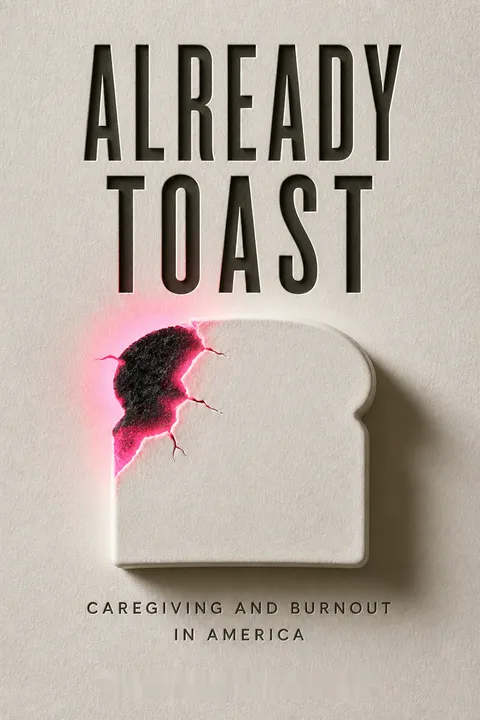
Already Toast explores Kate Washington's experience as a caregiver for her cancer-stricken husband, blending personal memoir with research on caregiving in America. Readers praised its raw honesty and insightful critique of the healthcare system, while some found the literary references distracting. The book resonated strongly with caregivers, who appreciated Washington's candid portrayal of burnout and resentment. Critics noted her privileged perspective but acknowledged the universal challenges of caregiving. Overall, it's seen as an important contribution to the conversation on caregiving's societal impact.
Glossary
kin work
Maintaining social tiesThe often-unrecognized work of sustaining relationships among relatives and friends. In caregiving, it includes updating family members, arranging visits, coordinating communication, and preserving social connections when the ill person cannot manage them. Because it is easily mistaken for ordinary family contact, this work can add substantial time and emotional responsibility to an already demanding care role.
sandwiched caregiving
Care for multiple generationsCaregiving that overlaps with other major responsibilities, especially supporting children while caring for an ill, disabled, or older adult. The obligations may involve people of different ages and may include a spouse as well as children or parents. The term describes the pressure of competing needs, not a single family structure or a fixed age group.
post-traumatic stress (PTS)
Ongoing stress after traumaA continuing stress response after an intense or traumatic experience. In the book, PTS describes reactions such as hypervigilance, anxiety, intrusive memories, and sensitivity to reminders of medical crises. It is distinguished from post-traumatic stress disorder, or PTSD, which is a clinical diagnosis with defined criteria. Not every caregiver with lasting distress has PTSD.
Universal Family Care
Integrated public care insuranceA proposed social-insurance program designed to combine supports for family care in one system. The model discussed in the book includes areas such as early childhood education, childcare, paid medical and family leave, and long-term care services. Its purpose is to make care support broadly available rather than leaving each household to manage major care needs alone.
caregiver support ratio
Potential caregivers per older adultAn estimate comparing the number of people aged 45 to 64, considered potential family caregivers, with the number of people aged 80 and older. The book describes a projected decline in this ratio from seven potential caregivers per older adult in 2010 to three per older adult by 2050. The measure signals a demographic challenge, not a guarantee that every person in either group will provide or need care.
The Angel in the House
Ideal of self-sacrificing womanhoodA Victorian cultural ideal of a devoted, gentle woman who centers domestic life and tends to others without complaint. The phrase comes from a poem by Coventry Patmore and became shorthand for expectations of female self-sacrifice. Washington uses it to examine how caregiving can be romanticized as women's natural role while its difficult labor remains unseen.
Download PDF
Download EPUB
.epub digital book format is ideal for reading ebooks on phones, tablets, and e-readers.








