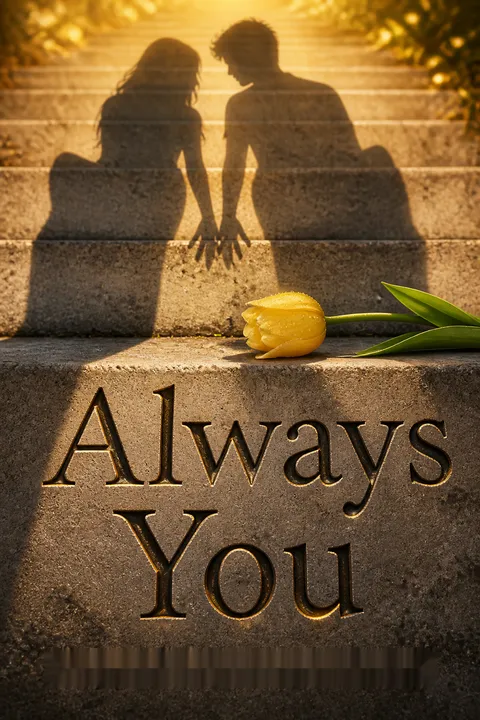


Plot Summary
Riley Finds Her Anchor
After a month away, seventeen-year-old Riley Thomas arrives at South Shore High anxious about starting junior year among strangers. The school’s attention quickly turns to her, but the crowd fades when Clay Preston, her handsome senior best friend and next-door neighbor since childhood, runs to greet her.
Their easy affection draws stares, while Clay’s football teammates Craig, Ben, and Tom immediately notice Riley too. She meets Rachel, a friendly classmate who helps her navigate the school and explains Clay’s popularity.
Riley enjoys the welcome, yet bristles when Clay tries to keep his friends from flirting with her. She has returned to the one person who makes her feel at home, but their closeness is already attracting an audience and stirring feelings neither has named.
Riley’s return gives the story its emotional baseline: Clay is not simply a boy she likes, but the person through whom she measures safety and belonging. That dependence makes the school’s attention more than social inconvenience. It exposes their private intimacy to a public world that reads them as a couple, while Riley herself still treats their closeness as ordinary. Clay’s protectiveness carries a similar ambiguity. It looks like friendship, yet his unease around other boys hints that the relationship has never been emotionally neutral for him.
A Bet Crosses the Line
At school, Riley teases Clay by pressing him against the lockers, then is startled by how strongly he responds. Their running bet later gives Clay the right to choose someone for her to kiss. He chooses himself, but when the moment comes he turns her head and gives her another hickey instead.
That night, during their familiar pizza-and-movie ritual, Clay kisses her for real. Riley is swept up in the tenderness before the fact of his being her best friend stops her; she asks them to forget it, afraid that desire might cost her their friendship.
Clay agrees, then spends the next days holding back the casual touch that has always defined them. Riley misses his closeness enough to seek him out, and their old habits return without resolving what the kiss meant.
The bet lets Clay approach a forbidden truth under cover of play, while Riley can participate without consciously revising her idea of their relationship. Her retreat is not indifference. It is an attempt to protect the structure that has kept her emotionally secure since childhood. Clay’s withdrawal makes that structure newly visible: the casual hand on a shoulder or forehead kiss had been doing intimate work, even when neither called it romance. The scene’s central tension is therefore not whether they feel something, but whether Riley can risk changing the name of a bond she fears losing.
Blake Brings Flowers
At a football game, Riley meets Blake Chambers, a striking former student who is twenty-one. He assumes she is dating Clay because she wears Clay’s number, but Riley insists they are only friends. Blake keeps pursuing her, remembers her birthday after meeting her only twice, and gives her a small rose charm for her phone.
His attentiveness contrasts with his reputation as a player, and Riley agrees to a date despite the age difference and Clay’s obvious dislike of him. Blake takes her to dinner and a movie, treats her gently, and kisses her at the door.
Riley enjoys the attention, then lies to Clay about the evening because she expects him to object. Clay’s hurt reaction reveals that Blake’s interest is not just a new flirtation: it threatens the unspoken place Clay occupies in Riley’s life.
Blake’s gift establishes a potent contrast: he appears to notice Riley as a romantic possibility, while Clay has spent years acting as if his own desire can remain safely unnamed. Riley’s attraction to Blake is genuine, but it is also shaped by her uncertainty about Clay. The age gap and Blake’s player reputation create reasons for caution, yet his apparent consideration makes those warnings harder for her to accept. Her first lie to Clay matters because it signals a shift from shared honesty toward a separate romantic life, one she has not yet decided she wants.
The Arcade Turns Dangerous
Riley tells Clay she has dated Blake, and Clay’s suspicion erupts into an argument that draws the school’s attention. Still, she accepts another date. At an amusement arcade, Blake steps away for more tokens and three men corner Riley, grabbing her and trying to pull her outside.
Blake rushes back, strikes two of them, and shields her from the third. Police arrive during the fight and arrest all four men, including Blake. Riley calls Clay from the station because she needs an adult beside her; he gets officers to take her statement and helps secure Blake’s release.
On the drive home, Clay and Blake manage a stiff exchange of thanks. Once Riley is safe, Clay stays with her, and their familiar intimacy returns, carrying them into a night neither knows how to interpret.
The arcade incident gives Blake a moment of real courage without erasing the risks Riley already sensed in him. For Riley, rescue and danger arrive in the same person, complicating any easy judgment of his character. Clay’s response is revealing in a different way: he sets aside his rivalry long enough to help the man who protected Riley, showing that his primary loyalty is to her safety. The station scene also makes Riley’s dependence concrete. When frightened, she does not call a parent or a new suitor first; she calls Clay, whose reliability remains the deepest fact in her life.
Friendship Becomes Physical
After the arrest, Clay stays overnight because Riley is shaken. A dream about losing him turns into an intimate encounter when he comforts her and they touch each other sexually for the first time. In the morning, Riley finds him briefly absent while he showers and assumes he has used her and left.
Clay returns, but her fear has already taken hold. She asks him to pretend nothing happened so their friendship can survive; he accepts, although both are hurt. Later, Riley attends a party with Clay and Rachel, where Blake is also present.
She and Clay dance closely, then kiss at home, but Clay refuses to go further while she is drunk and tells her that his feelings are serious. Riley cannot yet believe him. The next morning, she again tries to restore the safety of friendship.
Physical intimacy does not immediately settle Riley’s feelings; instead, it intensifies her fear of abandonment. She interprets Clay’s absence through the familiar script of the player, despite his history of showing up for her. That misreading reflects how deeply she has separated his sexual reputation from his private devotion. Clay’s refusal to exploit her drunkenness is a clear act of care, but his declaration arrives before Riley can recognize what she wants. Their asymmetry is not in affection, but in readiness to name it.
Clay Stops Pretending
After deciding that she and Clay should remain friends, Riley lets Blake come over and begins kissing him. Clay returns unexpectedly, sees them together, and leaves in anger, saying he will spend the night with Zoë. Riley is devastated, while Blake mistakes the moment for an opening.
Clay comes back later, apologizes for lashing out, and admits that he has loved Riley since childhood. He explains that his casual dating was a way of avoiding a relationship with anyone else while believing she did not want him.
Riley recognizes that her own love has grown just as deep and tells him she wants him. They become an official couple and begin a physical relationship founded on mutual trust. For Riley, the revelation transforms years of familiar gestures into evidence she had never known how to read.
Clay’s confession reorganizes the story’s past. His flirtations with other girls, his possessiveness, and his repeated claims that Riley was the only one for him now form a coherent pattern rather than isolated jokes. Riley’s choice is not simply between two men; it is between the safety of a bond she already understands and the vulnerability of acknowledging its full meaning. Their decision to become a couple repairs the gap between what they feel and what they permit themselves to say. It also creates a new obligation: they must learn to negotiate intimacy without treating friendship as a fallback.
Blake Breaks the Boundary
Riley tries to end things with Blake, but he refuses to accept her decision. When he arrives at her house while her parents are away, he kisses her against her will and twists her wrist hard enough to fracture it.
Clay takes her to the hospital, supports her through treatment, and warns Blake to stay away. At school, Blake confronts Riley again in the parking lot and slaps her; Clay knocks him down and beats him until teammates pull him away. Police caution Blake and tell Riley she can seek a restraining order if he contacts her again.
He then sends a message from the bleachers demanding that she break up with Clay. Riley hides it from Clay at first, but his friends help watch over her. Her effort to move on has become a safety problem neither can ignore.
Blake’s behavior clarifies the difference between pursuit and entitlement. He treats Riley’s refusal as a challenge to overcome, and his possessiveness escalates into physical coercion. Clay’s violence is framed as protection, but it also shows how quickly his fear for Riley can overwhelm his judgment. The incident forces Riley to confront the limits of charm and private reassurance: a boundary must be enforced by more than her own words. The restraining order introduces institutional protection, though the story makes clear that legal warnings cannot immediately erase a threat.
Vows Beneath Neon
Clay and Riley’s friends plan a weekend in Las Vegas, and their parents allow them to go together. Before the trip, Clay promises to stay close while Riley’s injury heals, and she looks forward to time alone with him. In Vegas, the group dances, drinks, and jokes through the night.
Drunk and swept up in the celebration, Clay and Riley decide to marry. They buy rings, recruit Tom and Rachel as wedding witnesses, and exchange vows in a small chapel. They return to the hotel without fully consummating the marriage, since Riley falls asleep before the night can continue.
The next morning, they remember what they did and decide they want to remain married, despite their youth. Clay wins a large sum at the casino, giving them money that will soon become unexpectedly useful.
The Vegas wedding is both impulsive and emotionally consistent. Alcohol accelerates the decision, but it does not invent the commitment: Clay has imagined marrying Riley for years, and she has already chosen him as her partner. Their age makes the ceremony unstable in legal terms, yet the vows matter to them as an act of recognition. The winnings add a practical irony. A night of reckless celebration leaves them with resources that help them build an independent household, turning chance into a material bridge toward adulthood.
Their Parents Close the Door
When Clay and Riley return, they tell both families they married in Vegas. Brian and Clay’s father react with anger, and Brian punches Clay before the young couple leaves together. Their mothers are more sympathetic, but neither family will let them stay as a married pair.
Riley and Clay rent a furnished apartment with money from Clay’s casino winnings, collect their belongings, and begin setting up a home of their own. Their mothers give them towels, bedding, and other essentials, while Brian later lets them use his wedding fund for the proper ceremony.
Clay asks Brian’s permission to marry Riley again, and Brian agrees. Their new home gives them privacy and independence, but it does not settle the conflict between their commitment and the adults who fear they are too young.
The family confrontation turns a romantic decision into a test of adult authority. Brian’s punch and the parents’ refusal to accept the marriage make clear that love alone cannot provide housing, security, or social recognition. Riley and Clay answer by building a household with what they have, a practical act more consequential than the impulsive chapel vows. Their mothers’ gifts soften the rupture without removing it. Brian’s later consent suggests that parental love can move from control toward support, but only after the young couple demonstrates that their bond is not a passing intoxication.
Blake Finds Their Home
After Blake continues contacting Riley, she and Clay report his behavior and obtain a restraining order. For a short while, their attention shifts to work, school, and furnishing their apartment. Then Blake appears at a restaurant where Riley is eating with friends.
He draws her outside and speaks as if their relationship can simply begin again; when Clay joins her, they leave and report the encounter. Police warn Blake that he is violating the order, but their response offers little immediate reassurance.
Riley tries to preserve ordinary routines, while Clay watches for signs of danger. Blake’s fixation now reaches beyond calls and messages, and the couple can no longer assume that their home, school, or social outings are separate from the threat. The restraint of the law has not made him disappear.
The restaurant encounter is frightening precisely because Blake presents it as normal. His easy manner tries to overwrite Riley’s refusal and the legal order, making the coercion harder to isolate from ordinary social contact. For Riley and Clay, the scene turns safety into a recurring calculation: where to sit, who knows where they are, whether to involve police again. Their desire for a normal newlywed life is not foolish, but it is increasingly incompatible with the threat Blake poses. The restraining order exposes a gap between formal protection and felt security.
The Wall of Photographs
After school, Blake grabs Riley before she can reach Clay and drives her to his house. There, she discovers a wall covered with photographs of herself and Clay, with Clay’s face scratched or burned away.
Blake blames Clay for the life he believes he lost after a football injury cost him his place on the team, and insists Riley belongs with him. Riley secretly calls Clay and gives him enough information to come, urging him to involve police. Clay arrives before officers and attacks Blake.
During the struggle, Blake grabs a kitchen knife and stabs Clay twice, puncturing his lung and severing his spinal cord. Police restrain Blake and medics rush Clay to hospital. Riley reaches him only after the attack, and the man who has always protected her is suddenly fighting for his life.
The photographs reveal that Blake’s pursuit has been sustained surveillance, not an intense but temporary crush. By erasing Clay from the images, Blake makes his grievance literal: he wants to remove the person he believes has taken everything from him. His injury and thwarted football ambitions offer context for the fixation, not an excuse. Clay’s decision to come alone grows from his established instinct to protect Riley, but it also gives Blake an opening. The attack reverses their familiar roles in an instant, leaving Riley to witness the cost of a danger she could not control.
A Wife Without Legal Standing
Doctors stabilize Clay, but explain that the knife has severed his spinal cord. An experimental operation might restore movement, yet it carries a serious risk of death. Because Riley is seventeen and their Vegas marriage is legally invalid, Clay’s parents are asked to make the decision.
Riley urges them to authorize the surgery, certain Clay would choose a chance to walk. Linda refuses, afraid the operation will kill him, and Richard will not override her. Clay remains unconscious while the opportunity narrows.
When he wakes, the doctors confirm that he cannot feel his legs and explain what his parents decided. He is furious that they denied him a choice. He then pushes Riley away, claiming she should not be tied to a life with a disabled husband, leaving her to face both his fear and her own heartbreak.
The crisis makes legal status brutally concrete. Riley and Clay understand themselves as married, but that bond cannot give her authority when his life is at stake. Linda’s refusal arises from fear of losing her son, yet it substitutes her tolerance for risk for Clay’s own values. Clay’s rejection of Riley repeats the same paternalistic logic in a different form: he tries to decide what future she can bear. The conflict exposes care’s double edge. Love can sustain a person, but when it claims the right to choose for them, it becomes another form of control.
The Box That Brings Him Back
Riley cannot accept Clay’s attempt to end their relationship on her behalf. She returns to his hospital room carrying a box filled with keepsakes from their shared childhood and years of friendship: drawings, cards, photographs, a badge, and even one of his baby teeth.
She shows him that her life is already threaded through his, and insists that disability will not make her love disappear. Clay admits he still loves her and stops pushing her away.
Brian investigates their marriage and confirms it is not legally valid, while Riley continues to insist Clay should have the operation. Once Clay is awake and able to decide, he agrees to surgery. The operation succeeds without immediate certainty about his recovery, but he begins to regain sensation and movement in his legs.
The memory box makes Riley’s argument tangible. Instead of answering Clay’s fear with a promise about an unknowable future, she shows him the accumulated evidence of a life already shared. The keepsakes also counter his belief that he alone has been the giver and protector; Riley has been preserving and valuing their history all along. His decision to accept surgery restores the agency his parents’ fear had denied him. Recovery remains uncertain, but their relationship moves from imagined sacrifice toward mutual choice.
Seven Steps Toward Home
Clay spends twelve days in hospital, then transfers to a rehabilitation centre for intensive therapy. At first he can manage only a few steps between parallel bars, and he grows frustrated by the effort required to move muscles he once controlled without thought.
Riley helps with exercises, swims beside him, and keeps him laughing by turning each step into a playful bargain. His teammates visit after winning their championship without him and leave the trophy at his bedside. Blake pleads guilty to his charges and receives a six-year sentence in a mental institution, where he will receive treatment.
Clay gradually regains strength and coordination. After six weeks, he is discharged to continue therapy at home. His body is not instantly restored, but persistence and support give him a path back to independent movement.
Rehabilitation replaces the single dramatic surgery with repetition, the less visible labor of recovery. Clay must learn to tolerate dependence without interpreting it as a loss of worth, while Riley must support him without taking over. Their humor turns exercise into a shared language, preserving erotic play and friendship even when his body is vulnerable. The team’s trophy matters because it marks Clay’s continued membership despite missing the final. Blake’s sentence closes the immediate threat, but the novel’s deeper resolution comes through sustained care rather than punishment.
The Wedding They Choose
After Clay returns home, he asks Brian for permission to marry Riley again, this time in a church with their families present. Brian agrees and welcomes him as a son, while Clay’s relationship with his own parents remains strained but slowly begins to reopen.
Once Clay has recovered his ability to walk, the couple prepares for the ceremony and a honeymoon. Riley enters in an ivory dress carrying yellow tulips, and Brian walks her down the aisle. Clay and Riley exchange legal vows, then celebrate with friends and family, dancing to the song that has long belonged to them.
This wedding gives them what the Vegas ceremony could not: public recognition, parental blessing, and a valid marriage. Clay once again calls Riley his wife, now with no legal doubt between them.
The second wedding does not erase the first; it repairs what the first could not secure. The Vegas vows expressed the couple’s private certainty, while the church ceremony incorporates family, law, and community into that commitment. Brian’s role in walking Riley down the aisle also revises the earlier rupture: he can now support the marriage without surrendering his place as her father. Clay’s recovery makes the celebration possible, but the ceremony’s significance is not that hardship has vanished. It is that the couple can choose each other openly, with the people around them finally able to witness it.
Epilogue
Seven years later, Clay accompanies Riley to an ultrasound appointment after more than a year of trying for a baby. The sonographer discovers that Riley is carrying twins. Clay is briefly stunned by the sight of two small shapes and the sound of two heartbeats, then turns his amazement into a joke about the trouble ahead.
Riley laughs, rests a hand over her stomach, and shares his excitement. The couple who began as inseparable children now face parenthood together, their future expanding from a marriage they had to choose twice into a family they had long hoped to build.
The twins provide a concrete measure of the distance the couple has traveled. Their early romance is organized around the fear of losing one another; the epilogue gives that devotion a future beyond the two of them. Clay’s first response is comic overwhelm, which preserves the novel’s playful tone even as the stakes change from courtship to parenthood. The ultrasound also answers the earlier fear that injury might foreclose their shared life. The story closes not by claiming that love prevents suffering, but by showing Riley and Clay able to imagine and welcome a life that continues to grow.
Analysis
Always You builds its romance from a mismatch between lived intimacy and conscious understanding. Riley and Clay already share the practical and emotional habits of a couple, but Riley interprets them as the natural language of childhood friendship. Clay’s flirtatious reputation further obscures his devotion, allowing him to hide behind a persona that contradicts what he consistently does for her. The novel’s first movement is therefore not a conventional courtship but a re-reading of accumulated evidence.
That pattern later expands into questions of agency. Blake’s pursuit presents desire as entitlement, while Clay’s protectiveness can also become possessive when fear overrides Riley’s autonomy. The distinction between them is not that one man feels intensely and the other does not; it is whether Riley’s choices remain real. The restraining order offers formal protection but cannot by itself restore control, and the knife attack makes the cost of that failure bodily and immediate.
Clay’s injury then reverses the familiar protector dynamic. His instinct is to release Riley from a future he imagines as diminished, just as his parents tried to choose safety on his behalf. Riley refuses both forms of substitution. Her keepsake box is not merely sentimental proof of love; it is an archive of shared life that counters Clay’s belief that he alone has given something. She chooses him with full knowledge of uncertainty, while he must learn that accepting care is not the same as becoming a burden.
The two weddings sharpen the novel’s distinction between private feeling and public legitimacy. The Vegas ceremony gives the couple a sincere but legally fragile promise. The later church ceremony draws family and community into a commitment they have already tested through conflict, injury, and recovery. The ending’s twins extend that movement from chosen partnership to shared future. The book’s emotional claim is not that love makes people invulnerable, but that durable love requires recognition, consent, and the willingness to let the other person choose what risks are worth taking.
Review Summary
Characters
Riley Thomas
Clay’s lifelong best friendRiley is an affectionate, socially self-conscious teenager whose deepest source of security is her next-door neighbor and best friend, Clay. She is playful and capable of flirting, yet initially struggles to understand how desire could change a bond she depends on so completely. Her need to protect their friendship makes her cautious, while her loyalty makes her persistent when Clay doubts his own worth. Riley is not passive: she makes romantic choices, challenges possessiveness, seeks help when threatened, and insists on being treated as an equal partner. Her emotional life is shaped by the tension between wanting independence and wanting the closeness that has defined her since childhood.
Clay Preston
Riley’s devoted protectorClay is Riley’s childhood companion, a popular football player, and the person she trusts most. Charming and physically confident, he has a softer private nature: he remembers details, makes thoughtful gestures, and is careful not to hurt people even when he is jealous. His history as a player helps him hide the seriousness of his feelings, especially while he believes Riley sees him only as a friend. Clay’s protective instinct is genuine, but it can become controlling when fear takes over. He measures his own value partly by his ability to care for Riley, which makes vulnerability and dependence difficult for him to accept.
Blake Chambers
The persistent former playerBlake is a charismatic former student whose confidence makes him accustomed to getting attention. He approaches Riley as a romantic challenge, but his charm and apparent thoughtfulness exist alongside a volatile need for control. A painful history with football and his resentment toward Clay shape how he interprets their rivalry, though his perspective is not a reliable account of what Clay intended. Blake’s behavior tests Riley’s ability to distinguish attraction from safety and forces the people around her to respond to escalating boundaries. His role is more complicated than that of a conventional rival, because his grievance gives his fixation a personal logic without making it acceptable.
Brian
Riley’s steadfast stepfatherBrian is Riley’s stepfather and the only father she has known. He is affectionate, generous, and deeply protective, having raised her as his own since she was a child. His first reaction to Riley and Clay’s sudden marriage is anger, rooted in fear and in the wish to guide his daughter into adulthood. When he calms down, his support becomes practical as well as emotional. Brian’s relationship with Riley shows that family bonds are built through years of care, not only biology.
Sarah
Riley’s encouraging motherSarah is Riley’s mother, warm and affectionate, and one of the first adults to recognize the strength of Riley and Clay’s bond. She tries to support her daughter without taking over her choices, even when those choices alarm her. Sarah’s humor and enthusiasm soften tense moments, while her willingness to help the young couple reflects her faith in their feelings.
Linda
Clay’s protective motherLinda is Clay’s mother and wants to protect him from harm. Her fear can make her cling to the safest immediate option, even when Clay’s own values point elsewhere. She is affectionate and generous toward Riley, but the strain between love and control becomes important when she has to make difficult decisions for her son.
Richard
Clay’s conflicted fatherRichard is Clay’s father, a family man who reacts strongly when his son makes a life-changing decision without warning. He can be impulsive under stress, but he is also capable of admitting fault and seeking reconciliation. His relationship with Clay is shaped by a genuine wish to protect his son, complicated by difficulty trusting Clay’s judgment.
Rachel
Riley’s candid new friendRachel befriends Riley on her first day at South Shore and helps her read the school’s social landscape. She is outspoken, funny, and comfortable discussing attraction, offering Riley a peer perspective that Clay cannot provide. Her developing relationship with Tom reflects a more cautious approach to intimacy than her usual flirtatious reputation suggests.
Tom
Clay’s teasing teammateTom is one of Clay’s close football friends, known for his easy teasing and dimples. He quickly welcomes Riley and recognizes that her connection with Clay is more charged than either admits. His growing closeness with Rachel adds a gentle romantic subplot and makes him a bridge between Riley’s new school life and Clay’s established circle.
Ben
Clay’s loyal teammateBen is one of Clay’s football friends, part of the popular group Riley meets at school. He helps organize the trip to Las Vegas and remains among the teammates who support Clay. Ben is less central than Clay or Tom, but his practical loyalty helps give the young friends a sense of community.
Craig
Clay’s teasing teammateCraig is one of Clay’s football friends and among the first classmates to meet Riley. He joins the group’s teasing and celebrations, helping establish the confident, close-knit atmosphere around Clay.
Reece
Rachel’s close friendReece is part of Rachel’s circle at South Shore and joins the group around football games and social outings. He provides companionship and practical support without becoming a major driver of the plot.
Michelle
Blake’s older sisterMichelle is Blake’s older sister and former guardian. She works hard to support him and treats Riley warmly when they meet, unaware of the darker conflict developing around them.
Coach Bradley
Clay’s football coachCoach Bradley trains Clay and the South Shore football team. He values Clay’s leadership and talent, while also expecting him to take responsibility for the team. His competitive demands help establish football as an important part of Clay’s identity.
Plot Devices
The Best-Friend Rituals
Intimacy in plain sightClay and Riley’s repeated habits, including running together, sharing movie nights, wearing his football number, exchanging hickeys, and holding hands, make their emotional intimacy visible long before they call it romance. Each ritual has an innocent explanation that lets Riley preserve her assumption that they are only friends. The same details later take on new meaning when Clay reveals how long he has loved her. Their shared routines therefore function as both foreshadowing and emotional evidence: the romance does not arrive from nowhere but grows out of practices that have already made them central to each other’s lives.
The Vegas Marriage
Vows before recognitionThe spontaneous Las Vegas ceremony gives Clay and Riley a private declaration of commitment before they have the age or family approval to make it fully secure. The rings, their friends as witnesses, and Clay’s casino winnings carry the night into later events. When the marriage proves legally invalid, that discovery becomes consequential at the hospital, where Riley cannot make a medical decision for Clay. The device distinguishes emotional commitment from institutional recognition, then makes the couple confront the cost of that gap. Their later church ceremony completes what their first vows began.
The Restraining Order
Protection with limitsAfter Blake repeatedly contacts and threatens Riley, police warnings and a restraining order create a formal boundary around her. The order gives Riley and Clay a way to report further contact, and its violation eventually increases the seriousness of Blake’s legal case. Yet it does not immediately stop him from watching, approaching, or abducting Riley. Its function is deliberately double: it offers a real avenue for protection while showing the distance between a legal rule and a person’s felt safety. The order also marks the point when the conflict can no longer be treated as ordinary romantic jealousy.
The Spinal Injury
Love tested through dependenceClay’s severed spinal cord changes the story from a romance about admitting desire into a struggle over agency, identity, and care. The risky operation, blocked at first by his parents, forces Riley to advocate for the future Clay would choose. His rehabilitation then makes recovery a sequence of small, measurable efforts rather than a sudden cure. The injury also provokes Clay to push Riley away because he fears becoming a burden, giving their emotional conflict a concrete physical source. His gradual return to movement does not simply restore the old relationship; it requires both of them to accept vulnerability and mutual dependence.
Best Friend Series


About the Author







Download PDF
Download EPUB
.epub digital book format is ideal for reading ebooks on phones, tablets, and e-readers.








