

Key Takeaways
Command means owning risks your people cannot see
A signal became fatal. In Kosovo, SEAL Chad Burkhart stepped from a helicopter 350 feet above the ground after a crew chief mistook his thumbs-up for the signal to go. The mission had been rehearsed, but a small change in procedure and an ambiguous gesture ended his first deployment in his death. Zinke was not Burkhart’s direct commander, yet the loss sharpened his sense that command responsibility extends beyond the person making the final mistake.
Responsibility is systemic. A leader must provide sound training, clear communication, reliable equipment, and support, then accept that no plan can remove every danger. Zinke compares command with parenting: guidance and preparation matter, but leaders cannot stand beside everyone at every moment.
What's striking is how the incident resembles a human-factors failure, not simply an individual error. In aviation and medicine, safety depends on unambiguous signals, repeated confirmation, and systems designed to catch predictable misunderstandings. That approach preserves accountability while avoiding the comforting fiction that better people alone prevent accidents. Zinke's grief gives the lesson emotional force, though hindsight can make a tragic chain seem easier to anticipate than it was. A useful leadership question is not only, “Who made the mistake?” but also, “What made that mistake consequential?”
Rehearse the failure path as seriously as the main plan
A plan met its weak point. During a Philippine training exercise, Zinke's team completed a simulated attack on a ship, then discovered their planned extraction boat was absent. Their contingency was to swim across the bay and hike through jungle and volcanic terrain, without suitable footwear, food, or water. Their commander had noticed that the escape plan was thin and deliberately forced the team to use it.
Make failure concrete. Zinke took from the experience a practical habit he calls the “rule of threes ”: identify the three most likely things to go wrong at each phase, then prepare responses. A good plan does not assume every step will work. It makes the team consider what happens when communications fail, extraction is delayed, or the situation changes after the mission begins.
This is a military version of scenario planning: people learn more from rehearsing a breakdown than from repeating a flawless script. The exercise also exposes a common planning bias. Teams often detail the desired sequence and treat contingencies as paperwork, even though the contingency may be the only part that matters under stress. Rehearsal cannot anticipate every surprise, and overplanning can slow action. Its value is narrower and more practical: it gives people a shared vocabulary and first moves when the expected path disappears.
Let trained people closest to danger make timely decisions
Distance distorted judgment. While tracking Bosnian war-crime suspects, Zinke says senior officials delayed an operation over a question about whether a dog near a surveillance van might detect the team. Operators were tasked with investigating the dog rather than advancing the mission. In Fallujah, he describes marines watching armed insurgents prepare a firing position while waiting hours for authorization. He instructed experienced snipers to stop the threat.
Delegate with boundaries. Zinke argues that field commanders often have the freshest view of a changing situation, while distant headquarters can add delay and requirements that weaken momentum. His preferred model is not unchecked initiative: operators need clear mission goals, rules, training, and accountability. Once those conditions are established, leaders should avoid inserting themselves into every tactical choice.
The tension is between local knowledge and centralized oversight. Organizational research often treats this as a design problem: move decisions toward the information, while keeping shared standards and a clear route for escalation. Proximity can improve speed, but it does not guarantee sound judgment, especially when civilians and incomplete intelligence are involved. The dog episode shows how oversight can become absurd; the snipers episode shows why delay can carry human costs. Good delegation therefore requires more than trust. It requires defined authority and review after the fact.
Follow the money when a hidden leader cannot be found
The accountant was the opening. In Iraq, Zinke's team could not locate militia leader Muqtada al-Sadr, so it tracked an accountant believed to handle the organization’s finances. The team seized him and records from his home, hoping the books would reveal the network. The accountant could not identify Sadr’s immediate location, but his records showed relationships, payments, and the flow of resources to operatives.
Logistics expose structure. The capture gave intelligence teams a map of connections that would have been difficult to see by watching individual fighters alone. Zinke says insurgent violence then surged, which he interpreted as compromised members rushing to act before they were targeted. The episode illustrates both the value and the risk of intelligence collection: learning how a network works can help disrupt it, but the network may react before the next move is ready.
The story’s strongest insight is organizational: violent groups depend on mundane systems, including accounting, transport, communications, and safe houses. Mapping those dependencies can reveal roles that a search for charismatic leaders misses. The ledger is not a complete picture, however. Recorded transactions can be incomplete, coded, or deliberately misleading, and a financial connection does not prove the same degree of responsibility for every recipient. Zinke’s account also links the intelligence breach to a rise in violence, but a memoir cannot establish that this was the sole cause.
Do not dismantle institutions before building workable replacements
A power vacuum followed. Zinke argues that dismantling Iraq’s military after Saddam Hussein’s fall removed structure and employment from a large population, including trained soldiers. He also criticizes the new Shia-led government for failing to protect Sunni communities, which deepened alienation. In his account, those decisions helped create conditions that insurgent groups could exploit.
A small unit revealed the gap. The Iraqi security forces were meant to assume responsibility, but Zinke says only the “Mighty 36,” a mixed-sect special forces battalion, approached combat readiness. Of about 500 personnel listed, roughly 240 were available when the battalion deployed, and many lacked equipment. Training a successor force is not the same as creating one. Institutions need legitimacy, resources, leadership, and a reason for people to serve together.
This argument connects military transition to a broader principle of institutional design: removing an order does not automatically produce a more capable one. Security forces rely on trust and incentives, not just uniforms and training. The memoir makes a persuasive case for anticipating who inherits authority and how excluded groups respond. Its account is still a participant’s retrospective interpretation of a complicated political collapse. A replacement institution can also reproduce the injustices of the old one, so preserving capacity is not enough. The harder task is retaining useful functions while changing who benefits from them.
Build resilience that helps the team, not just the individual
Endurance had a purpose. In BUD/S, Zinke’s training class began with 138 candidates. Hell Week lasted five and a half days, with more than twenty hours of activity on many days and about four hours of sleep across the period. The ordeal was meant to test whether candidates could keep functioning under exhaustion, cold, and confusion, not merely whether they could perform while comfortable.
Strength must serve a role. Zinke stresses that a team needs more than its fastest or strongest member. A slower, powerful operator may be the right person to carry communications equipment; teammates should share the load of essential gear. The test is not individual glory. It is whether each person can contribute reliably to a mission that depends on everyone.
The section distinguishes grit from showmanship. A useful team does not simply gather high performers; it coordinates different strengths around a shared task. That is familiar in team sports, emergency response, and complex engineering, where reliability often depends on role clarity and mutual backup. Extreme selection can create confidence, but endurance under a designed ordeal does not prove sound judgment in every real-world situation. Resilience is most valuable when paired with competence, adaptability, and the willingness to ask for help before a teammate’s burden becomes a failure point.
Professionalize elite teams without erasing their hard-won expertise
The Pirates had two sides. Zinke describes an elite SEAL unit whose members cultivated a rough, unconventional identity. That culture supported flexibility and aggressive training, but it also produced uneven performance and behavior that alienated senior leaders. During a ship-boarding demonstration, operators performed impressively, then celebrated in ways that left a visiting admiral questioning the command’s discipline.
Reform changed the team. Leaders including Eric Olson restored uniforms and standards while updating tactics and equipment. Zinke recognizes that professionalization improved credibility with the wider Navy, even as experienced founding members left and decades of skill departed with them. The lesson is not that discipline should be rejected or imposed blindly. It is that organizational reform must distinguish habits that merely look unruly from the tacit knowledge that makes a unit effective.
The episode captures a classic organizational tradeoff: informal cultures can enable initiative, but they can also normalize behavior that weakens trust and consistency. Formal standards make coordination easier across units and reassure institutions that must authorize missions. Yet a reorganization can unintentionally discard knowledge that was never written into manuals. Effective reform preserves the operational insight while changing the conduct that undermines the mission. The memoir also shows that legitimacy is a working resource: a team that cannot earn institutional confidence may lose access to the training, equipment, and authority it needs.
Treat military families as part of the force, not its background
Service reaches the household. Zinke describes a career that often kept him away for more than 200 nights a year. His wife, Lola, raised their children through deployments, uncertain schedules, and information she could not ask him to share. During Hurricane Bonnie in 1998, the command moved SEALs away from the storm while families remained in base housing. Lola rode it out with their children as the house flooded and power failed.
The sacrifice is distributed. The uniformed member takes the operational risk, but spouses and children absorb loneliness, disrupted plans, and the fear of a call that may never come. Zinke connects that burden to the wider obligation to recognize veterans, including Vietnam-era service members whose return home was often marked by isolation rather than welcome.
This account widens the meaning of readiness. A service member’s ability to deploy depends partly on care work performed at home, often without public recognition or institutional status. Family support is not sentimental decoration; it is infrastructure. At the same time, celebrating sacrifice should not make chronic separation seem inevitable or cost-free. Organizations can honor military families through practical support, inclusion, and honest expectations, while also examining whether repeated deployments are sustainable. Zinke’s hurricane story makes the imbalance visible because the institution protected its operators while leaving their dependents exposed.
Put local knowledge into policy, then test it against evidence
Ground truth changed the plan. In the Philippines, Zinke’s team negotiated directly with village leaders, trading useful materials and money for food, local cooperation, and access. The arrangements were specific to the community rather than imposed through a standard supply process. He contrasts this with headquarters-driven systems that often ignored conditions on the ground.
Apply the principle carefully. Zinke carries the argument into domestic policy, favoring decisions made closer to affected communities, particularly in natural-resource management. His geology background informs his support for energy development and his skepticism toward federal restrictions he considers detached from local conditions. The strongest version of the case is that people with direct experience can spot practical constraints that distant administrators miss. Their experience should inform policy, not substitute for measurement or independent review.
Local knowledge can reveal details that broad rules overlook: seasonal conditions, informal economies, and the way people actually use land or services. This resembles subsidiarity, the principle that decisions should sit at the lowest level capable of handling them. But proximity is not proof of impartiality. Local actors may have economic interests, overlook harms beyond their region, or disagree among themselves. Good governance combines community knowledge with transparent evidence and accountability. The memoir makes the case for listening locally, while its own confident policy judgments show why listening should be followed by verification.
Treat energy security as strategy, while weighing its environmental costs
Energy policy has several levers. Zinke argues that domestic energy production can support jobs, reduce reliance on foreign suppliers, and give the United States more strategic freedom. He advocates a three-part approach: improve efficiency, develop alternative sources, and responsibly produce conventional fuels such as oil, gas, and coal. He points to shale extraction and the proposed Keystone XL pipeline as examples of opportunities he believes were being blocked.
The tradeoff is real. His case treats affordable, dependable energy as a foundation for manufacturing and national security, while contending that domestic production can be regulated more effectively than some foreign production. He also argues that energy exports could strengthen allies. The book presents these as policy positions, not settled conclusions. Each proposed source or route requires its own assessment of cost, safety, climate impact, and geopolitical benefit.
The chapter’s useful move is to connect energy choices to more than household bills. Supply affects industrial capacity, foreign policy, military commitments, and the resilience of allies. A portfolio approach also avoids treating every technology as an all-or-nothing substitute. The limitation is that security and affordability do not erase environmental externalities; those costs can fall on communities that receive few economic gains. Nor does domestic production automatically end strategic dependence. Strong policy compares complete life-cycle costs and plausible alternatives instead of allowing either energy abundance or environmental protection to function as a slogan.
Give troops clear objectives, lawful discretion, and political follow-through
Tactical skill cannot repair strategy. Zinke argues that troops need rules of engagement that let experienced operators respond to clear threats without waiting through layers of approval. He describes Fallujah operations in which he considered delay dangerous, while also recounting limits he set, such as rejecting a cell phone alone as sufficient evidence of hostile activity.
Leadership must own the consequences. His strongest criticism comes in his account of Benghazi, where he says available American forces were not sent to assist during the long attack. He also criticizes unclear war aims and withdrawals that, in his view, leave local partners exposed. The memoir’s standard is decisive action, but the underlying demand is broader: civilian leaders must define the purpose of military force, authorize it responsibly, and accept accountability for the outcome.
This is the book’s most forceful claim about civil-military responsibility. Operational discretion can save time when conditions change quickly, yet military force remains subject to law, civilian authority, and the risk of misreading events. Clear objectives help reconcile those demands by telling commanders what outcomes matter and what limits cannot be crossed. Zinke’s Benghazi judgment is a politically charged interpretation of events, and the memoir alone cannot settle every question about available options or authorization. Its enduring challenge is to make decision-makers answer for both action and inaction.
Analysis
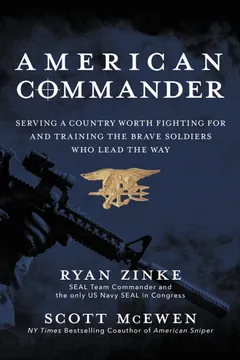
American Commander is a hybrid of combat memoir, leadership manual, family tribute, and partisan political argument. Its strongest through-line is stewardship: a commander prepares people, resources, and contingencies, then bears responsibility for what happens beyond direct control. The opening account of Chad Burkhart’s death gives this principle a human cost. Later stories, from an improvised extraction exercise to the seizure of an Iraqi accountant, show how preparation and initiative can shape outcomes while remaining vulnerable to chance and reaction.
The narrative is especially effective when it makes abstract organizational problems visible in a scene. A remote official obsessing over a dog, marines waiting for permission while armed men prepare a position, or a family enduring a hurricane after operators are evacuated all translate bureaucracy into lived consequence. The memoir also resists a purely heroic portrait at moments: Zinke recalls mistakes, family absences, and the loss of institutional knowledge during reform.
Its limits arise from the same first-person force that makes it compelling. Operational recollection is valuable evidence about what one commander saw, but it is not a complete account of Iraq, military policy, or the decisions surrounding Benghazi. The book often moves quickly from experience to broad causal claims, particularly about political opponents, energy policy, and the consequences of US withdrawal. Those claims deserve evaluation beyond the authority of military service. Skill in combat offers relevant perspective, not automatic expertise in every policy domain.
The most durable lesson is therefore not simply to trust operators or centralize control. It is to align authority with information, preserve lawful constraints, and make leaders answer for foreseeable consequences. The book’s patriotism is strongest when expressed as care for people who serve, including those who serve at home. Its arguments are less persuasive when loyalty is treated as proof that one contested policy must be right.
Review Summary
Reviews of American Commander are mixed, averaging 3.75/5 stars. Many readers appreciate Zinke's stories about growing up in Montana and his experiences as a Navy SEAL, finding them engaging and insightful. However, a recurring criticism is the book's disjointed structure, with frequent digressions and a lack of editorial polish. Many readers felt the heavy inclusion of political commentary disrupted the memoir's flow, making it read more like a political manifesto than a military autobiography. Readers seeking action-focused SEAL narratives may be disappointed.
Glossary
In extremis
Urgent emergency operationA mission undertaken because delaying action is judged to create a greater risk of harm, damage, or death. Unlike a planned operation, it allows little time for full preparation and depends heavily on the team’s existing skill, judgment, and ability to adapt.
Reconnaissance and Surveillance (R&S)
Observe and report activityA military activity in which a small team watches a location, route, or person to gather information without drawing attention. In Zinke’s Kosovo account, teams looked for movement patterns, suspected weapons caches, and individuals who might lead to higher-value targets.
Sensitive Site Exploitation (SSE)
Search and document a siteThe systematic examination of a location after it has been secured. Personnel search for items such as computers, documents, weapons, and records, while documenting what was found and where. In the accountant raid, the team used SSE to collect material that could help map an insurgent network.
Quick Reaction Force (QRF)
Rapid backup forceA force held ready to respond quickly if an operation encounters unexpected resistance or needs additional support. Zinke describes positioning a QRF close enough to reach the target area within minutes, with the choice of ground or air support shaped by local conditions and the need to avoid alerting the neighborhood.
Rule of threes
Plan for likely failuresZinke’s planning habit of identifying the three most likely problems at each phase of a mission and preparing responses in advance. The practice grew from a training exercise in which his team’s extraction plan failed and the fallback required an unprepared swim and overland journey.
Hell Week
BUD/S endurance testA five-and-a-half-day stage of Basic Underwater Demolition/SEAL training that subjects candidates to sustained physical activity, cold, exhaustion, and stress. Zinke presents it as a test of continued functioning and team contribution under pressure, rather than as instruction in advanced combat skills.
Threat/non-threat analysis
Judge immediate dangerA rapid assessment of whether a person or situation presents a threat requiring action. Zinke describes it as a trained judgment built through repeated practice, including scenarios where the correct response may be not to engage. Mistakes can endanger teammates and civilians or lead to unjustified force.
Pirates
Unconventional SEAL cultureZinke’s label for the informal, rough-edged culture of an elite SEAL unit shaped by its early leadership. The culture encouraged independence and unconventional methods, but it also tolerated conduct that clashed with Navy standards. Its later professionalization improved institutional confidence while contributing to the departure of experienced members.
Personnel Indicted for War Crimes (PIFWCs)
War-crime indictees targetedA term used in the memoir for people secretly indicted for war crimes and targeted for capture in Bosnia. The operations depended on discreet surveillance, pattern analysis, and careful timing so suspects would not be warned or disappear before they could be detained and transferred for prosecution.
Download PDF
Download EPUB
.epub digital book format is ideal for reading ebooks on phones, tablets, and e-readers.








