

Key Takeaways
Judge Sickles by what his charm made powerful friends forgive.
Charm as political capital. Dan Sickles was a gifted lawyer, speaker, and Tammany Hall operative. Tammany was New York’s Democratic political machine, rewarding loyal allies with jobs and influence. Sickles’s friendships with its leaders helped propel him from teenage campaign speaker to congressman. The same circle often shielded him from consequences for financial disputes, electoral misconduct, and sexual scandal.
A talent for audacity. While serving in London, Sickles brought Fanny White, a successful brothel owner, into diplomatic society and reportedly introduced her to Queen Victoria under an assumed name. He did not hide the affair as he might have hidden a relationship with a respectable woman. Friends forgave him, opponents used the episode against him, and he continued to attract influential allies.
What's striking is how his charm operates as a form of political infrastructure. Personal loyalty moves favors, jobs, and public influence through networks that formal rules cannot explain on their own. Social scientists describe this as patronage: relationships become channels for distributing resources and securing allegiance. That can make a machine responsive to constituents, but it also gives insiders a private shield. Sickles's story cautions against treating popularity as evidence of integrity. Yet the biography also shows why people stayed loyal: he could be generous, capable, and genuinely useful, not merely charming.
A public park can emerge from the same machine that bends politics.
A civic vision. Sickles helped advance the plan for what became Central Park. In 1853, he brought political factions together behind a consolidated park bill after earlier proposals had failed. He later pushed the state legislature to fund improvements, using maps and images to show lawmakers the rough, rocky ground and the landscaped park it could become. His own account credits him heavily, though other officials and advocates also shaped the project.
Deals, not purity. Sickles accepted that political outcomes depended on bargains. He described arranging a higher salary for an aqueduct engineer in exchange for routing the aqueduct through the proposed park. A city alderman also told him that land interests had offered council members money to remove valuable tracts from the plan. Sickles did not present this world as clean, only as the one in which he knew how to work.
The park story complicates the easy division between public-minded reform and machine politics. Large public projects require coalition-building, expertise, funding, and decisions about who bears costs. In that sense, political bargaining can create lasting public goods. But the same arrangements can privilege connected people and conceal private benefits inside public decisions. The useful question is not whether a politician is pure or compromised, but who gains, who pays, and whether the resulting institution serves people beyond its makers. Sickles’s own claim to Central Park’s authorship should also be read with the caution owed to a self-interested narrator.
A jury can excuse lethal violence when a husband's honor is on trial.
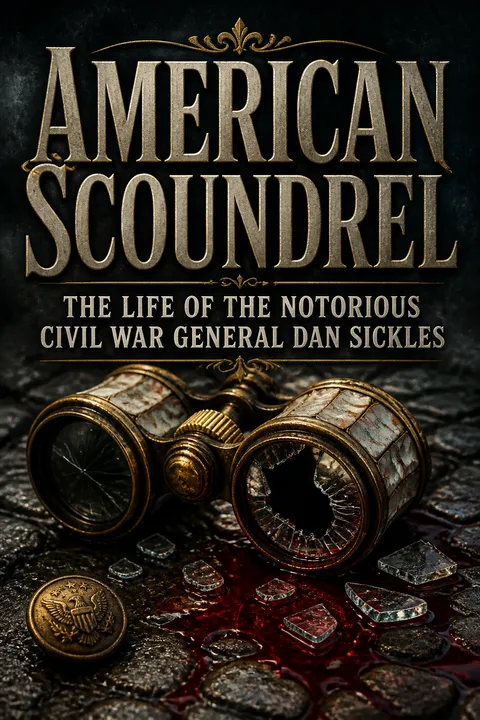
A public killing. In February 1859, Sickles learned that his wife, Teresa, had been having an affair with Philip Barton Key, Washington’s district attorney. Key was also a friend Sickles had helped professionally. Sickles confronted him in Lafayette Square and shot him repeatedly, including after Key had fallen. Key carried opera glasses, not a weapon. Sickles surrendered and was tried for murder.
A novel defense. His lawyers argued that the discovery had driven him into temporary insanity, sometimes described in court as moral insanity: a brief state of mental incapacity caused by extreme emotional provocation. They portrayed adultery as an assault on a husband’s household and invoked the era’s belief that a wife’s sexuality belonged to her husband. The jury acquitted Sickles after about seventy minutes of deliberation, though acquittal did not establish that the killing was morally justified.
The trial shows law absorbing a culture’s assumptions about masculinity and marriage. The defense turned a private betrayal into a public injury, then asked the jury to treat violent retaliation as evidence of temporary incapacity. That strategy was persuasive in a society where many men carried weapons and male honor could be defended through force. The acquittal is therefore revealing as much for what it normalized as for what it decided. A legal verdict answers a defined question under prevailing rules; it does not settle the broader ethical question of whether the response was necessary or proportionate.
Society punished Teresa's affair more durably than Sickles's violence.
A young wife exposed. Teresa was fifteen when she married the thirty-three-year-old Sickles. She was sociable, educated, and skilled as a diplomatic hostess, but her husband was often absent and continued his own affairs. Her relationship with Key became increasingly visible. After Sickles discovered it, he made Teresa write a detailed confession, which was later published and turned her private life into a national spectacle.
The unequal aftermath. Sickles eventually took Teresa back, a decision that drew public scorn, but the reconciliation did not restore their marriage as a shared life. She remained largely apart from him while he returned to politics and war. Teresa lived in isolation at the family home, became ill with tuberculosis, and died at thirty-one. Sickles survived the scandal and built a renewed public career. Her choices mattered, but she had far less power than her husband to shape how the story was told.
The contrast is not a claim that Teresa had no agency or that her affair caused no harm. It is a reminder that agency operates within unequal conditions. Sickles controlled the public narrative, had a political network, and could return to public life; Teresa faced sexual stigma, dependence, and limited freedom to rebuild her own reputation. The episode resembles what later scholars call a gendered double standard, where similar sexual behavior carries different social costs for men and women. The biography’s attention to Teresa’s letters and daily life helps restore a person who was otherwise reduced to evidence in a famous man’s case.
Sickles defended slavery's expansion until secession made loyalty costly.
A pro-Southern Democrat. Sickles supported the Democratic alliance with slaveholding interests and backed the admission of Kansas as a slave state under the disputed Lecompton process. He also helped promote the acquisition of Cuba, which some Southern politicians hoped would strengthen slaveholding power. The Ostend Manifesto, a diplomatic statement associated with Sickles and other American envoys, argued that the United States could be justified in taking Cuba if Spain refused to sell it.
A changed boundary. Sickles did not become an abolitionist. But when Southern states seized federal property and fired on the Union supply ship Star of the West, he described those acts as war. After Fort Sumter fell, he helped rally support for holding it, then recruited the Excelsior Brigade for the Union. His shift was from defending a political coalition to opposing its attempt to break the nation by force.
This is a useful example of political allegiance changing without a clean conversion of principle. Sickles had tolerated slavery and defended policies that served slaveholding power; secession changed the terms of that loyalty. Political behavior often follows a threshold: a coalition can remain acceptable while its members share a common interest, then become impossible to defend when one side violates the rules that held it together. That interpretation does not erase his earlier complicity. It makes the change legible without turning it into a simple story of moral awakening.
At Gettysburg, Sickles's advance was brave, consequential, and still contested.
A disputed position. On July 2, 1863, Sickles moved his Third Corps forward from the low ground assigned to it toward higher ground along the Emmitsburg Road, the Peach Orchard, and the Wheatfield. He believed the original position exposed his men to artillery and repeated the mistake he associated with Chancellorsville, where Union troops had abandoned high ground. His advance left a gap in the Union line and invited a fierce Confederate attack.
A costly result. Sickles’s corps absorbed heavy losses and helped prevent the Confederates from turning the Union flank. A cannonball shattered his right leg, which surgeons amputated. Sickles later argued that his decision helped save the battlefield; critics said it endangered the army. The biography presents a controversy that cannot be settled by his courage or injury alone. The counterfactual, what would have happened had he stayed put, remains unknowable.
The battle is a case study in how command decisions are judged under uncertainty. Sickles saw a terrain problem and acted before receiving clear approval; that initiative may have prevented one danger while creating another. Modern military analysis often distinguishes decision quality from outcome quality: a good decision can fail, and a risky decision can succeed by luck or by others’ intervention. The evidence supports neither a simple hero story nor a simple blunder story. Sickles’s later campaign against Meade also matters, because veterans’ recollections are arguments as well as memories.
Use military power to enforce equal rights, then submit it to oversight.
Protection by decree. As military governor of South Carolina, Sickles commanded thousands of troops and faced violence against freedpeople and Union loyalists. On January 1, 1866, he declared the state’s Black Code invalid and ordered equal application of the law. His orders also affirmed freedom of movement, access to occupations, and protection from special taxes and vagrancy arrests. When local courts failed to protect people, he sometimes intervened directly.
A contested authority. Sickles also issued a moratorium on debt imprisonment and foreclosure, and restricted liquor production to preserve grain. Some small farmers benefited, but President Andrew Johnson objected to Sickles’s unilateral use of power. His interventions in courts produced further conflict, and Johnson dismissed him in 1867. The biography presents both the urgent need to protect newly freed people and the danger of military rule that lacks clear checks.
The tension here is not between justice and procedure as if one must always defeat the other. Freedpeople could not rely on equal rights when local institutions refused to enforce them, so military protection had practical value. Yet emergency authority can become arbitrary, especially when one officer decides which laws and judges deserve respect. The durable question is how to make rights enforceable while keeping enforcement accountable. This is a familiar problem in post-conflict governance: institutions may need outside power to change, but they also need credible limits if the new order is to earn legitimacy.
Gettysburg made him a hero, but his family paid for his reinventions.
A career rebuilt. Sickles served as a military governor, traveled to Colombia on a diplomatic mission, and later became ambassador to Spain, where he again pursued the purchase of Cuba. He also helped organize a takeover of the Erie Railroad board against Jay Gould. His public reputation rose and fell with his usefulness to presidents and his ability to retell Gettysburg. In 1892 he received the Medal of Honor for his actions in the battle and chaired New York’s Gettysburg monuments commission.
A private reckoning. Sickles’s public honors did not repair his family life. His daughter Laura, whom he had raised largely through absence and later refused to support, died poor in Brooklyn in 1891. In 1913, a state investigation found more than $28,000 missing from the monuments commission’s accounts, and Sickles was arrested at ninety-three. He died in 1914. His career ended with a complicated record: conspicuous courage, political adaptability, and obligations to others left unmet.
Sickles’s life resists the tidy moral arithmetic of redemption. Public service, battlefield courage, and institutional contributions coexist with private neglect and financial misconduct. The Medal of Honor records a particular act of courage; it cannot certify the whole character of its recipient. Likewise, a public scandal does not erase every useful achievement. The more demanding judgment keeps both kinds of evidence in view, asking what a person did for the public and what other people were made to carry in the process. Laura’s fate gives that question a human scale beyond the monument or the headline.
Analysis
Keneally builds Sickles’s biography around a contradiction: the same man who could turn political access into public projects also treated rules, relationships, and even the truth as negotiable when they obstructed his desires. This is not simply a portrait of a rogue who occasionally did good. It shows how a political network can make capacity and impunity travel together. Tammany made Sickles effective; his effectiveness helped justify the network’s loyalty; that loyalty softened the consequences of his behavior.
The murder trial is the narrative hinge because it converts private entitlement into public doctrine. Sickles’s lawyers did not merely explain his grief. They drew on a culture that treated a wife as her husband’s possession and male violence as a potentially honorable response to sexual betrayal. The jury’s acquittal gave this story institutional force. Yet the book also refuses to let Teresa remain a courtroom symbol. Her letters, social life, and later isolation reveal the cost of making her conduct the central moral problem while treating Sickles’s repeated infidelity as familiar male excess.
The Civil War then offers Sickles a new arena in which energy and ambition can be recast as service. His Gettysburg decision remains unsettled because the outcome cannot prove what would have happened under a different deployment. His injury became both a genuine sacrifice and a durable source of public credibility. That dual meaning helps explain why later disputes over his battlefield conduct mattered so much to him.
The final arc tests whether public honor can balance private damage. Sickles held power during Reconstruction and used it to protect freedpeople, but he also resisted oversight. He won military honors, diplomatic posts, and public attention, while failing his daughter and ending under investigation for missing state funds. The book’s deepest insight is not that character is unknowable, but that one achievement cannot stand in for a whole life. A sound judgment must preserve the ledger’s separate entries, including who benefited, who was protected, and who was left to bear the cost.
Review Summary
Glossary
Tammany Hall
New York Democratic machineA New York political organization that became a powerful Democratic machine. It built support among immigrant communities, mobilized voters, and distributed municipal and federal jobs through patronage. Sickles’s friendships and political advancement depended heavily on Tammany’s network, whose loyalty could protect allies while enabling corruption and electoral manipulation.
Ostend Manifesto
Cuba acquisition proposalAn 1854 diplomatic statement developed by American envoys, including James Buchanan and Pierre Soulé, with Sickles involved in the effort. It argued that the United States could be justified in taking Cuba if Spain refused to sell it and American security required acquisition. The proposal provoked strong opposition, particularly because many saw it as an effort to expand slaveholding power.
moral insanity
Temporary loss of judgmentA legal and medical idea used in Sickles’s defense to describe a temporary condition in which extreme emotional provocation supposedly deprived a person of responsible control. His lawyers argued that learning of Teresa’s affair with Key produced such a state. The defense did not claim that Sickles had a permanent mental disease, and the jury acquitted him.
Excelsior Brigade
Sickles's Union brigadeThe Union force Sickles and Tammany ally William Wiley recruited in 1861, initially in New York. Sickles worked to keep the regiments together and obtain federal recognition, eventually receiving command after his promotion was confirmed. The brigade fought in the Peninsula Campaign and suffered heavy losses, including at Williamsburg.
Black Code
Restrictions on freedpeopleA set of postwar South Carolina laws and regulations that restricted the rights and choices of formerly enslaved people. Sickles declared the state’s Black Code invalid as military governor, asserting equal legal treatment and freedoms of movement and occupation. His order placed him in conflict with local authorities and President Andrew Johnson.
Download PDF
Download EPUB
.epub digital book format is ideal for reading ebooks on phones, tablets, and e-readers.








