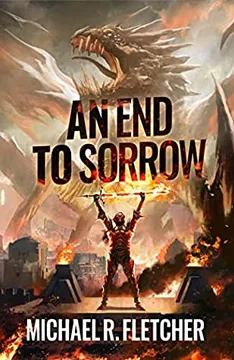


Plot Summary
Prologue
The narrator imagines a self shattered and repeatedly rebuilt, each new version recognizable but incomplete. Missing pieces gather memories like echoes, while the person they might restore risks becoming something worse than before.
The warning is bleak: recovering lost power may cost the possibility of change, and sorrow keeps producing new reasons for violence. This fractured voice frames the story as both a search for identity and a test of whether any version of Khraen1 can escape the harm made by the others.
The mirror image makes identity material and unstable: Khraen is not simply remembering a past self but assembling one from pieces that have lived different lives. The prologue also complicates recovery. Wholeness is not presented as health; it may restore the very appetites that made the original self dangerous. Its warning about sorrow anticipates a cycle in which pain becomes both explanation and permission for further harm.
God in the Bilge
Chained in a war galley's bilge after the battle at Abieszan, Khraen1 calls on the god who has shaped his life for millennia. She possesses a wizard's apprentice, and her presence leaves the ship warped with terror and Shalayn,4 the swordswoman who helped him,4 mentally shattered. Khraen1 begs for help finding Henka,2 his wife,2 whose severed head has been thrown into the harbour.
Instead, the god tears open his chest, retrieves the obsidian in his heart, and orders him to destroy the Queen of the Dead2 or watch his world perish. She then restores his ruined body and leaves. Shalayn,4 traumatized and furious, tries to drown him, blaming him for what she witnessed and for the deaths around them.
Khraen's first desperate act of dependence brings no comfort, only a harsher command. His god treats both the wizard's body and Khraen's body as disposable vessels, while Shalayn experiences the encounter as an invasion of her mind. The scene establishes a pattern that will govern the book: Khraen seeks rescue through power, and the rescue deepens the damage done to everyone nearby.
A Mage's Private Prison
Iremaire,5 the Guild battlemage who captured Khraen,1 identifies the obsidian in his chest as a piece of the ancient Demon Emperor.1 She says she needs him to interpret the empire's demon-bound artifacts, though her questions suggest a more personal objective. She has already destroyed the Soul Stone he carried and now moves him into a featureless underground sphere, where apprentices keep him fed, clean, and unable to measure time.
Khraen1 searches for a way out, but his attempt to use a mysterious ring fails. Iremaire5 cuts the light and air, leaving him close to death. The confinement ends only when Brenwick,3 his scarred old friend,3 infiltrates the keep, takes an apprentice hostage, and teleports Khraen1 to the surface.
Iremaire's prison is designed to make dependence feel like a privilege: food, air, and cleanliness arrive only through her staff. Khraen recognizes the arrangement as coercion, yet still longs to be useful because usefulness might buy freedom. Bren's rescue breaks that logic through action rather than persuasion, but Khraen's readiness to kill the apprentice shows how little confinement has softened his instinct to eliminate threats.
Bren Breaks the Silence
Bren3 explains how he survived Abieszan: fire badly scarred him, and he spent weeks searching the southern islands for the ship carrying Khraen.1 In the ruined city, he also lost Tien,9 Shalayn's sister,9 after ordering her to fight the mages who had captured Khraen.1 He has since worked as a labourer in Khaal, a strange city of raw stone, while secretly tracking Iremaire's5 apprentices.
Once free, Khraen1 and Bren3 evade pursuit, recover Bren's3 demon sword, and take work aboard Captain Rofalle's12 vessel. Khraen1 learns that other pieces of his heart are moving, and one has already begun destroying another. He still intends to return to Abieszan for Henka,2 though every new pursuit risks bringing the Guild after them.
Bren's account gives Khraen a human measure of the destruction he has treated as collateral. Bren's guilt over Tien mirrors Khraen's guilt over Henka, but the two men respond differently: Khraen reaches for another task, while Bren keeps trying to make amends through loyalty. Their friendship is moving, yet its imbalance is visible. Bren keeps risking his life for a man who has not yet learned how to protect him.
The Road Back to Ashes
Captain Rofalle12 sails toward Abieszan with food to sell, but finds its docks wrecked and two Guild galleys watching the harbour. Khraen1 admits that his wife2 is there, and Bren3 backs him when the captain doubts his story. Rofalle12 refuses to risk her ship, so she gives them a decaying rowboat in exchange for Bren's3 demon sword.
The boat sinks before they reach shore, and the friends wade the last stretch through the shallows. They enter a city full of burned buildings, bloated bodies, polluted wells, and survivors hunting one another. Khraen1 accepts that his own decisions helped destroy it. As armed strangers herd them through the streets, a masked giant called Clay announces that Mom,10 leader of Abieszan's Mummers, wants to meet them.
Rofalle's choice is practical rather than cruel: she will not sacrifice her crew to Khraen's private mission. The exchange of Bren's sword for a nearly useless boat makes their arrival costly before they even reach land. Abieszan then forces Khraen to see consequence at city scale. His past explanations may be sincere, but the ruined wells and hunted survivors remain facts no explanation can undo.
Fifty Souls for Passage
Mom10 receives Khraen1 in the Mummers' fortified tavern and offers support in exchange for control of Abieszan's ancient demons. He asks for a many-faceted diamond, blood, a workroom, and fifty human souls so he can summon a portal demon. Mom10 has her people seize the victims from rival noble households, then leaves Khraen1 to do the killing.
He cuts their throats and traps their souls in the diamond, disturbed by how little the crime now affects him. Using the ring Iremaire5 mocked, he opens a path to the Black Citadel, a hidden stronghold in another reality where the demon Nhil6 waits. Khraen1 arrives with the supplies he needs, but Nhil6 warns that another shard of his heart is already there.
The fifty victims mark a change in Khraen's relationship to violence. He once felt shame after similar killings; now he registers his numbness as the disturbing consequence. Mom's bargain also mirrors the power politics Khraen condemns: she sacrifices people outside her circle to secure rule. His portal escape is therefore not a clean break from captivity, but another form of freedom purchased with other lives.
The Heart That Hunts
In the Citadel's library, Khraen1 finds a starved teenage version of himself, another shard of the Demon Emperor's heart who has survived in isolation. The youth attacks with a bone knife, and Khraen1 kills him in a brutal struggle before cutting the obsidian from his chest and absorbing it. Memories flood back: Khraen's1 old campaigns, his weapons, and his former bond with Henka.2
They also show him making Kantlament, a sword intended to end sorrow through destruction. Nhil6 refuses to decide what Khraen1 should do with the new knowledge, insisting that the choice belongs to him. Khraen1 binds demon swords and armor for himself and Bren,3 then puts on a living crimson suit that grants immense strength and perception while feeding on its wearer.
The younger shard is not merely an opponent; he is a possible life Khraen destroys to become more complete. His victory strengthens him, but the cost is a narrowing of empathy. The armor makes that trade tangible: it protects Khraen by inhabiting him, turning vulnerability into a sensation he can temporarily shut out. Nhil's refusal to choose for him preserves Khraen's agency while exposing how readily he mistakes power for safety.
A Dragon Brings Henka
Back in Abieszan, the armored Khraen1 faces another shard arriving on a dragon.15 The rival intends to take his heart, but Henka,2 the wife2 Khraen1 thought lost beneath the harbour, rides behind him and kills him before he can finish the attack. She admits she sought another Khraen because Iremaire's5 ship had taken Khraen1 beyond her reach.
Khraen1 promises to remove the parasitic armor, then puts it back on when Guild mages attack. While Henka's2 undead sea creatures distract the mages, Khraen1 searches for Bren3 and finds the sorcerer Nokutenda7 in danger. He helps her escape, then awakens Abieszan's buried demonic guardian and orders it against the Guild ships. The battle devastates the city, but Khraen1 leaves with Henka,2 Bren,3 and Nokutenda.7
Henka's return gives Khraen relief without resolving the central harm between them. He wants her close, yet he is still wearing a device that can change him into someone she fears. His decision to unleash the city's guardian defeats an immediate enemy at terrible cost to the people and place he claims he might one day restore. The scene makes clear that love does not automatically moderate his use of power.
Naghron's Living Empire
A wounded undead dragon15 carries the group to Palaq, where Naghron,8 a powerful shard of Khraen, has built a thriving island empire. His streets are orderly and prosperous, but his priests and citizens worship him as a god. Naghron8 proposes that the scattered Khraens discuss what they know before deciding which one should continue. Khraen1 doubts him, and signals Nokutenda7 to act.
She stabs Naghron8 in the neck, choosing Khraen's1 claim over the emperor's plan. The priests prepare a public ceremony, and Khraen1 takes Naghron's heart before the gathered city, gaining memories, power, and their worship. He inherits Palaq's army and authority, but the ceremony also awakens the appetite to become the ruler his followers expect.
Palaq gives Khraen a living alternative to the squalor governed by the Guild, making the choice to wield authority genuinely tempting. Yet the city has organized its hope around one man's divinity. Nokutenda's decision accelerates Khraen's rise while leaving his own motives unresolved. The ceremony turns private self-reconstruction into public performance: once people worship him, refusing the role may feel like betraying them.
Shalayn Strikes First
While Khraen1 recovers from absorbing Naghron's heart, Shalayn4 reaches him with a stolen magical sword and attacks. He survives by repeatedly using the portal ring to escape to Nhil's6 Citadel, but each jump tears at his body and leaves him exposed when he returns. Nhil6 gives him a ring containing Brisinder,14 a demon of possession.
Khraen1 uses it to take control of Shalayn,4 who came seeking revenge for Tien.9 He learns that she has captured another shard of his heart and hidden two others in a warded box. Bren3 argues that Shalayn4 should not be condemned to helplessness, but Khraen1 keeps the demon in control because he needs her knowledge and cannot trust her to stop trying to kill him.
Shalayn's attack converts Khraen's guilt into an immediate physical threat. He could acknowledge her reasons, but instead solves the danger by taking control of her body, repeating the kind of coercion that defines his marriage to Henka. Bren recognizes the moral cost even while staying loyal. Khraen's promise to revisit Shalayn's freedom lets him postpone accountability without pretending the choice is kind.
The Ship of Fragments
Khraen1 gathers Palaq's forces and follows Shalayn4 to her ship, the Katlipok. Her crew, expecting to become heroes for killing the Demon Emperor,1 resist them. Khraen1 and his companions slaughter the sailors, then find a young shard chained in a filthy locker, where Shalayn4 has kept him barely alive and repeatedly tortured him.
Khraen1 orders Brisinder14 to kill the boy and remove the obsidian from his heart. In Shalayn's4 cabin, he also finds the box containing two other shards she collected. With these pieces secured, he orders the ship south for PalTaq, the capital where Henka's2 heart remains. He intends to retrieve the last great pieces of himself before deciding what to do with his wife2 and his inheritance.
The imprisoned shard reflects Khraen's own helplessness in Iremaire's underground cell, but recognition does not stop him from killing the boy for what he carries. Shalayn's vengeance has become a cycle of harm in which each character treats another person's body as the place to settle an older injury. The stasis box offers a rare counterweight: it lets Khraen hold the fragments without immediately surrendering to their pull.
The Citadel Burns
Before the voyage reaches PalTaq, Khraen1 returns to the Black Citadel with Bren3 and Nokutenda7 to prepare for the dangers ahead. Angry at Iremaire's5 interference, he attempts to summon Karatal, an elemental demon lord, but a flaw in his blood-marked binding lets the demon escape. Karatal devours the imprisoned god that served as the Citadel's sun, and the floating mountains begin to fall.
Khraen's1 portal demon fails to return them to the ship until the vessel is caught in a violent storm. Nhil6 stays behind in the collapsing refuge to buy them time. Khraen1 believes his old friend6 has died, and the storm wrecks their supplies, damages the ship, and leaves him burned and nearly blind.
Khraen's disaster is not a random punishment but the direct result of choosing retaliation over the simpler protection Nhil advised. His confidence in old skill collapses when he rushes a ritual he once would have checked carefully. Nhil's apparent sacrifice deepens the emotional cost, because Khraen has finally begun to trust him. The Citadel's destruction also strips away the refuge on which Khraen relied whenever danger became intolerable.
The Dead Keep Sailing
The storm passes, but the surviving crew face spoiled provisions, little water, and an uncertain route through the islands. As hunger and thirst spread, the sailors mutiny, tying Bren3 up and demanding that the ship turn north. Henka2 has anticipated the revolt: she has arranged for Brisinder14 to control Shalayn4 and stand ready to protect Bren.3
The demon kills the mutineers without killing them outright, leaving Henka2 victims whose blood and bodies can sustain her. She raises them as an undead crew, and later uses another dying sailor to repair her own body. The ship continues south. Khraen1 learns that the Guild has already destroyed the necropolis they hoped to use for supplies, leaving PalTaq as their only destination.
Henka solves a logistical crisis by turning mutiny into a supply of bodies, an act that is efficient and terrifyingly intimate. Her intervention saves Bren, but it also removes the crew's agency and makes their suffering useful to the mission. Khraen accepts the arrangement partly because it works and partly because he is increasingly numb to the costs. The voyage narrows his choices until forward motion seems less like courage than the only remaining option.
PalTaq's Ghosts
At PalTaq, Khraen's1 group finds a silent city preserved by its ancient defenses. The streets hold no living residents, but thousands of contracted ghosts still haunt the buildings, trapped there for three thousand years.
When the spirits recognize Khraen,1 they swarm him and Bren,3 forcing their voices and memories into the two men. Khraen1 calls on the city's guardian demons to stop them. The demons obey, destroying the ghosts along with the last souls bound to PalTaq. The group reaches the palace and descends through its vast lower levels.
Khraen1 finds the enormous shard that draws him, but refuses to absorb it, fearing the memories will derail his decision about Henka.2 Instead, he leads his companions toward the hidden hall where the necromancers' hearts are kept.
The ghosts embody a bargain the old empire made with skilled people: they sold their afterlives to support descendants, then were abandoned when the city fell. Khraen's rescue of himself and Bren destroys them permanently, repeating the empire's habit of treating lives as resources. His refusal to take the great shard is a fragile act of self-restraint, but also leaves him walking into the final chamber without the knowledge that might explain his own choices.
Henka's Hidden War
In the hall of heart-pedestals, Henka2 admits that she has been steering Khraen1 toward her heart and preparing to revive her necromancers for another war. She says she once destroyed worlds and believes the danger of battle is what makes him happiest.
Shalayn4 attacks under Henka's2 command, while Nokutenda7 uses sorcery against Bren.3 Bren3 invokes the jaguar god from the talisman he took in Khaal and kills Nokutenda,7 but Henka2 has already ordered Shalayn4 to kill Khraen.1
Nhil6 appears from hiding and commands Shalayn4 to protect him, interrupting the attack. Iremaire5 arrives moments later, having tracked the group through hidden scrying devices on their possessions. She kills Nhil6 and takes control of the chamber, leaving Khraen1 surrounded by enemies and losses.
Henka's love has become a system of coercion: she tries to manufacture the danger Khraen craves, while denying him the freedom to refuse her plan. Nokutenda's death exposes how quickly political loyalty can turn personal intimacy into a battlefield. Nhil's return confirms that his silences concealed a long effort to protect Khraen, but his death leaves the protagonist without the advisor who could name the trap.
The Eye of Gods
As Iremaire5 crushes Bren3 with magic, Khraen1 tears out his remaining eye and forces the Eye of Gods into the empty socket. The stone reveals the deities and demons imprisoned within it. He calls Azagothoth, a god of a greater hell, which overwhelms Iremaire5 and kills her. Khraen1 then confronts Henka,2 whose heart he can reach but whose love keeps her determined to shape him.
She reveals that she and Nhil6 helped fracture his heart, and that the world he thought he must save is already dead. Khraen1 cannot destroy Henka2 or release her without risking another catastrophe. He chooses to keep her close and turn his power toward protecting Palaq and the world, embracing the burden of rule rather than the freedom he had sought.
Khraen's victory depends on an act of self-mutilation, making knowledge and power inseparable from bodily cost. But defeating Iremaire does not resolve the deeper conflict: Henka's love remains a form of ownership, while Khraen's refusal to free her preserves the bond that has shaped him. His choice to protect the world is morally compromised and emotionally understandable. He accepts responsibility, but not the clean absolution he once hoped punishment might provide.
The Next Shard Wakes
After the final confrontation, the narrative returns to a newly awakened Khraen1 buried beneath the desert. He claws out of the earth, sustained by the lives of insects and small animals he has drained while buried. A yellow-haired mage finds him beside an ancient corpse and gives him clothes.
She tells him that the Demon Emperor1 has risen and that Khraen1 is the only one who can stop him. The newly awakened man senses a pull from the west and turns toward it. Rather than closing the story with a secure victory, this return to an earlier beginning shows that Khraen's1 identity and conflict remain caught in a cycle of death, recovery, and renewed pursuit.
The return to a newly awakened Khraen turns apparent resolution into recurrence. The man who chose to protect the world may have been only one fragment in a process that continues beyond his decision. Rebirth does not erase responsibility; it resets the conditions under which the same hunger can take shape again. The ending therefore makes hope uneasy: a new self may differ from the old, but the world still asks him to fight it.
Epilogue
The epilogue speaks from the perspective of a self that regards itself as the whole mirror rather than one fragment. It rejects the idea that repeated death can finally prevent its return, and promises another dawn after the cycle of breaking and rebuilding.
Its voice suggests that what survives the story is not a stable person but a force that can keep finding new bodies, new justifications, and new beginnings.
The epilogue refuses to let Khraen's decision stand as a final cure. The identity that calls itself complete may be the very force his fragments fear becoming, and its persistence makes moral progress provisional. The new dawn is neither simple hope nor simple doom: it means another chance to choose differently, but also another opportunity for the same appetite to disguise itself as purpose.
Analysis
The novel treats identity not as a hidden essence waiting to be uncovered, but as a contested construction. Khraen's1 memories are stored in obsidian, yet each shard has been changed by a life the original emperor1 never lived. Recovering the past therefore gives him power without guaranteeing wisdom. The people around him become tests of whether he can recognize that distinction: Bren's3 loyalty invites reciprocal care, Shalayn's4 revenge exposes the human cost of Khraen's1 choices, and Henka's2 devotion reveals how love can become coercive when one person controls the other's freedom.
The book also refuses to make moral judgment easy. Khraen's1 actions often begin with recognizable motives, such as rescuing his wife2 or protecting a friend,3 but he repeatedly turns those motives into permission to sacrifice strangers. The victims do not become less real because the goal is urgent. His growing numbness is presented as a consequence of repeated choices, not as a supernatural excuse that absolves him. Even his wish to die as punishment risks centering his own need for relief over the people he has harmed.
Power is always embodied and paid for: in souls trapped in diamonds, blood spilled for rituals, Henka's2 stolen freedom, or the armor that consumes its wearer. By contrast, the modest future Bren3 imagines offers an alternative measure of significance, one based on sustaining relationships rather than ruling histories. Yet Khraen1 cannot simply choose love and be absolved. His ending remains compromised: he chooses to protect a world while keeping the bond that makes Henka2 his, and the rebirth that follows warns that good intentions alone cannot break a cycle built from appetite, fear, and control.
Review Summary
An End to Sorrow receives mostly positive reviews, with readers praising Fletcher's imaginative worldbuilding, morally complex protagonist Khraen, and visceral dark fantasy elements. Many consider it a satisfying, explosive trilogy conclusion, highlighting its emotional depth, creative monsters, and thought-provoking themes of identity and morality. Critics, however, note repetition in the narrative, underdeveloped stakes, and an anticlimactic ending. Several readers felt the pacing dragged and character development was inconsistent. Overall, fans of grimdark fantasy largely embraced it enthusiastically, while others found it disappointing compared to earlier installments.
Characters
Khraen
The fractured emperorKhraen is one living fragment of the Demon Emperor, a man with an obsidian heart whose lost memories are scattered among other versions of himself. He is driven by his need to find Henka2, by shame over what he has done to her, and by a persistent wish to become more than the monster his past suggests. His self-questioning gives him moral awareness, but not reliable restraint: he often recognizes the cost of an action only after taking it. Friendship with Bren3 offers him a model of loyalty he never had as emperor, while every recovered memory tempts him toward the authority and power he both fears and desires.
Henka
The Queen of the DeadHenka is Khraen's1 wife and an ancient necromancer whose command over the dead makes her difficult to defeat or escape. Her love for Khraen1 is absolute, but it is entangled with an old magical bond that restricts her choices and turns care into control. She adapts her body to the person she thinks Khraen1 needs, and plans several moves ahead because uncertainty is intolerable to her. Henka's tenderness is genuine, yet her definition of what is best for Khraen1 can encompass enormous suffering for everyone else. She represents devotion without consent, a form of intimacy that can be both deeply sustaining and profoundly dangerous.
Brenwick
Khraen's scarred friendBrenwick, usually called Bren, is a sailor and Khraen's1 most steadfast companion. His burned face and body record the violence he has survived, but they do not harden him into indifference. Bren listens closely, makes room for other people's pain, and keeps believing that a small act of loyalty can matter in a world ruled by larger powers. His guilt about Tien9 makes him vulnerable to self-sacrifice, and his loyalty to Khraen1 sometimes carries him beyond good judgment. He wants a modest future built around a pub and friendship, a desire that contrasts with Khraen's1 imperial scale.
Shalayn
The avenging swordswomanShalayn is a skilled swordswoman who once trusted Khraen1 and helped him despite the danger surrounding him. She values directness, competence, and the freedom to act without being treated as fragile. Her connection to her sister Tien9 gives her grief a personal center, while Khraen's1 repeated failures have made trust difficult. She is not simply a weapon or an enemy: her anger grows from specific losses, and her strength is partly a defense against being made helpless by other people's choices.
Iremaire
The calculating battlemageIremaire is an exceptionally old Guild battlemage who combines formidable magic with patience and self-interest. She sees Khraen1 as a source of knowledge and power, not as a person deserving mercy, and she is willing to keep him imprisoned until he becomes useful. Her confidence rests on careful preparation and a belief that she understands other people better than they understand themselves. Iremaire's methods expose the gap between the Guild's claims of public virtue and its appetite for private advantage.
Nhil
The demon advisorNhil is an ancient demon who serves as Khraen's1 advisor in the isolated Black Citadel. He is patient, observant, and irritatingly unwilling to make decisions on Khraen's1 behalf. Their relationship is built on dry humor, guarded trust, and a long history neither can fully explain at first. Nhil understands the cost of power better than Khraen1 does, but he often gives advice in riddles or withholds information. His loyalty is difficult for Khraen1 to interpret, which makes their friendship an unusual lesson in accepting help without complete certainty.
Nokutenda
The island sorcererNokutenda is a southern-island sorcerer who seeks power and revenge against the Guild after it destroyed her childhood community. Sorcery costs her life force, so every use requires a personal calculation about what she is willing to spend. She is sharp, skeptical, and quick to puncture other people's grand self-images. Her political hopes make Khraen's1 return attractive, but her independence keeps her from becoming a mere follower.
Naghron
The god of PalaqNaghron is a powerful shard of Khraen who has spent centuries building Palaq into a prosperous island civilization. He is confident, physically imposing, and more patient than the Khraen1 who narrates the story. His city reflects an ambition to make something lasting from the same fractured past, while his public worship raises questions about whether a just society can safely center itself on one ruler.
Tien
Shalayn's gifted sisterTien is a young wizard and Shalayn's sister4, known for wit and an irreverent view of her own limited magical ability. Her complicated connection to Bren3 draws out his tenderness and his fear of failing people he loves. Tien's presence in his memories gives his guilt a particular shape, distinct from Khraen's1 older crimes and ambitions.
Mom
Abieszan's underworld rulerMom leads the Mummers, a criminal organization that maintains its own laws and protects a pocket of order inside ruined Abieszan. She combines a tavern keeper's hospitality with a ruler's instinct for leverage. Her interest in Khraen1 is practical: she sees the city's old demonic defenses as a path to political power. The contrast between her warm public manner and hard bargains makes her an effective local power.
Phaoro
Palaq's high priestPhaoro is Naghron's8 experienced high priest, a demonologist who has spent centuries helping maintain Palaq. She is efficient, blunt, and comfortable speaking to rulers without pretending they are infallible. Her authority gives Khraen1 access to the city's people and resources, while her practical competence makes her a possible steward of the political world he inherits.
Captain Rofalle
The wary ship captainRofalle commands the Karlotta Emelia, a well-kept trading vessel headed for disaster-struck Abieszan. She is pragmatic about risk, protective of her crew, and willing to offer Bren3 a place aboard because she recognizes his talent. Her refusal to let Khraen's1 mission endanger her ship establishes the cost of his urgency.
King Grone
The elemental city-builderKing Grone is an ancient elemental demon lord associated with Khaal, a city that seems to erupt from the mountain rather than obey human design. Khraen1 remembers conquering Grone's world and binding him, so even the city's strange beauty carries a history of domination.
Brisinder
The possessing demonBrisinder is a demon of possession bound to a ring. It can use a host's memories, skills, and mannerisms, making its presence difficult to distinguish from the person it inhabits. The demon treats human emotion as something to imitate rather than share, exposing how easily control can masquerade as familiarity.
Kaszius
Henka's undead dragonKaszius is a huge dragon brought back through Henka's2 necromancy. He serves as transport and protection, but his damaged, decaying body makes every journey uncertain. Henka's2 care for him reveals a tenderness she rarely extends to the living.
Plot Devices
The Obsidian Heart
Memory split into shardsKhraen's1 heart contains the Demon Emperor's1 soul and memories, divided among separate versions of him scattered across the world. Each shard has lived a different life, so recovering one restores knowledge and power without simply restoring the original person. The pull between pieces drives Khraen1 toward other selves, while the accumulating memories threaten to revive the emperor's appetite for domination. The fragments make identity a physical prize, but they also make every act of recovery an act of violence against another living version of Khraen1.
Soul Stones
Souls become magical fuelFaceted diamonds can hold human souls and supply the cost of demonology. Khraen1 uses a Soul Stone to summon and bind demons, including a portal demon that opens a route between worlds. Because magic consumes souls rather than abstract energy, every ritual makes the ethical cost of power concrete. The stones also let the story contrast Khraen's1 earlier discomfort at killing with his later willingness to spend captured souls as readily as money.
Iremaire's Ring
Escape doubles as surveillanceThe ring Khraen1 uses to summon a portal demon becomes his route to the Black Citadel and back. Iremaire5 originally gives it to him as a taunt, but its true importance is that it can also function as a scrying focus. Khraen's1 repeated use allows the battlemage to follow him across distances and even into another reality. Its apparent promise of escape therefore conceals the danger of being watched.
Crimson Living Armor
Protection feeds on its wearerThe crimson suit is a living demon rather than ordinary plate. It grants Khraen1 extraordinary strength, awareness, and protection, helping him survive battles against mages and dragons. It also feeds on him and urges him to feed it with other lives. The armor externalizes Khraen's1 attraction to power: it feels like safety precisely because it suppresses fear, while making it harder for him to distinguish his own will from the demon's appetite.
The Stasis Box
Fragments held without surrenderShalayn's4 polished wooden box protects the obsidian shards from scrying and holds them in stasis. When Khraen1 closes it, the fragments' overwhelming pull recedes, giving him a rare chance to decide when to absorb them. The box becomes a practical defense against both magical surveillance and his own compulsion to become whole. Its protection is limited, however, because it cannot resolve what Khraen1 will do with the memories once he takes them.
Download PDF
Download EPUB
.epub digital book format is ideal for reading ebooks on phones, tablets, and e-readers.








