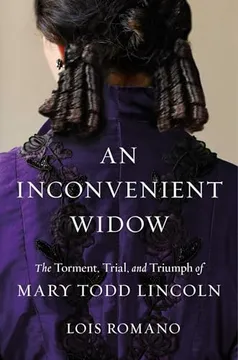


Key Takeaways
See Mary as the political partner who helped make Lincoln imaginable
A political apprenticeship. Mary grew up in a Kentucky household where influential politicians debated public affairs, and she received an unusually strong education for a woman of her era. In Springfield, she recognized Abraham Lincoln’s potential before many better-connected men did. She encouraged his ambitions, helped him move among influential people, and backed his political rise when he doubted himself.
A shared project. Lincoln valued her judgment and told others she believed he could become president. In 1860, she also rejected the idea that he should settle for the vice presidency. Her political influence was informal, but it was real: she helped sustain the ambition and public identity that carried him from a prairie law practice to the White House.
What's striking is how political influence can disappear when it is exercised through a spouse rather than an office. Mary’s contribution was not equivalent to Lincoln’s public work, but treating her as merely a domestic bystander distorts the partnership the book documents. The distinction matters: recognizing influence does not require claiming she controlled his decisions. Her story invites a broader historical question about whose labor counts as political labor, especially when it takes the form of confidence, social access, and strategic counsel rather than speeches or votes.
Read her ambition against a culture that expected wives to disappear
A narrow script. In the nineteenth century, women were expected to remain within the domestic sphere and leave public politics to men. Mary was educated in French and literature, followed political news, and spoke openly about public affairs. She was not a public campaigner for women’s rights, but she refused the role of a silent political wife. Her family and her husband’s allies sometimes treated that independence as improper meddling.
A difficult personality. Mary could also be volatile, proud, and quick to interpret a political loss as personal betrayal. After Lincoln lost a Senate contest in 1855, she cut off the friendship of Julia Jayne Trumbull, whose husband had won the seat. Context helps explain why Mary’s assertiveness provoked hostility; it does not make every response wise or fair.
The book’s strongest balance is its refusal to make social constraint an all-purpose excuse. Gender norms shaped which behaviors were tolerated, but Mary’s own sharpness and loyalty tests damaged relationships too. That tension resembles a problem in leadership studies: the same assertiveness can be read as competence in one person and arrogance in another, depending on status and expectations. Historical judgment improves when it separates the act, its consequences, and the standards used to condemn it. Mary challenged an unfair script while sometimes making the conflict harder to resolve.
Count her public service alongside the gowns and expensive bills
More than appearances. As first lady, Mary helped turn the White House into a center of public life and supported the Union cause. She visited military camps and hospitals, sat with wounded soldiers, brought food and books, and wrote to soldiers’ families. She also supported Elizabeth Keckly’s Contraband Relief Association, which aided formerly enslaved people and people escaping slavery. These acts were largely eclipsed by coverage of her clothes and spending.
Real mistakes, harsh optics. Mary overspent the $20,000 congressional allowance for White House renovations and relied on credit for her own purchases. Her 1862 ball drew particular anger while the war continued and her sons were sick upstairs. The criticism had a clear target, but it also flattened a complicated record into a story of frivolity.
Public reputation often rewards what can be photographed and punishes what is difficult to see. A lavish room or conspicuous dress makes an easy headline; hours beside a wounded stranger do not travel as neatly through the press. That imbalance does not erase the financial misjudgment or the poor timing of the ball. It does show how visibility can distort assessments of service. The book’s account also suggests that humanitarian work and political symbolism can coexist: Mary’s visits mattered to soldiers, while her visibility helped make the first lady’s role more public.
Treat grief and illness as context, not a verdict on character
Loss accumulated. Mary lost her mother at six, her father in 1849, and three of her four sons. Willie’s death in the White House in 1862 devastated her; Lincoln was then assassinated beside her in 1865. After Tad died in 1871, she described life as empty and spent years moving between hotels, health resorts, and spiritualists in search of comfort.
Diagnosis remains uncertain. The book weighs possible inherited mental illness, anxiety, trauma, physical disease, and the effects of medicines such as laudanum and chloral hydrate. None can be established as a definitive diagnosis from the historical record. Doctors of her day had little understanding of mental illness, and some treatments could worsen confusion. Her distress helps explain behavior that contemporaries called eccentric or insane, without proving every action was beyond her control.
A biographical diagnosis can restore context, but it can also create false certainty. The available record is uneven, and modern labels cannot be applied to a person who was never assessed with modern tools. The useful move is to distinguish evidence of suffering from confidence about its cause. Grief also changes what ordinary conduct looks like: isolation may be self-protection, while frantic searching for connection may look irrational to observers. Mary’s case makes clear that compassion and diagnostic caution belong together, rather than competing.
Interrogate the sources that turned a difficult widow into a villain
A story with an author. After Lincoln’s death, his former law partner William Herndon presented himself as the authority on Lincoln’s private life. He portrayed the marriage as miserable and promoted a romance with Ann Rutledge, although the evidence was largely secondhand and disputed. Herndon’s claims helped establish a durable image of Mary as a shrew who made Lincoln unhappy.
Repetition is not proof. Later writers repeated damaging anecdotes, sometimes without checking who had witnessed them or when they were recorded. The book does not ask readers to ignore Mary’s temper, spending, or outbursts. It asks them to compare hostile recollections with letters, contemporaneous accounts, and evidence of affection and partnership. The result is not a spotless portrait, but a more credible one.
This is a lesson in historical method as much as biography. A source’s access to a famous person does not guarantee neutrality, and a vivid anecdote can outlive the evidence that should qualify it. The same problem appears in modern media, where repetition can create the impression of corroboration even when many accounts trace back to one claim. A stronger reading asks who benefits from a story, what the witness could actually know, and what evidence complicates the account. That discipline protects both historical subjects and present-day reputations.
A widow can be legally entitled and still be made destitute
Money existed; access did not. Lincoln left an estate, but no will, and Mary initially depended on an allowance of roughly $1,500 to $1,700 a year while executor David Davis controlled the funds. The estate took more than two and a half years to settle. Her debts from years of shopping were real, yet the public often assumed that the reported value of the estate meant she could readily pay them.
Support came grudgingly. Congress awarded her $22,500, the remainder of Lincoln’s salary for 1865, then debated her pension for years. In 1870 she secured $3,000 annually. Her financial story was not simply poverty or extravagance: she had resources, obligations, and restricted access, while public scrutiny made asking for help humiliating. The book shows how control of money can matter as much as its nominal amount.
The distinction between wealth and liquidity is familiar in economics, but Mary’s case adds a question of authority: who gets to decide when someone may use their own resources? Her reported assets made her need seem illegitimate, while her actual dependence on executors and political decisions made independence difficult. At the same time, her spending and secrecy gave skeptics reasons to distrust her appeals. A fair account has to hold both facts together. Financial vulnerability can be real even when a person owns property, and poor choices can coexist with unjust restrictions.
Mental-health protection requires both care and due process
A rushed judgment. In 1875, Mary’s son Robert arranged a hearing to have her declared insane and placed under his financial control. She learned of the case only shortly before it began. Seven doctors testified, though only one had treated her over time, and her defense lawyer called no witnesses. The jury reached its verdict in about ten minutes. The proceeding focused heavily on her purchases and unusual behavior, not on what care she needed.
Rights opened an exit. Illinois law, known as Packard’s Law, required a jury hearing before someone could be confined. But formal protection did not guarantee a fair process. Myra and James Bradwell challenged Mary’s confinement, secured her release to her sister’s home, and helped her regain control of her estate. In 1876, a court declared her capable of managing her affairs.
The episode exposes a lasting tension in mental-health care: genuine concern can become coercion when the person at risk is excluded from decisions. Robert may have feared for his mother, but his case rested on thin medical assessment and a process that denied her meaningful preparation. Due process is not a substitute for treatment, and liberty alone cannot address severe illness. It is a safeguard against treating family embarrassment, unconventional behavior, or financial disagreement as medical evidence. The Bradwells’ intervention shows how legal advocacy can restore a patient’s voice.
Track her fight for control through graves, money, and freedom
Agency in the aftermath. Mary resisted Springfield leaders who tried to choose Lincoln’s burial place without her. She insisted that he be laid at Oak Ridge Cemetery with their children, and threatened to move his remains if her wishes were ignored. She later fought to leave Bellevue Place and regain control of her money, then chose Europe over a return to a city where she feared renewed humiliation and commitment.
No simple recovery. Abroad, Mary managed her bonds and payments closely, returned to the United States in 1880, and reconciled with Robert in 1881. She remained ill and often isolated. In 1882 Congress raised her annual pension to $5,000 and granted a $15,000 payment, but she died that July before receiving the increased annual benefit. Her persistence was real, even when it could not undo her losses.
Mary’s resilience is most legible in decisions, not in a tidy recovery arc. She made demands about burial, privacy, money, and where to live, even when the people around her described her as incapable. Those choices were sometimes stubborn and costly, but they also asserted personhood in settings where men presumed to speak for her. This is not a claim that independence solved her suffering. It is a reminder that vulnerability does not cancel agency, and that a person may need both support and the right to refuse others’ preferred version of help.
Analysis
This biography is built around a contradiction: Mary Lincoln was influential enough to help shape a presidency, yet vulnerable enough to be defined by people who controlled access to money, medicine, and public memory. The narrative follows her from an educated, ambitious young woman in Lexington to a first lady working under wartime scrutiny, then to a widow negotiating grief, debt, and confinement. Its central correction is not that Mary was secretly easy to live with. It is that the familiar caricature mistakes selected behavior for a complete life.
The most persuasive evidence comes from juxtaposition. Her White House overspending was consequential, but it sits beside hospital visits and aid to formerly enslaved people. Her volatility damaged relationships, but contemporaneous accounts also describe affection and generosity. Her grief sometimes took forms that frightened others, yet the period’s medicine offered crude diagnoses and potentially harmful sedatives. No single strand cancels another. The biography is strongest when it resists both the old prosecution and a modern acquittal.
The book also makes historical method part of the plot. Herndon’s hostility, the press’s appetite for scandal, and Robert’s secrecy shaped what later generations believed. Mary’s own letters can be impulsive, self-pitying, or strategically manipulative, but they also preserve a voice that other people tried to manage. Reading them alongside public records reveals not only what happened, but who had the authority to name it.
The most troubling episode is the 1875 hearing. Mary may have been seriously unwell, but the process treated unusual spending and resistance to a son’s advice as evidence while giving her little chance to answer. The book asks readers to distinguish protection from control. Its portrait ultimately earns sympathy without demanding agreement: Mary could be difficult, and still be treated unjustly; she could make bad decisions, and still deserve autonomy; she could be mentally ill, and still remain a person whose account mattered.
Glossary
Packard’s Law
Jury safeguard against confinementAn Illinois law requiring a jury hearing before a person could be committed to an institution for insanity. It followed Elizabeth Packard’s campaign after her husband had her confined for opposing his religious views. Mary’s 1875 proceeding nominally used this safeguard, but she received little notice and almost no meaningful defense.
Contraband Relief Association
Aid for people escaping slaveryA relief organization founded by Elizabeth Keckly through her church in 1862 to assist formerly enslaved people and people escaping to Union-held Washington. Mary supported its work with money, food, and other contributions. The association connects Mary’s private friendship with Keckly to the practical aid being organized for people displaced by slavery and war.
Insanity File
Documents on Mary’s commitmentThe name used for a collection of letters and records concerning Robert Lincoln’s effort to have his mother declared insane, her confinement at Bellevue Place, and her fight to regain her rights. Robert kept some related papers hidden, and the file was discovered decades after his death. Its documents complicate the public account of the trial.
spiritualism
Communication with the deadA nineteenth-century movement centered on the belief that the living could communicate with deceased people through mediums, séances, and related practices. Mary turned to spiritualists after losing her husband and sons, seeking contact and comfort. Some practitioners exploited mourners, and Mary’s involvement became a source of conflict with her son Robert.
laudanum
Opium-based pain and sleep medicineAn alcohol-based preparation containing opium, widely used in the nineteenth century for pain, insomnia, and other complaints. Mary used it among the medicines prescribed for her headaches and distress. The book notes that contemporary doctors rarely considered how such medicines, particularly when combined with other sedatives, might affect a patient’s judgment or perceptions.
chloral hydrate
Sedative used for sleepA widely used nineteenth-century sedative prescribed for sleep and anxiety. Mary’s doctors gave her powders that may have included chloral hydrate. The book notes that it could produce serious side effects, including hallucinations and dependence, making it relevant to cautious interpretations of her reported symptoms without establishing it as their sole cause.
Download PDF
Download EPUB
.epub digital book format is ideal for reading ebooks on phones, tablets, and e-readers.








