

Plot Summary
A Crash Opens the Cave
Grieving the death of her brother, Wild Will, detective Molly Masters is hauling his motorcycles toward a shop where she plans to sell them and begin again. On a rain-slick mountain road, she watches a reckless rider crash, then stops to help him. The biker, Lincoln Wade, jokes at her, wrestles her for control, and persuades her to drive him home with his damaged bike in her trailer.
When Molly gets stuck on his muddy road, she follows him into a tunnel and discovers a hidden cavern filled with computers, weapons, robots, and a holographic assistant named Sheila. Lincoln catches her trying to leave, kisses her, then injects her with a drug that will erase her memory of the encounter.
The meeting is built from two kinds of damage: Molly's grief makes her vulnerable to memories of her brother's fatal crash, while Lincoln treats danger as a familiar environment he can master. Their physical contest quickly establishes mutual competence, but the imbalance of information is decisive. Molly stops to help; Lincoln uses that help to bring her into a concealed world and then chemically controls what she can remember. The cavern turns a chance roadside encounter into an ethical breach, while the motorcycle trailer links Molly's attempt to discard the past with the secret history she is about to recover.
The Weekend Goes Missing
Molly wakes after losing two days to a haze of alcohol, surrounded by party debris and wearing lingerie she does not remember buying. Her police chief reprimands her for arriving late, then assigns her to investigate an employee's apparent suicide at Blue Corp, the powerful corporation that dominates Cathedral City.
Molly wants to help the parents whose children have disappeared, but the chief gives the politically sensitive case priority instead. At Blue Corp, she finds a guarded campus, meets executive Atticus Montgomery and his assistant Val Veti, and learns that another employee died after working on a classified project. The victim's wife describes his depression, but also says he had been planning to leave the company and start a new life with his family.
Molly's missing weekend is more than a mystery about intoxication. It interrupts the orderly identity she is trying to rebuild after leaving military service and losing her family. The unexplained lingerie makes her question her own agency, while the chief's assignment exposes how public duty is entangled with corporate influence. Her attention to the employee's plans to escape the job is important because it resists the easy suicide explanation. Molly recognizes depression without assuming it explains everything, showing how personal experience can sharpen investigation while also making her vulnerable to institutional pressure.
Three Bodies, One Company
Molly discovers that the first two dead employees joined Blue Corp fifteen years earlier and worked on the same secret project. The company releases few details, and the second victim's wife offers little beyond signs of depression.
When a third employee is found with a red anarchy symbol cut into his forehead, Molly realizes the deaths are unlikely to be ordinary suicides. Atticus shows her the mark before the scene is opened to others, and she briefly collapses at the sight.
Her chief orders officers to guard the campus, while Blue Corp reports interference with its security cameras. Meanwhile, Thomas Brooks, a returning technology entrepreneur, hires the department to secure his renovated cathedral for a SkyEye launch party, putting Molly among the city's corporate elite.
The investigation develops through withheld information rather than a clean trail of evidence. Blue Corp's secrecy, the repeated employment history, and the camera interference make institutional concealment part of the crime scene. The anarchy mark is both a signature and a challenge to the police, but its meaning remains unclear. Molly's fainting suggests that the symbol touches something buried in her own history, even as her conscious mind cannot explain the reaction. Assigning her to Thomas Brooks's party further complicates her position: she is meant to protect the powerful people whose rivalries may be connected to the deaths.
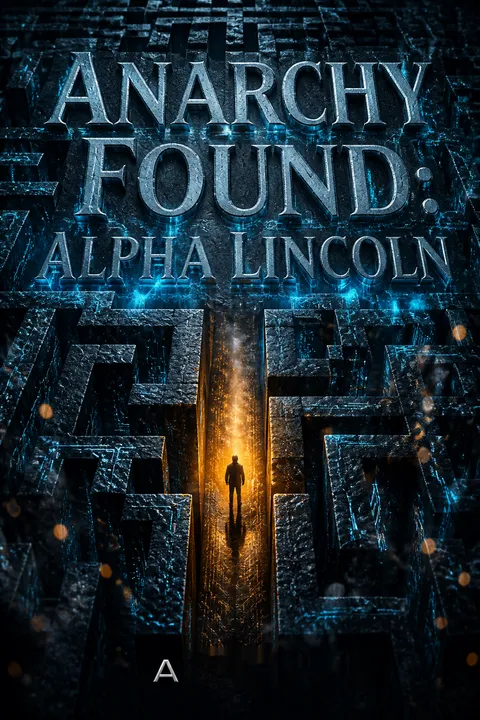
The Maze Remembers
At Thomas Brooks's party, Molly meets Case Reider, a polished technology executive who leads her into a waltz and describes a lost love. Across the room, she spots Lincoln and recognizes fragments of the rainy mountain road, the cavern, and a kiss. Lincoln slips away into the hedge maze, where Molly follows him.
Their exchange restores more memories: she recalls the truck, the drug, and an older encounter in snow, while Lincoln insists that he once saved her. They meet in the maze's center, where their attraction overwhelms Molly's anger, and they have sex before she leaves. Atticus then gives her a red letter A found at an earlier death scene, a clue that deepens the connection between the killings and the anarchy symbol.
The maze makes recognition physical: Molly must choose whether to pursue the man who violated her trust before she can recover the history he shares with her. Her memories return unevenly, so desire and suspicion coexist rather than cancel each other out. Lincoln's claim that he saved her is not yet enough to restore trust, and their sexual encounter complicates rather than resolves the imbalance between them. Case's story of a vanished girl quietly echoes the larger theme of engineered separation. Atticus's red A gives Molly a concrete investigative clue just as her private past begins to surface.
The Omega in Snow
Molly rides one of Will's motorcycles back to Lincoln's mountain property, determined to confront him. As their argument triggers memories, she recalls being eight years old at Prodigy School, where fifteen-year-old Lincoln was called Alpha and she was his Omega.
When the children escaped after a violent night, Lincoln pushed her through a window into the snow and ordered her to run, believing separation was the only way to keep her alive. Molly found shelter with the traveling Masters family and used a drug Lincoln had left behind to erase her identity.
They raised her as Molly, and Wild Will became the brother she mourned. Remembering this history brings the pair together again, but Molly also tells Lincoln that he abandoned her and cannot decide what their bond means for her.
The recovered memory reframes both abandonment and rescue without making either painless. Lincoln's choice to send Molly away may have preserved her life, but he made that choice for her, repeating the school's habit of treating children as instruments in a plan. Molly's use of the drug is equally significant: she takes the only available means of survival and turns it into a new identity. The Masters family gives that identity genuine love, so her past is not simply a false life to discard. Her grief for Will and her attachment to Lincoln can coexist, resisting the idea that one bond must replace another.
The Wall of Victims
After spending the night with Lincoln, Molly wanders through his cavern looking for a bathroom and finds a laboratory of jellyfish tanks, mice, surgical equipment, and robotic tools. In Lincoln's bedroom, she sees walls covered with records of his killings and discovers metal plates built into his legs.
Sheila explains that Lincoln's unusual gift lets him rewrite computer code, while his research adapts regenerative jellyfish cells and behavioral triggers. Lincoln confirms that he has killed Blue Corp scientists connected to Prodigy and helped make their deaths appear self-inflicted.
Molly leaves, sickened that the man she loves is also a vigilante murderer. She returns to police work, where a new victim and a package containing Lincoln's anarchy-marked gloves force her to face the case again.
The discovery breaks the romance's protective fantasy. Molly has wanted to believe that the boy who saved her remains intact beneath Lincoln's adult anger, but the laboratory shows that he has built an identity around the very violence that once controlled them. His science is not neutral in practice: he uses research to manipulate bodies and minds, then claims moral authority over its targets. The wall of victims turns memory into a private courtroom where Lincoln is both investigator and executioner. Molly's departure is therefore not a rejection of their childhood bond, but a necessary refusal to let that bond excuse present harm.
Gloves on the Table
Lincoln waits at Molly's home with his bare hands glowing from the electromagnetic devices embedded in his palms. He explains that Prodigy altered their bodies and memories: he can use biological and digital systems to influence people, while Molly was designed as a counterforce capable of stopping him.
The drug that erased her childhood also rewrote her biology, and the Blue Corp deaths were triggered through altered brain responses to flickering light. Molly refuses to treat their conditioning as destiny. She argues that Lincoln could use his abilities to heal rather than kill, and he admits he is not interested in becoming a conventional hero. Even so, she stays, choosing to hear the truth and press him toward a future beyond revenge.
The revelation converts the Alpha and Omega labels from private mythology into a system of coercive design. Their intimacy was shaped by genetic intervention, punishment, and behavioral conditioning, but Molly's insistence on choice contests the program's claim to define them permanently. Lincoln can describe his capacities in technical detail, yet his central difficulty is moral rather than scientific: he understands how to change a person but has not accepted responsibility for what he changes. Molly's hope is not simple absolution. She asks him to imagine a different use for power while recognizing that he has not yet chosen it.
A Brother in the Asylum
The conflict at Blue Corp escalates when Atticus Montgomery attempts to shoot his father, Alastair, but misses and is placed in the Cathedral City Asylum under a judge's order.
The police chief tells Molly to defer to the company, then admits Blue Corp helped secure her job; after he insults her family, Molly knocks him down, and Lincoln later threatens him for his harassment. Molly visits Blue Corp and discovers the newest death scene has already been cleaned.
At the asylum, she finds her mother, Martha, and learns that Atticus has been visiting her. Atticus tells Molly that Alastair is their father and Martha is their mother. The revelation makes Molly's police assignment, the family's history, and the Blue Corp deaths part of one concealed story.
The family revelation destabilizes the boundaries Molly has used to organize her life. Her adopted family remains emotionally real, but the people who controlled Prodigy are also tied to her biological origins. The asylum makes this knowledge arrive through confinement: Atticus and Martha are both physically restricted, while Alastair controls access to them through wealth and legal influence. Molly's clash with her chief marks a practical break from institutional obedience, yet her new knowledge does not give her a safe alternative. The episode joins private betrayal to civic corruption, showing that the systems meant to protect her have been compromised by the same powerful family.
The Boar's Maze
After Molly leaves the asylum, a false message from Lincoln's phone draws her to the cathedral maze for what she believes is a date. Instead, Alastair waits at its center beside a grotesque boar statue and calls her Omega.
He reveals that he has monitored and manipulated her life, including arranging medical interventions and using Will to keep her connected to Prodigy. When Lincoln arrives, Alastair's inhibitor makes Molly and the men physically ill if they try to attack him.
Alastair shoots Lincoln and takes Molly to the Blue Castle, where he plans to finish altering her into a weapon. Case and Thomas rescue Lincoln from the maze, but he is near death. At his cavern, they use his jellyfish research to transform his body and attach new weapons.
Alastair's control depends on converting care into surveillance. The medical help Molly received as a child becomes, in his account, a way to keep her available for the program, making ordinary memories newly suspect. The inhibitor is the physical form of the hierarchy: affection and loyalty are not enough to overcome the sickness it imposes. Lincoln's near-fatal defeat forces his friends to use the same science that has enabled his revenge, escalating the conflict rather than restoring him to an untouched human state. The maze, once a place of recovered memory and desire, becomes the passage through which Alastair reclaims control.
An Alpha Rebuilt
Alastair subjects Molly to pain and conditioning until she believes he rescued her and orders her to kill the Alphas. Lincoln, newly transformed and armed, crashes through the Blue Castle's glass spire with Case and Thomas.
Molly attacks him with a barbed golden lariat, while Alastair demands that she capture Lincoln alive. Lincoln refuses to kill Molly, even as her weapon tears into him and her conditioning turns her against Case and Thomas. When Molly hesitates at Lincoln's declaration of love, his magnetic hand pulls a gun into his grip.
He shoots Alastair, killing him, and Thomas's team extracts the injured group as their timed sabotage destroys the Blue Corp building. A second explosion at the asylum follows, leaving Molly unsure whether she caused it.
The climax tests whether engineered identity can be interrupted by a relationship without pretending that love alone erases conditioning. Molly's violence is real, but it is imposed through pain and false memory; Lincoln's refusal to treat her as an enemy preserves the possibility of recognition. His new weapons make him more powerful, yet the decisive act is not simply technological superiority. He waits for her hesitation and responds to it rather than destroying her. Alastair's death ends his direct control, while the two explosions leave responsibility unsettled, preventing victory from becoming a clean moral release.
SkyEye Takes the City
The explosions plunge Cathedral City into darkness, destroy Blue Corp's headquarters, and damage the asylum. News outlets also expose the police chief's misconduct, and he is fired. Thomas moves immediately to announce a hostile takeover of Blue Corp, promising that his SkyEye company will assume its subsidiaries and reshape the city's services.
Lincoln suspects Thomas's public speech is also a warning to Atticus, whose fate remains uncertain after the asylum blast. Molly, meanwhile, blames herself for the second explosion, though neither she nor Lincoln knows exactly what happened there. The group survives, but the old corporate order is replaced by another powerful figure whose motives remain difficult to trust.
The resolution answers the opening's civic problem only partially. Cathedral City is no longer under Blue Corp's uncontested control, and the corrupt police chief is removed, but Thomas's takeover concentrates power rather than distributing it. His language of stewardship echoes the promises Molly once trusted from public institutions, while the story gives readers reason to question whether he will honor them. The unexplained asylum explosion and Atticus's uncertain fate leave the consequences of the climax morally unfinished. Lincoln and Molly have survived Alastair, but the city has not escaped the structures that allowed him to rule.
Epilogue
Two months later, Molly and Lincoln live together in the small house above the cavern. Sheila tracks Molly's cycle, orders pregnancy books, and arranges delivery of a crib before the couple has agreed to have a child. Molly plans to return to police work after the chief's removal, while Lincoln considers rebuilding the family mansion.
Their intimacy has grown gentler in one crucial respect: Lincoln can touch Molly without suffering the old inhibition response. They still carry the consequences of Prodigy and the night's destruction, but they have begun making ordinary plans together. Molly's final judgment is that Lincoln can be dangerous and imperfect without being beyond love, a belief he has not yet fully learned to share.
The epilogue translates the scale of the conspiracy into domestic negotiation. Sheila's meddling with pregnancy and the crib makes clear that even their home is not free of surveillance or engineered expectations. Molly's return to work counters Lincoln's wish to absorb her into his private world, preserving her independent identity after years in which other people named and designed her. Their renewed physical trust signals a change in the conditioning that governed their bodies, but it does not erase their history. The ending offers a chosen partnership, not a cure: they will have to decide what family means rather than inherit Prodigy's definition.
Analysis
Anarchy Found binds its romance to a political and scientific problem: what remains of a person after institutions deliberately shape memory, desire, and violence? Molly and Lincoln's childhood bond is genuine, but it has been cultivated inside a system that treats children as experimental instruments. Their adult attraction therefore cannot be read as uncomplicated destiny. It is both an emotional recognition and a potential continuation of the control imposed on them. Molly's repeated demand for choice is crucial. She does not deny that Lincoln saved her, but she refuses to let rescue erase his present responsibility for murder.
The novel's technology makes power intimate. Lincoln's altered biology, Sheila's access to networks, and the inhibitor all turn abstract authority into bodily consequence. A flickering light can trigger death; a thought of violence can collapse a body; a machine can watch a woman rebuild a life. These devices expose how vulnerable agency becomes when other people control the conditions under which someone remembers, moves, or acts. Yet the story does not make technological ability equivalent to moral wisdom. Lincoln can rewrite code and bodies, but Molly's ethical challenge is whether he will choose what to do with that capacity.
The city mirrors the couple's private predicament. Blue Corp's wealth bends public services and police priorities, while Thomas's response replaces one concentrated power with another. The defeat of Alastair is decisive at the level of personal control, but the takeover leaves civic justice unsettled. The novel thus resists a simple superhero resolution: removing a villain does not automatically create a fair system, and a vigilante's good intentions do not erase his victims. Its strongest emotional movement is from imposed identity toward negotiated attachment. Molly and Lincoln can begin again only by acknowledging that love may explain their bond, but it cannot excuse every choice made in its name.
Review Summary
People Also Read

Characters
Molly Masters
The stubborn detectiveMolly is a former military security specialist who has recently become a detective in Cathedral City. She is grieving her brother Wild Will and trying to rebuild a life around public service, practical routines, and careful observation. Her habit of making lists helps her impose order on a world that has repeatedly taken people from her. She is physically capable, curious, and unwilling to accept a convenient explanation when details do not fit. Molly's compassion makes her attentive to overlooked victims, while her fear of being controlled makes her resist both institutional pressure and the men who try to define her. Her central tension is between wanting connection and protecting the independence she fought to recover.
Lincoln Wade
The hidden avengerLincoln is a wealthy, technically gifted recluse who lives in a concealed mountain workshop and builds advanced machines with the help of Sheila. He is physically formidable, impatient with ordinary authority, and organized around a long pursuit of revenge. His intelligence gives him unusual control over technology and biology, but it does not make him emotionally free: old conditioning still shapes how he responds to Molly, his closest bond from childhood. Lincoln hides vulnerability behind provocation and force, treating trust as a risk even when he longs for it. His conflict is not simply whether he can defeat his enemies, but whether he can recognize that power does not by itself make his choices just.
Sheila
The watchful artificial mindSheila is Lincoln's highly capable artificial intelligence, projected as a holographic woman and connected to his cavern's computers, security systems, vehicles, and machines. She manages tasks Lincoln cannot handle alone and monitors his physical and emotional condition with a mixture of technical precision and personal concern. Her independence makes her more than a tool, though she remains limited by the systems Lincoln has built around her. Sheila often pushes him toward choices he resists, especially when his obsession threatens his wellbeing. Her presence gives Lincoln companionship while also making clear how much of his world is automated, guarded, and isolated.
Case Reider
Lincoln's old allyCase is Lincoln's longtime friend and partner in the plans that have shaped their adult lives. A polished executive in public and a capable strategist in private, he moves easily between the corporate world and Lincoln's hidden operations. His loyalty is grounded in shared history and mutual survival, but he is not a simple follower: he challenges Lincoln when impulsiveness threatens their larger plan. Case is also more emotionally vulnerable than his confident manner suggests, carrying losses and questions that he has not resolved. His relationship with Lincoln rests on a hard-won trust that can be strained by secrets, competing priorities, and the unequal risks they take.
Thomas Brooks
The returning power brokerThomas is a wealthy technology entrepreneur who returns to Cathedral City to launch SkyEye and re-enter the lives of Lincoln and Case. He is commanding, socially polished, and accustomed to making plans that others are expected to follow. His history with the two men gives him authority within their circle, while his years away have left resentment and uncertainty in its place. Thomas speaks in the language of loyalty and shared purpose, but his ambitions are difficult to separate from the public good he claims to serve. He is a reminder that a common enemy can unite people without making them equally compassionate or trustworthy.
Atticus Montgomery
The uneasy heirAtticus is a Blue Corp executive and the son of its formidable founder, Alastair Montgomery. He has a history of risk-taking and carries an intensity that appears beneath his courteous public manner. As Molly investigates the deaths at Blue Corp, Atticus provides information while withholding parts of what he knows, suggesting that loyalty to his family and concern about the company do not sit comfortably together. He is both an insider and an uncertain guide to the corporate world around him. His presence makes Molly question what counts as stability when a polished executive, a guarded company, and a powerful family all conceal their own histories.
Alastair Montgomery
Blue Corp's iron patriarchAlastair is the elderly founder of Blue Corp, a man whose wealth gives him influence over businesses, civic institutions, and the people who depend on them. He treats information as something to control and expects officials to produce results on his schedule. His public authority is matched by a private severity that makes others cautious around him. Alastair's power is not merely financial; he knows how to use family ties, institutional access, and fear to shape what people believe. He represents the most intimate form of corporate authority, one that enters homes and personal histories as readily as it enters police offices.
Martha Masters
Molly's absent motherMartha is Molly's mother, now a long-term patient at the Cathedral City Asylum. Molly remembers her through the family's earlier life in the motorcycle show, where affection and instability existed side by side. Her illness and withdrawal have left Molly with anger, guilt, and unanswered questions about the collapse of their family. Martha's silence in the asylum does not make her past irrelevant; it forces Molly to confront how little she can know from present appearances alone. She is a figure through whom the story examines the lasting costs of untreated suffering and the difficulty of repairing a relationship when the other person cannot fully meet you.
Wild Will
Molly's fearless brotherWild Will is Molly's older brother and a celebrated motorcycle stunt rider. He grew up beside her in the Masters family's traveling show and became one of her strongest sources of companionship and stability. His courage and appetite for risk made him admired, but those qualities also shaped the dangerous world Molly is trying to leave behind. Molly's memories of Will are affectionate, sometimes painful, and closely tied to the motorcycles she must decide what to do with. His influence persists through her habits, her grief, and her difficulty imagining a future that is not measured against the family she lost.
Crazy Bill
The daredevil fatherCrazy Bill is Molly and Will's father, a stunt rider whose fearless reputation shaped the family business. Molly remembers him through the spectacle of motorcycle performance and the risks that came with it. His example helps explain why danger once felt like ordinary family life to her.
Chief O'Neil
The compromised chiefChief O'Neil runs the Cathedral City Police Department and supervises Molly's early work as a detective. He is blunt, politically cautious, and openly dismissive of the people and cases he considers inconvenient. His relationship with Molly reflects the department's institutional culture: he expects obedience, while she expects evidence and professional respect. The chief's willingness to prioritize influential corporate interests over vulnerable residents exposes the pressures surrounding the police investigation.
Val Veti
The polished gatekeeperVal Veti is Atticus Montgomery's poised assistant at Blue Corp. She manages Molly's access to the executive offices and presents a soothing, carefully controlled face for the company.
Sergeant Seville
The security organizerSergeant Seville helps Molly organize police officers for Thomas Brooks's cathedral party. His practical support gives her a chance to exercise the security skills she developed before joining the department.
Plot Devices
The Prodigy conditioning
Programs the Alpha and OmegaProdigy School uses drugs, punishment, reward, and biological intervention to shape children into paired Alpha and Omega subjects. Lincoln and Molly are conditioned to affect one another, while the surrounding adults treat their bond as a mechanism for control rather than a relationship the children can choose. The system explains Lincoln's illness when he tries to harm Molly and Molly's capacity to threaten him. Its long-term function is to blur the line between genuine attachment and designed response. As the adults attempt to reactivate the program, the device becomes the central question of whether people can act beyond the roles imposed on them.
The inhibitor
Makes betrayal physically costlyThe inhibitor is a drug-based conditioning system that causes severe sickness when its subjects attempt certain acts of violence against one another or their controllers. It shapes Lincoln's relationships with Molly, Case, and Thomas, limiting what he can do even when he understands the danger. Alastair uses the system to dominate the confrontation in the maze and to make the group hesitate while Molly is taken. The inhibitor makes loyalty difficult to distinguish from compulsion. It also gives the climax a concrete physical obstacle, because courage alone cannot immediately overcome the pain it produces.
Memory rewriting
Buried past returns in fragmentsA biological drug changes Molly's memory and identity after her escape from Prodigy. She uses it as a child to leave the school behind, then lives for years as Molly Masters, loved by the traveling family that takes her in. Lincoln later gives her a related drug after their mountain-road encounter, creating another gap in her recent memory. The effects do not erase the past permanently. Sensory triggers, Lincoln's face, and the anarchy symbol bring memories back in fragments. This device makes memory both a survival tool and a contested record, forcing Molly to decide which parts of her life remain meaningful after she learns how they began.
Sheila and the cavern
Turns secrecy into capabilitySheila is an artificial intelligence connected to Lincoln's hidden cavern, where she manages security, computers, vehicles, and robotic equipment. The cavern conceals his research, his weapons, and the records of his revenge, allowing him to operate outside the systems he distrusts. Sheila supplies the technical reach that makes his plans possible, but her concern for him gives her a perspective he lacks. The setting makes the contrast between Lincoln's private competence and his public absence visible. It is also where Molly learns that the mystery is not only about a killer, but about an entire scientific and technological world hidden beneath ordinary life.
The anarchy mark
Links murders to a hidden warA red anarchy symbol appears on a Blue Corp victim and recurs on Lincoln's clothing and equipment. It gives Molly a visible connection between the apparent suicides and a person willing to challenge the city's corporate and police authorities. The symbol functions first as a clue, then as a warning, and finally as an emblem of Lincoln's self-fashioned identity. Its meaning remains unstable because Lincoln uses violence against people he believes deserve punishment while rejecting the law that might judge him. It signals not simple disorder, but a private claim to decide who has power and who must answer for the past.
Download PDF
Download EPUB
.epub digital book format is ideal for reading ebooks on phones, tablets, and e-readers.








