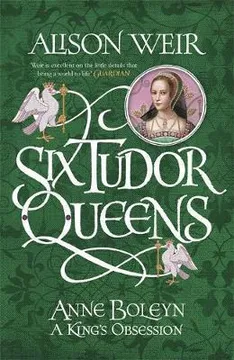


Plot Summary
Sent From Hever
At eleven, Anne Boleyn1 studies her face beside her more beautiful elder sister, Mary,3 and worries about the small extra nail on her right hand. Her closest companion is their brother George,4 another younger child who must make his own way. Their ambitious father, Thomas Boleyn,5 returns from court with an unexpected offer: Margaret of Austria7 wants Anne1 as a maid of honor.
Anne1's education, musical ability, and poise have won her a place before Mary,3 sharpening the sisters' rivalry. Thomas5 expects his daughter1 to advance the family through a suitable marriage, but Anne1 sees the appointment as a doorway into a larger world. After months of lessons and sewing new gowns to conceal her hand, she leaves Hever for the Netherlands.
The opening makes Anne's ambition personal before it becomes political. Her concern about beauty and her hidden finger shows how early she learns to manage the judgments made about a woman's body. Thomas treats education as preparation for marriage and family advancement; Anne also values learning for itself. Her departure therefore carries two motives at once: obedience to a father's plan and a young woman's hunger to discover what she might become beyond his household.
Mechlin Opens the World
At Margaret7's court in Mechlin, Anne1 arrives as the only English girl among seventeen maids of honor and initially struggles to follow their French. She works under the tutor Monsieur Semmonet, wins Margaret7's affection, and discovers a library filled with classical literature and the writings of Christine de Pizan.
Margaret7's example teaches her that a woman can govern, judge, and command respect through intellect as well as rank. Anne1 also learns the rules of courtly love: admirers may be encouraged, but a woman's honor must remain under her control.
When she dances with the young Archduke Charles, her sharp reply to his disdain confirms that she will not erase herself to please powerful men. At Tournai, she meets Henry VIII2 and his friend Charles Brandon,25 watching the king's flirtation with another maid with early suspicion.
Mechlin gives Anne a vocabulary for ambitions that her family has framed mainly as marriageability. Margaret's rule and Christine de Pizan's arguments make female intelligence visible as a political capacity, not merely a private accomplishment. Yet Anne's new agency remains bounded by reputation: she can direct male attention only if she protects the honor that society will use to judge her. Her encounter with Henry also plants a contrast between the ideal of chivalry and the conduct of men who wield power without answering for it.
The French Court's Hidden Cost
Anne1 reaches Paris in 1515 expecting to serve the new Queen Mary Tudor, but King Louis XII has died before she arrives. Mary Boleyn3 is already at court, caring for the widowed queen, and explains that Louis's successor, François, is pressing his attentions on her.
Anne1 sees how the king turns royal authority into leverage, even threatening to arrange Mary3's marriage when she refuses him. An English embassy eventually brings Mary3 home, and Charles Brandon25 secretly marries her despite Henry2's anger.
Anne1 remains in France, where Queen Claude9 accepts her into a vast, tightly controlled household. The change gives Anne1 a place at court, but also puts her under the authority of a king whose appetite has already made her sister3's service dangerous.
Mary's experience turns Anne's lessons about virtue into a question of consent. The court praises restraint while its king can threaten a woman's future and make refusal costly. Anne's loyalty to her sister cannot undo what power has permitted, and her decision to remain in France means she must navigate the same system without Mary's protection. The shift from a lively royal court to Claude's guarded household also begins Anne's long education in how safety can depend on rules imposed by women who possess little power over men.
French Lessons, English Return
Claude9's household is devout and restrictive, but Anne1 uses its seasons at Amboise and Blois to become fluent in French, refine her dancing, and reshape English gowns into a style copied by other women.
She studies with Marguerite of Valois,8 debates women's education and religious reform, and meets Leonardo da Vinci, whose portrait of her becomes a private reminder of the person she is making. Meanwhile, the sweating sickness kills her elder brothers Thomas and Hal, leaving George4 heir to Hever.
Anne's father5 visits France in 1518 and approves of her sophistication, while telling her he still expects a useful marriage. Renewed hostilities between England and France finally force Anne1 home in 1522. After nine years abroad, she returns to Hever changed, but still subject to her father's5 plans.
Anne's French years make self-fashioning more than a matter of clothes. She learns to turn appearance, language, and social skill into forms of influence, while religious and humanist debates give her ambitions an intellectual frame. But political borders can still erase the life she has built: war sends her home without asking what she wants. The deaths of her brothers also reorder the family, making George the heir and increasing Anne's attachment to the sibling who has shared her sense of being overlooked.
Promises at the Golden Field
At the Field of Cloth of Gold in 1520, Anne's father5 proposes marrying her to James Butler to settle a family dispute over the earldom of Ormond. Anne1 rejects the prospect of leaving France for Ireland and resents being discussed as a solution without her consent.
The tournament brings another possibility into view: she notices Henry Norris,17 a handsome courtier, but learns he is already married. In a chapel, Marguerite of Valois8 urges Anne1 to resist a marriage she does not want and offers her a place in her household.
Anne1 accepts, gaining an ally and a more stimulating life. She returns to France with Marguerite,8 but the proposed Butler match remains unresolved. The episode strengthens her conviction that consent should matter, even when fathers and kings treat marriage as diplomacy.
The marriage negotiation exposes the difference between being admired and being allowed to choose. Anne's skill at court has made her valuable, but that value invites her family to barter her into an alliance. Marguerite's counsel gives Anne both language and practical support for resistance. Her attention to Norris hints at a private longing that she cannot pursue, while his existing marriage reinforces the limits of a court where desire is managed through rank, contracts, and appearances.
Percy's Secret Betrothal
Back at the English court in 1523, Anne1 meets Harry Percy,15 heir to the Earl of Northumberland. Their friendship deepens into love, and they secretly pledge themselves to marriage before securing permission from their families or the king.
Cardinal Wolsey13 intervenes, claiming Percy15 is already promised to Mary Talbot, and pressures him to end the betrothal. Anne1 confronts Wolsey,13 but he sends her away from court and back to Hever. Percy15 is dispatched north and eventually marries Talbot. Anne1 spends months grieving, while her mother6 tries to draw her back into ordinary life.
The humiliation hardens her distrust of men who claim authority over her future. When she is finally recalled to Queen Katherine10's household, she returns with her defenses rebuilt and no intention of letting another man make a fool of her.
Percy's broken betrothal is the first time Anne's private choice collides directly with the machinery of royal power. Wolsey's intervention does not merely end a romance; it demonstrates that even a mutual promise can be overridden by status and political convenience. Anne's grief then becomes a psychological defense. She does not stop wanting love, but she decides that desire must never again leave her exposed to another person's authority.
Mary's Secret, Henry's Pursuit
At Queen Katherine10's court, Anne1 is reunited with Mary,3 now married to William Carey. Mary3 confides that Henry2 has forced himself on her and continues to pursue her despite her refusals. Anne1 tells their father, Thomas Boleyn,5 expecting him to protect Mary,3 but he calculates that royal favor may benefit the family and does little.
Mary3 becomes pregnant with Henry2's child, while Carey believes the baby is his. Anne1 sees Henry2's practiced charm beside the coercion he denies, and refuses to become his mistress when he turns his attention to her.
She also resists Thomas Wyatt,16 a married childhood friend who writes for her and longs for her affection. Mary3 later gives birth to Catherine, and Anne1 helps conceal the child's paternity. The king's desire now feels to Anne1 less like romance than a danger she must manage.
The sisters' experiences reveal how an unequal system can turn sexual coercion into family currency. Thomas Boleyn's response shows that ambition may persuade a father to treat a daughter's suffering as a negotiable cost. Anne's refusal is shaped by what she has witnessed, not by simple prudery: she recognizes the gap between Henry's self-image as a chivalrous man and the vulnerability his position creates. Her protection of Mary's secret also links sisterly loyalty to the risks of dynastic politics.
A Crown Offered in Secret
In 1527, Henry2 tells Anne1 that he believes his marriage to Katherine10 is invalid because she had been his brother Arthur's wife and he has no surviving son. He asks Anne1 to marry him once the annulment is secured.
She retreats to Hever to consider the cost: Katherine10 is blameless, Henry2 is still her husband, and Anne1's rise would make her hated. Yet she also sees the power to support religious reform and women's learning, causes she has carried from France. A miniature jewel depicting a woman alone in a storm gives form to her uncertainty.
Henry2's response persuades her that he means to make her queen, not merely keep her as a mistress. Anne1 accepts his proposal. Their engagement binds her future to Henry's legal struggle and turns her private ambition into a public crisis.
Anne's choice is neither a simple surrender to romance nor a purely cynical bargain. She weighs personal desire against the possibility of power, family advancement, and religious change, while knowing that Katherine will bear the human cost. The storm jewel lets her communicate hesitation without openly refusing a king. Her acceptance makes the relationship harder to separate from state policy: from this point, Henry's claim to the throne's future and Anne's hope for influence depend on the same contested marriage.
The Great Matter Stalls
Henry's case moves from a secret conscience question into a struggle between England, Rome, and the Emperor Charles, Katherine10's nephew. Cardinal Wolsey13 promises progress, but papal reluctance and the sack of Rome leave the case suspended.
Anne1 spends long stretches at Hever while Henry sends letters and visits, and she increasingly blames Wolsey13 for delay. She persuades Henry2 to send him to France, then encourages suspicion that the cardinal is serving Rome rather than the king. When Cardinal Campeggio delays the hearing and returns the case to Rome, Henry2 breaks with Wolsey13 and takes the cardinal's property.
The scholar Thomas Cranmer20 proposes that universities, rather than the pope, judge the marriage. Anne1 sees a path forward, while also urging Henry2 toward Scripture, reform, and greater royal control over the English Church.
The stalled annulment changes Anne from a prospective bride into a political actor. Her distrust of Wolsey has personal roots in Percy's lost betrothal, but it gains force because his delays now threaten the crown she has accepted. At the same time, Anne's reforming convictions intersect with Henry's need for a legal solution. The alliance is useful to both, though not identical: she seeks a less corrupt church and greater room for female agency, while Henry chiefly needs authority over his marriage and succession.
England Breaks with Rome
With the papal case stalled, Henry2 asserts royal supremacy over the English Church, ending Rome's jurisdiction in England. Anne1 supports the move and helps Henry2 consider English Bible translations and reform. In January 1533, after she becomes pregnant, they marry privately, and Archbishop Cranmer20 soon declares Henry's union with Katherine invalid.
Anne1 appears publicly as queen and is crowned in Westminster Abbey, carrying a child everyone expects to be a prince. The ceremonies give her rank, but the streets offer a chilly welcome and many subjects continue to favor Katherine.10
Henry2 also seeks to control the succession by stripping his daughter Mary11 of her title when she refuses to accept the marriage. Anne1 has won a crown, yet its security rests on a child not yet born and a kingdom divided over whether she belongs on the throne.
The separation from Rome converts a private marriage into a constitutional revolution. Anne's support for reform helps legitimate a new order, but the crown cannot erase popular attachment to Katherine or Mary. The pregnancy makes Anne's body carry the argument for the marriage: a male heir would appear to validate Henry's break and secure the dynasty. That expectation narrows the meaning of her queenship, making political authority depend on a biological outcome she cannot command.
Coronation, Then a Daughter
Anne1's coronation is elaborate, but Londoners watch in silence and some jeer as her procession passes. In September, she gives birth to a healthy daughter, Elizabeth,12 not the son Henry2 and Anne1 had expected.
Henry2 comforts Anne1 and names the child after his mother, yet cancels the tournament planned for a prince. Anne1 feels distant from the infant and leaves much of her care to nurses. Meanwhile, Mary11 resists her demotion, and Mary Boleyn3 secretly marries William Stafford without royal or family permission.
Anne1 and Henry2 banish her from court, although Anne1 later helps secure support for Mary3's family. Elizabeth12's birth does not resolve the succession; it sharpens Anne1's anxiety that Katherine10 and Mary11 remain rallying points for those who reject her marriage.
The daughter who should be a private joy becomes a public test of the regime's claims. Henry's affection for Elizabeth is real, but the canceled festivities reveal how strongly he equates dynastic safety with a male heir. Anne's difficulty bonding with her child reflects disappointment and pressure rather than indifference alone. The parallel with Mary Boleyn is pointed: one sister chooses a loving marriage without permission, while Anne's queenly status still depends on satisfying a political order built by men.
Two Daughters, One Succession
Henry2 strips Mary11 of her title and orders her into Elizabeth12's household, but she continues to recognize Katherine10 as the rightful queen. Anne1 alternates between attempts at reconciliation and demands that Henry2 punish his daughter,11 fearing Mary11 could become the focus of opposition.
Mary Boleyn3's secret marriage to Stafford ends in banishment, though Anne1 later helps her obtain an income and protect her children. As Henry2 declares himself head of the Church, Bishop Fisher and Thomas More21 refuse the required oath. Anne1 urges firmness; both men are imprisoned, and More21 is executed.
Anne1 also presses Henry2 to read reformist works and supports scholars, but she resists selling all monastic wealth for royal gain, arguing that some should support education and the poor. Her influence grows, yet it increasingly serves a government willing to punish dissent.
This period exposes the moral cost of Anne's political success. She advocates education and religious access, yet also urges coercion when Mary's refusal threatens Elizabeth's place. Her compassion for Mary's material needs coexists with fear of her political claim. The executions of More and Fisher show how reform has become entangled with obedience to the king. Anne's own ideals are not simply defeated by power; at moments she helps wield it, discovering that influence within a patriarchal state can reproduce the very force she once resisted.
Katherine's Death, George's Secret
In January 1536, Eustache Chapuys22 reports that Katherine10 has died. Anne1 celebrates the end of the rival who challenged her marriage, then learns from George4 that he secretly helped hasten Katherine10's death with poison.
Anne1 had wanted Katherine10 gone, but not through murder; she recoils from the crime and realizes her own desperate words may have encouraged her brother.4 Henry2 orders a private examination, which finds a blackened heart and fuels rumors of poisoning. Soon after, Anne1 catches Henry2 with Jane Seymour,18 a reserved maid of honor whose family is rising at court.
The shock brings on pain and bleeding, and Anne1 miscarries a male fetus. Henry2 mourns the lost son and grows cold toward her. Anne1 now faces both a concealed murder and the collapse of the protection she thought her pregnancy would bring.
Katherine's death appears to solve a political problem, but George's confession corrupts the apparent victory. Anne must distinguish wishing for an outcome from authorizing the means, and her guilt comes from recognizing how political desperation can be heard as permission. The miscarriage then joins private grief to dynastic fear. Henry's affair with Jane makes Anne's vulnerability immediate: without a surviving son, her status depends on affection from a husband whose attention is already moving elsewhere.
Anne Challenges Cromwell
After the miscarriage, Anne1 struggles to regain Henry2's affection while Jane Seymour18 attracts his attention and Cromwell14 gains influence. Anne1 challenges Cromwell14's plan to use monastic wealth chiefly to enrich the crown and reward supporters.
She persuades Henry2 to reserve some funds for schools, scholars, and the poor, then uses sermons to press the same case publicly. The alliance with the Emperor offers another source of security, and Anne1 welcomes Chapuys22's public courtesy as a sign of changing relations. Yet she remains emotionally drawn to Norris.17
Alone with him in a secluded tower, she admits the depth of her feelings but refuses to become his lover. Later, in a garden, she jokes that he might marry her if Henry2 died. She realizes the remark could sound treasonous and orders Norris17 to affirm her virtue.
Anne's late effort to preserve influence reveals both her political intelligence and her growing isolation. She can still persuade Henry on policy, but she cannot command his fidelity or make the court safe for her. Her disagreement with Cromwell concerns the purpose of reform, not simply personal rivalry: she wants resources to benefit subjects, while he advances royal power. Her restraint with Norris preserves an ethical boundary, yet their garden exchange supplies language that hostile listeners can recast as conspiracy.
May Day's Dangerous Joke
On May Day, Henry2 abruptly leaves a tournament after receiving a message, and Anne1 is left without an explanation. The next day, commissioners summon her and accuse her of adultery with Norris, Mark Smeaton, and other courtiers, as well as conspiring against the king.
Anne1 denies the charges, but Norris17 and Smeaton23 are already in custody, and George4 is arrested too. She is taken by barge to the Tower, where she is lodged in the apartments used for her coronation.
Her guards include relatives and attendants who distrust her, and she is forbidden to write to Henry.2 Anne1 tries to understand whether the accusations concern sex, treason, or George4's concealed role in Katherine10's death. With no access to evidence, she can only insist that she is innocent and wait.
The transition from courtly conversation to treason prosecution shows how little control Anne has over the meaning of her own words. The crown's authority that once amplified her voice now isolates her from information and counsel. Her imprisonment in her coronation rooms makes the reversal physical: the same chambers that staged her public elevation become a guarded cell. Her confusion about the charges is not merely fear; it reflects a process designed to keep the accused from understanding the case before it is used against them.
The Queen in the Tower
Anne1 is tried before her peers without a lawyer or witnesses of her own. The indictment alleges adultery with Norris, Weston, Brereton, and Smeaton, incest with George, and plans to kill Henry. She points out that several dates are impossible and argues that the charges also cast doubt on her children.
The court hears hostile testimony, including claims from Jane Rochford,19 while Smeaton23 alone has pleaded guilty. Anne's father5 and former friends sit among the judges. Every peer returns a guilty verdict, and Norfolk sentences her to death by burning or beheading.
George4 is convicted separately. After the men are executed, Cranmer20 declares Anne's marriage invalid; she accepts the dissolution in the hope of protecting Elizabeth,12 though the promised mercy will not save her.
The trial turns reputation into evidence and makes the performance of justice part of the punishment. Anne can identify contradictions, but she cannot call witnesses or secure independent counsel. The verdict is also dynastic: by declaring the marriage invalid, the court can recast Elizabeth's legitimacy and clear a path for Henry's next marriage. Anne's acceptance of the annulment is an act of maternal strategy under coercion, not a confession. The institution that once crowned her now removes both her title and the legal standing of her child.
One Last Morning
Anne1 watches from the Tower as George,4 Norris,17 Weston,24 Brereton, and Smeaton23 are beheaded. George4 and Norris17 both affirm her innocence in their final speeches, and Anne1 learns that George4's remorse concerns sins other than the incest charge. The next morning, she is told she will die. She distributes alms, asks Lady Kingston to seek Mary11's forgiveness for the cruelty she showed her, and prays with Archbishop Cranmer.20
On the scaffold, Anne1 asks the crowd to pray for Henry2 and makes no accusation against him. A swordsman from Calais kills her with a single stroke. Her death ends the marriage and removes her from the succession struggle, while Elizabeth12 remains a child whose mother's name has been branded by the court's verdict.
Anne's final actions contrast the public fiction of guilt with the private work of conscience. She refuses to use the scaffold to retaliate against Henry, but she does acknowledge the harm she caused Mary, a rare moment when political rivalry gives way to moral self-assessment. George and Norris's last statements preserve a counter-memory of her innocence, though they cannot overturn the sentence. The ending leaves power with the state and vulnerability with Elizabeth, while Anne's final choices show a person trying to reclaim some agency in the only space still available to her.
Analysis
Anne1's rise and fall are driven by a contradiction: she wants agency in a world that grants women influence chiefly through men, marriage, and childbirth. Her education in Burgundy and France gives her models of female intelligence and rule, but the English court offers no durable protection for those capacities. She can shape fashion, direct patronage, persuade Henry,2 and help alter the church, yet her political security repeatedly contracts to the question of whether she can produce a male heir.
The novel's treatment of courtship exposes the difference between performance and consent. Anne1 learns to manage flirtation as a language of power, but that skill cannot neutralize kings who can turn desire into coercion. Mary3's experience teaches Anne1 to distrust royal charm; Henry2's courtship then asks her to exchange that distrust for a promise of marriage. Her acceptance is ambitious and partly idealistic, but it also draws her into a system that makes Katherine10 and Mary11 enemies and converts Anne1's body into evidence for a dynasty.
Religious reform offers a genuine moral horizon, not merely a route to the crown. Anne1's interest in scripture, education, and charitable use of church wealth gives her goals beyond family advancement. Yet her own actions complicate that ideal. She supports coercion against Mary,11 presses Henry2 to punish dissenters, and helps wield a new state power that can silence the consciences she once admired. The novel makes this compromise psychologically legible without excusing it: fear for Elizabeth12 and the succession narrows Anne1's empathy.
The Tower trial completes the transformation of reputation into political fact. Anne1's defense identifies contradictions, but the court does not need a persuasive account of what happened; it needs a verdict that clears the succession and releases Henry2 to marry again. Her final appeals to conscience and forgiveness cannot reverse that machinery. The tragedy is not simply that ambition fails, but that Anne1's capacity to influence power never becomes the same thing as controlling it.
Review Summary
Reviews of Anne Boleyn: A King's Obsession are largely positive, praising Weir's meticulous research and vivid historical detail. Many readers appreciate the sympathetic, complex portrayal of Anne, from her youth abroad to her tragic execution. The book is noted for its engaging storytelling and immersive Tudor atmosphere. However, some critics highlight perceived authorial bias against Anne, questionable creative liberties — including depicting rapes and fabricated character traits — inconsistent writing quality, and a weakened portrayal of Henry VIII. Despite flaws, most found it a compelling, emotionally resonant read.
People Also Read



Characters
Anne Boleyn
The ambitious court readerAnne is a gifted, observant daughter of a rising family, shaped by years at the courts of Burgundy and France. She values education, performance, style, and the ability to read a room, but she also longs for authority in a world that expects women to be exchanged through marriage. Her confidence can conceal insecurity about beauty, status, and whether she is genuinely loved. Anne believes influence may let her advance religious learning and women's capacity, yet her hunger for security and rank can make her hard toward rivals. Her central tension is between wanting to direct her own life and seeking power through the very institutions that restrict women.
Henry VIII
The sovereign suitorHenry is a charismatic ruler who loves music, spectacle, sport, and the performance of chivalry. His conviction that England needs a male heir shapes his marriage, religion, and succession policy. He can be affectionate and emotionally vulnerable, especially when speaking of lost children, but he expects others to accommodate his desires and treats opposition as a threat to royal order. His courtship of Anne1 joins genuine fascination to political calculation. As their relationship changes, his need to control the future increasingly competes with the tenderness he once showed her.
Mary Boleyn
Anne's rival and sisterMary is Anne1's elder sister, admired for her beauty but often dismissed by her family as less accomplished. Their relationship mixes affection, rivalry, jealousy, and periods of uneasy solidarity. Mary is more interested in companionship and domestic security than Anne1 is, yet she is not merely passive: she makes choices for love and resents being judged by her sister's standards. Her encounters with royal power leave her vulnerable, while her closeness to Anne1 makes her both a source of loyalty and a painful mirror of the life Anne1 might have chosen.
George Boleyn
Anne's brilliant confidantGeorge is Anne1's closest sibling and emotional ally from childhood. A musician, poet, and courtier, he shares her intelligence and appetite for distinction, but carries resentment at being a younger son without an assured future. He is charming and capable of loyalty, while his private appetites and volatile choices make him harder to read than Anne1 wants to admit. Their intimacy gives Anne1 a rare relationship in which she feels understood. George's own ambition and moral compromises expose the cost of building identity inside a competitive court.
Thomas Boleyn
The family's ambitious brokerThomas Boleyn is a skilled diplomat whose rise depends on royal access, strategic marriages, and careful service. He prizes education because it can make his children useful and impressive, but he often views them through the lens of family advancement. His affection is real yet constrained by ambition and patriarchal authority. Anne1 admires his ability while resenting his assumption that he may decide her future. His conduct toward Mary3 and Anne1 shows how a parent can love a child and still treat her choices as secondary to the family's political prospects.
Elizabeth Howard
Anne's watchful motherElizabeth Howard brings aristocratic lineage, household competence, and emotional warmth to the Boleyn family. She teaches Anne1 practical skills while recognizing the value of her grace and intelligence. Her marriage to Thomas5 is strained, and she carries private disappointments that her children only partly understand. She offers comfort when Anne1 is wounded, but remains shaped by the conventions that make a daughter's security dependent on male relatives and advantageous matches.
Margaret of Austria
Anne's enlightened first patronThe Regent of the Netherlands is a formidable ruler, cultivated patron, and generous mentor to Anne1. Her court joins political administration with art, scholarship, and music, giving Anne1 a model of female authority beyond marriage. Margaret is warm but not sentimental: her own history of imposed matches and bereavement has taught her how precarious women's choices can be. She encourages Anne1 to value intellect, honor, and judgment, leaving a lasting template for the kind of influence Anne1 hopes to exercise.
Marguerite of Valois
Anne's outspoken French patronMarguerite, sister to King François, is a learned and emotionally perceptive woman who gives Anne1 refuge from an unwanted marriage plan. She supports debate about women's capacities and encourages Anne1 to defend her consent. Her own unhappiness complicates her public confidence, making her advice feel earned rather than abstract. For Anne1, Marguerite renews the intellectual companionship she first found in Margaret of Austria7's household.
Queen Claude
Anne's guarded French mistressClaude is a gentle, pious queen whose strict household rules reflect both personal conviction and the pain of living beside an unfaithful husband. She values charity, devotion, and decorum, and seeks to shield her attendants from the predatory conduct surrounding the French court. Anne1 respects her kindness, even when Claude's restrictions frustrate her. Their relationship shows Anne1 that female authority can protect other women, but cannot always change the conditions that endanger them.
Katherine of Aragon
The steadfast first queenKatherine is a devout, politically experienced queen whose identity is inseparable from her marriage, faith, and daughter Mary11. She has endured repeated pregnancies and losses while retaining dignity and a strong sense of lawful duty. Her refusal to yield her position is not simple obstinacy; she believes her marriage is valid and sees submission as a betrayal of conscience. Anne1 initially feels compassion for her, then experiences her resistance as a threat. Katherine's moral certainty makes her an enduring counterweight to Anne1's ambition.
Princess Mary
Katherine's defiant daughterMary is Henry2 and Katherine10's only surviving child, intelligent, disciplined, and deeply loyal to her mother10. Her conscience is bound to the belief that Katherine10 is the true queen and that her own birth is legitimate. She resists pressure even when it threatens her comfort and relationship with her father2. Anne1 reads that resistance as a political danger to Elizabeth12, but Mary's steadiness also reveals a courage Anne1 recognizes in herself. Their conflict is shaped by dynastic rivalry, yet it is also a contest between two women defending incompatible accounts of family and law.
Elizabeth
Anne's royal daughterElizabeth is Anne1 and Henry2's daughter, born into a court that expects her to resolve a succession crisis. As a small child she is curious, poised, and quick to learn, though she spends much of her early life in a separate household. Anne1 feels the pressure of her sex before she can fully know her as a person. Elizabeth's presence concentrates the adults' hopes and fears, making her childhood inseparable from questions of legitimacy, inheritance, and her mother's1 place.
Cardinal Wolsey
The king's powerful ministerWolsey is a brilliant administrator whose authority reaches across court, church, and diplomacy. His ability to control access to Henry2 makes him both indispensable and resented by nobles who believe power belongs in their hands. Anne1's hostility begins with his intervention in her relationship with Harry Percy15, then deepens as he manages Henry's annulment. Whether he is truly obstructive or simply constrained by Rome remains a source of conflict. He embodies the danger of a minister who becomes so powerful that the king's personal desires and the kingdom's machinery run through him.
Thomas Cromwell
The calculating reform ministerCromwell is a lawyer and political operator who rises through service, information, and an ability to turn crisis into administrative action. He supports royal supremacy and religious change, but his idea of reform is strongly tied to the power and resources of the crown. Anne1 values his talents when their aims align and distrusts him when his interests diverge from hers. His fluency in political survival makes him a formidable presence in a court where personal loyalty can shift overnight.
Harry Percy
Anne's first beloved suitorPercy is the heir to a powerful northern family, but Anne1 first responds to his courtesy, sincerity, and apparent trustworthiness rather than his title. Their mutual affection offers her a vision of marriage based on choice. His position also exposes how family contracts and royal approval can overrule private feeling. Anne1's memory of him remains a measure against which she judges later suitors and the bargains demanded of women.
Thomas Wyatt
The devoted poet friendWyatt is a poet, courtier, and childhood acquaintance of Anne1 who expresses affection through verses and persistent attention. He is sensitive and perceptive, but his love remains constrained by his marriage and by Anne1's refusal to become anyone's mistress. Their friendship carries a quiet emotional charge, and he offers a contrast to men who use status to demand access. Anne1's treatment of him reveals both her tenderness and her determination to preserve her reputation.
Henry Norris
The loyal court confidantNorris is a handsome, trusted member of Henry2's Privy Chamber, valued for discretion and access to the king. Anne1's attraction to him is joined to her respect for his courtesy and self-command. He occupies an intimate position near both the king and the queen, so even ordinary exchanges can carry political risk. His loyalty to the court and private feelings toward Anne1 place him in a position where personal devotion cannot be freely acted upon.
Jane Seymour
The quiet court attendantJane Seymour is a reserved, dutiful maid of honor who gives little away in conversation. Her association with Katherine10 and her family's careful attention to rank make her difficult for Anne1 to read. She seems modest beside Anne1's wit and display, but her restraint can also be interpreted as strategic patience. Jane's quiet presence becomes significant because the court often mistakes silence for harmlessness, especially when women's ambitions must be pursued indirectly.
Jane Rochford
George's wary wifeJane Rochford is George4's wife and Anne1's sister-in-law, intelligent enough to notice the tensions that others conceal. She is isolated within an unhappy marriage and often uses gossip or sharp observation to gain leverage. Anne1 mistrusts her, while Jane resents the closeness between the Boleyn siblings. Her position is precarious: she belongs to a powerful family but has little control over the men and alliances that define her household.
Thomas Cranmer
The reform-minded archbishopCranmer is a cautious scholar whose legal and theological arguments offer Henry2 a route beyond papal authority. Anne1 values his learning and supports his advancement, seeing in him a potential ally for reform. Yet his first duty is survival and service to the king, not personal loyalty to Anne1. His measured manner makes him useful in moments of institutional upheaval, while his choices reveal how reformers must navigate the demands of conscience and power.
Thomas More
The conscience-bound chancellorMore is a respected lawyer and humanist scholar whose friendship matters deeply to Henry2. His intellectual authority gives his refusal unusual weight, but he remains firmly opposed to the reformist ideas Anne1 favors. He believes religious interpretation should remain in learned hands and fears that unregulated access to scripture will produce disorder. His principled resistance complicates the court's demand that private conscience submit to royal policy.
Eustache Chapuys
Katherine's imperial advocateChapuys is the Emperor's ambassador, a well-informed and disciplined observer of the English court. His loyalty to Katherine10 and Princess Mary11 makes him a persistent critic of Anne1, though he can be courteous when diplomacy requires it. He represents the reach of foreign power inside England and reminds Anne1 that her position is judged beyond the court walls. His reports and relationships help turn private disputes into international politics.
Mark Smeaton
The gifted court musicianSmeaton is a talented musician of comparatively low birth who rises through performance and royal favor. He enjoys fine clothes and access, but his confidence can shade into presumption. Anne1 finds his attention intrusive and his social ambition difficult to trust. His presence shows how artistic skill can open doors at court while leaving a newcomer vulnerable to the judgments and suspicions of the aristocracy.
Francis Weston
The court's charming revelerWeston is a witty, sociable courtier who enjoys music, dancing, and flirtation. His ease among Anne1's circle makes him a familiar presence at royal entertainments. He is also close enough to court life to notice the loyalties and jealousies beneath its gaiety. His light manner can disguise the risks that attach to even casual intimacy around a king.
Charles Brandon
Henry's bold companionBrandon is Henry2's close friend, a charismatic courtier whose confidence and charm draw attention wherever he appears. His relationships with royal women become entangled with political advantage and personal desire. Anne1 observes him as an example of the latitude granted to powerful men, whose promises and flirtations can carry serious consequences for women with less freedom.
Plot Devices
Courtly love and virtue
Rules for desire and reputationAt Margaret of Austria7's court, Anne1 learns that a woman may accept admiration and flirtation while keeping control of her honor. The code seems to offer agency, but its protections are unequal: men can break the rules with less damage to their standing, while a woman's reputation can decide her marriage and future. Anne1 applies its techniques to suitors, Henry2, and later the court itself, using restraint and display as instruments of influence. The device shapes her self-image as a woman who can direct desire without surrendering to it, even as royal coercion repeatedly exposes the limits of that control.
Humanist and reformist books
Ideas become political leverageThe libraries and reformist writings Anne1 encounters in Burgundy and France expand her sense of what women and rulers might do. Christine de Pizan gives her arguments for female education and government; Erasmus and later English reformers direct her attention to scripture, clerical wealth, and access to learning. Anne1 brings these ideas into conversation with Henry2, presses him to read banned works, and argues that monastic resources could support schools and the poor. Books are not merely symbols of refinement: they provide language with which Anne1 can challenge established authority and imagine a different use of royal power.
The Great Matter
Marriage becomes a state crisisHenry2's claim that his marriage to Katherine10 is invalid begins as a problem of conscience and succession, then expands into a struggle over papal authority, English sovereignty, and Anne1's future. Every delay increases the personal and political stakes. Anne1's status remains insecure until institutions pronounce on the marriage, while Henry2's pursuit of an heir becomes the rationale for breaking with Rome. The dispute links bedroom, church, and state: a private union determines who may inherit the crown and who may command the English Church. Its unresolved legal basis continues to shadow Anne1 even after she is crowned.
Clothes, jewels, and letters
Private feeling made publicAnne1 uses clothing to reshape her appearance, signal status, and make herself memorable in courts where a woman's presentation carries political meaning. Jewels and gifts record the changing terms of her relationship with Henry2, from his insistence on intimacy to his promise of marriage. Letters allow them to maintain emotional contact during long separations, but they also create vulnerability when evidence can be stolen or interpreted by enemies. These objects make affection visible while leaving its meaning contested: a jewel can be a token of devotion, a claim of possession, or a piece of evidence used to damage the person who wore it.
Treason law and testimony
Rumor becomes a royal weaponThe legal machinery of treason turns conversations, jealousy, and hearsay into accusations against Anne1 and those around her. Once she is arrested, she cannot call witnesses or rely on legal counsel, while the prosecution uses testimony and impossible dates to construct a story of adultery, incest, and conspiracy. The charges target both her body and the succession, recasting private relationships as threats to the king. This device shows how law can appear ceremonially orderly while denying the accused the means to challenge its account. Its role in the final proceedings is a major spoiler.
Download PDF
Download EPUB
.epub digital book format is ideal for reading ebooks on phones, tablets, and e-readers.








