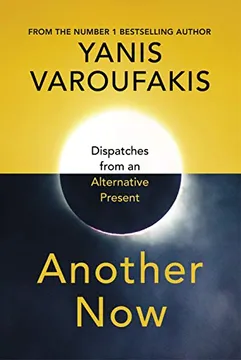


Plot Summary
Prologue
In 2035, the narrator Yango attends the funeral of Iris, his old friend, and finds Costa there, anxious that a diary must not reach corporate hands. Iris had given Yango the diary before her death, asking him to publish its account but keep Costa’s technology secret.
The pages carry him back to 2025, when Costa’s inventions opened a channel to a world transformed after the 2008 crash. Yango reconstructs the friends’ debates from Iris’s records, acknowledging that he was absent from many of the events and must imagine parts of their inner lives.
The frame makes storytelling itself part of the plot. Yango is not an omniscient witness but a custodian entrusted with an incomplete record, so the reader encounters both the events and the limits of their reconstruction. Iris’s demand to share the alternative while concealing its technology captures the book’s central tension: possibility must be made public, while tools that can manipulate people must be guarded. The diary also turns grief into a political act. Yango writes because Iris’s death leaves him with a responsibility, not because he has mastered what her story means.
Iris Abandons the Picket Lines
In 1982, Yango meets Iris at a left-wing meeting where she attacks both Thatcher and the complacent opposition for defending a dying order. He joins her at protests, strikes, and picket lines, but defeats expose her deeper fear: even comrades who promise liberation may rebuild the same hierarchies.
After police injure her during the Wapping dispute, she asks what kind of future their protests are meant to create. Thatcher’s 1987 election victory prompts Iris to resign her university post and leave political meetings.
She retreats to her Brighton home and makes intricate, provocative tapestries, while continuing to welcome friends for evenings of argument. Withdrawal protects her independence, but it also leaves her watching movements she once served from the outside.
Iris’s retreat is not a simple surrender to defeat. She recognizes that protest can preserve a movement’s identity while leaving its assumptions untouched, and she refuses to keep lending her courage to leaders she distrusts. Her tapestries offer a different kind of intervention: private work that refuses respectable categories without pretending to command a mass following. Yet the cost is isolation. Iris can support people without submitting herself to a cause, but that self-protection makes collective action harder to imagine. Her skepticism is therefore both an ethical discipline and a defense against the repeated grief of betrayed political hope.
A Banker Meets the Rebels
Yango introduces Costa to Iris in 1989, after the Greek engineer leaves weapons work for a company making bionic implants. Costa discovers that his employer will suppress a better device to protect sales of an inferior one, and Iris recognizes in his anger a rare concern for the people technology is meant to serve.
Years later, Eva, a former Wall Street financial engineer, moves next door to Iris with her young son, Thomas. Eva has left Lehman Brothers after its collapse and retreated into economics, but she still defends markets as necessary.
Iris greets her with open contempt for banking; Eva counters with her own suspicion of collectivist schemes. Their arguments begin as a collision of beliefs, though each recognizes in the other a person scarred by the failures of her chosen world.
The three friends represent different routes into disillusionment. Iris distrusts movements that reproduce domination, Costa distrusts technology when ownership directs it away from human need, and Eva distrusts alternatives that might replace markets with unaccountable authority. Their disagreements are not merely intellectual positions; each protects a wounded identity. Eva’s professional retreat follows her complicity in finance, while Costa’s technical idealism has already met corporate refusal. Iris’s hostility tests whether either newcomer can tolerate criticism without demanding her approval. Their friendship begins because the others can absorb that friction without reducing it to a debate they must win.
The Bliss Machine Takes Shape
After making money by betting against the dot-com boom and later the mortgage bubble, Costa leaves corporate employment and builds a laboratory in San Francisco. He develops HALPEVAM, a machine meant to create a shared virtual world shaped only by each user’s own desires.
To prevent it from implanting чуж desires, he searches for a physical record of experience and eventually detects CREST, a subatomic trace of lived lives. A brief test gives him a glimpse of overwhelming pleasure, but it also reveals the danger: corporations could harvest the same intimate data and turn the machine into an instrument of control.
When intruders nearly decode his access system using his DNA and monitored thoughts, Costa builds Cerberus, a safeguard designed to destroy CREST if anyone breaks in.
Costa’s invention is a moral experiment disguised as engineering. He hopes that an irresistible offer of perfect satisfaction will reveal that people can refuse to be ruled by appetite. But the machine grants its maker an extraordinary power to define the conditions under which that test occurs. Cerberus makes the contradiction concrete: Costa protects freedom by designing a system capable of destroying the source of his own invention. His secrecy is understandable after the break-in, yet it also concentrates responsibility in one anxious individual. The more successfully he guards the machine, the more his private judgment governs a technology intended to liberate everyone.
A Fold Opens in 2025
Costa tests Cerberus in April 2025, scrambling a small strand of CREST without apparent damage. Overnight, HALPEVAM produces a message written by someone with Costa’s DNA, in the same laboratory, while Costa slept.
Further tests lead him to an impossible answer: the sender is Kosti, his counterpart in a reality that split from his own during the 2008 financial crash. Using primitive, low-bandwidth messages through the tiny space-time fold, Costa learns that the other world did not rescue banks and restore the old order.
Digital activists instead coordinated payment strikes against securitized debt, pressure on pension funds, consumer boycotts, and mass disclosure of state and corporate secrets. Their efforts weakened finance and helped establish new democratic institutions, though Costa can communicate only with his own counterpart.
The wormhole turns a political counterfactual into a relationship between two people who share a past but not a present. Its narrow bandwidth matters: Costa cannot simply inspect the other world, so knowledge arrives through questions, delays, and omissions. The split at the crash insists that history is neither wholly predetermined nor freely rewritable; the divergence depends on organized choices made under pressure. The movement’s success also avoids the fantasy of a single heroic uprising. Different forms of leverage accumulate until entrenched institutions cannot recover. Costa’s restricted access, however, means this society first reaches him as evidence selected by another self, not as an impartial verdict.
TATIANA Reaches Brighton
After weeks of messages, Costa travels to Brighton to show Iris and Eva what Kosti has described. Iris initially treats the account as an elaborate delusion, while Eva agrees to examine it as a thought experiment, partly because she wants to challenge Iris’s certainty.
The three spend hours testing the claims about corporations without bosses, non-tradable shares, and a society without commercial banks. Their argument draws them closer than years of neighborly sparring had done: Iris recognizes a possible alternative to the political failures that drove her from activism, while Eva sees that questioning capitalism need not mean endorsing state command. Before Costa can return to California, both women ask to meet their counterparts. Eva also hopes to bring Thomas, who has been living apart from her.
The Brighton debates transform skepticism from a barrier into a shared method. Iris and Eva do not become persuaded by the same arguments: Iris searches for evidence that democracy will not conceal domination, while Eva asks whether the proposed system preserves choice and practical coordination. Their willingness to keep examining a world neither fully trusts creates intimacy without agreement. Costa, who has spent years alone with his invention, becomes the occasion for their renewed friendship. The invitation to California shifts the stakes from debating an abstract model to confronting alternate selves, whose different lives may expose the personal cost hidden inside political systems.
Eva Meets Her Other Self
In California, Eva begins exchanging messages with Eve, her counterpart, while Iris writes to Siris and Costa reconnects with Kosti. Eva learns that Eve left Wall Street after an activist named Esmeralda recruited her to undermine the financial instruments she once helped create.
Eve later joined the rebellion, built a family with Ebo, and helped shape the new monetary order. She explains that companies belong equally to their workers, who choose projects and distribute revenue through collective decisions; a universal central-bank account gives each person savings, a birth trust, and a regular dividend.
Shares cannot be traded, and private banks lose their former role. Eva questions how such rules can work in practice, but the answers make her see that markets might survive without finance’s concentrated ownership.
Eve’s account gives Eva a counterpart who has converted professional guilt into collective work, but the personal contrast is just as sharp: their shared past branches into different relationships and families. The economic model challenges Eva’s assumption that market exchange requires absentee owners and wage hierarchies. Its design does not abolish individual difference; it separates unequal recognition from unequal control, and gives people material security before they bargain. Eva’s questions remain important because the system depends on institutions that can themselves accumulate power. Her interest grows not through a sudden ideological reversal, but because the alternative answers practical objections she had regarded as fatal.
Markets Without Their Masters
Further dispatches show Eva how the Other Now handles problems its corporate reforms cannot solve alone. Regional land trusts collect rent from commercial property and use auctions to reveal its value, while social housing is assigned through lotteries rather than wealth alone.
Local assemblies decide how much space to reserve for newcomers, and international funds help communities build homes and services when they accept migrants. Digital-rights laws give people control over their data; users pay small amounts for apps, and a public data fund collects royalties when companies profit from shared information.
Eva also learns that international trade rules penalize persistent surpluses and deficits, directing the proceeds toward poorer regions. These mechanisms do not erase coercion or scarcity, but they persuade her that markets can operate without serving private monopolies.
Eva’s conversion is a change in what she believes markets are for, not a rejection of her concern for liberty. The alternative she studies keeps prices, auctions, lending, and consumer choice, but puts them inside rules that prevent private actors from owning the channels of exchange. Its most revealing feature is how it handles goods markets cannot distribute fairly, such as secure housing or the ability to migrate: lotteries and public deliberation supplement price. That combination unsettles the clean division between market freedom and social control. Eva’s admiration remains conditional, because every corrective institution raises the question of who monitors its power.
The Utopia’s Unhealed Wounds
Iris’s correspondence with Siris moves from economic design to the violence that survives political reform. Siris reports that the revolution did not end male dominance, and that the language of equality often concealed old patterns of control.
She sends Iris a radical account of sexual freedom associated with Esmeralda, then reports that Esmeralda was murdered in 2022 amid anger over a financial crisis. The crisis began when illicit brokers used savers’ accounts and local authorities’ future land income to create speculative contracts; a flood triggered falling land values and cascading losses.
Public institutions restored savings and purchasing power, then banned the unregulated contracts. Iris respects the recovery but concludes that markets still reward people adept at exploiting others. The alternative is better than capitalism, yet not the freedom from markets she wants.
Iris’s exchange with Siris distinguishes institutional reform from the transformation of intimate power. The surviving patriarchy prevents the alternative society from serving as proof that economic democracy automatically liberates women. Esmeralda’s murder makes that limit bodily and irreversible, while the financial Crunch shows that new systems remain vulnerable to familiar appetites for profit. The authorities’ swift response demonstrates resilience, but it cannot redeem the social arrangements that allowed the crisis or the violence to occur. Iris’s refusal is therefore not a claim that the experiment failed altogether. She rejects its premise that fairer markets are sufficient, because her desired freedom requires people to act beyond transactional exchange.
The Wormtunnel’s Last Hour
Thomas arrives in November, withdrawn and hungry for power, but finds an unexpected companion in Costa, who challenges his gaming habits without demanding confession. When Thomas says he would choose endless digital pleasure even if he could never return, Costa recognizes that his machine has not proved people will refuse it.
A failing wormhole is then enlarged by a synchronized experiment into a brief passage between worlds. Iris decides to stay, unwilling to exchange one market society for a better one; Eva chooses to cross with Thomas, who has no counterpart there.
Costa tells them he will follow, and they enter holding hands. He secretly returns to Our Now, intending to destroy HALPEVAM and prevent its capture. The lie saves the machine from corporate exploitation, but it leaves him separated from the people he helped send away.
The climax converts the book’s argument about freedom into an irreversible choice. Thomas’s answer defeats Costa’s optimistic premise: a person can knowingly choose limitless gratification, so the machine cannot guarantee liberation simply by offering an exit. Iris’s refusal is equally deliberate. She values the better material conditions of the Other Now but fears that their stability will make a deeper, non-market freedom harder to pursue. Costa’s deception repeats the danger he has tried to contain: he decides what others should do, then withholds the truth to secure that outcome. Protecting the machine from corporate power costs him the trust and companionship he had briefly recovered.
Epilogue
In 2036, Yango returns to Iris’s grave and sees Costa arrive with a woman he believes is Iris. Costa explains that she is Siris, Iris’s counterpart from the Other Now, who followed him through the passage before it closed.
She had chosen to return because she wanted to challenge the harsher world, not settle into a society she considered self-satisfied. Costa helped her adopt a new identity, and the two stayed mostly apart. Yango recognizes that the woman before him is not his dead friend, but a living dissident with whom he can begin a new friendship.
The final reversal refuses a clean division between the failed present and the successful alternative. Siris returns not because she misunderstands the Other Now, but because its relative comfort leaves her without the opposition through which she understands her political usefulness. Her choice echoes Iris’s refusal, though for a different reason: one seeks a world beyond markets, the other seeks a world where dissent still has urgent work. Yango’s reunion offers consolation without undoing Iris’s death. The ending also completes the frame’s argument about memory: the diary preserves one woman’s account, but its consequences continue through another woman who carries a related history into the narrator’s present.
Analysis
The novel’s central achievement is to treat political economy as a lived problem rather than a diagram. Its institutions matter because characters have to imagine working in them, raising children under them, losing money through them, or being judged by them. Eva’s movement from defense of capitalism toward conditional admiration for its alternative is persuasive precisely because she keeps testing the model’s practical claims. Iris supplies a different standard: not whether markets can be made fairer, but whether exchange should remain society’s organizing principle at all. Costa’s invention binds those arguments to a psychological question. If desire can be perfectly satisfied, does freedom follow, or does the power to gratify desire become a new form of captivity? Thomas’s willingness to choose permanent pleasure unsettles Costa’s answer, while Costa’s deception shows that benevolent intentions can reproduce the authority they oppose. The book also refuses to treat economic reform as a cure for patriarchy, racism, surveillance, or violence. The Other Now reduces some forms of domination, yet its crises and failures remain politically consequential. Its most important distinction is between a better system and a good society: structural reform can change who holds power without changing every habit through which power is exercised. By placing a speculative alternative beside intimate fractures among friends and family, the novel makes utopia neither blueprint nor escape. It is a demanding comparison that clarifies what each character values, what each fears losing, and which forms of freedom their preferred futures cannot guarantee.
Review Summary
Reviews for Another Now are largely positive, averaging 3.78/5. Readers praise Varoufakis's ability to make complex economic concepts accessible through an engaging sci-fi framework, depicting a post-capitalist parallel universe that diverged from ours after the 2008 financial crisis. Many celebrate the book's concrete alternatives to capitalism, including workplace democracy, public banking, and abolished stock markets. Critics note the fictional narrative feels awkward and underdeveloped, and the utopia's genesis seems overly convenient. Most agree it succeeds as a thought-provoking Socratic dialogue rather than accomplished literary fiction.
Characters
Iris
The defiant Marxist dissidentIris is an anthropologist, feminist, lesbian, and political radical who distrusts movements that reproduce the hierarchies they claim to abolish. She is brilliant, generous, confrontational, and often deliberately difficult, using provocation to expose what polite consensus leaves untouched. Her activism gives way to tapestry-making and a fiercely guarded private life after repeated defeats convince her that progressive leaders may be as hungry for authority as their opponents. She draws people into argument while resisting their attempts to recruit her. Her deepest concern is not simply who owns wealth, but whether people can act for one another without turning every relationship into an exchange.
Costa
The guarded engineerCosta is a Cretan-born engineer whose technical imagination is matched by a persistent unease about who controls what he makes. He leaves weapons design and later corporate medical technology when employers subordinate useful inventions to profit. His faith in technology survives, but it becomes guarded and solitary; he tries to build tools that could enlarge human freedom while fearing their conversion into instruments of exploitation. His friendships with Iris and Yango give him a political vocabulary, while Eva’s questions expose the practical limits of his idealism. Costa is both visionary and vulnerable to the temptation to make consequential decisions alone.
Eva
The skeptical economistEva is a mathematically gifted economist and former financial engineer who has seen markets from both the trading floor and the classroom. She prizes individual liberty, voluntary exchange, and practical solutions, and distrusts collectivist projects that might empower officials over ordinary people. Her experience at Lehman complicates her professional convictions, but does not erase them. As a single mother, she is also shaped by the demands of caring for Thomas and by the emotional distance between them. Eva argues carefully rather than theatrically, testing each proposal for hidden costs. Her curiosity makes her willing to examine alternatives without pretending that uncertainty has disappeared.
Thomas
The searching sonThomas is Eva’s son, a withdrawn young man drawn to games and the worlds they let him control. He has spent time apart from his mother and struggles to trust the people around him. His intelligence is sharp, sometimes coldly instrumental, and he is fascinated by power because he fears being at the mercy of others. Costa’s unforced companionship gives him room to speak without turning every exchange into a contest. Thomas is not simply a passive child in the adults’ debate: his reactions test their theories against the appetites and loneliness of someone who might actually choose the pleasures they describe.
Yango
The reluctant custodianYango is the book’s framing narrator, an old friend of Iris and Costa who receives Iris’s diary after years of separation. He approaches the material as a writer and witness, but admits that much of the 2025 story happened beyond his sight. His role is therefore partly archival: he must protect Costa’s technical secrets while making the political and personal history legible to readers. Grief gives his task urgency, though it also leaves him aware that a written account cannot restore the people it records. Yango’s restraint and self-questioning keep the frame from claiming complete authority over his friends’ lives.
Kosti
Costa’s alternate counterpartKosti is the version of Costa living in the alternative reality, with the same past up to the financial crash but a different later life. He serves as Costa’s only initial correspondent, patiently describing the institutions around him while showing less interest in explaining their revolutionary origins. Through Kosti, Costa encounters a familiar self shaped by a different political outcome. His established work, family, and friendships make the alternative world more than an abstract economic diagram, while his selective answers remind Costa that even a counterpart cannot provide an objective account of a whole society.
Eve
Eva’s other-world counterpartEve is the counterpart of Eva in the alternative world. Like Eva, she has experience in finance, but she responds to the collapse of the old system by joining the activists who challenge it. Her accounts give Eva a firsthand view of the new economy, from workplace democracy to money and international trade. Eve also has a family life that differs from Eva’s, making their correspondence personal as well as political. She is not presented as a perfected version of her counterpart; rather, she embodies a different set of choices made possible by a different historical moment.
Siris
Iris’s other-world counterpartSiris is Iris’s counterpart, sharing her history until the two realities diverge. Their correspondence lets Iris test whether the alternative society has changed the gendered power relations she has spent her life confronting. Siris is politically alert and unsparing about the distance between public ideals and private experience. Her reports complicate the triumphalist account of the revolution, especially where patriarchy and violence persist. Like Iris, she is a dissident rather than a representative spokesperson, and her perspective is shaped by personal memory as much as by the society around her.
Esmeralda
The revolutionary strategistEsmeralda is a former financial insider who helps turn the tools of finance against the institutions that made them powerful. Her Crowdshorters coordinate targeted payment strikes, linking household action to the vulnerabilities hidden inside securitized debt. She becomes one of the emblematic figures of the alternative world’s rebellion and advances a radical vision of freedom in intimate as well as economic life. Esmeralda combines technical knowledge with an ability to make collective action feel achievable. Her influence persists through the movements and ideas that others carry forward.
Ebo
The migration advocateEbo is Eve’s partner and an organizer who works to make human movement possible without leaving receiving communities to bear its costs alone. He argues that migration becomes politically sustainable when residents have real influence over housing, services, and local decisions. His work links international solidarity to ordinary regional choices. Ebo’s role shows how the alternative world’s reforms extend beyond corporations and banking into the conditions under which people can move and settle.
Akwesi
The consumer-strike organizerAkwesi is a former technology worker and an early leader among the Bladerunners. He helps organize brief consumer boycotts that pressure large companies to change their labor practices. His strategy makes small individual refusals powerful through coordination, showing how digital networks can aggregate public leverage rather than merely harvest attention.
Agnes
Eve’s young daughterAgnes is Eve and Ebo’s daughter. She offers a glimpse of the family life that develops in the alternative reality and becomes a point of comparison for Eva as she thinks about motherhood and Thomas’s future. She remains a child within the story, not a participant in its political debates.
Plot Devices
Iris’s diary
A guarded story archiveIris’s leather-bound diary contains handwritten memories and embedded audio-visual records of the events in 2025. Before her death, she gives it to Yango with instructions to publish the story but protect the technical details that could expose Costa’s inventions. The diary lets Yango narrate events he did not witness, while making his limitations explicit. It is both evidence and an ethical burden: the story must travel beyond the friends who lived it, but its most dangerous knowledge must remain concealed.
HALPEVAM and CREST
A desire-shaped virtual worldHALPEVAM is Costa’s proposed machine for giving users limitless experiences drawn from their own desires. To keep it from implanting new wants, Costa builds it around CREST, a hypothetical physical trace of lived experience that his instruments eventually detect. The machine embodies the book’s question about whether perfect satisfaction would free people from consumerism or make them its ultimate subjects. Its capacity to use intimate memories also makes it a prize for corporations seeking to turn personal experience into a source of profit and control.
Cerberus
A destructive security lockAfter intruders nearly access CREST, Costa develops Cerberus to admit access only when his own mind actively permits it. Its second safeguard is designed to destroy CREST if an unauthorized person breaks through. Costa tests the system by scrambling a small section of the experience trace, hoping to prove the security mechanism works without damaging the whole. The experiment instead produces an impossible communication from another reality. Cerberus therefore both protects Costa’s invention and accidentally creates the channel through which the political alternative enters the story.
The wormhole
A channel between presentsThe minute fold in space-time created during the Cerberus test allows small streams of information to pass between Costa and Kosti, his genetically identical counterpart. Its limited capacity shapes the story: messages arrive slowly, correspondence must be rationed, and the characters can ask only a fraction of the questions they want answered. A later experiment expands the narrow channel into a temporary passage large enough for people to cross. Because the realities share histories only until 2008, the wormhole makes political divergence tangible while forcing characters to confront the lives they might have lived.
PerCap and the Other Now
A civic alternative to bankingPerCap is the central-bank account assigned to each resident in the alternative society. Its separate funds provide personal savings, a birth endowment, and a regular social dividend. As a story device, it gathers several of the book’s political proposals into a concrete institution: people have material security, businesses can borrow savings directly, and commercial banks lose their privileged control over payments and money creation. The system does not eliminate disagreement or financial risk, as the later Crunch demonstrates, but it gives the characters a working example to test against the assumptions of their own world.
About the Author
Other books by Yanis Varoufakis
Download PDF
Download EPUB
.epub digital book format is ideal for reading ebooks on phones, tablets, and e-readers.








