

Key Takeaways
Treat aging as a daily health project, not a cosmetic emergency
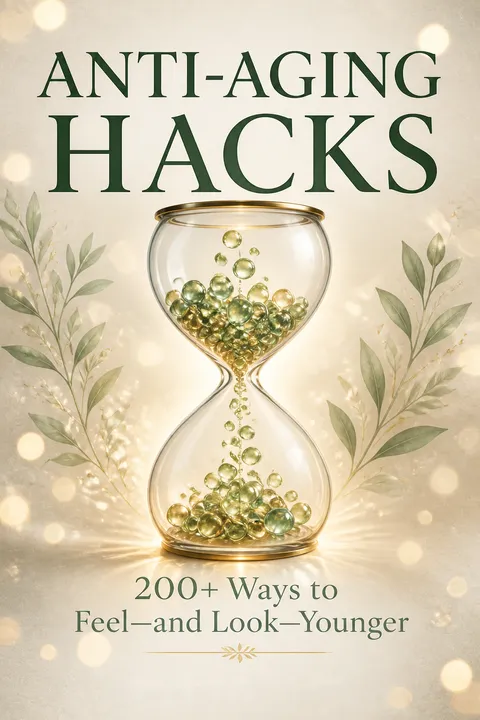
The practical thesis. Karen Asp’s 248 hacks make a simple argument: aging is unavoidable, but many habits that shape health, energy, and appearance can change. The book’s strongest organizing idea is a bundle of five “low-risk” behaviors: do not smoke, stay active, maintain a healthy weight, eat well, and drink alcohol moderately. A study tracking 123,000 Americans for more than thirty years estimated that a 50-year-old following all five might live about 43 more years if female and 38 if male, far longer than peers following none.
Not a personal forecast. Those figures come from population research, not a promise or an individual countdown. The useful lesson is that several ordinary choices can reinforce one another. Readers need not chase every hack; the highest-value starting point is a sustainable cluster of behaviors that protects health while supporting confidence at any age.
The book’s breadth is both its appeal and its editorial challenge: 248 tips can make aging feel manageable, but they can also make self-care resemble an endless maintenance job. The five-behavior bundle offers a better compass than the full menu. It shifts attention from looking younger to preserving the capacity to move, think, and participate in life. Population estimates are motivating, but they cannot account for every individual’s genes, resources, illness, or circumstances. The most defensible interpretation is not that lifestyle grants a fixed number of extra years, but that it improves the odds of healthier years.
Make plants the default, especially beans, greens, fruit, and whole grains
Build meals from plants. Asp repeatedly returns to beans, vegetables, fruits, nuts, seeds, and whole grains as the foundation of a longevity-minded diet. In the five Blue Zones, regions known for unusually long-lived populations, beans are a regular staple; some residents eat about a cup a day. Leafy greens are linked in cited research with lower heart and stroke risk, while fruit and vegetables supply fiber and antioxidants. The book also recommends replacing meat-based meals with bean or mushroom versions and choosing smaller oily fish when eating seafood.
Use a checklist, not a purity test. The Daily Dozen, a plant-focused food and activity checklist discussed in the book, includes beans, grains, berries, other fruit, greens, vegetables, flaxseed, nuts, spices, beverages, and exercise. Its value is practical variety, not flawless scorekeeping.
A plant-centered pattern is more useful than treating individual foods as magic ingredients. Beans, greens, and whole grains contribute different nutrients, and replacing processed meat with plants changes the overall composition of a meal rather than relying on one supposed superfood. That makes the advice adaptable across cuisines and budgets. The caution is that the book sometimes turns observational associations into confident-sounding lifespan claims. People in long-lived regions share many features besides diet, including social customs and daily routines. The Blue Zones are best read as examples of mutually reinforcing habits, not proof that one food explains exceptional longevity.
Break up sitting and train strength, balance, and cardiovascular fitness
Movement has two jobs. Planned exercise builds capacity, while ordinary movement interrupts long stretches of sitting. The book recommends at least 150 minutes of moderate activity each week, alongside strength training two or three times weekly. It also urges readers to stand or move about every thirty minutes, since a workout does not cancel out an otherwise sedentary day. Walking, taking stairs, active commuting, and moving during television all count toward a more active routine.
Train for independence. Muscle, balance, flexibility, and grip help with ordinary tasks as well as exercise. The sitting-rising test asks a person to get down to the floor and stand again with minimal support; a study of adults aged 51 to 80 linked lower scores with higher six-year mortality. It is a prompt to build capacity, not a diagnosis.
The distinction between exercise and the rest of the day is unusually useful. A scheduled workout develops fitness, but it does not make prolonged immobility disappear. Separating these two problems helps people avoid the familiar bargain of exercising for half an hour and then remaining seated for the next ten. Functional measures also give aging a concrete dimension: standing from the floor, carrying objects, and keeping balance matter more to daily freedom than a youthful appearance. Still, a test score can reflect injury, disability, or body shape as well as fitness. It should guide conversation and training, not rank people’s worth or predict an individual future.
Protect skin from sunlight every day, not only on beach days
Prevent cumulative damage. The book identifies sun exposure as a major driver of visible skin aging and a risk factor for skin cancer. UVA rays can pass through clouds and ordinary windows, so exposure can happen during a commute or at a desk as well as outdoors. Asp recommends broad-spectrum sunscreen of at least SPF 30, with reapplication about every two hours when exposed, plus UV-protective sunglasses, shade, and clothing. The same principle applies to hands, lips, neck, and chest, areas often missed when applying sunscreen.
Avoid tanning as a strategy. A tan is a sign of UV exposure, not evidence of safe protection. The book favors sunless tanning products over tanning beds and advises checking sunscreen dates and storage. Tomatoes or supplements may offer some protective compounds, but they do not replace sunscreen or other sun-safe habits.
Sun protection is one of the book’s clearest high-value recommendations because it addresses a preventable exposure with consequences for both appearance and health. Its emphasis on everyday settings is especially practical: a window seat, a long drive, or an overcast afternoon can all undermine the belief that sunlight matters only at the beach. Sunscreen works best as one layer in a broader strategy that includes clothing and shade, rather than as permission to stay exposed indefinitely. The larger lesson is preventive: consistent protection is easier than trying to reverse damage after it accumulates.
Guard sleep and recovery as seriously as diet and exercise
Make sleep conditions supportive. The book recommends seven to nine hours for adults, consistent bedtimes and wake times, and a cool, dark, quiet bedroom. Bright screens near bedtime can interfere with melatonin, a hormone involved in the sleep-wake cycle, so Asp suggests putting devices away thirty to sixty minutes before bed. If a person cannot sleep, briefly leaving bed for a quiet activity can help prevent the bed from becoming associated with frustration.
Give stress an outlet. Chronic stress is linked in the book with cardiovascular strain and shorter telomeres, the protective ends of chromosomes. The suggested tools are deliberately simple: slow counted breathing, meditation, regular exercise, enjoyable activities, and writing worries down with possible next steps. These are not substitutes for professional care when distress or insomnia persists.
Sleep and stress are often treated as optional extras after the supposedly serious work of diet and exercise. This book makes a better case for treating recovery as part of the system that supports those habits. A consistent bedtime routine, a dark room, and a screen boundary are environmental supports, not tests of character. The caution is that sleep problems can have medical, psychological, or caregiving causes that a better bedroom cannot solve. Practical routines may help, but persistent insomnia, depression, or overwhelming stress deserve more than another self-help tip.
Track function and health risks, not wrinkles alone
Measure what supports living well. The book proposes practical signals beyond appearance: waist circumference, resting heart rate, walking pace, strength, flexibility, and the ability to sit and rise from the floor. These measures can help someone notice changes and set a useful training goal. It also describes blood tests that can identify less familiar risks, including Lp(a), an inherited cholesterol-related particle that can raise cardiovascular risk, especially when early heart disease runs in a family.
Interpret results carefully. A measurement is a clue, not a verdict. A slow mile, high resting heart rate, or difficulty rising may have many explanations. The book’s stronger advice is to discuss concerning results with a clinician and use them to guide appropriate follow-up, rather than attempting to diagnose a disease from a home test or a single number.
The move from cosmetic markers to functional and cardiovascular ones gives the reader a more consequential definition of aging well. A waist measurement or a basic fitness test can make abstract health goals observable, while a family history can justify asking a clinician about risk that routine cholesterol numbers may not capture. But tracking only helps when the measure is meaningful and interpreted in context. Consumer testing can create false alarms, and a score can fluctuate with sleep, stress, medication, or temporary illness. The best use of numbers is to start a conversation and monitor trends, not to turn the body into a daily report card.
Build longevity into relationships, purpose, and shared activity
Connection belongs in health. The book links strong social ties with well-being and longevity, and suggests keeping a small circle of close friends rather than measuring social success by the size of a network. Purpose also matters: one study of adults averaging 65 found that those reporting stronger well-being, including a sense of purpose and control, were less likely to die during follow-up. Volunteering, community groups, faith communities, and shared activities are offered as ways to create connection and meaning.
Make participation practical. The advice is not to adopt a particular religion or maintain a packed calendar. It is to find regular contact built around something valued, such as a reading group, helping an organization, or walking with a friend. Even modest volunteer time can provide structure and a reason to show up for other people.
This section widens the idea of health beyond what a person eats or does at the gym. Relationships can provide emotional support, routine, and social influence, while purposeful activity gives those connections a shared direction. The mechanisms are likely varied, which is precisely why the advice is more compelling as a life-design principle than as a guaranteed longevity prescription. A fixed number of friends cannot fit everyone, and solitude is not automatically harmful. The relevant distinction is whether a person has connection and participation that feel sustaining, rather than whether they meet a numerical social target.
Choose evidence-based skin care over a cabinet of miracle fixes
Start with protection and gentleness. The book’s more credible skin-care advice is basic: use sunscreen, moisturize, cleanse gently, and avoid harsh or excessive exfoliation. It also discusses retinol, a vitamin A derivative, citing a small study in which adults aged 80 to 96 used a 0.4 percent preparation for 24 weeks and saw improvements in fine wrinkles and roughness. Vitamin C and ferulic acid are presented as antioxidant ingredients that may support protection from environmental damage.
Separate plausible from proven. Asp also offers many home remedies, from oils and food masks to ingredients applied to age spots. These are not all backed by equally strong evidence. A remedy that sounds natural can still irritate skin, and results vary. For persistent acne, unusual spots, or a reaction to products, a dermatologist is a more reliable guide than an expanding collection of kitchen treatments.
The strongest skin advice distinguishes prevention from cosmetic correction. Sunscreen and a gentle routine address repeated exposures and irritation; a topical product may help some visible signs, but it cannot restore every structural change associated with aging. The small retinol study is encouraging, yet its size and duration limit how broadly its results should be applied. This is a useful standard for evaluating the book’s many beauty hacks: ask whether the claim rests on controlled research, a plausible mechanism, or anecdote. That does not make low-risk experiments pointless, but it does make realistic expectations and attention to irritation essential.
Make healthier choices easier through small, repeatable swaps
Change the default. Many of the book’s most usable hacks are substitutions rather than sweeping rules: choose fruit instead of a sugary snack, sparkling water instead of soda, beans instead of meat for one meal, or stairs instead of an elevator. A timer can prompt movement breaks, while preparing meals ahead can make vegetables and whole foods easier to reach than packaged snacks. These choices reduce reliance on motivation in the moment.
Adapt, then repeat. The book also recommends reducing exposure to secondhand smoke, ventilating the home, and arranging screens so the neck stays upright. None requires an elaborate anti-aging regimen. The best selection is the change that fits a person’s actual routine and can be repeated. A modest habit practiced consistently is more useful than a dramatic plan abandoned after a week.
The format of the book itself points toward a sensible method: treat the tips as a menu, not a command to optimize every corner of life. Behavioral economics describes how defaults and friction influence choices; a healthy option that is visible and convenient is easier to repeat than one that requires constant restraint. This also brings a needed dose of realism. Access to fresh food, safe walking routes, time, money, and stable work varies widely, so not every hack is equally available. Effective self-care begins with the smallest change that is both relevant and feasible in a particular life.
Analysis
Anti-Aging Hacks is a practical health anthology, not a tightly argued scientific monograph. Its 248 short entries move among food, movement, sleep, social life, skin care, and household exposures. That structure makes the book easy to browse and difficult to compress: it includes useful behavioral principles beside narrowly cosmetic suggestions and claims supported by very different kinds of evidence. The adaptation therefore gives priority to recurring themes with the greatest potential reach, rather than treating every tip as equally important.
The central insight is that aging is not a single process with a single lever. The book’s strongest recommendations often work across several domains. Regular movement supports strength and independence; plant-rich eating supplies fiber and diverse nutrients; sun protection reduces cumulative skin exposure; and social connection can support well-being. These habits are less glamorous than a specialized serum or an unusual home remedy, but they are more coherent as a foundation. Their value lies partly in interaction: better sleep may make activity easier, and social routines can make healthy behaviors more durable.
The book also invites careful reading of evidence. It cites studies, expert guidance, and population associations, but those forms of evidence do not establish the same thing. A link between a habit and lower mortality does not prove that habit alone caused the difference. Nor does a result from a small skin study establish a broadly effective treatment. Some of the book’s numerical estimates are best understood as illustrations of possible associations, not personal predictions. The more confident claims about individual foods, supplements, and household exposures merit particular caution.
Its most useful practical model is selective experimentation: identify a meaningful risk or friction point, choose a manageable intervention, and repeat it. That approach preserves the book’s spirit without creating a new burden of perfect self-surveillance. The ultimate aim is not to erase visible age. It is to protect health, function, and participation in daily life while accepting that no routine can control every consequence of time.
Review Summary
Anti-Aging Hacks receives mixed reviews, with an average rating of 3.75 out of 5. Readers appreciate its practical tips and wide range of topics covered, including skincare, nutrition, and fitness. Some find the book informative and easy to implement, while others criticize it for repetition and lack of scientific depth. Many readers note that some tips are common knowledge, but others find valuable new ideas. The book is praised for its quick-read format but criticized for focusing more on appearance than overall health.
People Also Read



Glossary
Advanced glycation end products (AGEs)
Sugar-related damaging moleculesAGEs are compounds formed when sugars react with proteins or fats in the body, and they can also occur in foods, especially after high-temperature dry cooking. The book connects their accumulation with impaired collagen and elastin, which support skin structure, and with several chronic diseases. Its practical advice is to limit added sugar and favor moist, lower-temperature cooking.
Telomeres
Protective chromosome endsTelomeres are protective structures at the ends of chromosomes. They tend to shorten as cells divide, and researchers use their length as one marker associated with cellular aging. The book relates shorter telomeres to factors such as inactivity, stress, and some dietary patterns, while noting that active habits are associated with longer telomeres. They are a research measure, not a personal lifespan clock.
Blue Zones
Long-lived population regionsBlue Zones are five regions identified in the book as places where long life is relatively common: Okinawa in Japan, Loma Linda in California, Nicoya in Costa Rica, Ikaria in Greece, and Ogliastra in Sardinia. They are presented as examples of shared lifestyle patterns, including regular movement, close social ties, and frequent consumption of beans and other plant foods.
Daily Dozen
Plant-food and activity checklistThe Daily Dozen is a checklist associated with physician and nutrition researcher Michael Greger. It groups daily targets for beans, grains, berries, other fruit, greens, vegetables, cruciferous vegetables, flaxseed, nuts, spices, beverages, and exercise. In the book, it serves as a practical way to remember a broad plant-focused eating pattern, rather than a requirement to follow a specific menu.
Intermittent fasting
Scheduled eating and fastingIntermittent fasting is an umbrella term for eating patterns that alternate a defined period of eating with a period of not eating. The book describes a comparatively simple version: leaving 12 to 14 hours between the last meal of the day and breakfast. It notes that research is ongoing and presents the schedule as a possible routine, not a universal prescription.
High-intensity interval training (HIIT)
Alternating hard and easy exerciseHIIT alternates short periods of vigorous exercise with recovery periods of lighter activity or rest. The book describes it as a time-efficient way to improve cardiovascular fitness and recommends that people limit intense sessions to one or two times a week. The appropriate activity and intensity depend on a person’s fitness, health, and joint status.
Fitness age
Fitness compared with age normsFitness age is an estimate of physical fitness expressed as an age-like measure, based on inputs such as waist size, weight, heart rate, and exercise habits. It is intended to show whether a person’s fitness profile resembles that of younger or older groups. The book presents it as a motivating indicator that can change with activity, not as a medical diagnosis.
Sitting-rising test (SRT)
Floor-to-stand function checkThe sitting-rising test asks a person to sit on the floor and return to standing while using as little support as possible. Its score reflects a combination of balance, flexibility, and strength. The book cites a study linking lower scores among adults aged 51 to 80 with higher mortality over six years. The test can prompt attention to function, but cannot determine an individual’s prognosis.
Trimethylamine N-oxide (TMAO)
Gut-derived blood compoundTMAO is a compound produced when gut bacteria process substances including choline and L-carnitine, which occur in foods such as red meat, egg yolks, and dairy. The liver converts bacterial trimethylamine into TMAO. The book describes studies associating high TMAO levels with cardiovascular risk and discusses blood testing, while recognizing that the marker and its clinical use are specialized.
Lipoprotein(a), Lp(a)
Inherited cholesterol-related risk markerLp(a) is a cholesterol-carrying particle whose level is largely inherited. High levels are associated with increased risk of cardiovascular disease, blood clots, and stroke. The book suggests discussing a test with a clinician when there is a family history of early heart attack or stroke, or other relevant risk factors. Lifestyle changes may lower overall cardiovascular risk even if they do not lower Lp(a) itself.
Sarcopenia
Age-related muscle lossSarcopenia is the age-associated loss of muscle mass and strength. The book explains that declining muscle can affect metabolism, mobility, and the ability to carry out daily activities, and can increase vulnerability to falls. Regular strength training is presented as a way to preserve or build muscle and support independence as people age.
Hara hachi bu
Stop before complete fullnessHara hachi bu is a Japanese eating practice described in the book as stopping when roughly 80 percent full. It encourages attention to fullness rather than eating automatically until a plate is empty or the stomach feels completely full. The book suggests slowing down, taking smaller bites, and savoring food as ways to notice when to stop.
Forest bathing
Mindful time among treesForest bathing, known in Japanese as shinrin-yoku, means spending unhurried time in a wooded setting without focusing on reaching a particular destination. The book describes walking, sitting, and paying attention to the surroundings as the practice. It links forest bathing with relaxation and possible health benefits, including lower blood pressure and improved sleep.
Low-risk lifestyle
Five protective daily behaviorsThe book uses low-risk lifestyle for a combination of five behaviors examined in a long-term study of Americans: not smoking, maintaining a healthy body mass index, exercising regularly, drinking alcohol moderately, and following a healthy diet. The combined pattern was associated with longer projected life expectancy. It describes a population-level association, not a guarantee for any individual.
Download PDF
Download EPUB
.epub digital book format is ideal for reading ebooks on phones, tablets, and e-readers.








