

Key Takeaways
Treat forgetting as evidence about an idea's path, not its importance.
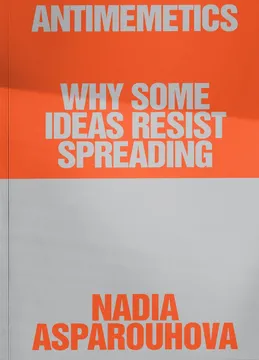
Some ideas slip away. Nadia Asparouhova opens with her own difficulty recalling personal experiences. She came to understand that many of her memories were really records she had written, photographs she had revisited, or stories repeated by other people. Her experience gives the book its central term: an antimeme is an idea that resists being remembered, understood, or engaged with, despite its significance. It is not simply a difficult or boring idea. It can be compelling in the moment, then vanish from attention.
The public forgets, too. More than two-thirds of Americans want to end the twice-yearly clock change, yet the issue repeatedly falls from view. Handwashing remains inconsistent even in healthcare settings, despite its known benefits. These examples suggest that awareness alone cannot explain why important ideas fail to shape behavior.
The opening distinction is useful because it separates an idea's value from its visibility. Cognitive science likewise distinguishes knowing a fact from retrieving it at the moment a decision requires it. The book extends that problem from individuals to societies: a public can endorse a policy in principle and still fail to keep it salient enough to act. The concept is strongest as a lens for investigating that gap, not as a catch-all label. Forgetting can reflect competing priorities, weak incentives, or institutional bottlenecks, not only an idea's antimemetic character.
Build a bridge between public reach and private rehearsal.
Two online worlds overlap. Public feeds are good at spreading ideas quickly, but their speed can strip away context and reward performance. Private spaces, especially group chats, let people test uncertain thoughts among trusted contacts. The book describes this retreat as a dark forest dynamic: people keep conversations out of public view because attention can bring unwanted scrutiny. These private spaces are not replacements for public platforms. They are places where ideas and relationships can develop before, or alongside, wider exposure.
Different networks do different work. Research on the Occupy Wall Street movement found that Twitter helped information travel between communities, while YouTube's more tightly connected networks reinforced shared interpretations. The useful model is not public versus private, but circulation plus deliberation. Each depends on the other, much like a public street and a private home.
This account improves on the familiar claim that social media simply connects people or isolates them. Network structure shapes what connection is for: sparse ties can introduce unfamiliar material, while dense ties build common language and trust. That distinction matters in workplaces, movements, and families, not just online. Private discussion can support nuance, but it can also shelter unchecked assumptions. The key question is whether ideas can cross the boundary in both directions, carrying context outward and new evidence back in.
Measure an idea's resistance before demanding that it spread.
Three forces shape spread. The book adapts epidemiological language to ideas. Transmission rate means the chance that someone who encounters an idea will pass it along. Immunity is the share of a network resistant to it. A symptomatic period is how long the idea continues to affect people. An antimeme also has a drag coefficient: the resistance it must overcome before it spreads. These properties vary across communities, so the same idea can be ordinary in one group and taboo in another.
Taboos can change gradually. Blogger Curtis Yarvin's political writing remained a taboo in many circles after he was removed from a conference lineup over separate offensive remarks. Some people nevertheless read his work privately, and parts of his critique of public social platforms gained wider discussion over time. That change did not make all his views acceptable. It shows how an idea can emerge selectively from social resistance.
The model encourages a more precise question than whether an idea is viral: which people receive it, under what conditions, and for how long does it matter? It also makes taboo socially legible as risk management, not proof that a belief is either wise or wicked. The epidemiological analogy has limits, since people interpret and contest ideas rather than simply catch them. Still, separating receptivity, transmission, and impact helps explain why condemning an idea can sometimes increase curiosity, while leaving its core claims unexamined.
Dense private groups can turn small beliefs into exotic, dangerous species.
Isolation encourages variation. Darwin saw species adapt differently on separate Galapagos islands. Asparouhova uses that image for dense online groups: members repeatedly test and refine ideas among people who share a context, with less outside influence to challenge them. Group chats may feel like shelters from public controversy, but members belong to multiple networks and carry ideas between them. A private group is not sealed containment.
Trust can accelerate harm. The book describes the Wolverine Watchmen, an extremist group whose members used online groups and encrypted chats to develop relationships and intensify grievances. In 2020, authorities arrested thirteen men accused of plotting to kidnap Michigan governor Gretchen Whitmer. A close network can make ideas more coherent and actionable, not necessarily more accurate or benign. Once ideas cross between groups, they may persist and travel farther than an isolated movement could.
The island metaphor captures a genuine tension: strong ties make coordination easier, but they also reduce the friction that might expose weak claims. This resembles an organizational problem in which trust supports cooperation while limiting dissent. The danger is not privacy itself; intimate groups can sustain care, creativity, and honest disagreement. The sharper diagnostic is whether a network has ways to encounter outside evidence and permit internal challenge. Seclusion without those channels can make confidence look like knowledge.
Give urgent causes deadlines and outcomes, or they will consume attention.
Some ideas become gravitational. A supermeme is an idea that spreads readily and holds attention for a long time. It often connects to deep fears or values, seems to affect everyone, and remains broad enough to invite many interpretations. War is a historical example. In recent decades, climate change and artificial intelligence risk have also become organizing narratives. Yale's climate-attitudes tracking found that the share of American adults in its most concerned category rose from 18 percent in 2017 to 33 percent in 2021.
Urgency can focus work or swallow it. The book contrasts open-ended crisis talk with Operation Warp Speed, the public-private effort that developed COVID-19 vaccines on a compressed timeline. A defined objective and a clear endpoint helped convert intense attention into coordinated action. A permanent state of emergency, by contrast, can keep a cause alive without resolving anything.
The distinction between a mobilizing crisis and a self-perpetuating one is valuable for evaluating campaigns, institutions, and personal commitments. A shared threat can coordinate resources that fragmented actors would not otherwise assemble. But urgency is also a rhetorical asset, and the book's categories do not by themselves establish whether a threat is proportionate or whether the proposed response works. Practical goals, measurable progress, and an exit condition help test whether attention is producing results rather than merely feeding the narrative.
Aim attention deliberately; the mind makes its focus feel like reality.
Attention selects experience. The author describes focused meditation practices in which sustained concentration can produce unusually intense mental states, including the jhanas. The example illustrates a broader claim: what attention rests on becomes vivid, while other parts of the world recede. Attention is not just a spotlight on reality; it helps determine which version of reality feels present.
The mind also hides inconvenient facts. Robin Hanson and Kevin Simler call one mechanism self-discretion: the mind's tendency to keep threatening information out of conscious focus. Someone may explain a charitable donation as pure generosity while overlooking motives involving status or guilt. The author also recalls repeatedly postponing a will after becoming a parent. The task mattered, but required contemplating death and planning. This filtering protects people from overload, yet can make essential actions hard to sustain.
This view connects attention to both perception and motivation. It explains why reminders and routines can matter more than agreement: people often know what matters but lose access to that knowledge when the relevant moment arrives. The concept also invites humility, since blind spots are not limited to other people's self-deception. Still, focusing attention is not an unlimited cure. Threatening information can overwhelm or mislead as readily as it can clarify. The practical challenge is to make important realities accessible without demanding constant vigilance.
Hide genuinely hazardous knowledge without making taboo itself a badge of value.
Some knowledge can cause harm. Philosopher Nick Bostrom uses information hazard for knowledge whose spread can create risks. Examples include sensitive personal data, instructions that enable violence, or information that reveals something a sender would rather keep private. Hard suppression uses rules or penalties. Soft suppression relies on norms, indifference, or framing an idea so it attracts little notice.
Prohibition can advertise its target. A secret may become more enticing simply because it is restricted. The book contrasts this with obscurantism, a form of intellectual camouflage that makes an idea seem dull or unremarkable. Politicians can also frame an issue to provoke fear or boredom. Yet unpopularity is not proof of danger. The difficult task is deciding whether an idea poses a real hazard or is merely a taboo that a community needs to examine.
The distinction between restricting access and reducing an idea's appeal is useful in safety design, where publicity can itself increase risk. It also clarifies why moderation cannot be reduced to a simple free-speech-versus-censorship contest: platforms and institutions face genuine tradeoffs between openness and harm. The hard question is who gets to classify a hazard, with what accountability, and how decisions can be revisited. Suppression may protect people, but it can also preserve the power of those who benefit from silence.
Let trusted truth-tellers name what a network is ready to hear.
Truth-tellers surface buried knowledge. They give voice to doubts or observations a group has struggled to express. Their role differs from attention-seeking provocation: the point is to reveal something useful to the community, not simply to shock it. Timing matters. A truth-teller may be punished if the network is unready, or ignored if the insight arrives after the moment has passed.
Credibility can come from unexpected places. In 2019, sixteen-year-old Greta Thunberg challenged world leaders over the gap between climate commitments and outcomes. Her youth helped frame the criticism as a demand from those facing the future consequences. Urban writer Jane Jacobs, who lacked formal planning credentials, similarly challenged expert assumptions by observing how city life actually worked. Both examples show how outsiders can make accepted blind spots visible.
Truth-tellers function as social sensors: they make it possible for a group to inspect assumptions that ordinary incentives keep hidden. Their effectiveness depends not only on accuracy, but on whether listeners perceive their motives as aligned with a shared interest. That perception can open space for neglected evidence. It can also become a gatekeeping test, since people without recognized innocence or status may be dismissed even when their claims are sound. A healthy network needs more than a charismatic messenger; it needs ways to assess the message.
Pair every revelation with champions who can make it institutional memory.
Awareness needs custodians. Truth-tellers may bring an overlooked problem into view, but champions keep it in view and work to embed a response in institutions. The book calls this distributed remembering: a society shares the burden of remembering across people, records, roles, and routines instead of expecting everyone to attend to every issue.
Continuity beats periodic outrage. Public interest in daylight saving time spikes around each clock change, then falls away. Despite broad opposition and a unanimous Senate vote in 2022, repeal legislation expired without House passage. By contrast, long-serving staff helped sustain the complex work behind the Affordable Care Act across changes in political leadership. Protocols and records can preserve knowledge, though outdated procedures can also become bureaucracy that nobody understands or can easily change.
This insight brings the argument from media dynamics into institutional design. Memory becomes durable when it is stored in artifacts and assigned to people with time, expertise, and authority to act. That is a stronger account of reform than relying on public attention alone. Yet continuity is not automatically progress: institutions can preserve harmful routines as efficiently as useful knowledge. Champions need both persistence and a way to test whether the systems they maintain still serve their purpose.
Protect some ideas from premature definition, measurement, and exploitation.
Not everything improves under a label. Peter Limberg's idea of vibe consciousness describes a shift toward experiences that are felt more readily than they can be precisely stated. Concepts such as love, community, or culture may lose something when turned into scores, products, or formulas. Their ambiguity can make them harder to exploit or control, while allowing people to approach them through shared experience.
A gathering can embody the idea. At Vibecamp, an event organized by people connected through online communities, attendees reportedly kept phones away and took few photographs. The organizers favored informal time together over a conventional program of talks and booths. The point was not to reject online life, but to create room for unplanned interaction. Ambiguity can shelter experimentation, though it can also hide who belongs or who sets the norms.
The defense of the unmeasurable is a useful counterweight to the reflex to turn every human value into a metric. Measurement can improve accountability, but it can also narrow the thing being measured until it becomes a proxy for the whole. At the same time, vagueness is not inherently humane: it can let groups evade scrutiny or exclude outsiders without explanation. The productive question is where precision helps coordination and where it flattens an experience that depends on trust, interpretation, and time.
Analysis
The book's central achievement is to treat forgetting as a social process rather than a private defect. Its model links individual attention, network structure, and institutional persistence: people filter what they can bear to notice, communities influence which ideas can circulate, and organizations decide what remains available after public interest fades. That layered account explains why awareness campaigns often fail. An idea may be understood but not retrievable, accepted privately but costly to say aloud, or briefly visible without anyone empowered to act on it.
The strongest contribution is the distinction between spread and importance. Digital platforms made rapid replication conspicuous, encouraging the assumption that significant ideas naturally become popular. The book corrects that bias by showing how private conversation, taboo, ambiguity, and deliberate restraint can also carry consequential knowledge. Its public and private network model is especially helpful because it avoids treating group chats as either democratic havens or inherently dangerous echo chambers. Their effects depend on density, trust, and contact with other networks.
The framework is best understood as a diagnostic vocabulary, not a complete causal theory. Terms such as immunity and drag coefficient clarify patterns, but do not yet supply reliable measurements for comparing political or cultural ideas. The rise of a once-taboo thinker, for example, can be described as shifting network receptivity, but that description does not isolate why those shifts occurred or prove a single pathway caused them. Moral content also remains outside the mechanics: a harmful ideology and a neglected reform can travel by similar routes.
The practical conclusion is therefore less about making every important idea viral than about building systems that can notice, test, and retain ideas without demanding constant attention from everyone. That means protecting spaces for uncertain discussion, preserving records, supporting candid messengers, and assigning durable responsibility for action. It also means checking whether the resulting institutions still deserve the memory they preserve.
Glossary
Antimeme
An idea that resists attentionAn idea that is difficult to remember, understand, or engage with despite its significance. It may be compelling when encountered yet soon forgotten, remain socially costly to discuss, or pass unnoticed. The term describes resistance to attention and transmission, not an idea's truth, moral value, or complexity.
Meme
A replicating cultural ideaFollowing Richard Dawkins, a meme is a cultural element that spreads and changes through imitation, much as a gene replicates through biological inheritance. Symbols, customs, phrases, and online posts can all function as memes. In the book, the term highlights how cultural ideas travel between people and become widely shared.
Memeplex
A mutually reinforcing idea groupA memeplex is a cluster of memes that reinforce one another and become established within an institution or shared identity. A religion or political party can operate as a memeplex because its stories, symbols, practices, and beliefs support one another and help the whole system persist and spread.
Mimetic desire
Desire shaped by imitationRené Girard's account of how people learn what to want by observing models. A person desires an object partly because someone they admire or compete with desires it. When people pursue the same scarce objects, imitation can become rivalry, which groups may try to resolve by blaming and expelling a scapegoat.
Drag coefficient
Resistance to an idea's spreadThe resistance an idea must overcome before it can circulate more easily through a network. An idea's drag depends partly on the beliefs and social risks present in that network. High drag can keep an important idea obscure, while changes in receptivity or transmission can let it cross into wider discussion.
Transmission rate
Chance an idea gets passed onThe probability that a person who has encountered an idea will pass it to connected people. The rate depends both on the idea's features and on how receptive the network is. An idea can transmit readily in one community and struggle in another, even when its content remains unchanged.
Immunity
Resistance within a networkThe share of people in a network who are resistant to an idea. Resistance may reflect existing beliefs, social norms, lack of interest, or concern about consequences. In the book's epidemiological analogy, an idea spreads more easily when network immunity is low and transmission between connected people is strong.
Symptomatic period
Duration of an idea's effectsThe period during which a person actively expresses or is affected by an idea. A passing joke may have a short symptomatic period, while a taboo, a life-changing belief, or a civilizational threat may shape attention and behavior for years. The term distinguishes an idea's duration of impact from its ease of spread.
Supermeme
A widely spreading, attention-holding ideaAn idea that spreads readily and holds attention over time because it feels consequential. Supermemes often connect to strong values or fears, seem to affect many people, and remain broad enough to support different interpretations. They can coordinate resources around a shared challenge, but may also keep people trapped in unresolved crisis narratives.
Self-discretion
Mental concealment of threatening factsA term used by Robin Hanson and Kevin Simler for the mind's tendency to keep uncomfortable, self-threatening information from becoming prominent in conscious thought. It can protect a person's self-image or social standing, but also make it hard to recognize motives, risks, or tasks that require sustained attention.
Information hazard
Knowledge that can cause harmNick Bostrom's term for information whose spread can create harm. Examples include sensitive personal data, knowledge that enables violence, or information that reveals something unwanted about its source. The concept helps distinguish risks tied to dissemination from ordinary disagreement, while leaving difficult judgments about access and suppression.
Obscurantism
Camouflage that reduces noticeA strategy of making an idea less visible or memorable by presenting it as dull, obscure, or unremarkable. The book treats obscurantism as a soft alternative to direct bans: rather than forbidding an idea, it can be framed so that people do not attend to it. The tactic can protect sensitive knowledge or conceal important truths.
Truth-teller
Messenger of suppressed shared knowledgeA person who brings a group's difficult or suppressed observations into public view. A truth-teller's role is distinct from provocation for personal attention: the value lies in expressing something the network needs to confront. Effectiveness depends on timing, credibility, and whether the community is ready to hear the message.
Champion
Keeper and advocate of an ideaA person who takes responsibility for preserving an idea and translating it into lasting practice or institutional change. Unlike a truth-teller, who may simply reveal what has been overlooked, a champion sustains attention, builds support, and helps embed the idea in organizations, procedures, or public policy.
Distributed remembering
Shared storage of social memoryA way for a society to retain more knowledge than any individual can keep in mind. Memory is distributed across people, records, institutions, routines, and artifacts. This arrangement allows different champions to attend to different issues, though the systems holding knowledge may also preserve outdated or harmful practices.
Antimemeplex
A system of mutually hidden routinesThe book's term for a cluster of procedures or assumptions that collectively repel attention. Bureaucratic systems can function this way when many interdependent rules make the whole difficult to understand, question, or change. Unlike a memeplex that reinforces ideas through visibility and repetition, an antimemeplex persists partly through complexity and inattention.
Vibe consciousness
Experience beyond precise definitionPeter Limberg's term for a mode of cultural understanding that emphasizes felt experience over easily copied, explicit ideas. A vibe may spread socially, yet resist precise definition. The book applies the concept to qualities such as community or belonging, which can be diminished when reduced to formulas, scores, or products.
Download PDF
Download EPUB
.epub digital book format is ideal for reading ebooks on phones, tablets, and e-readers.








