

Key Takeaways
Treat anxiety as human information, not automatically as a defect.
A wider definition. Fear usually points to a recognizable danger; anxiety is often a diffuse unease about what might happen, or about existence itself. Chopra argues that biology, personal history, inner conflict, and social conditions can all contribute. No single account explains every form. Anxiety may signal a disorder that needs treatment, but it can also be a normal response to uncertainty, limited time, and responsibility.
Philosophy changes the frame. Reflection is not offered as a cure or a substitute for care. It can help people ask what their anxiety means, and whether they are suffering from the feeling itself or from the belief that any anxiety proves something is wrong with them. Chopra's guiding possibility is learning to live with anxiety without adding shame about having it.
The value of this distinction is practical: it avoids treating every uncomfortable emotion as evidence of illness, while leaving room for clinical diagnoses. In psychology, the same bodily alarm can be adaptive in one setting and debilitating in another; context and impairment matter. Philosophical interpretation adds a question symptom checklists cannot answer alone: what does this fear mean in this person's life? The caution is equally important. Reframing cannot reliably resolve panic, trauma, or severe anxiety disorders on its own. A layered account is more credible than a contest between medicine and meaning.
Let grief explain your anxiety's shape, not necessarily its origin.
Loss changed the landscape. Chopra recounts losing his father suddenly when he was twelve, then his mother to cancer fourteen years later. Afterward, ordinary life seemed vulnerable to catastrophe, and each new loss could revive the terror of the earlier ones. Yet psychotherapy helped him see that anxiety had appeared much earlier: childhood fears included night terrors, fear of being late, and anxiety about school and social life.
History adds a signature. His parents' deaths did not create anxiety from nothing; they gave a longstanding disposition new material and force. Later, immigration, relationships, work, and parenthood each supplied distinct worries. The lesson is not that trauma is unimportant, but that a painful event may intensify and reshape an existing pattern rather than fully explain it.
This account resists a tempting but overly neat causal story: one terrible event explains a whole emotional life. Trauma research often distinguishes vulnerability from precipitating events, and the distinction matters because it allows multiple causes to be true at once. A person's temperament, losses, and surroundings can interact rather than compete as explanations. The memoir also models a useful question for reflection: did this experience begin the anxiety, or did it teach an old anxiety what to fear? That inquiry should remain open, not become a reason to discount grief or delay appropriate treatment.
Use Buddhist practice to loosen the grip of a permanent self.
Suffering and change. Chopra interprets Buddhist dukkha as more than pain: it is the unease of wanting stability in a changing world, fearing loss, and misunderstanding what the self is. Buddhist teaching describes a person not as an unchanging inner core, but as shifting processes of body, sensation, perception, intention, and awareness. The familiar name for a person is useful, but it does not prove that an unchanging self exists beneath those processes.
Practice attention. The Four Noble Truths frame suffering as real, explainable, capable of relief, and addressable through disciplined practice. Mindfulness and meditation help people observe thoughts rather than immediately obey them, while attention to the present can soften the grip of regret and anticipation. The goal is not a quick calm, but a gradual change in how one relates to uncertainty and desire.
The Buddhist account usefully shifts attention from controlling every external event to examining the mind's habits of attachment and prediction. Contemporary mindfulness approaches similarly train people to notice thoughts as mental events, a capacity often called decentering. But the no-self claim is a philosophical and spiritual interpretation, not a clinical finding that every reader must accept. It can be illuminating for some and alienating for others. Its practical contribution may survive that disagreement: a thought can matter deeply without being a command, and identity need not be treated as a fixed object under constant threat.
Accept that freedom brings uncertainty, then make a choice anyway.
No ready-made script. Existentialist thinkers reject the idea that people arrive with a complete purpose or fixed life plan. Sartre's account, often summarized as existence preceding essence, treats identity as something shaped through action. That freedom is not simply liberating: choosing one path means accepting uncertainty and closing off others. Anxiety can arise because the future has not been settled for us.
Responsibility has limits. The book does not present choice as effortless or equal for everyone. Family, class, gender, race, and historical conditions shape which options are visible and possible. Still, choices matter within those constraints. The existentialist challenge is to notice when conformity is being mistaken for a freely chosen life, and to take responsibility for the actions that remain available.
This view connects anxiety to agency rather than treating it only as malfunction. Research on decision-making supports a modest version of the point: greater choice can increase perceived responsibility and regret, especially when outcomes are uncertain. Yet existential language can become unfair if it implies that people can simply choose their way out of poverty, discrimination, or coercion. The book's attention to constraints helps prevent that error. A useful distinction is between responsibility for every circumstance, which no one has, and responsibility for one's response where genuine room to act exists.
Use anxiety to find the decision you keep postponing.
Possibility pulls both ways. For Kierkegaard, anxiety appears when a person senses what they could do but cannot know in advance what the choice will bring. The feeling is ambivalent: a possibility can attract and frighten at once. Standing near a cliff, for instance, can be disturbing not only because of danger, but because one recognizes the capacity to jump. In everyday life, a difficult relationship or career decision can carry a similar tension.
Look for the blocked move. Anxiety may point toward a choice, responsibility, or change that a person keeps circling without accepting its consequences. Chopra links this to procrastination: avoiding a task may briefly soothe distress while deepening it as the deadline approaches. The practical question is not simply how to feel less anxious, but what action or commitment the anxiety is gathering around.
This is a strong use of anxiety as a prompt for inquiry, not as an oracle. Feelings can reveal what a person values or fears losing, but they do not establish which option is wise. Decision science also shows that delaying can be rational when information is incomplete or stakes are high. The useful test is whether postponement is producing better information or merely repeating the same loop. That distinction preserves Kierkegaard's insight about action while avoiding the idea that every anxious impulse should be followed.
Question the inherited standards that make your life feel morally deficient.
Values have a history. Nietzsche asks what lies behind the moral rules people inherit. Standards of goodness, success, and respectability can reflect the needs of those who established them, yet people may internalize them as absolute truths. When they cannot meet those standards, they can feel guilty, inferior, or spiritually failed. The resulting anxiety may be less a verdict on the person than evidence of conflict with a powerful social ideal.
Uncertainty is costly. Nietzsche's challenge is not merely to discard old rules. Without an unquestioned authority, people face the difficult task of deciding what deserves loyalty and building values they can affirm. That work can be frightening. Chopra also notes a limit in Nietzsche's vision: its ideal of independence is elitist, and not everyone has equal power to escape social demands.
The question of who benefits from a norm connects Nietzsche to modern sociology, which studies how institutions make particular expectations seem natural. That perspective can loosen unnecessary shame and help distinguish ethical responsibility from status anxiety. Still, inherited standards are not all oppressive, and personal authenticity alone cannot settle moral questions. Shared rules can protect people from harm as well as enforce conformity. The sharper task is to examine a norm's effects and origins, then decide whether it deserves allegiance, rather than assuming either tradition or rebellion is automatically virtuous.
Let mortality clarify your priorities instead of hiding beneath routine.
Nothingness beneath the worry. Paul Tillich describes anxiety as awareness of nonbeing, the possibility that life and identity will end. Heidegger adds that anxiety can make the familiar world feel strange, exposing how much meaning depends on human habits and shared assumptions. A missed call or a career setback may feel enormous partly because it touches deeper fears about loss, death, and whether a life has been well lived.
The ordinary can disclose. Routine often keeps these questions out of view, but anxiety can interrupt routine and make priorities visible. Chopra's personal story shows how parental deaths made mortality impossible to treat as an abstract idea. This does not mean every worry secretly concerns death. It means asking what deeper loss, limitation, or uncertainty might be giving a particular fear its force.
Mortality awareness can sharpen priorities, a theme also found in research on how people respond to reminders of death. Such reminders do not always produce wisdom; they can also intensify defensiveness and attachment to familiar beliefs. The book's more measured invitation is to treat the feeling as an opening for reflection, not as proof of a single hidden cause. Ordinary anxiety may arise from concrete pressures, too. Asking what lies beneath a fear can deepen understanding, provided the answer is discovered rather than imposed.
Read recurring fear as a clue to conflict or remembered loss.
The mind can divide. Freud's theories treat anxiety as a signal of tensions among desire, self-protection, and internalized rules. He proposed several accounts over time: anxiety as undischarged bodily energy, as a response to inner conflict, and as a warning that an earlier danger may be recurring. In this final account, present-day events can revive feelings associated with helplessness or loss, even when the current trigger seems small.
Symptoms can have a history. Freud believed a phobia or avoidance could make a diffuse inner conflict feel more concrete and manageable. Chopra applies this lens to jealousy, social anxiety, and fear of abandonment: a delayed reply, for example, may carry the emotional weight of earlier separation. Psychoanalytic inquiry asks what desire, guilt, or remembered loss a symptom may be organizing, rather than assuming the reaction is meaningless.
The lasting strength of this framework is its insistence that symptoms can make sense within a person's history, even when they appear irrational from the outside. That idea informs many forms of psychotherapy. Freud's specific theories about libido, birth, and childhood development remain contested and should not be treated as settled explanations. A recurring fear may have many causes, including current conditions and biology. The productive question is therefore exploratory: what associations does this fear carry for this person, and what evidence supports that interpretation?
Change anxiety-producing conditions, not only your private response.
Anxiety has a social address. Marx's account of alienated labor describes workers separated from control over their work and its products. Chopra connects that estrangement to a world that can feel unfamiliar and hostile, even though people helped build it. Financial insecurity, status competition, isolation, and opaque systems can intensify anxiety. Marcuse warns that calling all distress an unavoidable feature of existence can excuse conditions people could change.
Personal and political work coexist. Meditation or reflection may help someone respond differently, but they cannot by themselves provide secure housing, fair work, or accessible care. The book argues for social critique and action alongside individual self-understanding. Material improvements can reduce preventable fear, even if they cannot eliminate grief, mortality, or uncertainty.
This account brings anxiety into conversation with social determinants of health: income, housing, work conditions, and social support shape mental well-being. It corrects the tendency to locate every problem inside an individual. The reverse reduction would also be a mistake. Structural reform cannot make people immortal or protect every relationship from loss. A layered explanation is more useful: distinguish suffering produced by avoidable conditions from distress rooted in human limits, then respond at the level where change is possible.
Practice living with anxiety, while treating disabling symptoms seriously.
Build a workable response. Chopra recommends facing anxiety rather than organizing life entirely around avoiding it. Mindfulness can create distance from spiraling thoughts; attention to the present can interrupt fearful prediction. A wider view, found through nature, meaningful work, art, or service, can loosen self-absorption. Ongoing activities without a single finish line, close relationships, and political engagement can give life shape without requiring a perfect outcome.
Care is not surrender. The book does not promise anxiety will disappear. Medication may make severe symptoms more manageable and allow people to function or engage in therapy, but it cannot answer existential questions or repair harmful social conditions by itself. When anxiety is incapacitating, professional help matters. The aim is not to romanticize suffering, but to reduce avoidable distress while making room for the uncertainty that remains.
The combination of acceptance and treatment avoids two familiar traps: demanding that people conquer every anxious feeling, and romanticizing serious illness as a source of insight. Exposure-based therapies, mindfulness, medication, and social support can serve different needs; no single tool fits every person. The book's emphasis on meaning is most helpful when paired with clinical judgment and material support. A reader need not choose between reflection and relief. The first priority is safety and functioning, with philosophical inquiry serving as one resource among several.
Analysis
Chopra's book is best understood as a philosophical map of anxiety, not a unified causal theory or treatment protocol. Its distinctive claim is that anxiety can be simultaneously biological, autobiographical, existential, and political. The same unsettled feeling may reflect a nervous system under strain, a history of loss, awareness of mortality, a conflict over identity, or a social world that makes security scarce. These explanations need not cancel one another. That pluralism is the book's strongest intellectual move, especially because it resists reducing suffering to a single favored discipline.
The narrative gives this argument emotional credibility. Chopra's account of losing both parents, and then discovering that anxiety predated those deaths, illustrates how a life event can intensify an existing vulnerability without serving as its total explanation. His story also makes clear that philosophical insight does not guarantee symptom relief. This is an important boundary: existential reflection may change a person's relationship to anxiety, but the claim should not be confused with evidence that it can treat every disorder.
The book's four broad perspectives offer different kinds of leverage. Buddhism examines attachment and the assumed solidity of the self. Existentialism links anxiety to choice and responsibility. Psychoanalysis looks for conflict and remembered loss. Marx and Marcuse direct attention to social arrangements that produce insecurity and alienation. Their disagreement is productive. It prevents the reader from mistaking one useful lens for the whole landscape.
The main tension is between welcoming anxiety as meaningful and acknowledging that it can be disabling. Chopra addresses that tension by distinguishing existential unease from severe symptoms and by allowing medication and therapy a role. The distinction could be made even more operational, but the ethical direction is sound: interpretation must not become blame, and acceptance must not mean tolerating preventable harm.
The book's practical contribution is therefore a disciplined set of questions. What is this anxiety attached to? What history gives it force? What choice, value, or loss does it expose? Which part is a human limit, and which part is a changeable social condition? Those questions do not promise certainty. They offer something more modest and durable: a way to understand anxiety without declaring the anxious person defective or the world beyond criticism.
Review Summary
Anxiety by Samir Chopra receives mostly positive reviews, with readers appreciating its philosophical approach to understanding anxiety. Many find comfort in the book's message that anxiety is a natural part of being human. Readers value Chopra's personal anecdotes and the exploration of various thinkers' perspectives on anxiety. Some praise the book for its depth and thought-provoking content, while others find certain sections challenging or dense. Overall, readers find the book insightful and helpful in reframing their relationship with anxiety.
Glossary
dukkha
existential dissatisfactionA Buddhist term Chopra uses for more than physical pain or immediate misfortune. Dukkha includes the unease of living with change, frustrated desire, mortality, and mistaken beliefs about the self. It names a pervasive dissatisfaction that can be eased, in Buddhist teaching, through clearer understanding and disciplined practice.
codependent arising
mutual dependence of experienceA Buddhist idea that things and experiences do not exist independently, but arise through relations and conditions. Chopra applies it to anxiety by suggesting that a person's anxious perspective and the world as experienced shape one another. Anxiety is not only an inner feeling; it can influence which people, events, and possibilities stand out.
Eight-Fold Path
Buddhist path of practiceThe set of Buddhist commitments and practices associated with easing suffering and developing more skillful ways of living. Chopra presents it as the practical dimension of Buddhist teaching, involving conduct, attention, and understanding rather than a single calming technique. Its promise is gradual transformation, not an instant escape from anxiety.
existence precedes essence
identity made through actionAn existentialist idea associated with Sartre: people do not arrive with a fully predetermined purpose or character that they must discover. They exist first, then shape who they become through choices and actions. The idea emphasizes responsibility, while the book also stresses that social and historical conditions limit which choices are genuinely available.
bad faith
denial of one's freedomIn Sartre's existentialist account, bad faith involves treating a socially assigned role or identity as if it completely determines a person, or evading responsibility for choices. It can provide the comfort of a ready-made script, but at the cost of denying the person's capacity to respond and define a life within existing constraints.
ultimate concerns
fundamental existential stakesA term associated with Paul Tillich for questions that reach beyond ordinary practical worries, including death, freedom, responsibility, meaning, and the possibility of living wrongly. Chopra uses it to show why everyday choices can feel so charged: they may touch deeper fears about a finite life and what deserves commitment.
nonbeing
the possibility of nonexistenceTillich's term for the negation of being, including the possibility of death and the loss of existence. In Chopra's account, awareness of nonbeing is not simply fear of a particular danger. It is a background condition of human consciousness that can lend ordinary losses and uncertainties an existential weight.
Das Man
the conforming social selfA Heideggerian term Chopra uses for the generic, conformist way of being shaped by ordinary social expectations. It offers familiar roles and shared meanings that can make life feel secure, while obscuring a person's individual responsibility and the contingency of those conventions. Anxiety can disrupt this apparent familiarity.
materialist alienation
estrangement shaped by social conditionsA way of understanding distress through material and social arrangements, especially the separation of workers from control over their labor, its products, and one another. Drawing on Marx and Marcuse, Chopra connects such alienation with anxiety and argues that reflection alone cannot remedy conditions that require social or political change.
FAQ
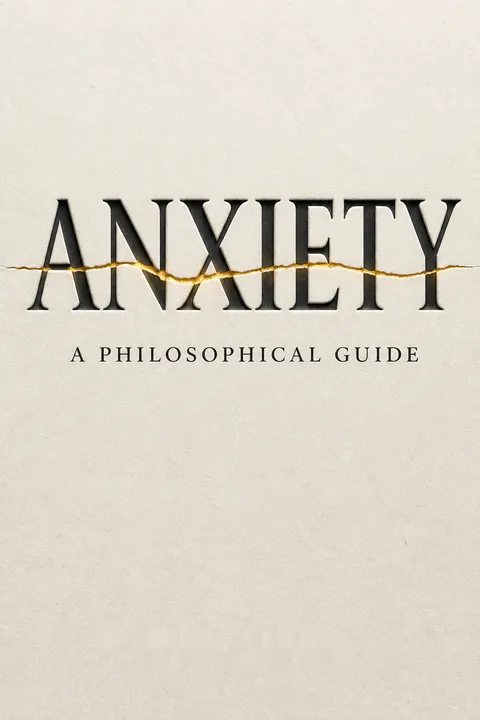
What's "Anxiety: A Philosophical Guide" about?
- Exploration of Anxiety: The book delves into the nature of anxiety, examining it as a universal and perennial human condition that affects everyone, regardless of their circumstances.
- Philosophical Perspectives: It provides a philosophical exploration of anxiety, drawing on various traditions such as Buddhism, existentialism, psychoanalysis, and critical theory.
- Understanding and Living with Anxiety: The author, Samir Chopra, aims to help readers understand anxiety's role in the human condition and offers insights into how to live with it.
- Integration of Personal Experience: Chopra integrates his personal experiences with anxiety, providing a relatable and introspective narrative that complements the philosophical discussions.
Why should I read "Anxiety: A Philosophical Guide"?
- Comprehensive Analysis: The book offers a thorough philosophical analysis of anxiety, making it valuable for anyone interested in understanding this complex emotion.
- Diverse Philosophical Traditions: It draws from a wide range of philosophical traditions, providing a multifaceted view of anxiety and its implications.
- Practical Insights: Readers can gain practical insights into managing and living with anxiety, informed by philosophical wisdom.
- Personal and Relatable: Chopra's personal anecdotes make the philosophical discussions more relatable and engaging, offering a unique perspective on anxiety.
What are the key takeaways of "Anxiety: A Philosophical Guide"?
- Anxiety as Universal: Anxiety is a universal human condition, deeply embedded in our consciousness and existence.
- Philosophical Resource: Philosophy can be a valuable resource for understanding and managing anxiety, offering different perspectives and solutions.
- Living with Anxiety: The book emphasizes the importance of accepting and living with anxiety rather than trying to eliminate it entirely.
- Self-Discovery and Growth: Anxiety can be a catalyst for self-discovery and personal growth, prompting introspection and deeper understanding of oneself.
How does Samir Chopra define anxiety in the book?
- Universal Condition: Chopra defines anxiety as a universal and perennial aspect of the human condition, affecting all individuals.
- Complex Emotion: It is described as a complex emotion that is both febrile and fertile, capable of bringing forth new versions of itself.
- Philosophical Problem: Anxiety is presented as a philosophical problem that requires introspection and understanding rather than mere elimination.
- Signal of Inner Conflict: It is also seen as a signal of inner conflict, pointing to unresolved issues within the psyche.
What philosophical traditions does the book draw from to explore anxiety?
- Buddhism: The book explores Buddhist concepts like dukkha and the Four Noble Truths, emphasizing the role of mindfulness and meditation in understanding anxiety.
- Existentialism: It examines existentialist ideas from philosophers like Kierkegaard, Nietzsche, and Sartre, focusing on anxiety as a hallmark of freedom and self-discovery.
- Psychoanalysis: Freud's theories on anxiety, repression, and inner conflict are discussed, highlighting the psychological dimensions of anxiety.
- Critical Theory: The book also incorporates insights from critical theorists like Marcuse and Marx, examining the social and material conditions that exacerbate anxiety.
How does the book suggest we live with anxiety?
- Acceptance and Understanding: The book emphasizes accepting anxiety as an inevitable part of life and understanding its role in personal growth.
- Philosophical Reflection: It encourages philosophical reflection and introspection to gain insights into one's anxieties and their underlying causes.
- Mindfulness and Meditation: Practices like mindfulness and meditation are recommended to help manage anxiety and cultivate a present-focused awareness.
- Engagement and Action: The book suggests engaging with the world and taking action, whether through personal commitments or social activism, to find meaning and purpose.
What role does personal experience play in the book?
- Integration with Philosophy: Chopra integrates his personal experiences with anxiety into the philosophical discussions, providing a relatable narrative.
- Illustrative Examples: His personal stories serve as illustrative examples of the philosophical concepts discussed, making them more accessible.
- Authenticity and Relatability: The inclusion of personal anecdotes adds authenticity and relatability to the book, helping readers connect with the material.
- Insight into Coping Strategies: Chopra's experiences offer insights into coping strategies and the practical application of philosophical ideas.
What are the best quotes from "Anxiety: A Philosophical Guide" and what do they mean?
- "Anxiety is the next day." This quote by Kierkegaard, discussed in the book, highlights anxiety as a reaction to the uncertainty of the future.
- "Anxiety is actually nothing but impatience." Another Kierkegaard quote, it suggests that anxiety stems from a desire to know and control the future, reflecting our impatience with uncertainty.
- "The ultimate task of therapy … is to help patients reconstrue that which they cannot alter." This quote by Irvin Yalom emphasizes the importance of changing one's perspective on unchangeable aspects of life, a theme explored in the book.
- "All existence makes me nervous." A quote by Kierkegaard, it encapsulates the pervasive nature of anxiety as an inherent part of human existence.
How does the book address the relationship between anxiety and freedom?
- Existentialist Perspective: The book explores the existentialist view that anxiety is a hallmark of freedom, arising from the burden of choice and self-creation.
- Freedom as Burden: It discusses how freedom can be both a blessing and a burden, with anxiety serving as a reminder of the responsibilities that come with it.
- Authentic Existence: Anxiety is seen as a pathway to authentic existence, prompting individuals to confront their choices and take responsibility for their lives.
- Avoidance and Inauthenticity: The book also addresses how people often avoid anxiety by conforming to societal norms, leading to inauthenticity and a loss of freedom.
What insights does the book offer on the social and material conditions that exacerbate anxiety?
- Critical Theory Perspective: The book draws on critical theory to examine how social and material conditions, such as economic inequality and alienation, exacerbate anxiety.
- Capitalism and Alienation: It discusses how capitalist systems can lead to alienation and a sense of powerlessness, contributing to anxiety.
- Social Pressures: The book highlights the role of social pressures and cultural norms in creating and sustaining anxiety, particularly in modern societies.
- Activism and Change: It suggests that social and political activism can be a way to address these conditions and reduce anxiety by creating a more equitable and just world.
How does the book suggest we use philosophy as a resource for anxiety?
- Philosophical Reflection: The book encourages using philosophical reflection to gain insights into the nature of anxiety and its role in the human condition.
- Diverse Traditions: It draws on diverse philosophical traditions to offer different perspectives and solutions for managing anxiety.
- Introspection and Self-Discovery: Philosophy is presented as a tool for introspection and self-discovery, helping individuals understand their anxieties and grow from them.
- Practical Application: The book emphasizes the practical application of philosophical ideas, encouraging readers to integrate them into their daily lives to better cope with anxiety.
What is the significance of the book's title, "Anxiety: A Philosophical Guide"?
- Philosophical Exploration: The title signifies the book's focus on exploring anxiety through a philosophical lens, offering a guide to understanding this complex emotion.
- Comprehensive Approach: It suggests a comprehensive approach to anxiety, drawing on various philosophical traditions and personal experiences.
- Guide to Living with Anxiety: The title implies that the book serves as a guide for living with anxiety, providing insights and strategies for managing it.
- Invitation to Reflection: It invites readers to reflect on their own experiences with anxiety and consider how philosophical ideas can inform their understanding and coping mechanisms.
Download PDF
Download EPUB
.epub digital book format is ideal for reading ebooks on phones, tablets, and e-readers.








