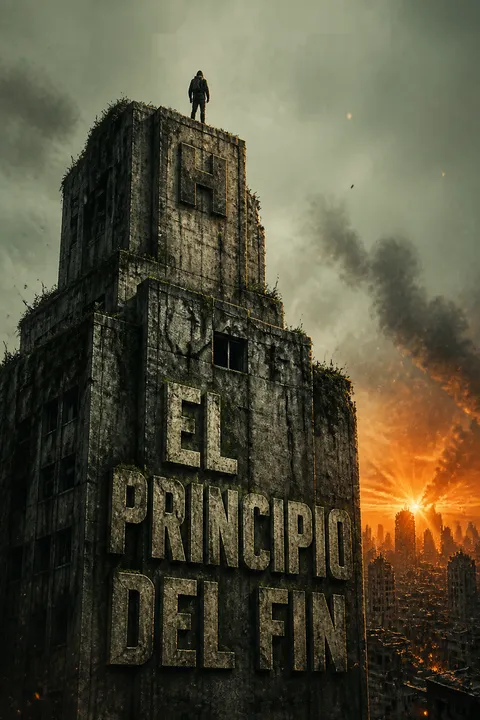


Plot Summary
Dagestan on the Radio
A widowed lawyer1 in Pontevedra, Galicia, begins writing a blog at his therapist’s suggestion, trying to make ordinary life feel inhabitable after his wife’s10 death. Work and the damp garden occupy him until news reports describe a rebel attack on a secret Russian base in Dagestan. The authorities close Russia’s borders, suppress reporting, and show masked soldiers firing at unseen targets.
At New Year’s dinner, his family9 speculates about stolen weapons, but the explanations remain distant and political. The lawyer1 returns to his house, where his Persian cat, Lucullus,2 and the blog are his closest companions. The crisis has not reached Spain, yet its first clues arrive as fragments on screens, easy to dismiss because they are so far away.
The opening makes private grief the measure against which public catastrophe will be felt. The lawyer’s blog begins as a therapeutic exercise, a way to arrange his thoughts after his wife’s death; soon it becomes an instrument for recording a world that official channels will increasingly distort. His initial distance from Dagestan is not foolishness so much as a normal reliance on geography and institutions. The disaster becomes frightening precisely because it enters his life first as abstract information, before he has any reason to imagine that the same collapse could reach his garden wall.
The News Stops Making Sense
As the Russian blackout deepens, reports alternately blame chemical weapons, West Nile, and Ebola. Evacuations, military cordons, and attacks on international medical teams contradict every official reassurance.
The lawyer1 buys water, food, batteries, a solar system, and a shortwave radio, treating the uncertainty as a practical problem he can prepare for. Meanwhile, the disease spreads through Russia and into neighboring countries. Its victims become delirious and violently aggressive, while governments close borders and impose martial law.
Spain’s authorities still urge calm, but hospitals and cities elsewhere are already failing. The lawyer’s sister8 calls from Barcelona, and his parents9 plan to leave for the countryside. The distance between watching the news and preparing to survive it is shrinking by the hour.
Preparation gives the lawyer a temporary sense of agency, but the things he buys are not yet a survival plan. Solar panels and stored water answer familiar emergencies, while the actual threat is biologically and politically unprecedented. His attention to technical detail becomes a coping strategy: if he can calculate battery life or follow radio frequencies, he can postpone the more terrifying question of what is happening to infected people. The official reversals destroy trust before the epidemic reaches him. By the time the government speaks plainly, the public has already learned that reassurance is often another form of delay.
Barcelona Before Lockdown
The lawyer1 flies to Barcelona hoping to bring his younger sister8 home, but Spain declares an emergency while he is in the air. The airports fill with soldiers, and the brief visit becomes a race to return before travel shuts down. His sister8 and her boyfriend stay behind, intending to reach the boyfriend’s family farm.
On the lawyer’s1 last flight out, a crowd surges toward the gate; soldiers escort him through it because he has a valid ticket. A man breaks through the police line and is shot. After he falls, a soldier fires into his head. The lawyer1 reaches Galicia sick with shock. News of nuclear blasts in China and collapsing cities elsewhere makes clear that the outbreak is global, while the fate of his sister8 remains unknown.
The airport killing is the first moment when state violence becomes intimate rather than televised. The lawyer cannot interpret why a soldier shoots an already fallen man, but the scene lodges in him as evidence that the authorities understand more than they admit. His return home is technically a success, yet it separates him from his sister at the moment when family contact matters most. The collapse is no longer something he can prepare for through shopping or information. It has begun to dictate where people may go, who may leave, and what a human body is worth in a crowd.
The Dead Rise
Spain declares martial law, seals cities, and orders civilians into defended Safe Havens. The lawyer1 cannot reach his parents9 through checkpoints, and he refuses to abandon Lucullus2 for a crowded shelter that forbids pets. Reports of attacks grow harder to dismiss.
Soldiers eventually advise people to destroy attackers’ brains, and the lawyer1 understands that the afflicted are not merely feverish patients. They die, then rise again, driven to attack the living. He hears gunfire near his housing development as troops evacuate the neighborhood.
From his window he watches thousands of corpses move toward Pontevedra’s noisy Safe Haven. By dawn, the gunfire has stopped and smoke rises over the city center. The shelter has fallen, leaving the lawyer1 alone outside its walls.
The Safe Haven is built on a plausible premise: concentrate people so armed forces can protect them. Its failure exposes the fatal mismatch between administrative order and a threat that grows stronger wherever people gather. The lawyer’s refusal to leave Lucullus initially looks like stubborn attachment, but it also keeps him outside the crowd that attracts the dead. His first clear knowledge of the undead arrives through observation rather than expertise. He learns the new rules by watching a city’s defenses fail, and survival begins to depend less on trusting public instructions than on judging the consequences of them.
A Spear for Vincent
With the neighborhood evacuated, the lawyer1 inventories his supplies and watches the dead circle his gate. A soldier’s body carries a gun and backpack, so he uses a noisy toy bear to draw the corpses away, spears the soldier through the head, and drags the equipment inside. The dead begin hammering at his gate, but the weapon and supplies improve his odds.
His neighbor Miguel,7 who has been fixated on reaching his boat, returns wounded and hides the bite. When the infection transforms him, the lawyer1 climbs into Miguel’s7 yard and discovers what happened. Unable to let the former neighbor keep attacking him, he kills Miguel7 with a spear, then buries him. Guilt and practical necessity now occupy the same small backyard.
The lawyer’s adaptation is measured in acts he once would have considered unthinkable. He kills the soldier to acquire tools, then kills Miguel to prevent an attack, but neither act becomes emotionally neutral. His habit of weighing risks resembles his legal work, yet the relevant evidence is now blood, wounds, and the dead man’s movement. Miguel’s concealment makes trust dangerous, while the lawyer’s own secrecy keeps him alive. The backyard, once a private space shaped by his wife’s choices, becomes a site of burial and improvised defense. He is learning to survive without mistaking necessity for innocence.
The Street Becomes a River
The dead at the gate and dwindling food make staying impossible. The lawyer1 packs his scuba gear, Vincent’s supplies, weapons, and Lucullus,2 then uses a vehicle alarm to draw corpses away from the street. The escape goes wrong immediately: a dead man bites at his ankle, and the lawyer1 shoots him before the crowd closes in.
He drives through narrow country lanes, abandoning mirrors and bumper to keep ahead of the pursuit, and reaches a fenced oil substation for shelter. From there, he attempts to reach the marina by road, but a crash kills his car. He loads his cat2 and equipment into barrels, enters the freezing river, and lets the current carry them downstream. The marina is empty, so he swims again and finds one sailboat still afloat.
Escape is not a clean transition from safety to danger; each solution creates a new exposure. The alarm works because the dead follow sound, but it also summons more of them. The river offers concealment and a route through the city, yet nearly kills the lawyer through cold and exhaustion. His method is improvised rather than heroic, built from objects whose original purposes have changed: a toy, a car, barrels, a wetsuit. Lucullus remains central to every calculation. Protecting the cat constrains the lawyer’s mobility, but it also gives him a reason to keep choosing survival over surrender.
The Corinth Breaks Free
The sailboat, the Corinth, is trapped by an anchor chain caught in the riverbed. The lawyer1 retrieves diving equipment from the yacht club, releases the chain’s bolt underwater, and lets the tide pull the boat free. He first heads for Tambo Island, a familiar nature reserve with military buildings, but finds undead on its shore and abandons the plan.
Low on food and water, he risks a landing in storm-lashed Bueu to take nautical charts and supplies. Inside a house above a marine shop, he encounters a dead mother and child, then fights another undead in the shop. He escapes with charts, food, and equipment. Sailing toward Vigo, he hopes its large port still holds survivors, though the deserted coastline offers no sign that anyone remains.
The Corinth gives the lawyer mobility, but the boat does not restore the world he expects to find. Every apparent refuge is conditional: Tambo is already compromised, and Bueu’s supplies come at the cost of confronting a family’s death. The mother and child force survival to become morally specific, not merely a question of killing threats. Meanwhile, the lawyer’s seamanship and diving experience, once recreational skills connected to his marriage, become practical assets. The boat carries both memory and possibility. It can take him away from Pontevedra, but it cannot guarantee that another community, or even another living person, still exists.
The Last Safe Haven
Vigo is a burned battlefield, but an anchored freighter, the Zaren Kibish, still has a living crew. Its Ukrainian captain, Igor Ushakov,6 welcomes the lawyer,1 then keeps him under guard.
Ushakov6 explains how Vigo’s Safe Haven failed: hundreds of thousands crowded the port, food and sanitation collapsed, disease spread, and military leaders abandoned most civilians. When the defenses broke, explosives meant to destroy the undead also killed people sheltering in warehouses. Ushakov’s6 crew survived by hiding supplies aboard ship.
He now needs a sealed package from a courier office across Vigo. The lawyer1 refuses, but Ushakov6 threatens to kill him and holds Lucullus2 as leverage. Viktor Pritchenko,3 a Ukrainian survivor who speaks Spanish, joins the forced expedition with Ushakov’s first officer11 and four Pakistani sailors.
Ushakov’s account dismantles the idea that a defended perimeter can preserve society if the people inside are starving, overcrowded, and abandoned. His crew’s survival depends on withholding food from desperate refugees, a choice that is rational from the ship’s perspective and morally corrosive from the shore. The captain then reproduces that coercive logic against the lawyer, turning hospitality into a debt enforced by violence. Pritchenko’s presence offers a human connection, but not freedom. The new group is held together by mistrust, language barriers, and the captain’s ability to make one person’s survival conditional on another’s obedience.
The Van Through Vigo
The expedition reaches an armored van, but its fuel and battery are dead. Shafiq13 siphons diesel from cars while the lawyer1 and Pritchenko3 remove a battery from a nearby Volkswagen. Their noise draws the undead, and the crew opens fire to escape. The van starts, but hundreds of corpses crowd the narrow street. The lawyer1 drives slowly through them, trusting the armored vehicle to hold.
On an overpass, the van crashes through a railing and flips. One sailor dies, others are injured, and Waqar12 develops a worsening wound. In a ransacked grocery store, Waqar12 dies and reanimates; Kritzinev11 shoots him, then the undead break through the gate. The lawyer1 and Pritchenko3 hide in a crawlspace as the rest of the team is overwhelmed.
The failed crossing reveals the limits of both military training and machinery. The crew’s weapons can clear a few attackers, but the gunfire attracts a multitude that firepower cannot contain. The van protects them until the crash turns its armor into a trap. Waqar’s transformation makes infection immediate and personal, while the team’s delay in confronting his condition reflects the same human reluctance seen in Miguel’s concealment. Pritchenko and the lawyer survive not by defeating the horde but by hiding in a space designed for storage. Their escape begins with accepting that endurance, not command, is the only available tactic.
The Briefcase and the Pilot
When a ship’s horn draws the undead away, the lawyer1 and Pritchenko3 escape through Vigo’s burned ruins and find shelter in a tavern. They eventually reach the courier office, where a dead employee hangs in the back room. The sealed briefcase is still there. While searching the office, the lawyer1 realizes that Pritchenko’s3 name for the Galician government, Xunta, explains why a package intended for him was mistaken for Ushakov’s.
It contains a small helicopter part needed to repair Pritchenko’s3 aircraft, parked at a forestry camp outside the city. Pritchenko3 is not merely a stranded survivor: he is the only pilot nearby who can fly it. The men now have a way to bargain for Lucullus2 and a possible route out of Vigo.
The briefcase has been a source of danger because its contents are valuable to Ushakov, but its deeper value is accidental: a clerical mix-up links the captain’s demand to Pritchenko’s abandoned aircraft. The revelation changes Pritchenko’s role from fellow captive to a possible means of escape without erasing his vulnerability. The courier office also mirrors the larger collapse: a worker waited alone for rescue until starvation and isolation became unbearable. In this world, bureaucratic remnants still matter, but their meanings have shifted. A mislabeled parcel can determine who gets a future, while a familiar institution offers no protection at all.
A False Briefcase
The lawyer1 and Pritchenko3 return to the Zaren Kibish with the real package and a duplicate case filled with old newspapers. Ushakov6 accepts the decoy long enough for the lawyer1 to demand Lucullus,2 Pritchenko’s helicopter part, food, and a weapon. Ushakov6 orders his men to kill him, but the lawyer1 reveals that Pritchenko3 can disappear with the genuine briefcase.
Forced to negotiate, Ushakov6 hands over the supplies and the cat.2 Pritchenko3 then warns by radio that a sailor is aiming an RPG at the Corinth. The lawyer1 and Pritchenko3 rig the sailboat with a dummy, secretly unload their gear, and dive to shore. Ushakov’s6 crew destroys the empty yacht. The two survivors escape in a van with Lucullus2 and the real case.
The lawyer’s legal training becomes useful not as courtroom knowledge but as an instinct for leverage. He recognizes that Ushakov’s need for the package can be used against the captain’s control of the ship. The decoy makes the bargain possible, while the hidden RPG confirms that Ushakov never intended to honor it. The Corinth’s destruction marks the loss of the lawyer’s most reliable home, but the escape preserves his essential attachments: Lucullus, Pritchenko, and the helicopter part. Deception here is not a moral victory. It is a temporary counterweight to a stronger man’s coercion.
The Hospital Full of Traps
The survivors’ van is damaged in Vigo, then fails on the highway beside a Mercedes dealership. They take an SUV, find water and a hot shower, and try to open the briefcase. A hidden device explodes, badly burning Pritchenko’s3 hands and destroying its contents.
The lawyer1 drives toward a hospital for supplies, carrying his wounded friend and Lucullus2 through a landscape of checkpoints and corpses. At Meixoeiro Hospital, the emergency room is a slaughterhouse. The lawyer1 finds medicine but fires a gun at an undead attacker, drawing more into the building.
The crowd blocks their entrance, so he pushes Pritchenko3 through dark corridors in a wheelchair. During the struggle, Lucullus2 escapes. The lawyer1 leaves Pritchenko3 secured in a chapel and searches the flooded basement for his cat.2
The briefcase’s destruction is a sharp reversal: the object they risked lives to retrieve cannot provide the answer they expected. Its trap leaves Pritchenko injured and makes the mission’s gains feel fragile. The hospital intensifies that fragility by exposing them to every ordinary dependency that civilization once concealed: antibiotics, clean water, surgical care, and safe transport. The lawyer’s decision to search for Lucullus, even while Pritchenko is incapacitated, shows that attachment remains his organizing principle. It is not always efficient, but it prevents survival from becoming mere self-preservation.
Lucia Behind the Flood
In the hospital basement, the lawyer1 hears Lucullus2 meowing and finds a teenage girl named Lucia4 holding him in a backpack. She has survived alone for months and mistakes the lawyer1 for part of a rescue team. He tells her that the Safe Havens have fallen.
Lucia4 leads him back through the flooded corridors to a sealed kitchen sub-basement, where Sister Cecilia5 has kept Pritchenko3 alive. The women have electricity from emergency generators, water from the hospital’s aquifer, and food in industrial freezers.
Lucia4 and Sister Cecilia5 had stayed behind to care for patients after an evacuation left them stranded. The lawyer1 brings them news of the outside world, while Sister Cecilia5 tends Pritchenko’s3 burns and helps him recover from the psychological collapse brought on by the mission.
Lucia’s belief in a rescue team preserves hope, but it also shows how isolation can freeze an outdated version of reality in place. The lawyer’s news breaks that illusion, yet the encounter replaces it with something more credible: a small community that has survived through care and practical work. Sister Cecilia’s nursing and the kitchen’s resources make recovery possible in ways neither weapons nor mobility could. The refuge is not a return to normal life. It is a fragile pocket where people can regain enough physical and emotional strength to act together.
Numantia Holds
Months pass in the sealed hospital kitchen. The lawyer,1 Pritchenko,3 Lucia,4 and Sister Cecilia5 ration fuel, cook from the freezers, and rebuild strength while the generators continue to run.
The women’s stories explain how they reached the refuge: Lucia4 was separated from her parents during an evacuation and later escaped a crowded Safe Haven, while Sister Cecilia5 volunteered to nurse patients left behind at the hospital. Pritchenko3 recovers through Sister Cecilia’s5 care and their shared religious conversations.
The lawyer1 still dreams that his parents9 and sister8 have become undead, but cannot accept that they may be gone. Their refuge supplies food, water, and company, yet the group knows the generators will eventually fail. When Pritchenko3 smells smoke from a forest, their sheltered life is suddenly on borrowed time.
The refuge gives the novel its clearest counterimage to the failed Safe Havens. It is small enough to sustain, organized around care rather than crowd control, and honest about its limits. Sister Cecilia’s work repairs more than Pritchenko’s wounds; it gives him a relationship through which grief can be spoken without being solved. The lawyer remains less able to mourn because uncertainty keeps his family psychologically present. Their domestic routine is meaningful precisely because it cannot last. The smell of fire interrupts comfort with a reminder that no shelter is independent of the world outside its walls.
The Last Flight South
Pritchenko3 identifies a forest fire approaching the hospital, and the group packs the supplies prepared for an eventual departure. The flames race down the valley faster than expected, so the four survivors flee in the SUV as the hospital burns behind them.
They reach Pritchenko’s3 forestry camp and find his red-and-white helicopter still intact. The aircraft’s limited range rules out a direct flight to the Canary Islands. Lucia4 notices the suspended water bucket used for firefighting, and the others realize it can carry extra fuel.
They load barrels into a transport net and plan to refuel in flight, aiming first for Morocco and then Tenerife, where weak radio transmissions suggest an operating airport. The lawyer1 leaves a copy of his journal at the hangar before their uncertain departure.
The fire removes the group’s last fixed home and forces the story’s central movement from endurance toward deliberate travel. Unlike the lawyer’s earlier escapes, this departure is collective and planned. Pritchenko contributes the aircraft and piloting skill, while Lucia’s observation turns an unused firefighting bucket into a fuel solution. Their survival now depends on combining different forms of knowledge rather than improvisation by one person. Tenerife is not a guaranteed sanctuary, only a destination with a faint radio signal. The journal left behind extends hope beyond the group itself: if they vanish, someone may still learn that they tried.
Analysis
The novel’s central transformation is not simply the spread of an infection. It is the collapse of the assumptions that make ordinary life feel safe: that authorities know more than the public, that a crowd can be protected by a perimeter, that a hospital can treat the injured, and that a familiar body is still a person one can reach. The narrator1 begins by consuming news as a spectator. He becomes a survivor only when he stops treating official language as reliable and learns to read concrete signs: a silent radio frequency, a locked gate, a wound, a crowd moving toward noise.
His journal preserves that shift in real time. Because he writes while frightened and often wrong, the account retains the texture of uncertainty instead of offering hindsight as mastery. Practical skill helps him, but no single preparation is enough. Solar batteries keep his house lit until he misuses them; a boat becomes shelter only after he frees its anchor; a weapon can defend a doorway while its noise summons more attackers. Survival depends on revising plans as their costs appear.
The Safe Havens expose a social failure as much as a military one. Concentrating people seems rational, yet scarcity, poor sanitation, secrecy, and abandonment turn protection into a trap. In contrast, the small hospital refuge works because its members care for one another and share finite resources. Sister Cecilia’s5 nursing, Lucia’s4 alertness, Pritchenko’s3 skills, and the narrator’s1 improvisation make a community where the larger institutions have failed.
Lucullus2 gives the narrator1 a stubborn connection to his former life, but the novel’s deeper answer to isolation is not the cat2 alone. It is the gradual formation of a group capable of grief, humor, practical cooperation, and hope. The final plan for Tenerife remains uncertain, and the helicopter has not yet taken off. The ending therefore offers neither a cure nor a restored civilization. It offers a departure made possible by shared knowledge, and a journal left behind as proof that people continued to choose one another even when the world stopped promising rescue.
Review Summary
Apocalypse Z: The Beginning of the End receives mixed reviews, with many praising its realism, engaging narrative, and unique Spanish setting. Readers appreciate the protagonist's relationship with his cat and the diary-style format. Some criticize the pacing, character development, and translation quality. The book is noted for its tension, humor, and relatability. While some find it addictive and well-written, others point out plot holes and weak prose. Overall, it's considered an entertaining zombie apocalypse story with both strengths and flaws.
People Also Read


Characters
The narrator
Widowed field observerAn unnamed Galician lawyer, recently widowed, who begins recording events online at his therapist’s suggestion. He is practical, observant, and inclined to reason through a problem before acting, but the collapse repeatedly forces him into choices no legal training can make clean. His wife’s10 absence remains a private wound, while Lucullus2 gives him a daily obligation stronger than despair. As institutions fail, he shifts from a spectator parsing news to a survivor who can improvise, negotiate, and accept help. His journal preserves his uncertainty as well as his decisions, making him a perceptive but emotionally exposed witness rather than an all-knowing guide.
Lucullus
The stubborn companionThe narrator’s1 orange Persian cat, given to him by his sister8 after his wife’s10 death. Lucullus is vain, independent, and fond of food and female cats, but his presence gives the narrator1 a concrete responsibility when grief and fear threaten to make every choice abstract. He cannot understand the scale of the disaster, yet his ordinary needs shape the narrator’s1 routes, supplies, and willingness to risk himself. Their bond is not sentimental decoration. It is the most durable connection to the life the narrator1 had before the outbreak.
Viktor Pritchenko
The resilient UkrainianA Ukrainian survivor found aboard the Zaren Kibish, compact, guarded, and more capable than his unassuming appearance suggests. Pritchenko has lived and worked in Galicia, speaks enough Spanish to bridge the language gaps among the ship’s crew, and keeps his fear under tight control until the strain finally breaks through. He and the narrator1 become partners through necessity, then through repeated acts of trust. Pritchenko’s loyalty, technical competence, and capacity for persistence make him essential to the group, while his missing family and memories of military service reveal the grief beneath his discipline.
Lucia
The watchful teenagerA brave, sharp-eyed teenager who has survived by moving through dangerous places and trusting her own observations. Separated from her parents during an evacuation, Lucia clings to the hope that help and family may still be found. She is cautious with strangers, yet capable of decisive kindness, as shown by her care for Lucullus2. Her youth does not make her passive: she contributes ideas, carries responsibility, and reads situations the adults overlook. After prolonged isolation, she must reckon with news that destroys her assumptions while finding a new reason to cooperate with others.
Sister Cecilia
The practical caregiverA warm, sturdy nun in her fifties who has worked as a nurse in Kenya and later volunteered at Meixoeiro Hospital. Sister Cecilia responds to danger with service rather than denial. She tends the wounded, keeps a household functioning, and offers Pritchenko3 a patient listener as he struggles with loss. Her faith is not presented as a guarantee that events will make sense; it is a discipline that helps her remain useful to others. Her humor and firmness prevent compassion from becoming helplessness, and her work gives the survivors a model for living together.
Igor Ushakov
The hard-eyed captainThe Ukrainian captain of the Zaren Kibish, a large, forceful man whose loyalty to command and ship has hardened into a belief that survival justifies coercion. Ushakov keeps his crew alive by guarding their food and refusing to risk the freighter for strangers. He is capable of welcome and generosity when it serves his purposes, but he treats the narrator1 as a tool once the captain needs something from shore. His military past helps explain his command instincts, though it does not excuse the danger he imposes on others.
Miguel
The desperate neighborThe narrator’s1 construction-worker neighbor, divorced and living alone, who refuses to join the Safe Haven and becomes fixated on reaching his boat. Miguel is impulsive, proud, and increasingly reckless under pressure. His insistence on action contrasts with the narrator’s1 cautious planning, but his gift of wooden posts helps fortify the narrator’s1 gate. Their uneasy alliance shows how survival can create obligation between people who barely know one another.
The narrator’s sister
The distant family bondThe narrator’s1 younger sister, a lawyer living in Barcelona with her boyfriend. She has been a source of emotional support since the narrator’s wife10 died and once gave him Lucullus2. Independent and settled in her own life, she remains close to her brother even as distance and failing communications make contact difficult. Her fate becomes one of the narrator’s1 most persistent unanswered questions.
The narrator’s parents
The unreachable parentsRetired parents living near Pontevedra, who leave for a rural family town as the epidemic spreads. They care deeply about their son1 and try to persuade him to join them, but checkpoints and distance make travel unsafe. Their brief phone contact gives the narrator1 reassurance and then leaves him with a painful uncertainty about what became of them.
The narrator’s wife
The absent belovedThe narrator’s1 deceased wife, remembered through the house she chose, the objects stored in the attic, and the grief he has not finished processing. She is not present in the action, but her absence shapes his loneliness and his attachment to Lucullus2. The catastrophe gives him little room to mourn, so memories surface in brief, forceful moments rather than as a completed elegy.
Aleksandr Kritzinev
The first officerUshakov’s6 first officer, a Russian-speaking sailor whose authority and temper make the forced expedition more dangerous. Kritzinev follows military habits and expects obedience, but his confidence falters when the undead surround the team. His reliance on alcohol and weapons exposes the strain beneath his command posture.
Waqar
The injured crewmanA young Pakistani sailor on the expedition from the Zaren Kibish. Waqar is injured in the armored van crash, and the group’s attempt to care for him becomes a test of their limited medical knowledge and their reluctance to accept what his worsening condition means.
Shafiq
The resourceful sailorOne of the Pakistani crewmen, wiry and capable, who gathers diesel from abandoned vehicles to get the armored van moving. His practical competence helps the team advance, while his faith and loyalty to his companions shape his response to danger.
Plot Devices
The blog and journal
A record against silenceThe narrator1 begins blogging because a therapist encourages him to write after his wife’s10 death. As the internet and broadcasts collapse, the posts become a private record of the epidemic, his decisions, and the people he meets. The shift from online blog to handwritten journal tracks the loss of the systems that once connected him to the world. Writing also steadies him under stress and gives his experiences a witness, even when no reader is likely to see them. At the end, he leaves a copy behind so the group’s struggle may remain known if they do not return.
The solar-powered house
A temporary private fortressBefore the collapse, the narrator1 buys solar panels and batteries to protect his freezers from frequent power cuts. The purchase unexpectedly gives him light and limited electricity after the grid fails, allowing him to remain in his home longer than most survivors. Yet he misjudges how much power his appliances consume, and the freezers eventually fail. The house’s high walls and stored supplies offer safety but also trap him as the dead gather outside. The preparation delays his departure, but cannot replace human contact, fuel, food, or a route to somewhere safer.
Sound as bait
A weapon without bulletsThe undead are drawn to human noise, a behavior the narrator1 learns through repeated danger. He uses a cymbal-banging toy bear to lure corpses away from his front door, and later a vehicle alarm to clear a path to his car. The tactic provides brief openings rather than lasting protection, since each loud sound attracts more attackers. Its effectiveness depends on timing, distance, and a clear escape route. Noise becomes both a tool and a risk, shaping the narrator’s1 movement through streets and explaining why gunfire can turn a manageable encounter into a horde.
The undead infection
Death that keeps huntingA filovirus outbreak first reported in Dagestan produces fever, confusion, aggression, hemorrhage, and death. The dead later reanimate and attack living people, with destruction of the brain the most reliable way to stop them. The disease spreads through bodily fluids, and even a scratch can be fatal. Governments conceal information, misidentify the illness, and direct people into Safe Havens that become gathering points for the dead. The infection changes the practical meaning of injury and death: a wounded person may become a threat, and a familiar face may return without recognition or mercy.
The misdirected package
A false errand becomes escapeUshakov6 forces the narrator1 to retrieve a sealed courier case, believing it contains instructions from the freighter’s owners. The courier mix-up actually involves a small part intended for Pritchenko’s3 grounded helicopter. The object gives the survivors a bargaining tool, but the case is booby-trapped and its contents are destroyed when Pritchenko3 tries to open it. Its importance therefore lies less in what it contains than in the aircraft it can help repair and the leverage it provides over Ushakov6. The retrieval mission connects the freighter, Pritchenko’s3 past work, and the group’s eventual plan to leave Galicia.
FAQ
Synopsis & Basic Details
What is Apocalypse Z: The Beginning of the End about?
- A Lawyer's Apocalyptic Chronicle: Apocalypse Z: The Beginning of the End follows an unnamed Spanish lawyer as he navigates the sudden and brutal collapse of civilization due to a global zombie-like pandemic. Initially a personal blog to cope with grief, his entries transform into a harrowing, real-time account of society's unraveling, from distant news reports to the direct threat of the reanimated dead at his doorstep.
- Survival Against All Odds: The narrative details his desperate struggle for survival, first barricaded in his home with his cat, Lucullus, then forced into a perilous journey through a devastated Spain. He encounters both the relentless "undead" and the moral ambiguities of desperate human survivors, forming fragile alliances and making brutal choices to stay alive.
- Quest for a New Beginning: The story culminates in a desperate bid for escape, as the protagonist and his newfound companions—a Ukrainian pilot, a resourceful teenager, and a compassionate nun—seek a rumored safe haven in the Canary Islands, leaving behind a world consumed by chaos and death.
Why should I read Apocalypse Z: The Beginning of the End?
- Visceral First-Person Immersion: The novel's unique epistolary format, shifting from blog to journal entries, plunges readers directly into the protagonist's mind, offering an unfiltered, immediate, and deeply personal experience of the apocalypse. This raw perspective enhances the psychological tension and realism, making the unfolding horror intensely palpable.
- Realistic Human Response Analysis: Unlike many zombie narratives, Apocalypse Z meticulously details the slow, agonizing breakdown of societal structures, government, and human morality. It explores the psychological toll of isolation, the erosion of empathy, and the desperate measures individuals take when faced with unimaginable threats, providing a compelling Apocalypse Z analysis of human nature under duress.
- Subtle Thematic Depth: Beyond the gore, the book delves into profound themes of grief, loss, the search for meaning, and the enduring power of hope and connection. The protagonist's journey is as much an internal struggle for his humanity as it is an external fight for survival, offering rich material for themes in Apocalypse Z discussions.
What is the background of Apocalypse Z: The Beginning of the End?
- Global Pandemic Origin: The crisis begins with a mysterious outbreak in Dagestan, a former Soviet republic in the Caucasus Mountains, initially downplayed as a chemical leak but quickly escalating into a highly virulent, reanimating filovirus. This geopolitical flashpoint serves as the catalyst for a worldwide collapse, highlighting the fragility of international stability.
- Rapid Societal Breakdown: The narrative meticulously tracks the swift disintegration of modern society, from initial denial and censorship by authorities to the imposition of martial law, the failure of "Safe Havens," and the eventual cessation of all public services like electricity, communication networks, and even basic law enforcement. The book portrays a world unprepared for such a rapid, total collapse.
- Cultural and Geographical Specificity: Set primarily in Galicia, Spain, the story grounds the universal horror in a specific, recognizable European context. Details like the protagonist's legal profession, local landmarks (Ria Pontevedra, Vigo), and references to Spanish media and political figures (Putin, Matías Prats, the King of Spain) lend a unique cultural texture and realism to the unfolding catastrophe.
What are the most memorable quotes in Apocalypse Z: The Beginning of the End?
- "When there's no more room in Hell, the dead will walk the Earth.": This epigraph, a direct quote from George A. Romero's Dawn of the Dead, immediately sets the grim, supernatural tone and foreshadows the central horror of the walking dead. It serves as a chilling prophecy for the world the protagonist soon inhabits, emphasizing the overwhelming nature of the threat.
- "The dead return to walk the earth and kill us. We're fucked.": This stark realization by the protagonist in Entry 31 marks a pivotal emotional and psychological turning point. It shatters any remaining illusions of a conventional epidemic, forcing him to confront the truly monstrous nature of the threat and accept the utter hopelessness of the global situation. This quote encapsulates the raw despair and brutal truth of the Apocalypse Z explained reality.
- "We're the last train leaving the station. If there's anyone left in this area, I'm afraid his chances are slim to none.": From Entry 86, this quote encapsulates the desperate, finality of the survivors' escape. It highlights their profound isolation and the slim odds of finding other living humans, while simultaneously affirming their determination to seize the last sliver of hope. This line defines the group's precarious position and the high stakes of their journey.
What writing style, narrative choices, and literary techniques does Manel Loureiro use?
- Epistolary Realism: Loureiro employs an epistolary structure, beginning as a blog and transitioning to a physical journal, which grounds the fantastical premise in stark realism. This first-person, subjective viewpoint provides immediate access to the protagonist's thoughts, fears, and observations, creating a sense of authenticity and raw immediacy that pulls the reader into his deteriorating mental state and the unfolding chaos.
- Journalistic Detachment & Escalation: The narrative maintains a semi-journalistic tone, especially in the early entries, as the protagonist reports on global events with a lawyer's analytical eye. This detached observation gradually gives way to visceral, emotional reactions as the horror encroaches on his personal space, mirroring the world's descent into madness and effectively building suspense and dread.
- Sensory Detail & Psychological Depth: Loureiro excels at using vivid sensory details—the smell of decay, the sound of shuffling feet, the cold of unheated homes—to immerse the reader in the apocalyptic environment. He also delves deeply into the protagonist's psychological state, exploring his grief, paranoia, moral dilemmas, and the gradual hardening required for survival, making the internal journey as compelling as the external one.
Hidden Details & Subtle Connections
What are some minor details that add significant meaning?
- Lucullus's Name Significance: The protagonist's cat, Lucullus, is named after a Roman general known for his luxurious banquets and lavish lifestyle. This seemingly minor detail subtly highlights the stark contrast between the protagonist's pre-apocalyptic life of comfort and the brutal, resource-scarce reality he now faces. It also serves as a poignant reminder of the lost world of abundance and leisure.
- The Unnamed Protagonist's Profession: The protagonist being a lawyer, a profession rooted in order, rules, and societal structure, is a subtle but crucial detail. His analytical mind and reliance on logic are constantly challenged by the illogical, chaotic nature of the apocalypse, emphasizing the complete breakdown of the world he once understood and thrived in. His legal background also informs his observations of societal collapse and moral decay.
- The Manager's "Bachelor Pad": The discovery of the Mercedes dealership manager's hidden "bachelor pad" with its fold-out bed and burgundy panties (Entry 77) is a small, unexpected detail. It offers a fleeting glimpse into the mundane, often morally ambiguous, aspects of pre-apocalyptic human life, providing a stark contrast to the current struggle for survival and a moment of dark humor amidst the horror.
What are some subtle foreshadowing and callbacks?
- Early Power Outages as Omen: The recurring "damn power outages" mentioned in early entries (Entry 3, 4) initially seem like minor inconveniences. However, they subtly foreshadow the complete collapse of infrastructure and the return to a pre-industrial existence, highlighting society's fragile dependence on modern amenities. This early frustration becomes a grim reality later in the book.
- The "Rabid Animals" Report: In Entry 12, a news report mentions aid workers attacked by "rabid animals" in Germany. This seemingly throwaway line subtly foreshadows the true nature of the infected—not just sick, but aggressive, animalistic, and driven by a primal urge to attack, blurring the line between human and beast.
- The "Old Soviet Way" Callback: Viktor Pritchenko's repeated phrase, "Better fix things old Soviet way" (Entry 62), initially refers to his pragmatic, often forceful, methods of problem-solving. This becomes a recurring callback that subtly highlights his resilience, resourcefulness, and the brutal efficiency forged in his past, contrasting with the protagonist's more conventional, less effective approaches.
What are some unexpected character connections?
- The Protagonist's Shared Trauma with Pritchenko: While their initial interactions are transactional, the protagonist and Viktor Pritchenko develop a deep, unspoken bond forged through shared trauma. Their mutual experiences of loss (Pritchenko's family, the protagonist's wife and family) and the horrors they witness create a profound connection that transcends language barriers and cultural differences, making them more than just allies but true companions in the Apocalypse Z analysis of survival.
- Lucia's Unwavering Hope as a Catalyst: Lucia, initially a desperate refugee, unexpectedly becomes a vital emotional anchor for the protagonist and Pritchenko. Her youth, resilience, and persistent hope for a rescue team, though naive, subtly challenge their hardened cynicism and despair, forcing them to reconsider their own outlook and providing a renewed sense of purpose for their escape plan.
- Sister Cecilia's Unconventional Strength: Sister Cecilia, a nun from Kenya, represents an unexpected source of practical and spiritual strength. Her medical expertise and unwavering faith, honed in a challenging environment, provide not just physical healing for Pritchenko but also a moral compass and emotional stability for the group, demonstrating that compassion and resilience can thrive even in the most brutal circumstances.
Who are the most significant supporting characters?
- Miguel: The Mirror of Recklessness: Beyond being a casualty, Miguel serves as a significant foil to the protagonist. His impulsive, ill-conceived attempts at survival (e.g., his obsession with the boat, his reckless use of a shotgun) highlight the dangers of unpreparedness and denial, indirectly reinforcing the protagonist's more methodical approach and the harsh realities of the Apocalypse Z world.
- The Zaren Kibish Crew: A Microcosm of Humanity: The diverse, multi-ethnic crew of the Zaren Kibish, particularly the Pakistani sailors, represent a microcosm of humanity's varied responses to crisis. Their pragmatic survival skills, loyalty to Ushakov, and religious devotion (praying in Arabic during danger) offer a glimpse into how different cultures adapt to the apocalypse, contrasting with the protagonist's Western perspective.
- The Unseen Family: Lingering Emotional Anchors: Though never physically present after the initial chapters, the protagonist's sister and parents remain profoundly significant. Their unknown fate serves as a constant, agonizing emotional anchor for the protagonist, fueling his despair but also his desperate drive to survive and find a new safe haven, symbolizing the universal human need for connection and the pain of unresolved loss in Apocalypse Z themes.
Psychological, Emotional, & Relational Analysis
What are some unspoken motivations of the characters?
- Protagonist's Grief-Driven Preparedness: The protagonist's initial meticulous preparations—installing solar panels, stockpiling food, fortifying his home—are not solely driven by fear of the unfolding pandemic. Subtly, they are an extension of his unresolved grief for his deceased wife, a desperate attempt to control something in a world where he felt utterly powerless after her death. His need for self-sufficiency is a coping mechanism for profound loss.
- Ushakov's Obsession with the Package: Captain Ushakov's ruthless determination to retrieve the mysterious package from the VNT office is driven by more than just company loyalty. His rigid adherence to orders in a world without authority stems from a deep-seated need for structure and purpose, a psychological anchor in the face of overwhelming chaos. The package represents the last vestige of his old world's order and his identity within it.
- Pritchenko's Stoic Despair: Viktor Pritchenko's initial stoicism and pragmatic approach to violence mask a profound, unspoken despair over the loss of his family. His willingness to undertake dangerous missions and his later emotional breakdown reveal a man who has suppressed immense grief, finding purpose only in action and the slim hope of survival, a key aspect of Viktor Pritchenko motivations.
What psychological complexities do the characters exhibit?
- Protagonist's Desensitization and Moral Erosion: The protagonist undergoes a profound psychological transformation, moving from initial horror and nausea at violence to a chilling desensitization. His internal monologue reveals a struggle with moral ambiguity and survival ethics, as he justifies killing the undead (and even other humans) and notes his own hardening: "I'm really hardened. Just a month ago, the sight of carnage like that would've made me vomit my guts out. Now I looked on the scene as detached as a child tearing the wings off a fly." (Entry 62).
- Pritchenko's PTSD and Resilience: Viktor exhibits clear signs of post-traumatic stress disorder (PTSD), particularly after the harrowing journey through Vigo and the loss of his comrades. His catatonic states, emotional outbursts, and later, his reliance on Sister Cecilia for psychological support, highlight the severe mental toll of the apocalypse. Yet, his ability to recover and maintain his core skills demonstrates remarkable psychological resilience.
- Lucia's Naiveté vs. Adaptability: Lucia's character embodies the psychological complexity of youth in an apocalypse. Her initial naiveté about "rescue teams" and "Safe Havens" contrasts sharply with her rapid adaptability and resourcefulness. She maintains a fragile hope, yet her experiences have clearly hardened her, as seen in her ability to navigate the hospital's dangers and her pragmatic approach to survival.
What are the major emotional turning points?
- The Airport Execution: Witnessing the cold-blooded execution of a desperate man at the Barcelona airport (Entry 19) is a major emotional turning point for the protagonist. It shatters his remaining illusions of civil order and the sanctity of human life, forcing him to confront the brutal reality of martial law and the extreme measures taken in the face of panic.
- Killing Miguel: The protagonist's forced decision to kill his infected neighbor, Miguel (Entry 42), is a deeply traumatic emotional turning point. It represents the ultimate loss of community and the horrifying necessity of violence against someone he knew, pushing him further into isolation and forcing him to accept the monstrous nature of the undead. "I'd murdered my neighbor from the top of the garden wall. I'd driven a piece of steel into his head."
- The Hospital Children's Ward: The encounter with the child undead in the hospital's pediatric ward (Entry 81) is a devastating emotional turning point, particularly for Pritchenko, who has a son of similar age. This scene pushes both men to their psychological limits, confronting them with the most innocent victims of the apocalypse and the profound, unbearable loss of a future.
How do relationship dynamics evolve?
- Protagonist and Lucullus: From Pet to Lifeline: The relationship between the unnamed lawyer and his cat, Lucullus, evolves from that of a grieving owner and his pet to a profound, symbiotic bond. Lucullus becomes the protagonist's last link to his past, a source of unconditional comfort, and a tangible reason to survive, as he refuses to abandon him even for "Safe Havens." The cat's needs force the protagonist to maintain a semblance of routine and responsibility, anchoring him amidst chaos.
- Protagonist and Pritchenko: From Captor to Brotherhood: The dynamic between the protagonist and Viktor Pritchenko transforms dramatically from a forced, wary alliance under Ushakov's threat to a deep, trusting brotherhood. Their shared ordeal, mutual reliance on skills, and emotional vulnerability (especially after Pritchenko's breakdown) forge an unbreakable bond, demonstrating the power of human connection in the face of extreme adversity.
- Group Dynamics: Fragile Unity to Found Family: The group's relationships evolve from initial suspicion and pragmatic cooperation (with Ushakov's crew) to a cohesive, supportive "found family" unit with Lucia and Sister Cecilia. This shift highlights the human need for belonging and mutual support, as they pool resources, share burdens, and provide emotional solace, contrasting sharply with the predatory nature of other survivors.
Interpretation & Debate
Which parts of the story remain ambiguous or open-ended?
- The Virus's True Nature and Longevity: While identified as a mutated filovirus, the exact biological mechanisms of the reanimation and the long-term viability of the undead remain ambiguous. The protagonist observes that they show "no trace of putrefaction, unlike a normal corpse" (Entry 77), leading him to question if they are "eternal." This open-ended question leaves the ultimate fate of the world, even if the survivors escape, uncertain.
- The Fate of the Wider World: Beyond the Canary Islands, the state of the rest of the world remains largely unknown. While the narrative implies a global collapse, the existence of military transmissions to Tenerife suggests pockets of organized resistance or survival. The story leaves it open whether humanity has truly fallen or if there are other, larger enclaves of survivors, inviting debate on the scale of the apocalypse.
- The Protagonist's Long-Term Psychological State: Despite his physical recovery and renewed hope, the protagonist acknowledges that "Part of me has grown hard and bitter, like a war veteran" (Entry 84). The ending leaves open the question of whether he and his companions can truly heal from the trauma, or if the psychological scars of the apocalypse will forever define their "new humanity."
What are some debatable, controversial scenes or moments in Apocalypse Z: The Beginning of the End?
- The Airport Execution and Military Brutality: The scene where a desperate man is shot dead at the Barcelona airport for trying to board a plane (Entry 19) is highly controversial. It sparks debate about the morality of martial law and the extreme measures authorities take to maintain order, even at the cost of innocent lives. This moment forces readers to confront the thin line between necessary control and inhumane brutality in a crisis.
- The "Final Solution" for the Infected: Sister Cecilia's revelation that the military escorted infected patients to a "specialized medical center" that "never existed" (Entry 84), implying mass executions, is a deeply disturbing and debatable moment. It raises questions about the ethics of triage in an apocalypse, the value of human life when resources are scarce, and the hidden atrocities committed by desperate authorities.
- The Protagonist's Killing of the Child Undead: The protagonist's forced act of killing the child undead in the nautical store (Entry 54) is arguably the most controversial scene. It challenges the reader's moral boundaries and the protagonist's own humanity, forcing a confrontation with the horrific reality that even the most innocent can become monsters, and that survival demands unspeakable acts. "I know I did what I had to do, but I can't help thinking he was practically a baby. It's the most horrible thing I've ever done."
Apocalypse Z: The Beginning of the End Ending Explained: How It Ends & What It Means
- A Flight Towards Uncertain Hope: The Apocalypse Z ending explained sees the protagonist, Pritchenko, Lucia, and Sister Cecilia escaping the burning heliport in Viktor's repaired helicopter, fueled by an improvised "bambi" system. Their destination is Tenerife in the Canary Islands, a rumored safe haven, representing a desperate flight from the devastated European continent. The final entry is written from the heliport, just before their departure, leaving their ultimate fate open-ended.
- Symbolic Journey of Renewal: The escape by air symbolizes a profound shift from passive survival to active agency. The helicopter, previously a symbol of Viktor's lost past, becomes a vehicle for collective hope and a new beginning. The journey itself is a metaphor for humanity's enduring will to find sanctuary and rebuild, even when faced with overwhelming odds and the destruction of their known world.
- The Enduring Human Spirit: The final lines of the journal, left behind for any future survivors, encapsulate the core meaning of the ending: "We never surrendered. We always kept in our hearts the most noble, beautiful feeling that sets human beings apart: hope." This emphasizes that despite the horrors, losses, and moral compromises, the human spirit's capacity for resilience, connection, and hope remains, offering a poignant, albeit fragile, message of endurance in the face of total annihilation. This provides a powerful Apocalypse Z analysis of the human condition.
Download PDF
Download EPUB
.epub digital book format is ideal for reading ebooks on phones, tablets, and e-readers.








