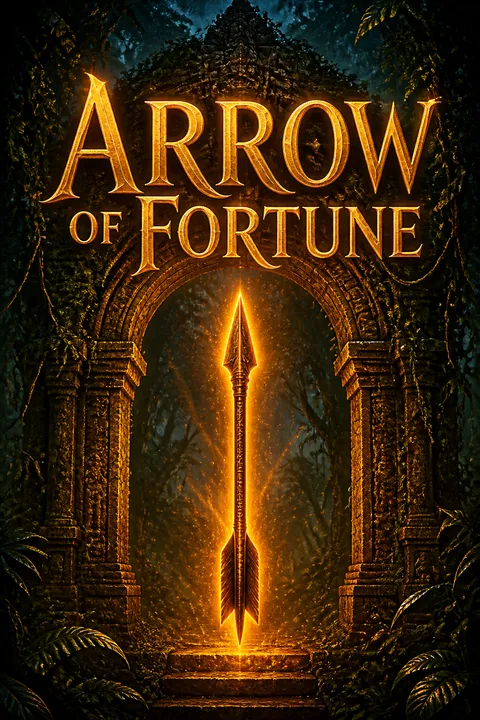


Plot Summary
Prologue
On the riverbank, the sage Valmiki finds Sita abandoned by her brother-in-law, Lakshmana, under orders from her husband, Rama. Pregnant with twins, she refuses Valmiki’s offer to argue her case at court and chooses instead to raise her children in a hidden forest refuge.
She also carries a cloth-wrapped object whose light stirs a storm when briefly exposed. Sita asks Valmiki to tell Rama’s story as she directs, and he recognizes the goddess Shakti in the queen he thought he knew. Her warning is plain: a story always holds secrets beyond the version people inherit.
The opening makes the book’s central method visible before its adventure begins: a familiar story changes when the woman inside it controls the telling. Sita is neither merely a wronged queen nor a passive symbol. She chooses exile, guards a dangerous object, and appoints the historian who will shape her husband’s legacy. Valmiki’s surprise exposes the limits of his authority as a learned man; he can preserve a story, but he cannot claim to own its meaning. The prologue prepares the novel to question who gets remembered, who gets believed, and what power women may conceal until the moment they choose to use it.
The Missing Ramayana
In 1898, historian Eleanora Mallory, her stepbrother Neil Fairfax, their friend Constance Tyrrell, and surveyor Adam Bates travel through India with Constance’s grandmother, Padma Devi.
A wire diverts their private train to Puri, where Padma’s nephew, Maharaja Vijayrama, explains that Colonel Charles Borthwick, head of the Raj’s secret police, has shown interest in a stolen temple manuscript. The sixteenth-century Ramacharitamanas has an extra chapter written in Brahmi, a script believed lost for centuries.
One priest has read a single word from it: Brahmastra, the divine weapon from the Ramayana. Vijay suspects Borthwick took the book to reach the weapon first. Since Indian agents risk detention if they follow the colonel, the four English-presenting travelers agree to track him through Puri’s vast Chariot Festival.
The inciting mystery fuses scholarship with state power. The missing chapter matters not only because it may disclose a weapon, but because a colonial official is trying to control an Indian sacred text and its interpretation. The party’s usefulness is inseparable from the racial hierarchy that protects them: their foreignness makes them less conspicuous to Borthwick than local investigators. Ellie’s historical curiosity therefore enters a conflict in which knowledge is never neutral. Whoever deciphers the manuscript may determine who can wield a force capable of reshaping the world.
Dancing Through the Crowd
The procession fills Puri with chariots, drums, worshipers, and actors performing the Ramayana. From a rooftop, Constance follows the movement of Borthwick’s policemen and spots the colonel amid the crowd. When she and Neil nearly lose him, she disguises them with a vendor’s cloth and scarf, then pulls Neil into a dance whose steps seem to come to them without instruction.
The spectacle gives them cover, but Constance’s attention catches on Borthwick’s carved wooden box. Neil restrains her before she can reach it, pointing out the ring of officers around the colonel. They hear Borthwick send the box, which contains the manuscript, to the Puri Beach Club. The group now has a destination, but the club is reserved for British members.
The festival works as both setting and tactical environment: its crowds conceal pursuit, while its performance makes the Ramayana a living public story rather than an ancient text on a shelf. Constance’s instinctive dancing hints that India’s mythic inheritance may be active around them, but the scene refuses to pause and explain it. Her near theft also establishes her characteristic tension: courage and impulsiveness are often the same motion, separated only by Neil’s caution. The manuscript’s passage into a British club shifts the danger from open procession to the quieter violence of exclusion.
The Club's Closed Door
At the Puri Beach Club, the secretary accepts Neil as a temporary member but restricts Constance to the North Dining Room because she has Indian ancestry. Adam recognizes the familiar machinery of a welcome that is designed to exclude, and he suppresses the confrontation because an incident could end their search before it begins.
Constance names the insult without yielding to it, while Neil’s anger makes clear that he will not treat the club’s rule as ordinary. The four decide to gather information anyway, using Constance’s social confidence and Adam’s ability to move among the club’s privileged guests.
For Adam, the polished rooms revive the class world he escaped after his father rejected him. He remains inside, choosing the mission over the satisfaction of striking back.
The club’s discrimination gives the novel’s imperial politics a small, exact location: a secretary’s office, a membership book, and a restriction on where Constance may sit. Adam recognizes that anger alone cannot undo the institution, while Neil discovers that quiet scholarship does not protect him from complicity. Constance’s composure is not indifference. It is a practiced way of refusing to let exclusion define her worth. The scene also foreshadows Adam’s larger conflict, since survival in a hostile hierarchy may require him to perform the very identity he has spent his life resisting.
Bats Above the Closet
While seeking Borthwick’s location, Ellie and Adam stumble upon Professor Dawson, their self-important former associate, who accidentally reveals that he is working with Borthwick and the Order of Albion. Before they can learn more, the armed operative Mr. Jacobs arrives and points a pistol at them.
He lets Dawson leave, then locks Ellie and Adam inside a broom closet. Adam cannot kick through its bolted door, so Ellie identifies cleaning chemicals that might make an explosive.
They escape instead through a ceiling hatch into a bat-filled attic, then crawl through a vent and descend a vine onto the golf course. Their route leaves them guano-streaked and soaked by sudden rain, but free to rejoin their companions. Jacobs has confirmed that the Order’s pursuit of arcana has followed them to India.
Dawson’s accidental confession reveals how little control he has over the dangerous work he claims to understand. Jacobs, by contrast, is frightening because he acts with economy: he removes the witness he needs, confines the others, and makes no unnecessary threats. Ellie and Adam escape by combining different forms of competence, her chemical knowledge with his physical improvisation. Their flight is comic in its bats and mess, but the humor does not dissolve the warning. The Order is not a distant rumor. Its agents are present, armed, and already shaping the party’s options.
Culpepper at Lal Bagh
Constance and Neil learn from a club guest that Borthwick is staying in the Lal Bagh, a former Mughal palace on the club grounds. Disguised as a servant, Constance accompanies Neil, who invents the name Dr. Bartholomew Culpepper and claims Lord Aldbury sent him to examine the manuscript.
Borthwick lets him inspect the book but stays in the room with a guard. Neil copies its final Brahmi page while improvising scholarly notes to keep the colonel distracted. Jacobs arrives, recognizes the danger, and forces them to flee.
Neil and Constance go through an open window, land on a narrow ledge, and tumble into a hedge as shots strike nearby. Neil is grazed, but the transcription survives in his pocket. The group now has the text, even though Borthwick still holds the original.
Neil’s success comes not from sudden mastery but from the habits that make him himself: careful observation, patience with written evidence, and a scholar’s ability to look occupied while he thinks. Constance creates the opening, but she also has to accept that the manuscript cannot safely be stolen in a room full of armed men. Their escape turns expertise into a collective practice rather than a solitary heroic gift. The copied page changes the balance of the pursuit: Borthwick possesses the artifact, yet the travelers carry the knowledge needed to reach its secret.
An Arrow's Unspent Power
Back at their hotel, the travelers reunite with their transcription and learn that Neil has escaped with a copy of the Brahmi lines. Nawaz Chowdhury, Vijay’s solicitor and close adviser, argues that racing Borthwick to the answer may avert a direct clash.
The party travels separately to Nandapur, where Vijay’s royal library can help him decipher the text. He explains the Brahmastra’s scale: its power can devastate vast territory and may be directed against an entire people.
The manuscript’s clues point toward the Jnananadi, the River of Wisdom, and the Dandakaranya, the forest associated with Rama’s exile. Borthwick has learned enough to pursue the same trail. Nandapur can provide support, but Vijay must avoid openly opposing the Raj or risking his kingdom.
The weapon’s danger is inseparable from the structures that would make its use seem legitimate. Borthwick treats imperial security as a reason to seize it, while Vijay understands that even resisting the colonel could invite annexation. The artifact thus magnifies an existing political imbalance rather than creating one from nothing. The party’s race into the forest is not a quest for a prize: it is an attempt to keep an absolute power from becoming an instrument of collective punishment. Vijay’s caution reveals that royal independence is real but conditional.
A Palace Full of Kin
At Nandapur’s palace, Constance is welcomed by her aunt Parvati, her young cousin Arjuna, and a family eager to claim her as one of their own. Padma’s warmth turns pointed when she arranges for eligible princes to attend Arjuna’s birthday, pressing Constance toward marriage before her parents’ deadline.
During breakfast, Neil panics at the prospect of Constance being steered into a match and announces that they are engaged. Constance quickly sustains the story, while Padma studies them with suspicion.
Later, Padma takes Constance and Ellie to a Kali temple and tells them the hidden account of Sita as Kali, a woman whose strength is concealed beneath the familiar story of dependence. Constance insists her feelings for Neil are genuine enough to satisfy Padma, though the engagement began as a desperate fiction.
The family pressure is affectionate, strategic, and still coercive. Constance is loved by relatives who want her nearby, yet they translate that love into a timetable for choosing a husband. Neil’s impulsive announcement is protective, but it also forces Constance to manage a lie she had already considered and withdrawn. The Kali teaching reframes concealment as a possible form of agency rather than simple submission. For Constance, that lesson lands in the middle of her own performance: she is expected to appear marriageable while privately deciding what kind of life she will accept.
The Forest's Own Guide
Before the expedition, Neil finds that his sword, Dyrnwyn, ignites when he grips it, though he cannot explain why. The travelers leave Nandapur with Vanika, a quick-witted twelve-year-old from the Adrija Khond, as their guide.
At her village, law student Subhas Kōnja distrusts their search, warning that outsiders have often used archaeology to justify taking land and resources. He agrees to hear them only after learning that Borthwick is approaching. Vanika has gone to the soldiers herself, offering money and help to keep them from suspecting her real purpose.
Neil admits that he sometimes sees the past, an ability he has hidden even from Ellie. Subhas grudgingly lets Neil and Constance join his party, while Adam and Ellie set out to reach Vanika before Borthwick can use her.
The journey tests the travelers’ assumption that good intentions make them welcome. Subhas insists that an ancient city is not an innocent discovery when outsiders have the power to remove its people or carry its history away. Neil’s disclosure of his temporal perception parallels that challenge: he must stop treating an unexplained gift as evidence that his scholarly work is fraudulent. Vanika’s decision to approach Borthwick shows both her courage and the danger of a child forced to negotiate with armed authority. The forest belongs first to the people who live there.
The River Takes Them
Adam and Ellie follow Subhas’s route to a rope crossing, but the swollen river hides a monstrous catfish. When it seizes Ellie’s leg, Adam attacks it with his machete, kills it, and pulls her onto the army’s newly built pontoon bridge. The soldiers immediately surround them.
Jacobs identifies Adam as George Bates’s son and calls Ellie his wife, giving Borthwick a reason to keep them alive while he investigates their presence. Adam claims he came to inspect a mining prospect for his father, and Borthwick tests his manners, connections, and knowledge of the terrain.
To protect Ellie and avoid immediate arrest, Adam accepts the colonel’s account of him as a wealthy American gentleman on a honeymoon. The role buys them time but draws Adam back toward the identity his father demanded.
The river crossing makes Adam’s instinctive courage both useful and costly. He saves Ellie through direct action, but the act deposits them in Borthwick’s hands and strips away their freedom to choose how they are seen. Jacobs’s invented marriage is a tactical shield, yet it also gives Borthwick leverage over the intimacy Adam and Ellie have kept private. Adam’s performance is not merely camouflage. It reactivates a family wound, since the imperial colonel recognizes the public name of the father who once made Adam feel he could never be enough.
The Whip Test
Borthwick brings Vanika into his tent and asks Adam to verify the route she has offered. Adam realizes she is deliberately misleading the soldiers. When Borthwick loosens his whip, Adam gives the correct direction to the ridge, preventing the colonel from punishing the child for her lie.
Vanika reads the choice as betrayal and is placed under guard. During the same tense camp, Ellie confronts Jacobs about his hidden ability to detect lies and his distrust of the Order; he warns her away, then attacks when she approaches his private motive.
He releases her before killing her, but leaves bruises on her throat. Adam later admits to Ellie how painful it is to perform his father’s cruelty and agrees that their relationship need not be disguised as mere friendship.
Adam’s choice is morally difficult because its protective purpose is invisible to the person it hurts. He prevents immediate violence by sacrificing Vanika’s trust, a consequence he cannot erase simply by explaining himself later. Ellie’s confrontation with Jacobs carries a parallel risk: insight is not the same as safety, and correctly reading someone can still provoke violence. Yet both scenes resist easy moral categories. Adam’s borrowed privilege shields the child for a moment, while Jacobs’s restraint coexists with genuine brutality. The survivors must act without pretending that good motives guarantee good outcomes.
Dyrnwyn Faces the Tiger
While Adam’s party remains with Borthwick, Subhas leads Neil and Constance deeper into the forest. Neil struggles with the possibility that his scholarly instincts are entangled with a supernatural ability to witness the past.
At night, a tiger approaches their rain-soaked camp, and the Adrija cannot risk firing guns that would reveal their position. Neil steps between the animal and the archers, raises Dyrnwyn, and discovers that the sword’s fire can frighten the tiger when the men add flaming arrows.
The tiger retreats rather than attack. The next day, Neil sees an Ashoka pillar on a ridge and a ruined city below it. Subhas challenges him to consider how discovery can become theft when outsiders claim the past without protecting the people whose land contains it.
Neil’s first deliberate use of Dyrnwyn is not a triumph over nature but a gamble that creates enough space for the animal to leave. He acts despite fear, then has to face the ethical question of what his talent means for his profession. Subhas makes that question political: the scholar’s desire to uncover a city can repeat the same taking that he opposes in the present. Neil’s growing courage is therefore not measured by how much he discovers, but by whether he can let the people of the forest define the terms of that discovery.
The City Beneath the Forest
At the ruined city, Constance recognizes monkey carvings as signs of Kishkindha, Rama’s loyal ally kingdom, while Neil identifies the towering pillar as an Ashoka monument. They follow the manuscript’s clue to a stepwell built around a statue of Hanuman.
Carvings show Shabari offering Rama berries, revealing the next riddle’s reference to a woman considered untouchable but noble in spirit. Neil’s uncanny sense of the past fills a missing section of another carving with the image of a valley of bones.
Borthwick arrives before they can act on the discovery. His soldiers overpower Subhas’s party, and the struggle brings part of the stepwell gallery crashing down. Neil and Constance are sealed inside a small chamber, while Ellie and Adam remain exposed to Borthwick’s forces.
The route is decoded through overlapping forms of attention: Constance reads the Ramayana’s imagery, Neil reads architecture and the past, and Subhas knows the boundaries that outsiders overlook. The stepwell is an infrastructure of care, built to preserve access to water during drought, and its clues connect spiritual nobility to a low-caste woman’s offering. Borthwick’s arrival converts interpretation into immediate danger. The collapsing gallery literalizes the instability of the historical record, but the people who know how to read it are not all trapped in the same place.
The Girl's Escape
In the valley of bones, Adam finds Vanika under guard and apologizes for making her think he had chosen Borthwick’s side. She will not accept a rescue that leaves Subhas and the other Adrija imprisoned, so she asks Adam for his machete and a distraction.
Adam provokes Jacobs into a public fistfight, drawing the soldiers’ attention. Vanika uses the opening to disappear and free her cousin. Borthwick stops the fight by whipping Jacobs across the back, leaving him badly wounded, then has Adam and Ellie bound.
On the ridge, Neil and Constance escape the collapsed stepwell after discovering that Dyrnwyn cuts through stone. They reach the camp and prepare to free their friends, but the rescued Adrija and the prisoners are still surrounded by armed soldiers.
The fight is a deliberately chosen spectacle. Adam uses the persona Borthwick expects of him to divert attention, but this time the performance serves Vanika’s plan rather than the colonel’s authority. His apology matters because he does not ask the child to trust him without giving her agency; she sets the terms and acts on them. Borthwick’s attack on Jacobs exposes the same hierarchy Adam has been mimicking, now turned against another subordinate. The scene leaves survival dependent on collaboration between people who do not share equal power or equal freedom.
Fire Over the Bones
Neil and Constance return to the gorge just as Ellie’s preparations are ready. She has combined potassium and alcohol inside a supply trunk and hidden the charge near the stream. Constance lights the fuse with Adam’s matches, producing a blue flash that sends Borthwick’s soldiers scrambling toward the apparent threat.
Neil uses Dyrnwyn to cut through the ropes binding Ellie and Adam, and the four flee past the elephant bones into a concealed chamber behind the waterfall.
Once out of immediate reach, Ellie and Neil exchange what they have each hidden: she carries memories of the lost city of Tulan, while he can perceive the past. Neil also explains that his sword can slice stone. The group now knows the last clue points to a place associated with Sita, but Borthwick is still searching nearby.
The escape succeeds because each character contributes a distinct kind of knowledge: Ellie’s chemistry, Constance’s nerve, Neil’s newly understood sword, and Adam’s ability to act under pressure. The blast is not a magical solution but a carefully prepared distraction, one that gives the group a narrow window to move. Their reunion also changes the emotional conditions of the team. Ellie and Neil stop treating their extraordinary experiences as private embarrassments and begin to understand them as shared problems. That mutual disclosure is a practical resource as well as an act of trust.
Sita's Hidden Chamber
The four travelers follow Neil’s vision through a rock-cut ashram concealed behind the waterfall. Ellie recognizes the refuge as the secret place associated with Sita, and the group finds a small temple inside a hidden sinkhole.
Its carvings depict the Ramayana, including Sita, while an altar holds a bow, quiver, and plain arrow. When Adam touches the arrow, it erupts with the strange light and force that mark an astra. Jacobs enters with Adam’s stolen Winchester and orders Ellie to hand over the objects.
Constance notices the crossed swords and broken tower tattooed on Jacobs’s chest, a design she has seen on Lord Aldbury’s ring. She recognizes the resemblance between the two men, and Ellie realizes that Aldbury is the father Jacobs has spent his life seeking.
Sita’s refuge joins the opening frame to the expedition’s physical destination: a woman’s hidden place contains the weapon everyone else has pursued. The plainness of the arrow resists the assumption that power announces itself through ornament. Jacobs’s identity revelation similarly unsettles inherited appearances. The tattoo that marks his connection to the ruling elite has not granted him belonging; instead, it has preserved a clue to the violence that shaped his life. The discovery gives Jacobs what he wanted, but it arrives at the most dangerous possible moment, with an apocalyptic weapon already in his hands.
The Brahmastra Chooses
Jacobs learns that Lord Aldbury, whom he has never met, is his father and the man connected to his mother’s death. He threatens the others with the Brahmastra, but when Borthwick surrounds the temple with soldiers and orders him to obey, Jacobs turns the weapon on the colonel.
The arrow strikes Borthwick’s shoulder; its stored power consumes him in a storm of light and leaves only ash. Jacobs drops the bow and walks away rather than surrendering. Singh Rao raises his pistol, but Ellie begs him not to shoot.
Before the confrontation can become a battle, Subhas and the Adrija take the high ground around the sinkhole. Vijay arrives with a personal guard and elephants, and Singh Rao chooses not to escalate. The immediate threat to the village ends, though Jacobs escapes.
The climax turns on a refusal to keep serving the system that has used Jacobs as a disposable instrument. His action destroys Borthwick, but it does not make Jacobs safe, healed, or trustworthy. The weapon’s single use ends one threat by creating a new moral uncertainty about what justice can justify. Ellie’s plea to Singh Rao matters because she refuses to treat lethal force as clean simply because its target is a villain. The Adrija’s strategic position, combined with Vijay’s arrival, prevents a colonial expedition from turning the aftermath into collective punishment.
The Bow Stays Hidden
With Borthwick dead, Singh Rao negotiates rather than attack the Adrija, and he later agrees to keep his report focused on Jacobs rather than complicate it with the royal party’s intervention. Vijay accepts the ancient bow and promises to protect it until India can claim its own treasures openly.
The arrow’s power has been spent, so the weapon that threatened a whole people is no longer usable. The group returns to Nandapur, stopping first in Vanika’s village, where the Adrija celebrate her return.
Vanika asks to keep Adam’s machete; he refuses but offers to teach her knife throwing. Ellie’s injured leg is healing, Neil carries Dyrnwyn with greater understanding, and the travelers have prevented Borthwick from turning the forest’s history into an imperial weapon.
The resolution is political as much as physical. Borthwick’s death does not dismantle the system that empowered him, so survival depends on Singh Rao’s discretion and Vijay’s capacity to shield the relic. The bow is preserved not as a trophy for a museum or a tool for another expedition, but as something whose public ownership remains contested. Vanika’s return to her community restores a measure of safety without turning her into a passive rescued child. She retains her appetite for risk and her authority over her own next steps.
No More Pretending
At Arjuna’s birthday celebration, Constance and Neil stop treating their engagement as a temporary device. After Constance and Neil confess what they want from each other, they agree to marry, and Neil begins considering a future archaeological search for Thinis with his old colleague Sayyid as a true partner.
Ellie and Adam separately decide to present themselves as married, making their devotion visible without surrendering their objections to marriage as an institution. Padma then reveals that Adam’s father, George Bates, is searching in Korea for the legendary Mount Penglai and offers resources for the journey.
Ellie agrees to go with Adam, partly because a scholar named Cairncross may help her understand the supernatural abilities and lost history surrounding them. The book closes with the friends joining the palace dance, carrying both new commitments and unresolved dangers into the next journey.
The romantic resolutions do not erase the characters’ disagreements with convention. Constance chooses Neil because he respects her full identity; Neil chooses her despite the fear of asking for more than she wants to give. Ellie and Adam adopt a public fiction that feels more honest than the social cover they have used before, while preserving her right to define commitment for herself. These decisions echo the novel’s larger concern with authorship: each pair claims the right to name their relationship rather than accept the version imposed by family or society. The closing journey keeps that self-determination active, not settled.
Analysis
Arrow of Fortune treats history as contested territory. The secret manuscript, the ruined city, the stepwell, and the hidden ashram are not simply puzzles awaiting the cleverest European scholar. They lie within Indian communities whose land, religious traditions, and political autonomy are already threatened by colonial extraction. Subhas’s challenge to Neil gives that conflict its sharpest articulation: preservation can become possession when outsiders remove artifacts and interpret a people’s past without granting them authority over it. Neil’s professional growth depends on hearing that criticism rather than defending his intentions.
The novel also makes secrecy morally complex. Borthwick hides violence behind the language of security, and Padma withholds information as a strategy of protection. Jacobs conceals his abilities to preserve leverage, while Sita’s story suggests that a woman may conceal power because public expectations leave her no safer way to exercise it. These forms of concealment are not equivalent. Their ethical meaning depends on who benefits, who is endangered, and whether the hidden knowledge can be reclaimed by the person whose life it governs.
The four travelers change by learning that courage is not one stable temperament. Adam can act fearlessly in the river yet feel shaken when forced to perform his father’s values. Neil is physically timid but steps before a tiger and eventually uses his sword with purpose. Constance’s boldness includes the harder work of naming what she wants, and Ellie’s scholarship becomes more responsible when it makes room for testimony and uncertainty. Their romances resolve not through surrender to convention but through negotiated forms of visibility and commitment.
The Brahmastra gives these questions catastrophic scale. A weapon capable of targeting an entire people resembles, in magical form, the colonial policies already used to classify and punish whole communities. Its destruction of Borthwick ends his immediate threat, but not the institutions or appetites that produced him. The final journey therefore opens outward: the characters have protected one history, but they must continue learning how power travels, who controls knowledge, and what it means to fight without becoming the kind of force they oppose.
Review Summary
Arrow of Fortune, the third installment in the Raiders of the Arcana series, receives largely positive reviews, averaging 4.29 stars. Readers praise its vibrant Indian setting, rich cultural and mythological details, and the balance of adventure and romance. The dynamic between Constance and Neil earns particular enthusiasm, while Adam and Ellie remain beloved. Common criticisms include repetitive plot structure mirroring previous books, pacing issues, and excessive length. Many compare the series favorably to The Mummy films and Indiana Jones adventures.
Characters
Eleanora Mallory
Historian of hidden livesEllie is a historian and archivist whose appetite for evidence makes her quick to question inherited accounts, especially those that diminish women or erase colonized people. She is intellectually fearless, politically principled, and less comfortable with emotional risk than she is with dangerous fieldwork. Her relationship with Adam gives her a place to test a life beyond the respectable rules she resists, while her bond with Neil is rooted in shared scholarship and hard-won family loyalty. Ellie’s curiosity is not merely acquisitive: she feels responsible for preserving the histories that survive in fragile, incomplete forms. That responsibility becomes more complicated as she encounters knowledge she cannot summon or explain at will.
Adam Bates
Maverick with a compassAdam is an American surveyor, wilderness operator, and Ellie’s fiercely devoted partner. He reads terrain instinctively, improvises under pressure, and trusts practical action more readily than social maneuvering. His ease in the wilderness contrasts with his painful memories of the wealthy family world that rejected him, especially his father’s demand that he become a man he was not. Adam’s humor and bravado can disguise guilt, fear, and a reflexive willingness to take danger onto himself. He is protective without wanting to own the people he loves, though learning when protection means trusting them is a recurring challenge. His unruly dog, Kalb, is a constant reminder that care rarely stays tidy.
Constance Tyrrell
Heiress who chooses herselfConstance is a wealthy English heiress with Indian heritage, a taste for adventure, and a talent for making danger look like an invitation. She is witty, physically capable, socially observant, and quick to challenge anyone who treats her as a prize or a decorative guest. Her confidence does not mean she is untouched by family pressure or by the difficulty of belonging to more than one culture. She loves her grandmother while resisting the marriage expectations her family places on her. Neil’s scholarly reserve has long made him an ideal target for her teasing, but beneath the mischief is an enduring respect for his intelligence, kindness, and willingness to change.
Neil Fairfax
Scholar with a dangerous giftNeil is Ellie’s older stepbrother, a Cambridge-trained historian and archaeologist who prefers books, careful argument, and predictable routines to physical danger. His modesty often becomes self-doubt, particularly when he fears that his achievements may be less his own than he believed. Neil’s quiet conscience is sturdier than his nerves: when another person is at risk, he can act before he has finished convincing himself he is brave. His long friendship with Constance is built from childhood irritation, mutual familiarity, and a growing respect for the person she has become. He is most comfortable interpreting the past, yet his own unexplained perceptions force him to reconsider what counts as evidence.
Padma Devi
Royal strategist and grandmotherPadma is Constance’s formidable grandmother, a royal woman whose courtesy can conceal a precise calculation. She protects her family and her country by collecting favors, reading people, and deciding when information should be shared. Her affection for Constance is genuine, but she can mistake strategic pressure for a necessary form of care. Padma’s faith and political history shape how she interprets Sita’s concealed strength, and her experience of empire gives her little patience for idealistic plans that ignore material danger.
Vijayrama Chandra Devi
Charming maharajaVijay, the Maharaja of Nandapur and Padma’s nephew, is sociable, playful, and more politically alert than his easy manner suggests. He welcomes Constance as family and treats scholarship, local relationships, and royal resources as parts of the same responsibility. His kingdom retains limited autonomy under British rule, so every act of resistance carries a risk beyond his own safety. Vijay’s warmth makes him accessible; his careful management of appearances keeps his people safer.
Nawaz Chowdhury
The maharaja's watchful adviserNawaz is Vijay’s solicitor and trusted adviser, a disciplined observer who understands the legal machinery of colonial power. He plans discreetly because even a small misstep could give the Raj grounds to strip Nandapur of its remaining independence. His formality is not coldness; it is a practiced form of protection. He balances Vijay’s impulsive charm with the sober calculation their political position requires.
Charles Borthwick
Colonial power in uniformBorthwick heads the Raj’s Thuggee and Dacoity Department, using broad powers of detention and surveillance to maintain imperial control. He sees resistance as proof that more force is needed and treats racial hierarchy as evidence of his own right to rule. His military composure makes his cruelty more dangerous, not less. Borthwick’s interest in the manuscript grows from his conviction that any power capable of threatening the empire must be seized and controlled by it.
Mr. Jacobs
A dangerous man seeking justiceJacobs is a highly capable operative who works alongside the Order of Albion without trusting its leaders. He is controlled, observant, and willing to use violence as a tool, which makes him both an effective ally and a frightening adversary. His social position is precarious: powerful men may employ him, but they do not treat him as an equal. Jacobs keeps his motives close because knowledge is one of the few forms of leverage he can hold against the people who use him.
Vanika
Fearless Adrija guideVanika is a twelve-year-old Adrija girl who reads widely, excels at school, and meets adults with more confidence than they expect from her. She is loyal to her village and determined to contribute rather than wait safely at the margins. Her fascination with American adventure stories gives her an appetite for bold action, but she is not naïve about her home or its dangers. Vanika’s stubbornness can put her in peril, and it also makes her an active participant in protecting her people.
Subhas Kōnja
Adrija law student and leaderSubhas is a law student, the Adrija clan leader, and a sharp critic of the institutions he is studying. He values his village’s independence above the prestige of a university career and doubts that either British administration or a future Indian government will protect poor hill communities. His distrust of outsiders comes from history, not simple hostility. Subhas expects visitors to prove that their interest in the past will not become another excuse to take land, labor, or cultural authority.
Singh Rao
A soldier with a conscienceSingh Rao is a subedar in Borthwick’s Indian Army detachment, a disciplined officer who takes his oath seriously. His professionalism does not erase his private judgment about the colonel’s methods. He watches before acting, weighing what his duties permit against what his conscience can accept. Singh Rao’s restraint makes him an important counterpoint to Borthwick’s arbitrary command.
Professor Dawson
Blustering academic liabilityDawson is a self-important academic whose confidence greatly exceeds his judgment. He repeatedly mistakes proximity to powerful men for professional importance and tends to talk when silence would be safer. His knowledge can be useful, but his vanity makes him easy to manipulate and difficult to rely on. He reveals how scholarly credentials can coexist with poor ethical judgment and little awareness of other people.
Kalb
A loyal, unruly dogAdam’s large, energetic Saluki is perpetually drawn to food, lizards, birds, and anyone who might scratch his ears. Kalb’s poor sense of boundaries repeatedly creates trouble, but his attachment to Adam and the traveling party is unmistakable. His instincts sometimes lead him toward people who need help, even when his owners are less certain where they are going.
Parvati
Constance's welcoming auntParvati is Constance’s aunt by marriage, warm, generous, and delighted to welcome her into the Nandapur family. Her hospitality makes the palace feel less like a royal institution and more like a home. She supports the family’s matchmaking efforts but approaches Constance with sincere affection rather than calculation.
Nirjara
Village spiritual authorityNirjara is Vanika’s grandmother and an Adrija spiritual leader who speaks with the gods and the dead according to her community’s understanding. She observes the travelers with calm curiosity and trusts her own judgment about who should be allowed to help. Her quiet authority contrasts with the formal power of colonial officers and royal officials.
Arjuna Krishna Devi
A young royal challengerArjuna is Vijay’s nine-year-old nephew, proud of his royal status and quick to argue with Vanika about school and manners. Beneath his formal self-importance is a child eager to establish his place in the palace.
Sita
The story's hidden centerSita is the queen at the center of the Ramayana and the subject of competing accounts of her strength, duty, and suffering. The prologue presents her as deliberate and authoritative, guarding her children and choosing how her story should be preserved. Her significance lies partly in the distance between the familiar version of her life and the power that may remain unseen within it.
Valmiki
Sita's chosen historianValmiki is the revered sage traditionally associated with the Ramayana. In the prologue, his learning and reputation do not prepare him for Sita’s authority over her own account. He becomes a listener before he can become a chronicler.
Plot Devices
The secret Ramayana chapter
A map hidden in scriptureThe missing final page of Tulsidas’s Ramacharitamanas is written in Brahmi, a script unexpected in a sixteenth-century manuscript. Its clues link places and figures from the Ramayana to landmarks in the forest: the Jnananadi, a ridge, a ruined loyal kingdom, and the waters of Hanuman. Neil’s stolen transcription lets Vijay decode the route without recovering the original book. The manuscript connects historical inquiry to religious narrative, while its theft raises the question of who has the right to interpret and control sacred knowledge.
The Brahmastra
A single-use catastropheThe Brahmastra is not a manufactured weapon with a unique shape. It is divine power invoked into an ordinary object, and its consequences can reach far beyond one target. The secret chapter guides the party to a surviving invocation held in a plain arrow. Once its stored power is used, it cannot simply be disarmed or safely put away. Its existence gives Borthwick a reason to pursue the manuscript and gives every character a moral problem: possession alone can be dangerous, but using it can destroy lives on an immense scale.
Dyrnwyn
A flaming sword cuts stoneDyrnwyn is an ancient sword associated with Rydderch Hael. It lights with blue-gold flame when held by someone it deems worthy, a quality Neil initially regards as an inconvenient hazard. Under pressure, Neil discovers that the blade can cut through stone as well as illuminate darkness. The sword gives him practical means to confront danger, but its power also sharpens his fear of hurting someone by mistake. Its changing role parallels his effort to accept that scholarly intelligence and extraordinary ability can coexist.
Gifts of the past
History becomes lived perceptionNeil sometimes sees or senses earlier versions of places, while Ellie carries fragments of the lost civilization of Tulan after contact with the Smoking Mirror. Neither ability works on command, and both characters fear that their experiences undermine the scholarship they value. In the forest, Neil’s perceptions help him reconstruct a missing carving and identify the path toward the final sanctuary. Their gifts transform research from detached observation into an encounter with human lives, while leaving them responsible for how they use knowledge they cannot fully control.
The assumed marriages
Social cover becomes commitmentNeil and Constance’s engagement begins as a ruse to forestall family pressure, while Jacobs’s claim that Ellie is Adam’s wife helps keep Borthwick from treating them as disposable strangers. Ellie and Adam later consider adopting that public identity themselves, not because they accept the institution’s rules but because they want to stop hiding the seriousness of their bond. The device turns a social convention into a tactical disguise, then asks the characters to decide whether the disguise expresses a truth they are ready to claim.
Download PDF
Download EPUB
.epub digital book format is ideal for reading ebooks on phones, tablets, and e-readers.








