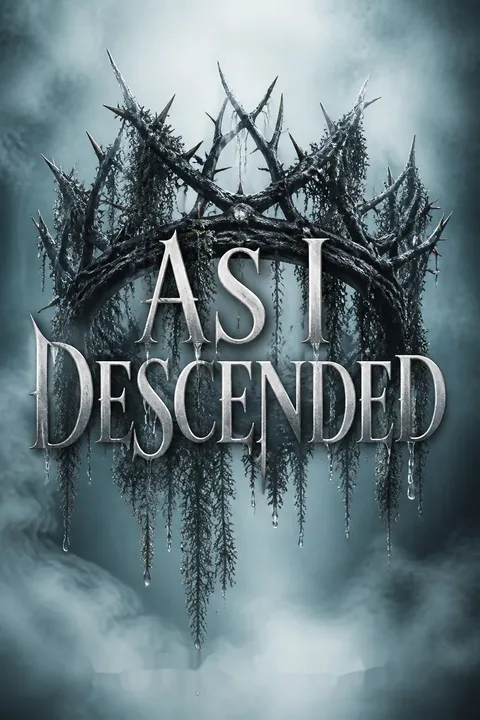


Plot Summary
The Broken Ouija Board
At Acheron Academy, a Virginia boarding school built on a former plantation, Maria joins her girlfriend Lily and best friend Brandon for a séance in the old dining hall. Maria has sensed spirits since childhood, so when the planchette spells her name, she takes the message seriously. It promises that she will gain what she wants most and warns that three portents will come.
The board also names Cawdor Kingsley and delivers cryptic Spanish predictions. Brandon and Lily see the chandelier swing, then crash onto the table, shattering the board. No one is badly hurt, but Maria realizes they never completed the closing ritual. Whatever answered them may now be free to roam the school.
The séance begins as a social experiment but quickly becomes an encounter with a force that speaks in the language of Maria’s private ambition. Its warnings do not simply predict events; they give desire the authority of destiny. The setting matters: a room preserved from the plantation house makes the school’s polished traditions share space with the violence they obscure. When the board is destroyed before the ritual is closed, the group loses control of both the object and the story it has begun telling itself. Their first mistake is not believing in ghosts. It is assuming they can use belief without consequence.
Second Place Isn’t Enough
The next day, the Kingsley Prize finalist list confirms what Acheron expects: Delilah Dufrey leads, with Maria close behind. Delilah is also the school’s star athlete and social ruler, though Maria and Lily know she has used her popularity, her relationship with the soccer coach, and prescription drugs to maintain her position.
Maria still believes she should win by following the rules. Lily sees those rules protecting Delilah instead. She wants Maria to win the scholarship and attend Stanford with her, where their relationship need not stay hidden.
After a party, Lily connects Delilah’s drug use to an upcoming athletic drug test. She proposes getting Delilah to take drugs before the test, so her standing on the team and for the prize will collapse.
The scholarship turns an intimate fear into a contest with public rules: Maria and Lily want a shared future, but only one of them is willing to treat the institution as a game that can be manipulated. Lily’s argument grows from a genuine history of being underestimated, yet she directs that anger toward sabotage rather than confrontation. Maria’s restraint is not pure virtue; it is also a strategy she has relied on to earn recognition. The scene exposes the weakness in that strategy. In a school where status is assembled from connections and appearances, decency can feel less like a moral compass than a rule imposed on the people least able to bend it.
The Drink at Porter’s
Maria and Delilah sneak off campus to Porter’s, a shabby bar in nearby Lennox. Maria has the capsules Lily obtained from Austin, intending to make Delilah fail the drug test. At the bar, Maria falters and calls Lily, but Lily reminds her of the future they hope to share and the humiliation Delilah caused her.
Delilah refuses to take the capsules that night, so Maria waits until Delilah leaves for the bathroom and empties one into her drink. The substance is not the oxy Maria expects.
Delilah becomes intensely disoriented, fixates on patterns in the air, and sees the drowned children rumored to haunt Acheron’s lake. Maria drags her back to campus, where Delilah believes the dorm air is poisonous and climbs toward an open fourth-floor window.
The betrayal happens through a small, concealed action, which makes it easy for Maria to pretend it is still reversible. Lily’s appeal to their future converts love into leverage, while Delilah’s established drug use lets Maria frame the dose as merely accelerating a consequence Delilah already risks. But the contents of the capsule are uncertain, and that uncertainty is the point: Maria acts without knowing what she is giving another person. Delilah’s hallucinations blur the line between the drug’s effects and Acheron’s haunting. The scene makes ambition bodily and immediate. A contest for a scholarship has become a danger Maria can no longer manage by reasoning about fairness.
Delilah Falls
Delilah reaches the dormer window in a panic and falls onto the lawn. Lily hears Maria’s distress, finds Delilah injured but alive, and tries to clean blood from her hands before anyone discovers her beside the body. She flushes away Delilah’s bloodied lip gloss, then tells Maria that Delilah is still breathing and that they must report what happened.
Maria says the capsules were not oxy; Lily admits she obtained a different drug, but hides what she knew about it. Delilah is taken to hospital and remains in a coma. A test identifies LSD, not the oxy everyone associates with her. Maria and Lily conceal their role, while Maria’s impulse to remove evidence deepens the danger of their shared secret.
Lily’s first response is not simply fear of punishment. She begins managing the scene as if the right explanation can still keep their future intact. That shift from planning harm to concealing its consequences is a moral escalation, and it isolates Maria from the one person she trusts. Maria, meanwhile, is left with a truth that neither girl can comfortably admit: she administered a drug whose identity she did not know. Their different forms of denial reinforce each other. The hospital’s LSD result punctures their original plan, but the cover-up prevents that fact from becoming useful to Delilah’s care or to an investigation.
A Friend’s Ultimatum
Brandon has watched Maria evade him since Delilah’s fall. When he finally corners her, he asks her to tell the authorities that she and Delilah went to the bar and that she removed drugs from Delilah’s purse. Maria lies, inventing a story about strangers tampering with their drinks. Brandon gives her until the next day to come clean.
The threat frightens Maria, but she does not turn to Lily. In the bathroom mirror, she sees writing that she believes comes from Altagracia, the childhood nanny who taught her about spirits. Maria says she fears Brandon’s threat and accepts the answer that promises to handle it. The message sends her to meet him at the lake at six thirty the next morning.
Brandon’s ultimatum gives Maria a chance to restore a boundary she has already crossed, but she experiences truth as an immediate threat to the life she and Lily planned. The mirror exchange is frightening partly because it resembles care: Maria believes Altagracia is protecting her, and therefore treats a dangerous request as an act of trust. Her decision also marks a change in how she uses secrecy. Earlier, she hid a crime to preserve her standing; now she seeks supernatural help to prevent exposure. The scene does not absolve her by making the spirit responsible. It shows how badly she wants an authority that will remove the need to choose.
The Lake Takes Brandon
At dawn, Brandon runs beside the lake with freshman Felicia, who is training to become a student ambassador. A shape near an oak tree appears to him as Rafael, the man who once robbed him at knifepoint and later died. Brandon collapses, apparently caught in a frightening vision, and dies before help can save him. Maria arrives and calls for an ambulance, but she cannot explain why she was there.
Afterward, she retreats from Lily and everyone else, deciding that she can survive the loss by pursuing the prizes and honors she once wanted. The school calls Brandon’s death a heart attack. Felicia insists something was near him, while Mateo, Brandon’s boyfriend, notices Maria’s strange behavior and begins questioning what happened.
Brandon’s death transforms Maria’s private request into a public absence that cannot be explained away by a successful cover story. The ambiguity around what he saw leaves the living with different kinds of knowledge: Felicia witnessed his collapse, Mateo recognizes that the account is incomplete, and Maria knows her request preceded it. Her choice to pursue achievement is a defense against grief as much as a continuation of ambition. By treating accomplishment as compensation, she turns success into a substitute for accountability. The supernatural threat remains uncertain, but the human consequences are not: Brandon is gone, and Maria’s silence deprives his friends of a truthful account.
The Crown Feels Empty
After Brandon’s funeral, Acheron postpones the soccer championship and the Kingsley finalist announcement. Maria has become acting soccer captain and Lily acting student body president, but neither feels rewarded by the new status.
On the night of homecoming, Mateo is named king and Maria queen. During the school’s memorial silence for Brandon, Maria sees his bloodied ghost above the crowd and tries to explain that she did not intend his death. Mateo, who already suspects her, watches the outburst and demands answers.
Lily pulls Maria from the stage and takes her to the health center, while the dean dismisses Mateo’s suspicions for lack of evidence. The school’s public tribute makes Maria’s private guilt visible, but no one can agree on what her words mean.
The homecoming ceremony compresses the school’s priorities into one scene: it crowns students, stages grief, and expects everyone to follow a public script. Maria’s breakdown tears that script, but it does not produce a clean confession. She speaks to a presence only she can see, leaving the crowd to interpret her as unstable rather than accountable. Mateo’s anger has evidence behind it, yet institutional authority prefers the explanation that demands the least disruption. Lily’s attempt to protect Maria is also a way of protecting their secret. The ceremony therefore offers no shared ritual of mourning. It converts loss into spectacle while leaving responsibility unresolved.
The Haunting Spreads
As the school’s lights fail and strange sounds return, Lily hears scratching at her window and later finds Austin and his sister Felicia in the old cemetery. Austin admits he has seen figures and felt the air change; Felicia has heard the same scraping Lily fears.
They connect the disturbances to Acheron’s many ghost stories, including a student teacher who supposedly jumped from a fourth-floor window. Lily also hears voices near the lake urging her toward the water, then wakes from repeated nightmares about Delilah and Brandon.
These encounters do not explain Maria’s behavior, but they make it harder for Lily to dismiss the haunting as imagination. Her fear shifts from protecting Maria from suspicion to wondering whether Maria herself is in danger.
The haunting becomes more credible through corroboration, but the novel resists making that credibility reassuring. Austin and Felicia do not solve the mystery; they show that Lily’s experience belongs to a larger pattern. The cemetery’s boundary between consecrated ground and the supposedly unsafe campus offers only temporary comfort, suggesting that inherited beliefs can organize fear without controlling it. Lily’s skepticism has protected her from accepting explanations on faith, yet it has also left her without a language for what she sees. Her changing concern is psychologically significant: love no longer guarantees trust, and recognizing danger does not tell her whether it comes from Maria, the spirits, or both.
The Tunnel of Bones
Maria returns to the old dining hall seeking answers, then wanders into the woods and finds the ruined church associated with Acheron’s history. Beneath its floor, a hidden tunnel leads past bones and a floating flame. Voices of men, women, and children surround her, and she realizes they are the people said to have died in a plantation fire.
The spirits tell her that she has power but does not know how to use it, then name Mateo as the danger ahead and demand blood for blood. Maria escapes the tunnel’s false fire by walking through it unharmed. Back at school, she discovers Mateo has moved ahead of her on the Kingsley list. In the dining hall, an antique dagger appears, and she takes it as the spirits’ aid.
The tunnel gives Acheron’s haunting a buried history rather than a single ghostly source. The institution’s origin story, usually softened into campus lore, becomes a physical space filled with the remains of people erased from the school’s polished identity. Yet Maria reads this revelation through the narrow lens of her own ambition. The spirits’ warning about Mateo becomes, in her mind, permission to remove him. Her passage through the fire shows that some threats are illusions, but she mistakes that discovery for mastery over the dead. The dagger crystallizes this error: an object that looks like agency becomes a tool for surrendering judgment to prophecy.
A False Email
When the updated Kingsley list places Mateo first, Maria feels her promised victory slipping away. She sends a forged school email to Mateo’s father, falsely revealing that Mateo had a boyfriend and suggesting grief counseling after Brandon’s death.
The message causes Mateo’s father to withdraw him from Acheron, forcing him to face an uncertain future just months before graduation. Meanwhile, Mateo finds Lily near the fourth-floor window, disoriented and speaking as if she is following a spirit.
He discovers Delilah’s bloodied lip gloss in Lily’s possession, but cannot get a coherent explanation. Later, after Maria summons him to Dunsinane Field, Mateo sees Lily walking into the lake and dives after her. He cannot find her beneath the black water; she drowns.
Maria’s attack on Mateo is both calculated and intimate. Rather than expose him to the school directly, she weaponizes the authority of his family, knowing that the truth about his relationship can endanger his place at Acheron. The forged email makes the institution’s private, conditional acceptance of queer students brutally concrete. Lily’s death follows a different logic: she is not simply harmed by Maria’s rivalry, but appears caught in the same hostile supernatural environment that has shaped everyone’s fear. Mateo’s failure to save her repeats his helplessness at Brandon’s death, yet this time he acts. His effort cannot undo the loss, but it exposes how far the tragedy has spread.
The Field of Reckoning
Mateo reaches Dunsinane carrying Delilah’s bloodied lip gloss as evidence and demanding to know what Maria did. He tells her Lily has drowned. Maria can no longer hide behind the promise that the spirits will arrange a happy future. When the spirits form words in the dirt, they reveal that they never forced her actions; Maria chose to see them as Altagracia and chose to follow their suggestions.
She admits that she drugged Delilah, concealed the truth, and helped bring the danger that killed Brandon and Lily. She apologizes to Mateo for the forged email, then collapses against him, finally asking forgiveness rather than another prophecy. Mateo’s anger falters, but neither of them can restore the people they lost.
The final revelation removes the moral shelter Maria built around supernatural influence. The spirits may manipulate perception and exploit desire, but they do not erase her agency. That distinction makes her apology meaningful without making it a cure. Mateo’s forgiveness emerges from shared grief and his recognition that Maria did not intend every consequence, yet he does not have to deny the damage she caused. The scene also reverses the structure of the earlier mirror exchange. Maria once asked a supposed protector to act for her; now she must name her actions to another person. Accountability begins when she stops asking fate to absolve her.
Lightning at Dunsinane
As rain and thunder gather over the football field, the dagger reappears in Maria’s hand. Mateo sees it and backs against a goalpost. The spirits’ riddle about the sun rising in the west resolves in a lightning flash approaching from that direction. Mateo shoves Maria away from the metal post, trying to keep her safe.
Maria sees the danger and grabs his hand; the bolt passes through Mateo and into her. Mateo survives with a burst eardrum and a burn scar, while Maria dies. Her last choice is not dictated by the prophecy: she acts to protect the person she had been prepared to kill. The supernatural pattern ends in a consequence neither of them can bargain away.
The climax places two forms of agency side by side. Mateo’s instinct is to shield Maria, while Maria chooses contact with him despite the danger. Her final act does not cancel the earlier choices or restore Delilah, Brandon, or Lily. It does, however, break the logic by which she had treated other people as obstacles to her future. The riddle’s apparent promise of a tactical solution gives way to an event that cannot be controlled. Lightning is at once a physical force and the story’s harshest image of consequence: it connects the two survivors of the school’s violence, but it does not distribute harm equally.
Epilogue
Nearly a year later, Delilah has awakened from her coma and attends the University of Virginia, walking with a cane after her injuries. She avoids drugs and competitive ambition, and she tries to understand the harm she caused Lily. Mateo studies at UVA on a full scholarship after being emancipated from his parents, who rejected him after learning he was gay.
He still refuses to return to Acheron or attend a memorial for Maria, Lily, and Brandon. Delilah invites him anyway, hoping to repair what she can. He declines. She cannot recover her friends or fully remember the night she fell, but she has begun to value people more than the victories that once defined her.
The epilogue refuses a tidy moral accounting. Delilah survives and changes, but her regret cannot restore Lily or undo her earlier cruelty. Mateo’s refusal to attend the memorial protects him from the school’s performance of grief, while his new life shows the cost of his father’s rejection and the possibility of community elsewhere. Delilah’s partial memories keep the central night unresolved in one sense, yet her changed priorities matter more than solving every supernatural detail. The ending shifts attention from winning and punishment to the ordinary labor of becoming more empathetic. Survival gives Delilah a second chance, not a clean slate.
Analysis
As I Descended makes ambition frightening by giving it a supernatural vocabulary. Maria’s desire to win the Kingsley Prize and stay with Lily is not presented as inherently corrupt. The danger begins when she treats unfairness as permission to harm someone and then recasts that choice as fate. The spirits exploit a familiar psychological move: people often experience their own desires as external instructions when acting on them would otherwise feel shameful. The haunting does not absolve Maria. Its final insistence that she chose her actions forces the story to distinguish influence from responsibility.
Acheron’s setting deepens that question. The school’s polished image rests on a plantation’s history, and its dead are not abstract monsters but traces of violence buried beneath institutional prestige. Students inherit a landscape that turns old power into heritage, just as they inherit social rules that distribute opportunity unevenly. Delilah’s privilege, Lily’s disability, Mateo’s racial and economic position, and Brandon’s isolation all shape who can move safely through that world. Their experiences cannot be reduced to one kind of oppression, but each reveals the cost of pretending that the school’s hierarchy is neutral.
The novel also treats queer love as both refuge and pressure. Maria and Lily want a future together, yet fear and ambition make their relationship a place where one can persuade the other to cross a boundary. Mateo and Brandon’s tenderness offers a different picture of intimacy, but their vulnerability to family and institutional rejection remains real. In the end, no prize can repair the damage done in pursuit of recognition. The more difficult achievement is telling the truth, accepting responsibility, and recognizing other people as more than obstacles to a desired future.
Review Summary
People Also Read
Characters
Maria Lyon
The ambitious mediumMaria is a popular, high-achieving soccer player whose mother is a state senator. She speaks Spanish and has felt connected to spirits since childhood, though she tries to appear composed and conventional at Acheron. She is intensely loyal to Lily and shares a long, trusting friendship with Brandon. Her ambition is sharpened by a belief that effort and good conduct should earn recognition, even as she watches social privilege reward Delilah instead. Maria’s instinct to follow rules can look like kindness, but it also lets her avoid confronting unfairness until resentment overwhelms restraint. Her deepest conflict lies between wanting a life with Lily and wanting public proof that she deserves success.
Lily Boiten
The watchful strategistLily is Maria’s roommate and girlfriend, a sharp student who uses crutches because of lasting injuries from a childhood car accident. Her chronic pain and experience of being reduced to her disability have made her fiercely self-reliant and skeptical of pity. Lily wants to attend Stanford with Maria and live more openly, but she fears rejection from her conservative parents and the social costs of being out at Acheron. She is observant, academically gifted, and capable of turning frustration into a plan. That strategic instinct can protect the people she loves, but it can also make her treat moral limits as obstacles to be overcome.
Mateo Pífano
The questioning athleteMateo is a talented soccer player recruited to Acheron on scholarship and a founding member of the school’s Gay-Straight Alliance. He is Brandon’s new boyfriend and has earned a place among the popular students, though he remains alert to the racial and class hierarchies beneath the school’s easy talk of inclusion. Warm and funny, Mateo often uses humor to avoid exposing his own vulnerability. His family’s rejection of a queer relative has made him cautious about coming out at home. His loyalty to Brandon gives him a strong sense of what is at stake when the school tries to dismiss a suspicious death as an accident.
Brandon Stuart
Maria’s steadfast confidantBrandon is Maria’s closest friend, a funny, thoughtful student who has often felt excluded from Acheron’s wealthy social circle because he is poor, fat, and gay. His new relationship with Mateo makes him feel more accepted, but it does not erase years of loneliness or the panic attacks that began in childhood. Brandon is attentive to small changes in Maria and trusts their friendship enough to challenge her when her behavior turns troubling. He wants to protect people without becoming an accuser, a tension that makes it difficult for him to act decisively when loyalty and responsibility pull in opposite directions.
Delilah Dufrey
Acheron’s reigning queenDelilah is the school’s most celebrated student: a high-ranking scholar, student leader, and star athlete whose confidence commands attention. She is competitive enough to treat achievement as proof of personal worth and uses charm to keep others close. Her relationship with Lily’s prescription medication and her history with Lily reveal a more careless, self-centered side than her public image suggests. Delilah is not simply a rival to Maria; she is also a young woman whose need to stay exceptional leaves little room for empathy. Her privileged status makes it easy for her to assume that consequences will fall elsewhere.
Altagracia
Maria’s childhood guideAltagracia was Maria’s nanny and an important presence in her childhood. She taught Maria Spanish, cared for her closely, and introduced her to stories about spirits and protection. Maria remembers her as a trusted adult who understood experiences the rest of her family might dismiss. That memory gives Maria a source of comfort when Acheron’s supernatural disturbances begin, and it helps explain why she is willing to interpret spiritual signs as guidance.
Felicia
The observant freshmanFelicia is Austin’s younger sister, a freshman who hopes to become a student ambassador. Brandon treats her like a little sister, and she responds to his attention with real affection. She is earnest, curious about Acheron’s history, and more observant than older students tend to assume. Her habit of asking questions makes her one of the few people willing to connect the school’s ghost stories with its present disturbances.
Austin
The wary drug sourceAustin is a senior known for his goth clothing, marijuana use, and access to drugs. He is Felicia’s older brother and part of the same social circle as Brandon and Mateo, though he often keeps people at a distance through jokes and a deliberately careless manner. Austin claims to have seen strange things at Acheron long before the others take the haunting seriously. Beneath his bluster is a student who wants to leave the school and its history behind.
Ross
The dorm monitorRoss is a young dorm monitor responsible for enforcing rules and responding to emergencies. He tries to be reassuring with students, though his role leaves him caught between their suspicions and the school’s preference for orderly explanations.
Dean Cumberland
The school’s gatekeeperDean Cumberland represents Acheron’s official authority. He handles discipline, parental calls, and student crises, favoring explanations that allow the school to continue functioning. His polite manner often masks how little power students have to challenge the institution’s decisions.
Plot Devices
The Ouija board
A door mistaken for a toolLily buys an antique board to encourage Maria, but the séance becomes a genuine supernatural contact. It provides cryptic predictions about Maria’s desires, future events, and the Cawdor Kingsley Prize. The chandelier crashes before the group can complete the closing ritual, leaving the spirits free to appear elsewhere at Acheron. The board therefore serves two functions: it launches the haunting and gives Maria a language for turning ambition into supposed destiny. Its destruction does not end the danger; it removes the group’s most visible evidence of how the danger began.
The Kingsley Prize
Ambition with a deadlineThe prestigious scholarship promises college tuition and status to one graduating senior from each participating Virginia school. At Acheron, the prize becomes a public ranking system that shapes Maria and Delilah’s rivalry, while Lily sees it as the path to a shared future at Stanford. Mateo’s late application changes the contest after Delilah is removed from consideration. Because the award has both practical value and symbolic prestige, its rankings repeatedly intensify the characters’ fears of being left behind. The prize makes their choices feel urgent, but it cannot deliver the belonging they expect from winning.
Acheron’s plantation past
History beneath the schoolAcheron occupies an old plantation house in Virginia, with a disused dining hall, family cemetery, lake, woods, and ruined church. School tours turn the site’s history into anecdotes, while rumors describe deaths, a fire, and a hidden passage beneath the church. These spaces shape the novel’s supernatural events and make the school’s present-day status hierarchies echo its inherited racial history. The setting is not merely atmospheric: the tunnel beneath the church reveals the human remains beneath the institution’s polished identity, while the lake and dorm windows become sites where characters confront danger.
La Llorona and the spirits
Fear given familiar facesCharacters encounter spirits through legends and personal fears, including the figure of La Llorona, the children said to haunt the lake, and the woman in blue who appears on the stairs. The haunting produces visions, strange sounds, cold spaces, and messages that seem to offer guidance or warnings. Its power lies partly in tailoring itself to what each character already fears or desires. Maria interprets one presence as her dead nanny and treats its messages as permission, while others see or hear different figures. The story ultimately distinguishes supernatural influence from human choice: the spirits can mislead, but they do not make the characters act.
Download PDF
Download EPUB
.epub digital book format is ideal for reading ebooks on phones, tablets, and e-readers.








