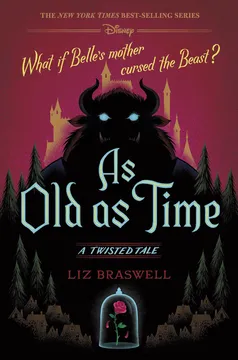


Plot Summary
Prologue
For ten years, an unnamed prisoner has survived by replaying the story of a prince cursed into a Beast. Each day, guards enter her cell, feed her thin broth, and leave without remembering her.
She has nearly lost herself to the repetition when the tale’s hidden truth presses through: the Enchantress was seized after leaving the castle and carried away in a black carriage. To keep from breaking, the prisoner begins the story again, unaware that the people she loves are moving toward her.
The opening turns a familiar fairy tale into a survival mechanism. Repetition gives the prisoner a narrow strip of control inside a world where her identity, memory, and freedom have been taken from her. The black carriage, deliberately excluded from the version she rehearses, marks the gap between stories that promise order and events that refuse to resolve neatly. That gap becomes the novel’s central question: what has been omitted, and who benefits from forgetting it? The frame also makes memory an urgent physical need, not a decorative mystery.
Maurice Meets Rosalind
Maurice arrives in a secluded kingdom hoping to build steam-powered inventions, and finds a home among its magical outsiders. Outside a tavern, he watches Rosalind, a gifted enchantress, rebuke a man who condemns people like her; her magic turns the aggressor’s nose into a pig’s snout.
Maurice falls for her before he has properly learned her name. Their courtship joins his stubborn mechanical imagination to her patient magical research, while their friends Alaric and Frédéric reveal the divisions gathering around them.
When Maurice protects a beaten young charmante from attackers, Rosalind is moved by his courage and asks him to marry her. They wed among their unusual friends, and an unruly boar disrupts the celebration in a way that foreshadows the costs magic can return to its users.
Maurice and Rosalind meet through an act of public defense, not a private spell of attraction. His instinct is to intervene when power is used to persecute someone weaker, while Rosalind recognizes in him a form of solidarity that does not depend on sharing her abilities. Their marriage offers a small model of the kingdom’s possible coexistence, but the boar at the wedding complicates any easy celebration: consequences circulate through the same world as affection. The scene establishes the story’s moral tension between unusual power and the responsibility to use it carefully.
The Kingdom Turns Hostile
As attacks on magical residents increase, Maurice cannot find Vashti, the midwife Rosalind wants for their expected child. Other friends grow wary, and the tavern excludes charmantes; Rosalind’s search through a mirror reveals only darkness where Vashti should be.
She petitions the king and queen to protect their subjects, but they dismiss the disappearances and treat magic itself as a threat. At Belle’s christening, frightened friends urge the family to flee. Frédéric, a former medical student with limited visions, predicts that Rosalind and the baby will be caught in violence, while Maurice will be beaten and blinded.
Rosalind finally accepts that courage alone cannot keep them safe. They leave the kingdom with their infant daughter, helped across the guarded border by a soldier whose mother Rosalind once healed.
The persecution gains force through ordinary institutions: a closed tavern, silent neighbors, and rulers who describe exclusion as public safety. Rosalind’s failed petition matters because it converts private fear into political knowledge. Frédéric’s vision sharpens the dilemma: staying would express defiance, but would place a child in danger. The family’s escape is not a rejection of their community so much as a recognition that courage cannot substitute for protection. The soldier’s gratitude also shows that memory of kindness can survive where official justice fails.
A Curse Before Coronation
In exile, Maurice and Rosalind build a quiet life for Belle, while Alaric secretly helps persecuted charmantes escape to their home. A plague devastates the old kingdom, and the royal family summons Rosalind to save them.
She refuses after recalling how the rulers abandoned her people, but secretly protects the prince and castle’s children from the disease. When the orphaned prince is about to be crowned, Rosalind returns in disguise to judge whether he might rule differently from his parents.
He rejects her request for shelter, and she reveals herself as an enchantress. Convinced that the child’s selfishness threatens what remains of the kingdom, she curses him into a Beast and enchants the castle and its inhabitants. As she leaves, Frédéric’s men seize her in a black carriage.
Rosalind’s choices are neither simple cruelty nor uncomplicated heroism. She refuses to rescue rulers who enabled persecution, yet secretly shields children who had no part in their decisions. Her final test of the prince turns a political judgment into a personal curse, exposing the danger of giving one powerful person authority to decide who deserves transformation. The spell is meant to force moral change, but it also traps servants and a child inside the consequences. Her own abduction makes the punishment’s presumed author vanish from the story, leaving everyone else to interpret it without her.
Belle Loses Her Father
Belle grows up in a small village where books and questions set her apart. Gaston, the admired local hunter, treats her refusal to marry him as a problem to overcome and stages a wedding without her consent. Belle escapes the gathering, then spots her father Maurice’s frightened horse returning from the fair without him.
She follows the animal into the woods and finds an abandoned-looking castle, where Maurice is locked in a cell after trespassing. Its master, the Beast, agrees to release him only if Belle takes his place. Belle offers herself, believing she can find a way out later. The Beast sends Maurice home in a strange self-moving carriage, leaving Belle alone in a castle she has never heard of and a bargain she cannot easily undo.
Belle’s first great decision comes after two men try to define her future: Gaston through marriage and the Beast through captivity. Her refusal of the wedding is a clear act of self-determination, but her bargain for Maurice shows how quickly care can draw her into danger. Books have taught her to expect adventures, yet they have also encouraged the belief that cleverness can always find an exit. The castle tests that assumption. Her curiosity is not a flaw, but it cannot protect her from unequal power on its own.
The Castle Wakes
The Beast moves Belle from the dungeon to a lavish bedroom and orders her to dine with him, then leaves her to the castle’s animated household. Mrs. Potts, a talking teapot, brings tea; the wardrobe offers gowns; Cogsworth the clock and Lumière the candelabrum try to manage the household.
Belle refuses the Beast’s dinner invitation but explores the castle, coaxing Cogsworth into a tour. When the servants steer her toward the library, she realizes they are diverting her from the forbidden West Wing.
She chooses the forbidden stairs instead. In the ruined chamber she finds a shattered mirror, a child-sized bed, a torn portrait, and a rose floating beneath glass. The objects connect the castle’s mysteries to the ten years its residents have been waiting.
The enchanted household makes captivity feel hospitable without making it voluntary. The servants offer warmth and food, but their cheer cannot erase the Beast’s control over Belle’s movement. Belle responds by gathering evidence: the wardrobe’s outdated fashions date the castle’s silence, and the staff’s nervous evasions point toward a buried history. Her movement toward the West Wing is therefore more than curiosity. It is a refusal to accept the comforting version of events offered by people who have learned to survive through silence.
The Rose Breaks
When Belle lifts the glass covering the rose, the Beast charges in, but she touches it before he can stop her. The petals vanish, and a vision shows her that the enchantress who cursed him was her own mother. The castle shudders as bone-white webs spread over its walls, and the Beast loses the last chance the rose gave him to break the spell.
Belle flees through the gates, only to meet enchanted white wolves in the forest. They corner her and Phillipe, her father’s horse, until the Beast arrives and fights them off, suffering deep wounds. Belle could ride home alone, but she cannot leave him to freeze. She hauls him onto Phillipe and returns to the castle, choosing to help the creature who first made her his prisoner.
The rose transforms Belle’s investigation into personal responsibility: the curse is not merely a stranger’s history but part of her own family. Her touch accelerates the danger, though the Beast’s dwindling time means the flower was never a secure promise of rescue. The wolf attack then changes their relationship through action rather than sentiment. The Beast risks himself to save Belle, and she answers by carrying him home. Their bond begins not with trust but with reciprocal decisions made when each could have abandoned the other.
Books Replace the Mirror
After Belle binds the Beast’s wounds, she frees him and they consult his magic mirror. It can show distant places, but it cannot reveal the Enchantress; it does show Maurice trapped in the carriage, confirming he is alive.
The Beast leads Belle to a vast library, where they search records for her mother. Belle learns that the castle’s servants were once people, and the Beast begins to see them as more than tools. He and Belle cook a meal together, though his frustration erupts when he mishandles the dough.
Their uneasy partnership becomes warmer as they share stories and investigate. The records reveal a mark beside the names of people who vanished, and the Beast remembers that Alaric Potts, his former stablemaster, disappeared before the curse.
The mirror offers vision without understanding: it can display Paris or Maurice, but it cannot explain why the family has been separated. Belle’s books provide a slower, more demanding form of access, requiring comparison and interpretation. In the library, the Beast confronts the human cost of his own sheltered upbringing, while Belle begins to recognize his grief beneath his temper. Their shared cooking is a modest rehearsal for equality: he cannot perform the task perfectly, and she does not let failure excuse a tantrum.
Alaric’s Buried Truth
Following a strange odor in the neglected stables, Belle and the Beast dig beneath a loose patch of earth and uncover Alaric Potts’s corpse. A horse-shaped buckle identifies the former stablemaster, and a narrow surgical blade remains lodged in his chest.
Alaric’s journal shows he had been helping charmantes escape the kingdom, carrying them to Maurice and Rosalind’s home across the river. His last notes suggest someone close to him knew about the operation.
The Beast realizes his parents lied when they said Alaric abandoned his family, and that his own childhood gifts to the stablemaster may have made him a target. The castle holds a funeral. Mrs. Potts learns her husband did not willingly leave, and the Beast begins to mourn the servant he had never thought to ask about.
Alaric’s remains make an absence legible. For years, the Beast accepted the royal explanation because it spared him the pain of questioning those who raised him. The journal replaces that convenient story with evidence of a deliberate rescue network and a murder. It also gives Mrs. Potts a truth that grief had been unable to supply. The funeral marks a shift in the Beast’s moral attention: he no longer sees servants as background to his own suffering, but as people whose lives and losses demand recognition.
The Castle’s Last Exit
In the old census books, Belle discovers that Monsieur Lévi, her village bookseller, appears in records more than a century old and bears the same mark as the vanished charmantes. She and the Beast decide to reach him before the webbing seals the castle.
The Beast and animated suits of armor hammer a gap through the barrier, while Belle guides them to strike the weakened panes before the webs can reinforce them. They escape into the snow, leaving the servants behind. In the village, Lévi’s shop has burned down, and no one knows whether he survived.
Among the ashes Belle finds a small silver mirror untouched by fire. When it begins to show her mother’s memories, Belle sees Rosalind helping charmantes flee and learns that her mother’s past is far more complicated than she imagined.
The escape is a collective achievement: the Beast supplies strength, the suits of armor repeat Belle’s precise sequence, and Belle notices that brute force alone strengthens the barrier. Their success opens the outside world, but the ruined bookshop immediately shows that freedom does not restore what violence has destroyed. The memory mirror offers a different kind of archive, one made of intimate images rather than official records. It challenges Belle’s assumption that her mother simply chose to leave, while withholding enough information to keep the family’s history unresolved.
The Asylum’s Secret
At Maurice’s home, masked men abduct Belle before she can reunite with her father. The Beast tracks her to the asylum, while Belle discovers Maurice imprisoned nearby. He tells her that Rosalind was kidnapped years earlier and tortured by Frédéric D’Arque, the former friend who now directs the institution. Belle realizes the shadows had warned her to stay away from D’Arque.
When her captors take her for examination, she escapes the table, finds keys, and opens cells holding charmantes and other prisoners. In the last cell she finds Rosalind, scarred and weakened but alive. She also frees Lévi, who helps release the others. Belle and her mother hurry through the asylum to reach Maurice, as guards mobilize to stop them.
The asylum gives the story’s abstract persecution a physical structure: barred cells, instruments, records, and a language of treatment used to disguise coercion. Belle’s escape relies on habits formed through reading and observation, but her first priority is no longer simply her own survival. She opens other cells before she knows whether the prisoners can help her. Finding Rosalind reverses Belle’s childhood story of abandonment. Her mother’s absence was produced by violence and protective forgetting, not indifference.
A Family Breaks Free
Belle, Rosalind, and Lévi reach Maurice’s cell and free him; he recognizes his wife after years of magical forgetting. Belle gives the keys to another prisoner so the remaining captives can escape, then leads her parents through the asylum’s exercise rooms and laundry.
Outside, villagers and escaped patients converge on the grounds, some searching for relatives and others carrying weapons. D’Arque blocks the family’s path with armed guards.
He admits that the old king and queen funded his campaign against charmantes, and that he targeted Belle to draw the Beast into reach. Rosalind identifies him as the friend who betrayed their circle. The Beast bursts from the crowd before D’Arque can shoot, but his rage has pushed him close to becoming wholly animal.
The reunion is deliberately interrupted by danger. Belle finally has both parents beside her, yet the family cannot retreat into private happiness while prisoners remain in danger and D’Arque still commands force. Her choice to pass the keys onward extends responsibility beyond blood ties. D’Arque’s explanation also reveals that prejudice was not merely mob behavior: it was financed and organized by rulers who feared rivals to their power. The Beast’s arrival turns the confrontation toward a final test of whether he can act from attachment rather than instinct.
The Beast Chooses Mercy
The Beast pins D’Arque to the ground, nearly overtaken by the curse’s animal fury. Belle approaches and brings him back to himself by invoking the stories they shared and the promise he made to rebuild her bookstore.
He releases D’Arque, but Gaston kills the asylum director with a hunting blade and then proposes to Belle before the watching crowd. Belle refuses him and publicly explains the Beast’s identity and D’Arque’s crimes. When Rosalind offers to turn the Beast human, he instead asks her to free the castle servants, now lifeless objects.
He chooses their restoration over his own appearance. Rosalind’s remaining magic releases the servants, while the Beast remains a Beast and his affection for Belle keeps his mind from surrendering to the curse.
The decisive change in the Beast is not a return to a handsome body but a different use of power. He could kill D’Arque, yet Belle’s reminder of their shared experience helps him refuse the violence that would confirm the curse’s worst judgment. Gaston’s sudden proposal repeats his earlier assumption that Belle is a prize, and her public refusal rejects that script. The Beast’s choice to restore the servants makes care concrete and costly: he gives up the cure that might benefit him most.
The Castle Wakes Again
The family returns to the castle, where Rosalind uses her last strength to restore Cogsworth, Lumière, Mrs. Potts, Chip, and the other servants to human form. The Beast remains transformed, but his mind is safe so long as he and Belle continue to love one another. The rescued residents celebrate, while Belle and Rosalind begin the difficult work of knowing each other after years of separation.
Rosalind proposes gathering enough charmantes to break the remaining curse, and Belle sees that the forgotten castle could shelter them. The Beast will have to leave the world he has watched through a mirror and seek them out. Belle agrees to travel with him, trusting that her parents and Lévi will remain a home she can return to.
The ending resists the neat restoration expected of a fairy tale. The servants regain their bodies, but the Beast does not regain his human shape, and the kingdom’s safety depends on the very forgetting that once erased its people. Belle’s choice to travel is not an escape from family; it is a way of joining exploration to belonging. Rosalind’s mistake cannot be undone completely, but her remaining power is redirected toward repairing the harm she caused. The castle becomes less a prison than a possible refuge.
Analysis
As Old as Time asks what a fairy tale’s moral machinery looks like when it is applied to an entire society. The prince’s curse appears at first to be a compact lesson about selfishness: change inwardly, or remain monstrous. But the spell also transforms servants who did not choose the prince’s behavior, while the kingdom’s political failures have already harmed people far beyond the royal family. The novel therefore refuses to treat punishment as automatically just because its target is flawed.
Belle’s investigation supplies the corrective. She reads records, compares symbols, studies memories, and listens to servants whose personhood the prince had ignored. Her intelligence is not simply bookish cleverness; it is a practice of questioning who produced a story and whose interests its omissions serve. That practice lets her recognize the difference between a monster’s appearance and his decisions, without excusing his imprisonment of Maurice or the servants’ lost lives.
The novel’s strongest ethical contrast is between D’Arque’s attempt to remove difference and Rosalind’s attempt to protect it through concealment and vengeance. Both claim to know what must be done for a community. Both use power on people who cannot consent. Belle’s insistence on individual responsibility challenges each form of collective judgment, whether it targets charmantes as dangerous or excuses a prince because he is young.
The ending makes repair more important than restoration. The Beast remains physically transformed, but he chooses the servants’ freedom over his own cure. Belle gains a family without abandoning the independent life she has wanted, and the castle becomes a possible home for those still excluded elsewhere. Love matters here not as a magical reward for good behavior, but as a sustained attention to other people’s needs, histories, and choices.
Review Summary
Reviews for As Old as Time are mixed, averaging 3.87/5. Many praise its imaginative twist — Belle's mother being the enchantress who cursed the Beast — and appreciate the dual timeline exploring Belle's parents' backstory. Fans of the original Disney film enjoy the nostalgic callbacks and deeper characterization. However, critics cite flat characters, juvenile writing, inconsistent plot logic, and excessive movie dialogue reproduction as weaknesses. The ending, which notably omits the Beast's transformation into a prince, divides readers sharply, with some finding it refreshingly unique and others deeply disappointed.
Characters
Belle
Restless reader and rescuerBelle is an inventive, observant young woman raised by her father in a village that regards curiosity as eccentricity. Books offer her both escape and a method of understanding the world: she notices dates, symbols, and inconsistencies that others overlook. Her wish for adventure is genuine, but so is her loyalty to Maurice, and she repeatedly acts when someone she loves is in danger. Belle is not fearless; she is often frightened, overwhelmed, or ashamed of acting too quickly. What distinguishes her is her ability to keep thinking while afraid, then revise her assumptions when new evidence appears. She wants a life larger than the one prescribed for her, without surrendering compassion or independent judgment.
The Beast
Isolated prince learning empathyThe Beast is a cursed prince who has lived apart from the world and learned to treat his own misery as the only suffering that matters. His fury is real, but it coexists with intelligence, loneliness, and a capacity for tenderness that he has rarely practiced. A royal upbringing taught him to regard servants as instruments of comfort, while isolation prevents him from seeing how much their lives contain beyond service to him. Belle unsettles his habits by asking questions, refusing to flatter him, and requiring him to participate in ordinary tasks. He is physically powerful and emotionally inexperienced, a combination that makes self-control an ethical necessity rather than a matter of good manners.
Rosalind
Powerful, impetuous enchantressRosalind is Belle’s mother and a formidable enchantress who values the safety of magical outsiders in a kingdom increasingly hostile to them. She is loving and courageous, but anger can turn her moral certainty into rash action. Her magic lets her heal, protect, disguise, and punish, yet she cannot control how others experience the consequences of her decisions. Rosalind’s relationship with Maurice gives her a private life beyond her public role, while motherhood forces her to weigh the survival of her family against the fate of a wider community. She is compelling because good intentions do not make her harmless: she can protect the vulnerable and still exercise power unjustly.
Maurice
Inventor and devoted fatherMaurice is a traveling inventor whose plans for steam-powered machines make him an object of suspicion in a village that prefers familiar routines. He is generous, practical, and more perceptive about people than his distracted manner suggests. His love for Rosalind and Belle is expressed through patient care, steady work, and the assumption that their dreams deserve room. Maurice does not share Rosalind’s magic, but his willingness to stand beside her makes him part of the danger she faces. He is also a tinkerer who responds to failure by studying what went wrong and trying again, a habit that quietly models persistence for Belle.
Frédéric D’Arque
Uneasy physician and seerFrédéric is a former medical student whose limited visions have disrupted the conventional career his family expected him to pursue. Polite, guarded, and intellectually ambitious, he is drawn to medicine because it promises expertise and control. His discomfort with magic is entangled with his own identity and his desire to be accepted by people who fear the supernatural. Frédéric’s friendship with Maurice and his presence at Belle’s christening place him close to the family, even as his judgments about charmantes make that closeness uneasy. He represents the temptation to treat belonging as something earned by rejecting the people one resembles.
Gaston
Admired hunter and pursuerGaston is the village’s handsome, accomplished hunter and its most celebrated bachelor. He assumes that admiration entitles him to Belle’s affection and treats her refusal as an obstacle rather than a decision. His confidence depends on the crowd’s approval, which makes him less self-aware than he believes. Gaston can be brave and decisive, but he often mistakes forceful action for moral authority. His pursuit of Belle exposes the difference between wanting a person and recognizing her as an independent person.
Monsieur Lévi
Bookseller and trusted guideLévi runs a modest bookshop that becomes Belle’s most welcoming refuge from village narrowness. He respects her hunger for ideas and encourages Maurice’s inventions when others call him foolish. A careful observer of persecution, Lévi understands that survival sometimes requires retreat, though he remains loyal to people who need help. His knowledge of books and history makes him a guide, but he never treats Belle as a child incapable of forming her own conclusions.
Mrs. Potts
Warm-hearted castle housekeeperMrs. Potts is the castle’s practical, motherly housekeeper and Chip’s devoted mother. She tries to make Belle feel welcome without pretending that the Beast’s actions are harmless. Her loyalty to the household is rooted in affection and shared history, not merely duty. She carries grief for her missing husband while continuing to care for her son and the other servants.
Alaric Potts
Kindly royal stablemasterAlaric is a horse-loving stablemaster and Maurice’s friend, respected for treating people of different backgrounds with equal kindness. He has a close bond with the young prince and a family life with Mrs. Potts and their son. His concern for vulnerable outsiders leads him to act where official authorities will not, making him a quiet but consequential figure in the kingdom’s history.
Cogsworth
Orderly household stewardCogsworth is the castle’s punctilious steward, anxious about rules and the Beast’s temper. His formality can make him seem fussy, but his caution comes from years of trying to keep the household functioning under a volatile master. He is proud of his knowledge and status, and uneasy when Belle challenges the boundaries he has learned to preserve.
Lumière
Flirtatious castle hostLumière is the castle’s sociable, theatrical household servant, eager to make a rare guest feel welcome. He uses charm and humor to soften the silence of the cursed household, while his loyalty to his friends remains steady beneath the performance. His ease with Belle contrasts with Cogsworth’s caution.
Chip
Cheerful little teacupChip is Mrs. Potts’s young son, spirited and curious despite his unusual enchanted form. His requests for stories and his uncomplicated affection give the castle’s adult conflicts a child’s scale.
LeFou
Loyal friend to GastonLeFou is Gaston’s smaller, more hesitant companion. He is often pulled along by Gaston’s plans, but his loyalties can also connect the hunter’s circle to people harmed by the asylum.
The King and Queen
Fearful royal rulersThe unnamed king and queen govern the magical kingdom as disease and social unrest intensify. They are preoccupied with preserving royal authority and distrust the powers of charmantes. Their decisions shape the dangerous world their son inherits, though they are also parents grieving a child and frightened by a plague they cannot control.
Plot Devices
The Enchanted Rose
A deadline made visibleThe rose is the visible measure of the Beast’s curse: its falling petals mark the limited time in which he must learn to love and be loved. It gives the Beast a reason to remain isolated while also making hope feel countable. When Belle touches it, the remaining petals disappear and the curse intensifies, transforming a familiar fairy-tale emblem into a consequence of her curiosity. Its red color also links the Beast’s fate to Rosalind’s garden and Belle’s recovered family history.
The Magic Mirrors
Windows into missing livesThe Beast’s mirror shows distant places and present scenes, but it cannot explain what it displays or reveal the Enchantress. A second mirror, preserved by Lévi, carries Rosalind’s memories instead. Together the mirrors distinguish observation from understanding: one can show Belle’s father captive, while the other gradually reconstructs the past that Belle and Maurice were made to forget. Their different limits drive the investigation rather than simply solving it.
The Forgetting Spell
Protection through erasureRosalind’s spell hides the magical community from human memory and keeps Belle and Maurice from remembering her. It is intended as protection from persecution, but its cost is severe: Belle grows up believing her mother left, and the family cannot understand who has been taken from them. Memory returns through the castle’s enchanted surfaces and the mirror Lévi keeps. The spell makes forgetting both a refuge and a wound.
The Webbed Castle
A curse closing inwardBone-white webs spread from the castle grounds as the curse nears completion. They first trap the Beast and servants, then grow stronger as the rose’s deadline is lost. Belle and the Beast escape by finding a weakness in the barrier’s self-reinforcing structure and coordinating the Beast’s hammer blows with the armor’s strikes. The webbing turns the castle into a visible countdown and, later, a hidden refuge for the people the outside world has driven away.
Download PDF
Download EPUB
.epub digital book format is ideal for reading ebooks on phones, tablets, and e-readers.








