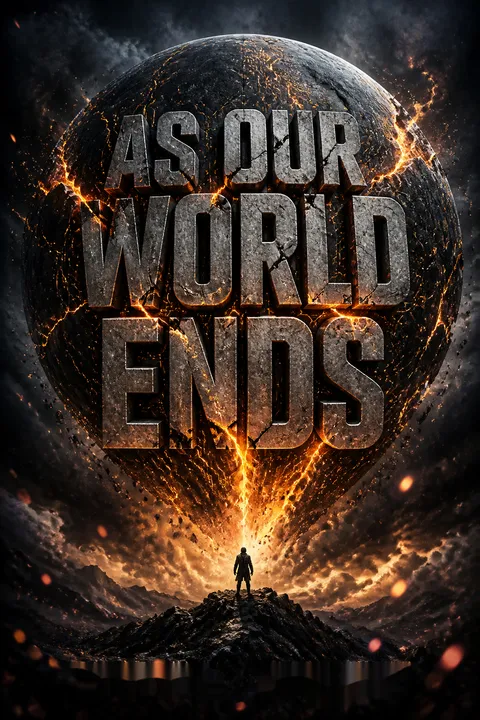


Plot Summary
Prologue
After America’s collapse, Alex Reid hangs upside down over a lake while a gang tortures him for information. He remembers the wreckage of his family, but keeps his hands moving against the rope that binds him.
At the shore, ordinary people gather around a fire as if cruelty has become another rough civic ritual. Then Sophie and others emerge from the trees, and Alex drops into the dark water, leaving his fate unresolved.
The prologue turns the book’s central survival question into a physical image: Alex is suspended between the life he lost and whatever remains possible. The captors’ ordinariness matters. The catastrophe has not created violence from nothing; it has removed the institutions that once restrained it. Alex’s memories of marriage and family are not comforting detours but evidence of what he is trying to preserve. By withholding the outcome of his plunge, the frame makes endurance itself the first promise of the story, while also setting up the lake as a test of whether his rescue skills can survive in a world without rescuers.
A Hacker’s Conditional Freedom
In a juvenile detention cell, sixteen-year-old Ryan Valez is offered a way out by Homeland Security assistant director Danielle Gardiner. A string of ransomware attacks has struck American cities, and investigators suspect the latest intruder accessed a Defense Threat Reduction Agency network.
Ryan is unusually qualified: before prison, he hacked NASA, the Pentagon, and federal agencies. He refuses to work on a vague promise, demanding written protection and a list of extravagant rewards. His final, quieter request is placement with a foster family in California.
Once DHS agrees to negotiate, Ryan locates the attack’s source within hours, but withholds the culprit’s name until Danielle supplies information about the person who betrayed him. His freedom begins as another bargain built on distrust.
Ryan’s talent gives him leverage, but his insistence on terms reflects a childhood in which adults and institutions have repeatedly failed to protect him. He treats the government as an adversary to negotiate with, not an authority to trust. Danielle’s decision to bargain with a teenager reveals the state’s own vulnerability: its technical systems are sophisticated, yet its ability to identify the person attacking them is weak. Ryan’s California placement request quietly changes the stakes. Beneath the swagger and absurd demands is a concrete desire for a home, linking the cyber plot to the family story before either strand meets the national disaster.
A Family Already Fraying
In California, nineteen-year-old Elisha Reid prepares to finish Coast Guard rescue-swimmer training while her mother, Sophie, decides to foster Ryan. Sophie has already separated from Alex, Elisha’s father, after years of distance and grief over their son Michael’s death.
Elisha objects to the divorce and resists treating Ryan as family, especially because his appearance recalls her dead brother. Alex, meanwhile, refuses to sign the divorce papers and throws himself into punishing storm simulations at the Coast Guard training pool.
His captain, Brad Thomas, orders him to take leave and confront the grief that is damaging his judgment. When Sophie visits Alex in North Carolina with Ryan, Alex finally signs the papers, then learns Sophie is taking the boy home without first introducing them.
The Reids have each turned grief into a different form of control. Alex relies on physical danger, where training can make fear legible; Sophie makes a decisive move toward fostering, where care might still be possible. Elisha resists because Ryan’s resemblance to Michael threatens to turn a new relationship into a replacement. Their conflict is not simply about whether the marriage should end. They have never fully shared their grief, so each reads the other’s coping strategy as indifference. Ryan enters this fractured household carrying the possibility of connection and the danger of being assigned a role he did not choose.
The Sky Goes Dark
On the drive to Norfolk airport, Sophie loses contact with Elisha after a blast interrupts their phone call. The airport screens then show explosions and destruction across the West Coast, and every flight is cancelled.
Sophie and Ryan hire a taxi to reach Alex, while Alex learns from his friend Charlie that power and communications have failed nationwide. At the Coast Guard base, personnel report that the country is under attack, but have no clear explanation. Alex packs a gun and survival gear, intending to find Elisha; Sophie and Ryan refuse to stay behind.
Their plan changes from a trip home to a cross-country search. With communications gone and the damage spreading, the family must rely on incomplete reports, improvised transport, and the skills Alex learned rescuing people at sea.
The catastrophe arrives through failures of ordinary connection: a broken call, cancelled flights, dead phones, and an unreachable military base. Sophie’s fear for Elisha and Alex’s need to act converge before the couple can settle their divorce, forcing them back into cooperation without resolving their old disputes. Alex’s rescue training gives him a practical role, but it cannot tell him where his daughter is or whether she survived. The loss of communications also makes rumor a substitute for knowledge. Their first task is not to defeat an enemy but to move through a country whose familiar systems have vanished faster than anyone can understand why.
Buried Beneath Petaluma
An explosion collapses the neighborhood near Elisha’s home, trapping her beneath concrete with fellow Coast Guard trainee Liam Carter. Elisha wakes with a broken arm, cramped in a pocket of air beside a dead neighbor.
Liam passes her a little sports drink, and she crawls toward a leaking pipe to collect more water. When the slab beneath her shifts, she loses her flashlight and nearly falls into a dark crevice; Liam reaches through the rubble and catches her wrist. They later discover a dead woman’s phone and use its light to signal through a narrow opening.
After an initial voice above them walks away, a rescuer finally returns with help. Officer Garcia and search-and-rescue volunteer Andre Flores pull both trainees out and take them to a makeshift community shelter.
Elisha and Liam’s entrapment strips away the competence their Coast Guard training usually promises. Their survival depends not on strength alone but on sharing scarce water, keeping one another focused, and recognizing when fear is making the confined space more dangerous. The dead neighbor is an unavoidable reminder that rescue has limits; Elisha has to work past her horror because the pipe may be their only water source. Their eventual extraction is not proof that help is guaranteed. It follows a failed call for attention and depends on a person choosing to return, introducing the uncertain but persistent role of individual responsibility in the disaster.
Gas Bought at Gunpoint
As Alex, Sophie, and Ryan search for fuel, masked thieves rob a station and take most of the available gas. Alex follows them to recover a canister, only to discover that the leader is Tommy Dumont, an old friend of Michael’s. Tommy lets Alex leave with fuel, but explosions then strike nearby and injure Sophie.
The family continues north, encountering military roadblocks and a junkyard crew that mistakes them for thieves. After their truck is shot and damaged, Alex drives through a barricade of cars as riflemen fire at them. The truck finally dies near a church, forcing them to steal a pastor’s SUV to keep moving. Ryan admits he has a brother in Asheville, giving their westward flight a personal detour and a new reason to stop.
Scarcity changes the moral shape of routine decisions. Alex follows armed thieves because fuel is necessary, then takes a vehicle from a church when the truck becomes unusable. These choices are dangerous, but the text keeps their consequences concrete: Sophie is injured, the truck is lost, and the family becomes more visible to people willing to use violence. Tommy’s appearance connects the emergency to Michael’s past, showing that Alex’s grief is embedded in the local relationships he encounters. Ryan’s mention of a brother likewise complicates the rescue mission. The road west is not a straight line toward Elisha; it keeps exposing the unfinished histories traveling inside the car.
Shelter Turns Battlefield
At Lucchesi Park, Elisha and Liam find food, medical care, and volunteers struggling to manage Petaluma’s wreckage. Officer Garcia, who knows Sophie, has helped bring them to safety, but gunfire soon tears through the shelter and kills civilians and medical workers. Garcia takes the trainees to Liam’s family home, where Liam’s father refuses to welcome him and his mother quietly gives him the key to a grandfather’s cabin.
Before they can leave, gang members break in, kill Liam’s parents, and capture both trainees. The attackers are connected to Carlos Zonaras, whose crew is fighting to control the damaged city. Elisha and Liam are carried to a bar cellar and held as leverage against Garcia, turning a possible refuge into the next trap.
The shelter’s collapse marks a shift from disaster response to deliberate social predation. The first violence at the park targets people who are helping the injured, making care itself vulnerable. Liam’s return home exposes a second kind of danger: he has nowhere uncomplicated to go, and the father who once expelled him remains hostile even as the world breaks apart. His mother offers practical help, but the gang’s arrival makes that small act costly. Elisha and Liam are now bound by shared peril rather than training alone. Their capture also gives Garcia a personal reason to confront the gang’s growing power, tightening the connection between the rescue plot and Petaluma’s struggle for authority.
Asheville’s Debt Comes Due
In Asheville, Ryan leads Alex and Sophie to Thomas Wallace, a former hacking partner he calls his brother. Thomas admits that his testimony helped send Ryan to juvenile detention, and Ryan attacks him before Alex separates them.
The argument is interrupted by Travis Delmar, known as Cowboy, who arrives with armed men to collect money and drugs Thomas owes him. The group escapes a gun battle that leaves the house burning and several police officers dead. Thomas takes them to Raven, his wary former girlfriend, who lets them shelter for the night.
In the dark, Alex and Sophie finally discuss Michael’s death and the loneliness that followed it. Sophie acknowledges that Alex needed her support; Alex admits he still loved her even as their marriage failed.
Thomas’s betrayal turns Ryan’s criminal history into a relationship wound rather than a résumé detail. Ryan’s rage is sharpened by the fact that Thomas was the closest thing he had to a brother, making their reunion a rehearsal of the abandonment he fears. Cowboy’s pursuit makes that old betrayal immediately dangerous, while Alex’s family must depend on Thomas despite having little reason to trust him. The night at Raven’s apartment provides a rare pause in which Alex and Sophie can name the grief they previously interpreted as blame. Their conversation does not repair the marriage, but it replaces certainty about the other’s motives with a more accurate account of their shared pain.
The Flaw Ryan Sold
After escaping Cowboy’s crew, the group learns that their SUV has been sabotaged. In the woods, Thomas reveals that a secret military program could drop tungsten rods from orbit, causing the city-scale impacts they have witnessed.
Ryan then confesses that he sold details of a software vulnerability to an anonymous buyer for a large payment. He never learned who bought it or what they intended, but he withheld the information from federal investigators because disclosure could have meant a long sentence.
Alex blames Ryan for enabling the catastrophe and tells Sophie the boy will never be his son. Sophie chooses to stay with Ryan. In Weaverville, Alex leaves them to find a vehicle and accepts help from a local man, Bill Mulroney, who delivers him into Cowboy’s hands.
The revelation gives the apocalypse a human point of entry without making Ryan its mastermind. He sold access to a flaw, not a plan, and his ignorance does not erase the consequences. Alex reacts by collapsing the distinction between culpability and intent, turning his fear for Elisha into condemnation of the boy in front of him. Sophie’s choice to remain beside Ryan is not a denial of what he did; it is a refusal to make abandonment the family’s only response to wrongdoing. Alex’s capture follows a moment of practical trust in Bill, showing how urgently the search for transportation can expose survivors to people who exploit their need.
Sophie Goes Back
When Alex fails to return, Sophie searches Weaverville and recognizes Lyla, one of Cowboy’s associates, in a truck. Sophie forces her to reveal that Alex is being held at a house, but Lyla fights back and is fatally stabbed in the struggle. Sophie drives back to Ryan and Thomas, then follows Bill Mulroney to the isolated property where he has helped Cowboy.
Thomas identifies Bill as one of Cowboy’s associates and shoots him when he refuses to cooperate. Ryan finds a murdered family inside the house, confirming that Bill has been helping Cowboy dispose of victims. Before leaving, the group learns that Cowboy takes captives to McInnis Lake. Thomas knows people who have suffered under Cowboy and can help them reach the site.
Sophie’s return reverses the passivity she once feared in herself: she risks arrest and fights Lyla because leaving Alex behind would repeat the silence that damaged their marriage. The killing is not framed as effortless empowerment. Sophie is horrified by what she has done, even though Lyla posed an immediate threat. Thomas’s execution of Bill is similarly morally compromised, but it extracts the information the group needs. The murdered household reveals the cost of Cowboy’s rule beyond the people he directly tortures. By turning his past victims into potential allies, the rescue begins to depend on more than the Reids’ private loyalty; it draws strength from a wider community of people who have endured his violence.
Garcia Calls Old Debts
In Petaluma, Elisha and Liam escape the cellar by killing a guard, but gang members catch them outside and beat them. Carlos breaks Liam’s arm while preparing to do the same to Elisha. Elsewhere, Garcia finds the city council unable to summon outside help and realizes the police cannot contain the gangs alone.
He asks Marco Rodriguez, a former gang friend, to honor an old debt and help him fight Carlos. Meanwhile, Elisha and Liam are held in a bar basement.
They trick a guard, kill him with broken glass, and reach the stairs, but are caught before escaping the building. Garcia and Marco’s forces assault the tavern from several entrances. The gang loses control of the fight, Carlos dies, and Garcia brings Elisha and Liam out alive, sending them toward medical care.
Garcia’s dilemma is not whether violence is desirable but whether refusing to use power will leave the city to a more brutal authority. He turns to Marco because the official chain of help has failed, exchanging institutional legitimacy for an old personal obligation. Elisha and Liam’s escape attempts reveal both courage and the limits imposed by injury and numbers; resourcefulness can open a door without guaranteeing a way through it. Their rescue requires coordination from people with conflicting histories, not a lone heroic intervention. The episode also shows how crisis can reactivate old affiliations: identities Garcia once left behind become tools for protecting the community he still considers his own.
The Lake’s Last Dunk
At McInnis Lake, Cowboy binds Alex’s ankles to weights and repeatedly hauls him from the water, demanding to know where Sophie is. Alex has already freed his hands with the concealed belt knife he wears, and uses the next dunk to stab Cowboy. Gunfire from the shoreline kills Cowboy, but Alex and the dead man sink into deep water with Alex’s ankles still tied.
Sophie arrives with Thomas and the people Thomas gathered, while Ryan dives after Alex and pulls him free. As Alex coughs water onto the shore, he mistakes Ryan’s resemblance to Michael for a vision of his dead son. Ryan apologizes for the harm he caused. Alex accepts the apology, and Sophie explains that Ryan chose to risk his life rather than leave him to drown.
The lake makes Alex’s old professional strength insufficient: he can survive submersion, but the weights and darkness threaten to turn expertise into a final memory. His hidden knife matters because it represents preparation learned in a career of rescue, repurposed for self-defense. Yet survival depends on Ryan, the person Alex had just rejected as irredeemably dangerous. Ryan’s rescue does not cancel the vulnerability he created by selling the software flaw; it gives Alex new evidence about his capacity to act. Seeing Michael in Ryan briefly confuses resemblance with return, but the scene’s emotional movement depends on Alex recognizing the living boy who reached for him.
A Family, Not Yet Healed
After the lake, Thomas and the others dispose of Cowboy’s dead followers while Alex warms himself beside the fire. Sophie tells him how Thomas gathered people who had been too frightened to challenge Cowboy alone.
She also makes clear that Ryan volunteered to enter the water; she did not send him to earn Alex’s approval. Alex recognizes the risk Sophie took by returning for him, and she answers by turning his own question about faith back toward him. They do not pretend their marriage has been repaired, and Ryan’s guilt is not erased.
But Alex thanks him, accepts his apology, and sits with Sophie as they discuss the journey ahead. Their immediate destination remains California, where Elisha is waiting, and the larger disaster remains unresolved.
The ending offers a provisional family rather than a restored one. Alex and Sophie have begun speaking honestly, but no single crisis can undo years of separation or the grief attached to Michael. Ryan’s place in the family is likewise not settled by one courageous act; the rescue creates a basis for trust, not immunity from accountability. Thomas’s gathering of Cowboy’s victims extends the book’s model of survival beyond blood ties, suggesting that people become a community through coordinated acts of protection. The destination matters: Elisha is still separated from her parents, so the ending closes the immediate danger at the lake while preserving the larger journey as a moral and physical obligation.
Analysis
As Our World Ends makes social collapse a test of relationships before it becomes a contest over territory. The power grid, air travel, and communications fail, but the characters’ more intimate systems have already been failing: Alex and Sophie cannot speak about Michael, Elisha resists being asked to accept Ryan, and Ryan assumes every adult bargain will eventually turn against him. The catastrophe does not create these fractures. It removes the routines that allowed the family to postpone them.
The novel also insists that responsibility survives uncertainty. Ryan did not plan the attacks, yet he sold a vulnerability whose consequences he could not control. Alex’s anger is understandable but too simple; the story complicates it by making Ryan risk his life to save the man who condemned him. That act does not erase the sale. It gives Alex evidence that a person’s worst decision is not the whole of that person.
Across both coasts, institutions are too damaged to protect everyone. Garcia must draw on relationships with former gang members, while Thomas’s knowledge of Cowboy’s victims helps organize a rescue. Survival therefore depends on fragile, improvised alliances, often between people who distrust one another. The book’s most durable form of hope is not a promise that order will return. It is the possibility that people can choose a responsibility to one another even when no authority can enforce it.
Water gathers the family’s history into a single image. Alex has spent his career pulling strangers from it, while Michael’s death in water became the grief neither parent could share. At the lake, Alex survives only because Ryan reaches him. The rescue does not restore what the Reids lost, but it changes who is allowed to belong beside them as they face what comes next.
Review Summary
As Our World Ends receives mixed reviews, with an average rating of 4.18 out of 5. Readers praise the unique apocalyptic premise, well-developed characters, and engaging storyline. Some appreciate the focus on the Coast Guard and the fast-paced action. However, critics find the pacing slow, characters making unrealistic decisions, and a lack of action in parts. The book is noted for its emotional depth and intriguing plot twists, though some readers find it confusing or irritating at times. Overall, it's considered a promising start to a series.
Characters
Alex Reid
The rescue swimmerAlex is a veteran Coast Guard rescue swimmer and instructor who understands danger most easily when it takes the form of rough water, a trapped survivor, or a problem with a clear procedure. The death of his son Michael has unsettled that certainty, and the separation from Sophie leaves him grieving without knowing how to ask for help. He cares deeply for his daughters and measures himself by whether he can protect them, a standard that can make him reckless and emotionally rigid. His professional discipline is real, but so is his tendency to hide behind action when intimacy requires vulnerability. Alex’s connection to the water, his family, and his service defines both his strengths and his blind spots.
Sophie Reid
The stubborn caregiverSophie is a nurse, mother, and prospective foster parent who has spent years caring for others while feeling increasingly alone in her marriage. She and Alex share the loss of their son Michael, but their different ways of grieving have hardened into mutual misunderstanding. Sophie is decisive and protective, sometimes mistaking action for a complete answer, yet she is capable of reconsidering her own assumptions. Her choice to foster Ryan reflects a desire to offer stability to a young person who has lacked it, while her relationship with Elisha shows how difficult it can be to invite a new bond into a family still shaped by loss. She seeks connection even when she is afraid of being hurt again.
Elisha Reid
The determined traineeElisha is Alex and Sophie’s nineteen-year-old daughter, training to become a Coast Guard rescue swimmer. Athletic, disciplined, and used to testing herself, she has chosen a demanding path partly in response to the example set by her father and the memory of her brother Michael. She loves her parents but resents being treated as the ground on which their separation is fought. Elisha is wary of Ryan because he resembles Michael, and she does not want grief to dictate who she must accept as family. Her practical courage appears under pressure, but it does not make her invulnerable: she can be frightened, angry, and uncertain while still taking the next necessary action.
Ryan Valez
The brilliant outsiderRyan is a sixteen-year-old hacker who has spent much of his childhood moving through foster homes. Intelligence and sarcasm give him control in rooms where adults hold the formal power, while his demands for clear terms reflect a hard-earned suspicion of promises. He wants a stable family but is embarrassed by that need, so he often disguises vulnerability with provocation. His technical skill has brought him attention from the government and trouble with the law, yet he is more than either role. Ryan’s relationship with Thomas shows how strongly he values chosen family, while his growing connection to the Reids raises the question of whether accountability and belonging can exist together.
Felix Garcia
The divided officerGarcia is a Petaluma police officer with a history in local gangs and a reputation for understanding people on both sides of the law. He uses that knowledge to mediate conflict and protect residents, but his position requires him to risk old loyalties and confront the people he once knew as peers. His relationship with Sophie begins as a cautious friendship, and his promise to look out for her family gives his work a personal dimension. Garcia believes in service without pretending that the department can solve every problem. When official support collapses, he must decide how far to rely on the past he worked to leave behind.
Thomas Wallace
The compromised hackerThomas is Ryan’s former hacking partner, a young man whose charm and technical ability have not prevented him from making destructive choices. He drifts between schemes and relationships, often explaining away harm as a response to circumstances. His history with Ryan carries both genuine closeness and resentment, making their encounters volatile. Thomas knows the criminal world around Cowboy and understands how fear can keep people silent. Beneath his evasions, he has access to relationships and knowledge that can help others, though earning trust is harder than offering information. His place in the group is unstable, shaped by the gap between the person he claims to be and the consequences of his decisions.
Travis Delmar
The lake’s violent rulerKnown as Cowboy, Travis is a drug dealer and armed gang leader who treats fear as a means of command. His childhood was marked by instability, violence, and exploitation, experiences he has converted into a ruthless belief that power belongs to whoever can take it. He demands loyalty while using intimidation to make loyalty seem compulsory. Cowboy is unpredictable by design, keeping allies and enemies unsure of what he will do next. His conflict with Thomas begins in debt but grows into a struggle over authority and reputation. He embodies the danger of a person who interprets survival not as endurance, but as permission to dominate others.
Liam Carter
Elisha’s fellow traineeLiam is a Coast Guard trainee from Petaluma who is quiet around his peers and estranged from his father. He joined the service after other paths failed, and carries the belief that his family sees him as a disappointment. His connection with Elisha develops through shared confinement and danger, where his humor and persistence help keep both of them focused. Liam is neither fearless nor fully reconciled with his past; the prospect of returning to his parents’ home is as emotionally risky as the ruined city outside.
Carlos Zonaras
The gang’s chief enforcerCarlos leads La Primera, a Petaluma gang that exploits the breakdown to expand its control. He uses personal loyalty, family ties, and intimidation to keep his crew aligned, and sees challenges to his authority as invitations to retaliate. His history with Garcia complicates their conflict: they share a past, but Carlos expects that history to protect his power. He is skilled at turning other people’s fear into leverage, particularly when he can target someone they care about.
Marco Rodriguez
Garcia’s old allyMarco is a leader among the Norteños and a former friend of Garcia’s from their youth. He carries a long memory of the loyalty and injury that shaped their relationship, and he is wary of helping an officer whose choices separated him from their old world. Garcia’s request rests on a promise Marco once made after Garcia helped his family. Marco’s presence shows that old obligations can survive ideological division, though they do not erase distrust.
Raven
Thomas’s wary refugeRaven is Thomas’s former girlfriend, a guarded young woman who deals in stolen electronics and protects the precarious life she has built. Her apartment is packed with technology, but her real defense is a careful refusal to let other people’s trouble become hers. She is blunt with Thomas because she knows how often he asks for help without considering the cost. Even so, she is not without compassion, and her decisions reveal how survival can depend on drawing boundaries without abandoning every human connection.
Brad Thomas
Alex’s candid captainBrad is Alex’s Coast Guard captain and longtime friend, willing to confront him when grief begins to compromise his work. He understands the strain that rescue service places on a marriage because he has faced similar pressure in his own relationship. Rather than dismissing Alex, Brad sets limits and insists that he take leave. His directness comes from concern, not authority for its own sake, and he represents the kind of support Alex has trouble accepting.
Danielle Gardiner
The DHS negotiatorDanielle is a Homeland Security assistant director tasked with finding the source of a widening cyberattack. She is practical and persistent, willing to negotiate with Ryan despite his attitude because the investigation has stalled. Her confidence in her ability to manage the situation is tested by the government’s lack of information and by Ryan’s insistence on controlling the terms.
Charlie Murphy
Alex’s longtime friendCharlie is Alex’s old friend, whose drinking and romantic indecision help draw Alex out of his routine before the disaster. He remains a familiar connection to the life Alex had before the collapse, and the survival knife he gave Alex becomes a practical reminder of their friendship.
Plot Devices
The zero-day vulnerability
A flaw with consequencesRyan sells technical details about a software vulnerability to an unknown buyer, a transaction that later becomes central to his guilt. A zero-day flaw has not yet been patched, so a buyer can exploit it before the system’s defenders know where to look. The device connects Ryan’s illegal hacking to the national catastrophe without making him its planner: he knows he sold access, but not who purchased it or what they intended. It turns a remote technical decision into a moral problem that Alex and the others must face while they are trying to survive its consequences.
Project Thor
The hidden strike mechanismThomas describes a classified military concept involving tungsten rods released from orbit. In the story, the possibility helps explain the enormous impacts, fires, and infrastructure failures that have struck cities. The explanation remains uncertain as to who launched the attacks, preserving the wider mystery even as it gives characters a possible mechanism. The device links cyber intrusion to physical destruction and suggests that a vulnerability in a computer system can open the way to violence on a national scale.
Coast Guard training
Skills under new conditionsAlex’s career as a rescue swimmer and Elisha’s training prepare both characters to handle drowning, injury, confined spaces, and panic. Those skills do not make them invincible; instead, the story tests how far professional habits can carry them when there is no functioning rescue network to call. Alex’s comfort in water becomes relevant to his ordeal at the lake, while Elisha’s strength and composure help her endure entrapment. Their training is a practical resource, but it cannot replace judgment, cooperation, or help from others.
St. Christopher medal
A mother’s protective tokenBefore leaving California, Sophie gives Elisha a St. Christopher medal, a gift associated with protection during travel. Elisha is not sure she believes in its promise, but wears it as a tangible reminder of her mother and the family bond under strain. The medal gains emotional weight as Elisha survives the destruction of her neighborhood and wonders whether her parents are alive. It cannot prevent danger, but it gives her a physical connection to home when she has been cut off from it.
Alex’s belt knife
A hidden means of escapeCharlie’s unobtrusive belt knife is designed to sit concealed in Alex’s belt buckle. Alex carries it without expecting to need it, then uses it when his captors bind his wrists and lower him into the lake. The blade gives him a way to cut his hands free and strike back, but it does not solve the danger of the weights still tied to his ankles. Its practical purpose is matched by its emotional origin: a friend’s small gift becomes essential when Alex is isolated from the people who might help him.
Cyber Apocalypse Series Series

Download PDF
Download EPUB
.epub digital book format is ideal for reading ebooks on phones, tablets, and e-readers.








