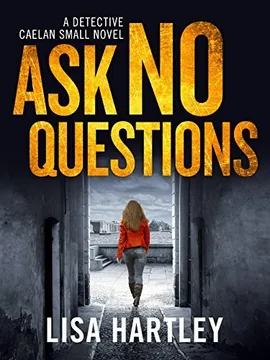


Plot Summary
Prologue
Blood has become Caelan Small's most persistent memory. She sees it on the floor where her colleague Nicky Sturgess fell and on the body of Charlie Flynn, the ten-year-old the police had hoped to rescue.
Caelan believes she failed them both, and the images return whenever she closes her eyes. The prologue begins with her guilt, not with the operation that caused it, making the investigation ahead feel like a return to a wound she has never managed to close.
The opening makes memory feel less like recollection than an involuntary crime scene: Caelan cannot leave it, revise it, or know whether she understood what happened. That uncertainty matters. Her guilt is sincere, but the narrative has already framed her account as something shaped by trauma rather than complete knowledge. By beginning with the apparent deaths of Nicky and Charlie, the prologue makes the reader experience the same emotional certainty Caelan does, while leaving room for later evidence to challenge what she thinks she witnessed.
Egypt Ends Her Retirement
On holiday in Egypt, former undercover officer Caelan Small is living under her own name and keeping to herself. In London, senior officer Elizabeth Beckett sends Richard Adamson to bring her back into the Metropolitan Police's orbit.
The target is Seb Lambourne, the criminal Caelan helped pursue before he escaped after Charlie Flynn's kidnapping. Richard expects her to refuse, and at first she does. But Lambourne's name carries the weight of the old operation and Nicky Sturgess's apparent death.
When Caelan learns the police believe Lambourne has returned to Britain, she accepts the assignment. The holiday ends before its promised rest can begin; Caelan is drawn back by the unfinished case and the fear that Lambourne may hurt someone else.
Caelan's return is not simply professional duty. The job offers a way to act on grief that has otherwise left her powerless, so the institution can recruit her through the very wound it helped create. Her choice is also compromised from the start: she is asked to find a fugitive, but she wants more than an arrest. The conflict between official purpose and private revenge gives the case its emotional motor. Her willingness to return suggests courage, but also the risk of mistaking self-punishment for justice.
A Partner She Chooses
At a secret briefing, Caelan learns that Lambourne may contact his university-age son, Ronnie Morgan, and that she is to follow him in Lincoln. Commander Ian Penrith challenges her fitness for the work, reviving suspicions about the failed Flynn operation.
Caelan accepts the assignment but refuses to work alone. She chooses Ewan Davies, the former soldier assigned to collect her, despite senior officers' doubts about his investigative experience.
The police give them new identities as Karen and Edward Devlin, a married couple, complete with documents, accounts and a furnished house. Ewan is unsure what he has agreed to, but Caelan brings him into the operation. Their cover is ready before either has learned how much they can trust the other.
The false marriage makes intimacy part of the surveillance machinery: Caelan and Ewan must perform trust before they have earned it. Her insistence on choosing him is both practical and revealing. After years in a world where colleagues have become difficult to trust, she prefers an outsider who has not already formed an opinion of her. Ewan, meanwhile, accepts a role that returns him to meaningful service after military trauma. Their partnership begins as a tactical arrangement, but its vulnerability is already personal.
Ron's Sudden Journey
Ronnie Morgan lives as a student while quietly accepting money from his estranged father, Seb Lambourne. A letter draws him from Lincoln to London, where a distorted phone call sends him by Underground to Northolt. Caelan follows, with Ewan driving south to rejoin her.
On the train, she recognizes Glen Walker, Lambourne's feared associate, who has been missing since the Flynn case. Walker gives Ronnie a Tube map, then vanishes into the crowd. At Northolt, another call threatens Ronnie with his father's death unless he keeps walking.
Caelan follows at a distance, but Ronnie disappears from view. The abrupt trip has turned a routine watch into a race through London, with Walker's presence suggesting that someone has anticipated the police's every move.
Ronnie's journey is driven by divided loyalty: he wants distance from his father's crimes, yet still accepts his money and responds to the possibility of contact. That ambivalence makes him vulnerable to manipulation. Walker's appearance is a warning without explanation, a deliberate pressure on Ronnie and on Caelan's surveillance. The police have chosen the son as a route to the father, but the son's movements are already being controlled by someone else. Their plan depends on watching; the threat exploits what watching cannot prevent.
The Underpass Goes Red
Caelan finds Ronnie at the far end of a dark underpass, shot and barely breathing. Richard Adamson, secretly following her, arrives and calls for an ambulance while Caelan presses his shirt against Ronnie's wound. Ronnie dies after being taken to hospital. At the debrief, Penrith again questions Caelan's judgment and suggests she may be involved.
Caelan is ordered away from the investigation, but first visits Sam Clifton, the disgraced former colleague who was with her when Charlie Flynn was found. Sam insists Charlie was already dead when the officers entered the house. Caelan cannot accept certainty: she never saw the boy clearly. Her old guilt now has a new focus, and Ronnie's blood has made her the easiest person to blame.
The underpass repeats the emotional geometry of the earlier operation: Caelan reaches a child or young man too late, then is left with bodily evidence of failure. The repetition intensifies her guilt but does not establish her culpability. Penrith's accusations turn uncertainty into an institutional weapon, while Caelan's questions about Charlie reveal that her confidence in the official version has already weakened. Her visit to Sam is an attempt to recover a shared memory, but it opens rather than closes the case.
Milne Comes Calling
After Caelan leaves, Brendan Milne enters Sam Clifton's flat armed and demands to know who visited him. Sam recognizes the danger and kills Milne with a knife when the intruder threatens to expose Caelan. Caelan later learns of the death from Detective Chief Superintendent Adele Brady, who brings her into the inquiry despite orders to keep her away.
At Sam's flat, Caelan recognizes Milne as a man who once assaulted her during an undercover operation. Brady identifies him and begins tracing his contacts. The killing gives the investigation a tangible link to Caelan's past, but not yet to Ronnie's shooter. It also proves that someone is looking for Sam and asking questions about Caelan.
Sam's trained reflexes reappear at the precise moment when his former life seems to have collapsed into drink and isolation. His choice to protect Caelan suggests a loyalty that survives his disgrace, but the violence also brings the hidden operation into the present. Milne is not merely a threat at Sam's door; he is evidence that someone is probing the old team. Brady's decision to involve Caelan creates a fragile alternative to Penrith's hostility, though neither woman has enough information to know where the danger truly lies.
Gunfire at the Wheatsheaf
Caelan and Ewan go to the Wheatsheaf in Whitechapel, hoping to find a lead on Walker. Before they enter, Nasenby appears in disguise. Gunfire erupts; four shots strike nearby, but none of the three is hit, and the shooter escapes. Nasenby suffers only a minor injury after diving for cover. The attack becomes a public scare, while the team has no clear answer about who was targeted.
Later, Ewan tells Caelan that combat left him haunted by a boy he killed in Afghanistan. His confession brings them closer, but Caelan's instinctive retreat from intimacy remains. She leaves him to seek company in Soho, then walks away from a flirtation when she sees the other woman's wedding ring.
The attack exposes the inadequacy of the team's usual categories: a shooting can be an attempt to kill, a warning, or a staged event, and the evidence supports none conclusively. Ewan's confession makes visible the cost of survival that his professional competence conceals. Caelan recognizes his guilt because it resembles her own, yet she cannot easily accept closeness without fearing its loss. Her refusal of an affair with a married woman is a small act of moral clarity in a life where identity and attachment are routinely performed.
The Inheritance Nicky Left
Brady visits Caelan at home and questions how she could own an expensive apartment. Caelan explains that Nicky left it to her, then reveals that they had been lovers. The inheritance makes the bond concrete, and the confession forces Caelan to speak aloud about the colleague she believes she watched die.
Meanwhile, forensic testing shows that the bullet that killed Ronnie came from the same gun used to kill Charlie Flynn. The weapon also matches the shots fired outside the Wheatsheaf. Caelan is no longer merely chasing Lambourne's return: someone has reused the gun from the old case to kill Ronnie and threaten the investigators. The past is not a closed file but a continuing crime scene.
The apartment turns grief into a material fact: Caelan lives inside a gift whose emotional meaning she has tried to avoid. Telling Brady about Nicky makes private attachment part of an official investigation, exposing the cost of keeping love hidden in covert work. The ballistic match does something similar for the plot. It binds separate incidents to one object and forces the characters to reconsider the assumption that the Flynn case ended with Lambourne's escape. Evidence gives the past a present tense.
A Mother Names Walker
At a senior briefing, Caelan is assigned to question Suzanne Morgan and pursue Walker. Suzanne describes Lambourne as a loving father when present, but confirms that his criminal life drove the family into danger.
She remembers Walker as courteous yet frightening, a man whose menace seemed carefully concealed. On the drive, Ewan tells Caelan that an explosion and a fatal decision in Afghanistan ended his military career. At the Wheatsheaf, Caelan disguises herself and questions the patrons about Milne and Walker.
When men crowd and grope her, she draws her concealed gun to make them back away. The barman finally says Walker lived above the pub and mentioned the trains near King's Cross. Caelan leaves with a location, but also with a serious breach of procedure.
Suzanne's account complicates the idea that a criminal father is only a monster to his family, while her fear of Walker suggests danger can hide beneath politeness. Ewan's history deepens the partnership through shared, but not identical, guilt. At the pub, Caelan's disguise lets her enter a hostile space, yet it cannot guarantee control. Drawing the gun protects her in the moment and risks turning her own judgment into another liability. The lead she gains is valuable precisely because it costs her safety and professional cover.
Sam's Last Secret
Caelan returns to Sam's flat after he calls her, but finds him hanging from a light fitting. His death is treated as a possible suicide, though Caelan believes he was murdered. She tells Adamson, Nasenby and Penrith, watching each man's reaction. Penrith admits that his accusations against her were meant to draw attention away from his own inquiries; he also recalls that an anonymous tip led police to Charlie Flynn's location.
The call came from Ealing, where Walker was later reported. Penrith urges Caelan to reconsider the case. She has little reason to trust him, but his information makes the original rescue look increasingly suspect. Sam's death leaves her with one fewer witness and no clean account of what happened.
Sam's death changes the inquiry from a search for a fugitive into a test of the institution itself. Caelan's visits to her colleagues are not conventional interviews; she is measuring grief, surprise, and evasion because formal channels may be compromised. Penrith's confession that he used her as a smokescreen makes antagonism itself unreliable. His hostility may have concealed an investigation, just as apparent loyalty may conceal betrayal. The anonymous tip links the old case to the new without identifying who shaped either one.
The Cell Is a Cover
After Beckett says Caelan's fingerprints have been found on the rope used to hang Sam, uniformed officers take her into custody. The arrest is a cover: Beckett releases her and brings her to a concealed office, where she explains that Nicky had quietly reported concerns to her. Beckett admits the evidence against Caelan is being used to remove her from public view while the inquiry continues.
Caelan and Ewan visit imprisoned Duncan Seddon, a relative of Charlie Flynn's mother. Seddon says he once met Lambourne and Walker at the Wheatsheaf and claims Walker lived above it. Caelan leaves unsure whether Seddon is offering intelligence or repeating a script, but she now knows the official investigation has been hiding as much as it reveals.
The staged arrest makes the police's power double-edged: the same institution that can protect Caelan can also manufacture the appearance of her guilt. Beckett's secrecy may be tactical, but it reproduces the isolation that has already harmed Caelan and Sam. Nicky's reporting adds another layer to the private and professional boundaries the characters thought they controlled. Seddon's testimony appears to advance the case, yet his bargaining and rehearsed manner keep knowledge suspect. In this story, information rarely arrives without a motive attached.
Walker's Final Ride
After leaving prison, Caelan suspects Ewan may be reporting to Beckett and gets out of his car. She calls her concierge, Jitesh, for phones and a disguise, then contacts Beckett. Before she can regroup, a driver shoots at her from a passing car. Penrith arrives, pulls her out of the gunman's path and drives her toward the abandoned vehicle.
Inside, police find Walker dead from a gunshot wound. Beckett and Penrith reveal that Walker had been secretly working for the police and was meant to identify his own employer. He was killed before he could do so. Caelan has survived another attack, but the person directing the violence remains unknown, and the police have lost their informant.
Caelan's break with Ewan is an understandable response to repeated betrayal, but it also demonstrates how suspicion can reproduce the isolation her enemies need. Jitesh's help briefly offers a form of loyalty outside the police hierarchy. Penrith's rescue complicates his role again: the officer who has attacked her credibility risks himself to keep her alive. Walker's death closes off a potential source while confirming that the threat can reach even a compromised informant. The case advances through losses, not clean victories.
The Ring Gives Him Away
Watching Nicky's body-camera footage, Caelan spots a faint glint on the shadowy figure who returned to Charlie after the police left: a wedding ring. Financial records and street footage point toward Adamson, but the ring implicates married Nasenby. Caelan confronts him with Ewan, wearing a hidden transmitter.
Nasenby attacks her, shoots Ewan, and boasts that he arranged Lambourne's escape and killed Charlie, Ronnie and Sam to protect himself. Ewan survives because he is wearing body armor; police rush in and shoot Nasenby before he can kill Caelan. In hospital, Caelan asks whether Nasenby also killed Lambourne, but Beckett cannot confirm it. The immediate killer is exposed, while the older criminal's fate remains unresolved.
The ring is a small, physical detail that defeats a culture of plausible deniability. Caelan's attention to it matters because the institution's experts and technicians had seen the same footage without recognizing its significance. Nasenby's violence makes his authority legible at last: the mentor's power was not protection but control. Yet the resolution is deliberately incomplete. His confession explains the killings and escape, but the question of Lambourne remains open, preventing personal revenge from masquerading as total justice.
Epilogue
Three hours after leaving hospital, Caelan returns to her apartment, battered and exhausted. When the delivery driver arrives, Nicky Sturgess is standing at the door with the pizza. Nicky says she survived the attack by staging her death with prepared blood and that Beckett helped hide her while she investigated the corruption.
Caelan cannot accept the explanation as comfort. She had held Nicky as she appeared to die, attended her funeral and built her return to work around grief and revenge. She leaves the apartment rather than stay with the woman who has come back, carrying a fresh betrayal alongside her injuries.
Nicky's return overturns the emotional certainty that has governed Caelan's choices, but it does not restore what was lost. The revelation makes the earlier grief real as an experience even if the death was staged: Caelan's mourning, guilt and decisions were shaped by a lie told by someone she loved. Nicky's survival may have served a larger inquiry, yet the tactic treated Caelan's attachment as expendable. The ending refuses easy reunion. Caelan's departure recognizes that a truth can arrive too late to undo the harm done in its name.
Analysis
Ask No Questions builds its mystery around the instability of evidence and the moral cost of institutional secrecy. Caelan's first account of the Flynn operation feels emotionally certain because she remembers blood, a dead colleague and a dead child. But memory cannot tell her when Charlie was killed, who returned to the house, or why Nicky seemed to die. The body camera eventually supplies a fragment that memory could not: a shadow and a later shot. The clue is powerful precisely because it is incomplete, requiring interpretation rather than offering a neat solution.
The police institution mirrors the undercover work it conducts. False names, hidden surveillance, staged arrests and withheld briefings are tools meant to protect operations, but they also make colleagues difficult to distinguish from adversaries. Caelan's isolation is not merely a personal flaw; it is produced by a system that treats trust as a liability and then demands loyalty from people it has kept uninformed. Her decision to rely on Ewan is an attempt to build a more honest partnership, yet suspicion drives her to push him away at a moment when she needs him.
The novel also refuses to make grief a reliable guide to justice. Caelan's desire to punish Lambourne gives her determination, but it can make her accept an incomplete story about both the crime and the people she loved. Nicky's return exposes the most intimate cost of that uncertainty. A staged death may have served a covert investigation, yet it turned Caelan's love into collateral damage. The ending therefore resolves the murder conspiracy without restoring emotional order. Justice can identify a perpetrator; it cannot return the years of grief or make deception harmless.
Review Summary
Ask No Questions is the first in the Detective Caelan Small series, earning an overall rating of 4.07/5. Readers praise its fast pace, gripping twists, and the compelling protagonist Caelan — a bruised but resilient undercover specialist. Many highlight the shocking, unpredictable ending. Common criticisms include an overwhelming number of characters, occasionally convoluted plotting, and too many trust-reversal twists. Despite mixed feelings about pacing, most readers express enthusiasm for continuing the series.
Characters
Caelan Small
The undercover investigatorCaelan is a gifted Metropolitan Police undercover officer whose skill lies in becoming credible to people who would otherwise never speak to her. Years of living under invented identities have made her observant, self-contained and wary of intimacy. She left the force after disagreeing with how Sam Clifton was treated, but her sense of responsibility and attachment to the unresolved Flynn case draw her back. Caelan's central tension is between professional discipline and private anger: she knows how to watch without being seen, yet grief repeatedly tempts her to act before she has the full picture. Her intelligence is real, but so is her vulnerability to guilt, which others can exploit.
Ewan Davies
The soldier turned protectorEwan is an ex-soldier now working in police protection. He is steady, observant and more emotionally perceptive than his modest account of himself suggests. Caelan chooses him because he has no history with her and because his training makes him useful in danger. He is drawn to fieldwork after a quieter assignment, while carrying guilt from a combat decision that ended his military career. Ewan does not mistake fear for cowardice, but he has learned to keep painful memories private. His developing trust in Caelan offers her a rare experience of partnership not built solely on deception.
Nicky Sturgess
Caelan's trusted colleagueNicky is a capable police officer who had experience with kidnapping investigations and entered the Flynn operation despite not having worked the case from its beginning. She is remembered through Caelan's grief and through the traces she leaves behind, including the apartment that binds their histories together. Her past includes an abusive marriage, which helps explain her guardedness and the importance she places on choosing whom to trust. Nicky represents the hidden personal cost of undercover work: colleagues can share danger and intimacy while keeping both from the wider institution. Her professional life intersects with senior leadership in ways Caelan does not initially understand.
Michael Nasenby
Caelan's senior mentorNasenby is a senior Metropolitan Police officer who has guided Caelan and knows how to make institutional pressure sound like personal concern. He is polished, confident and accustomed to managing people as well as operations. He values results and expects loyalty, but his authority also gives him access to sensitive information and the ability to shape what others believe. Caelan has long treated him as a mentor, which makes her reassessment of him especially difficult. His presence embodies the central danger of a hierarchy where the same person can offer protection, issue orders and control the account of what happened.
Adele Brady
The blunt senior investigatorBrady is a Detective Chief Superintendent who takes charge of the inquiry after Ronnie's shooting. Direct, perceptive and willing to challenge orders, she sees Caelan as both a valuable investigator and a possible suspect. Brady is not easily impressed by rank, and her questioning pushes Caelan to confront facts she would rather leave buried. She can be compassionate without becoming reassuring, and she uses secrecy as a working method rather than a promise of trust. Her alliance with Caelan is productive but uneasy, because each woman knows the other may be withholding information.
Elizabeth Beckett
The powerful police chiefBeckett is an Assistant Commissioner with influence across Specialist Crime and Operations. She is controlled, strategic and accustomed to working several levels above the officers in the field. She brings Caelan back into the investigation and later organizes a covert effort to find the truth about the Flynn case. Beckett values intelligence gathered outside official reports, but her secrecy makes even her protection difficult to distinguish from manipulation. She represents institutional power at its most ambiguous: capable of creating room for an investigation while deciding what its participants are allowed to know.
Ian Penrith
The combative commanderPenrith is a senior commander with a blunt manner, a strong sense of grievance and a personal investment in the Flynn operation. He openly questions Caelan and challenges the decisions of his colleagues. His anger is tied to the child's death and to the failure of the police response, though he is not always clear about what his accusations are meant to achieve. Penrith's suspicion makes him difficult to trust, while his willingness to pursue uncomfortable questions keeps him relevant to the inquiry. He shows how righteous anger can become both a source of insight and a damaging public performance.
Richard Adamson
The divided colleagueRichard is an experienced covert officer who once worked closely with Caelan and understands her talent for disguise. Beckett sends him to persuade Caelan to return, then Penrith draws him into a parallel effort to watch her. Richard is cautious, socially alert and uncomfortable with being asked to undermine a colleague. His history with Caelan gives him insight into her strengths, but also makes his loyalties difficult for others to read. He occupies the familiar middle ground of the organization: a capable officer caught between orders from senior figures who do not trust one another.
Sam Clifton
The disgraced former officerSam was the senior officer working undercover with Caelan during the Flynn case. After the operation failed, he was dismissed and publicly blamed, leaving him isolated and drinking heavily. Beneath that collapse, he retains the training and protective instincts that once made him effective. Caelan's visit forces him to revisit the question of whether Charlie was alive when they left the house, a doubt he has tried to suppress. Sam is a portrait of how institutions can discard an officer and then expect his silence to preserve their own version of events.
Tim Achebe
The ambitious detectiveAchebe is a Detective Chief Inspector assigned to the Ronnie Morgan investigation. Ambitious and intelligent, he wants to prove himself while recognizing that the case could damage his career as easily as enhance it. He begins cautiously, wary of Caelan's reputation and of the senior officers' conflict. As the investigation develops, he makes room for evidence that challenges the command structure. Achebe's choices reveal a young leader learning that advancement and integrity are not always compatible, especially when a case involves people who outrank him.
Seb Lambourne
The elusive crime bossLambourne is a feared criminal with a history of drug dealing, extortion and violence. His operations are difficult for police to penetrate because he limits direct contact and relies on a close circle of associates. To his son, he can also be a loving father, a contradiction that complicates any simple portrait of him. Caelan sees him as the man responsible for the catastrophe surrounding Charlie Flynn and Nicky Sturgess. His absence from the present action gives him a powerful influence over it: people make dangerous choices based on what they believe he may do next.
Glen Walker
Lambourne's feared associateWalker is Lambourne's imposing right-hand man, known for physical violence and a capacity to unsettle people without raising his voice. Caelan recognizes him from the earlier operation, while Suzanne Morgan remembers him as a threatening presence around her family. His sudden appearances make him seem to be directing events, though the police know little about his current loyalties. Walker's role depends on the gap between what he is reputed to be and what he actually knows, making him both a target and a source of uncertainty.
Ronnie Morgan
The estranged criminal's sonRonnie is a university student who has taken his mother's surname to separate himself from his father's notoriety. He wants a respectable future and works toward a professional qualification, yet accepts money from Lambourne and remains emotionally curious about him. Ronnie is neither an accomplice nor entirely free of the family bond he wishes to escape. His choices expose the vulnerability of using a relative as bait in a police operation: the person being watched has his own motives, loyalties and limits.
Suzanne Morgan
The grieving motherSuzanne raised Ronnie largely without Lambourne and understands the danger of allowing him back into their lives. She is protective, practical and deeply ambivalent about her former husband, remembering that he could be an affectionate father even while his criminal choices endangered the family. After Ronnie's death, grief narrows her attention to the person responsible. Her memories of Walker give Caelan an important human account that police files cannot provide, and her insistence on being kept informed makes her more than a source of evidence.
Duncan Seddon
The imprisoned fixerSeddon is a convicted murderer and a relative of Charlie Flynn's mother. In prison, he is crude, calculating and alert to any bargain that might improve his conditions. He knows the criminal world through business dealings and family connections, but enjoys making investigators work for every scrap of information. His account of Lambourne and Walker's past meeting offers a possible lead while leaving Caelan unsure whether he is helping or manipulating her.
Jitesh
The helpful conciergeJitesh works at Caelan's apartment building and knows her as a considerate resident, not as an undercover officer. When she needs practical help outside official channels, he risks trouble to bring her the items she asks for. His kindness contrasts with the secrecy and suspicion of the police operation. Jitesh's modest loyalty gives Caelan a brief reminder that trust can exist without a chain of command or a demand for proof.
Plot Devices
The Devlin identities
A marriage built for coverPolice create a complete identity for Caelan and Ewan as Karen and Edward Devlin, including passports, a marriage record, shared accounts and a furnished home in Lincoln. The documents give them a plausible way to approach Ronnie without revealing their real purpose. The cover also forces them to perform intimacy in public while negotiating trust in private. Its details matter because undercover work in the novel is not just a disguise; it is a manufactured life that can make even ordinary conversation dangerous.
Nicky's body camera
The past keeps recordingNicky wears a camera during the operation to find Charlie Flynn. After she is attacked, the camera continues recording, leaving a dark, blood-obscured image and a faint sound of a gunshot. At first the footage seems useless. Later, enhanced viewing shows a shadow return to Charlie after the officers have left, proving that the boy was killed later than the police believed. A tiny glint from a ring gives Caelan a clue the investigators had missed. The device turns a traumatic memory into evidence, though it cannot show the figure's face.
The matched bullets
One weapon binds casesForensic comparison links the bullet that killed Ronnie to the gun used to kill Charlie Flynn, and the same weapon fired the shots near the Wheatsheaf. The match forces the investigators to treat the attacks as connected rather than isolated. It does not identify the shooter, and the gun itself remains missing, so the evidence narrows the field without resolving it. Its importance lies in turning Caelan's suspicion that the old operation is still active into a testable fact.
The anonymous tips
A source without a faceAn anonymous call once directs police to Charlie Flynn, while another tip informs them that Lambourne may have returned to Britain. The calls appear to give the investigation useful direction, but their origins are never established. Penrith recalls that the earlier call came from Ealing, a detail that connects it to Walker's known movements without proving who placed it. The tips make the police's knowledge itself suspect: someone may be guiding the operation, feeding it truths, or steering it toward a trap.
The staged arrest
A cell becomes camouflageBeckett has Caelan taken into custody after incriminating evidence appears, then quietly releases her into a concealed investigation. The arrest gives the police a public explanation for Caelan's absence and keeps her available to pursue the hidden inquiry. It also makes her distrust sharper: she cannot easily distinguish genuine evidence from evidence planted to frame her, or protection from manipulation. The device echoes the novel's larger concern with police authority, since the institution can create an appearance of guilt and then use that same appearance as cover.
Download PDF
Download EPUB
.epub digital book format is ideal for reading ebooks on phones, tablets, and e-readers.








