

Plot Summary
Thirty Minutes Underground
Ashley Lutin, a Connecticut artist whose grief has remade his face with metal piercings, offers strangers a ritual meant to make life feel worth continuing. He buries a new client in a cedar coffin with an oxygen tank, waits thirty minutes, then digs her out. She returns weak and amazed, but says her time underground held nothing at all.
She scatters her pills into the empty coffin, suggesting she had hoped the experience would change more than her body’s brief helplessness. Ashley records her impressions, helps her recover, and accepts her payment. When she drives away, he packs his old painting supplies beside the coffin and leaves the field, still unable to return to the life he had before his wife and son vanished from it.
The ritual gives Ashley a practical role in the face of grief: he can prepare a grave, control the interval, and bring someone back. Its promise is not supernatural rebirth but a managed encounter with helplessness, where another person’s presence is supposed to make survival imaginable. Yet the client’s report of nothingness undermines the meaning Ashley assigns to the procedure. Her pills in the coffin turn the exercise into something more troubling: a rehearsal that has not displaced suicidal despair. Ashley’s attention to protocol and payment helps him avoid intimacy, while the client’s brief gratitude exposes how urgently both participants want contact.
A Hat in the Dirt
Ashley’s wife, Pema, died of cancer, and their eight-year-old son, Bailey, disappeared while Ashley briefly returned to a market to retrieve his credit card. A year later, Detective Margaret Cloade brings him a photograph of Bailey’s orange hat, found buried in a field, and reports enough blood nearby to make survival seem unlikely.
Ashley cannot accept the implication, though he struggles to picture his son’s face. His grief has already taken visible form in piercings and in unfinished paintings he cannot destroy.
At home, Pema and Bailey appear to him as figures in reflections and doorways. Bailey’s apparition recalls that Ashley once used a cruel slur about him, a private wound that makes the disappearance feel not only like loss, but like punishment.
Bailey’s disappearance is both an external mystery and the organizing absence in Ashley’s mind. The hat and blood provide evidence, but not a body, leaving him suspended between hope and mourning. That uncertainty feeds his rituals: he can stage a controlled burial for clients because he has been denied any ending for his own son. The apparitions complicate his grief without resolving the mystery; they give shape to the guilt he cannot bear to face directly. The slur matters because Ashley’s fear of a cruel world became cruelty inside his own home. His grief is not simply bereavement, but a judgment he continually delivers against himself.
The Story Behind the Screen
A man using the name Jinx contacts Ashley for a ritual, saying he needs to be changed and cannot wait long. Before they meet, he tells Ashley the story of Keane Withers, a young man hired by Emil Dubois to exploit adult performer Mace Cavalier for a jeweled emerald centipede. When Mace discovers Keane’s lie about his age, a fight ends with Mace dead.
Dubois reveals he has filmed the encounter and keeps Keane imprisoned as an unwilling attraction for paying viewers. Keane fixates on finding a supposed spider in his brain. Ashley reads the account without interrupting, then discovers it has sexually excited him. The response horrifies him, but it also breaks through years of numbness and draws him toward Jinx.
Jinx’s story works as a test of Ashley’s capacity to receive what others hide. Keane is both victim and perpetrator, while Dubois converts coercion into entertainment and profit; the tale offers no clean position from which to feel innocent. Ashley’s arousal is therefore more than a shocking reaction. It punctures his self-image as a caretaker whose darkness belongs only to appearance and grief. He does not yet understand what Jinx wants from him, but the story creates an intimacy based on shared appetite for what polite life excludes. That intimacy is dangerous precisely because Ashley mistakes being trusted with a secret for knowing the person who told it.
The First Grave That Stays
An older woman arrives at the abandoned Hoffman farm hoping Ashley’s procedure will loosen the grief she carries after losing her daughter, Clairice. She signs his waiver and writes a makeshift will, naming her heart as the last thing she can give. While Ashley prepares the grave, he decides that her suffering makes death a kindness, though she came seeking a reason to live.
During the required washing, she tells him how her father injured a family dog and justified the pain as deserved. Her story unsettles him, but he still places her in the coffin. She refuses the oxygen tank; Ashley closes the lid, buries her, and leaves without setting a plan to return. He abandons her car in the woods and drives away calling the killing a rescue.
The shift from caretaker to killer happens through a moral distortion rather than a sudden loss of control. Ashley treats the woman’s despair as proof that he understands what she needs, replacing her stated wish to live with his own conviction that existence is futile. Her story about the dog offers a language of deserved pain, which he quietly turns against her and himself. The signed waiver and ritual rules disguise coercion as consent, allowing procedure to stand in for ethical judgment. Ashley’s choice is especially chilling because it grows from the same desire to relieve suffering that once made his work seem compassionate.
A Name Against the Dark
After leaving the woman beneath the Hoffman farm, Ashley insists to himself that he has freed her, while Pema’s apparition warns that she is still terrified underground. On Bailey’s birthday, Ashley’s despair sharpens into a near-suicide attempt in his garage.
He presses a key into his palm and prepares to start the van, but Bailey appears and reminds him that he has not yet been found. Ashley stops, dresses the wound, and visits Norman Restarick, the mortician who buried Pema.
He asks for another adult coffin, claiming it will help him hold a memorial for Bailey. Restarick gives it to him without charge and urges him to repeat his own name when despair blurs his sense of self. Ashley leaves with the coffin and a renewed, dangerous purpose.
Restarick’s advice offers Ashley a modest counterweight to his tendency to become whatever the night seems to demand. Repeating his name is an act of orientation, not a cure: it asks him to remain a particular person rather than surrender to grief’s totalizing story. Bailey’s apparition works similarly, interrupting Ashley’s movement toward death by returning him to a relationship that still carries responsibility. Yet the renewed purpose is compromised. Ashley does not abandon his doctrine of rescuing the despairing through death; he recommits to it. The same images that could reconnect him to care also give him permission to keep acting as judge over other lives.
The Cancer in the Story
Ashley’s private reading leads him back to Tandy, a man who once chronicled his attraction to his husband Victor’s cancer. Tandy secretly urges Victor to delay surgery because illness has become part of what arouses him.
When Victor’s health worsens, Tandy recognizes the harm he has done, but after surgery and recovery he finds his desire has vanished. He finally admits that he loved the disease more than the man. Ashley sees his own attachment reflected in Tandy’s fixation: he feels more at home in misery than in any imagined recovery.
Meanwhile, a boy on a country road briefly resembles Bailey, and at the abandoned schoolhouse Bailey appears again to condemn Ashley’s claim that killing the old woman was help. Jinx arrives as Ashley prepares their meeting.
Tandy’s embedded story gives Ashley a vocabulary for a desire he would rather call compassion. Tandy’s fixation does not make him incapable of loving Victor, but it makes the beloved’s suffering serve his own emotional and erotic needs. Ashley recognizes the structure without fully accepting its warning: he too has made pain indispensable to his identity. The appearances of Bailey sharpen that recognition by turning the question from what Ashley feels to what his actions do to others. The schoolhouse encounter brings his private justification under judgment, just as Jinx’s arrival makes the consequences of Ashley’s theory immediate.
The Marble Test
At the schoolhouse, Jinx proves less compliant than Ashley’s other clients. He questions whether the ritual is genuine, then asks Ashley to swallow one of the green marbles inherited from his grandfather as a test of trust. Ashley does so, and Jinx gives him a drawing of an anatomically impossible angel. He also tells Ashley about a dog his father beat to death after hunger made it bite him.
The story leaves the animal dying in confusion, a memory Jinx cannot put away. When Ashley asks whether he would write anyone a letter, he confesses that he nearly cheated on Pema during her chemotherapy and feared his attraction to men. Jinx presses further about Bailey, drawing out Ashley’s shame over the slur he used against his son.
The marble makes trust physical: Ashley must accept something that cannot be immediately explained or taken back. Jinx’s choice of a childhood possession also tests whether Ashley understands that a seemingly small object can carry an entire history. Their stories create reciprocal exposure, but not equality. Ashley controls the ritual and intends to bury Jinx, while Jinx controls what he reveals and continually redirects Ashley toward his own failures. The dead dog links their histories of witnessing harm and feeling powerless. The angel drawing, meanwhile, becomes a token whose meaning Ashley cannot yet read, keeping Jinx’s connection to Bailey present without making it legible.
The Confession Under Earth
After Jinx completes the washing and climbs into the coffin, he tells Ashley that he took Bailey. Ashley buries him, then digs him out because he cannot risk losing the one person who may know what happened. Back in the schoolhouse, Jinx confirms that he killed Bailey and burned the body. Ashley strikes Jinx with a hammer, then learns that the angel drawing was Bailey’s and that the boy had spoken about wanting to be a girl.
Jinx offers more details of Bailey’s abuse, but Ashley cannot bear to hear them. He stops himself from killing Jinx when Bailey’s apparition recoils from the bloodied hammer. Jinx asks Ashley to end his life, revealing he has months to live. Ashley refuses and leaves, wishing him years of continued life instead.
The revelation collapses Ashley’s long uncertainty into knowledge, but knowledge does not give him the control he has been seeking. Jinx’s confession turns the ritual into an interrogation, with Ashley’s own tools of burial and force suddenly directed at a real perpetrator. The apparition of Bailey interrupts revenge at the precise moment Ashley resembles the kind of adult who frightened his son. This does not absolve Ashley or restore Bailey; it changes the action he chooses next. Refusing Jinx’s request for death is the first clear rejection of Ashley’s claim that he can decide when another person’s suffering should end.
The Grave Opened Too Late
Before dawn, Ashley returns to the Hoffman farm and searches for the grave he filled the night before. He digs through the disturbed ground, opens the coffin, and finds the older woman dead. The proof strips away the story he had built around her burial: she did not pass peacefully into some merciful nothingness; she died alone because he chose not to return.
Ashley pulls her body from the coffin and holds her, wishing he could reverse what he has done. Two figures approach in the field, but he does not turn to identify them. He rocks the woman until morning enters the grass. His ritual has ended without resurrection, and his final act is not another explanation but an embrace of the person he failed to save.
The ending makes consequence bodily and irreversible. Earlier, Ashley could use darkness, procedure, and belief in oblivion to make the old woman’s death sound like a service. The opened coffin removes that distance: the person he tried to reduce to a case of suffering is still there, dead through his decision. His embrace cannot repair the harm, but it marks a change in the form of his attention. He stops interpreting the woman and responds to her as a person. Morning does not absolve him; it exposes what his night has made permanent.
Analysis
The novel links grief to the urge to control what cannot be repaired. Ashley cannot locate Bailey or undo the slur he used against him, so he builds a ritual in which bodies can be buried and reliably returned. Its strict sequence gives him the sensation of competence, but competence is not care when he begins deciding that another person’s wish to live is mistaken. The old woman’s burial makes this distinction material: the same coffin that once staged renewal becomes an instrument of irreversible harm.
The nested stories complicate the idea of monstrosity. Tandy’s desire for Victor’s illness, Keane’s actions under Dubois’s coercion, and Ashley’s self-image as a creature all resist easy moral sorting. Yet the novel does not treat shame as accountability. Ashley’s hatred of himself can become another way to center his own suffering, especially when he interprets death as mercy for strangers. His more meaningful change comes when Bailey’s image interrupts revenge and Ashley refuses to decide that Jinx must die.
Queerness, gender, and bodily transformation are woven into this moral problem. Ashley’s fear of being judged has shaped how he treats himself and Bailey, while Bailey’s unspoken questions expose the cost of a parent’s protective fear when it becomes rejection. The novel’s horror comes not only from bodily violence but from the damage done when adults claim authority over another person’s identity or future. Its final image offers no easy absolution. Ashley can hold the woman he failed to save, but he cannot make the grave into a rehearsal again. The consequences remain, and so does the obligation to see the dead and living as people rather than symbols of one’s own pain.
Review Summary
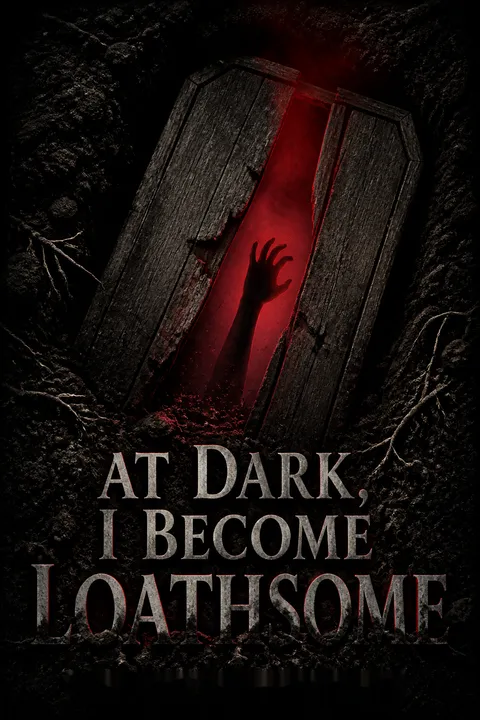
At Dark, I Become Loathsome received mixed reviews, with some praising LaRocca's disturbing and provocative writing style while others found it overly gratuitous. Many readers appreciated the exploration of grief, trauma, and dark human impulses, but some felt the book tried too hard to shock. The unique premise and lyrical prose were highlights for many, though the repetitive use of certain phrases and disjointed storytelling were criticized. Trigger warnings for graphic content were frequently mentioned. Overall, the book polarized readers, with some hailing it as brilliant horror and others finding it repulsive.
Characters
Ashley Lutin
Grieving ritual-maker in hidingAshley is a middle-aged artist and widower whose wife, Pema, died and whose son, Bailey, disappeared. He begins offering simulated-death rituals to people in despair, partly from a real wish to help and partly to escape the emptiness that returns after each client leaves. His piercings, abandoned canvases, and strict procedures give visible form to a life he feels has been permanently altered. Ashley is bisexual, but shame and inherited ideas about masculinity have taught him to distrust parts of himself. He is observant and capable of tenderness, yet he can turn those qualities into a claim that he knows what others need. His central struggle is between care as attention to another person and care as permission to impose his own beliefs.
Jinx
Provocative stranger seeking changeJinx first approaches Ashley through an online forum and presents himself as someone desperate for transformation. He is handsome, self-possessed, and deliberately difficult to manage, questioning the ritual instead of passively accepting its rules. Stories about a dog from his childhood and a drawing he carries reveal that he is haunted by memories of cruelty and loss. Jinx uses tests and disclosures to shape the terms of his relationship with Ashley, drawing attention to the difference between staged danger and genuine responsibility. His confidence can read as charm or threat, and his interest in suffering makes it difficult for others to know whether he is asking for care, punishment, or something more complicated.
Bailey Lutin
Missing child and moral centerBailey is Ashley and Pema’s young son, a child who loves dressing up and drawing. His mother encourages his imagination, while Ashley worries that the world will punish him for being different. Bailey’s relationship with his father is shaped by Ashley’s fear and emotional distance, especially around questions of gender and identity. Even in his absence, Bailey remains central to Ashley’s decisions: memories and apparitions bring forward both his longing and the harm he fears he caused. The story presents Bailey not merely as a symbol of lost innocence but as a child with desires and sensitivities that adults have a responsibility to hear.
Pema Lutin
Wife remembered through reflectionsPema is Ashley’s late wife and Bailey’s mother. She endured breast cancer and maintained a teasing, direct intimacy with Ashley, even when they disagreed about his habits and desires. She supported Bailey’s imaginative play, offering him the acceptance Ashley struggled to give. After her death, she appears to Ashley in reflections and imagined exchanges that challenge his excuses rather than simply comfort him. Pema represents a relationship in which love included knowing the other person’s weaknesses, not overlooking them. Her remembered voice helps Ashley confront the difference between grief and moral permission.
Margaret Cloade
Detective bearing hard evidenceMargaret Cloade is the detective investigating Bailey’s disappearance. She visits Ashley with evidence found in a field: a hat resembling Bailey’s and a troubling quantity of blood. Her careful manner reflects the burden of delivering facts that may destroy hope without resolving the case. Cloade does not offer Ashley certainty or comfort beyond the limits of the investigation, and that restraint becomes part of the emotional pressure he faces. She represents the institution trying to distinguish what can be proved from what a grieving parent needs to believe.
The older client
Grieving mother seeking renewalThe older client seeks Ashley’s ritual after years of mourning her daughter, Clairice. She is cautious about signing the waiver but proceeds because she wants relief from despair. Her brief account of her father injuring a family dog reveals a history in which cruelty could be defended as deserved. She is polite, lonely, and willing to trust Ashley with an intimate experience, but her stated wish is to recover a desire to live. Her story makes her more than a test case for Ashley’s theories: she has a past, a daughter she loved, and a hope he has no right to redefine.
Keane Withers
Captive at the story’s centerKeane is the central figure in the violent story Jinx tells Ashley. A young man with a history of meth addiction and a painful childhood, he accepts a scheme involving Mace Cavalier and a valuable jeweled ornament. His choices entangle him in violence and leave him under Emil Dubois’s control. Keane is neither a simple innocent nor a freely acting villain: shame, coercion, and survival continually narrow his options. His fixation on finding a spider in his brain gives his confinement a grotesque purpose, while his story reveals how people can turn vulnerability into spectacle.
Emil Dubois
Profiteer behind the cameraEmil Dubois runs a sexual business that secretly records and sells violent encounters to private viewers. He recruits Keane to manipulate Mace Cavalier, then uses the resulting killing to keep Keane trapped as an unwilling performer. Dubois treats other people’s bodies and secrets as commodities, disguising exploitation as an arrangement between consenting adults. His control of the cameras and locked room makes him a concise portrait of power without accountability.
Mace Cavalier
Performer with a prized jewelMace Cavalier is an adult performer whose jeweled emerald centipede becomes the object of Dubois’s scheme. He is introduced through images and then meets Keane in a private room. His vanity, vulnerability, and capacity for violence complicate the polished sexual image that Dubois sells.
Tandy
Confessor of dangerous desireTandy writes about discovering that his husband Victor’s cancer arouses him. His account traces how a private fixation alters his choices: he encourages Victor to delay treatment, then struggles when recovery removes the illness around which his desire has formed. Tandy sees himself as monstrous, but his story also shows how confession can become a substitute for repair. Ashley returns to the account because it gives shape to his own attachment to suffering.
Victor
Tandy’s ill and trusting husbandVictor is Tandy’s husband, diagnosed with cancer after blood appears in his stool. He is frightened by surgery and initially trusts Tandy to help him decide what to do. Victor’s illness alters their marriage, but his character is not reduced to his diagnosis: he has his own fears, preferences, and right to choose treatment. His story exposes the damage caused when a partner’s devotion becomes entangled with a private appetite.
Norman Restarick
Mortician offering steady counselNorman Restarick is the elderly mortician who handled Pema’s funeral and later sells Ashley another coffin. He remains courteous but perceptive, recognizing that Ashley’s request carries emotional weight. His practical kindness and advice to hold onto his own name offer a small, grounded alternative to Ashley’s all-consuming despair.
Plot Devices
The fake-death ritual
A controlled encounter with deathAshley’s procedure involves a contract, preparatory care, a written will, burial in a coffin for thirty minutes, and aftercare. He presents these steps as a safe way for clients in despair to return to life with a changed outlook. The ritual creates the novel’s recurring structure of trust, surrender, and resurrection, while its rules also give Ashley an illusion of ethical control. Its most consequential use occurs when Ashley abandons the promise to exhume a client, turning a simulation into a real burial.
Stories within stories
Confession as a test of trustJinx’s account of Keane, Dubois, and Mace, and Ashley’s fascination with Tandy’s account of Victor, interrupt the main plot with other people’s intimate histories. These narratives are not detached examples: they expose the characters’ conflicting relationships to desire, illness, violence, and care. Ashley reads or listens to them as a way of approaching feelings he cannot name directly. Their stories also train the reader to question the distance between telling about harm and taking responsibility for it.
Bailey’s angel drawing
A fragile link to BaileyJinx gives Ashley a strange drawing of an angel, initially without explaining who made it. Ashley carries it into the ritual and later recognizes its importance when Jinx connects it to Bailey. The drawing turns an abstract mystery into a material trace of the missing child’s inner life. Its imperfect, imaginative form also counters Ashley’s habit of reducing people to fixed categories such as monster, victim, or client. By the end, Ashley treats the image as something to return to Bailey rather than keep as evidence for himself.
Marble swallowed by Ashley
Trust made physicalJinx asks Ashley to swallow a green marble inherited from his grandfather as proof that Ashley can accept a risk chosen by someone else. The act is strange and deliberately unsettling, but it reverses their expected roles: before Ashley directs Jinx through a ritual, Jinx makes Ashley submit to a test. The marble also represents the weight of memory carried inside the body. It gives their first meeting a lasting physical trace and signals that Jinx will not let Ashley control the encounter without question.
Reflections and apparitions
Grief made visibleAshley repeatedly sees Pema and Bailey in dark screens, doorways, and outdoor spaces. These appearances are presented through his perspective and do not settle whether they are supernatural or products of grief. They give his guilt a form he cannot simply dismiss, particularly when Bailey’s image reacts to Ashley’s actions. The apparitions do not provide a clean answer about the afterlife or the missing child; instead, they force Ashley to confront what he remembers, what he fears, and how his choices look to the people he loves.
About the Author
Other books by Eric LaRocca
Download PDF
Download EPUB
.epub digital book format is ideal for reading ebooks on phones, tablets, and e-readers.








