

Key Takeaways
Stop treating burnout as the price of meaningful work.
Success can conceal strain. Nieuwhof describes leading a growing church while raising young children, sleeping too little, and assuming that adding hours was the answer to adding responsibility. From the outside, life looked successful. Inside, he was so depleted that he sat in his car wondering whether to go home or return to work. In 2006, the strain became burnout. A study of 7,500 full-time American employees found that more than 70 percent of adults in their twenties and thirties reported some burnout; an informal poll at a leadership event found that 93 percent of 800 attendees had experienced symptoms in the past year.
Change the operating pattern. Nieuwhof calls the trap the Stress Spiral: time is scattered, energy is ignored, and other people's demands displace personal priorities. His alternative, the Thrive Cycle, aligns time, energy, and priorities around meaningful work and relationships. Time off can help, but it cannot repair a life whose ordinary pace is unsustainable.
The useful distinction is between recovery and redesign. Rest can reduce immediate strain, while a recurring pattern of excessive demands keeps recreating it. That resembles the difference between treating symptoms and changing an exposure. The book is strongest when it makes burnout a signal about the system, not proof of personal weakness. Its language of choice needs care, however: illness, low-wage work, caregiving, and rigid workplaces can sharply restrict a person's options. A workable strategy should identify genuine agency without implying that every worker controls the conditions causing exhaustion.
Treat time as a budget of choices, not a shortage of hours.
Name the tradeoff honestly. Nieuwhof's shift began after a chaotic workday: he had told a colleague he lacked time, then realized the day had been consumed by interruptions and low-value tasks. He reframed the explanation privately: he had time, but had chosen to spend it elsewhere. The point is not to shame every missed commitment. It is to make tradeoffs visible, so repeated neglect of a relationship or ambition is no longer hidden behind a vague claim of impossibility.
Choose a few commitments fully. The book argues against treating perfect balance as the goal. Instead, select a small number of important responsibilities and give them wholehearted attention, while accepting that not everything can fit. A practical starting exercise is to list three to five people or pursuits that have been crowded out, then estimate the hours each deserves in a typical week.
This reframing resembles opportunity-cost reasoning in economics: every hour spent somewhere is unavailable elsewhere. It can replace helplessness with a clearer decision, especially when a calendar is full of defaults rather than deliberate commitments. But clock-time equality is not equality of freedom. A parent caring for a newborn and a worker with unpredictable shifts do not face the same menu of choices as an executive. The most constructive use of the exercise is not self-accusation. It is to distinguish chosen tradeoffs from imposed constraints, then act on the parts that can actually change.
Map your daily energy before assigning your hardest work.
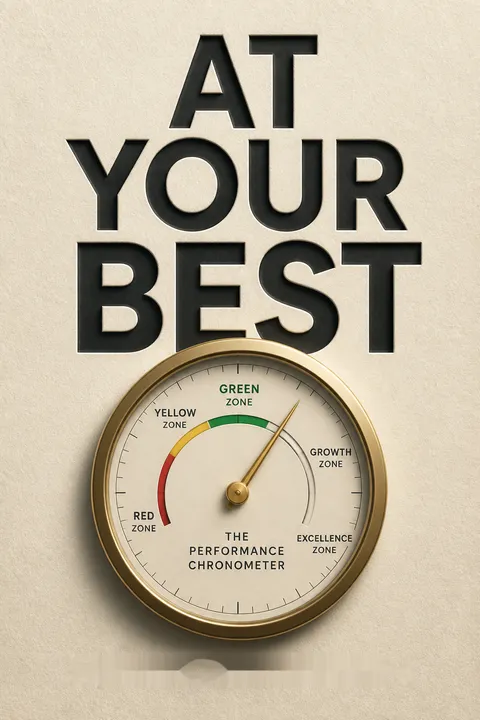
Peak hours are limited. Nieuwhof found that his clearest, most productive period usually fell between 7 a.m. and 11 a.m. He argues that many people have only three to five hours a day of especially strong concentration, creativity, and judgment. The book calls this high-energy period the Green Zone. The Energy Clock is a simple map of when a person's energy and mood tend to rise and fall, rather than an assumption that every hour is equally useful.
Look for repeating patterns. For several days or weeks, notice when ideas come easily, focus holds, and interactions feel constructive. Also notice when accuracy, patience, or attention falls. Nieuwhof cites Daniel Pink's rough population breakdown: about 14 percent are morning-oriented, 21 percent are night-oriented, and most people fall between those poles. The percentages are a starting point, not a substitute for observing one's own pattern.
The method turns vague self-knowledge into a scheduling hypothesis that can be tested. It echoes chronobiology, the study of how biological rhythms affect alertness and performance, and encourages better task timing rather than moral judgments about discipline. The author's three-to-five-hour estimate is a practical rule of thumb, not a universal biological limit. Sleep, health, medication, shift work, and caregiving can all change the pattern. Treating the Energy Clock as adjustable is therefore essential: it should describe lived experience, not become another standard against which people feel they are failing.
Reserve peak hours for work only you can do exceptionally well.
Find the overlap. Nieuwhof calls the best use of peak hours Optimal Green Zone Focus. It combines natural gifting, work that feels energizing, and tasks with meaningful impact. Gifting means an ability that comes relatively naturally; passion is work that gives energy; impact is what advances an important goal. A person may be skilled at many things, but the most valuable Green Zone work sits where these factors reinforce one another.
Do not confuse ease with mastery. Nieuwhof could prepare a persuasive talk quickly, but that ability sometimes tempted him to underprepare. His son, by contrast, picked up guitar chords quickly while his father struggled, illustrating how different natural aptitudes can be. The lesson is to use peak hours not only to perform a strength, but also to develop it through deliberate practice. Routine tasks can wait for less precious hours.
The framework is useful because it prevents productivity from collapsing into speed alone. A task can be urgent and familiar yet still be a poor use of a person's rare concentration. The distinction between aptitude and developed skill also matters: an apparent strength can stagnate if effortless early success discourages practice. There is a limit to the model, though. Some essential work is neither enjoyable nor a natural strength, and teams need people to share it fairly. The framework works best as a guide for allocating premium attention, not as permission to abandon necessary responsibilities.
Give low-energy hours appropriate work, not your most consequential decisions.
Match the task to the zone. The Yellow Zone is a period of moderate energy, suitable for ordinary meetings, planning, and work that needs care but not peak creativity. The Red Zone is a low-energy period, better reserved for routine or lower-stakes tasks. Nieuwhof uses late-day hours for email and administration, and often exercises then because activity can restore some energy. His central point is to stop treating low energy as a personal failure and start working with it.
Protect judgment when tired. He recalls making a poor decision in a Red Zone and having his assistant remind him of it weeks later. He warns against leaving sensitive messages, major choices, or conflict for the hours when attention and patience are weakest. Even people who do not control their work calendars can look for movable tasks and protect nonwork time. The book notes that a typical 40-hour workweek leaves 128 of 168 weekly hours outside paid work, though obligations differ widely.
This is a form of risk management: high-consequence decisions deserve conditions that support attention, while routine work can tolerate lower cognitive bandwidth. It also offers a practical alternative to demanding peak performance all day. The calendar arithmetic is rhetorically useful, but it can understate unpaid labor, commuting, disability, and on-call work. A more precise application counts discretionary time rather than assuming all nonpaid hours are freely available. The principle still holds: where choice exists, do not spend the clearest attention on tasks that could be handled adequately when energy is lower.
Pre-decide what matters, then decline requests that displace it.
Other people's urgency travels well. Nieuwhof recounts a day intended for writing that dissolved into messages, browsing, interruptions, impromptu conversations, and meetings. He calls this priority hijacking: a person reacts to incoming demands until important work is pushed aside. The book applies the Pareto principle as a prompt to identify the small set of activities that produce much of the meaningful result, then give those activities more space.
Make fewer decisions repeatedly. A clear, kind refusal protects a commitment without requiring hostility. Categorical decision-making goes further: decide in advance to avoid a class of commitments, such as certain meeting types or recurring requests, rather than reconsidering every invitation. During the pandemic, many of Nieuwhof's speaking engagements disappeared at once, showing how eliminating a whole category can expose what a calendar can function without. Categories should remain revisable, with room for exceptions that genuinely matter.
The insight connects to decision fatigue: recurring choices consume attention, so a stable rule can conserve it for work that needs judgment. Pre-deciding also makes boundaries less personal, since the refusal follows a general policy rather than a judgment about the requester. Still, the Pareto ratio is a heuristic, not a law that every person's work neatly follows. Service roles, junior staff, and care work may be valuable precisely because their impact is indirect or difficult to measure. The strongest version of the advice pairs focus with explicit criteria for what counts as an exception.
Make distraction inconvenient before asking yourself to concentrate.
Attention has a recovery cost. Nieuwhof cites a study estimating that people touch their phones an average of 2,617 times a day, with heavy users averaging 5,427. He also points to research suggesting that refocusing after an interruption can take nearly 25 minutes. The figures illustrate why brief alerts can consume far more than the moment they occupy. Digital platforms compete for attention, and the user often ends up following the sender's schedule rather than choosing when to engage.
Build a quieter work setting. During Green Zone work, the author recommends silencing notifications, using Do Not Disturb, and choosing a space suited to sustained thought. He writes in a quiet home workspace and adapts with headphones when traveling. A walk can also help generate ideas when constant typing stalls thought. The goal is not a perfect office. It is to reduce avoidable interruption and protect periods long enough for complex thinking.
The emphasis on environment is stronger than advice to simply try harder. In behavioral design, friction changes what people do: an alert-free phone is less likely to trigger an automatic check than one that constantly lights up. The idea of attention residue also explains why switching between tasks can impair the next task even after the switch is over. Yet total disconnection is not feasible for every job or household. A realistic boundary names who can reach someone, through which channel, and what qualifies as urgent, rather than treating every interruption as equally optional.
Give your closest relationships more access than your digital crowd.
Not every relationship needs equal bandwidth. The book draws on anthropologist Robin Dunbar's estimates of social circles: roughly three to five intimate relationships, twelve to fifteen regular friends, and a wider network of about 150 people. These are proposed limits on meaningful connection, not a rulebook for deciding who matters. Nieuwhof observes that the people demanding attention are often not those who most need it; a spouse, child, or strong colleague may ask for less than a person in recurring crisis.
Match attention to connection and impact. He recommends prioritizing close relationships and high-value working relationships, while routing some draining or unproductive requests elsewhere. His own practice is to give family the fastest access and handle more distant messages less urgently, sometimes with help from his team. The point is not to discard people in difficulty. It is to avoid giving every message the same claim on the hours best suited to focused work or intimate connection.
This is a useful corrective to digital platforms, which make a large audience feel like a large set of reciprocal friendships. Dunbar's model gives readers a language for limited relational capacity, while the distinction between mutual and one-sided relationships can help prevent chronic depletion. The numbers remain estimates, and culture, life stage, and individual needs shape social networks. Care work also cannot be reduced to a return-on-investment calculation. A humane application protects close bonds and reserves capacity for service, rather than treating people as productive assets ranked by output.
Put priorities on a recurring calendar before blank space gets claimed.
White space is not a plan. Nieuwhof describes agreeing to attend an acquaintance's Saturday party after seeing an empty day on his calendar, even though the day was meant for his wife and children. The invitation filled the space because he had not made his real commitment visible to himself. He calls the Thrive Calendar a set of advance decisions, often repeated weekly, that reserves time for important work, relationships, rest, and personal priorities.
Schedule rhythms, not every detail. A recurring block for writing or family time can protect the purpose of a period without specifying every task. Nieuwhof reserves mornings for focused work, limits meeting slots, and keeps some time free of scheduled meetings. He also recommends scheduling what people rarely request on one's behalf: development, rest, spiritual practice, or a regular meal with family. The calendar makes a boundary easier to honor because the commitment exists before a new request arrives.
The calendar functions as a commitment device: it turns an intention into a visible constraint that can resist momentary pressure. This is more powerful than maintaining a long task list, which can name priorities without assigning them a realistic place. Scheduling also makes tradeoffs discussable with colleagues and family. It should not become a rigid ideal that treats every disruption as failure. The value lies in creating a default pattern and noticing when exceptions have become the pattern. A calendar is a tool for protecting chosen commitments, not evidence that life can be fully controlled.
Recalibrate your schedule when life changes, before strain becomes routine.
A good system needs maintenance. A new job, promotion, child, move, health change, or loss can alter both available time and energy. Nieuwhof recommends adapting as soon as change is foreseeable, much like maintaining a vehicle before a part fails. When the problem appears unexpectedly, a time audit can reveal the gap between remembered workload and actual behavior. The Energy Clock, priorities, and calendar may all need revision.
Track the conditions that drain you. The author suggests reviewing three personal ratios: time alone versus time with people, time spent in meetings, and time away from home. His own balance shifted over the years; he found that more than 15 meetings in a week left him depleted, but presents that as his limit, not a universal target. These measures help identify when a previously workable routine no longer fits the person or season.
Recalibration treats productivity as an adaptive system rather than a one-time optimization. That is consistent with resilience research, where the ability to respond to changing conditions matters more than preserving a perfect routine. The author's ratios are especially useful as personal baselines, because they make hidden stressors measurable. Their value depends on repeated observation, not copying someone else's numbers. A time audit can also expose structural overload that no calendar adjustment can solve; in that case, the relevant change may involve staffing, workload, or a conversation about expectations.
Judge a productive life by who your habits help you become.
Efficiency is not the final measure. Near the end, Nieuwhof describes returning to a strenuous family camping trip after years of disliking the mud, rain, and lack of control. This time, he enjoyed being with his wife and adult sons despite the discomfort. He connects that change to a more sustainable pace and reflects on the irritable father he had been when his children were young. The story shifts the book's promise beyond completed tasks: managing time and energy can create more patience, presence, and room for relationships.
Make the system serve a whole life. The author defines thriving across spiritual, relational, emotional, financial, and physical areas, rather than measuring work output alone. For him, the practical benefit of better routines includes sleep, exercise, family connection, hobbies, and purpose. The daily question is not only whether enough was accomplished, but whether today's way of living supports the kind of person and relationships worth carrying into the future.
The camping story gives the productivity argument a human test: success is not simply a larger output from the same exhausted self. This resembles virtue ethics, which evaluates repeated behavior by the character it cultivates, and also explains why protected time with loved ones can be an outcome rather than a reward after work is finished. A caution is that character change cannot be scheduled into existence; the calendar can make room, but repair and intimacy require attention from everyone involved. Its deeper promise is possibility, not a guarantee.
Analysis
At Your Best is a practical leadership and personal development book organized around a single operating principle: schedule demanding work for the hours when energy, ability, and purpose overlap, then protect that schedule from avoidable interruption. The author's personal narrative supplies the motive. His early career success hid a life that felt so depleted he contemplated escaping into simpler work. Burnout became the point at which he stopped treating longer hours as the natural solution to growth.
The argument's strength is integration. Time management alone cannot explain why a person spends the clearest hour of the day on email, or why a blank Saturday gets claimed by someone else's plans. Nieuwhof links daily rhythms, task selection, attention, relationships, boundaries, and calendar design. The Energy Clock helps readers observe patterns; the Thrive Calendar translates those observations into repeatable choices. The book also avoids defining success as workplace output alone, placing family, rest, health, and inner life inside the same frame.
Its most useful provocation is that many failures of follow-through are allocation problems rather than failures of ambition. That reframing makes experimentation possible: move a task, mute alerts, decline a category of meeting, or revise the routine after a life change. The approach is strongest for knowledge workers with at least some scheduling discretion. Its language of personal choice can overstate control for people in inflexible jobs, intensive caregiving, or precarious circumstances. Likewise, the energy zones are an adaptable heuristic, not a clinical measure or universal map of human performance.
The book is best read as a system for making tradeoffs visible, not as a promise that every person can reclaim a fixed number of hours. Its durable contribution is a useful question: does the structure of an ordinary day support the work and relationships that matter, or merely absorb whatever arrives? The answer depends on context, but the question redirects attention from heroic effort toward deliberate design.
Review Summary
At Your Best receives mixed reviews. Many praise its practical approach to time and energy management, finding the concepts of green, yellow, and red zones helpful for productivity. Readers appreciate the focus on doing important work during peak energy times. Some criticize the book for lacking scientific data and being too anecdotal. Critics argue it doesn't address systemic issues causing burnout and may not apply to those with less control over their schedules. Overall, readers find the book's ideas simple but potentially impactful for managing stress and improving work-life balance.
People Also Read






Glossary
Stress Spiral
Pattern of chronic overloadThe Stress Spiral is Nieuwhof's name for a repeating pattern in which time is spent without clear focus, daily energy is not taken into account, and outside demands repeatedly displace personal priorities. The result is feeling overwhelmed, overcommitted, and overworked, often while still failing to make progress on important work or relationships.
Thrive Cycle
Pattern for sustainable effectivenessThe Thrive Cycle is Nieuwhof's framework for aligning time, energy, and priorities so people can do important work during their strongest hours while preserving room for relationships and rest. It is presented as an alternative to the Stress Spiral, and depends on observing personal rhythms, focusing attention, and revising routines as circumstances change.
Energy Clock
Map of daily energyThe Energy Clock is a personal map of how energy, focus, productivity, and mood tend to change over the course of a typical day. A person estimates high, moderate, and low-energy periods by observing recurring patterns over time. It is meant to guide scheduling and can be adjusted when work, health, sleep, or family circumstances change.
Green Zone
Peak-energy work periodThe Green Zone is the period when a person typically has strong energy, clear thinking, sustained focus, and a positive working mood. Nieuwhof estimates that many people have about three to five such hours per day. He recommends reserving these hours for work requiring creativity, judgment, or a person's strongest abilities, rather than routine tasks.
Yellow Zone
Moderate-energy periodThe Yellow Zone describes hours when energy and effectiveness are neither especially high nor especially low. A person can usually handle ordinary meetings, planning, and moderately demanding work, though the results may not match their best performance. The concept encourages assigning tasks according to current capacity rather than expecting equally strong output throughout the day.
Red Zone
Low-energy periodThe Red Zone is a low-energy period marked by reduced attention, patience, accuracy, or ability to produce demanding work. Nieuwhof suggests using these hours for routine or lower-stakes tasks and avoiding major decisions or sensitive conversations when possible. The zone describes a recurring pattern, not a personal defect, and may vary with sleep, stress, or health.
Optimal Green Zone Focus
Best use of peak hoursOptimal Green Zone Focus is Nieuwhof's way of identifying the most valuable use of a person's highest-energy hours. It considers natural ability, the work that energizes the person, and the activity likely to make a meaningful difference. The overlap helps distinguish important, high-value work from tasks that are merely familiar, urgent, or easy to complete.
Thrive Calendar
Recurring priority scheduleThe Thrive Calendar is a preplanned schedule that uses recurring appointments to protect important work, relationships, rest, and personal commitments. It makes broad decisions about how different parts of the week should be used before new requests arrive. The calendar is intended to be a flexible default, revised when a person's priorities, energy, or circumstances change.
Categorical decision-making
One choice removes manyCategorical decision-making means deciding in advance to accept or decline an entire type of commitment, rather than evaluating each request separately. Examples include setting limits on certain meeting formats or declining a recurring class of invitations. The technique reduces repeated decisions and protects time, while leaving room to reconsider categories or make meaningful exceptions.
Dunbar's number
Estimated social capacityDunbar's number refers to anthropologist Robin Dunbar's estimate of the number of social relationships people can maintain meaningfully. The book describes nested circles, from a few close relationships to a broader network of roughly 150 people. These figures are presented as research-based estimates of cognitive limits, not fixed rules that dictate how anyone must organize their relationships.
FAQ
What's "At Your Best" about?
- Focus on thriving: "At Your Best" by Carey Nieuwhof is about helping individuals manage their time, energy, and priorities to thrive both personally and professionally.
- Avoiding burnout: The book provides strategies to avoid burnout by living at a sustainable pace and focusing on what truly matters.
- Practical guidance: It offers practical advice on how to align your daily activities with your peak energy levels to maximize productivity and fulfillment.
- Life transformation: The ultimate goal is to help readers build a life they don't want to escape from, by making intentional choices about how they spend their time.
Why should I read "At Your Best"?
- Overcome stress: If you're feeling overwhelmed, overcommitted, or overworked, this book offers a roadmap to regain control.
- Improve productivity: It provides actionable strategies to help you accomplish more in less time by leveraging your peak energy periods.
- Enhance well-being: The book emphasizes the importance of balancing work and personal life, leading to greater happiness and fulfillment.
- Long-term benefits: By applying the principles, you can create lasting changes that improve your quality of life and relationships.
What are the key takeaways of "At Your Best"?
- Time management: You have the same 24 hours as everyone else; it's about how you use them that matters.
- Energy zones: Identify your Green Zone (peak energy) and use it for your most important tasks.
- Prioritize effectively: Focus on tasks that align with your gifting, passion, and impact for optimal results.
- Say no strategically: Learn to say no to less important demands to protect your time for what truly matters.
How does Carey Nieuwhof suggest managing time in "At Your Best"?
- Truth about time: Stop saying you don't have time; instead, admit you didn't make time for certain tasks.
- Fixed calendar: Use a Thrive Calendar to pre-schedule your priorities and protect your time.
- Green Zone focus: Allocate your peak energy hours to your most important and impactful tasks.
- Avoid distractions: Turn off notifications and create an optimal work environment to maintain focus.
What is the Thrive Cycle in "At Your Best"?
- Virtuous loop: The Thrive Cycle is a system where focused time, leveraged energy, and realized priorities work together to help you thrive.
- Green Zone: Use your peak energy hours for tasks that align with your gifting, passion, and impact.
- Yellow and Red Zones: Allocate less critical tasks to times when your energy is moderate or low.
- Continuous improvement: Regularly adjust your strategies to maintain balance and effectiveness.
How can I identify my Green Zone according to "At Your Best"?
- Track energy levels: Pay attention to when you feel most alert, focused, and productive during the day.
- Observe patterns: Note the times when you consistently produce your best work and feel most energized.
- Feedback from others: Ask colleagues or family members for their observations on when you seem most effective.
- Experiment and adjust: Test different schedules to find the hours that consistently yield your highest productivity.
What strategies does Carey Nieuwhof offer for saying no in "At Your Best"?
- Empathy and clarity: Start by expressing empathy and understanding, then clearly state your inability to commit.
- Firm but polite: Use phrases like "I'm not available" or "I have other commitments" to convey your decision.
- Redirect if possible: Suggest alternative resources or people who might be able to help.
- Thank them: End on a positive note by expressing gratitude for their understanding.
What are some of the best quotes from "At Your Best" and what do they mean?
- "You can make excuses or you can make progress, but you can’t make both." This emphasizes the importance of taking responsibility for how you spend your time.
- "Live in a way today that will help you thrive tomorrow." This encourages readers to make choices that lead to long-term well-being and success.
- "Stress is a good bad word. Our culture hates stress yet thrives on it." This highlights the paradox of modern life and the need to break free from stress as a status symbol.
- "You become what you repeatedly do." This underscores the power of habits and the importance of intentional living.
How does "At Your Best" address the issue of distractions?
- Turn off notifications: Disable alerts on your devices to minimize interruptions and maintain focus.
- Optimal environment: Create a workspace that minimizes distractions and supports deep work.
- Mind-body connection: Incorporate physical activity to stimulate creativity and problem-solving.
- Early mornings: Leverage the quiet hours before the world wakes up for uninterrupted productivity.
What is the Thrive Calendar in "At Your Best"?
- Pre-scheduled priorities: A Thrive Calendar is a tool to schedule your most important tasks and commitments in advance.
- Repeating appointments: Set up regular time blocks for key activities to ensure they get done consistently.
- Balance work and life: Include personal time, family commitments, and rest to maintain a healthy balance.
- Adaptability: Regularly review and adjust your calendar to reflect changes in your life and priorities.
How does Carey Nieuwhof suggest handling people who drain your energy in "At Your Best"?
- Identify energy drainers: Recognize individuals who consistently leave you feeling depleted.
- Limit interactions: Minimize time spent with these individuals, especially during your Green Zone.
- Focus on energizers: Invest more time in relationships that are mutually beneficial and uplifting.
- Set boundaries: Politely but firmly establish limits on your availability to protect your energy.
What long-term benefits does Carey Nieuwhof promise in "At Your Best"?
- Sustainable success: By aligning your time, energy, and priorities, you can achieve lasting personal and professional success.
- Improved relationships: More intentional time with loved ones leads to deeper connections and fulfillment.
- Greater well-being: Reduced stress and better work-life balance contribute to overall happiness and health.
- Personal growth: The focus on who you're becoming, not just what you're doing, leads to meaningful life transformation.
About the Author


Download PDF
Download EPUB
.epub digital book format is ideal for reading ebooks on phones, tablets, and e-readers.








