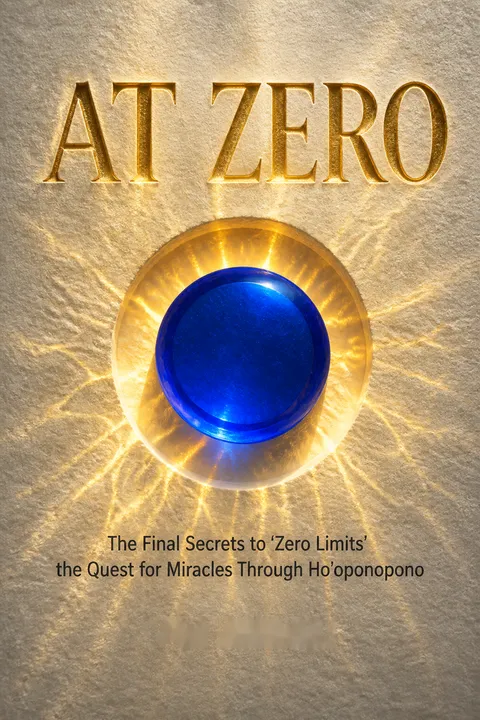


Key Takeaways
When criticism hits, clear your hurt before deciding what it means.

A painful test. After publishing Zero Limits, Vitale faced attacks from readers who had not yet read the book, accusations that its central story was fabricated, and a former friend’s public campaign against him. He describes feeling betrayed and humiliated, then turning to Ho’oponopono rather than retaliating. In this practice, a distressing encounter is a cue to notice and work with one’s own inner reaction. His account is not that the conflict was imaginary: the friendship ended, and he missed it.
The practical shift. Cleaning helped him loosen the grip of anger and grief. The story makes the method less like a promise that life will become agreeable and more like a way to face painful events without letting them dictate every response.
The strongest part of this example is its modest, psychologically plausible outcome: the practice helped Vitale process hurt, even though it did not restore the friendship. Repetitive phrases can function like a pause between emotional activation and action, a role shared by grounding and self-compassion practices. That pause can reduce impulsive retaliation. It should not, however, require silence in the face of abuse or false accusations. Emotional release and practical protection are separate tasks, and neither cancels the other.
Treat responsibility as agency, never as proof that suffering is your fault.

Responsibility without blame. Vitale’s central claim is that whatever enters one’s awareness can be addressed by looking inward. In his account, a person is responsible for working with the thoughts and feelings an event activates, but not necessarily guilty of causing the event. That distinction matters when the mind leaps from “I can respond” to “I deserved this.”
He illustrates the idea with a long lawsuit over a house he decided not to buy after a bank changed its loan terms. He cleaned on his fear and frustration, then concluded that ignoring an inner warning and failing to read the contract carefully were lessons he could own. The dispute settled, but the book does not establish that his practice caused the settlement. The concrete lesson is to examine one’s part without denying other people’s choices.
This distinction resembles a useful principle in therapy: people may not control what happens to them, but they can often shape how they respond. That framing can restore agency after conflict. The danger appears when a spiritual claim expands responsibility to every event, including illness, violence, or disaster. Such a claim can quietly turn into self-blame or excuse another person’s conduct. A safer reading keeps responsibility local: own one’s reactions and choices, while preserving evidence, boundaries, and accountability for actions taken by others.
Question the mental filter shaping your view before trusting your first interpretation.

Memory colors perception. Vitale uses “data” for stored memories, beliefs, and unconscious patterns that, in his model, shape how people interpret the present. A vivid example comes from his wife’s car catching fire. For days afterward, ordinary morning haze looked like smoke to both of them. He also recalls reacting to bosses as if they were his strict father, rather than seeing each supervisor as an individual.
The book connects this idea to research on memory influencing visual perception and to Jeffrey Schwartz’s work on changing responses to unwanted thoughts. Schwartz’s four steps are to identify a troubling message, reinterpret it as a mental event rather than a command, redirect attention to a useful activity, and reassess its importance. This offers a practical way to create distance from a reaction without pretending it never arose.
The examples capture a real feature of perception: attention and expectation influence what people notice and how they interpret it. Naming a thought as a thought can make it easier to choose a response, a principle used in cognitive behavioral therapy and mindfulness-based approaches. But the book sometimes stretches this sensible observation into the claim that the outside world is merely an inner projection. Cognitive filters shape experience; they do not prove that external events are created by one person’s memories. The distinction protects both insight and reality-testing.
Use the four-part ritual as a pause, not a guarantee of external change.
A compact practice. The method centers on four expressions: love, apology, a request for forgiveness, and gratitude. Vitale describes saying them inwardly when upset, directing them toward the Divine rather than using them to manage the other person. The phrases can be repeated in any order, and he says even one may be used. Their purpose is to help a practitioner notice a painful feeling, accept responsibility for addressing it, and seek inner peace.
He describes cleaning as a cycle: notice the upset, focus on the feeling rather than trying to control someone else, repeat the phrases or another clearing method, and continue until calmer. The book recommends ongoing practice, not just crisis use. It also says that feeling worse can occur as old material comes into awareness, though it offers no reliable way to distinguish that from a method that is not helping.
As a ritual, the phrases combine self-compassion, remorse, forgiveness, and gratitude, giving attention a clear and repeatable structure. Repetition can interrupt rumination and help people settle before responding. Their spiritual meaning may also matter deeply to practitioners. Those benefits do not establish that the words erase unconscious memories or change another person at a distance. If the practice intensifies distress, it is reasonable to pause or seek support rather than interpret worsening feelings as proof that hidden material is being cleared.
Set goals lightly, then act on useful ideas instead of forcing the entire route.
Intention versus inspiration. Vitale contrasts action by default, deliberate intention, and what he calls inspiration: ideas he believes arise when mental noise quiets. His four stages of awakening move from victimhood to empowerment, then surrender, and finally awakening. In the earlier stages, people try to shape outcomes; in surrender, they hold goals less tightly and remain open to unexpected direction. He does not reject goals altogether. He recommends loosening attachment to a specific result and acting when a next step feels clear.
One example is Vitale and his trainer hoping to meet Arnold Schwarzenegger. They did not engineer an introduction. When a local film premiere contest appeared in an email, the trainer felt moved to enter and won. The story illustrates how an open goal can make a person attentive to opportunities, though chance and ordinary action remain part of the explanation.
This approach pairs well with flexible planning: set a direction, then update when new information arrives. Research on implementation intentions and feedback supports the value of converting a broad aim into timely action, while excessive attachment can narrow attention. The book’s language of Divine guidance gives this openness spiritual significance, but a strong feeling is not automatically a trustworthy instruction. An idea still benefits from ordinary checks: Does it fit the situation, respect others, and withstand practical scrutiny?
Keep cleaning and still take concrete steps when the situation requires them.
Inner work is not a substitute. Vitale’s stories include plenty of external action: he consulted advisers before declining the home purchase, pursued music training, hired musicians, and entered a demanding recording schedule. He describes cleaning as a way to reduce the fear and self-criticism that can interfere with action, not as a technical replacement for every practical solution.
The book’s advice to wait for inspired action can become confusing in high-stakes situations. Vitale says he chose not to hire a lawyer or contact authorities during his former friend’s smear campaign because it did not feel loving to retaliate. That was his personal decision, not a general rule. A reader can use the practice to regain composure and still consult a lawyer, doctor, therapist, or trusted adviser when appropriate. Inner peace and effective problem-solving can work together.
This is where the book’s method needs its clearest guardrail. Emotional regulation can improve judgment, but refusing external help is not inherently more spiritual or more effective. In safety-critical contexts, direct intervention may be the most responsible response. A useful synthesis is to clean for steadiness, then assess the facts and choose proportionate action. That preserves the method’s emphasis on self-awareness without asking a person to surrender rights, abandon treatment, or leave preventable harm unaddressed.
Use the whiteboard and breath to watch thoughts without treating them as identity.
A witness metaphor. Vitale uses a blank whiteboard to represent the calm awareness beneath thoughts, emotions, and bodily sensations. In the meditation, a person imagines thoughts appearing and passing across that background rather than defining the self. The image is meant to make mental distance easier to experience, not to prove that consciousness is literally a blank surface.
Dr. Hew Len also taught a breathing exercise: inhale for seven counts, pause for seven, exhale for seven, pause again, and repeat for seven rounds. Vitale presents it as a way to settle and return to rhythm. A related exercise imagines an “inner child,” a name for the subconscious in this teaching, and encourages addressing it with care. These are optional attentional practices, not medical treatments or measures of spiritual progress.
The whiteboard is a memorable version of the observer perspective used in mindfulness: thoughts can be noticed without being obeyed or mistaken for the whole self. Slow, paced breathing can also support calm for many people. The precise spiritual interpretation remains a matter of belief, and not every breathing pattern suits everyone. The useful test is practical: does the exercise help someone become more present and deliberate? If it causes discomfort, the counts and imagery can be changed or set aside.
Recognize Morrnah Simeona’s inward method as one adaptation of a broader tradition.
Two forms, different settings. Vitale describes traditional Ho’oponopono as a family process for resolving conflict. Participants aired grievances, examined their own conduct, sought forgiveness, and worked toward restoring harmony, often with a leader guiding the discussion. In 1976, Morrnah Simeona adapted the practice into an individual process that could be done inwardly, without gathering everyone involved. Dr. Hew Len taught this modern form to Vitale.
The adaptation shifts the work from negotiating a shared dispute to attending to one’s own reactions and seeking Divine help. Vitale also recounts Simeona’s teachings about unseen connections called aka cords and her cleansing prayer. These are elements of the spiritual account in the book, not established historical or scientific facts. Readers can appreciate the method while remembering that a modern self-help version is not identical to every Hawaiian practice.
The distinction is important because a technique popularized internationally can easily become detached from its cultural history. The book does acknowledge that Ho’oponopono existed as a communal Hawaiian practice before Simeona’s individual adaptation. That context invites respectful curiosity rather than treating one version as the sole authentic form. It also highlights a substantive difference: group reconciliation depends on communication and repair between people, while the inward approach can be practiced privately. Neither automatically replaces the other.
Hold miracle stories with hope while asking what the evidence can actually show.
A story with limits. Vitale’s interest began with Dr. Hew Len’s work at Hawaii State Hospital, where he reportedly reviewed patients’ files and practiced clearing on himself. The story says the ward improved, staff conditions changed, and patients were released. Vitale later acknowledges important limits: not every patient recovered, one patient was transferred, staff members did not attribute the changes directly to Hew Len, and he could not produce a clear public record proving the claimed causal link.
The book also includes testimonials about health, finances, and relationships. These accounts may show that people found the practice meaningful, but they cannot isolate its effects from medical care, chance, other actions, or selective reporting. Vitale’s most defensible personal claim is that cleaning often helped him feel calmer. That is valuable without needing to certify every dramatic outcome as a miracle.
Anecdotes can generate hypotheses and convey emotional meaning, but they cannot establish that one person’s private ritual healed patients or altered another person’s illness. Improvement in a hospital ward could have many causes, and a testimonial rarely documents all of them. At the same time, uncertainty about supernatural causation does not make a calming practice worthless. The reader can preserve the humane insight, use the ritual if it helps, and keep medical and historical claims proportionate to the evidence.
Analysis
At Zero is part spiritual memoir, part practice manual, and part defense of a controversial story. Its narrative engine is the collision between Vitale’s optimism about Ho’oponopono and the ordinary pain that follows success: public criticism, a broken friendship, a lawsuit, and uncertainty about his own creative ability. Those episodes give the book its best argument. The practice matters most clearly as a way to meet emotional activation with attention, compassion, and less reactive behavior.
The larger metaphysical claim is much stronger: that whatever appears in one person’s experience is their responsibility in a way that can influence the outer event. The book offers moving reports, but it does not establish that inward clearing causes another person’s recovery, apology, or financial change. It is crucial not to convert that claim into blame. Illness, abuse, and misfortune are not evidence that a person harbors the wrong memories, nor should the ritual displace practical assistance.
The book is most useful when its spiritual vocabulary is read as a practice language rather than a scientific explanation. “Data” can help name learned reactions; “Zero” can describe a desired state of quiet; and “inspiration” can encourage openness to new options. Each metaphor becomes less reliable when treated as a literal account of causation. The author’s distinction between responsibility and fault offers a humane corrective, although his universal claims sometimes strain that distinction.
The cultural history also deserves attention. Morrnah Simeona’s individual adaptation is presented alongside the communal Hawaiian practice from which it developed. That difference matters: private self-clearing and collective reconciliation address overlapping but distinct problems. Overall, the book offers a memorable ritual for emotional reflection, while asking readers to supply their own standards of evidence, boundaries, and practical judgment.
Review Summary
At Zero received mostly positive reviews, with readers praising its insights into Ho'oponopono and personal growth. Many found it enlightening and life-changing, appreciating the expanded explanations and new techniques. Some critics felt it was repetitive of the previous book, while others valued the reinforcement. The book's focus on forgiveness, responsibility, and inner child work resonated with many readers. Overall, it was seen as a valuable resource for those interested in Ho'oponopono practice and self-improvement.
People Also Read




Glossary
Ho’oponopono
A practice of restoring balanceA Hawaiian practice associated in the book with forgiveness and putting matters right. Vitale focuses on Morrnah Simeona’s modern individual adaptation, in which a person attends inwardly to distress and petitions the Divine for clearing. The book distinguishes this form from traditional group processes for resolving conflict among family members.
Data
Stored memories and patternsVitale and Hew Len use “data” for memories, beliefs, unconscious patterns, and other mental material that they believe shapes perception and reaction. In their spiritual model, cleaning means asking for this material to be released so a person can experience greater calm and openness. The term is their interpretive vocabulary, not a standard scientific category.
Zero
A clear, receptive stateZero is the book’s name for an inner condition with minimal interference from memories, beliefs, and habitual thought. Vitale presents it as a state of peace and receptivity to Divine inspiration. A whiteboard with its writing erased serves as a metaphor for this condition; the book does not establish Zero as a measurable psychological or physical state.
Aka cords
Invisible ties between people or thingsIn Morrnah Simeona’s teaching as described by Vitale, aka cords are unseen links formed through relationships or contact with people, places, and objects. They are said to persist after an encounter and can be released through prayer or clearing. This is a spiritual concept within the book, not an empirically verified connection.
Self I-dentity through Ho’oponopono
An inward problem-solving practiceThe book uses this name for the modern Ho’oponopono approach in which a person works internally rather than requiring everyone involved in a conflict to meet. The practitioner notices distress, takes responsibility for their own inner response, and petitions the Divine for clearing. Vitale presents it as a path toward peace, not as a guarantee of changing another person.
Four stages of awakening
A sequence of spiritual developmentVitale’s framework describes four stages: victimhood, empowerment, surrender, and awakening. The progression moves from blaming circumstances, to consciously pursuing goals, to loosening control and seeking inspiration, and finally to a state he describes as unity with the Divine. It is the author’s spiritual model, not a validated developmental scale.
Whiteboard
Metaphor for awareness beneath thoughtThe whiteboard is Vitale’s image for the awareness that remains when thoughts, emotions, and beliefs are noticed and allowed to pass. Imagining its surface being cleared represents the desired return to Zero. The image functions as a meditation aid and explanatory metaphor, rather than a claim that the mind literally contains a blank inner surface.
Ceeport
A branded clearing reminderCeeport is Dr. Hew Len’s name for a visual symbol used as a clearing aid. The book explains the name through ideas of cleaning and erasing while returning to port, or to Zero. It is presented as a reminder or tool for focusing attention, not as an independently demonstrated mechanism for removing memories.
FAQ
What's At Zero: The Final Secrets to "Zero Limits" about?
- Exploration of Ho’oponopono: The book delves into the Hawaiian healing system of Ho’oponopono, focusing on personal transformation and miracles. It builds on concepts from Zero Limits with deeper insights and advanced techniques.
- Personal Journey: Author Joe Vitale shares his experiences and challenges with Ho’oponopono, illustrating its impact on his life and others. He emphasizes personal responsibility for one's experiences.
- Achieving Zero: Discusses reaching a state of "Zero," where one connects with the Divine, experiencing peace and clarity essential for inspiration and positive life changes.
Why should I read At Zero?
- Practical Techniques: Offers actionable methods for applying Ho’oponopono in daily life, helping readers clear negative beliefs and emotions for personal growth.
- Inspiring Stories: Includes compelling anecdotes and testimonials illustrating Ho’oponopono's transformative power, motivating readers to embrace the practice.
- Spiritual Growth: Encourages exploring spirituality and developing a deeper connection with the Divine, presenting a path to healing and enlightenment.
What are the key takeaways of At Zero?
- Total Responsibility: Emphasizes taking ownership of one's experiences and emotions, reflecting one's inner state in their life.
- The Four Phrases: Highlights the importance of “I love you,” “I’m sorry,” “Please forgive me,” and “Thank you” as tools for clearing negative emotions and beliefs.
- Connection to Divinity: Achieving Zero allows for divine connection, leading to inspiration and guidance essential for personal growth and transformation.
What is Ho’oponopono, and how does it work?
- Hawaiian Healing System: A traditional practice focused on reconciliation and forgiveness, taking responsibility for thoughts and actions to heal relationships and oneself.
- Clearing Process: Involves repeating four phrases to clear negative memories and beliefs from the subconscious, releasing emotional burdens for inner peace.
- Divine Connection: Facilitates connection with the Divine, allowing inspiration and guidance crucial for personal transformation and healing.
How can I apply Ho’oponopono in my daily life?
- Daily Practice: Incorporate the four phrases into your routine, repeating them when negative thoughts or emotions arise to clear emotional baggage.
- Mindfulness: Stay aware of feelings and reactions, using Ho’oponopono to release discomfort or negativity.
- Journaling: Write down thoughts and feelings on specific issues, using the four phrases to address and clear them from your mind and heart.
What are the four phrases of Ho’oponopono?
- I Love You: Expresses unconditional love and acceptance, dissolving negative emotions and fostering connection.
- I’m Sorry: Acknowledges responsibility for thoughts and actions, promoting healing and forgiveness.
- Please Forgive Me: A plea for forgiveness from the Divine and oneself, releasing guilt and shame.
- Thank You: Expresses gratitude for healing and lessons learned, reinforcing a positive mindset.
What is the significance of reaching "Zero" in At Zero?
- State of Clarity: Represents mental clarity and emotional peace, free from negative thoughts and beliefs, connecting with true self and the Divine.
- Inspiration and Guidance: Opens individuals to divine inspiration and guidance, enhancing creativity and intuition for better decision-making.
- Healing and Transformation: Essential for personal healing and transformation, enabling release of past traumas for a fulfilling life.
How does At Zero differ from Zero Limits?
- Deeper Insights: Builds on Zero Limits with more advanced techniques and insights into Ho’oponopono, delving deeper into the author's journey.
- Expanded Techniques: Introduces new methods for applying Ho’oponopono in life, offering practical advice for overcoming challenges and personal growth.
- Focus on Spirituality: Emphasizes spiritual aspects, encouraging exploration of divine connection and surrendering to a higher power for guidance.
How does Ho’oponopono help with personal relationships?
- Healing Relationships: Encourages taking responsibility for perceptions of others, leading to healing and reconciliation.
- Transformative Stories: Shares testimonials of mended relationships, illustrating the practice's effectiveness in shifting dynamics and fostering understanding.
- Inner Work: Focuses on cleaning one's memories and emotions, often leading to positive relationship changes without direct confrontation.
What are some success stories shared in At Zero?
- Personal Transformations: Includes anecdotes of significant life changes through Ho’oponopono, illustrating its power in overcoming challenges and achieving goals.
- Healing Relationships: Stories of improved relationships with family, friends, and colleagues, fostering forgiveness and understanding.
- Overcoming Adversity: Inspiring accounts of navigating difficult situations with Ho’oponopono, motivating others to seek their own transformations.
What are the best quotes from At Zero and what do they mean?
- “You are only here to clean.”: Emphasizes taking responsibility for thoughts and actions, focusing on personal growth and healing.
- “When you’re clear, you don’t think. You just do.”: Highlights achieving clarity to act from inspiration rather than fear, encouraging trust in intuition.
- “Your life is a miracle.”: Reminds of life's inherent beauty and potential, encouraging embracing one's journey and recognizing miracles through Ho’oponopono.
How does Ho’oponopono relate to the Law of Attraction?
- Attracting Positive Outcomes: Aligns with the Law of Attraction by emphasizing internal state in attracting positive experiences.
- Clearing Blocks: Helps clear emotional and mental blocks hindering desire manifestation, opening receptivity to abundance.
- Mindset Shift: Focuses on thoughts and beliefs shaping reality, adopting love and forgiveness for a positive, abundant life.
About the Author
Other books by Joe Vitale


Download PDF
Download EPUB
.epub digital book format is ideal for reading ebooks on phones, tablets, and e-readers.








