

Key Takeaways
Build focus from bodily calm, not from scolding a restless mind.
A personal starting point. Patrick McKeown describes being a poor student with asthma, shallow breathing, and disrupted sleep. In 1997, he read that changing breathing habits might change how he felt and performed. He credits that discovery with helping him become more alert and focused, then built a career teaching breathing techniques. His story supplies the book’s central proposition: attention is not only a matter of trying harder. The state of the body can influence how easy it feels to concentrate.
Start with the conditions. McKeown argues that sleep and breathing can either support attention or make it harder to sustain. This is a practical invitation to notice bodily state before blaming a wandering mind. It is not proof that breathing explains every concentration problem.
The useful shift is from moral judgment to conditions: difficulty focusing need not mean laziness or weak character. A bodily check-in can reveal fatigue, tension, or restless breathing before these become another reason for self-criticism. The author’s personal account makes the idea vivid, but an individual story cannot establish a universal cause. Attention is also shaped by workload, health, motivation, and the design of the surrounding environment. Breathing is best understood here as one accessible lever, not a complete explanation or a substitute for assessment when concentration problems are persistent.
Choose five priorities, and treat the rest as genuine distractions.
A hard-edged filter. The book retells a story about Warren Buffett and his pilot, Mike Flint. Flint writes down 25 ambitions, then circles the five he considers most important. When Flint says he will keep working on the other 20 as well, Buffett’s lesson is that those goals compete with the chosen five. The value of the exercise is not the exact number. It is the recognition that a second tier of appealing projects can quietly consume the time needed for the first.
Turn priorities into action. McKeown recommends setting achievable goals, breaking them into monthly, weekly, and daily steps, and reviewing them regularly. The immediate question is simple: which next task moves a chosen priority forward?
A ranking exercise makes opportunity cost visible. People often treat every worthwhile aim as compatible, then wonder why none receives sustained effort. Naming a short list forces a more honest choice. The harder question is whether the list still reflects current values: a priority can become an inherited ambition or an outdated identity. A periodic review keeps focus from turning into rigidity. The story’s force comes from excluding good options, not from treating five as a scientifically ideal number.
Protect sleep as the first performance tool, not a leftover.
Recovery supports attention. McKeown argues that sleep quality matters alongside sleep duration. He cites research linking poor sleep with lower productivity and health costs, including a 2010 survey of employees from four US companies that estimated fatigue-related productivity losses at $1,967 per employee each year. The book also emphasizes that weekend sleep is not a reliable way to erase chronic short sleep.
Notice breathing at night. The author connects mouth breathing and disrupted breathing with snoring, insomnia, and sleep apnea, and recommends quiet nasal breathing as part of healthy sleep habits. Persistent snoring, repeated awakenings, or suspected sleep apnea deserve professional evaluation. The book’s breathing exercises are not a diagnosis or replacement for treatment.
The productivity framing is effective because it recasts sleep as part of work rather than its rival. Rest is not merely an interval in which no work occurs; it supports the attention and judgment that work requires. The cited workplace estimates help make hidden costs legible, though they do not prove that any single sleep habit causes a particular performance outcome. Breathing advice also needs a clear boundary: symptoms of a sleep disorder are not a self-help puzzle to solve alone. Behavioral routines can support care, but they should not delay it.
Use gentle nasal breathing to shape alertness, recovery, and stress.
Three breathing dimensions. McKeown’s approach to functional breathing is summarized as Breathe Light, Breathe Slow, and Breathe Deep. “Light” means reducing the effort and volume of resting breaths; “slow” means easing the breathing rate; “deep” means breathing low with the diaphragm, not gulping a large breath. The book presents nasal breathing as the foundation for these practices and argues that slower breathing can support a calmer state.
Measure without turning it into a contest. BOLT, or Body Oxygen Level Test, times how long a person can comfortably pause after a normal exhale before the first definite urge to breathe. McKeown proposes 25 seconds as a functional benchmark and 40 seconds as an aspiration. He also says not to force the test. BOLT is not a direct measurement of blood oxygen or a medical diagnosis.
The memorable strength of this framework is its correction of a common confusion: “deep” does not have to mean “big.” It offers people a concrete way to notice breathing effort and experiment with a gentler rhythm. The physiological story in the book, especially claims about carbon dioxide and oxygen delivery, is presented with more certainty than a reader should apply to personal diagnosis. A timed breath pause is also affected by many factors. Treat it as a self-observation exercise, not a score that proves health or predicts performance.
Practice returning attention to one sensation until attention becomes trainable.
Repetition is the practice. McKeown suggests focusing on the air moving at the nostrils, noticing when the mind wanders, and gently returning attention. The aim is not to stop thoughts. A simple check is to sit for three minutes, attend to the breath, and mark each time attention drifts. The count is feedback, not a grade.
Bring practice into ordinary life. Notice sounds while walking, the taste of a meal, or the feeling of a hand resting on a desk. The book also offers a body scan, moving attention gradually from the hands and arms through the rest of the body. These small exercises make focus something practiced during daily activities, not a special state reserved for a meditation session.
The practical insight is that noticing distraction is itself part of attentional control. If the mind wanders and a person returns, the practice has not failed; that return is the repeated action being trained. Using senses and body sensations also gives attention a specific target, rather than demanding an abstract, empty mind. The approach should remain gentle. For some people, close attention to breathing or bodily sensations can feel uncomfortable, so another neutral sensory anchor may be more suitable.
Regulate stress before it hijacks judgment and attention.
Stress has a useful range. The book describes the military’s COSC model, short for Combat and Operational Stress Control, as four zones. Green is a balanced state; yellow signals rising strain; orange suggests stress injury and a need for support; red describes severe clinical distress that calls for professional help. The model is a prompt to notice changes in sleep, concentration, mood, and functioning before they become impossible to ignore.
Respond, do not just endure. McKeown argues that some stress can sharpen performance, but too much can impair judgment. He recommends using slow, comfortable breathing to settle the body, then choosing whether to accept a situation, address it, leave it, or plan a practical response. Severe or persistent symptoms require more than breathing exercises.
The zone model is valuable because it makes stress observable before it becomes a vague identity such as “I am bad at coping.” It also resists the simplistic goal of eliminating all pressure: challenge can be manageable when recovery is adequate. The model is a guide, not a clinical instrument, and people may move between states differently. Its most important boundary is the red zone. Self-regulation can be supportive, but serious distress deserves professional care rather than a message to breathe through it.
Give important work uninterrupted blocks; multitasking leaves attention residue.
Switching has a cost. The book uses “attention residue” for the lingering mental engagement with one task after attention has moved to another. A person replying to messages while drafting a report may appear busy but repeatedly has to reorient. McKeown argues that the brain switches between tasks rather than fully attending to several demanding tasks at once.
Protect a block of attention. Identify the distractions that most often interrupt work, then reduce them: silence notifications, put the phone away, batch email, or reserve set periods for focused work. The book recommends protecting the early workday, when energy may be stronger, and checking whether the task at hand is the most important use of that time.
This argument connects personal discipline with task design: attention is easier to sustain when interruptions are less available. Blocking time is not simply a productivity ritual; it reduces the repeated cost of restarting. But the burden should not fall only on individuals. Meeting-heavy schedules, understaffing, and norms of instant response can make uninterrupted work difficult by design. Personal boundaries help, yet organizations also shape whether concentrated work is genuinely possible.
Let quiet create room for intuition, but check it against evidence.
Separate solving from circling. McKeown distinguishes useful thinking, such as planning and comparing options, from repetitive thinking that replays the same worry without advancing a decision. His suggested exercise is to write down a problem and possible solutions, assess them, then stop rehearsing the issue if no answer is clear. A walk or a few quiet minutes can create distance from the loop.
Treat intuition as input. The book presents intuition as information processed outside conscious awareness, drawing on experience and stored knowledge. It recounts research in which people made quicker, more accurate judgments after receiving emotional information they did not consciously notice. McKeown’s practical point is to combine quiet and reflection with deliberate learning, rather than mistake every strong feeling for reliable insight.
The distinction between useful analysis and repetitive rumination is more helpful than the blanket instruction to think less. Quiet can make space for associations that conscious effort overlooks, while a written list preserves the rational work already done. Intuition is strongest when experience provides relevant patterns; in unfamiliar situations, confidence can outrun accuracy. The book’s own call to balance intuitive and rational judgment is therefore essential. A hunch can guide the next question, but evidence should still test the answer.
Earn flow through practiced skill, meaningful challenge, and protected concentration.
Flow has conditions. The book describes flow state, a term associated with psychologist Mihaly Csikszentmihalyi, as deep involvement in an activity, sometimes accompanied by a changed sense of time. It identifies three ingredients: a skill the person has practiced, a challenge that is neither trivial nor overwhelming, and sustained concentration. A composer interviewed by Csikszentmihalyi described becoming absorbed in making music, illustrating the experience without making it exclusive to artists.
Distinguish absorption from autopilot. Flow is not merely losing track of time while doing a familiar routine. McKeown presents it as active, present engagement with the task. Sleep, breathing, and awareness can support concentration, but mastery and an appropriate level of challenge matter too. The practical move is to choose one demanding task, limit interruptions, and build the skill needed to meet it.
Flow is a useful design problem, not a mystical reward for trying hard enough. The balance between skill and challenge explains why the same activity can feel absorbing to one person and tedious or threatening to another. This also makes flow partly a property of the task: clear goals and fewer interruptions matter alongside an individual’s mental state. The book’s emphasis on breathing can help prepare attention, but no breathing technique can compensate for a task that is poorly matched to a person’s skills.
Treat recovery as part of ambition before exhaustion makes the choice.
A career can outlast its recovery system. Tennis player Robin Söderling reached fourth in the world before retiring at 26. In the account presented here, he describes perfectionism, pressure, and repeatedly pushing harder without learning how to switch off. He later spoke about anxiety and panic, and about making daily breathing and recovery practices part of life. His story complicates the idea that strong performance means being able to tolerate endless pressure.
Use methods with care. McKeown applies breathing ideas to sport, including nasal breathing during lower-intensity exercise and breath holds as a training load. He cautions that stronger air-hunger exercises are not suitable for everyone, including people who are pregnant or have serious medical issues. The book’s disclaimer advises consulting a qualified health professional before beginning a new program.
Söderling’s account gives recovery a human cost and prevents performance from becoming the only measure of success. His experience is not evidence that breathing practice alone explains recovery from anxiety, but it underscores the danger of ignoring strain because results remain strong. The exercise guidance also deserves restraint: breath holds and deliberate air hunger are not casual productivity hacks. A sustainable approach distinguishes low-intensity awareness practices from more demanding training and takes health circumstances seriously.
Analysis
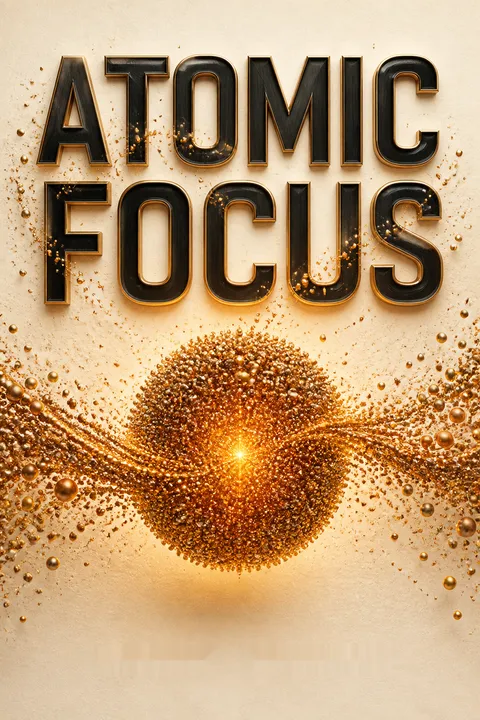
Atomic Focus is a self-help book that joins personal narrative, breathing instruction, attention training, and performance coaching. Its most effective organizing move is to treat concentration as more than a mental command. Sleep, bodily awareness, stress, and the surrounding environment all influence whether attention can be sustained. That gives readers several entry points: choosing fewer priorities, protecting work blocks, noticing sensory experience, or practicing slower breathing. The autobiographical opening makes this system feel lived rather than purely theoretical, while stories from sport and emergency response show why the author thinks the tools matter under pressure.
The book’s strongest practical distinction is between changing attention and changing the conditions under which attention operates. A short sensory practice trains the return of attention; notification limits reduce demands on it; sleep supports its availability. These are complementary, not competing, explanations. The COSC zones add a useful warning system, especially because they distinguish ordinary strain from distress that merits outside help.
The greatest caution concerns the book’s physiological certainty. It sometimes moves from plausible links between breathing, arousal, and attention to broad claims about oxygen delivery, intelligence, sleep disorders, or performance. A BOLT score is a breath-pause measure, not a direct measure of blood oxygen, brain function, or clinical health. Personal success stories and small studies can generate hypotheses, but they cannot establish that one breathing pattern will treat insomnia, anxiety, or sleep apnea. Breath-holding and air-hunger exercises also require care, particularly for people with medical conditions or panic symptoms. The soundest way to use the book is to keep its behavioral insight while treating its health claims as prompts for careful inquiry. Observe whether gentle breathing, better sleep routines, and fewer interruptions help. Do not turn a metric into a diagnosis, or a breathing exercise into a substitute for professional care. Its enduring message is practical: attention can be practiced, and the conditions surrounding it can be deliberately improved.
Review Summary
Atomic Focus receives mixed to positive reviews, averaging 4.17/5. Readers praise the breathing exercises and science-backed content, with many reporting real benefits like improved concentration, reduced anxiety, and better sleep through nasal breathing techniques. Critics note the book feels repetitive and poorly structured, suggesting 20 pages would suffice. Some feel it strays too far into general mindfulness territory rather than focusing on McKeown's unique breathing expertise. Those unfamiliar with his previous works may find it a useful introduction, while existing fans may find little new material.
People Also Read








Glossary
BOLT
Breath-pause self-checkThe Body Oxygen Level Test is a timed pause after a normal exhale, ending at the first definite urge to breathe. McKeown uses the result as an indicator of breathing comfort and sensitivity to air hunger. It is not a direct blood-oxygen measurement, a competition, or a medical diagnosis.
Breathe Light, Breathe Slow, and Breathe Deep
Three breathing dimensionsMcKeown’s practical description of functional breathing. “Light” means breathing quietly with less effort and volume, “slow” means reducing the breathing rate, and “deep” means breathing lower with the diaphragm rather than taking a large gasp. The book presents nasal breathing as the foundation for practicing these dimensions.
COSC
Four-zone stress modelCombat and Operational Stress Control is a framework described in the book for noticing changes in mental health and functioning. Its zones range from green, a balanced state, through yellow and orange, increasing strain and possible stress injury, to red, serious clinical distress. The model is intended to prompt awareness and support, not to diagnose a condition.
attention residue
Lingering focus from prior tasksThe book uses this term for the mental carryover that remains after switching tasks. Even when someone begins a new activity, some attention may still be tied to the previous one. McKeown uses the concept to explain why repeated task switching can make focused work harder and recommends reducing interruptions.
flow state
Deep, absorbed engagementA state of concentrated involvement in an activity, associated in the book with psychologist Mihaly Csikszentmihalyi. The account describes flow as more likely when a person has practiced the relevant skill, faces a suitably challenging task, and can concentrate. It is active engagement, not simply performing a familiar task automatically.
Oxygen Advantage®
Breathing and performance methodMcKeown’s named approach to breathing and performance. The book describes two main elements: developing more functional everyday breathing, particularly nasal breathing, and using breath-hold exercises as a training load. Its sports applications include attention, recovery, and conditioning. Some exercises involve significant air hunger and are not suitable for everyone.
FAQ
What's "Atomic Focus" about?
- Core Theme: "Atomic Focus" by Patrick McKeown explores the importance of focus, concentration, and attention span in achieving success across various fields, from education to elite sports.
- Breathing Techniques: The book emphasizes the role of breathing exercises in enhancing mental clarity, reducing stress, and improving overall performance.
- Personal Journey: McKeown shares his personal journey of overcoming poor concentration through breathing techniques, which led to significant achievements in his life.
- Practical Guidance: It provides practical exercises and insights into how breathing can be optimized for better focus and success.
Why should I read "Atomic Focus"?
- Improve Focus: The book offers strategies to enhance your ability to concentrate and maintain attention, which are crucial for success in any field.
- Stress Management: It provides tools to manage stress effectively, which can improve mental health and productivity.
- Personal Development: McKeown's personal story and the practical exercises can inspire and guide readers in their own journey toward self-improvement.
- Scientific Backing: The book is grounded in scientific research, making the techniques reliable and effective.
What are the key takeaways of "Atomic Focus"?
- Focus is Essential: The ability to focus and concentrate is crucial for success and happiness in life.
- Breathing Matters: Proper breathing techniques can significantly enhance mental clarity and reduce stress.
- Mindfulness and Awareness: Being aware of your body and breath can improve your focus and overall well-being.
- Practical Exercises: The book provides actionable exercises to help readers implement these techniques in their daily lives.
How does Patrick McKeown define focus, concentration, and attention span in "Atomic Focus"?
- Focus: Defined as narrowing your attention to one thing, which is crucial for achieving success.
- Concentration: Involves holding your attention on one thing, which is a skill that can be trained and improved.
- Attention Span: Refers to how long you can concentrate on a task, which can be extended through practice and proper techniques.
- Interconnected Skills: These skills are interconnected and essential for personal and professional success.
What is the "secret ingredient" for success according to "Atomic Focus"?
- Focus: Both Bill Gates and Warren Buffett attribute their success to the ability to focus, as highlighted in the book.
- Eliminate Distractions: Success involves eliminating distractions and learning to calm a racing mind.
- Goal Setting: Setting clear goals and focusing on them is crucial for achieving success.
- Mindfulness: Being present and aware of your thoughts and actions can enhance your ability to focus.
What breathing techniques does "Atomic Focus" recommend for improving focus?
- Nasal Breathing: Breathing through the nose is emphasized for its benefits in improving oxygen delivery and mental clarity.
- Breathe Light, Slow, and Deep: These techniques help in calming the mind and improving focus.
- Breath Holds: Practicing breath holds can enhance mental resilience and focus.
- Regular Practice: Consistent practice of these techniques is recommended for long-term benefits.
How does "Atomic Focus" suggest managing stress?
- Breathing Exercises: Slow and controlled breathing can deactivate the stress response and promote relaxation.
- Mindfulness Practices: Being aware of your breath and body can help manage stress effectively.
- Focus on the Present: Concentrating on the present moment can reduce anxiety and improve mental clarity.
- Practical Tips: The book provides practical tips and exercises to help readers manage stress in their daily lives.
What role does sleep play in "Atomic Focus"?
- Quality Over Quantity: The book emphasizes the importance of deep, quality sleep over the number of hours slept.
- Breathing and Sleep: Proper breathing techniques can improve sleep quality and reduce sleep disorders.
- Impact on Focus: Good sleep is crucial for maintaining focus and mental clarity throughout the day.
- Practical Advice: The book offers advice on how to improve sleep through breathing exercises and lifestyle changes.
What is the Body Oxygen Level Test (BOLT) in "Atomic Focus"?
- Measurement Tool: BOLT is a tool to measure your breathing and tendency for breathlessness.
- BOLT Score: A score of more than 25 seconds indicates functional breathing, while less than 25 suggests room for improvement.
- Improvement Exercises: The book provides exercises to help improve your BOLT score and breathing efficiency.
- Breathing Awareness: BOLT helps in identifying breathing patterns that may affect focus and concentration.
How does "Atomic Focus" address the issue of distractions?
- Identify Distractions: The book encourages identifying what distracts you most often and finding ways to overcome it.
- Work Environment: Suggestions include working in silence, using noise-canceling headphones, and setting boundaries for focused work.
- Social Media: The book discusses the impact of social media on focus and offers strategies to limit its distractions.
- Time Management: Emphasizes the importance of managing time effectively to reduce distractions and improve productivity.
What are some best quotes from "Atomic Focus" and what do they mean?
- "Focus is about narrowing (and holding) your attention on just one thing." This quote highlights the importance of eliminating distractions to achieve success.
- "Stressful situations don’t actually cause stress. Our stress is caused by our reaction to the situation." It emphasizes the role of perception in managing stress.
- "The mind controls the body, but the breath controls the mind." This underscores the power of breathing in regulating mental states and improving focus.
- "When you learn to control your breath, you build resilience." It suggests that mastering breathing techniques can enhance mental and emotional resilience.
How can "Atomic Focus" help in achieving personal and professional goals?
- Goal Setting: The book provides strategies for setting and achieving personal and professional goals through focused attention.
- Improved Productivity: By enhancing focus and reducing distractions, readers can improve their productivity and efficiency.
- Stress Management: Effective stress management techniques can lead to better decision-making and goal achievement.
- Holistic Approach: The book offers a holistic approach to personal development, combining breathing, mindfulness, and focus techniques.
About the Author
Other books by Patrick McKeown

Download PDF
Download EPUB
.epub digital book format is ideal for reading ebooks on phones, tablets, and e-readers.








