

Key Takeaways
Let anomalies challenge your categories without pretending they prove a new world.
Start with uncertainty. Kripal opens with Adam, a former monk and therapist who says he awoke in Toronto just before Robert Kennedy was shot in California. A radio happened to be tuned to a station carrying news of the event. Years earlier, Adam had shaken Kennedy’s hand. He later wondered whether the episode involved telepathy, coincidence, or some connection he could not explain. Another researcher, Alan Vaughan, had recorded dreams he thought warned of danger to Kennedy.
Separate account from cause. These stories may be sincere and still fail to establish what caused them. Kripal treats that gap as a reason to investigate carefully, not as permission to dismiss witnesses or declare a paranormal explanation proven.
The opening models a useful distinction between taking testimony seriously and accepting its interpretation. In fields such as medicine and law, an account can be important evidence without being a complete causal explanation. That middle position guards against two familiar errors: treating sincerity as proof, or treating uncertainty as proof of fabrication. The book’s strength is its attention to what an event means to the person who experienced it. Its risk is that vivid coincidence can feel more conclusive than it is.
Keep the paranormal between credulity and dismissal, where inquiry can begin.
Name the middle ground. Kripal distinguishes the psychical from the paranormal. He defines the psychical as the sacred moving into a modern scientific vocabulary, and the paranormal as that material crossing into a looser, parascientific realm of imagination and story. These are interpretive categories, not proof that every reported event is supernatural.
Recover a neglected history. The London Society for Psychical Research, founded in 1882, gathered reports and tested claims with interviews, affidavits, and comparison. Its researchers found many accounts unreliable, but they also retained cases they considered worth examining. Kripal argues that the academic study of religion has largely abandoned this lineage, leaving anomalies either to popular culture or to dismissive shorthand.
The distinction helps explain why an unusual experience can matter even when its mechanism is unknown. A report may be studied as a psychological event, a cultural story, and a possible interaction with the physical world, without those approaches having to cancel one another. The framework also needs discipline: calling something sacred, psychical, or paranormal can clarify a question, but can also make a disputed claim sound more settled than it is. Precise labels should open inquiry, not smuggle in conclusions.
Treat the everyday self as a narrow band, not the whole mind.
Myers widened the self. Frederic Myers, a classicist and founder of psychical research, called the ordinary waking personality the supraliminal self. Beneath its threshold, he proposed a subliminal Self: a wider field of mental activity that might emerge in dreams, creativity, trance, or crisis. He did not mean merely an unconscious storehouse of forgotten memories. He considered these less visible processes forms of consciousness in their own right.
Build from familiar to strange. Myers’s two-volume study moves from mental distress and artistic inspiration through dreams and hypnosis, then toward apparitions, automatic writing, and trance. He compared unusual capacities to parts of a spectrum normally outside our perception. His reports of telepathic dreams, including dreams around death, support a hypothesis in his work, not an established account of how minds operate.
Myers’s model is compelling because it resists equating awareness with the narrow stream of deliberate thought. Contemporary ideas about divided attention, implicit memory, and altered states likewise show that people can act on information they cannot readily report. But those findings do not, by themselves, demonstrate telepathy or survival after death. The valuable move is methodological: study unusual states as evidence about the limits of ordinary self-knowledge, while keeping claims about what lies beyond the brain open to testing.
Compare the rejected details; patterns often hide in what experts discard.
Fort collected the leftovers. Charles Fort spent years scanning newspapers and scientific journals for reports that official explanations had dismissed: stones falling indoors, strange lights, showers of fish, and objects appearing in the sky. He preserved tens of thousands of notes. His peach-label prank captures his skepticism toward neat categories: in his father’s grocery, he labeled cans of plums and beans as peaches, exposing how labels can organize reality while also distorting it.
Make comparison do the work. Fort treated repeated coincidences across locations and eras as clues that might reveal relationships hidden by specialization. His term Intermediatism names a provisional way of knowing between religious belief and scientific explanation. It favors gathering more data over claiming a final theory. Fort’s cosmic speculations were often wrong, but his insistence that neglected evidence deserves scrutiny remains useful.
Fort’s method resembles anomaly detection: a single outlier may be noise, while repeated, independently sourced outliers can expose a weakness in the prevailing model. His comic style also helps loosen the reader’s trust in labels that appear neutral. Yet collecting many stories does not automatically establish a pattern. Selection bias, unreliable reporting, and flexible categories can manufacture apparent clusters. Fort is most valuable as a provocateur of better questions, not as a reliable guide to the hidden causes he imagined.
Read UFOs as cultural signals, not merely visitors from another planet.
Vallee widened the timeline. Computer scientist and UFO researcher Jacques Vallee compared modern flying-saucer reports with older accounts of fairies, angels, and other beings arriving from the sky. In Passport to Magonia, he argued that the recurring pattern matters more than a simple extraterrestrial explanation. The same kinds of encounters appear in changing cultural dress, from medieval stories to modern reports of abduction.
Keep the event strange. Vallee’s UFOs can leave physical traces, affect witnesses, and appear on radar, yet their behavior can also seem symbolic, theatrical, or absurd. He proposed that the phenomenon might act as a cultural control system, shaping human beliefs over time. This remains a speculative interpretation. His deeper point is that neither a spaceship story nor a purely psychological account explains every feature of the reports.
Vallee’s comparative lens makes folklore relevant to modern technology rather than treating old stories as quaint precursors. It also highlights how new inventions supply new costumes for older uncertainties. The control-system idea is imaginative, but its breadth makes it difficult to falsify: almost any pattern could be read as evidence of hidden influence. The stronger contribution is the demand to compare across eras and disciplines, then distinguish a recurring narrative structure from proof of a single recurring cause.
Remember that cultures shape what people can experience as real.
Méheust linked experience and history. French scholar Bertrand Méheust studied animal magnetism, psychical research, and UFO reports. He argued that communities do not simply describe reality after the fact. Their language, institutions, and accepted explanations help determine which experiences can be noticed, named, and shared. His phrase description-construction captures this two-way process: describing a phenomenon can help make it socially and psychologically available.
Track what gets forgotten. In 1784, the Marquis de Puységur reported that a young peasant, Victor Race, entered a magnetic state and seemed able to respond to unspoken thoughts and diagnose illness. Such claims were once debated in medicine, then largely excluded. Méheust argues that psychoanalysis and other intellectual movements absorbed some questions about the mind while placing limits on others.
This account is strongest when it shows that institutions shape what counts as evidence and which questions researchers are willing to ask. A concept can change observation itself: once a community has language for an experience, people may report it differently or notice features previously overlooked. That does not mean culture creates every underlying event. The distinction between shaping a report and producing its cause is crucial, and Méheust’s framework is most useful when it keeps both possibilities visible.
Interpret paranormal events as meaning-bearing encounters, not just physical objects.
Hold matter and meaning together. Across the book, Kripal describes reports that seem to involve both physical effects and personal significance: a distant harp reportedly located by a psychic, a dream coinciding with a death, or a UFO encounter that leaves a bodily mark. He calls such episodes meaning events because people experience them not only as things happening, but as signs requiring interpretation.
Resist premature reduction. A strictly physical account may miss why the event matters to a witness. A purely symbolic account may ignore reported material effects. Kripal proposes a hermeneutical approach: read the narrative, symbols, timing, and context while asking what can actually be verified. This does not solve the causal mystery. It makes interpretation part of the investigation rather than an optional afterthought.
The approach usefully separates two questions: what happened, and what the event means within a life or culture. Human perception is interpretive even in ordinary settings, so an account cannot be understood by collecting measurements alone. At the same time, meaning should not be used to bypass physical verification. A careful inquiry can preserve a witness’s interpretation as data while testing material claims independently. This dual attention is harder than choosing one explanatory camp, but it avoids discarding half the problem.
Notice how imagination and history can script events later called real.
Méheust found fiction in the record. In 1974, he discovered a 1908 science-fiction novel depicting a glowing disk, a levitating beam, and an abduction. Those details resembled later UFO reports. He compared other early science-fiction stories with encounters reported decades afterward, raising a difficult question: did fiction supply a template for experience, did writers intuit a real phenomenon, or did both draw on shared cultural material?
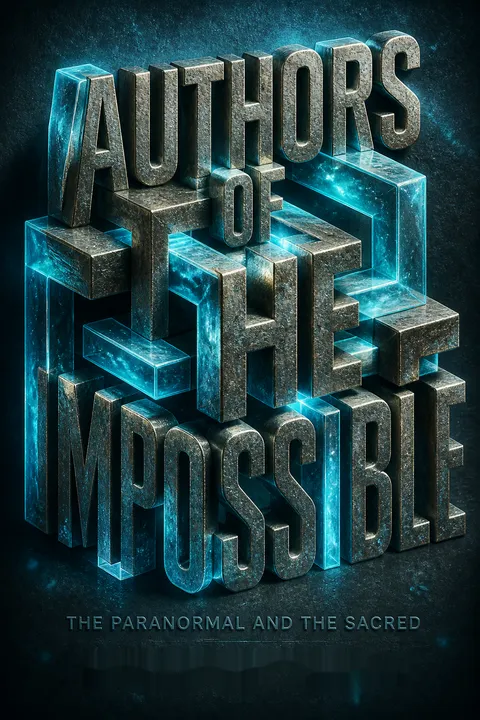
Make stories evidence, not verdicts. Kripal calls the four featured thinkers authors of the impossible because their writing makes anomalous events available for serious interpretation. The phrase also points to a feedback loop: people encounter events through stories and then tell stories that shape future encounters. Reading can expose assumptions, but resemblance between fiction and testimony does not prove either copying or paranormal transmission.
This feedback loop connects literary history to the study of memory and expectation. People do not perceive events as blank recording devices; prior images can organize what becomes salient and how it is later recalled. Yet influence is not a complete explanation, especially when witnesses report details they did not knowingly encounter in fiction. The productive question is not whether imagination contaminates reality, but how imagination, perception, and public narrative interact, and what evidence could distinguish their roles.
Use Fátima to see how interpretation can turn one event into rival worlds.
One spectacle, competing readings. In 1917, three children in Fátima, Portugal, reported a luminous woman appearing over six months. On the final visit, crowds described the sun spinning, changing color, and seeming to descend. The Catholic tradition identified the figure as Mary. UFO researchers have emphasized reports of buzzing, unusual light, a disk-like object, and physical effects. Others have proposed natural explanations involving atmospheric or electromagnetic conditions.
Keep the evidence layered. Kripal does not settle the case. He uses it to show how testimony, religious expectation, bodily experience, and later interpretation can produce sharply different accounts of the same event. The useful question is not simply which label wins, but which details are independently documented, which vary across witnesses, and how each explanation handles what remains unexplained.
Fátima demonstrates why a public event can become a struggle over authority as well as a puzzle about perception. The Church’s interpretation gave the experience a durable devotional form, while later researchers reclassified details through other frameworks. Neither classification is neutral, and neither should be treated as an exhaustive account. A layered analysis asks what witnesses shared, what differed, and how institutions shaped memory. That method respects religious meaning without confusing institutional certainty with proof of a particular cause.
Analysis
The book’s central achievement is methodological rather than evidentiary. Kripal does not establish that telepathy, survival after death, or extraterrestrial contact is real. He argues that established intellectual habits often make these questions disappear before they can be examined. His four figures supply distinct ways to resist that disappearance: Myers builds a psychology capacious enough to include anomalous reports; Fort uses comparison to expose the exclusions of official knowledge; Vallee links UFO narratives to folklore and cultural change; Méheust traces how institutions shape the possible and impossible.
The approach is most persuasive when it distinguishes the reality of an experience from the proposed cause. A witness can be credible, an event consequential, and its explanation unsettled. This allows testimony to matter without converting it into proof. It also opens a productive conversation between history, psychology, literature, and the natural sciences. The book’s attention to narrative is especially valuable because reports are not raw data. They are remembered, told, classified, and sometimes suppressed.
Its most serious vulnerability is the slide from possibility to ontological suggestion. Repeated anecdotes, striking parallels, and institutional neglect can demonstrate that a subject deserves study, but they do not establish a paranormal mechanism. Some of the book’s interpretations, especially its evolutionary and nonlocal models of mind, are far more speculative than its historical arguments. The author’s insistence on uncertainty helps, yet his lyrical treatment can make an intriguing hypothesis feel more supported than the evidence warrants.
That tension is also the book’s point. The reader is asked to resist both credulity and reflexive debunking, while recognizing that suspending judgment is not the same as suspending standards. A robust future inquiry would preserve first-person accounts, compare them systematically, document physical claims independently, and examine how cultural expectations shape reports. The lasting challenge is not to believe the impossible. It is to make room for questions that current categories cannot answer, without mistaking that room for an answer itself.
Review Summary
Authors of the Impossible received mostly positive reviews, with an average rating of 4.14/5. Readers found it fascinating, thought-provoking, and well-written, praising its exploration of paranormal phenomena and religious mysticism. Some appreciated Kripal's challenging of materialist worldviews and his connections between spiritualism, UFOs, and consciousness. Critics noted the academic language and complex sentence structures as potential barriers. Overall, the book was seen as an important contribution to the study of religion and the paranormal, though some found it speculative or difficult to follow.
People Also Read



Glossary
psychical
sacred in scientific transitKripal uses psychical for phenomena and inquiries that carry religious questions into a modern scientific register. The term is associated with nineteenth-century psychical research, including the Society for Psychical Research, founded in London in 1882. In this book, it names a historical and interpretive zone between traditional religious claims and explanations framed as natural law.
paranormal
sacred in parascientific storyKripal defines the paranormal as the sacred moving beyond both conventional religion and science into a speculative, parascientific register. Paranormal reports often combine claims about physical events with mythic or narrative meaning. The term does not itself certify that an event occurred as reported or that a supernatural cause is responsible.
subliminal Self
awareness beyond the waking egoFrederic Myers’s term for aspects of personality that lie outside ordinary, waking awareness. Myers treated these processes as potentially conscious in their own way, not merely as unconscious material. Dreams, creative insight, trance, and other altered states could reveal parts of this wider self, which he believed might possess capacities unavailable to the everyday personality.
supernormal
unusual capacities within natureMyers’s term for phenomena that exceed ordinary experience while remaining within nature and its laws. He used it for capacities that might indicate a more advanced form of psychological development, rather than an interruption of natural law. Telepathy and precognition were among the reported phenomena he considered under this heading.
telepathy
mind-to-mind information beyond the sensesA term Frederic Myers introduced in 1882 for the communication of impressions between minds without recognized sensory channels. Myers used it to interpret reports such as dreams coinciding with a distant death. He regarded it as a hypothesis grounded in collected cases, not as an ordinary communication process under conscious control.
Intermediatism
provisional knowing between systemsCharles Fort’s name for a deliberately unfinished way of knowing that avoids treating either religious belief or scientific explanation as final. Intermediatism favors collecting and including anomalous data that established systems exclude. It remains provisional, since any framework can become an authority that later evidence challenges.
occulture
hidden currents in public cultureA term for the reservoir of esoteric, mystical, and alternative beliefs and practices circulating within Western culture, often outside elite institutions. In Kripal’s account, occulture is not simply a survival of premodern religion. It is shaped by modern science, secularization, popular media, and the continuing search for sacred meaning.
description-construction
describing shapes what can be experiencedBertrand Méheust’s idea that describing a phenomenon can help make it socially and psychologically available. Language, institutions, and accepted theories influence what people notice, report, and recognize as real. The concept does not mean that culture creates every event, but that experience and its interpretation are shaped by historical settings.
fantastic
uncertainty between natural and impossibleFollowing literary theorist Tzvetan Todorov, Kripal uses the fantastic for experiences that leave the witness or reader undecided between an ordinary explanation and a reality governed by unknown laws. The uncertainty is essential. Once an interpretation settles fully on illusion or supernatural fact, the experience leaves the fantastic in Todorov’s sense.
About the Author
Other books by Jeffrey J. Kripal

Download PDF
Download EPUB
.epub digital book format is ideal for reading ebooks on phones, tablets, and e-readers.








