

Key Takeaways
Read a meltdown as information about distress, not proof of bad parenting.
Look beneath the outburst. Wallace-Iles tells the story of raising three autistic sons and a daughter with Asperger’s, amid exhausting routines, public judgment, and frequent crises. Her central reframing is that behavior others call naughty or defiant may reflect sensory pain, anxiety, confusion, or difficulty communicating. A child who refuses a meal, bolts from a room, or lashes out may be responding to a problem adults have not yet identified. The parent’s task is to investigate what happened before the behavior, what the child may be experiencing, and what helps them recover.
Keep safety in view. This approach does not mean every difficult action is caused by autism or that boundaries disappear. It means interpreting behavior before choosing a response, and protecting the child and others while doing so.
The useful shift is from moral judgment to curiosity. In behavioral science, looking at what precedes and follows an action can reveal patterns that punishment alone obscures. That perspective can make a parent more effective and less ashamed. It also protects against an opposite mistake: explaining every behavior through autism and overlooking pain, illness, learned patterns, or ordinary frustration. The book is strongest when it treats behavior as evidence to investigate, not as a complete explanation in itself.
Reduce sensory friction before demanding that a child tolerate the ordinary.
Change the conditions. The book describes sensory processing difficulties: trouble filtering or interpreting information from sound, light, touch, taste, smell, movement, and body position. A grocery store can combine flickering lights, trolley noise, strong food smells, and crowded aisles into an overwhelming experience. Clothing labels, food textures, or a familiar product in changed packaging can also matter intensely. Some children avoid sensations; others seek them, and the same child may respond differently in different places.
Adjust one thing at a time. Wallace-Iles suggests noticing patterns, then testing practical changes such as quieter spaces, softer clothes, plain plates, ear defenders, or familiar foods. The point is not to create a perfect world, but to make necessary situations more manageable.
This is a strong example of person-environment fit: difficulty does not reside only in the person, but also in the demands of a setting. Small adjustments can prevent distress and make participation possible, often benefiting other people in the room as well. The caution is that sensory preferences are individual. A list of common sensitivities is a starting point for observation, not a checklist that proves autism or predicts what a particular person needs.
Make hidden instructions explicit, and teach new skills in manageable steps.
Say the missing part. The author’s example of teaching tea-making shows how a supposedly simple task contains many steps, from filling the kettle to returning the milk to the fridge. Instructions such as putting milk in a cup may leave out actions that another person assumes are obvious. A child following words literally is not necessarily being difficult; the request may be incomplete from their perspective.
Build on what matters. Wallace-Iles describes using her children’s interests in trains, LEGO, and dinosaurs to teach concepts and encourage new experiences. Visual schedules, extra processing time, and breaking a task into small parts can reduce uncertainty. She also recounts teaching her son to answer a greeting explicitly. His first response, a literal version of “hello back,” became a bridge to understanding the social purpose of replying.
Explicit instruction is not a concession to low ability. It is a way to expose assumptions that usually remain invisible, and it resembles good teaching for any learner tackling a complex sequence. The child’s interests can provide motivation and shared attention, turning instruction into collaboration. One nuance matters: social teaching should increase understanding and choice, not simply train a child to imitate expected behavior. A useful skill helps the autistic person communicate or navigate a situation on their own terms.
Use diagnosis to secure understanding and support, never as a ceiling on potential.
A label can open doors. Wallace-Iles argues that an autism diagnosis helped her children access educational support and understand why they struggled. Without that explanation, children may instead be called lazy, rude, or unintelligent. She compares diagnosis to a tool for getting help, not a permanent verdict on what someone can do.
Do not confuse a snapshot with a future. One son, Dominic, was described by specialists as profoundly autistic and unlikely to speak or live independently. As an adult, he lived away from home, completed a university degree in law and politics, and had friendships and a relationship. His story shows why forecasts should not be treated as certainties. It does not mean every child will follow the same path, or that substantial support needs are trivial.
Diagnosis can serve two roles at once: it can grant access to accommodations, and it can shape expectations. That tension makes the author’s distinction between a label and a life important. Dominic’s trajectory powerfully challenges premature certainty, but exceptional progress should not become a new standard used to judge people whose needs remain high. Support planning is more useful when it describes specific abilities, barriers, and assistance required, rather than reducing a person to a single functioning category.
Treat overload differently from a tantrum, and respond before distress peaks.
Watch for escalation. The book distinguishes a tantrum, framed as an attempt to obtain something, from a meltdown, described as a loss of control after too much information, anxiety, or frustration accumulates. It lists possible early signs such as pacing, becoming rigid, covering the ears, or asking repeated questions. A meltdown may involve screaming, property damage, or self-injury, followed by withdrawal or exhaustion. Wallace-Iles stresses that prevention is not always possible, particularly when a child must face an unavoidable demand.
Look for the trigger. A child who behaves calmly at school and erupts at home may be releasing strain after holding it in all day. The author calls this the delayed after effect. Predictable routines, transition warnings, communication aids, and a calm recovery space may help.
The distinction encourages adults to ask whether a child still has control and what demands are exceeding their capacity. That can prevent a punitive response from adding stress to distress. Still, the categories are not always cleanly separable: a child can be overwhelmed and also learn that certain behavior changes what adults do. The practical question is not which label wins, but what maintains safety, reduces distress, and helps the person communicate more effectively.
Grieve changed expectations without mistaking grief for a lack of love.
Make room for mixed feelings. Wallace-Iles describes parents grieving not the child they have, but an imagined path: easy conversation, school milestones, independence, or uncomplicated affection. She calls grief a response to expectations that have been disrupted, and notes that sadness, anger, guilt, and acceptance can recur rather than arrive in a neat sequence. Feeling overwhelmed or wishing life were less difficult does not mean a parent loves their child less.
Return to the present. The author found it helpful to replace predictions about a child’s whole future with small, reachable steps. She also describes cake decorating as a private source of pleasure during years of relentless caregiving. The lesson is to notice progress and preserve some activity, relationship, or support that belongs to the caregiver too.
Naming grief can relieve shame because parents often feel pressure to perform gratitude and optimism. The book’s comparison to bereavement is emotionally vivid, but the losses are not equivalent to a child’s death; the analogy is most helpful when it validates adjustment without collapsing distinct experiences together. Its practical emphasis on small goals also resists catastrophic forecasting. A parent’s wellbeing is not a luxury, although individual hobbies cannot substitute for respite, practical help, or professional care when those are needed.
Persist with schools and relatives, but turn conflict into specific requests.
Explain what helps. The author recounts relatives denying autism because older family members had behaved similarly, or insisting that discipline would solve the problem. Her father changed his view after reading a novel featuring an autistic character and then became a source of support. The story suggests that resistance can sometimes come from fear, unfamiliarity, or a painful history of disability rather than simple indifference.
Advocate with evidence. Wallace-Iles urges parents to speak early with teachers, document what a child finds difficult, and propose concrete accommodations. Her examples include quiet areas, visual schedules, reduced sensory clutter, and more time to process instructions. The special educational needs system she describes is imperfect and slow, so she recommends persistence alongside cooperative relationships with staff.
A specific request is easier to consider than a general demand to “understand autism.” Written examples of what happens, what has helped, and what support is being requested can also make a child’s needs legible to people who have not seen them at home. Yet the burden should not fall entirely on parents to redesign institutions. Effective advocacy matters, but schools and public services remain responsible for accessible systems, clear procedures, and competent support.
Protect caregivers from burnout instead of treating endurance as a virtue.
Do not confuse survival with health. Wallace-Iles describes years of severe sleep loss, isolation, and constant readiness for the next crisis. She rejects the idea that autism parents are super-parents, presenting herself instead as an ordinary person adapting to unusually demanding circumstances. The book encourages caregivers to ask for help, notice their own emotional warning signs, and seek professional support when distress becomes serious.
Keep a source of renewal. The author’s cake-decorating hobby offered a small refuge and a sense of achievement beyond caregiving. Her practical message is not that every parent must find a hobby, but that a life narrowed entirely to managing crises becomes harder to sustain. Respite, supportive relationships, and care for one’s health are part of caring for a child.
Caregiving research often emphasizes that sustained stress affects both the caregiver and the quality of support they can provide. This book makes that point through lived detail rather than abstract advice. Its celebration of personal resilience is moving, but resilience should not become an excuse to leave families without services. Individual coping skills can help, while adequate sleep, material assistance, and dependable respite address conditions that positive thinking cannot remove.
Reject miracle cures, and verify treatment claims with qualified clinicians.
Desperation invites exploitation. Wallace-Iles condemns purported cures involving bleach, exorcism, and other harmful practices, warning that families facing distress can be vulnerable to promises of a quick fix. At the same time, the book endorses complementary approaches, including cranial osteopathy, hypnosis, and the Emotional Freedom Technique, based largely on personal experience. These accounts are part of the memoir, not proof that the methods treat autism.
Separate support from cure. The author’s broader aim is to reduce distress and help autistic people pursue their own goals, rather than erase their identity. On vaccination, she rejects the claim that the MMR vaccine causes autism, but some of her surrounding explanations rely on personal family comparisons. Readers should use current medical guidance and qualified clinicians for health decisions, not anecdotes or online cure claims.
The book’s warning about abusive cures is essential, especially because fear can make implausible promises feel attractive. Its own complementary-treatment recommendations need the same scrutiny it asks readers to apply elsewhere. Personal improvement after a treatment does not establish that the treatment caused the change, and evidence for a treatment should be judged separately from the sincerity of the person recommending it. Large bodies of research do not support a causal link between MMR vaccination and autism.
Accept autistic identity while easing distress and expanding real choices.
Hold difficulty and value together. Wallace-Iles rejects the idea that autism is simply a disease to remove, while acknowledging the fear, pain, and exhaustion that can accompany it. Her family stories include intense interests, deep attachments, unusual humor, and hard-won achievements, alongside sensory distress, communication barriers, and dependence on support. The book’s memorable image of people experiencing the world in high definition is the author’s metaphor for sensory and emotional intensity, not a description that applies equally to everyone.
Support without demanding sameness. The author favors learning, accommodations, and encouragement while opposing the notion that autistic people should be left without help to prove acceptance. The aim is not to make a person appear normal, but to reduce barriers and help them live as fully and safely as possible.
This position avoids a false choice between celebrating difference and addressing disability. The social model of disability helps clarify the balance: environments can create barriers, while some impairments and support needs remain real even in an accommodating setting. The author’s emphasis on strengths counters deficit-only portrayals, but claims that autistic people are uniformly gifted, empathic, or unusually spiritual would replace one stereotype with another. Respect begins with asking what this individual values and needs.
Analysis
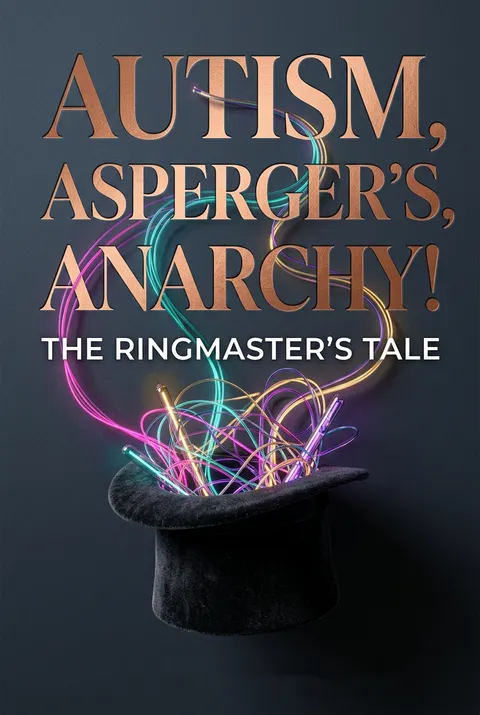
This book is part family memoir, part practical guide, and part argument against shame. Its organizing image is the ringmaster managing a noisy, unpredictable household. That image gives the advice emotional credibility: strategies emerge from the author’s attempts to understand four children whose needs differed, not from an idealized parenting manual. The most durable ideas are concrete. Notice what precedes distress, make hidden instructions explicit, adapt environments, use interests to build connection, and treat diagnosis as a route to support rather than a forecast of a person’s life.
The narrative’s strongest evidence is its family stories. Dominic’s movement from being described as unlikely to speak to completing university is a forceful warning against treating an early assessment as destiny. Yet an exceptional outcome cannot prove that every child can reach the same milestones, and achievement should not be the measure of a worthwhile life. The book sometimes shifts from one family’s experience to broad claims about autistic people, gender, genetics, empathy, or cognition. Such generalizations need caution. Autistic people vary widely, and the author’s explanations of brain processing are simplified models, not a complete account of autism.
The health material especially requires careful reading. The book correctly rejects the MMR-autism claim and condemns dangerous purported cures, but it also promotes complementary therapies on the strength of personal experience. Those endorsements should not be mistaken for clinical evidence. The work is most valuable when it offers humane observation and practical adaptation, and least reliable when it treats anecdote as proof. Its enduring contribution is a stance: take distress seriously without reducing a person to it, and keep support focused on the life the autistic person wants, not merely the behavior others find convenient.
Glossary
Sensory processing disorder
Difficulty handling sensory inputThe book uses this term for difficulty taking in, interpreting, and responding to sensory information such as sound, light, touch, taste, smell, movement, and body position. It describes both avoidance of particular sensations and seeking them out. The author uses the term to explain why ordinary settings or activities may become uncomfortable or overwhelming for some autistic people.
Delayed after effect
Stress released after copingWallace-Iles’s term for a pattern in which a child holds together in a demanding setting, such as school, then releases accumulated distress at home. She interprets home as a safer place where the child can stop suppressing reactions. The phrase is the author’s explanatory label, not a formal clinical diagnosis.
Functioning labels
Broad ability shorthandTerms such as high functioning and low functioning used to summarize how an autistic person manages particular tasks or expectations. The book argues that these labels can obscure uneven abilities and changing support needs. It accepts that classifications may help services organize support, while warning that they cannot predict a person’s full potential or describe their whole life.
Pathological demand avoidance
Anxiety around demandsA term the book applies to a pattern of intense avoidance of everyday requests, which may include refusal, delay, negotiation, distraction, or distress. Wallace-Iles explains the behavior as a response to anxiety and perceived loss of control, rather than simple defiance. The term’s status and use vary, so it should not be treated here as a settled diagnosis.
High Definition humans
Metaphor for intense experienceWallace-Iles’s metaphor for autistic people who may experience sensory details, emotions, or interests with unusual intensity. It captures the book’s attempt to describe both the strain and the vividness of life on the spectrum. It is an image from the author, not a clinical category or a claim that every autistic person experiences the world in the same way.
Emotional Freedom Technique
Tapping-based self-help methodA technique the author recommends that combines tapping on selected points on the body with attention to a troubling feeling, thought, or physical discomfort. She presents it as a way to reduce distress. This definition describes the book’s account and does not establish the method as an evidence-based treatment for autism or as a substitute for clinical care.
Ongoing Traumatic Stress Disorder
Author’s stress analogyWallace-Iles informally coins this phrase, abbreviated OTSD, to describe the chronic strain she associates with caring for autistic children through recurring crises and sleep deprivation. She contrasts it with post-traumatic stress after an event has ended. It is an analogy used in the book, not a recognized diagnostic term.
Download PDF
Download EPUB
.epub digital book format is ideal for reading ebooks on phones, tablets, and e-readers.








