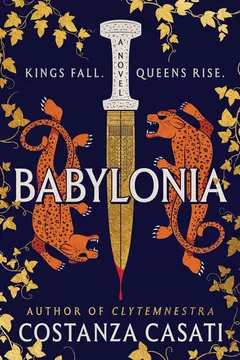


Plot Summary
Prologue
Derceto, a healer abandoned by the man she loves, brings her infant daughter to his temple and demands that he acknowledge the child. When he rejects them, she stabs him at the altar, then leaves the baby on a rock beside a lake and ties herself to a stone before drowning.
The story opens with Semiramis already at the center of a wound inherited from her mother: rejection, violence, and a choice that leaves a child to survive without her.
The prologue turns Semiramis’s origin into more than a miraculous survival tale. Derceto’s violence is both punishment of the man who abandons her and the last act of someone who cannot imagine a future beyond rejection. Her daughter inherits no stable family story, only rumors and a conspicuous absence. That absence becomes a space Semiramis can fill with invention, ambition, and fear. By showing the mother’s choice before the daughter’s rise, the novel asks whether a life can escape the emotional conditions of its beginning, or only give them a different shape.
The Governor’s Gold
In Eber-Nari, Semiramis watches soldiers shoot a rider from his horse and discovers he is the province’s governor. She offers to guide him to the river, but only in exchange for the gold rings braided into his hair. Before she can move him, the soldiers kill him and threaten to punish her as a thief.
Semiramis escapes down a ravine and hides beneath tree roots until night. The danger is familiar: Simmas, the shepherd who raised her, beats her, and now plans to marry her off. With the empire’s civil war making roads perilous and her future at home narrowing, she sees the stolen rings as both wealth and a way out of Mari.
The rings make Semiramis’s first act of mercy inseparable from calculation. She helps the wounded governor, but she also takes payment because she has learned that survival requires turning other people’s power to her advantage. Her escape is physical, yet the deeper flight is from a household where her body is treated as an asset to be exchanged in marriage. The scene establishes her central contradiction: she is capable of compassion, but compassion alone has never protected her. She watches, weighs risk, and acts before anyone grants her permission.
A Prophecy at Mari
News reaches Mari that Shamshi-Adad has defeated his rebel brother Assur-danin and appointed Onnes, his trusted governor, to secure the western province. Semiramis watches the villagers prepare a feast for the new ruler and meets Onnes by the river, where their shared histories of maternal loss draw them together.
At the feast, she tells him her mother drowned herself; he recognizes the loneliness beneath her guarded manner. A diviner then predicts that a woman clothed in purple and gold will become as great as Babylon. Semiramis cannot know whether the prophecy is a promise or warning, but she connects its image of power with Onnes and the chance to leave Mari before Simmas can arrange her marriage.
The prophecy gives Semiramis’s private longing a public, almost cosmic scale, but it does not tell her how to reach its destination. Its ambiguity lets her project both hope and danger onto a future she has not earned yet. Onnes matters for the same reason: he is not simply a rescuer but a person who recognizes that she has been shaped by abandonment. Their bond begins in mutual loss, although they approach vulnerability differently. Semiramis wants a future she can seize; Onnes conceals his past behind composure. The prophecy draws those differences toward the same political world.
The Price of Leaving
Baaz accuses Semiramis of stealing his seals, and Simmas finds the governor’s rings hidden beneath her sleeping mat. When Simmas beats her and demands a confession, she refuses to return to the obedience he expects. She escapes to Onnes’s camp and claims Simmas stole the rings. Onnes knows she is hiding something, but he uses the evidence to punish Simmas under Assyrian law, ordering his hand cut off.
Amon condemns Semiramis for making their father suffer, and she leaves Mari without her brother’s blessing. On the road, Onnes reveals that he recognized her from the governor’s death and knows she took the rings herself. He still offers marriage and a place in his household, which she accepts.
Semiramis does not simply flee abuse; she uses the law that has threatened her to make her abuser answer for his own crime. The punishment is not clean justice. She lies, exposes Simmas to public humiliation, and loses Amon, the person who had offered her genuine affection. Her departure therefore costs more than a village home. It breaks the last relationship that might have kept her connected to an ordinary life. Onnes’s acceptance of her deception is equally consequential: he sees her capacity for strategy and treats it as strength, making their marriage a pact between survivors rather than a rescue without conditions.
The Palace of Kalhu
Onnes brings Semiramis to Kalhu, where glazed palaces, temples, and terraced gardens dwarf everything she has known. At court she meets King Ninus, Onnes’s childhood friend and half-brother, though she does not yet know their blood connection. Ninus barely acknowledges her, while his mother, Nisat, assesses her as a potential threat.
In Onnes’s palace, Semiramis begins learning the household’s routines and recruits Ribat, a cautious slave who knows the city’s hidden channels, as her eyes and ears. He teaches her to read cuneiform. She also persuades Onnes to train her with weapons, turning the physical helplessness of her childhood into a skill she can practice rather than merely fear.
Kalhu offers Semiramis magnificence, but its scale also makes her feel newly vulnerable. The palace’s beauty is built over a hierarchy in which a common-born wife can be watched, traded, or discarded. Her first response is not to imitate aristocratic ease but to learn: she studies the household, cultivates Ribat, and asks Onnes to teach her how to fight. Literacy and combat become parallel forms of self-defense. One lets her read the rules that govern power; the other lets her resist the force used to enforce them. Her ambition grows through practical knowledge, not inherited status.
The King’s Hidden Brother
The spymaster Sasi tells Semiramis that Onnes is the illegitimate son of the late King Shalmaneser, making him Ninus’s half-brother and a possible rival to the throne. Onnes had concealed this not because he wants the crown, but because royal blood has brought him suspicion and shame. Semiramis also learns that Ninus’s attachment to Onnes reaches beyond ordinary friendship.
Nisat later confirms that her son loves Onnes, leaving Semiramis to face a marriage shaped by a bond she cannot control. Meanwhile, the Urartian princess Taria lives as a political hostage in the palace. Semiramis recognizes that court relationships are never merely private, because every intimacy can alter the balance of power.
The revelation complicates Semiramis’s marriage before it becomes a conventional rivalry. Onnes’s concealed parentage is a political fact with emotional consequences: he is close enough to power to be threatened by it, yet has learned to treat his own claim as a danger rather than an entitlement. Ninus’s love for him gives their friendship an intensity that Semiramis can perceive but cannot easily name. The palace turns intimacy into information, and Sasi’s disclosure demonstrates that knowledge itself is a form of leverage. Semiramis’s challenge is to understand the bonds already in place without mistaking access for belonging.
A Leopard in Court
Semiramis trains at the royal grounds and watches Onnes lose to the formidable commander Ilu, whose taunts expose the old rivalries surrounding the king. During a public lion hunt, she sees Ninus kill with restraint while the Babylonian prince Marduk takes pleasure in wounding animals. Afterward, Semiramis finds a captive leopard and persuades its handlers to let her keep it.
Marduk later insults her and treats her as a woman available for his amusement; she refuses him without submitting to his status. These encounters bring her into the court’s political orbit. Ninus begins paying closer attention, while Sasi sees in Semiramis someone able to read danger and answer it without waiting for protection.
The leopard gives visible form to the quality Semiramis is trying to preserve in herself: wildness that cannot be domesticated simply because it has been captured. Her refusal of Marduk is more than a personal rebuff, since his rank usually makes other people’s consent seem irrelevant. At the same time, the lion hunt exposes competing models of power. Ninus shows discomfort with killing, Marduk enjoys domination, and Ilu embodies the empire’s practiced violence. Semiramis learns that the court does not reward virtue consistently. To survive there, she must read character as carefully as she reads weapons.
The Council Without Onnes
When Ninus prepares to campaign east toward Bactria, Semiramis asks him to protect Onnes, who has confessed that war can make him want to kill without limit. Ninus leaves with the army, and Semiramis is left in Kalhu to manage a household and a growing political role. She enters the royal council in Onnes’s place, where Sasi, Ilu, and Marduk test her authority.
Marduk later corners her at the training ground and tries to force himself on her. Ribat invents a summons from Sasi to draw her away, saving her from immediate assault and from the reputational damage Marduk could inflict. Semiramis realizes that the danger is not only violence, but the court’s ability to turn it against its victim.
Semiramis’s council seat marks a transition from learning power at close range to exercising it in public. Yet political access does not erase the gendered limits around her. Marduk can threaten her body and then rely on the institution to question her conduct rather than his. Ribat’s intervention is therefore a political rescue as much as a physical one. It also reveals how precarious Semiramis’s authority remains: she has allies, but their safety is tied to her standing. Her growing influence depends on protecting a network of people who are themselves exposed to the same hierarchy.
Semiramis Joins the Army
After more than a year without reliable news, Bel, Ilu’s son, returns from the siege of Balkh seeking fifty climbers to reinforce the army. He admits privately that Assyria is losing men and cannot breach the city’s walls. Semiramis offers to join, arguing that her years climbing the cliffs around Mari make her more useful than many soldiers.
Bel agrees, though he warns that Onnes may send her back. She leaves Kalhu with the climbers, carrying her own weapons and concealing her fear beneath resolve. The journey takes her through the Zagros mountains and into devastated Bactrian territory, where burned settlements and abandoned bodies show what the army has already done in the name of conquest.
Semiramis’s decision to follow the army is a deliberate rejection of the protected role assigned to a governor’s wife. She does not confuse courage with invulnerability; she knows the campaign may kill her, but staying behind would mean letting others decide what her life is for. The devastated route also strips away the court’s polished account of conquest. The empire’s glory reaches her as burned homes and bodies, not as a victory inscription. Her participation will make her more powerful, but it will also make her responsible for consequences she could previously observe only from a distance.
The Gate of Balkh
Semiramis reaches the Assyrian camp and finds Onnes exhausted, wounded, and furious that she has crossed the empire to join him. Ninus permits her to remain because the siege has stalled and the army needs climbers. When Ilu’s plan sends the climbers up the exposed slope, Semiramis points out that earlier attempts have left the hillside covered with bodies.
She proposes a riskier route up the steep ravine to the city’s archer posts, followed by a fire in the acropolis to distract the defenders. Bel accepts the strategy after scouting confirms the climb is possible. The plan gives a small team a chance to open the city from within, but success depends on reaching the posts before dawn.
The siege forces Semiramis to make a kind of argument the council has rarely needed to hear from her: she must prove that observation can matter more than inherited command. Her plan emerges from looking at the dead on the slope and refusing to treat repeated failure as courage. Ninus’s permission is not a gift of trust so much as a constrained military decision, which makes the coming action a test of her judgment. The scene also changes the marriage dynamic. Onnes’s fear for her is real, but his instinct is to send her away; Semiramis insists on being treated as an agent in the danger.
Fire Above Balkh
At night, Semiramis and the climbers scale the ravine toward the archer posts. A guard spots them, and an arrow kills one of Bel’s men; another climber falls as Semiramis reaches the first post. She kills its guard, then follows Bel toward the acropolis. Onnes leads his soldiers through a foul drainage tunnel, but Bactrian fighters ambush them in the streets.
The climbers meet resistance too. Bel and Luqa are killed, yet Semiramis retrieves a fallen torch and ignites the prepared wood. The fire draws defenders away from the gates. During the assault, she pulls Ninus out of danger and hides with him beneath corpses until the patrol passes. The city falls, but victory leaves her wounded and surrounded by burning homes.
The plan succeeds, but the cost prevents success from becoming a simple proof of Semiramis’s worth. She acts decisively under pressure, yet she cannot save Bel or Luqa, and the fire that opens the city also consumes places where civilians live. Ninus and Semiramis save one another in the chaos, creating intimacy through shared dependence rather than courtship. Their survival beneath dead soldiers captures the campaign’s moral structure: the living advance by using the bodies of the fallen. Semiramis has crossed into a world where courage changes outcomes, but cannot make those outcomes clean.
The Cost of Conquest
After the fall of Balkh, Assyrian soldiers burn the city’s temples, kill the wounded, and impale the leaders they captured. Semiramis sees Onnes mutilate a prisoner and confronts him with the brutality he once described as necessary. Ninus, sickened by the slaughter, listens when she asks to take Bactrian women and children under her protection.
He agrees, allowing her to arrange their resettlement in Eber-Nari. At a victory gathering, Semiramis tells the story of Gilgamesh and Enkidu to honor the dead, while Ninus shares his grief with her. She returns to Kalhu with a chest wound, the rescued captives, and a new knowledge: she has helped win the city, and cannot separate that achievement from its victims.
Balkh changes Semiramis’s understanding of what it means to rise. She can use authority to spare some captives, but that mercy operates inside a conquest that has already destroyed their city and killed people she tried to save. Her influence is real, yet partial. Onnes’s participation in torture makes clear that shared trauma does not guarantee shared conscience; they have survived the same campaign and interpret it differently. Ninus’s grief creates a fragile connection with Semiramis, grounded in the dead they cannot recover. The episode makes moral responsibility a consequence of power, not an alternative to it.
Ribat Leaves the Shadows
Back in Kalhu, Semiramis learns that Ribat’s mother was among the slaves Nisat had poisoned after they witnessed the queen’s affair with Ilu. Ribat also carries a secret from the civil war: he saw Onnes kill Shalmaneser, Ninus’s father, though Ninus believes Assur did it.
When Nisat has Ribat beaten to uncover Semiramis’s private movements, Semiramis treats his wounds and sends him to train as a free scribe, protecting him from further palace retaliation. Ribat leaves slavery with the literacy he taught himself by studying scars. His freedom gives Semiramis a trusted ally, but the secret he preserves will later expose a truth that could shatter the king’s bond with Onnes.
Ribat’s story runs alongside Semiramis’s ascent, but it begins from a different kind of confinement. She fights to become visible in a world that dismisses her; he survives by becoming difficult to see. Literacy offers him a way to enter the archive that has excluded people like his mother, while freedom does not erase the violence that shaped him. Semiramis’s decision to free him is an act of gratitude and practical care, not a claim that she has dissolved the hierarchy around them. His knowledge remains dangerous because the palace values secrets more than the people forced to carry them.
A Love That Betrays
Semiramis and Ninus grow closer as they share memories, grief, and the aftermath of Balkh. When Nisat seeks to marry Ninus to Taria, Semiramis discovers that the princess is pregnant by Marduk and persuades the queen to send her back to Urartu rather than trap her in a false marriage. Ninus eventually sends Taria home and admits his desire for Semiramis.
They begin an affair, despite Semiramis’s marriage to Onnes. Ninus then offers Onnes a political exchange: Onnes could marry Ninus’s daughter Sosanê, while Ninus takes Semiramis. Onnes refuses. The proposed arrangement turns private desire into a succession crisis, and Semiramis is caught between the man she loves and the husband who first carried her out of Mari.
The affair is not a clean escape from a loveless marriage. Semiramis and Ninus find recognition in each other, but their intimacy is entangled with Onnes’s history and the state’s demand that every relationship serve a political purpose. Ninus’s marriage proposal makes this entanglement explicit: he tries to transform desire into a new family arrangement, as if affection can be reorganized by royal decree. Semiramis’s decision to protect Taria from a forced marriage suggests that her ambition does not require treating every woman as a rival. Yet she cannot extend the same clarity to her own choices without injuring people she values.
The Father’s Murder
Onnes finally tells Semiramis that he killed Shalmaneser during the civil war, after confronting the king about the cruelty and rejection that drove Onnes’s mother to her death. Ribat’s account confirms the confession. When Onnes reveals the truth to Ninus, the king attacks him and cuts his head, but cannot bring himself to kill him.
Ninus has ruled for years believing Assur murdered their father, and his execution of Assur now rests on a false understanding of the past. Onnes calls out Ninus’s failure to act like a king, then leaves with his secret exposed. The truth does not free either brother; it makes the affection between them impossible to separate from guilt.
The revelation rearranges the moral meaning of Ninus’s kingship. He killed Assur to avenge a father whose actual killer was the man he loved, and Onnes allowed him to build an identity on that mistaken belief. Yet Onnes’s confession is not a simple act of honesty or repair. It arrives as an accusation, a demand that Ninus finally see the violence and shame Onnes has carried. Ninus’s inability to execute him shows both mercy and paralysis. The brothers are caught between competing forms of loyalty: truth to the dead, tenderness toward the living, and the demands of the throne.
Onnes Chooses the Blade
After the revelation, Onnes grows increasingly unstable, tormented by the memories of Balkh and by his own violence. When Ninus proposes that he marry Sosanê, Onnes hears the arrangement as another attempt to divide what remains between the brothers. He lashes out at Semiramis for her affair, while she confronts him over his inability to care for anyone beyond his dead mother.
Later, Ninus comes to Semiramis and Onnes finds them together. He draws his sword, but Semiramis steps between them. Onnes lowers the weapon, then turns it on himself. Ninus holds his dying brother, while Semiramis loses the husband who gave her a life beyond Mari and the man whose secrets she had hoped to survive.
Onnes’s suicide is shaped by more than jealousy. He has built his identity around emotional numbness, then discovers that the people closest to him can still wound him profoundly. His final choice interrupts the violence he might have inflicted on Semiramis or Ninus, but it also makes his pain irreversible for them. Semiramis cannot rescue him by understanding him, just as his love for Ninus never made him capable of trusting him. The death leaves Ninus with grief and Semiramis with guilt, showing how love can be genuine without being sufficient to undo a person’s damage.
The Battle at Dur
After Marduk takes Babylon’s throne and declares war, Ninus chooses to meet his forces at Dur rather than wait behind Kalhu’s walls. Semiramis discovers she is pregnant but keeps the news from him as he prepares to leave. Against Sasi’s warning, she follows with guards. Rain turns the battlefield to mud; Ninus fights among his soldiers, and Marduk’s allied forces are driven toward the river.
Semiramis reaches the camp after Ninus is badly wounded. She finds Marduk bound among the prisoners and kills him, ending the rival king’s claim but eliminating the chance of a negotiated settlement. Back in Kalhu, Ribat has the willow medicine that might reduce Ninus’s fever, but withholds it to avenge his mother.
Dur repeats the pattern that has defined Semiramis’s rise: she intervenes where established authority has failed, but the intervention carries an irreversible cost. Killing Marduk protects Ninus and secures Assyrian victory, while foreclosing diplomacy and helping leave Babylon’s succession unsettled. Her hidden pregnancy makes the battle personal in a new way, though she still acts as a political strategist. Ribat’s withheld medicine complicates the story’s moral arithmetic. His revenge answers an old injustice, but it is directed at a king who did not kill his mother and at a queen who trusted him. Power creates choices; it cannot guarantee that justice and mercy will coincide.
The Queen Takes Assyria
Ninus returns from Dur alive but weakened by his chest wound. Ribat’s withheld willow bark cannot reverse the fever, and Ninus dies while Semiramis tells him she is carrying his child.
Nisat orders Semiramis to leave Kalhu, but changes course when she realizes the unborn child could prevent Ilu’s family from controlling the throne through Sosanê. Semiramis argues that her child will inherit and that she will rule until then. Sosanê declines the crown, and Sasi and Ilu accept Semiramis’s claim.
She takes the royal name Sammuramat and announces plans to strengthen the empire and rebuild Babylon. Her ascent fulfills the prophecy, but it begins in bereavement, political calculation, and the knowledge that power cannot return the people she has lost.
Semiramis’s accession is not a triumph that cancels the cost of the story. She gains the authority she once imagined from the bottom of Mari’s social order, but the crown arrives only after Ninus dies and Onnes is gone. Her claim rests on pregnancy, a dynastic argument that protects her position while still tying it to a future male heir. At the same time, she refuses to disappear into the role of grieving widow. Her rule begins as a practical answer to a succession vacuum, yet it also challenges a system that has repeatedly treated women as instruments of inheritance rather than political actors.
Epilogue
Ribat watches Sammuramat’s public enthronement and remembers the former slave who taught him to read. Sasi later tells him that Semiramis has borne a son, Ninyas, and confronts him with the knowledge that he withheld medicine from Ninus. Semiramis learns that Ribat’s mother was among the slaves killed after witnessing Nisat and Ilu together.
She acknowledges his loyalty and his betrayal, but cannot promise forgiveness. Ribat returns to the scribal school and begins recording Semiramis’s rise. His account gives a woman and a former slave a place in the written record that their society would otherwise deny them.
The epilogue makes storytelling a final arena of power. Semiramis has secured a throne, but her legitimacy will depend on how people remember her; Ribat has escaped slavery, but must decide what to do with the truth he carries. Their relationship remains unresolved because gratitude cannot erase betrayal, and regret cannot restore Ninus. Still, Ribat’s writing offers a form of repair that neither law nor revenge could provide. The record does not absolve anyone. It ensures that lives dismissed as insignificant leave evidence behind, turning literacy into a fragile counterweight to the empire’s official monuments.
Analysis
Babylonia treats political ascent as a struggle over who gets to define a life. Semiramis begins as an orphan whose origins are narrated by village rumor. At court, people try to reduce her again, this time to beauty, marriage, or usefulness to a king. Her answer is to become difficult to categorize: she steals, learns, fights, governs, and ultimately claims authority in her own name. The novel does not present ambition as uncomplicated liberation. Semiramis’s climb depends on alliances, deception, and violence, and her victories repeatedly arrive beside losses she cannot repair.
The court’s relationships reveal how power distorts intimacy. Ninus loves people intensely but often sees what he hopes they are. Onnes protects himself by hiding feeling until it curdles into cruelty. Semiramis understands both men, yet understanding cannot make her responsible for saving them. Their triangle is not only romantic; it shows how friendship, desire, kinship, and political allegiance become entangled in a monarchy where private feeling can redirect armies and succession.
The book’s recurring concern with death gives these choices their pressure. The Epic of Gilgamesh offers the characters a language for grief, while Assyrian monuments promise that conquest can make a ruler immortal through memory. Semiramis eventually achieves a form of survival through power and legend, but the human cost remains visible in the dead of Balkh, Ninus’s loss, and the people she leaves behind. Ribat’s final act of writing offers a different answer to oblivion. His record cannot undo violence, yet it can preserve the lives and voices that imperial history would otherwise omit. The novel’s sharpest insight is that history is not only made by rulers. It is also made by the witnesses who decide what deserves to be remembered.
Review Summary
Babylonia is widely praised for its lyrical prose, immersive world-building, and complex characters. Most reviewers award it 4-5 stars, highlighting Semiramis as a compelling, morally nuanced protagonist whose rise from orphaned commoner to Assyrian queen feels both epic and intimate. The dynamic between Semiramis, her husband Onnes, and King Ninus is frequently cited as a standout element—messy, tragic, and utterly captivating. Some readers found the pacing uneven or felt less connected to it than Casati's debut, Clytemnestra, but the majority consider it an extraordinary mythological retelling.
Characters
Semiramis
The self-made rulerAn orphan raised in Mari, Semiramis is observant, curious, and unwilling to mistake survival for a life worth living. Her instinct is to study a situation before she acts, whether she is stealing from a powerful man, reading the politics of Kalhu, or learning to fight. She wants safety, but she has learned that safety is rarely granted to women without status, so she pursues power as a means of self-protection. Her compassion for people beneath her rank coexists with a willingness to deceive and take risks. This tension makes her neither a spotless heroine nor a simple climber. She is a person trying to build a future without becoming numb to what it costs.
Ninus
The grieving kingKing of Assyria and younger son of Shalmaneser, Ninus is thoughtful, literary, and troubled by the brutality expected of a ruler. His love of epics and his concern for ordinary people set him apart from the empire’s most ruthless men, but they do not free him from its machinery. He is deeply attached to Onnes and longs for relationships in which he can be known rather than obeyed. His mother’s ambition and his father’s violence taught him to confuse duty with strength, leaving him uncertain when mercy becomes weakness. Ninus’s mind repeatedly returns to old choices, especially the deaths and betrayals that made him king.
Onnes
The guarded governorGovernor of Eber-Nari, Onnes is a seasoned soldier and Ninus’s oldest confidant. He is controlled, perceptive, and difficult to read, qualities that help him survive at court but also keep affection at a distance. His mother’s suffering has shaped his mistrust and his fear of helplessness. He admires strength, often equating it with the ability to endure pain or inflict it first. His connection to Ninus is intimate and longstanding, while his marriage to Semiramis begins as an alliance between two people who have escaped painful pasts. Onnes can recognize another person’s courage more readily than he can offer emotional safety.
Ribat
The watchful scribeA palace slave who teaches himself to read by tracing the marks on his mother’s branded back, Ribat survives by watching carefully and staying unnoticed. He is cautious, intelligent, and hungry for a life in which his mind belongs to him. Semiramis treats him as a person and gives him the chance to pursue literacy, deepening his loyalty to her. Yet his memories of slavery and his mother’s fate make loyalty difficult to separate from anger. He notices the secrets powerful people leave in their wake, and his knowledge gives him both a route toward freedom and a dangerous responsibility.
Nisat
The kingmaker queenNinus’s mother and the most formidable woman at court, Nisat treats survival as a political discipline. Born the daughter of a cupbearer, she learned to gather influence through marriage, intelligence, and unyielding control. She loves her son, but often expresses that love by preparing him to rule rather than allowing him to be vulnerable. Her view of power is unsentimental: status protects a family, and hesitation invites replacement. She recognizes Semiramis’s ambition because she understands the conditions that produce it, even while resisting the threat Semiramis poses to her own authority.
Sasi
The keeper of secretsA Phoenician eunuch and the king’s spymaster, Sasi gathers information across the empire and uses it to shape political decisions. He is theatrical, perceptive, and rarely transparent about his motives. His own past as a deportee gives him insight into vulnerability, but he has survived by turning knowledge into influence rather than by trusting others. He recognizes Semiramis as a fellow outsider with unusual political instincts. Their alliance rests on mutual usefulness and a certain respect, though Sasi’s loyalty is ultimately tied to power and the crown.
Taria
The Urartian hostageA princess from Urartu held in Kalhu as a political hostage, Taria carries the memory of her mountain homeland and its losses. She is proud, observant, and resistant to being treated as a diplomatic object. Her friendship with Semiramis grows through shared outsiderhood, though they differ in what they are willing to sacrifice for influence. Taria’s relationship with Marduk exposes the danger of mistaking a powerful man’s attention for affection. She wants to preserve a connection to home even while navigating the court that confines her.
Marduk
The predatory princeA Babylonian prince and political hostage in Kalhu, Marduk is entitled, volatile, and accustomed to treating desire as permission. He enjoys violence and assumes that rank will protect him from consequences. His presence makes the alliance between Assyria and Babylon unstable, since his appetite for power is matched by his contempt for the people around him. He serves as a sharp contrast to Ninus: both are rulers shaped by dynastic competition, but Marduk embraces domination rather than questioning it.
Amon
The brother left behindSemiramis’s adoptive brother, Amon is kind, patient, and more at ease with village life than she is. He offers her genuine companionship and understands the danger of Simmas’s temper, but he cannot follow her into the future she wants. His affection does not prevent him from condemning her choices when she punishes Simmas. Amon represents the painful possibility of remaining loved while still being unable to remain together.
Simmas
The violent foster fatherChief shepherd of Mari, Simmas takes Semiramis in as an infant and treats her as a possible source of social and material advantage. He believes obedience and marriage are the proper limits of her life, and he uses violence when she resists. His devotion to royal codes and stories of conquest reflects a world in which the powerful define justice for everyone else. His relationship with Semiramis is one of care without tenderness and authority without trust.
Ilu
The empire’s warlordAssyria’s commander-in-chief and an ally of the royal family, Ilu is physically formidable, politically calculating, and proud of the empire’s military traditions. He believes strength is the basis of rule and regards mercy as a liability. His history with Ninus and Onnes includes both protection and abuse, which makes his loyalties difficult to reduce to friendship or enmity. Ilu understands how power is maintained and expects others to respect the same harsh logic.
Sosanê
The thoughtful princessNinus’s daughter is serious, bookish, and often lonely in the royal household. She inherits her father’s reflective temperament and has a strong sense of what marriage may demand of her. Sosanê listens closely to the adults around her, noticing motives that they would prefer to leave unspoken. Her reluctance to be treated as a piece of dynastic property gives her a quiet independence within a family built around succession.
Derceto
Semiramis’s lost motherA village healer, Derceto is a lonely woman whose lover abandons her when she becomes pregnant. Her despair and fury shape the story Semiramis inherits, though the daughter knows her mostly through rumor. Derceto’s brief presence establishes the emotional wound at the root of Semiramis’s life: a child left to build an identity without a mother’s account of who she was.
Assur
The rebellious crown princeNinus’s elder brother and the firstborn son of Shalmaneser, Assur is ambitious, impulsive, and accustomed to being treated as the natural heir. His resentment grows when his father entrusts military command to another man. Assur’s childhood bond with Ninus survives beneath rivalry, but the brothers inherit a court that turns affection into competition. He embodies the danger of a royal succession in which personal worth is measured through force.
Shalmaneser
The conquering kingNinus and Assur’s father, Shalmaneser rules through military power and expects his sons to embody the same tradition. His treatment of Onnes’s mother leaves a lasting mark on Onnes, while his lessons about kingship shape Ninus’s understanding of duty. His authority continues to influence the living through memory, guilt, and the political choices made in his name.
Bel
The climbers’ commanderIlu’s elder son, Bel returns from the Bactrian siege seeking skilled climbers to help the Assyrian army. He is practical enough to recruit Semiramis despite the objections of other soldiers, and he recognizes that the siege demands a different kind of attack. His decision gives her a path into the campaign.
Ana
The compassionate servantA slave in Onnes’s household, Ana is warm-hearted and attentive to the people around her. Her kindness offers a contrast to the palace’s guarded relationships, while her connection with Ribat gives him a rare experience of affection outside his service to Semiramis.
Zamena
The fearful housekeeperAn older slave in Onnes’s palace, Zamena has learned to survive by staying wary of powerful people. She knew Ribat’s mother and carries knowledge of the dangers that destroyed her. Her caution reflects the compromises forced on those who live close to authority without possessing any.
Baaz
The village rivalA blacksmith’s son in Mari, Baaz uses Semiramis’s outsider status and her mother’s reputation to humiliate her. His casual cruelty reflects the village’s narrow expectations for women and helps sharpen Semiramis’s refusal to remain where others can define her.
Plot Devices
The Diviner’s Prophecy
A future she can seizeAt a village feast, a diviner predicts that a woman dressed in purple and gold will become as great as Babylon. Semiramis carries the image with her into Kalhu, where it shifts from a tantalizing possibility to a source of political and personal pressure. A second prophecy predicts a king’s death through his own madness and the gain of his wife. The predictions do not dictate events so much as shape how characters interpret them. They create dramatic tension between fate and choice, especially as Semiramis must decide whether ambition is fulfilling a destiny or making one.
The Epic of Gilgamesh
A language for griefThe ancient epic gives Semiramis and Ninus a shared vocabulary for mortality, friendship, and the desire to keep loved ones from death. Semiramis uses Gilgamesh and Enkidu’s story to honor soldiers lost at Balkh, while its ideas return as Ninus and Semiramis confront their losses. The epic’s search for immortality also echoes Semiramis’s desire to leave a name that outlasts her life. It is not merely an ornament of the setting; the characters use its old story to interpret their own choices and grief.
The Royal Prophecy
A warning misreadThe bârû’s prediction that a king will bleed Assyria with his brother’s blood is initially associated with the civil war between Ninus and Assur. Its language gains a different meaning as hidden facts about Shalmaneser’s death emerge and Ninus’s emotional state deteriorates. The prophecy heightens the sense that political violence repeats itself, while the characters’ efforts to interpret it can push them toward the very dangers they fear.
The Assyrian Code
Law as weaponThe laws of Hammurabi’s code define punishments for theft, assault, and murder, but the novel shows how legal authority is exercised unevenly. Semiramis invokes the rules around theft to expose Simmas, while rulers use spectacle and bodily punishment to command obedience. The code gives characters a language for justice, yet it cannot ensure that the powerful are held to the same standards as everyone else. Its presence makes Semiramis’s later claim to rule especially charged: she must decide whether to wield the law as it was wielded against her or reshape what authority means.
Ribat’s Literacy
A slave enters the recordRibat learns cuneiform by tracing the marks burned into his mother’s back, then teaches Semiramis to read the tablets that govern palace life. Literacy gives him a private ambition and helps Semiramis understand the empire beyond its spoken rules. Later, his training as a scribe offers him a path beyond enslavement and a means to preserve the stories of people otherwise excluded from official records. The device connects reading with both personal freedom and historical memory.
Download PDF
Download EPUB
.epub digital book format is ideal for reading ebooks on phones, tablets, and e-readers.








