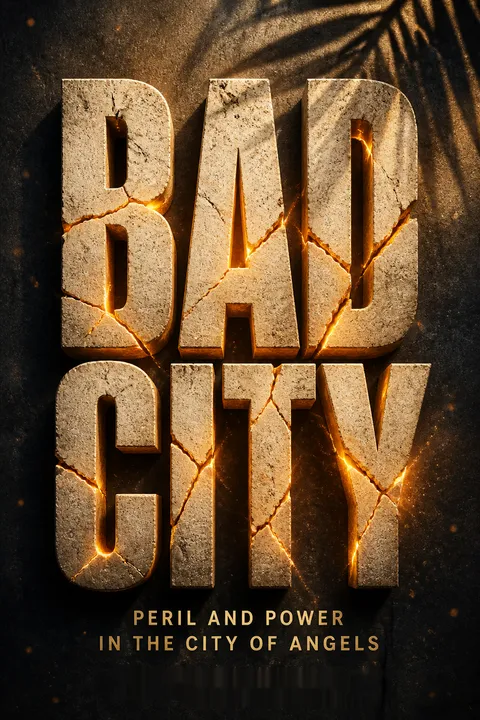


Key Takeaways
One overdose revealed how a prestigious university could shield its own dean
A disturbing discovery. In March 2016, Hotel Constance manager Devon Khan found a young woman unconscious in a drug-strewn room registered to Carmen Puliafito, then dean of USC’s medical school. Khan called paramedics despite Puliafito’s effort to minimize the emergency. Police arrived, but made no arrest and initially produced no incident report. Puliafito resigned weeks later, without a public explanation. The apparent one-room emergency opened onto a larger story: a powerful doctor’s drug-fueled relationships, police inaction, university silence, and a newspaper’s resistance to its own investigation.
Power had many layers. Puliafito was a celebrated surgeon and fundraiser who said he had brought USC $1 billion in funding. The scandal eventually reached the university president, Pasadena officials, and the Los Angeles Times newsroom. The book’s central argument is that misconduct flourishes when institutions protect status and reputation instead of vulnerable people.
The case is compelling because the first alarm is concrete and ordinary: a hotel employee recognizes that a person may die and calls for help. The institutional stakes emerge only after that basic act is met with silence. This shifts the question from whether an individual is reprehensible to how organizations distribute attention, protection, and consequences. The account also cautions against treating prestige as evidence of integrity. Puliafito’s professional accomplishments were real, but they did not make his conduct less dangerous or his institution more accountable.
Protect a witness before asking them to risk a career for the truth
Speaking carried a cost. Khan feared that identifying himself could cost him his hotel job and expose his family to retaliation from a wealthy, connected guest. Before approaching a reporter, he tried contacting Pasadena’s city attorney and USC’s president, first anonymously and then by phone. Neither route produced visible action. He finally reached the Los Angeles Times through a photographer he met socially, and the reporter granted him anonymity because his employment was at risk.
Courage is not a shield. Khan’s decision to help was shaped by his sense of responsibility, but also by careful choices about where to speak and what risks to take. The story required protecting his identity while independently checking his account against records, audio, and other witnesses.
Whistleblowing is often praised as a personal virtue, which can obscure the conditions that make it possible. Khan’s story shows that trust, anonymity, and independent corroboration are not favors to a source; they are part of responsible reporting. The same principle applies inside workplaces, where formal channels can fail and retaliation can be subtle. Yet confidentiality cannot substitute for verification. A protected witness deserves safety, while readers deserve to know that the evidence does not rest on an unchecked account.
Turn bureaucratic evasions into records, timelines, and contradictions
Paperwork became evidence. Pringle requested Pasadena records and received a sparse Call for Service log, which noted an overdose and crystal meth but offered little context. The city initially withheld identifying information and resisted follow-up questions. Persistent requests revealed an Injury and Death Report naming Puliafito as a witness, plus an evidence report documenting methamphetamine in the room. Police later acknowledged that the incident report had been written months after the overdose, following the reporter’s inquiries.
Audio changed the story. The city first released a shortened 911 recording, then provided a longer version that included the man who answered the transferred call. A source familiar with Puliafito confirmed the voice. Each document was limited on its own, but together they challenged the official account and corroborated Khan’s details.
Records requests do more than collect facts. Their timing, omissions, revisions, and explanations can reveal how an institution handles scrutiny. Here, the delayed report and changing audio were not self-proving evidence of a coordinated conspiracy, but they made careful questions unavoidable. That distinction matters: suspicion is a reason to investigate, not a substitute for proof. The reporting gains strength by showing the reader the documentary trail and its gaps, rather than asking the reader to accept a broad accusation on trust.
Prestige can make money look like proof of institutional virtue
Fundraising shaped status. USC wanted to raise its medical school’s standing against UCLA and prized rankings, prominent faculty, and large research grants. Puliafito was attractive to the university because he recruited researchers and funding, and he claimed to have brought Keck $1 billion. USC celebrated his tenure months after his abrupt resignation, even as the overdose story remained unanswered.
The incentives reached beyond medicine. In the later Varsity Blues admissions scandal, USC was more deeply implicated than the other universities named in the federal case. The indictment charged 21 people in connection with USC, including coaches and athletics administrator Donna Heinel. The book does not establish that senior university leaders knew about the scheme. It does show how a university’s pursuit of status and money can make its internal safeguards a vital question.
A useful distinction is between institutional success and institutional health. Rankings, grants, and donations are measurable, while respectful treatment and candid oversight are harder to quantify. When leaders reward the former much more visibly than the latter, misconduct can be treated as an inconvenient liability rather than a warning about governance. That does not mean ambitious fundraising causes abuse or fraud. It means that metrics can distort attention, and that institutions need independent ways to test whether their success is being purchased at the expense of basic safeguards.
When editors protect power, the newsroom itself becomes a reporting subject
The first story was killed. After months of reporting, Pringle’s initial account of the overdose was ready for publication. Editor Davan Maharaj refused to run it, arguing that too much remained unknown, while managing editor Marc Duvoisin delayed and cut material that could embarrass USC or Pasadena. Pringle and editor Matt Lait believed the decisions reflected fear and conflicts of interest, though the company’s later inquiry found no evidence of a direct conflict with USC.
Colleagues kept reporting. After Lait proposed a broader team, five reporters secretly pursued the story despite the risk of discipline. Editors later removed the anonymous witness who had contacted USC, then restored him after the reporters challenged the decision. The conflict eventually contributed to an HR investigation and the departure of Maharaj and Duvoisin.
The book’s newsroom account shows that censorship need not arrive as an explicit order from an outside power. Delay, selective standards, and repeated cuts can have the same practical effect, even when motives are contested. That makes process important: editors should explain decisions, apply standards consistently, and invite scrutiny of their own relationships. At the same time, disagreement over publication is not automatically corruption. The strongest evidence here lies in documented changes, inconsistent treatment, and the reporters’ efforts to preserve the record of what happened.
Corroborate every claim, but do not let caution become a hiding place
Evidence accumulated in layers. The investigation began with Khan’s account, then added police and fire department records, 911 recordings, Sarah Warren’s testimony, statements from her family, and images and videos from the drug parties. Reporters checked the voice on the call with people who knew Puliafito and compared their sources’ accounts with court records and other documents. That work established a far broader pattern than the initial hotel incident suggested.
Delay had consequences. The first story took more than a year to appear after the tip. By the time it ran, Sarah and her family had endured more months of turmoil, while Puliafito continued treating patients for part of that period. Careful verification was essential, but endless re-editing did not resolve factual disputes; it postponed publication.
Investigative journalism faces two genuine risks: publishing a damaging claim that is wrong, and withholding a well-supported warning until it loses practical value. Corroboration reduces the first risk; transparent standards and deadlines can limit the second. The book’s strongest reporting does not rely on a single dramatic image or a source’s indignation. It triangulates testimony, records, and recordings. The difficult editorial question is not whether to be careful, but what new information further delay is expected to produce.
Addiction magnified Sarah’s vulnerability, but the powerful man chose to exploit it
Money deepened the dependency. Sarah Warren was a young addict who met Puliafito while working as a prostitute. He paid her rent and other expenses, supplied drugs, and continued doing so during treatment. At Creative Care, he brought her Xanax and later meth, helping cause her expulsion. Sarah’s parents repeatedly tried to separate them through rehabs and other interventions, but Puliafito’s money and access kept the relationship going.
The harm spread. Puliafito also introduced Sarah’s younger brother, Charles, to meth while Charles was still a teenager. He supplied drugs to other people in the group as well. Sarah made destructive choices, and the book does not erase them. It shows, however, that her choices took place inside a relationship where an older, wealthy physician could finance the addiction he claimed to be helping.
The story resists two easy accounts: that Sarah had no agency, or that her decisions absolve the adult with vastly greater power. Addiction can narrow a person’s options without eliminating choice, while financial dependence and a supplier’s control can make escape harder. That distinction matters in public discussion of exploitation, which often demands a perfectly blameless victim before recognizing abuse. Sarah’s candor about her own conduct makes the imbalance clearer, not less important.
Repeated complaints make a rogue-doctor story an institutional accountability story
Warnings persisted for decades. USC gynecologist George Tyndall faced complaints dating to the 1990s, including allegations that he photographed patients’ genitals and behaved inappropriately during exams. Clinic employees and patients raised concerns repeatedly. In 2013, an internal inquiry closed without finding actionable evidence, despite a long record of complaints. Nurse Cindy Gilbert eventually reported him to the campus rape crisis center in 2016, after earlier internal efforts failed to stop him.
Secrecy extended the harm. USC eventually investigated, found serious concerns about Tyndall’s practices, and allowed him to resign with a financial payout. The university did not then notify his patients or report him to the medical board. After the Times published its findings, hundreds of former patients came forward. USC later paid more than $1.1 billion to settle claims from women who said Tyndall had abused them.
The shift from individual misconduct to institutional accountability depends on chronology. A complaint can be ambiguous; a long sequence of similar complaints, ignored or handled in isolation, is harder to dismiss as a misunderstanding. The case also shows how confidentiality can protect privacy while simultaneously shielding an institution from scrutiny. Effective systems need more than a place to file complaints. They need independent review, clear escalation rules, and a way to ensure that protecting an organization’s reputation does not outrank protecting patients.
Investigate leadership patterns, not just each scandal in isolation
The story kept widening. After the Puliafito reporting, the Times uncovered a sexual harassment complaint and settlement involving his successor as dean, Rohit Varma. In 2018, reporting on Tyndall revealed years of complaints that USC had failed to resolve. Meanwhile, the Varsity Blues investigation exposed bribery and admissions fraud involving numerous USC coaches, staff, and parents. These were distinct cases, not proof of one shared conspiracy.
Governance became the connecting question. Across the scandals, reporters examined who received warnings, who could act, who stayed silent, and whether university leaders faced meaningful oversight. USC’s trustees initially backed President Max Nikias, but faculty, students, and public pressure mounted after the Tyndall revelations. Nikias resigned in 2018, though he received a substantial exit package and retained prestigious university roles.
Pattern recognition is powerful, but it can overreach. Separate scandals do not establish that the same people knew about every offense or that one hidden plan tied them together. Their value as a pattern lies in the recurring questions they raise about oversight, incentives, and consequence. A careful investigation distinguishes documented links from thematic resemblance. That discipline lets readers see a governance problem without turning every failure into evidence of a single mastermind.
Count justice by consequences, not by exposure or headlines
Some consequences were substantial. USC placed Puliafito on leave, and the Medical Board of California revoked his license. Nikias eventually left the presidency. More than 700 women brought claims against USC and Tyndall, leading to settlements totaling more than $1.1 billion. The reporting on Tyndall won the Pulitzer Prize for Investigative Reporting, and the Times newsroom organized its first union during its struggle over editorial independence.
But exposure was not the same as full accountability. Prosecutors declined to charge Puliafito, including after medical board proceedings in which he was accused of lying under oath. Investigators could not prove he caused the death of Dora Yoder’s infant son. Nikias retained university honors, and the Warrens had to surrender and destroy copies of evidence as part of their settlement. The book ends with gains, losses, and unresolved questions.
Accountability has several dimensions: professional discipline, financial restitution, criminal punishment, institutional reform, and public recognition. They do not reliably arrive together. A billion-dollar settlement can acknowledge widespread harm without explaining every administrative failure; a Pulitzer can validate reporting without guaranteeing justice for every source. Measuring impact across these dimensions avoids both cynicism and triumphalism. The book’s most sobering lesson is that disclosure can change an institution’s costs and reputation, while leaving parts of the underlying system intact.
Analysis
Bad City is built around an expanding chain of accountability failures. It starts with a hotel manager confronting an immediate emergency, then follows the evidence outward: a dean, a police department, a university administration, a newspaper leadership team, and eventually a wider culture of elite protection. This structure makes the book more than a story about one powerful doctor. Each new institution is tested by a basic question: when a vulnerable person is at risk, does the organization act, or does it manage the information?
The answer is rarely a single dramatic conspiracy. The narrative is more persuasive when it shows ordinary mechanisms of protection: an unfiled report, a delayed response, a private settlement, an ignored complaint, an editor’s repeated cuts. Such choices can produce the effects of a coordinated cover-up without proving a centrally directed plan. The distinction is important. It preserves the force of the evidence while resisting the temptation to make every silence proof of intent.
The book also examines the conditions that allow accountability to work. Khan’s firsthand testimony needed corroboration and protection. Sarah and her family needed to be heard without being reduced to flawless victims. The Tyndall investigation depended on employees who risked their jobs, and the newsroom required colleagues willing to challenge its editors. Reporting emerges as collective labor, not the lone heroics of a byline.
Its sharpest tension is between caution and delay. Verification protects people from false accusations, especially when reputations and careers are at stake. But in these cases, delay also preserved access and comfort for institutions while vulnerable people remained exposed. The book cannot prove every counterfactual, such as whether earlier police action would have prevented later harm. It can show that institutions repeatedly received warnings and failed to respond adequately.
The resulting picture is neither a simple victory nor a story of futility. A dean lost his license, a university president resigned, and hundreds of women received major settlements. Yet criminal accountability remained limited, secrecy persisted, and institutional prestige survived. The book’s lasting contribution is to show how power works through routine decisions, and why independent scrutiny must examine not only the accused, but the systems that decide whether anyone will be held responsible.
Review Summary
Bad City by Paul Pringle exposes corruption at USC and the LA Times through investigative journalism. Readers praise Pringle's dogged pursuit of truth, uncovering scandals involving USC's medical school dean and gynecologist. The book offers a behind-the-scenes look at newsroom politics and the power of institutions to cover up wrongdoing. Many reviewers found it gripping, shocking, and reminiscent of noir fiction. While some felt it dragged in parts, most agreed it was an important expose of systemic corruption and the value of persistent reporting.
People Also Read




Glossary
Call for Service log
Record of a dispatchA police record documenting a call for assistance and the department’s response. In the Pasadena overdose case, the log recorded basic timing and references to an overdose and methamphetamine, but did not provide a full account of what officers learned. Its limited details led the reporter to seek additional records and clarify whether a separate police report existed.
Injury and Death Report
Police incident reportA Pasadena police form used to document an incident involving injury or death. In the Hotel Constance case, the report was created months after the overdose and heavily redacted. One visible entry identified Carmen Puliafito as a witness and described his relationship to the woman as friend, giving the investigation an official record connecting him to the scene.
Skittles surgery
Xanax hidden in candySarah Warren’s name for the method Puliafito used to smuggle Xanax into a rehab center. He carefully opened bags of Skittles, replaced the candy with pills, and resealed the packages before mailing them to her. The tactic let him supply drugs during treatment, undermining the purpose of rehab and extending his control over her access to substances.
Operation Varsity Blues
College admissions fraud caseThe federal investigation and criminal case concerning a scheme to bribe college coaches and administrators and falsify athletic credentials or test results to secure university admissions. USC was more heavily represented among the defendants than the other universities named. The book presents the case as a distinct scandal that raised further questions about the university’s oversight, without alleging that senior leaders knew of the scheme.
FAQ
What's Bad City: Peril and Power in the City of Angels about?
- Investigative Journalism Focus: The book chronicles the investigation into Dr. Carmen Puliafito, former dean of USC's medical school, and George Tyndall, a gynecologist accused of sexual abuse.
- Corruption and Cover-ups: It explores the systemic corruption and cover-ups by institutions like USC and the police, allowing powerful individuals to evade accountability.
- Personal Stories: The narrative includes personal stories of victims, highlighting the human impact of institutional failures and corruption.
Why should I read Bad City?
- Engaging True Crime Narrative: The book combines true crime with investigative journalism, making it a gripping read for those interested in real-life scandals.
- Insight into Journalism: Readers gain insight into the challenges journalists face when investigating powerful institutions, including ethical dilemmas and pressures.
- Relevance to Current Events: Themes of corruption and power dynamics are highly relevant today, encouraging reflection on institutional integrity and accountability.
What are the key takeaways of Bad City?
- Power and Corruption: The book illustrates how power can corrupt individuals and institutions, emphasizing the need for transparency and accountability.
- Role of Journalism: It highlights the critical role of investigative journalism in uncovering truths that powerful entities prefer to keep hidden.
- Human Impact: Personal stories underscore the real-life consequences of corruption and negligence, emphasizing the human cost of scandals.
What are the best quotes from Bad City and what do they mean?
- “The tip about the dean... seemed too good to be true.”: Reflects initial skepticism in journalism and sets the stage for shocking revelations.
- “The scandals that followed led to the downfall of powerful men.”: Highlights accountability and the consequences of corruption, even for powerful individuals.
- “I would be derelict in my responsibilities if I didn’t seek medical attention for her.”: Emphasizes moral obligation and ethical dilemmas in the face of wrongdoing.
Who is Paul Pringle, the author of Bad City?
- Experienced Journalist: Paul Pringle is a seasoned journalist with a history of investigative reporting, particularly for the Los Angeles Times.
- Focus on Corruption: He has a track record of uncovering corruption and misconduct within powerful institutions.
- Personal Connection: Pringle's commitment to the story is evident in his personal investment in the lives affected by the scandal.
What methods does Paul Pringle use in Bad City to uncover the truth?
- Investigative Techniques: Pringle uses interviews, public records requests, and analysis of police reports to support the narrative with evidence.
- Building Relationships: He builds relationships with sources to gather information, crucial for gaining trust and uncovering deeper truths.
- Persistence in Reporting: Pringle demonstrates relentless pursuit of the story, facing obstacles from powerful institutions.
How does Bad City address the issue of institutional failure?
- Systemic Corruption: The book illustrates how institutions like USC failed to act on evidence of wrongdoing, highlighting a culture of complicity.
- Impact on Victims: Emphasizes the consequences of institutional failures on victims and their families, critiquing systems that prioritize reputation over justice.
- Call for Reform: Pringle advocates for reform within institutions to ensure accountability and protect vulnerable individuals.
What challenges did Paul Pringle face while writing Bad City?
- Resistance from Institutions: Pringle encountered pushback from USC and the police, who were reluctant to provide information.
- Balancing Ethics and Reporting: He faced ethical dilemmas in navigating relationships with sources and potential repercussions of his reporting.
- Personal Stakes: Pringle's commitment to the story was personal, seeking justice for victims and their families.
How does Bad City reflect on the state of journalism today?
- Importance of Investigative Reporting: The book underscores the critical role of investigative journalism in holding power accountable.
- Challenges Facing Journalists: Highlights obstacles journalists face, including resistance from institutions and pressures of corporate media.
- Call to Action: Encourages readers to support investigative journalism and recognize its value in uncovering corruption and injustice.
What impact did the events in Bad City have on the community?
- Awareness of Corruption: Raised awareness of corruption within powerful institutions, potentially leading to calls for reform and accountability.
- Impact on Victims' Families: Highlighted the human cost of corruption and negligence, serving as a reminder of real-world consequences.
- Community Response: May inspire community members to advocate for change and demand accountability from local institutions.
What were the consequences for Carmen Puliafito and George Tyndall?
- Loss of Medical Licenses: Both lost their medical licenses due to the investigations, with Puliafito scrutinized for drug use and Tyndall for sexual misconduct.
- Legal Troubles: Puliafito faced potential criminal charges, while Tyndall was involved in multiple civil lawsuits against him and USC.
- Public Exposure: Their actions led to significant reputational damage for them personally and for USC as an institution.
What lessons can be learned from Bad City?
- Importance of Investigative Journalism: Highlights the vital role of journalism in holding powerful individuals and institutions accountable.
- Courage to Speak Out: Emphasizes the importance of courage in speaking out against wrongdoing, whether as a journalist or whistleblower.
- Need for Systemic Change: Serves as a reminder of the need for systemic change within institutions to prevent abuse and corruption.
Download PDF
Download EPUB
.epub digital book format is ideal for reading ebooks on phones, tablets, and e-readers.








