

Plot Summary
The Room Behind the Routine
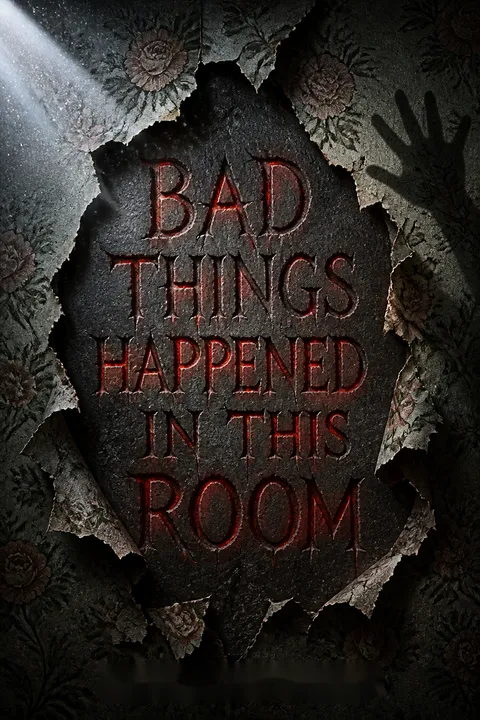
Willow lives in her parents’ old house with her husband, Liam, but cannot say how long she has stopped going outside. She spends hours in a locked, empty room, studying its faded floral wallpaper and sensing that it contains a memory she cannot reach. Meals, chores, baths, and pills organize her days; Liam corrects her small mistakes, and she increasingly doubts her own recollections.
At dinner, a chewed bite seems to become a rose petal in her hand, then meatloaf again. Willow accepts the contradiction as another failure of her mind. Her only certainty is that something terrible happened in the room, and that the walls may hold the answer.
The opening makes domestic routine both a shelter and a means of confinement. Willow’s limited memory makes ordinary acts, choosing a meal or taking a pill, feel like tests she is destined to fail. Because the narration stays close to her perceptions, the reader cannot yet distinguish a supernatural house from a mind struggling to organize experience. The floral room gives that uncertainty a physical address: it is not merely a symbol of the past but a place Willow repeatedly enters to retrieve it. Liam’s orderly care can read as affection or control, establishing the novel’s central problem of interpretation before offering any reliable ground.
A Garden Full of Secrets
When Liam is elsewhere, Willow slips into the backyard and tends flowers planted above what she believes are her buried children. She hums their lullaby, removes invasive weeds, and avoids planting vegetables because she thinks the children protest. After she imagines a girl being struck by a truck near the road, she searches the ditch and finds no body.
The next morning, a blonde child appears at the edge of the garden, calmly denying Willow’s account of the accident. Willow calls her Sarah, though she feels that name is wrong, and the two share a private understanding. The girl admires the flowers, while Willow’s grief briefly eases in the company of someone who seems to accept her strange world.
The garden turns private grief into a daily practice: Willow tends living plants as if tending children who can still answer her. Her mother’s lessons about the forest’s interconnected roots will later complicate this image, but here Willow experiences the soil as a place of intimacy and protection. Sarah’s arrival offers connection without demanding that Willow explain herself. At the same time, Willow’s insistence that the child has another name reveals how her need to protect can overrule the child’s own identity. The scene makes tenderness and distortion inseparable. Willow’s affection is real, even when the story she builds around it may not be.
Contractors at the Gate
After Liam announces plans to renovate the backyard, Willow finds landscaping contractors preparing to begin work. Their papers carry her signature, though she cannot remember approving anything.
She first claims the project is unaffordable, then abandons that explanation and orders them to leave, unwilling to let strangers disturb the ground. Liam treats her objections as another symptom and insists that the garden is harming her.
Their confrontation ends with him overturning the dinner table; the next morning, he has cleaned away every trace of the outburst and left Willow’s wrists and ankles sore from restraints. Later, she discovers crushed poppies and sees Liam standing among them with a shovel. Her refuge is no longer safe, and its buried secrets seem to be in danger.
The contractors give Willow’s fear a practical trigger: the garden may be removed, and with it the only place she believes her children are protected. The signature complicates her resistance, because the evidence appears to show that she herself agreed to the work. Liam’s cleanup after the table is overturned similarly erases a shared event and leaves Willow without witnesses. This repeated loss of evidence makes her memory crisis feel like a struggle over who gets to define reality. Her defiance is not simply a rejection of treatment. It is also an effort to preserve the one part of her world that still feels morally meaningful.
A Child Taken from the Garden
Sarah returns to the flowers, but her mother arrives and pulls her away after Willow makes a cruel remark about motherhood. Willow regrets frightening the child, yet she cannot stop seeing Sarah as someone she must protect.
Liam orders Willow to stay away from the family, while Sarah’s visits become less certain and Willow’s fear grows. A newspaper later shows Sarah’s photograph beneath a missing-child notice. Willow believes the girl is waiting for her somewhere in the woods, although every search leaves her with less proof and more dread.
At home, Liam sometimes seems frozen in place, then resumes his routine as if nothing happened. Willow’s attachment to Sarah now gives her a purpose, but it also sharpens her suspicion of everyone who tells her to let go.
Sarah’s removal by her mother echoes Willow’s fear that every loved child is vulnerable to separation. The neighbor’s possessive gesture becomes, in Willow’s mind, evidence of theft rather than ordinary parental protection. When the missing notice appears, that private fear gains public confirmation, but not the explanation Willow wants. The contrast is important: the newspaper can establish that a child is missing without validating Willow’s theories about why. Her growing certainty is therefore emotionally understandable but evidentially unstable. Liam’s apparent stillness adds to the instability, turning the familiar dinner routine into something that seems staged for her benefit.
Photographs Beneath the House
Drawn back to the floral room, Willow finds a faint rectangle in the living-room paint where pictures once hung. She follows the clue into the basement, where boxes contain photographs of a younger Willow, Liam, and a small child. One image shows Willow holding a baby in a room that resembles the wallpapered room upstairs.
A blanket in the photographs brings back the sensation of rocking an infant, but the memory remains fractured, and Willow cannot tell what happened to the child. She also finds pictures that suggest her parents belonged to a life she has lost. Rather than clarifying Sarah’s disappearance, the images deepen the mystery: Willow now has evidence of a family, but not a trustworthy account of her place within it.
The photographs are the first external objects to challenge Willow’s account of herself. Unlike the walls, they can be handled, compared, and placed, yet their meaning still depends on a mind unable to supply context. A baby in an image seems to promise a stable past, but it also opens a new source of grief without explaining its cause. The basement functions as an archive that preserves what Willow cannot consciously retrieve. Its contents do not simply restore memory; they expose how incomplete memory can make evidence feel like an accusation. The reader’s task shifts from asking what the house is hiding to asking what Willow is capable of remembering.
The Husband Others Deny
After Willow believes Liam has attacked her with a hammer, a police officer arrives, but he cannot find Liam inside the house. Elaine, presenting herself as a social worker, later tells Willow that Liam divorced her years earlier and has not visited in a long time. Willow rejects their account because she sees Liam every day, and she believes he and the authorities are conspiring to hide Sarah.
Elaine urges her to accept help, but Willow sends the visitors away and refuses the hospital they suggest. The encounter leaves her more isolated: the people who might confirm her fears instead describe a different life. She continues to trust her own perceptions, even as they contradict the account offered by those standing in front of her.
The encounter makes the reader confront the costs of taking Willow’s testimony at face value. Her fear of Liam is vivid and coherent from inside her experience, while the officer’s inability to find him and Elaine’s history of the marriage point elsewhere. Neither account immediately settles the matter for Willow, whose survival depends on treating her perceptions as evidence. Elaine’s offer of assistance also lands as a threat because Willow experiences care as another attempt to take control away from her. The scene avoids a simple opposition between a delusional patient and rational outsiders. Instead, it shows how the loss of trust makes even potentially helpful intervention feel dangerous.
The Incident Beyond Home
Willow secretly stops swallowing the medication and searches for Sarah beyond the property. She retrieves her old bicycle and rides toward town, where memories return in flashes. She recalls a previous grocery-store trip: she believed a lost child named Emily was her daughter and tried to take her from the store before Emily’s mother intervened.
Liam used the incident to keep Willow from leaving home, and its shame helps explain how the house became her boundary. On the present journey, Willow sees shoppers with distorted faces and again believes children need her protection. A near collision sends her off the road. She then sees Sarah beside her, comforting her after the fall, before the child runs back into the trees.
The bicycle journey converts a vague prohibition into a specific memory with a real consequence: Willow once misidentified a stranger’s child and tried to remove her from her mother. Remembering the episode gives Liam’s restriction a plausible origin, but Willow’s present visions show that the underlying confusion has not vanished. Her impulse to rescue children is both loving and dangerous, which prevents the story from treating her protective instinct as either purely noble or simply threatening. Sarah’s appearance after the crash offers emotional comfort but no verifiable proof. The journey advances Willow toward the outside world while demonstrating that leaving the house does not mean leaving her altered perception behind.
The Man in the Photograph
While searching the basement, Willow finds more photographs, including one of herself with a red-haired, bearded man holding a baby. She cannot reconcile him with the brown-haired Liam she believes lives with her.
During a birthday gathering that Liam arranges, the guests seem to freeze, and Willow loses control of her body. Later, she discovers an official certificate in the bedroom closet: Rose Elizabeth Hawthorne died seventy-two days after her birth.
The document confirms that the baby was real, but it does not support Willow’s theory that Liam has hidden a child or replaced her husband. She briefly agrees that she is ready to recover, yet the discovery overwhelms her, and Liam resumes the medication and restraints that she had been trying to escape.
This discovery gives Willow a solid fact while leaving the emotional meaning of that fact unresolved. Rose’s certificate confirms a child and a death, but Willow immediately tries to fit the document into a larger story of kidnapping and deception. The photograph’s unfamiliar man further splits her husband into competing identities. Her decision to accept help is therefore fragile, not a clean turn toward recovery: it follows a moment of recognition, then gives way under the force of grief and confusion. The scene also shows how official records can correct a false theory without repairing the psychological injury that made the theory necessary.
A Mind in Restraints
After the birthday gathering collapses, Willow cycles through visions of Liam, Sarah, and the house’s shifting rooms. She sees herself bound to furniture, imagines Liam carrying Sarah away, and struggles against restraints that sometimes seem physical and sometimes part of the nightmare.
She digs into the garden, convinced a child has been buried there, but finds no body. The wallpaper reveals accusations about neglected flowers, while the basement photographs and the pill organizer become competing guides to time.
Willow’s efforts to stop medication and regain control do not restore a stable world. Instead, the house grows more hostile in her perception, and the routines that once organized her days become another mechanism through which she feels trapped.
The escalating visions make repetition itself a form of confinement. Willow keeps trying to solve the same uncertainty by searching rooms, interpreting objects, and testing whether Liam is present, but each attempt produces another version of the problem. The garden excavation is especially revealing: she searches the place where she expects proof, yet finds only soil and her own exhaustion. Her attempts to reclaim agency through refusing pills are understandable, but they do not produce reliable clarity. The novel makes the frightening point that escape from a controlling routine is not equivalent to recovery when the person has no stable support or trustworthy account of the past.
Sarah's Name in Print
A newspaper finally reports that Sarah Giles has been found drowned in the lake. Willow reads the notice repeatedly, then tells Liam that the child is dead. Her grief turns immediately toward self-accusation, and Liam’s response seems to confirm that she is responsible for something she cannot name. She remembers imagined scenes of searching for Sarah and cannot separate them from what actually happened.
The child from next door was real, and so is her death, but the story provides no evidence that Willow caused it. Still, she treats her emotional bond as proof of responsibility. By the time she admits that something is wrong with her, she has begun to approach the truth she has spent the novel avoiding.
The newspaper supplies the clearest fact about Sarah, yet it does not settle Willow’s relationship to the child or her own responsibility. Her grief is genuine; her conclusion that grief proves guilt is not. That distinction is central to the novel’s treatment of mental illness, where intense feeling can become mistaken for evidence. Liam’s response is also difficult to read because his words and motives reach Willow through a distorted frame. The report does not resolve the mystery so much as strip away one protective fiction: Sarah cannot return. Willow must now face a different loss, one connected to the baby in the photographs and to the room she has kept sealed.
Four Days with Rose
Willow finally recalls the events behind the photographs. After years of miscarriages, she gave birth to Rose, while her parents died in a car crash during a snowy visit. Liam was away on business when Rose died unexpectedly from SIDS. Already overwhelmed and experiencing postpartum psychosis, Willow placed the crying baby in her crib, then returned to find her cold and still.
The silence brought a moment of relief before she understood what it meant. Following voices in the walls, she carried Rose to a rocking chair and rocked her for four days, unable to recognize that her daughter had died. The revelation explains Willow’s fragmented reality, but it does not make her responsible for Rose’s death.
The recovered memory distinguishes cause from guilt. Rose’s death was sudden and unexplained, while Willow’s psychosis shaped what she did afterward. Her four-day vigil is devastating because it combines maternal love with a mind unable to register the death it is trying to undo. The earlier images of flowers, buried children, and the rocking chair now acquire specific emotional origins rather than functioning as supernatural clues. The novel does not excuse Liam’s grief or Willow’s suffering by simplifying either one. Instead, it shows how untreated trauma can distort memory and how a loved one’s blame can turn an illness into a moral sentence.
The Ward Behind the Story
The final chapters reveal that Willow has been in a psychiatric hospital, locked in her body in a persistent vegetative state. Sarah, the young nurse who cares for her, and Elaine, her colleague, witness Liam’s regular visits. Dr. Bellinger tells him that Willow’s condition persists, but Liam continues coming, not simply from devotion.
He blames Willow for Rose’s death and pinches her before whispering reminders of what he believes she did, hoping to keep her suffering. Sarah and Elaine see a patient whose life has been overwhelmed by loss, while Liam uses the language of care to disguise punishment. Willow’s apparent home, garden, and search for Sarah have been the mind’s unstable refuge from the ward.
The hospital reveal reclassifies the novel’s apparent haunting without reducing it to a trick. The house and garden are products of Willow’s damaged consciousness, but the fear, grief, and need for protection they carry are emotionally grounded. The most consequential reversal concerns Liam: his regular visits resemble care, yet the nurse’s account exposes a deliberate use of proximity to intensify Willow’s guilt. His grief has hardened into punishment, while medical staff can observe her condition but cannot restore her to herself. The ending refuses easy closure. Naming the illness clarifies the past, but Willow remains imprisoned, and understanding arrives too late to guarantee recovery.
Epilogue
In the epilogue, Willow’s mind returns to the house and to the ordinary evening she has spent trying to reconstruct. She imagines taking meatloaf from the oven, checking the garden, and greeting Liam as he comes home.
He embraces her and answers her affection with the tenderness she remembers from their happier life. The scene offers no evidence that she has recovered or left the hospital. It is another inward refuge, one in which she can imagine a safe marriage and a familiar routine.
The imagined homecoming is moving precisely because it cannot repair the reality revealed in the final chapters. Willow’s return to cooking and gardening restores the rhythms that once helped her feel oriented, while the loving Liam in this scene differs sharply from the man who now visits to punish her. The ending does not present delusion as a cure. It shows the mind reaching for the version of domestic life that can be endured when the actual world is inaccessible. Her routine is both a consolation and a cage, preserving affection while keeping her from the truth of her isolation.
Analysis
The novel’s central horror comes from the gap between what Willow feels and what she can know. Her perceptions are unreliable, but her grief is not. She loves the children she believes she must protect, fears the husband she cannot consistently recognize, and experiences the house as both refuge and prison. The reader is made to inhabit that uncertainty, then asked to revise it as photographs, newspapers, and the hospital frame emerge.
The garden condenses the book’s treatment of motherhood. Willow’s flowers grow from loss, but her belief that they contain or protect children turns care into an impossible task. Her mother’s teaching about connected roots offers a tender model of nurture, while Willow’s own grief makes every act of cultivation feel like an attempt to reverse death. The garden is not simply a symbol of madness; it is the form her love takes when memory cannot hold its object.
The novel also distinguishes illness from moral responsibility. Rose’s death from SIDS is not caused by Willow, although postpartum psychosis leaves her unable to understand what has happened and Liam later uses that confusion to punish her. His grief is real, but his visits become a deliberate instrument of cruelty. That turn prevents the story from locating all danger inside Willow’s mind. The outside world contains failures of care too, especially when a bereaved partner chooses blame over compassion.
Finally, routine becomes an ethically unstable form of care. Meals, baths, medication, and familiar gestures can keep a person safe, yet they can also conceal coercion or preserve emotional harm. The ending offers no simple recovery. Willow finds the truth, but remains unable to return to ordinary life; her mind retreats toward an imagined home where love still feels possible. The book leaves readers with a difficult distinction: understanding the cause of suffering matters, but understanding alone cannot undo it.
Review Summary
Characters
Willow Hawthorne
A mind searching for groundWillow is a woman whose attachment to her garden, home, and daily rituals remains strong even as memory and perception become unreliable. She is observant, imaginative, and capable of tenderness, but her longing to protect children can make her interpret uncertainty as danger. The house’s voices and the gaps in her recollections shape what she believes, leaving her unsure whether she is being cared for or controlled. Her inner life is not reducible to fear: flashes of humor, defiance, and affection survive even when she doubts herself. Willow’s defining struggle is to find a stable account of her life without surrendering the feelings that still seem unmistakably hers.
Liam
A husband hard to readLiam is Willow’s husband and the person most closely tied to her household routine. He values order, cleanliness, and predictable habits, and he often presents himself as the one who knows what Willow needs. From her perspective, his control can appear protective one moment and threatening the next. His work keeps him away for long stretches, while his return restores the familiar sequence of dinner, chores, bathing, and medication. Liam’s relationship with Willow is shaped by love, exhaustion, and grief, though the reader initially receives all of it through her uncertain perceptions. He is difficult to judge because ordinary gestures of care sit beside commands that make Willow feel smaller.
Sarah Giles
The neighbor's lost childSarah is the young daughter of Willow’s neighbors. Curious and direct, she takes an interest in Willow’s flowers and returns to the garden despite her mother’s concern. Willow experiences Sarah as a companion and someone she must protect, though their bond is filtered through Willow’s unstable memory and perception. Sarah’s presence connects the garden to the world beyond Willow’s home and gives her a focus outside her daily routine.
Rose
The child in the photographsRose is the small child whose images appear among the photographs hidden in Willow’s house. A blanket, a rocking chair, and the tenderness in Willow’s recorded gestures suggest how deeply the child belongs to the emotional center of Willow’s life. For much of the story, Rose is present as a question rather than a fully understood person. Her place in the family is gradually clarified through Willow’s recovered memories.
Sarah
A nurse who keeps watchSarah is a young psychiatric nurse whose work brings her into contact with Willow and Liam. She notices Willow’s changing presentation and offers practical, attentive care, including brushing her hair and positioning her by a garden view. Sarah’s own financial and family pressures make her empathy concrete rather than abstract. She is distinct from Sarah Giles, the neighbor’s daughter, despite sharing her name.
Elaine
A careful colleagueElaine is a nurse who works alongside Sarah in the hospital. She recognizes Willow’s difficult episodes and shares concern for the patient’s wellbeing. In Willow’s shifting perceptions, Elaine appears as a social worker bringing warnings and recommendations, which makes her seem more threatening than she is. Her role shows how professional concern can be misread when trust and memory have fractured.
Dr. Bellinger
The clinical realistDr. Bellinger is the psychiatrist responsible for Willow’s care in the hospital. He speaks with Liam about Willow’s persistent condition and the limits of what treatment can presently accomplish. His manner is professional and measured, offering a clinical frame for a story otherwise filtered through hallucination and memory. He represents medical knowledge, but not a power to reverse the losses at the story’s center.
Willow’s mother
A teacher of the living worldWillow’s mother taught her about herbs, flowers, and the networks that connect a forest. In Willow’s memories, she is patient and affectionate, answering questions without ridicule and making the natural world feel generous and intelligible. Her lessons shape Willow’s relationship to the garden and the idea of a mother tree. She remains an important presence in Willow’s inner life, especially when Willow feels lost.
Willow’s father
A quiet family presenceWillow’s father belongs to the family photographs and remembered scenes of home. He shares the old house and family life with Willow’s mother, and his presence helps establish that Willow’s past once included ordinary companionship and security. The story gives him fewer individual moments than her mother, but he remains part of the family world Willow struggles to recover.
Sarah’s mother
A protective neighborSarah’s mother tries to keep her daughter away from Willow, whose behavior alarms her. She responds defensively when Willow approaches her family and later shows the strain of a parent living through a child’s disappearance. Her actions make sense as protection from her perspective, even as Willow interprets them as proof of hostility. She embodies the painful gap between what Willow believes and what the people around her may actually intend.
The police officer
A doubtful responderA uniformed officer appears when Willow believes she is in immediate danger. He asks questions and tries to assess what has happened, but Willow experiences his measured response as disbelief. His uncertain place in her account reflects how difficult it is for her to distinguish help from dismissal.
Emily
The child at the storeEmily is a child Willow mistakes for her own daughter during a frightening episode at a grocery store. Her mother intervenes before Willow can take her from the building. The memory becomes central to the restrictions Liam places on Willow’s movements and to Willow’s fear of what she may have done.
Plot Devices
Willow's unstable viewpoint
Reality through a fractureThe story confines readers to Willow’s perceptions, so scenes may shift from domestic life into hallucination without a clear boundary. A dinner petal becomes meatloaf, a husband seems to vanish, and a missing child appears in settings that may be memory, dream, or present experience. This method makes the reader share Willow’s investigative task rather than observe it from a safe distance. Contradictions are not random twists; they show how a mind under severe distress tries to impose meaning on incomplete evidence. The final hospital perspective forces earlier scenes to be reconsidered without making Willow’s feelings false.
The floral room
A sealed memory chamberThe room with faded rose wallpaper is the house’s most charged interior. Willow returns to it because she senses that something important happened there, and the wallpaper’s peeling surface becomes a physical prompt to uncover what she has forgotten. Images of vines, roses, and writing on the walls change alongside her perceptions. The room connects the present crisis to hidden photographs and memories, while its locked and empty state keeps the past just out of reach. It works as both setting and mechanism: each change in the room signals a change in Willow’s access to memory.
The backyard garden
Grief made visibleWillow’s garden is her refuge, her imagined sanctuary for children, and the place where she fears Liam will expose or destroy what lies beneath the flowers. Her mother’s lessons about herbs and connected roots give the plants a history that predates Willow’s illness. The garden’s changing condition, flourishing, crushed, or overgrown, tracks Willow’s sense of safety and control. Its role shifts as her memories return: what first seems like a supernatural burial ground becomes an expression of maternal grief and the life she cannot recover. Flowers make private sorrow visible without turning it into a simple explanation.
Medication and routine
Order with a costMeals, chores, baths, and a weekly pill organizer give Willow a structure for measuring time after her memories begin to fail. Liam oversees the routine, and Willow gradually comes to treat the medication as one more instrument of control. When she secretly stops taking pills, she hopes to regain clarity, but her perceptions become more volatile rather than reliably accurate. The device keeps medical treatment and coercion uncomfortably close in her experience. Its meaning changes once the hospital context emerges: routine may preserve care, but it cannot substitute for trust, grief work, or the presence of someone who understands what Willow has lost.
Photographs and newspapers
Evidence without contextPrinted images and news reports repeatedly interrupt Willow’s private explanations. Photographs show a family and a child she cannot place, while the newspaper first marks Sarah as missing and later reports her death. These objects provide facts, but Willow’s condition makes their meaning difficult to interpret. She may recognize a face yet assign it the wrong identity, or treat a true report as confirmation of a false theory. The documents therefore serve as evidence and as tests of interpretation. They bring Willow closer to the past while demonstrating that information alone cannot repair memory or resolve guilt.
Download PDF
Download EPUB
.epub digital book format is ideal for reading ebooks on phones, tablets, and e-readers.








