

Key Takeaways
Treat aid loans as contracts, not gifts, and inspect every condition.
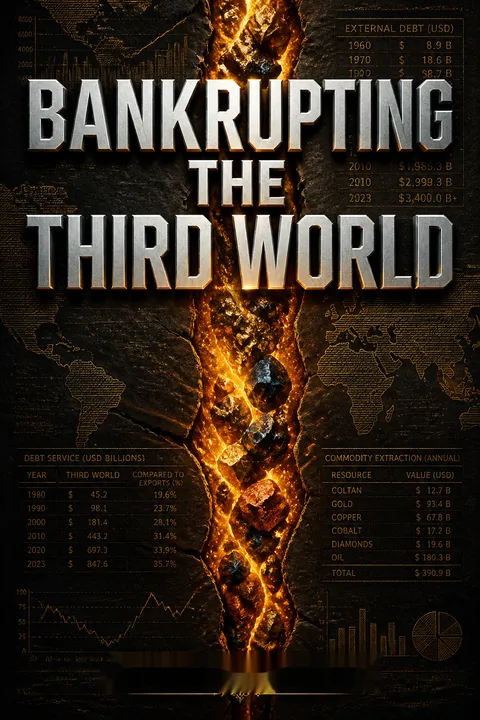
Follow the money. The book argues that loans from institutions such as the World Bank and IMF can create long-term obligations rather than deliver unconditional charity. Its central analogy is a credit card: lenders earn from interest, while borrowers can become trapped in debt they cannot repay. The authors say loan terms may also give foreign governments or companies influence over national policy and access to resources. They distinguish these financial institutions from charities that provide direct services, while warning that the labels of aid and development do not guarantee that recipients benefit.
Separate mechanisms from motive. A loan can finance useful infrastructure, but its interest rate, repayment schedule, policy conditions, and distribution of benefits determine who gains. The book’s strongest practical invitation is to examine those details instead of judging a program by its stated purpose.
What's useful here is the shift from judging aid by its benevolent branding to examining its contract. That is a basic principle of institutional accountability: incentives and enforceable terms matter more than declared intentions. A careful assessment would compare the loan's cost with the project's expected public benefits, and ask who bears losses if forecasts fail. The book sometimes moves from this sound scrutiny to a sweeping claim that aid institutions are designed to dominate borrowers. That conclusion requires evidence about specific terms and outcomes, not suspicion alone.
Borrowed money can leave a country with debt but few lasting assets.
Track the destination. The book draws heavily on John Perkins's account of economic hit men, professionals who allegedly persuaded developing-country leaders to accept large infrastructure loans. Perkins describes projects such as power plants, roads, and ports built by companies from the lender's country. In that arrangement, much of the loan money goes to foreign contractors, while the borrowing nation remains responsible for principal and interest. The authors present this as a way for companies to profit even when a project does little for local people.
Test the project itself. The key question is not simply whether money was borrowed, but whether the resulting asset serves the public and generates enough economic value to justify its cost. The book's account is a reported allegation, not proof that all foreign-funded infrastructure follows this pattern.
This mechanism connects to a familiar problem in development economics: the party that chooses a project may not be the party that bears its costs. When contractors, politicians, and lenders benefit early, while taxpayers repay over decades, accountability can become diffuse. Public disclosure of contracts, competitive procurement, and independent evaluation help close that gap. The counterpoint matters too: external contractors can provide expertise and build useful infrastructure. Whether a deal is extractive depends on its terms, local capacity, and actual public returns, not simply on the nationality of the builder.
A mineral-rich nation stays poor when citizens cannot claim the value.
Wealth underground is not prosperity. The Democratic Republic of the Congo is the book's clearest example. The authors cite an estimate of roughly US$24 trillion in untapped mineral deposits and say the country holds a large share of known coltan reserves. Yet they describe the DRC as impoverished and repeatedly caught in conflict. Their account links competition for minerals, including coltan, gold, and diamonds, to armed groups, smuggling, and weak public control of resource revenues. They also cite reports of more than six million conflict-related deaths since 1996, a figure presented in the source material.
Follow ownership and revenue. A country's natural endowment does not automatically become public wealth. The book argues that foreign firms and local power brokers can capture value while citizens inherit insecurity and poverty. The resource estimate is not a measure of money available to the government or its people.
The example usefully separates a country's geological wealth from its citizens' material wellbeing. Resource income benefits the public only when institutions can collect revenue, disclose contracts, and convert earnings into services and infrastructure. This is also why simply blaming foreign companies can be incomplete: domestic elites, armed groups, and governance failures can shape who receives the proceeds. The book's broad estimates make the contrast vivid, but resource valuations are uncertain and do not establish that minerals could be extracted profitably or safely. The more durable question is who controls the value chain.
Trace phone minerals beyond a brand's promise of clean sourcing.
Follow the supply chain. The book focuses on coltan, an ore refined into tantalum, a material used in electronic components such as capacitors. It reports that armed groups in the DRC have profited from the trade in minerals, while mining has involved dangerous conditions and child labor. The authors connect that violence to demand for materials used in phones, laptops, and other devices. They note that minerals can be smuggled through neighboring countries and intermediaries, making their origin difficult to establish.
Make disclosure verifiable. The book describes manufacturers saying that complex supply chains make reliable sourcing difficult, and notes that some companies sought suppliers outside the region. It calls for stronger due diligence. A consumer cannot identify a mine from a product label, so meaningful accountability depends on company records, supplier checks, and independent scrutiny.
The supply-chain argument turns distant violence into a question of ordinary corporate governance. A brand's statement is only as credible as its ability to identify suppliers beyond the first tier and respond when a source is implicated. This is a collective-action problem: consumers have limited visibility, while firms and governments have greater access to purchasing records. The book's moral framing is forceful, but tracing origin is not the same as proving that a particular device financed a particular armed group. Due diligence should improve transparency without treating all minerals from a conflict-affected region as equally culpable.
War can enrich extractive interests, but correlation cannot prove orchestration.
Look beneath the official economy. In its Afghanistan case study, the book connects the War on Terror to opium production and mineral wealth. Citing figures from its period, it reports that opium output rose from 185 tons in 2001 to 3,400 tons in 2002, and that Afghanistan supplied a large majority of the world's opium by 2015. It also discusses estimates of vast mineral deposits and describes foreign interest in mining and pipeline projects. These examples support the authors' argument that conflict can create openings for outside commercial interests.
Keep the claim proportionate. The authors go further, suggesting that powerful actors may have benefited from prolonged conflict and illicit trade. The cited changes in production and investment do not, by themselves, prove that foreign governments or aid agencies intentionally prolonged war to secure those benefits.
The distinction between beneficiaries and instigators is essential. A conflict can create profitable opportunities for firms without those firms having caused or prolonged it. Political economy analysis is strongest when it maps actors, incentives, decisions, and evidence of coordination rather than inferring a plan from an outcome. The book is right to ask who gains when a country remains unstable. Its account becomes less convincing when a sharp change in a statistic is treated as self-explanatory. State collapse, farmer livelihoods, enforcement, and market demand can all affect illicit production.
Require independent audits when anti-corruption agencies police themselves.
Scrutinize the watchdog. The book questions whether international aid institutions can effectively combat corruption if senior officials or internal systems are themselves compromised. It cites criticism of the World Bank's oversight and revolving-door practices, as well as allegations by former insider Karen Hudes that powerful financial interests shape the system. Those are distinct kinds of evidence: criticism of governance practices may be investigated through records, while broader claims of a coordinated financial cartel require much stronger substantiation.
Build external checks. The authors argue for formal oversight and independently appointed anti-corruption committees within aid institutions. The underlying point is straightforward: an organization should not be the sole judge of its own integrity, especially when it manages public money and large development projects.
This is a strong institutional question because oversight can fail through conflicts of interest even without a grand conspiracy. Independent auditors, protected whistleblowing, transparent procurement, and public reporting make misconduct easier to detect and harder to conceal. Yet independence is not a magic word: auditors need access to records, protection from retaliation, and consequences for ignoring problems. The book's use of whistleblower allegations can prompt legitimate scrutiny, but allegations should not be treated as verified findings. Trust is best built by procedures that let critics test claims against evidence.
Compare poverty budgets with military spending, then question the priorities.
Put costs in perspective. The authors cite a 1998 United Nations Development Programme estimate that an additional US$40 billion could provide basic food, health care, education, reproductive health services, clean water, and sanitation worldwide. They then suggest that even a much higher figure, US$200 billion, would be modest beside the costs of major military budgets and wars. Their point is not that a single payment would permanently eliminate poverty, but that governments can mobilize vast sums for conflict while basic needs remain unmet.
Read the estimate carefully. These figures are historical and are not a current cost assessment. They also do not fully describe the institutions, local capacity, maintenance, and political conditions required to sustain services. Still, the comparison asks readers to see poverty reduction as a matter of priorities, not simply a lack of global resources.
Budget comparisons are powerful because they turn abstract compassion into a question of opportunity cost: what is funded, and what is left waiting? The comparison is a moral argument, not a complete financing plan. Ending extreme poverty involves recurring costs and durable systems, not only a one-time transfer. The distinction does not weaken the challenge. It makes it more precise: governments should explain why military objectives can command rapid, large-scale resources while public-health and infrastructure commitments are often framed as unrealistic.
Judge aid by local outcomes, not donor intentions or headline sums.
Separate kinds of help. The book distinguishes direct-service charities, which it generally regards as valuable, from large financial institutions whose main tools include loans and development programs. It also includes a poll of members of the authors' online discussion group: 65.6 percent believed institutions such as the World Bank, IMF, and USAID hinder developing nations, while 22.2 percent said they both help and hinder. The poll records the views of that group, not a representative measure of public opinion or institutional performance.
Ask what changed. A large announced loan or aid package says little by itself about whether people gained reliable water, health care, education, or control over local resources. The authors urge more scrutiny of outcomes and stronger accountability. Their broader appeal is for aid that helps communities build capacity rather than leaving them dependent on creditors or outside decision-makers.
This takeaway offers a practical evaluation standard: track effects on people and institutions, not the size of the announcement or the virtue claimed by the donor. The online poll is best read as evidence of distrust among participants, not as a verdict on aid effectiveness. Stronger measures would compare promised outcomes with observed results, debt costs, and local priorities. The distinction between charity and finance also deserves nuance: both can help or harm, depending on design. A credible assessment asks who chose the intervention, who benefits, and who can challenge it.
Analysis
The book's core contribution is to make international aid answerable to questions that polite development rhetoric can obscure: Who receives the money? Who repays it? Who owns the resulting infrastructure or extracts the resource? Its most persuasive material concerns mechanisms that can be checked, including loan conditions, contractor selection, mining revenues, supply-chain opacity, and weak oversight. These are meaningful risks even if no coordinated hidden agenda exists.
The authors, however, often move from evidence of unequal outcomes to claims of deliberate orchestration. The text combines published reporting, quoted critics, historical statistics, personal conversations, a small online poll, and excerpts from the authors' fiction. Those forms of evidence do not carry equal weight. A rise in opium production after an invasion, or persistent poverty alongside mineral wealth, can establish a troubling pattern without proving that a government or lender caused it for profit. The book's strongest questions should not be confused with its most sweeping answers.
A more rigorous reading separates three propositions: development projects may be poorly designed; financial and corporate actors may benefit disproportionately; and those actors intentionally engineer poverty or war. The first two can be assessed through contracts, audits, ownership records, and outcome data. The third requires direct evidence of decisions and coordination. Keeping these claims distinct protects legitimate criticism from being dismissed as speculation.
The title's image of debt captures a real danger: loans can narrow a government's choices when repayment obligations exceed the public value created. But debt is not inherently exploitative, just as aid is not automatically benevolent. The relevant tests are transparency, distribution, sustainability, and local control. The book's lasting challenge is therefore less a verdict on every aid institution than a demand for proof: show that a program improves people's lives, disclose who profits, and let independent observers examine the books.
Review Summary
Bankrupting the Third World receives overwhelmingly positive reviews, averaging 4.40 out of 5 across 96 ratings. Readers praise the book's eye-opening exploration of how institutions like the World Bank and IMF exploit developing nations through debt and corrupt aid systems. Many highlight its well-researched, thought-provoking examination of why resource-rich regions remain impoverished. Reviewers appreciate the clear, accessible writing style and the hard-hitting facts presented, though one noted the book could have included more information. Most recommend it as essential, challenging reading.
Glossary
Economic hit men
Loan and policy intermediariesA term popularized by John Perkins and used in the book for highly paid professionals who allegedly persuade developing-country leaders to accept large loans and policies favorable to foreign companies. The book describes their tools as financial forecasts, political influence, and deal-making. These claims are Perkins's account and should be distinguished from independently established evidence about any particular project.
Conflict minerals
Minerals linked to armed conflictMinerals whose extraction or trade helps finance armed groups or occurs amid serious human-rights abuses. The book focuses on materials mined in the Democratic Republic of the Congo, including tantalum, tin, tungsten, and gold. It emphasizes that smuggling and complex supplier networks can make a mineral's origin difficult to verify, which is why traceability and due diligence matter.
Corporatocracy
Interlocking corporate powerA term appearing in the book through its discussion of Perkins's account. It describes an arrangement in which large corporations, financial institutions, and government actors are portrayed as advancing shared economic interests. In the book's argument, development loans can benefit contractors and investors while leaving borrowing nations responsible for repayment. It is an interpretive label, not a formal description of a specific institution.
Underground Knowledge Series
Download PDF
Download EPUB
.epub digital book format is ideal for reading ebooks on phones, tablets, and e-readers.








