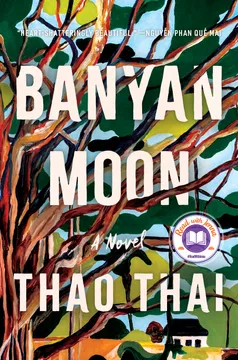


Plot Summary
The Red Tide Search
In 1998, seven-year-old Ann visits a Florida beach with her mother, Hương, and grandmother, Minh. A red tide stains the water and irritates their throats, but Ann delights in the strange colors while Hương worries about the sea. When Minh leaves to find a restroom, Hương dozes and wakes to find Ann gone.
She searches the shore in panic, then discovers her daughter hiding in dune grass. Ann meant to surprise them; Hương grabs her hard enough to leave marks on her arm. Minh comforts the crying child, while Hương, ashamed and frightened, cannot make herself apologize. On the silent drive home, Ann retreats to the far side of the car, an early fracture in the family’s closeness.
The beach turns ordinary maternal vigilance into a scene of inherited alarm. Hương’s fear is not simply about the water: her memories of Ann’s absent father have taught her to treat intimacy and danger as neighboring conditions. Her harsh grip protects Ann physically while making the child recoil emotionally. Minh, meanwhile, can soothe Ann but cannot repair the distance between daughter and mother. The red tide stains the family’s first shared memory with a warning: love can be genuine and still arrive in a form that hurts.
The Anniversary Cracks
Years later, Ann attends a lavish anniversary party for Noah Winthorpe’s parents, Alice and Brandon. She feels sick, alienated by the family’s polished wealth, and increasingly unsettled when Alice describes pregnancy. Noah notices Ann’s nausea and quietly replaces the steak she cannot face with fish, but he does not notice how sharply his family’s world excludes her.
His sister-in-law, Tina, hints that Noah’s parents once expected him to marry Alexis, his former girlfriend. Ann watches Alexis laughing easily with Noah and his parents, then confronts him at home. He admits that he has been sleeping with Alexis. Ann ends their relationship, discovers she is pregnant, and decides to keep the news from Noah until she knows what she wants.
Ann has mistaken fluency in Noah’s world for belonging to it. The party’s manners make exclusion difficult to name, so small gestures, Alice’s comments, Tina’s hints, and Noah’s silences accumulate until the affair gives them a concrete shape. Pregnancy disrupts the couple’s assumed future, but it also gives Ann a private center of gravity. Her decision not to tell Noah immediately is not a tactic against him. It is her first attempt to make a consequential choice before his needs and confidence define it for her.
Minh's Last Night
Minh has fallen, broken her hip, and been hospitalized with serious heart and lung problems. She insists she will recover, even imagining that a shadowy visitor has agreed to give her more time. After she returns to the Banyan House, Hương cares for her, but neither woman can make Minh accept how frail she has become. Minh dies alone during the night.
Hương calls Ann, who first resists the news, then breaks down and announces that she is coming home. Ann leaves Noah behind and flies to Florida. At the Banyan House, she and Hương face one another among Minh’s cluttered rooms, both grieving and both angry: Ann was never told Minh had been ill, while Hương had respected her mother’s wish to keep it secret.
Minh’s death removes the person who has quietly mediated between Hương and Ann. Their grief is therefore double: each loses Minh, and each loses the relationship that Minh helped make possible. Hương’s obedience to her mother’s wishes has a cost, since Ann experiences the silence as exclusion rather than protection. Ann’s return is a decisive break from the life organized around Noah, but it does not instantly make her close to Hương. The house receives her before her mother can.
The House Is Inherited
At Minh’s funeral, Ann and Hương handle the work together, while Hương’s brother, Phước, contributes little and complains when Minh’s will gives him money but divides the Banyan House between Hương and Ann. He had already imagined taking the property for his family. Afterward, Ann and Hương drive to the beach, where Ann finally tells her mother about the pregnancy and Noah’s betrayal.
Hương does not scold her. She asks whether Ann wants the baby, and Ann admits that she does, though she is frightened of raising a child alone. Ann considers leaving Florida, but the idea of returning to her old life feels wrong. Hương offers help without demanding a promise that Ann will stay, and they visit a temple to bless the baby.
The will makes family love materially consequential: the house is not just a memory but a contested future. Phước treats inheritance as a resource to optimize; Hương and Ann feel its emotional weight, even as they question whether they can live inside it. Their beach conversation marks a change in their habitual roles. Hương offers support without converting it into control, and Ann shares fear without surrendering authority. Their tentative trust begins not with an apology for the past, but with a practical willingness to face the next decision together.
Minh's First Secret
In 1965, seventeen-year-old Minh falls for Bình, a handsome classmate whose attention briefly offers escape from wartime hardship. Their secret encounters end when Bình marries a wealthier girl and stops seeking Minh out.
When Minh realizes she is pregnant, Xuân, a gentle friend of her brother, chooses to marry her and raise the baby as his own. Their daughter, Hương, is born, and the couple gradually build a loving family and a successful jewelry shop. They later have a son, Phước.
Minh grows ambitious, determined to make her children secure, but Xuân’s sudden illness and death in 1969 leave her a young widow. His tenderness has given the family a foundation, yet Minh still carries the secret of Hương’s conception and her own complicated feelings about the marriage.
Minh’s past complicates the idea that family begins with biological certainty. Xuân’s decision to raise Hương is an act of love, though Minh knows that the marriage began partly as rescue and obligation. Her later success does not erase the origin she conceals. The novel makes secrecy less a simple moral failure than a strategy that can shelter one generation while burdening the next. Minh’s ambition grows from a wish to protect her children, but protection also becomes her reason for deciding which truths they are allowed to know.
Gold in the Hem
After Xuân dies, Minh expands the jewelry business and uses its profits to support relatives, while sewing gold into the family’s clothes against the possibility of flight. As war worsens in 1973, she turns to Việt, a wealthy widower with political connections and a discreet sexual relationship with her.
Minh asks him to secure passage to America for her and the children. He agrees, and she leaves Vietnam with Phước and Hương, carrying Xuân’s carved wooden boat and Bình’s photograph among her keepsakes.
In the United States, the family begins in a crowded trailer, where a threatening landlord pounds on their door. Minh shields the children with stories and songs, then works cleaning houses. The Banyan House eventually becomes the family’s refuge, a home Minh fills with both care and accumulated possessions.
Minh survives by converting whatever resources she has into movement: business acumen becomes gold, and sexual bargaining becomes passage out of a dangerous country. The choice is neither romantic nor free of compromise, but it is purposeful. In America, the refuge she builds is materially fragile, yet she tries to make it emotionally durable through work and storytelling. The house’s later clutter reflects more than acquisitiveness. It is also Minh’s attempt to keep a place ready for the people who might return.
The Honeymoon's Warning
Hương meets Vinh while working at a college bookstore. His confidence and attention draw her into a quick courtship, and they marry after six months. On their honeymoon at a borrowed lake house, Vinh becomes fixated on the neighboring couple, Ashlynn and Rob, and bristles when Hương questions their behavior.
During an argument, Vinh smashes a bottle; Hương cuts her fingertip while cleaning a fish, and he watches before helping her bandage it. His charm and ambition remain, but Hương has glimpsed how quickly his insecurity can become threat.
Years later, pregnant with Ann, she endures his absences and bruises while still hoping marriage can be repaired. At Ann’s birth, Vinh leaves the hospital and does not return, forcing Hương and the newborn back to the Banyan House.
The honeymoon’s apparent smallness is part of its warning. Vinh does not begin as a monster; he begins as a man whose wounded pride repeatedly takes precedence over Hương’s perception and safety. Hương’s hope that their shared life will soften him keeps her interpreting danger as a temporary mood. The cut fingertip makes that denial bodily: she is injured, he is detached, and the marriage continues anyway. Her return to the Banyan House after childbirth is not a neat rescue, but it puts mother and baby within reach of Minh’s protection.
The Window Gives Way
After Ann’s birth, Vinh grows more abusive and treats Hương’s care for their daughter as an affront to his control. During one fight, he tosses the swaddled baby into the air, terrifying Hương until he finally hands her back. Hương takes Ann to Minh’s house. A week later, Vinh smashes through a window and attacks Hương in front of the child.
Minh arrives carrying Xuân’s old knife and stabs Vinh in the neck, stopping him from strangling her daughter. The women sit with the body through the night, then wrap it and carry it away in Minh’s Oldsmobile. They decide to make Vinh’s disappearance look like an abandonment, sparing Hương and Ann the danger of a criminal investigation and concealing Minh’s act for decades.
The violence forces a choice between moral cleanliness and immediate survival. Minh acts decisively where Hương has been trapped by fear and by the hope that Vinh might still become the man she married. Their cover-up protects Hương and Ann, but it also turns protection into a shared silence. Ann grows up interpreting her father’s absence as abandonment, while the women carry a far more dangerous history. Their secret is a shield, but it is also a wall inside the family.
The Key Beneath Jade
While sorting Minh’s possessions, Ann finds a small key inside the jewelry safe and uses it to open a trunk in the attic. Beneath a red dress and Xuân’s painted wooden boat lies a photograph of a young man, inscribed by Bình to Minh. His face resembles Ann’s and Hương’s. Ann understands that Bình, not Xuân, was Hương’s biological father, though Xuân raised her as his own.
Around the same time, Crystal, Ann’s former friend, explains that Minh once ordered her away from Ann, believing she was a bad influence. Ann also discovers that Hương secretly saved years of Ann’s illustrations. The discoveries make Minh’s love look less innocent, but also more complicated. Ann keeps the photograph’s meaning from Hương.
The trunk converts family history from a reassuring story into evidence that can be handled, hidden, or destroyed. The photograph reveals a biological truth, but it does not invalidate Xuân’s fatherhood; it exposes the gap between genetic inheritance and lived care. Crystal’s account also punctures Ann’s idealized memory of Minh, whose protectiveness could injure people beyond her granddaughter. Hương’s saved illustrations provide a quieter countertruth: her love for Ann has existed even when Ann could not recognize its form.
A Current of Her Own
After Minh’s death, Hương begins adult swimming lessons, having never learned as a child. She progresses from keeping her face underwater to swimming in the Gulf. When a rip current drags her away from shore, she remembers her instructor’s advice, swims sideways out of its pull, and reaches land alive with a sand dollar in hand.
She refuses a younger swimmer’s invitation to date, recognizing that she does not need a new man to prove she has survived. At home, Phước presses her to give up the Banyan House so he can claim it for his family. Hương rejects him, even when he mocks her and flicks a cigarette toward the grass. She stamps it out, protecting the property and asserting a will she once mistook for her mother’s alone.
Swimming gives Hương a form of agency that is neither domestic nor relational. In the current, she cannot command the water, but she can change her response to it; survival comes through technique rather than panic or rescue. Refusing Cliff’s invitation extends that lesson beyond the sea. She does not have to attach herself to a man to feel alive. Her confrontation with Phước likewise transforms old caretaking instincts into boundaries, though his discarded cigarette leaves a small, ominous trace beside the house.
A Boy and Old Friends
Ann reconnects with Wes Asher, her old friend, after he offers to help clear Minh’s belongings. They share a night together and later spend time in his small boat. Ann tells him she is pregnant; Wes reveals that he has a young son, Elijah, living far away with his mother, and regrets failing to stay close.
His honesty makes Ann feel seen, though she does not mistake tenderness for a settled future. Crystal returns to Ann’s life, apologizes, and explains the conflict that ended their friendship.
Ann also learns she is carrying a boy. She begins imagining a life in Florida, creates a nursery with Hương, and starts drawing again, shaping a Vietnamese folktale into a book for her child. Her future becomes something she can make, rather than inherit intact.
Wes matters less as a replacement for Noah than as a witness to the parts of Ann’s life she has muted. His own failure to remain present for Elijah prevents their connection from becoming a simple rescue fantasy. Crystal’s return performs a similar repair: friendship resumes only after Ann hears an account that challenges her certainty about Minh. Ann’s creative work gathers these imperfect inheritances into a form she can revise. She is not yet certain what kind of partner she wants, but she is increasingly certain that her life belongs to her.
The Daughter's Inheritance
As Ann grows closer to Wes, Hương fears her daughter is repeating the mistakes of women who trusted unreliable men. She insults Ann’s hopes and admits that Minh often failed her as a mother, while Ann insists that Minh was the only person who protected her from Hương’s husband, Gary.
Their argument exposes old wounds each had mistaken for settled history. Afterward, Ann finds the photograph of Bình and Hương’s hidden album of Ann’s artwork. She chooses not to burden Hương with the photograph’s revelation.
Instead, she burns it, keeping Xuân’s place in her mother’s memory intact. The two women have not reconciled, and Ann falls down the stairs soon afterward, badly enough to require hospital observation. The secret remains hers, but so does the choice to withhold it.
This quarrel shows how inherited care can be experienced as rivalry. Hương fears losing Ann to another man; Ann hears that fear as another attempt to govern her life. Neither woman is wrong about the history beneath the argument, but both use it as a weapon. Ann’s decision to burn the photograph is ethically ambiguous: she protects Hương from grief, yet repeats the family habit of deciding which truths another person can bear. The difference is that Ann recognizes the choice as hers and accepts its cost.
A Fall Opens the Door
At the hospital, Hương stays beside Ann, determined not to repeat the failures that shaped their relationship. The baby is unharmed, but Ann is shaken and struggles to remember what she meant to tell her mother.
Hương answers a call from Noah, who has been trying for months to see Ann, and gives him the hospital’s location. After Ann returns home, Noah visits with flowers. He apologizes for the affair and admits that his parents’ contempt for Ann mattered more to him than he had acknowledged.
Ann lets him feel the baby move, but tells him she cannot simply return to their old life. She does not know whether she will love Wes or Noah; she does know that she and the baby have built a life without Noah. Hương accepts his presence without deciding for her daughter.
Hương’s decision to contact Noah is a measured act of care, not a bid to reunite the couple. She makes room for the child’s father while allowing Ann to set the terms. Noah’s apology matters because he names the social pressure he previously disguised as uncertainty, but remorse does not restore the future Ann once imagined. Their encounter replaces a romantic ultimatum with a more difficult possibility: affection can remain, and co-parenting can begin, without requiring Ann to surrender her independence.
The Banyan House Burns
During a storm, lightning catches a smoldering spark at the banyan tree, and fire races from its dry branches into the decaying house. Ann wakes beside Noah and gets him moving before they flee with Hương, carrying only a few photographs and books.
The fire destroys the house and the tree that has stood over generations of family life. Its precise cause remains uncertain, though Phước had recently flicked a cigarette near the grounds; afterward, Hương quietly pockets a watch fragment that may connect him to the scene.
Outside, Hương fears Minh is trapped inside. Ann reminds her that Minh is no longer bound to the house. As firefighters douse the flames, the women leave together, grieving the place without mistaking it for the person they loved.
The fire makes the family’s metaphorical inheritance literal: the house cannot preserve them indefinitely, and its destruction releases rather than erases their history. The narrative leaves a narrow uncertainty around the blaze, echoing the family’s long habit of living with incomplete knowledge. Ann’s insistence that Minh is not trapped in the burning house marks a change in how the women understand memory. Love need not depend on keeping every object, secret, or room intact.
A Smaller Kind of Home
After the fire, Ann and Hương sell the land and use the insurance money to buy a modest cottage near the beach. They build a life there through ordinary negotiations over meals, plates, and the nursery. Ann’s baby arrives two weeks early and needs a stay in the neonatal unit. She names him Bình, a name she says means peace, while Noah arrives too late for the birth but returns to meet his son and promises to keep visiting.
Wes, moved by Ann’s becoming a mother, decides to go to California and rebuild his relationship with Elijah. Ann completes her illustrated folktale, giving its abandoned hero a new ending. In the final image, she brings baby Bình to the shore with Hương and sees the moon above them in daylight.
The resolution refuses the fantasy of a perfectly repaired family. Noah remains a father, Wes follows his own unfinished responsibility, and Ann does not have to choose a man as the condition of becoming whole. Naming her son Bình transforms a buried family name into a deliberate gift, even though Ann keeps its full history from Hương. The new cottage offers less grandeur than the Banyan House but more room for choice. Ann’s rewritten folktale gives the family something the past could not: an ending shaped by the living.
Analysis
Banyan Moon treats inheritance as something more unstable than property or blood. The women inherit a house, a set of family stories, and habits of care that can feel like protection to one generation and control to the next. Minh’s hidden past exposes the limits of biological certainty, while Xuân’s chosen fatherhood demonstrates how kinship is also made through sustained action. Ann’s choice to hide the photograph repeats the family’s secrecy, but with awareness of what secrecy costs. The novel does not offer a simple cure for that pattern. It shows Ann and Hương learning to make different decisions while still carrying what they cannot undo.
The book also links migration and domestic life without treating either as a clean escape. Minh’s flight from wartime Vietnam secures her children’s survival, but refugee life brings new forms of precarity. The Banyan House becomes both a refuge and a burden, a place where the women can shelter one another and where old injuries remain difficult to leave. Its fire destroys the physical container of their memories, not the relationships themselves. The move to a smaller cottage is therefore not a return to innocence. It is a practical decision to build a home better suited to the people they have become.
Motherhood is the novel’s most powerful bond and its most difficult inheritance. Hương’s fear makes her controlling; Minh’s protection becomes possessive; Ann’s love for her grandmother risks erasing her mother’s pain. Each woman acts from care, but care does not excuse every consequence. Ann’s emerging independence comes not from rejecting family, but from accepting its imperfections without letting them dictate her future. The ending offers no ideal household or perfect romance. Instead, Ann, Hương, and the child they welcome create a family through repeated acts of presence, negotiation, and revision.
People Also Read









Characters
Ann Tran
Artist becoming a motherAnn is an illustrator and Minh’s beloved granddaughter, raised between the protective Banyan House and her uneasy relationship with Hương. Observant and imaginative, she often draws what she cannot say, yet has spent years adapting herself to Noah’s ambitions and affluent family. Her loyalty to Minh can make her idealize the past, while her independence can look like withdrawal to the people she loves. Pregnancy forces her to consider what she wants apart from the future others have planned for her. She is capable of tenderness, but she also resists being managed, and her growth comes through making choices without pretending those choices are simple.
Hương Tran
Guarded, determined motherHương is Minh’s daughter and Ann’s mother, shaped by war, migration, an unstable marriage, and years of trying to build the intact family she never had. Her love often appears as vigilance, provision, or sharp correction, which can leave Ann feeling judged rather than protected. She is resourceful and hardworking, but her fear of loss has taught her to hide pain and keep control. Minh’s death leaves Hương without the family mediator she depended on, pushing her to face Ann more directly. Her desire to care for her daughter is genuine, though she must learn that care cannot require Ann to stay within reach.
Minh Tran
Matriarch guarding old truthsMinh is Hương’s mother and Ann’s grandmother, an ambitious survivor who builds security through work, practical cunning, and fierce devotion to her family. She can be funny and tender with Ann, but she is also proud, secretive, and accustomed to deciding what others should know. Her memories connect a Vietnamese childhood marked by war to the family’s life in Florida. Minh understands that survival often demands compromise, yet she does not always see how her choices shape her children’s later wounds. Her love is not gentle in every direction: it protects those she claims as her own while sometimes pushing other people away.
Noah Winthorpe
Ambitious, uncertain partnerNoah is Ann’s long-term partner, a classics professor whose ambition and manners fit easily into his wealthy family’s expectations. He is attentive in practical ways and genuinely wants a shared future, but he is also conflict-averse and slow to recognize how much his family’s approval shapes his choices. His confidence can make a plan seem inevitable even when Ann has not agreed to it. Noah is not cruel, and his affection is real, but kindness alone does not make him a fitting partner for the life Ann begins to claim.
Wes Asher
Hometown friend and fixerWes is Ann’s old friend, a furniture restorer and practical problem-solver who remains rooted in their Florida hometown. His easy humor makes him a refuge from Ann’s polished adult life, but his own past includes a broken marriage and distance from his son. He is more comfortable repairing objects than explaining himself, and his tenderness can coexist with avoidance. Wes offers Ann companionship without demanding that she become someone else, while his history reminds her that charm and good intentions do not guarantee reliability.
Xuân
Gentle, steadfast husbandXuân is Minh’s husband and the father who raises Hương and Phước. A friend of Minh’s brother, he is patient, kind, and less driven by ambition than his wife. His steadiness gives Minh a form of trust she rarely finds elsewhere, and his care for the children is not conditional on biology. He represents a quiet kind of strength, one expressed through loyalty and daily work rather than dominance.
Bình
Minh's first loveBình is a handsome classmate who briefly draws young Minh away from the constraints of wartime village life. Playful and self-assured, he enjoys her attention but does not offer the lasting commitment she hopes his affection might mean. A photograph he gives her becomes a trace of a past that Minh keeps private.
Vinh
Hương's volatile husbandVinh is Hương’s husband and Ann’s father, a charismatic, ambitious man whose confidence is shadowed by insecurity and anger. He longs for status and a life that feels larger than the one he has, and he can be attentive when his needs are met. Hương’s hopes for him are bound to the appealing man she first encountered, even as another side of him emerges. His presence shapes the family’s understanding of safety, marriage, and absence.
Phước Tran
Restless, status-seeking brotherPhước is Minh’s son and Hương’s younger brother. He has built a respectable, prosperous life and takes pride in the signs of success he has acquired, but he remains dissatisfied and sensitive to perceived favoritism. His relationship with Hương is strained by old childhood roles: she once cared for him, while he now wants to be treated as an equal. He values practical ownership more readily than family memory.
Crystal King
Frank, returning friendCrystal is Ann’s intense, outspoken friend from adolescence, now a wife and mother in their Florida hometown. Her bluntness can wound, but it also cuts through the polite evasions Ann encounters elsewhere. Crystal carries her own history of illness and difficult choices, and she is willing to challenge Ann’s idealized memories rather than simply comfort her. Their friendship depends on honesty, not on pretending their separation never mattered.
Diane Tran
Phước's observant wifeDiane is Phước’s wife and the mother of their daughters. Warmly mannered and sometimes distractible, she often seems to drift away from tense family exchanges, yet she notices more than people assume. Her eccentric intuition and unexpected candor complicate the family’s tendency to dismiss her as merely accommodating. Diane is loyal to Phước, but she does not always share his practical view of the world.
Alice and Brandon Winthorpe
Noah's affluent parentsAlice and Brandon are Noah’s wealthy parents, comfortable with social rituals and accustomed to having their expectations met. Alice uses charm and maternal familiarity to exert influence, while Brandon takes pride in status, possessions, and his sons’ achievements. They are not openly hostile to Ann, but their assumptions make her feel like a curiosity rather than a fully accepted member of the family. Their approval matters to Noah more than he initially understands.
Alexis
Noah's former girlfriendAlexis is Noah’s former girlfriend and a familiar presence in his family’s social circle. Her history with Noah gives Ann reason to question whether she truly belongs in the Winthorpe world, though Alexis is not the source of every problem in their relationship.
Mitchell and Tina Winthorpe
Noah's brother and wifeMitchell, Noah’s older brother, shares his family’s ease with privilege and needles Ann about her creative work. Tina, Mitchell’s wife, is more candid after drinking and lets slip the family’s expectations about Noah and marriage. Together they help reveal the social pressures beneath the Winthorpes’ polished gatherings.
Duke
Hương's married loverDuke is Hương’s employer and a married man with whom she has a discreet relationship. His presence offers companionship without providing the family life Hương once hoped to build. Hương keeps him separate from Ann and the family history she considers more important.
Scarlet and Meg Tran
Phước's ambitious daughtersScarlet and Meg are Phước and Diane’s adult daughters. They are confident, career-minded, and sometimes unkind toward Ann at family gatherings. Their ambitions echo Phước’s drive to improve the family’s status and circumstances.
Fiona
Wes's former partnerFiona is Wes’s former partner and the mother of his son. Their relationship was troubled by conflict and incompatible hopes, leaving Wes with a lasting sense of distance from the family he wanted.
Elijah
Wes's young sonElijah is Wes’s young son, living far from his father with Fiona. His absence weighs on Wes and gives him a personal reason to think carefully about what it means to show up for a child.
Cliff
Younger beach swimmerCliff is a younger swimmer Hương meets at the beach. His friendliness encourages her to notice the possibility of new connection, but he also gives her a chance to set a boundary without apology.
Gary
Hương's former husbandGary is Hương’s later husband and Ann’s stepfather. He presents himself as a respectable partner but is cruel to Ann when Hương is not present. His presence adds another layer to Ann’s distrust of the family life Hương tried to construct.
Plot Devices
The Banyan House
A home holding family historyThe large, decaying Florida house shelters Minh, Hương, and Ann across different stages of their lives. Its crowded rooms hold inherited objects, private histories, and evidence of the women’s affection and conflict. Ann and Hương inherit the property together, while Phước sees it as a financial opportunity. The house’s eventual destruction forces the women to separate their bond from the place that has contained it.
The Locked Trunk
A container for buried historyMinh keeps a trunk filled with a red dress, a wooden boat, and a photograph connected to her youth. A key hidden among her jewelry leads Ann to it after Minh’s death. The objects make private choices legible across generations, especially the difference between biological ancestry and the father who raised a child. The trunk also embodies the family’s habit of protecting loved ones by withholding difficult truths.
The Banyan Folktale
A story about leaving and returnMinh tells her children the Vietnamese tale of Chú Cuội, the man carried to the moon with a banyan tree. The story recurs in Ann’s memories and becomes the basis for a book she creates for her child. Its meaning changes as the family does: separation can be loss, escape, or a necessary departure, while a new ending can be made by the people who remain.
Water and Swimming
A measure of chosen agencyThe sea begins as a danger Hương fears and a setting for Ann’s childhood disappearance. After Minh dies, Hương learns to swim and eventually survives a rip current by changing direction rather than fighting straight against it. Her progress gives physical form to a broader change: she can meet uncertainty without depending on a man or her mother to rescue her.
Family Altars
A ritual of continuing connectionThe altar gives the living a way to honor ancestors through photographs, incense, fruit, and offerings chosen from family habit. Ann and Hương adapt Minh’s ritual after her death, disagreeing over details while making the altar together. It links the family’s Vietnamese traditions to their Florida home and turns mourning into an ongoing relationship rather than a clean severance.
Download PDF
Download EPUB
.epub digital book format is ideal for reading ebooks on phones, tablets, and e-readers.








