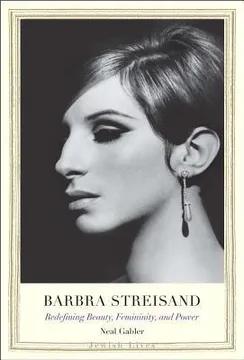


Key Takeaways
Treat visible difference as a source of authorship, not a defect.
A mirror becomes a manifesto. In her first film, Funny Girl, Streisand pauses before a mirror and appraises the face Hollywood had been telling her to hide. The moment makes self-regard an act of defiance: she claims the right to define her own beauty before an audience can define it for her.
A particular outsider becomes universal. Neal Gabler argues that Streisand’s Jewishness, Brooklyn accent, and unconventional looks made her a cultural emblem for people who had been dismissed. Her appeal was not that she seemed like an unreachable star, but that she seemed like someone viewers already knew. She did not succeed by erasing her difference. She made it central to her public identity.
What's striking is how representation changes when it begins with specificity rather than smoothing difference into a vague message of acceptance. Streisand's particular features gave audiences a visible challenge to Hollywood's narrow ideal. The strategy has limits: one celebrity cannot stand in for every outsider, and personal triumph does not remove the structures that exclude others. But her example makes a useful distinction between seeking inclusion on existing terms and changing what counts as desirable.
Turn rejection into a craft, not merely a grudge.
Attention became a need. Streisand was fifteen months old when her father died. Her mother grieved, the family struggled financially, and Streisand later described feeling neglected by both her mother and stepfather. Other children mocked her looks. Singing in her apartment-building hallway brought something she rarely received elsewhere: an audience that applauded and asked for more.
Drive met repeated refusal. School staff dismissed her ability, casting agents called her unmarketable, and her mother urged her toward secure work. Streisand kept auditioning, studying acting, and performing. Her ambition mixed genuine confidence with deep insecurity. Gabler presents that tension, rather than confidence alone, as part of her determination to keep working when praise was scarce.
The story makes ambition legible as both artistic appetite and an answer to early deprivation. That connection can deepen understanding, but it should not turn hardship into a success formula. Many people experience neglect or ridicule without finding a career-making outlet, and drive can exact a personal cost. The more useful lesson is narrower: Streisand converted some painful experiences into material and effort, while her talent and access to mentors also mattered.
Use small audiences to prove what the mainstream cannot yet recognize.
A niche made the first opening. In 1960, Streisand entered a talent contest at a Greenwich Village club and won with a song she had rehearsed carefully. The room included many gay patrons, people familiar with being treated as outsiders. Her unusual clothes and comic manner drew attention, but the sudden shift into serious, emotionally precise singing made the performance memorable.
The act was built, not accidental. She developed a public persona that seemed spontaneous, including the talkative, offbeat guest who could abruptly become a commanding singer. Broadway’s I Can Get It for You Wholesale expanded her audience. Her first album then reached number eight on the Billboard chart, despite limited support from Columbia Records. She also secured creative control over that recording.
Streisand's early career illustrates how subcultures can act as testing grounds for forms that established institutions initially reject. A small audience provides more than applause: it offers a setting where an unfamiliar style can acquire meaning and advocates. Yet the story is not a simple triumph of authenticity. Her persona was carefully rehearsed, and a major Broadway opportunity and a record contract helped carry her beyond the clubs. Distinctiveness still needs channels through which to travel.
Make every lyric sound like lived speech, not polished display.
Interpretation, not just range. Streisand’s singing joined a large vocal range to the intimacy of ordinary speech. She moved between chest and head registers, emphasized individual words, and allowed the rhythm to bend around the feeling of a lyric. The book calls flexible timing rubato. This approach made her performances sound less like a polished recitation and more like a person telling a story.
A song could change direction. On Happy Days Are Here Again, she transformed a tune of optimism into something mournful. In Cry Me a River, the delivery moves from hurt toward defiance. Her phrasing gave words emotional texture, including sounds other singers might smooth away. Listeners heard not just a voice but a point of view, often one shaped by loneliness, longing, and resilience.
The account connects musical technique with the psychology of persuasion. Listeners often respond to the sense that a performer means what the words say, but that impression is produced by craft: timing, articulation, breath, and changes in tone. Streisand's achievement shows how precision can create intimacy rather than undermine it. There is also a useful caution: perceived emotional truth is not proof that a song literally recounts the singer's life. Performance can make imagined experience feel credible.
Redefine beauty by changing the audience’s standards, not your face.
She refused the expected repair. Streisand was repeatedly advised to have her nose altered if she wanted a screen career. She considered the suggestion but kept her features. Makeup, clothing, styling, and her own growing confidence shaped how audiences saw her, yet Gabler stresses that the change was not simply cosmetic. The public began to read her distinctive face differently as her talent and authority became impossible to ignore.
The screen made the argument visible. Funny Girl turned the supposedly plain performer into a romantic lead whose intelligence, comic timing, and vocal power were part of her appeal. Critics described the effect as a new idea of beauty. Her career also challenged the assumption that a leading woman had to be conventionally attractive, compliant, or defined by a man’s approval.
Beauty is not only a physical judgment; it is also a social story about which traits deserve attention. Streisand's fame helped alter that story by making talent and personality visible in a role usually reserved for conventional glamour. Still, the success of one exceptional star does not mean appearance stops shaping women's opportunities. The strongest reading is not that confidence solves bias, but that changing representation can widen the standards against which people are judged.
Use art to expose the costs of being powerful, not only its rewards.
Her films replayed real conflicts. In The Way We Were, Streisand plays Katie, a politically committed woman whose conviction and judgment are strengths, but also help strain her romance with the more accommodating Hubbell. The film does not simply celebrate a forceful woman or blame her for a failed relationship. It shows how admirable traits can become difficult to live with, and how love does not erase differences in values.
Yentl brought the struggle behind the camera. Streisand spent years preparing to direct and star in this story of a woman who disguises herself as a man to study Jewish religious texts. She consulted scholars and learned about Judaism, a tradition she had known mainly through culture and family. The film let her explore gender, learning, and selfhood while challenging the assumption that women belonged only in front of the camera.
These films gain force from the friction between empowerment and its interpersonal costs. The Way We Were allows a strong woman to be morally serious without making her infallible, a more interesting model than either the flawless heroine or the cautionary shrew. Yentl makes exclusion concrete through access to education and authorship. A caveat is that a celebrity's personal identification can make a film's argument vivid while narrowing its view of other women's experiences.
Spend fame where silence would protect comfort, not vulnerable people.
Her politics had a moral source. Streisand connected her liberal activism to Jewish teachings about charity and tikkun olam, the responsibility to help repair the world. In 1986, her One Voice concert raised more than eight million dollars for political causes, including reproductive rights and nuclear disarmament. She supported civil liberties, AIDS advocacy, gay and lesbian rights, and environmental causes through public appearances and philanthropy.
She defended the right to participate. At Harvard in 1995, she argued that artists remain citizens, entitled to speak about public questions. The same forcefulness that helped her advocate also fed complaints that she was pushy or controlling. Gabler links those judgments to gendered and ethnic expectations: behavior praised as assertive in a man could be condemned as excessive in a woman.
Streisand's advocacy shows how celebrity can convert attention into money, visibility, and pressure on institutions. Her speech at Harvard also challenged the idea that artistic work disqualifies someone from civic argument. Fame, however, is not expertise, and public confidence can outrun a speaker's knowledge. The important distinction is between using visibility to open a debate and expecting visibility alone to settle it. In Streisand's case, fundraising and sustained study accompanied the public voice.
Come home to your origins without surrendering the life you built.
Success did not require erasure. After decades of fame, Streisand returned to Brooklyn to perform at the Barclays Center, drawing on the neighborhood and school that had shaped her. The concert was both a homecoming and a reminder of how far she had traveled. Her identity could include the sophisticated star, the private collector, and the Brooklyn outsider without forcing one to cancel the others.
Contentment changed the measure. Her marriage to actor James Brolin and growing preference for home and privacy eased the pressure to keep proving herself publicly. She continued to record and perform, including an album that became her eighth number one and made her the first performer with a top album in five different decades. The closing image is not retreat or assimilation, but a life she could inhabit on her own terms.
The homecoming matters because it treats origin as a resource rather than a trap. Streisand could claim the benefits of success without pretending that Brooklyn, Jewish identity, or early rejection belonged to a discarded past. Her quieter priorities also complicate the usual equation of achievement with constant visibility. Privacy can be a form of agency, though it is easier to choose when wealth and recognition have already been secured. The story holds both facts at once.
Analysis
Gabler's book is less a conventional life story than an argument about how a star becomes a cultural symbol. Its central claim is that Streisand's meaning cannot be separated from the traits that initially made her difficult to cast: her Jewish identity, Brooklyn voice, unconventional appearance, and refusal to behave modestly. In this account, the career is not a sequence of awards. It is a contest over who gets to define beauty, femininity, and authority.
The most persuasive part of the argument is its attention to reception. Streisand's significance did not come from talent in isolation. It emerged through the interaction of performance, audience identification, changing cultural expectations, and the publicity that made her personal story part of her work. Her songs turn emotional interpretation into a recognizable signature; her films repeatedly stage conflicts between selfhood and conformity. Her eventual move into production and direction made control itself part of the public meaning of her career.
That interpretive method also creates a risk. When biography explains a role, then the role is treated as evidence about the biography, the argument can become circular. Gabler's emphasis on Jewishness and gender illuminates real patterns in the language used against Streisand, but it can make heterogeneous criticism seem to have a single source. Some objections concerned artistic choices, some reflected prejudice, and the two could coexist. The book is strongest when it holds those possibilities together rather than treating every conflict as proof of one explanation.
Its subject is therefore both a person and a public construction. That distinction matters: the audience encounters a crafted persona, not transparent access to private motives. Yet the persona has real cultural effects. Streisand made it harder to imagine that femininity required deference or that ethnic difference had to be hidden for a woman to lead a film. The durable insight is not that one person conquered bias, but that her success changed what audiences could see as possible, while leaving the institutions that set the old rules open to question.
Review Summary
Reviews for Barbra Streisand by Neal Gabler are mixed, averaging 3.64/5. Many praise its focus on Streisand's Jewish identity and how it shaped her career, calling it insightful and compelling. However, critics note it reads more like an analytical essay than a traditional biography, relying heavily on existing sources with little original research. Some find the author overly reverential and repetitive, while others appreciate its exploration of beauty, femininity, and power. Several readers objected to the criticism of What's Up, Doc?
Glossary
mieskeit
perceived plainnessA Yiddish term for ugliness or plainness. Gabler uses it to describe the identity imposed on Streisand by people who judged her face against conventional Hollywood standards. In the book's argument, the label is not an objective verdict: it marks the social judgment she resisted and eventually helped turn into a distinctive source of appeal.
chutzpah
bold, unapologetic nerveA Yiddish word for audacity or nerve, used here for Streisand's refusal to accept the limits others set for her. It describes her insistence on pursuing leading roles, preserving her appearance, and exercising creative control. In the book, chutzpah is not mere confidence; it is the willingness to act as if a dismissed outsider has the right to claim authority.
Jewish metaphor
outsider identity made symbolicGabler's account of how Streisand's visibly Jewish identity came to represent more than one community. Her experience of exclusion, self-assertion, and success made her a figure with whom many people who felt different could identify. The metaphor depends on her particular Jewishness, rather than on hiding it or treating it as a universal identity.
tikkun olam
responsibility to repair the worldA Hebrew phrase meaning repair of the world, cited by Streisand in explaining the ethical basis of her political activism. In the book, it connects charitable responsibility and concern for justice with her Jewish upbringing. It helps explain why she treated public influence as a means to support causes, rather than only as a reward for celebrity.
rubato
flexible musical timingA musical term for expressive freedom in tempo, in which a performer stretches or compresses timing instead of following a beat mechanically. Gabler uses it to explain part of Streisand's interpretive style. By letting a phrase follow the emotional shape of its words, she could make a song feel conversational and personal.
schwa
unstressed vowel soundThe neutral vowel sound common in unstressed syllables of English words. Gabler discusses how Streisand shaped this sound rather than leaving it thin or indistinct, making ordinary speech sounds richer in song. The term helps describe her larger approach: vocal beauty served the meaning of a lyric, rather than taking precedence over it.
Method Singer
emotionally inhabiting a songGabler's analogy between Streisand's singing and method acting. A Method Singer presents a song as if its emotions are being experienced, rather than simply delivering its melody and words. The concept explains why listeners heard her performances as unusually truthful, even when a song described events she had not personally lived.
Jewish Woman Syndrome
stereotype of forceful Jewish womenA cultural stereotype that portrays Jewish women as unattractive, loud, domineering, or excessively demanding. Gabler uses the term to examine how criticism of Streisand's behavior could echo prejudices about both women and Jews. It describes a stereotype applied to her, not a medical condition or a reliable account of Jewish women.
Download PDF
Download EPUB
.epub digital book format is ideal for reading ebooks on phones, tablets, and e-readers.








