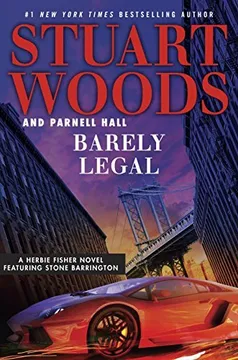


Plot Summary
The Paper Finds Herbie
At ninety-two, bookmaker Benny Slick avoids being thrown from his office window by producing a marker for ninety thousand dollars. The slip began as Herbie Fisher’s gambling debt to Vinnie the Vig, then passed through two creditors until it reaches loan shark Mario Payday.
Herbie, once a reckless young man rescued from prison by lawyer Stone Barrington, has since become a prosperous senior partner and Stone’s protégé. At dinner with Stone and police commissioner Dino Bacchetti, he introduces Yvette Walker as his fiancée, an aspiring actress whose wit charms the table.
Outside, Mario’s enforcer Carlo checks Herbie against an old arrest record and reports that he has found the debtor. A forgotten signature has joined Herbie’s polished present to his dangerous past.
The opening makes a piece of paper behave like a surviving appetite: Herbie’s former self has left a claim that neither professional success nor personal reinvention can erase. The marker is legally ambiguous but socially potent because Mario’s authority rests on enforcement, not adjudication. Herbie’s respectable life therefore appears less like a clean break than a carefully maintained surface. His engagement offers an image of forward motion, while the old debt quietly pulls the plot backward. The contrast also establishes the novel’s comic-criminal register: a lethal threat can begin with a creditor’s missing paperwork, yet the absurdity does not make the danger less real.
Engagement Dinner Gunfire
Carlo confronts Herbie at Patroon, claiming that Mario is owed ninety thousand dollars. Herbie denies the debt, and when Carlo refuses to leave, Dino steps in. Carlo recognizes the police commissioner, panics, draws a revolver, and fires; Herbie pulls Yvette out of the line of fire, while Stone trips Carlo as he flees.
The shot ruins the couple’s engagement dinner and brings detectives to the restaurant. Herbie’s old arrests make the questioning uncomfortable, but Dino’s presence prevents the officers from treating him as the obvious culprit. The episode leaves Yvette shaken and Herbie exposed to a debt collector who knows where he eats. What should have been a private celebration has become a public warning.
The gunshot turns the novel’s two forms of intimacy, friendship and courtship, into a public test. Herbie protects Yvette instinctively, but the act cannot shield either of them from the institutions and criminal networks gathering around him. Dino’s authority can cool an investigation, yet it cannot erase the danger that produced the violence. Herbie’s past also becomes an active social fact: his record shapes how detectives interpret him before they know what happened. The scene makes respectability conditional, a status that can be challenged by one old photograph or one frightened gunman.
Mario's Twenty-Four Hours
After the restaurant shooting, Mario’s men abduct Herbie and take him to a shabby office. Mario shows him the original marker, with each creditor’s transfer written onto it, and insists that Herbie’s earlier repayment to Vinnie cannot be proved because Herbie kept no receipt. To make the claim feel immediate, the men hang Herbie upside down outside an eighth-floor window, then pull him back in.
Mario gives him a day to pay the principal and waives the interest as a display of supposed generosity. Herbie returns to his apartment rattled and exhausted. Yvette greets him with an extravagant attempt to restore their romantic evening, and for a moment he lets the threat fall away. The deadline, however, remains in force.
Mario’s power depends on converting an evidentiary gap into a bodily fact. Herbie may be right that he paid, but without a receipt, memory has no force against a chain of signed transfers and a man willing to suspend him over traffic. The scene exposes the limits of professional confidence: Herbie can argue over the document’s meaning, but he cannot control the room in which that meaning is enforced. His return to Yvette’s affection is not mere escapism. It shows how urgently he wants ordinary life to resume, even while danger has already entered his home.
The Substitute Lawyer
Herbie’s colleague James Glick, under mob pressure, phones from a train and invents an emergency appendectomy to get away from the case he is supposed to try. Herbie reaches court as a substitute for David Ross, a Columbia student charged after undercover detective Marvin Kelly claims he found cocaine in David’s jacket and locker.
Prosecutor Charles Grover offers a lenient plea arranged with David’s father, Councilman Ross, but David refuses because he says the drugs were planted.
Herbie, who has never tried a criminal case, must choose between an easy resolution and his client’s insistence on innocence. Meanwhile, developer Jules Kenworth needs the councilman to approve a building height change; he orders mobster Tommy Taperelli to put David in jail as leverage.
Herbie is drawn into the case by a colleague’s cowardice, but the decisive pressure comes from David’s refusal to accept a deal that would make a false account official. The plea bargain looks merciful because it prevents prison, yet it also asks the accused to surrender the truth of his own experience. Herbie’s initial temptation to treat the case as an inconvenient favor gives way to a more demanding professional identity. The political plot sharpens the distinction between lawful procedure and justice: the system’s apparent generosity is being used to conceal an unlawful scheme, while the defendant’s stubbornness becomes the first credible challenge to it.
Kelly's Missing Answer
Herbie begins cross-examining Kelly by probing how the detective handled the envelope of cocaine. David says he removed it from his own pocket when ordered to empty it, which could explain why his prints are present and Kelly’s are not. Herbie also tests the detective’s account of the locker evidence and asks whether Taperelli influenced his testimony.
The judge limits the inquiry, but Dino confirms privately that Kelly is corrupt and connected to Taperelli. Herbie’s home life also proves less secure than he thought: Dino discovers that Yvette has a sex-work record, while she secretly uses a phone-tracking app to monitor Herbie for her boyfriend, Donnie Dressler. Donnie presses her to hurry their scheme to rob the lawyer.
The courtroom and the engagement reveal parallel forms of managed evidence. Kelly’s account depends on the jury accepting that the detective controlled the crucial object, while Herbie’s questions expose how little the testimony actually establishes. At home, Yvette’s tracking app turns care into surveillance, and Herbie’s trust becomes a resource someone else can exploit. The novel does not make suspicion automatically virtuous: Dino’s instincts are accurate, but Herbie’s happiness is genuine. That tension matters because the danger does not arrive in a plainly villainous disguise. It inhabits the reassuring gestures and procedural explanations that people rely on to feel safe.
A Bed Made for Murder
Mario decides to make an example of Herbie and sends Carlo and Ollie the Ox to stage a crime in his penthouse. Yvette has already slipped knockout drops into Herbie’s martini to help Donnie steal valuables, so he is unconscious when the intruders arrive.
They shoot Yvette, strip away her clothing, place the gun in Herbie’s hand, and fire into the headboard to suggest a lovers’ quarrel. Donnie reaches the apartment afterward, finds Yvette dead, and steals cash and jewelry before leaving in his false deliveryman role.
Carlo then anonymously reports a domestic disturbance. Police find Herbie beside the body, drugged and holding the weapon, and book him for murder. The robbery and the staged scene give several people reasons to misread what happened.
The staged bedroom is an argument built out of props: the gun, the naked bodies, and Herbie’s unconsciousness invite investigators to settle on a familiar story before they test it. Yet the scene is not a single criminal plan. Yvette and Donnie have arranged a theft, while Mario’s men turn that opportunity into murder and a frame. Their motives overlap without aligning, producing evidence that is simultaneously genuine and misleading. Herbie’s powerlessness is literal, but his arrest also shows how quickly institutions can treat a convincing tableau as knowledge. The violence succeeds first by controlling what others see.
The Wrong Woman Taken
Stone and Dino help Herbie leave custody and begin examining the penthouse. Dino finds evidence of a drugged drink, missing cash and jewelry, and Donnie Dressler’s fingerprints on the emptied cash box; the medical findings confirm Herbie was heavily sedated.
While the murder inquiry turns toward the burglar, Taperelli’s men target Melanie Porter, David’s sister, after seeing her with Herbie and assuming she is his girlfriend. They seize her outside the hospital and take her to a house in Queens.
Mookie eventually learns who she is and tells Kenworth that the councilman’s daughter is now in their hands. Kenworth sees a new route to force the zoning vote. Councilman Ross receives the threat: Melanie will remain captive unless David’s trial is lost.
This turn transforms the family’s private anxiety into direct political coercion. The kidnappers make a consequential mistake about Melanie’s identity, but once they discover her parentage, the error becomes useful to Kenworth. Meanwhile, the police investigation demonstrates that material evidence can weaken the case against Herbie without repairing the loss he has suffered. The threat forces Councilman Ross to confront the gap between his public skill at managing favors and his private inability to protect his children. Melanie is not merely a bargaining chip in the plot; she is the person whose independence and practical competence the captors underestimate.
Courtroom Time Bought
With Melanie missing and her father afraid that police involvement will get her killed, Herbie cannot finish David’s trial or simply abandon it. He returns to court and asks Kelly how the detective knew David would be at the Columbia party.
Kelly cannot answer without consulting notes, so Herbie turns that failure into an adjournment. He also tells Stone to keep the trial moving carefully, while withholding the kidnapping from Dino to avoid a police raid.
After dinner with Stone and Dino, Herbie spots a rough tail, tricks him into leading the way to Queens, and sees Melanie held behind a locked door with armed guards. One captor’s instructions make clear that the men may kill her if police arrive. Herbie now knows the location and the cost of waiting.
Herbie’s legal maneuver is not a bid for victory but a way to preserve the conditions for rescue. He uses courtroom procedure to buy hours, even though each delay risks damaging David’s defense. This is an ethically unstable choice: he protects Melanie by concealing information from the police, but that secrecy also places both of them in greater danger. Herbie’s discovery of the hideout converts an abstract threat into a tactical problem with a specific address, armed men, and a rule about police. His familiar talent for improvisation returns, now burdened by consequences he cannot argue away.
The Queens Hideout
Herbie drives to Strategic Defenses, the training operation he helped establish, and asks former CIA officer Joshua Hook for a refresher with a handgun. After practice, Josh gives him the weapon and offers backup. Herbie returns to court, keeps the questioning narrow, and leaves Stone to manage the proceedings while he prepares to reach Melanie.
A police officer is tailing him, so Josh confronts the man and draws police attention long enough for Herbie to slip away. Herbie then visits Mario, whose demand for the old debt has followed him through the crisis. He persuades Mario that his conservator will pay, but only if Mario accompanies him. The loan shark’s collection party becomes Herbie’s way into the Queens house.
Herbie’s competence now lies in combining resources that do not naturally belong together: legal delay, tactical training, a friend’s physical courage, and a loan shark’s insistence on payment. His deception of Josh is morally uncomfortable, but it is also an admission that he cannot manage the rescue alone. The gun does not make him a trained operative; it gives him one fragile option in a situation where every route is compromised. Mario’s debt, once a symbol of Herbie’s old recklessness, becomes an instrument he can redirect. His survival depends less on mastery than on improvising with other people’s motives.
The Debt Collectors Arrive
At the Queens house, Mario’s men demand entry while Taperelli’s guards refuse to recognize their claim. Mookie’s surprise at seeing Mario reveals that he believes the loan shark arranged Yvette’s murder. Herbie seizes the confusion, warns the room about a gun, and fires into the floor. Both gangs draw weapons and open fire.
Herbie reaches Melanie upstairs; she nearly attacks him before recognizing him, then escapes with him toward the front of the house. On the way out, Mario appears and shoots Herbie in the chest. Herbie returns fire, killing Mario as Stone and Dino arrive. David has followed the convoy and called emergency services. Melanie survives, and Herbie is rushed to hospital with a bullet lodged near his heart.
The climax resolves the book’s collision of criminal systems through a breakdown in their assumed control. Mario and Taperelli’s men arrive with separate agendas, and each group mistakes its own leverage for command of the situation. Herbie does not win through a clean tactical plan; he turns their mistrust into a brief opening and accepts the physical cost of putting himself between Melanie and Mario. David’s decision to follow and call for help matters because the threatened family is no longer merely acted upon. The rescue is collective, improvised, and dangerous, rather than a simple triumph of individual heroism.
Two Cases Unravel
Herbie wakes in hospital to learn that Melanie is safe and David’s charges have been dropped. The surviving Taperelli enforcer is cooperating, Kelly is under investigation, and prosecutors are building a case against Taperelli and developer Kenworth.
Donnie remains a fugitive after the police identify him as the burglar, while Glick is captured near the Mexican border and returned to face the consequences of his flight. Herbie also learns that Yvette’s apparent devotion concealed a criminal arrangement, a revelation that complicates his grief rather than erasing it.
Melanie is engaged to Arthur, so Herbie’s growing attachment has no easy future. When his firm urges him back to corporate work, he asks that Glick take the assignment instead and admits he wants to try cases.
The resolution distributes consequences unevenly, refusing the neatness of a single solved crime. David’s freedom follows from the collapse of the frame-up, while Kelly, Taperelli, and Kenworth face exposure through testimony and investigation. Donnie’s flight leaves the theft plot partly unsettled, and Herbie’s survival cannot restore the relationship he thought he had. His choice of trial work is not a triumphant career makeover so much as a changed understanding of what legal skill is for. The novel’s final emotional movement is toward responsibility: Herbie has spent much of the story escaping the consequences of his old self, then discovers a form of work that demands he face them.
Analysis
Barely Legal tests the boundary between a person’s legal identity and the story others can make from his past. Herbie has become a successful lawyer, yet a forgotten marker, old arrest record, and reputation for reckless choices repeatedly pull him back into the role of the irresponsible young man. The plot makes that pressure literal: people use documents, police testimony, a planted weapon, and a staged bedroom to author versions of reality that are more immediately persuasive than the truth.
The courtroom plot is not simply a contest between a clever defense and a powerful prosecution. David’s refusal of the plea insists that survival without truth may still be a form of defeat. Herbie’s professional growth begins when he stops treating the case as an inconvenience and accepts the duty to defend a client whose account he believes. Yet his attempt to protect Melanie by concealing the kidnapping shows the ethical cost of acting alone. He can be brave and strategically perceptive while still mistaking secrecy for protection.
The book’s criminal worlds mirror one another through transaction. Kenworth treats political influence as a development cost, Taperelli treats intimidation as management, and Mario treats violence as debt collection. Each man converts relationships into leverage. Against that logic, Herbie’s most consequential acts arise from loyalty that cannot be priced: Stone’s mentorship, Dino’s friendship, David’s insistence on being heard, and Melanie’s trust. The novel does not make these bonds magically safe. It makes them imperfect resources that people must choose to use.
Its comedy sharpens rather than dissolves the danger. The false appendectomy, the disputed IOU, and the pizza-delivery disguise are absurd precisely because they operate inside systems with real consequences. By the end, Herbie’s decision to embrace trial work signals more than a career preference. He has found a form of responsibility that asks him to challenge the stories powerful people impose, while accepting that the truth may arrive late, messily, and at personal cost.
Review Summary
Barely Legal received mixed reviews, with ratings ranging from 1 to 5 stars. Some readers enjoyed the fast-paced plot and Herbie Fisher's character development, while others found the story disjointed and improbable. Positive reviews praised the humor, courtroom scenes, and inclusion of familiar characters like Stone Barrington. Negative reviews criticized the writing quality, plot inconsistencies, and perceived decline in Woods' storytelling. Overall, opinions were divided on whether this new series featuring Herbie Fisher was a successful departure from the Stone Barrington novels.
People Also Read
Characters
Herbie Fisher
Reformed reckless lawyerA brilliant, personable New York attorney, Herbie has rebuilt his life after a reckless youth and now works as a senior partner at Woodman & Weld. Stone Barrington mentored him, and Herbie values both his professional standing and the chance to prove he is no longer the careless young man people remember. His confidence can shade into impulsiveness, especially when he feels responsible for someone in danger. He is not a seasoned criminal lawyer or an action hero, but his quick wit, improvisational intelligence, and willingness to accept personal risk make him effective under pressure. His central psychological struggle is learning that competence is not the same as control.
Stone Barrington
Mentor and fixerA wealthy, well-connected attorney and Herbie’s former mentor, Stone provides professional judgment, access, and steady friendship. He understands Herbie’s history well enough to recognize both his talent and his tendency to rush into danger. Stone is practical without being cold: he works to protect Herbie legally, helps manage the trial, and makes space for his grief. His position offers him influence, but he does not mistake influence for omnipotence. In the story, Stone represents the stabilizing relationship Herbie can rely on even when he resists advice.
Dino Bacchetti
Police commissioner allyNew York’s police commissioner and Stone’s longtime friend, Dino balances institutional authority with personal loyalty to Herbie. His first instinct is to investigate, and his experience makes him alert to corruption and procedural inconsistencies. Yet his protective impulses can make him impatient with Herbie’s refusal to accept an easy deal or follow police advice. Dino’s role is complicated by the fact that the department he leads includes compromised officers. He must distinguish friendship from favoritism while deciding how to use his authority without making a dangerous situation worse.
Yvette Walker
Glamorous fiancéeAn aspiring actress who appears polished, playful, and warmly attentive, Yvette enters Herbie’s life as a source of excitement and affection. Her conservatively presented appearance contrasts with a mischievous wit, and her relationship with Herbie seems to give him a fresh chance at intimacy. She is also closely connected to Donnie Dressler, whose impatience shapes the choices she makes. Yvette’s role invites the reader to consider how readily a person can mistake a carefully performed version of trust for the thing itself.
David Ross
Accused councilman's sonA Columbia student studying prelaw, David is charged with possessing and selling cocaine. His father’s political influence could secure him a lenient plea, but David refuses to accept a conviction for something he says he did not do. He is earnest and sometimes sharp with Herbie, especially when he fears that adults are making decisions about his future without listening to him. David’s insistence on being treated as an adult challenges his father’s protective instincts and pushes Herbie to take the case seriously.
Melanie Porter
Doctor and clear-eyed allyDavid’s older sister, Melanie is a medical intern who combines warmth with a direct, observant manner. She recognizes that her father’s political instincts often obscure the truth and offers Herbie a more candid account of the family’s dealings with Jules Kenworth. Her easy rapport with Herbie develops alongside her concern for David, though she is not simply an extension of either man’s needs. Melanie is resourceful and physically capable, qualities that inform her response to danger without defining her entire character.
Councilman Ross
Political fatherDavid and Melanie’s father is a practiced politician who knows how to preserve his reputation and use relationships to solve problems. He arranges a favorable plea for David because he fears the damage a drug conviction could do to his son. His political caution can make him seem evasive, but it coexists with sincere concern for his children. Kenworth’s pressure forces him to confront the limits of managing every crisis through influence.
James Glick
Frightened trial counselA young trial lawyer at Woodman & Weld, Glick is assigned to David’s defense before mob intimidation convinces him that remaining in court may cost him his life. He passes the case to Herbie through a fabricated medical emergency, then keeps fleeing as pressure follows him. Glick is neither fearless nor wholly without conscience; his panic and evasions create real problems for Herbie and David. His choices illustrate how coercion can turn a professional into both a victim and a participant in a wrongdoing.
Mario Payday
Relentless debt collectorA loan shark who treats collection as both business and performance, Mario uses threats, ritualized courtesy, and physical intimidation to maintain his reputation. He believes a creditor’s authority depends on never appearing weak, which makes even an old disputed marker dangerous. His polished manners do not soften his violence; they make it seem, to him, like a reasonable part of commerce. Mario’s fixation on payment connects Herbie’s past to the criminal conflicts surrounding the trial.
Tommy Taperelli
Connected mob operatorA powerful mob figure with ties to business and politics, Taperelli values discretion and results. He serves Jules Kenworth while trying to preserve his own standing among criminals and legitimate institutions. Unlike a loud, flamboyant boss, he presents himself as controlled and strategic, but his reliance on threats exposes how fragile that control is. His relationship with Detective Kelly gives him influence over the case and places Herbie in danger when the lawyer refuses to cooperate.
Jules Kenworth
Developer with leverageA billionaire real-estate developer, Kenworth expects politicians and associates to make room for his projects. He wants a zoning change that would increase the height of a planned Lower Manhattan office tower, and he treats opposition as an obstacle to be removed. His polished public status depends on connections he would rather keep out of view. Kenworth’s mix of entitlement and calculation makes him dangerous without requiring him to appear personally violent.
Joshua Hook
Tactical training chiefA former CIA agent who runs Strategic Defenses, Joshua trains clients in security, weapons, and defensive tactics. He respects practical thinking and treats students as adults rather than recruits. Herbie is both his friend and a former student, which lets Joshua recognize when a request for a firearm carries more weight than its explanation suggests. He is capable and decisive, though Herbie’s selective honesty complicates his ability to judge the danger.
Donnie Dressler
Opportunistic confidence manA small-time con man with several aliases, Donnie is impatient, self-serving, and more interested in immediate money than the careful timing a long con requires. He pressures Yvette to exploit her engagement to Herbie, then improvises when events go wrong. His ability to present himself as an ordinary deliveryman depends on observation and nerve rather than sophistication. Donnie’s opportunism makes him an important source of evidence and confusion.
Detective Marvin Kelly
Compromised narcotics detectiveAn undercover narcotics detective and the prosecution’s key witness, Kelly speaks with the confidence of long experience. He knows how to shape testimony and use the authority of his position, but Herbie’s questions expose gaps in his account. Kelly’s connection to Taperelli makes his official role difficult to separate from private interests. He embodies the danger of an institution’s credibility being borrowed by an individual who does not deserve it.
Judge Buckingham
Hostile trial judgeA stern judge with a short temper for delay and procedural games, Buckingham initially views Herbie’s unorthodox questioning as disrespect. He controls the pace of David’s trial and repeatedly restricts the defense’s room to maneuver. His certainty about courtroom authority makes him a formidable obstacle, especially for an inexperienced criminal lawyer.
Mookie
Mob surveillance lieutenantTaperelli’s observant, sometimes exasperated operative, Mookie monitors the trial, tails Herbie, and coordinates the men holding Melanie. He is more cautious than several of the enforcers around him and understands that an operation can collapse through sloppy execution. His practical competence makes him an effective link between the mob’s orders and the street-level violence.
Carlo
Payday's eager enforcerOne of Mario Payday’s principal thugs, Carlo enjoys intimidation and often mistakes force for good judgment. He helps collect debts and carries out Mario’s orders, including the effort to stage a crime at Herbie’s apartment. His eagerness makes him dangerous but also prone to overlooking consequences.
Charles Grover
Ambitious prosecuting ADAThe assistant district attorney trying David’s case, Grover presents the prosecution’s evidence with confidence and expects Herbie to accept a plea already arranged with Glick. He is skilled enough to make the case look straightforward, but he underestimates how much Herbie’s questions may unsettle the account.
Plot Devices
The Transferred Marker
Debt that survives repaymentHerbie’s signed marker begins as a gambling debt to Vinnie the Vig and passes through Benny Slick to Mario Payday. Herbie believes he paid Vinnie, but he kept no receipt and never recovered the paper. Each creditor’s endorsement gives Mario a plausible claim, while the missing proof makes the claim hard for Herbie to defeat. The marker links Herbie’s youthful recklessness to the present plot and gives Mario a reason to pursue him even as more urgent dangers arise. Its importance changes from a symbol of old irresponsibility into a practical means of getting Herbie into the same place as the hostage-takers.
The Corrupt Drug Case
Political pressure disguised as prosecutionThe charges against David Ross provide Kenworth and Taperelli a way to pressure Councilman Ross over a zoning vote. Detective Kelly’s account of the party and the cocaine appears to support a straightforward prosecution, while the favorable plea bargain helps conceal the case’s political function. Herbie’s questions about the envelope, the locker, and Kelly’s source expose weaknesses in the official narrative. The courtroom device keeps the story focused on concrete procedure: every objection, delay, and witness answer can either protect David or strengthen the frame-up.
The Tracking App
A gift turned into surveillanceYvette gives Herbie a phone-location app, ostensibly as a practical way to find a misplaced device. The same function allows her to monitor his movements, making a small act of technological convenience part of her scheme with Donnie. Later, the app helps Stone locate Herbie when he vanishes from the people trying to protect him. Its meaning therefore shifts with the user: the same tool can enable control, expose a secret, or help friends find someone in danger. The app also suits the novel’s attention to ordinary objects becoming consequential under pressure.
The Staged Crime Scene
A convincing false storyCarlo and Ollie use Herbie’s unconsciousness, Yvette’s body, a gun, and a bullet hole in the headboard to construct the appearance of a lovers’ murder-suicide. Donnie’s robbery adds genuine evidence of theft, which makes it harder for investigators to separate his scheme from Mario’s violence. The scene works because its details point in different directions while inviting a familiar explanation. Toxicology, fingerprints, surveillance footage, and the missing valuables gradually challenge that explanation. The device is central to the murder investigation and to Herbie’s emotional disorientation after waking with no memory of the night.
Strategic Defenses
Training becomes a rescue resourceJoshua Hook’s security and tactical training center is introduced through Herbie’s legal work for the company and his earlier experience as a student. Its ranges and instructors make it a credible place for Herbie to refresh his firearm skills when he decides he must reach Melanie without alerting compromised police. The facility does not turn him into an expert; it gives him a limited, practical chance to prepare and connects him with Josh, whose intervention helps Herbie evade surveillance. The earlier business relationship pays off as personal trust becomes a resource in a crisis.
Download PDF
Download EPUB
.epub digital book format is ideal for reading ebooks on phones, tablets, and e-readers.








