

Key Takeaways
Practice freedom in the choices you can make without permission.
Start with personal agency. Wolfe and Perez define resistance broadly: acting on conscience when a rule, institution, or social expectation conflicts with your principles. It can mean refusing, finding an alternative, protecting privacy, building self-reliance, or helping others. Their term freedomista describes someone who does not merely praise freedom in theory, but takes practical steps to live it. The book rejects the idea that only dramatic confrontation counts.
Keep the means in view. The authors present violence as a last resort and emphasize clever, nonviolent action. Their examples also include illegal and dangerous conduct, which this adaptation does not endorse. The practical point is that people have options between passive complaint and reckless confrontation: local service, mutual aid, public communication, and lawful efforts to reduce dependence.
What's valuable here is the move from political identity to personal agency. Civic life often treats change as something delegated to elections, courts, or leaders; this book asks what a person can do directly. That can make action feel possible at a human scale. The limitation is that opting out is not equally available: poverty, disability, caregiving, and legal vulnerability constrain choices. A serious account of practical freedom therefore needs collective support, not just individual resolve.
Turn distant ideals into local, achievable changes you can keep advancing.
Make progress concrete. The authors argue that sweeping visions can distract from reachable work. They point to the campaign for permit-free concealed carry, once associated in the book with Vermont, as a state-by-state effort that advanced through focused, incremental advocacy rather than a single national breakthrough. They also describe the American Revolution as a process whose early participants did not begin with one settled plan for a new nation.
Treat scale as a choice. A useful goal is specific enough to guide action and modest enough to pursue with available skills and resources. Local preparedness, a neighborhood project, or a targeted public campaign may have more practical influence than an abstract demand to transform an entire system. The authors' preference for achievable steps does not mean abandoning ambitious values; it means giving them a workable route.
This is a useful application of incrementalism: large changes often become possible when people build capacity through smaller wins. Political science and organizational research also suggest that clear goals help groups coordinate and evaluate progress. Yet gradualism has a danger of its own. A series of limited reforms can stabilize an unjust arrangement rather than change it. The strongest version of the book's advice pairs attainable milestones with periodic review of whether those milestones still serve the larger principle.
Study past movements for lessons, even when their beliefs repel you.
Separate method from allegiance. The book asks readers to learn from movements across ideological lines, rather than dismissing useful lessons because they dislike a group's politics. In Nazi Germany, the student resistance group the White Rose circulated leaflets condemning the regime. Its members showed extraordinary commitment, but six were executed after being caught, a stark reminder that courage cannot substitute for careful judgment in a repressive setting.
Notice how pressure works. The Irish Land League used collective refusal to deal with landlord agent Charles Boycott. Local people stopped providing ordinary services, and Boycott left the area; the movement helped press for changes to harsh land arrangements. The episodes differ sharply in danger and context. Together, they show why historical study should examine consequences, public sentiment, and the conditions that make an action effective, not simply celebrate defiance.
Comparative history is strongest when it produces questions, not recipes. The White Rose story foregrounds the moral cost of dissent under dictatorship; the Irish example shows how community solidarity can exert pressure without a central army. Both illuminate the relationship between tactics and context. But the book sometimes turns complex outcomes into neat lessons. Historical movements succeed or fail for reasons beyond any single decision, so readers should resist treating one dramatic episode as proof that a tactic will transfer cleanly.
Choose a resistance role that fits your actual strengths.
Contribution has many forms. The authors argue that not everyone should be in the most visible or confrontational position. A group may need organizers, writers, funders, mechanics, cooks, medical professionals, or people who quietly provide a place to rest and recover. The book describes a woman who used a wheelchair being asked to serve as a lookout rather than enter a physically dangerous confrontation. Its intended lesson is to match responsibilities to real capabilities, not to treat visibility as proof of commitment.
Make support count. Practical help can let others continue their work while reducing unnecessary exposure and strain. The authors also urge readers to know their own temperament, limits, and skills, and to learn from mistakes rather than defend them. A well-designed role respects the person doing it and contributes to a shared purpose.
The emphasis on varied contribution counters a familiar bias: movements often reward the most public, dramatic labor while overlooking care, logistics, and maintenance. Research on collective action likewise points to the importance of behind-the-scenes work. The wheelchair anecdote, however, risks making role assignment sound like a leader's unilateral judgment. A more inclusive application asks people about their own capacities and access needs, then designs meaningful roles collaboratively rather than equating disability with inability.
Protect privacy proportionately, because casual disclosures can expose other people.
Information travels farther than intended. The authors recount how friends shared a woman's new address with people they considered trustworthy, despite knowing that her safety depended on keeping it private. They were not malicious; they simply treated confidential information as ordinary conversation. The story illustrates why privacy is also a responsibility to other people, especially when they have not consented to being identified or connected to a cause.
Use judgment, not panic. The book encourages discretion, careful handling of personal information, and awareness that digital services collect data. Its warnings sometimes veer toward assuming that every contact is dangerous. A proportionate approach is more useful: share only what a person needs for an agreed task, protect sensitive personal details, and choose communication methods suited to the actual risks. Privacy should enable safe participation, not isolate people from support.
Privacy is a social practice, not merely a technical setting. One person's casual disclosure can transfer risk to someone who never agreed to it, much as poor data stewardship in an organization can harm people outside its decision-making process. The book's anecdote makes that asymmetry memorable. Its more sweeping surveillance claims deserve independent verification, however. Trust should not mean indiscriminate sharing, but caution should also remain evidence-based rather than becoming a permanent suspicion of friends and neighbors.
Keep groups focused, trustworthy, and accountable to their shared purpose.
Define the work first. The book argues that a group should have a clear purpose instead of trying to represent every cause or personality. Members need complementary skills, reliability, and the ability to learn. The authors distinguish core members, who make a sustained commitment, from allies, who cooperate on particular objectives, and associates, who may provide information or help without sharing that deeper commitment.
Trust needs boundaries. The authors warn that ego, impulsiveness, unresolved personal pressures, and a hunger for attention can damage a group. They also favor small, decentralized teams for some forms of action. The transferable lesson is to agree on roles, expectations, decision-making, and limits before conflict arises. This summary does not reproduce the book's clandestine organizational instructions; for civic groups, openness and accountability are essential safeguards.
Clear purpose and complementary roles are sound principles for any organization. The distinction between committed members and occasional collaborators is especially useful because it prevents vague expectations from masquerading as loyalty. The book's intense emphasis on screening and secrecy, though, can encourage insularity and unchecked leadership. Healthy trust is neither blind faith nor endless suspicion. It grows through observable reliability, transparent rules, room for dissent, and a process for correcting mistakes.
Use creative communication to challenge assumptions, not merely attract attention.
Make ideas visible. The authors describe culture jamming, a form of provocative communication that disrupts familiar messages and invites people to reconsider them. One example used projected images and slogans on prototype sections of a proposed border barrier. Another Seattle campaign placed unusual folded notes in public spaces and drew press coverage through mystery and surprise.
Attention is not persuasion. These examples show how a small creative effort can reach people who might ignore a conventional statement. But the Seattle notes' alarming wording also demonstrates a risk: an audience may remember the unease without understanding the campaign's point. Effective communication should make the intended question or argument legible, account for how different audiences may interpret it, and avoid needlessly alarming bystanders. A striking image is an opening, not evidence that anyone has been persuaded.
Culture jamming works by interrupting automatic interpretation, a mechanism familiar from advertising and visual design. An unexpected image can earn a moment of attention that a routine appeal would not. But attention is a scarce resource, not a measure of understanding or support. The Seattle example makes that distinction especially clear: ambiguity can generate conversation while also provoking fear or confusion. Strong campaigns pair surprise with a clear path from the image to the claim.
Plan actions around consequences, not adrenaline or fantasies of martyrdom.
Think through the whole effort. The authors present a four-part planning method: Plan, Prepare, Execute, and Assess. In a lawful, nonviolent campaign, that can mean defining the objective, deciding who is responsible for what, checking resources and foreseeable risks, carrying out the work, and reviewing what happened. The final review should identify lessons without turning into blame or self-congratulation.
Account for other people. The book warns that arrest can disrupt a group, harm family members, and reduce a person's ability to contribute. Even when an action is intended to attract attention, its legal and personal consequences need to be considered in advance. A good plan includes limits: what outcomes are unacceptable, when to stop, and how to support people affected. Preparation is not cowardice; it is a way to keep commitment from becoming avoidable harm.
The cycle of planning and review resembles after-action analysis in emergency management, where teams learn by comparing intended outcomes with actual ones. It is a strong antidote to action driven by outrage alone. The framework is most ethical when it includes affected communities in defining success, not only the organizers. It also cannot remove uncertainty: careful plans can fail, and excessive planning can become an excuse for never acting. The discipline is to prepare enough, then remain willing to revise.
Preserve your capacity to act by resting, learning, and changing tactics.
Resistance takes time. The authors describe a long commitment as tiring even when it does not involve immediate danger. They recommend stepping back after intense work, taking stock after failure, and changing approaches when a strategy drains people or stops producing results. Rest is presented not as a retreat from principle, but as a way to regain perspective and continue with better judgment.
Stay adaptable. The book's final advice returns to self-knowledge: assess your skills, barriers, acceptable risks, and achievable goals, then choose an action that fits. A person may contribute through a brief project, ongoing community work, or a period of support followed by a pause. The measure is not constant activity. It is whether effort remains purposeful, sustainable, and consistent with the freedom and dignity the work is meant to protect.
This closing emphasis aligns with research on burnout, which treats exhaustion as a mismatch between sustained demands and available resources, not a personal moral failure. Rest can protect judgment as well as energy. Adaptability also prevents a movement from confusing a tactic with its purpose. Still, individual endurance is not the whole answer: groups need fair workloads, shared responsibility, and room for people to leave or return without being shamed.
Analysis
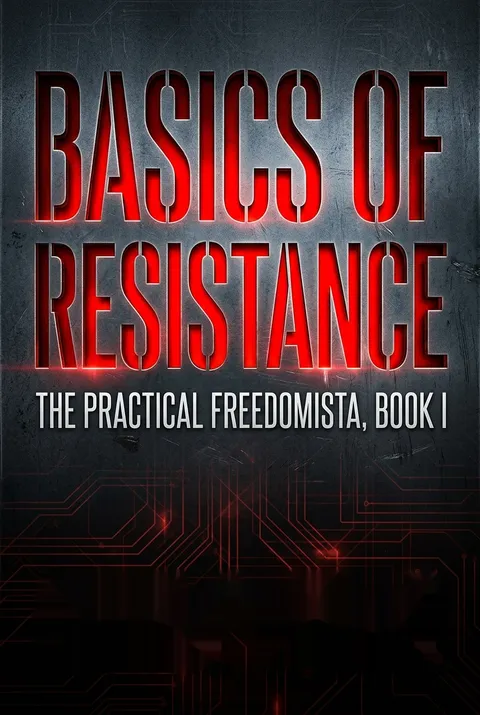
Basics of Resistance is a hybrid of political argument, practical guide, and anthology of historical cases. Its strongest organizing idea is that freedom is practiced through choices and relationships, rather than secured only by formal politics. That emphasis makes the book unusually attentive to overlooked work: local preparedness, privacy, communication, financial independence, practical support, and the quiet labor that keeps a movement functioning. Its recurring demand for self-knowledge also gives the argument a useful personal dimension. People differ in temperament, capacity, and exposure to risk, so a single heroic model of activism is both unrealistic and strategically poor.
The historical examples help dramatize a second claim: tactics cannot be separated from context. The White Rose, Irish tenant resistance, the Media burglary, and the Berlin Wall episode involve sharply different risks, audiences, and outcomes. Their value lies less in imitation than in asking what made a particular action meaningful, what it cost, and who bore the consequences. The book is less convincing when it compresses complex histories into simple lessons or treats institutional failure as inevitably self-correcting. Political change depends on organization, public legitimacy, resources, and contingent events, not just courage or cleverness.
A major tension runs through the text. It advocates nonviolence and warns against reckless action, yet also devotes attention to illegal and potentially harmful tactics. That breadth can blur the line between principled civil resistance and conduct that endangers bystanders or undermines public trust. A sound adaptation must therefore retain its strategic insights while declining to reproduce operational guidance. The most durable lessons are ethical and organizational: define an achievable goal, fit roles to real skills, protect people's autonomy, consider consequences for families and allies, and learn honestly from outcomes.
The book's libertarian assumptions shape its account of government and freedom, and readers should recognize those assumptions rather than mistake them for neutral analysis. Still, its call to question inherited narratives, learn across ideological boundaries, and build forms of mutual support has value beyond its politics. Its best contribution is not a catalog of defiance, but a challenge to make resistance deliberate, proportionate, and sustainable.
Review Summary
Basics of Resistance receives mostly positive reviews, with an average rating of 4.03 out of 5. Readers appreciate its practical approach to resistance activities, drawing lessons from various historical examples. The book is praised for its clear, understandable presentation of basic concepts and skills needed for successful resistance. While some find it superficial, others value its overview and practical examples. The book is seen as a good starting point for those interested in upping their activism, offering insights on organization, security, and strategy without preaching a specific ideology.
Glossary
freedomista
practical defender of freedomThe authors' term for a person committed to both living freely and taking practical action to preserve or expand freedom. A freedomista is not defined by membership in one party or by a single tactic. The term emphasizes personal responsibility, thoughtful planning, and contributions that may be public, private, individual, or supportive.
Resistance
self-directed refusal of injusticeIn this book, resistance means taking personal action when an injustice or corrupt system conflicts with one's conscience. It may be quiet or public, individual or collective, and can include nonviolent refusal, mutual aid, privacy, self-reliance, or communication. The authors distinguish it from ordinary political complaint, while presenting violence as a last resort.
culture jamming
provocative message disruptionA communication approach that uses unexpected images, messages, or public interventions to unsettle familiar assumptions and prompt people to reconsider them. The book treats it as a form of resistance because it can bypass conventional political messaging and draw attention to neglected arguments. Attention alone is not proof that an audience understands or agrees.
OPSEC
protection of sensitive informationShort for operational security, OPSEC is the practice of identifying information that could expose people or undermine a group's work, considering who might access it, and reducing unnecessary disclosure. The book applies the term to individual and group activity. In ordinary civic organizations, it should be balanced with lawful conduct, transparency, and accountability.
PACE
layered communication backup planAn acronym for Primary, Alternate, Contingency, and Emergency. It describes planning several ways to communicate so that a group is not dependent on a single channel if circumstances change. The book applies the idea to activist coordination. In general settings, it can also help community or volunteer organizations prepare for routine communication failures.
Download PDF
Download EPUB
.epub digital book format is ideal for reading ebooks on phones, tablets, and e-readers.








