

Plot Summary
Brookhaven’s First Blood
Sergeant Robert Priest’s Marauder unit reaches Brookhaven to recover a kidnapped scientist, but its first contact is a slaughter. A hidden sniper kills Captain Piper and Corporal Avon before the Marines can reach their objective. Lieutenant Natalia Lacy spots an advancing force of Void Trolls, and the rescue team falls back under fire.
When a Troll seizes Lacy and smashes her against a tree, recruit Henrietta McCraw abandons cover to reach her. Priest carries the badly injured lieutenant toward safety as the mission collapses around them. The wider assault begins, yet the scientist is not securely recovered. Priest leaves Brookhaven with friends dead, Lacy scarred, and a failure that will shadow the unit’s return.
The opening makes combat’s costs immediate rather than heroic: command disappears in seconds, and survival depends on decisions made without reliable information. Priest’s rescue of Lacy creates a durable bond, but also a wound in his command identity, since he must choose between the original objective and a person whose life is in front of him. McCraw’s disobedience is similarly double-edged: it risks the unit while preserving its humanity. The mission’s failure is not a clean defeat. It expands into war, establishing the novel’s pattern of small tactical choices being swallowed by forces no individual can control.
The Empty Pallets
In Tower Building 595, twenty-year-old Kevin Connelly wakes from another painful nightmare and discovers his younger siblings, twins Ace and Amanda-Margaret, missing. His older brother Arthur is away with Ruby McGuire, so Kevin searches their cramped home alone before summoning him.
Neighbors, police, and even local gangs join the search, but no one finds a trace. Outside, Kevin sees soldiers surrounding a strange, dark-haired Siren whose song holds his attention even as the twins’ absence hollows him out.
He remembers that Ace has endured nightmares for years and that Amanda learned to manage hers. When the search produces nothing, Kevin turns to the library for information about Sirens and begins imagining a way to reach their distant world.
The disappearance converts Kevin’s private habits of endurance into a demand for action. His family has survived by dividing roles: Arthur commands, Kevin protects, Amanda steadies Ace. With the twins gone, that arrangement no longer works, and Kevin’s first response is to repeat its familiar routines, searching, listing, and waiting for Arthur. The Siren’s appearance gives his grief a possible target, though not yet a reliable explanation. The scene also links nightmares to family history before revealing their larger significance. Kevin’s longing to enlist is not simply inherited ambition; it becomes a practical route toward recovering the people his home cannot protect.
A Brother’s Contract
Arthur takes Kevin to Raf, a crime lord who controls several neighborhoods, hoping to buy help finding the twins. Raf already knows their names and treats the meeting as a chance to claim the brothers’ services.
When Kevin realizes Arthur has negotiated without his consent, the brothers fight in Raf’s dining hall. Arthur beats him badly, then hurries him out as Raf’s armed men follow. Ruby guides them through an alley, but Kevin leaves the family home rather than return to the conflict.
Bruised and disoriented, he reaches a military recruiting station and enlists in the Starship Marine Corps, the only realistic path to travel privileges. The decision offers a way toward the twins, but separates him from Arthur and the neighborhood that raised him.
Kevin’s enlistment begins in a compromised state: he chooses it after violence, exhaustion, and flight, not after a calm assessment of military life. Yet the choice is not merely escape. Raf’s offer exposes the danger of letting Arthur make every decision in the name of family, while enlistment gives Kevin a route toward agency. Arthur’s beating is a betrayal in the moment, but his motive is entangled with fear for the twins and the belief that he must control the family’s survival. Ruby’s intervention helps Kevin get away without resolving the brothers’ rupture. The military becomes both a real institution and a promise that family bonds can cross distance.
The Dreaming Recruit
On the train to basic training, Kevin meets Joii, a recruit whose neck tattoo resembles the monsters Ace describes after his nightmares. She notices Kevin’s headaches and recognizes a connection between pain and sleep.
At the training facility, Kevin also befriends the irrepressible Peter Foster and the steady Richard Chafalote, while Ruby appears in another platoon. Eye surgery and the discipline of training briefly quiet Kevin’s symptoms. Then the Navy’s first decompression drill turns real enough to terrify the recruits.
Joii panics, strikes a wall in her suit, and dies. Kevin cannot save her. After her funeral, he, Foster, Chaf, and Blake Edwards pledge to reach Marauder Recon in her memory, turning grief into the first chosen family Kevin has made outside his siblings.
Training offers Kevin structure, but not the security he expected. Joii’s recognition briefly makes his unexplained pain shareable; her death then demonstrates that belonging does not protect anyone from institutional risk. The fatal drill is not a conventional test of courage. It exposes how one person’s terror can become a physical danger in an environment where a mistake affects everyone. Kevin responds by converting loss into a pact, a form of meaning-making that is emotionally useful but also demanding. The new group does not replace his siblings. It gives him a community in which responsibility, rather than birth order, can hold people together.
Back to Brookhaven
After basic and advanced infantry training, Kevin joins the battered 343rd Marauders as a replacement, alongside Foster, Chaf, and Edwards. The unit’s commander, Captain Kingstar, briefs them on a return to Brookhaven, where the Dissident Union and Void Trolls have regrouped.
During the descent, enemy kinetic rounds punch through their Thunderbolt. The battered craft lands hard, and Kevin’s squad scrambles toward Hill 401 to defend the invasion force. On the slope, they fire their armor weapons into advancing DU troops, heat streaming from their suits in bright plumes.
Kevin anchors his armor with heat sinks, then an artillery strike buries him against the ground. Priest frees him and redirects his team toward a new objective, beginning Kevin’s first real campaign in a landscape already shaped by the previous disaster.
Kevin’s first battle strips away the imagined clarity of enlistment. He has trained for weapons and formations, but the damaged landing and artillery strike leave him disoriented before he can understand the larger fight. The heat plumes from the armor make the recruits’ bodies visible even as the technology protects them, a useful image of the book’s recurring bargain: power offers survival while generating new vulnerabilities. Priest’s intervention also connects Kevin’s individual initiation to the opening campaign. Brookhaven is not a blank stage for a young soldier’s heroism; it is a place where past failures have already determined what the next generation must risk.
Cronin’s Captives
Far from Kevin’s unit, Ace and Amanda-Margaret are held by Cronin, a towering Nix warrior who has taken them from the Siren Eigon. He claims the twins are safer with him than with the Siren rulers, but refuses to let them leave. Around Cronin, Ace’s nightmares quiet, while Amanda studies the giant and tests the limits of his protection.
She sees that he is not simply a jailer: the Nix are forced to fight and serve the Sirens, and Cronin’s loyalty is beginning to fracture. When the human assault reaches Brookhaven, Amanda watches Kevin’s soldiers approach a trap and urges Cronin to help. He refuses at first, insisting the twins belong under his protection, not with humans or their enemies.
The twins’ captivity unsettles the novel’s simple division between rescuers and captors. Cronin controls the children, yet his protection is also a refusal to hand them back to a system that treats Nix as property and humans as useful instruments. Amanda can perceive this contradiction without mistaking it for safety. Ace’s relief from nightmares complicates his anger toward the being who causes and eases his pain. Their different responses give the captivity plot its emotional tension: Ace resists dependence, while Amanda negotiates with it. The family’s search therefore confronts a hard question before Kevin knows it: what if the apparent enemy is also resisting a greater threat?
The Admiral’s Cargo
Admiral Danzig Robedeaux, newly placed over Red Fleet, distrusts the alien Guide that shepherds human ships through faster-than-light travel. A strange dream sends him with Commander Melanie Ford to inspect his carrier’s storage decks.
In Storage Bay 27, they find concealed components for obsolete mega tanks, machines supposedly retired decades earlier. The discovery suggests someone has secretly moved a vast arsenal to Brookhaven, and Ford connects it to the unusually large carrier presence during the earlier campaign.
The Guide appears in the bay and warns Robedeaux about the Dream-rider, confirming that the two mysteries touch the hidden weapons and the coming conflict. Robedeaux refuses to report the find immediately, choosing to investigate while the fleet and ground forces prepare to return to Brookhaven.
Robedeaux’s suspicion is a form of professional dissent. His career has taught him that institutions can dismiss accurate warnings when they come from the wrong specialty, so he follows the evidence himself. The tanks turn an abstract conspiracy into material weight: a weapon has been hidden in plain sight because the surrounding bureaucracy assumes it no longer exists. The Guide’s appearance complicates Robedeaux’s inquiry, showing that technological systems may conceal motives humans have mistaken for assistance. Ford’s role is crucial because she translates his intuition into strategic implications. Their private investigation positions the war as both a battlefield crisis and a failure of institutional knowledge.
A Bracelet in the Ashes
As the Marauders pursue the Nix ship, Kevin sees Sirens and Nix crossing a river before the vessel escapes into the sky. His platoon returns to the main force, but Kevin cannot stop looking for clues to his siblings.
During a later patrol, he persuades Sergeant Davis to let his fire team search a deserted camp. They find little, until Edwards discovers an old medical bracelet bearing the Connelly name. The artifact suggests the twins have been there, though Kevin cannot prove when or how it arrived.
Then Chaf brings urgent news: the doctor is not aboard the Nix ship, and the apparent chase was a diversion. DU commandos are racing toward a new objective. Kevin rejoins the unit, carrying the bracelet and the suspicion that the war and his family’s disappearance are connected.
The bracelet changes Kevin’s search from intuition into evidence, but it does not deliver certainty. That distinction matters: he now has a reason to persist, yet the clue can also distort his judgment by making every tactical choice feel personally decisive. Edwards’ careful observation supplies what Kevin’s urgency cannot, showing the value of the team he formed after Joii’s death. The false trail toward the Nix ship reveals a parallel problem in the military plot: command decisions are built on incomplete intelligence. Kevin’s family quest and the war’s strategic confusion begin to mirror one another, each forcing him to act before he can know the whole situation.
The Living Forest
Kevin’s pursuit of the Sirens carries him away from his assigned line, where he watches Nix warriors deliver Void Trolls to DU officers. The trolls begin to rebel against their Siren masters, and a sudden assault threatens the Marauders’ defense.
Kevin returns too late to prevent a gap in the line, and Lieutenant Lovejoy holds him responsible for the deaths that follow. Elsewhere, Priest’s Recon team notices that trees near a river delta are moving because they conceal mega tanks.
The old machines advance with DU infantry, overwhelming positions and exposing how deeply the enemy prepared Brookhaven. Air strikes destroy some tanks, but more emerge across the planet. The conflict is no longer a limited campaign: the hidden arsenal has turned the invasion into a broad war of attrition.
This sequence binds Kevin’s personal fixation to collective consequences. He is drawn toward the Sirens because of the twins, but his diversion leaves others exposed; Lovejoy’s reprimand forces him to see that private urgency can become public harm. The mega tanks then reveal that the battle itself was designed around concealed history. The landscape has been made deceptive, with living vegetation hiding industrial weapons, so even reconnaissance must question what appears natural. Kevin and Priest encounter different versions of the same problem: perception is necessary, but not sufficient. Their survival depends on accepting that the visible battlefield has been arranged by someone else.
Arthur Takes Flight
After Kevin leaves, Arthur loses his home and drifts through the city until a violent encounter with the pit fighter Kroger draws him into military life. He and Kroger enlist alongside Eve, a street survivor Kroger once protected.
Though Arthur wanted the Marines, the selection process sends all three toward the Starship Pilot Corps. On Brookhaven, Eve thrives as a Hellfire pilot, while Arthur struggles with the cockpit and the constant flow of orders. Kroger is recruited into the secret Cyclops program, then disappears with one of its powerful units.
Arthur and Eve search for him, knowing that desertion with a classified weapon could make him a traitor. Arthur’s new companions offer a rough substitute for his lost family, but his worry for Kevin and the twins remains unresolved.
Arthur’s subplot reverses Kevin’s route into service. Kevin leaves home to gain the means to find his siblings, while Arthur is pushed into a new institution after losing the home he once controlled. His friendships with Eve and Kroger grow from violence and mistrust rather than inherited loyalty, forcing him to learn forms of attachment he cannot govern by strength alone. The Pilot Corps selection also exposes the military’s power to redirect individual intention. Kroger’s disappearance turns that system into a moral test: the friends must decide whether loyalty means concealing his choice or confronting the danger he has created.
The Siren’s Invitation
As the front shifts, Eigon approaches Kevin in the open and identifies herself as a Siren seeking escape from the Dream-rider inside her. She offers knowledge about the twins, then uses her song to draw him away from his position. Kevin recognizes too late that the music is overpowering his judgment. He strikes at her, breaks free, and returns toward the line, where Void Trolls and DU forces are pressing the defenders.
Another Siren, Tion, appears and insists Kevin should not interfere with Eigon. She turns instead toward the approaching Nix warriors. Kevin sees two prisoners with the Nix, but cannot reach them before the battle swallows the moment. The sisters’ demands and the Nix rebellion now converge directly on his family.
Eigon’s offer targets Kevin at the point where duty and longing are least separable. The song does not merely seduce him; it interrupts the practical judgment that keeps him alive and makes the promise of family knowledge feel more urgent than the soldiers beside him. His resistance is incomplete but meaningful: he recognizes the manipulation and retreats, even though he still follows the clue toward the conflict. Tion’s refusal to obey Eigon introduces a second kind of resistance, one rooted in competing political and spiritual loyalties. The scene makes the Sirens individuals rather than a single enemy, while showing how their powers exploit human attachment.
Cronin Breaks Rank
At the battlefield’s edge, Cronin leads Ace and Amanda beside his battle lord Rog. Eigon and Tion arrive, and the twins break toward Kevin as the Nix warriors move to stop them. Cronin chooses the children over his own people, refusing both Eigon’s claim and Rog’s authority. Tion fights Rog, while Eigon tries to block the twins from reaching their brother.
Kevin charges in and fires his armor weapon without taking a stable firing position. He is struck by Rog’s axe and collapses, but the attack helps bring the battle lord down. Cronin carries the unconscious Kevin to his friends, then takes Ace and Amanda away from the battlefield. Kevin has finally seen his siblings alive, but cannot keep them beside him.
The apparent reunion becomes a separation because every character’s protective instinct points in a different direction. Kevin wants to reclaim his siblings, Cronin wants to shield them from the Nix and Sirens, and the twins choose to run toward the brother they remember. Cronin’s defiance makes his loyalty legible through action rather than sentiment: he risks himself against his own hierarchy. Kevin’s reckless shot saves others but nearly costs him his life, marking the difference between courage and control. The siblings are alive, yet the family’s restoration remains incomplete. Recognition is not the same as recovery.
The Doctor’s Warning
While Brookhaven’s battles continue, Priest tracks Dr. Marc Robedeaux to an underground bunker guarded by Captain Connelly, Kevin’s grandfather. The old Marine allows Priest inside because Robedeaux is ready to explain why he has avoided capture.
He reveals that the Void Trolls are not naturally berserk soldiers but dormant travelers whose behavior changes according to whoever awakens and directs them. The Guide knows their origin yet steers human ships away from it, while the Dream-rider is entangled with the Sirens and their effort to build a Nix army.
Robedeaux says the DU war is effectively spent, but the Nix rebellion poses a larger danger. Priest takes him into custody anyway, unwilling to let another unverified promise cost his people more lives.
Robedeaux’s explanation revises the moral categories that have organized the campaign. Void Troll violence is not an essential racial trait; it is a consequence of awakening, use, and political circumstance. That revelation indicts the human tendency to treat unfamiliar beings as fixed threats, while also clarifying how the DU weaponized them. Captain Connelly’s presence connects Kevin’s inherited hero story to the hidden architecture of the war, but Priest refuses to let family legacy substitute for verification. His decision to take Robedeaux into custody is not disbelief alone. It is an insistence that knowledge must answer to the people who have been asked to die for it.
Surrender Meets Siris
In space, Robedeaux leads Red Carrier Group One against the full Dissident Union Fleet. Rather than retreat from its superior numbers, he orders an aggressive formation that breaks the DU’s confidence and helps secure its surrender.
As the ships part to let his carrier group pass, a small unidentified force pursues the defeated fleet. The newcomers destroy several fighter squadrons before Robedeaux can identify them as connected to Siris.
He orders his ships to withdraw and prepare for a larger engagement, even as the ground forces report that the DU has been defeated and Brookhaven is under Coalition control. The immediate war appears won, but the Guide, Dream-rider, and Nix threat remain active, and Robedeaux’s fleet must hold position for reinforcements.
The ending grants a military victory without granting security. Robedeaux succeeds because he reads the DU’s desperation and acts before conventional caution can become paralysis; yet the new ships make that success feel provisional. The sudden surrender also changes the meaning of the prior battles: the DU had been dangerous, but not the ultimate power gathering around Brookhaven. Across the novel, leaders repeatedly discover that the enemy they can name is only one layer of a larger conflict. The unresolved fleet threat preserves tension, while Kevin’s separated family leaves the emotional story open as well. Victory settles territory, not belonging or knowledge.
Analysis
Bayonet Dawn begins with a rescue operation and ends with a military victory that cannot settle the larger danger. That structure reflects the novel’s central problem: people act inside systems whose histories and motives are only partly visible. Kevin’s family gives this problem an intimate form. He wants to recover his siblings, but the effort repeatedly forces him to choose between private devotion and responsibility to the soldiers beside him. His most consequential mistakes do not come from cowardice; they come from treating his own urgent knowledge as more complete than everyone else’s.
The book also challenges the idea that violence belongs naturally to a species. The Void Trolls are not simply born berserk, and the Nix are not simply obedient monsters. Their behavior is shaped by those who wake, command, or enslave them. This revelation does not absolve the forces using them, but it shifts attention from biology to power. The same question applies to human institutions: military command can protect people, yet bureaucracy ignores evidence, hides weapons, and sends recruits into lethal tests.
Family is the story’s counterweight to those systems. Kevin inherits his grandfather’s military idealism and his parents’ methods of self-control, while Arthur tries to keep their family safe through force. Amanda offers another model, one based on patient observation and negotiation. Cronin’s attachment to the twins extends the meaning of family beyond blood, though it cannot restore the Connellys to one another. Their near-reunion ends in another separation, just as the DU’s defeat gives way to a new threat from Siris. The novel’s resolution is therefore deliberately partial: the immediate enemy loses, the missing twins are found, and yet neither political safety nor family wholeness is secured. Survival creates the next obligation rather than ending the story.
Review Summary
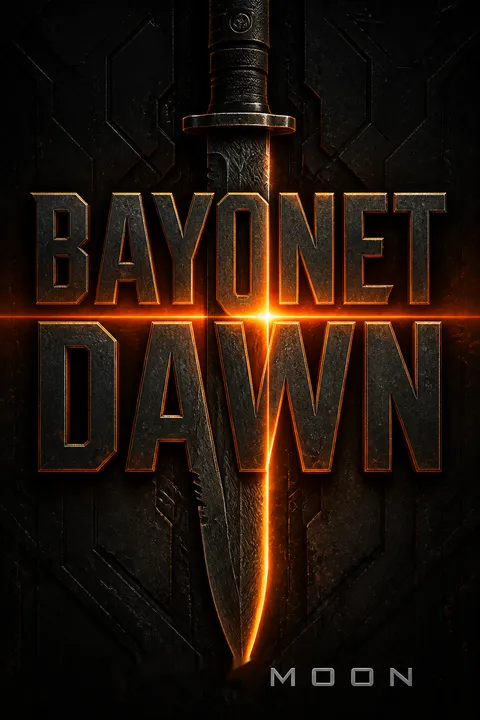
Bayonet Dawn by Scott Moon receives mixed reviews, with ratings ranging from 2 to 5 stars. Positive reviews praise the blend of sci-fi and fantasy elements, character development, and world-building. Negative reviews criticize the choppy writing, confusing plot, and lack of coherence. Some readers find the military aspects intriguing, while others struggle with the multiple storylines and character perspectives. The book's unique combination of military sci-fi and fantasy elements, including sirens and trolls, is noted as both a strength and weakness, depending on the reader's preferences.
Characters
Kevin Connelly
The searching recruitKevin is a young man raised in Tower Building 595, where work, hunger, and neighborhood violence have taught him to notice danger and protect his siblings. He reveres his grandfather Brandon and hopes to become a Marine, but his loyalty to Ace and Amanda-Margaret gives that ambition a personal purpose. Kevin is physically brave and emotionally earnest, yet he often mistakes urgency for judgment, especially when the Sirens seem connected to his family. His parents’ lessons in calm breathing and practical lists remain tools he can use when fear overwhelms him. Military service forces him to broaden his idea of family, responsibility, and what it means to rescue someone.
Arthur Connelly
The hard-pressed eldestArthur is Kevin’s older brother and the self-appointed head of the orphaned Connelly family. Strong, commanding, and accustomed to settling disputes through force, he believes security depends on keeping control of the people he loves. His relationship with Ruby is serious, though his choices often leave Kevin feeling shut out. Arthur’s protective instinct is genuine, but it has hardened into rules that can resemble the neighborhood violence he opposes. He is less comfortable than Kevin with admitting grief or uncertainty, and he often acts before he can explain what fear is driving him.
Amanda-Margaret Connelly
The steady twinAmanda-Margaret is Ace’s twin and the youngest Connelly sister. She is observant, composed under pressure, and unusually able to face fear without letting it dictate every choice. Her tenderness toward Ace does not make her passive; she studies Cronin, tests his motives, and looks for chances to influence him. Amanda’s calm contrasts with Kevin’s guilt and Arthur’s force, making her a stabilizing presence in the family. She values practical loyalty over grand declarations and can recognize complexity in someone dangerous without mistaking danger for kindness.
Ace Connelly
The troubled twinAce is Amanda-Margaret’s twin brother, a sharp and defiant teenager whose lifelong nightmares have frightened the family. His pain has shaped the household’s routines and made Arthur especially protective. Ace resists being treated as helpless, often answering pressure with stubbornness and humor. He is closest to Amanda, whose presence can steady him, but his relationship with the rest of the family is marked by their concern and his need for independence. His dreams are more than a private difficulty, though the meaning of that connection is not immediately clear.
Robert Priest
The battle-worn mentorPriest is a veteran Gunnery Sergeant of the 343rd Marauders, known for exceptional combat experience and a difficult relationship with authority. He trusts small-unit judgment more than polished plans, a habit born from missions where conditions changed faster than orders could follow. His history with Natalia Lacy and the first Brookhaven campaign leaves him carrying guilt as well as professional pride. As Kevin’s instructor and later battlefield superior, Priest recognizes the recruit’s courage while trying to teach him restraint. He is not a distant, invulnerable commander; his loyalty to his people is precisely what makes loss so hard for him.
Gwyneth Ruby McGuire
The neighborhood commanderRuby is Arthur’s girlfriend and a forceful presence in the Connellys’ neighborhood. Tough, quick to challenge others, and skilled at organizing people, she can turn a chaotic search into coordinated effort. Her sharp manner protects a generous attachment to the twins and, more cautiously, to Kevin. Ruby’s bond with Arthur is complicated by the family’s instability and by the way both siblings lean on her. She values loyalty, but she is not content to be treated as someone else’s possession or caretaker.
Joii
The perceptive recruitJoii is a young recruit Kevin meets on the train to basic training. Small and guarded, she recognizes the connection between his headaches and nightmares before he is ready to discuss it. Her monster tattoo recalls the images described by Ace, giving her an unsettling link to Kevin’s family mystery. Joii is perceptive without being sentimental and approaches intimacy cautiously. She becomes one of the first people outside Kevin’s family to make him feel understood.
Francis Frenchie Waldon
The irreverent veteranFrenchie is a broad-built Marauder whose exaggerated French persona conceals a capable and observant soldier. He uses humor to relieve pressure and provoke his friends, but he understands the seriousness of combat and remains dependable when danger arrives. His friendship with Priest and McCraw is built on shared service rather than easy sentiment. Frenchie’s curiosity about cultures and languages hints at a more reflective side beneath the barracks comedy.
Henrietta McCraw
The fearless squad leaderMcCraw is a physically formidable Marauder and a close friend of Priest and Lacy. She is blunt, funny, and willing to break formation when a person’s life matters more than procedure. Her courage is not carefree; she knows the risks and resents being asked to absorb them without acknowledgment. McCraw’s loyalty is practical, often expressed through action, teasing, or the willingness to confront someone who has lost control.
Natalia Lacy
The scarred commanderLacy is a skilled Marine officer whose confidence and competence are complicated by the severe injuries she carries from Brookhaven. She can command a unit without theatrical force, and she expects subordinates to act decisively. Her relationship with Priest holds affection, tension, and the residue of a mission they survived differently. Lacy refuses to let visible damage define her professional identity, though others’ reactions make that refusal a continual effort.
Peter Foster
The restless recruitFoster is Kevin’s fast-talking training companion, curious about military procedure and eager to prove that he knows more than the instructors. His jokes can create trouble, but his energy helps draw Kevin into a group. Foster is more vulnerable than his bravado suggests, particularly when the risks of space travel become real. He values camaraderie and has a talent for turning awkwardness into shared humor.
Richard Chafalote
The steady teammateChaf is a large, even-tempered recruit who becomes one of Kevin’s closest friends. He prefers clear boundaries, as shown by his insistence on being called by his chosen name, and often serves as a counterweight to Foster’s impulsiveness. Chaf’s calm manner does not make him fearless; he has to adapt to military life and the physical discomforts of space travel. He earns trust by staying with his team when circumstances become frightening.
Blake Edwards
The underestimated teammateEdwards begins as an anxious recruit who is often teased by Kevin, Foster, and Chaf. Under pressure, however, he proves observant, quick, and more capable in the field than his nervous laughter suggests. His habit of noticing small evidence becomes useful when the team searches for signs of the twins. Edwards wants acceptance but gradually contributes on his own terms.
Cronin
The conflicted Nix warriorCronin is a towering Nix warrior who takes responsibility for Ace and Amanda-Margaret while claiming to protect them from the Sirens. He is disciplined, dangerous, and initially convinced that strength and rank determine what is right. The twins unsettle those certainties. Ace’s defiance and Amanda’s patient questions expose the emotional life beneath Cronin’s martial role. His struggle is not simply whether to obey, but whether a being raised within a hierarchy can choose whom he serves.
Eigon
The ambitious SirenEigon is a powerful Siren warrior seeking transformation and a status beyond the ordinary order of her people. She is proud, disciplined, and willing to manipulate others to achieve her aims. The Dream-rider’s presence in her mind gives her ambition an unsettling outside pressure, though she continues to assert her own desires. Eigon’s interest in the Connelly twins mixes calculation with an attachment she does not fully understand.
Tion
The independent sword-saintTion is a formidable Siren fighter whose judgment does not reliably follow Eigon’s commands. She is calm in the middle of violence and seems to value combat skill on its own terms. Her presence complicates Kevin’s assumptions about the Sirens, since she can oppose her own kind while pursuing motives that remain difficult for humans to read. Tion’s discipline makes her more unsettling, not less.
Marc Robedeaux
The hunted scientistRobedeaux is a scientist whose knowledge of Brookhaven, the Void Trolls, and the alien Guide makes him a coveted asset. He is intelligent and stubborn enough to challenge conventional military explanations, even when doing so damages his standing. His relationship with authority is wary, because he believes important truths have been ignored or concealed. Robedeaux’s work sits at the intersection of science and strategy, but he is not a simple repository of answers; he has his own judgment about when knowledge should be shared.
Danzig Robedeaux
The unpopular fleet admiralDanzig is a career starship officer newly placed in command of a major fleet group. He is direct, impatient with inefficiency, and willing to voice theories that more established officers reject. His doubts about the Guide and the hidden military cargo place him at odds with the institutions he serves. Despite his formality, he is emotionally attached to his crew and experiences command as responsibility for a family, not merely control over ships.
Melanie Ford
The admiral’s trusted XOFord is Robedeaux’s executive officer, a decorated and capable commander who can translate his unconventional instincts into action. She is loyal without being uncritical and often challenges his choices when secrecy or risk endangers the crew. Her discipline is matched by a dry wit and an alertness to political maneuvering. Ford’s experience makes her a stabilizing presence as the fleet approaches a conflict larger than its briefing suggests.
Kroger
The reluctant fighterKroger is a huge, tattooed street fighter who first meets Arthur in a violent confrontation. Beneath his intimidating appearance, he is uneasy about the harm he can do and wary of being turned into a weapon. Military training gives him direction, but the Cyclops program tests his capacity to live with the violence it enables. His friendship with Arthur and Eve is built on an unpolished form of mutual protection.
Eve
The fierce pilotEve is a street survivor who joins the military with Arthur and Kroger. Sharp-tongued and fiercely independent, she takes naturally to the Hellfire aircraft and the chance to strike back at enemies. Her confidence can mask a history of vulnerability, but she resists being treated as someone who needs rescuing. Her developing friendship with Arthur is lively, argumentative, and grounded in shared danger.
Uriah Davis
The pragmatic sergeantDavis is a seasoned infantry sergeant responsible for guiding Kevin’s unit through Brookhaven. He understands battlefield uncertainty and gives his soldiers room to act, while remaining alert to the cost of poor decisions. His suspicion of the Nix shapes his advice to Kevin, sometimes clashing with Kevin’s focus on the Sirens. Davis values competence and accountability more than ceremony.
Keper Lovejoy
The blunt platoon leaderLovejoy is the unconventional officer leading Kevin’s platoon. He is impatient with formal performance and speaks plainly about the danger of Brookhaven, but he recognizes useful initiative when he sees it. His leadership mixes humor with uncompromising judgment, particularly when a soldier’s personal mission puts others at risk. Lovejoy’s perspective forces Kevin to understand that bravery has consequences beyond the person who chooses it.
Brandon Connelly
The remembered MarineBrandon is Kevin and Arthur’s grandfather, a former Marine whose stories shaped Kevin’s ambitions and ideas about courage. His remembered advice helps Kevin manage fear, while his reputation casts a long shadow over the brothers’ choices. Brandon is more than an idealized hero: his service and absences are part of the family history that the younger Connellys must interpret for themselves.
Plot Devices
The Dream-rider and the Guide
Alien minds shape the warThe Dream-rider is an influence tied to the Sirens and their plans for the Nix, while the Guide appears during faster-than-light travel and directs human ships through space. Robedeaux suspects the Guide conceals the Void Troll home system, and Eigon experiences the Dream-rider as a presence inside her mind. Their relationship links private visions, human navigation, and the political struggle over alien populations. The entities turn what first looks like a military conflict into a contest over who controls knowledge, movement, and the future of several species.
Shared Nightmares
Dreams signal hidden kinshipKevin’s headaches and the twins’ recurring nightmares begin as family afflictions. Joii’s similar symptoms and Ace’s relief around Cronin suggest that the dreams have a wider cause. They become a sensory thread joining human characters to the Sirens, Nix, and the Dream-rider before anyone can explain the connection. The device makes emotion physically consequential: sleep can bring pain, recognition, and vulnerability to manipulation. It also gives the twins a significance beyond their role as missing children.
The Siren Song
Sound turns longing into leverageSiren music attracts human attention and can overwhelm a listener’s judgment. Kevin first hears it while his siblings are missing, so the sound becomes inseparable from his search for them. Later, Eigon uses it to draw him away from his military position by promising knowledge about the twins. The song blurs the line between genuine attachment and coercion, making Kevin’s desire to help his family a vulnerability an enemy can exploit.
Hidden Mega Tanks
Old weapons overturn the battlefieldMega tanks are supposed to have been retired, yet components are concealed aboard Robedeaux’s carrier and entire machines are camouflaged beneath trees on Brookhaven. Their reappearance explains the DU’s ability to spring coordinated attacks and transforms a limited landing into a protracted war. The tanks make concealed history tangible: official claims of disarmament and military preparedness prove unreliable when the weapons emerge. Their scale also gives the Cyclops units a battlefield purpose without making the new weapons a simple solution.
Kevin’s Family List
A private code guides choicesKevin carries forward his mother’s habit of putting family at the top of a practical list. The practice helps him organize fear, gear, and immediate decisions, but it also sharpens the conflict between rescuing the twins and serving his unit. His parents’ lessons in breathing and control offer another way to contain the nightmares. Together, these inherited routines give Kevin a personal compass, while the story repeatedly tests whether family loyalty can be followed without ignoring the lives of others.
Download PDF
Download EPUB
.epub digital book format is ideal for reading ebooks on phones, tablets, and e-readers.








