

Key Takeaways
Ask whether you want healing, not only relief from symptoms
Healing means wholeness. The book opens with Jesus asking a man who had been ill for thirty-eight years whether he wanted to be well. The question can sound accusatory, but Schuchts reads it as an invitation to notice where repeated disappointment has buried hope. Healing, in his Catholic framework, is not just curing a body or quieting a symptom. It means restoring communion with God, greater integration within oneself, and repaired relationships with others. That process may include physical, emotional, and spiritual change, and its completion belongs to the life to come.
Consent matters. Jesus offers help, but the person must become willing to face the need and receive it. Schuchts urges honest self-examination rather than a performance of certainty: acknowledge doubt, fear, or resignation, and bring them into prayer.
The question usefully distinguishes wanting pain to stop from being ready to change the patterns organized around it. That distinction appears in many forms of care: a person may want relief while fearing what vulnerability, treatment, or a changed relationship could require. Readiness is not a moral test, however. Depression, trauma, disability, and chronic illness can constrain hope and agency. A compassionate reading treats consent as something that can grow through safety and support, not as a condition a sufferer must satisfy before deserving help.
Let trustworthy love reach the role that kept you functioning
Competence can conceal pain. After his father left, Schuchts took on the emotional burden of helping his mother and siblings. He excelled in school and sports, became a therapist, and taught others about family life while leaving his own grief largely untouched. His achievements looked like strength, but also helped him avoid depending on anyone. A caring math teacher had once changed his direction by coaching him through work he thought he could not do, rather than humiliating him.
Community changed the pattern. Years later, honest friendship and a men’s formation group gave him a place to receive care instead of always providing it. He began to recognize that distrust of his father had shaped how he imagined God: as demanding and hard to please. Relationship, not expertise alone, helped him face that wound.
Schuchts’s story makes a subtle point about high functioning: competence can be both a genuine strength and a well-practiced defense. A trusted teacher or group does not erase painful history, but can offer a new experience of being seen without being shamed. This resembles the corrective role of secure relationships in counseling and caregiving. The limit is important: no single supportive encounter guarantees resolution. Trust is built through repeated, reliable care, and some injuries require skilled professional help as well as community.
Build identity on being beloved, not on performance or rebellion
Two false exits. Schuchts uses the two sons in the parable of the prodigal son to describe ways people seek life apart from a loving parent. One son rebels and tries to medicate pain through escape; the other performs, follows rules, and resents those who do not. Both remain unsure that they are loved without earning it. Schuchts recognized the dutiful son in himself, hiding grief beneath athletic success, responsibility, and religious respectability.
A different foundation. Catholic teaching on Baptism gives believers an identity as adopted children united with Christ. Schuchts invites readers to consider whether this is merely an idea they affirm or a truth they can receive emotionally. In his account, encountering the Father’s love loosened his need to prove himself and helped him love his wife and family with greater openness.
The parable’s strength is that it refuses to equate obvious misconduct with the only kind of alienation. Rule-following can become a strategy for securing worth, just as rebellion can become a way to numb unmet needs. Contemporary psychology similarly distinguishes a person’s worth from the behaviors used to cope. Still, an identity of belovedness should not erase responsibility or consequences. Its most useful function is to make honest accountability less threatening, not to excuse harmful choices.
Trace repeated sins and symptoms to the roots feeding them
Fruit points downward. Schuchts uses two biblical tree images as a way to examine behavior. The tree of life represents life rooted in communion with God, which bears virtues such as love and patience. The tree of knowledge of good and evil represents, in his interpretation, self-reliance apart from God, which can produce destructive habits. In a teaching illustration, recurring sins are apples: removing one matters, but more may grow if the underlying tree remains.
Look beneath the behavior. Schuchts invites readers to ask what repeated patterns are connected to deeper attitudes. He organizes these through the traditional seven deadly sins, such as anger, pride, and lust, and asks what fear, unmet need, or misplaced source of security may lie beneath them. The aim is not to skip confession or responsibility, but to understand what keeps a pattern alive.
The tree image offers a practical formulation: an observable behavior is evidence to investigate, not a complete explanation of a person. It encourages curiosity about triggers, beliefs, relationships, and sources of reward, much as behavioral and systems-based approaches do. Yet a spiritual framework can overreach if every symptom is interpreted as evidence of a hidden sin. The metaphor works best as a prompt for self-inquiry, never as a diagnosis imposed on another person.
Name what trauma taught you before obeying its old protective rules
Protection can become a prison. Schuchts describes seven “deadly wounds”: abandonment, fear, powerlessness, hopelessness, confusion, rejection, and shame. He also distinguishes trauma through deprivation of care from trauma through harmful events or boundary violations. In his account of John, a young man’s sexual compulsions were connected to early experiences of feeling cut off from his mother’s care. As a toddler, John formed a silent resolve not to need her; later, he sought comfort through sex and substances.
The first insight was incomplete. Prayer helped John recognize pain and imagine Jesus offering comfort, and his compulsions eased for a time. But he had not yet faced an earlier memory of his mother leaving for several weeks. Years later, he described confronting that hurt and forgiving her. His story illustrates how protection, beliefs, and private vows can build on wounds, and why healing may take more than one encounter.
The account captures a clinically recognizable possibility: painful early experiences can shape expectations about safety, care, and closeness. But a vivid image arising in prayer is not, by itself, proof that a remembered event occurred exactly as imagined. Memory is reconstructive, especially when emotion and suggestion are involved. The model is most responsible when it helps someone explore present feelings without treating imagery as forensic evidence. Trauma-informed professional support matters, particularly where abuse, addiction, or destabilizing memories are involved.
Treat the whole person without mistaking spiritual meaning for medical diagnosis
No symptom stands alone. The book’s whole-person perspective connects five areas of life: relationship with God, relationships with others, the inner life, the body, and the natural environment. Schuchts argues that focusing only on a diagnosis can obscure the person’s history and context. He recounts people with serious depression whose stories involved different losses, relationships, and spiritual struggles. In his account, attending to those roots brought some immediate relief and gave others renewed hope, even when recovery remained gradual.
Integration is not replacement. Schuchts explicitly values doctors, therapists, medication, and other forms of care. His argument is that these should not be treated as the entire picture. A whole-person approach can ask what else is affecting someone’s wellbeing while continuing appropriate medical treatment. It resists reducing a human being to a label, without pretending that spiritual reflection alone explains or cures illness.
The humane insight is that a diagnosis names a clinical pattern, not the entirety of a person’s life. Social connection, stress, history, and meaning can all matter to health, so coordination across forms of care can be valuable. The caution is equally important: the book’s accounts of prayer and sudden improvement are testimonies, not controlled evidence that hidden spiritual causes explain depression or physical illness. Psychological and medical treatment should not be delayed or abandoned in pursuit of a presumed spiritual root.
Let suffering become a place for communion, not a command to endure harm
Suffering is not good in itself. Schuchts presents “redemptive suffering” as suffering met in relationship with Christ and directed toward love, rather than pain treated as something to seek or glorify. Jesus’ Passion provides the central Christian example: he faces evil without returning it, and the story does not end with his death. Schuchts connects this with everyday choices to resist retaliation, seek forgiveness, and remain open to help.
Dave’s illness changed a family. Schuchts’s brother, once estranged from faith and family, chose to face AIDS openly rather than disappear. During his final illness, relatives cared for him, and his father, who had left the family, was present when Dave died. The family’s grief did not vanish, but it became a setting for renewed care, reconciliation, and shared mourning. The meaning came through love, not from the illness itself.
This account shows how meaning can emerge from suffering without making suffering desirable. Research and practice around caregiving often emphasize that shared responsibility, rituals, and honest communication can help families endure loss. The distinction between finding meaning and claiming that pain was necessary is essential. No one should be pressured to accept abuse, refuse treatment, or remain in danger because suffering might be spiritually useful. Compassion includes relief, protection, and practical care.
Use prayer and sacraments as practices of trust, not spiritual shortcuts
Grace invites participation. In Catholic teaching, sacraments are encounters with Christ, not mechanical guarantees of a particular result. Schuchts recalls that confession and the Eucharist became newly meaningful to him when he was ready to receive them. He describes prayer as a practice of trust, attention, and persistence, sometimes shared with others. The book reports both striking healings and cases where physical illness remained, while prayer brought emotional or relational change.
Hope needs humility. Schuchts encourages people to pray boldly, listen for guidance, and continue when an answer is delayed. He also acknowledges that not everyone is healed as expected. One of the book’s measures of change is whether a person feels more connected, safe, accepted, hopeful, and clear. Prayer and sacramental life can support healing, but they do not guarantee a cure or remove the need for professional care.
Ritual can give people a shared language for guilt, hope, grief, and belonging. In this Catholic account, sacraments are both theological commitments and communal practices that locate an individual’s pain within a larger story. The safeguard is to separate spiritual consolation from medical outcome. If healing is presented as dependent on sufficient faith, those who remain ill may blame themselves. A sound practice welcomes prayer while respecting uncertainty, treatment, and the limits of what any minister can promise.
Measure freedom by the love you can now give and receive
Healing has a direction. For Schuchts, freedom is not merely the absence of a compulsion. It is the growing ability to receive love, make responsible choices, and give oneself to others without using them to manage pain. John’s story makes this concrete. An early prayer experience brought temporary relief, but his sexual and substance compulsions returned while he remained cut off from his mother and sister. After facing a deeper abandonment wound and forgiving his mother, he described a lasting change in those relationships and in his capacity for intimacy.
The work continues. The book’s final emphasis is not on achieving flawless emotional health. It is on using increased freedom for family, community, and service. Schuchts encourages reflection, prayer, trusted relationships, and continued support. The sign of progress is not a dramatic experience alone, but a more truthful, generous, and connected life.
This definition of freedom is relational rather than purely individual: a person is freer when less governed by compulsion and more capable of mutual care. That is a useful counterweight to self-help models that treat independence as the ultimate goal. Forgiveness, however, is not identical to reconciliation, restored trust, or renewed contact. Those require safety and the other person’s participation. The practical measure is increased agency and care, not pressure to resume a relationship that remains harmful.
Analysis
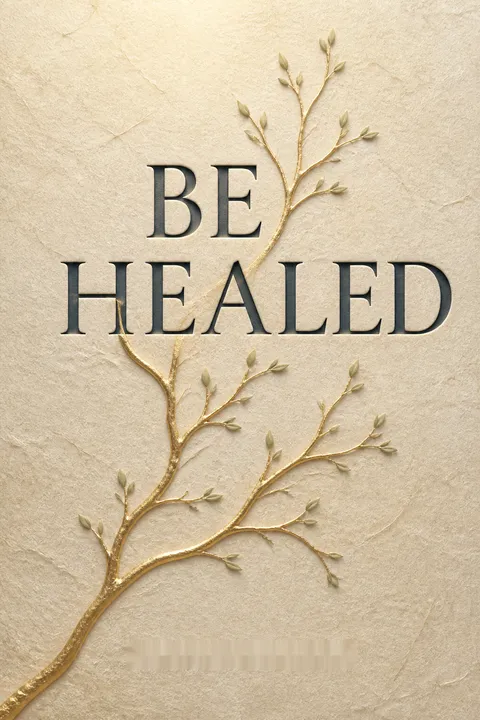
Be Healed is a Catholic spiritual guide shaped by memoir, pastoral counseling, and testimony. Its narrative moves from encounter with Jesus, through an examination of wounds and repeated behavior, toward practices of healing and a life oriented to service. The structure matters: readers are asked to experience the theological claims through stories before applying the book’s interpretive tools to themselves.
Its strongest contribution is a compassionate account of how competence, rule-following, addiction, and anger can each function as protection around pain. The tree metaphor and the model of wounds, beliefs, and inner vows give readers a vocabulary for looking beneath recurring behavior. Schuchts’s family history makes the approach more credible as personal testimony: his own role as therapist did not exempt him from needing therapy, community, and spiritual formation. His brother Dave’s illness shows how care and reconciliation can emerge even when a physical cure does not.
The book also makes claims that need careful boundaries. Its Catholic account of healing is coherent within its faith tradition, but personal testimonies cannot establish general medical causes or demonstrate that prayer reliably cures illness. The argument is strongest when it invites spiritual meaning alongside psychological, relational, and physical care. It is weaker when spiritual explanations risk being treated as universal accounts of symptoms. The text itself says medicine and therapy have a place, and that balance deserves emphasis.
A second tension concerns forgiveness and imaginative prayer. Both may help people approach painful experience, but neither should be turned into a demand, a substitute for safety, or proof that an image is a historically accurate memory. With those cautions, the book offers a compelling pastoral proposition: healing is not simply symptom removal, but renewed communion that enables a person to live less defensively and love more freely. Its value lies in pairing that hope with honest attention to suffering, rather than promising effortless transformation.
Review Summary
Be Healed receives overwhelmingly positive reviews, with readers praising its transformative impact on their spiritual and emotional well-being. Many find the book's approach to healing through Jesus insightful and practical. Readers appreciate the author's personal stories, scriptural references, and reflection questions. Some highlight the book's usefulness in addressing past traumas and wounds. While a few readers found certain sections less relevant or repetitive, the majority recommend it as a powerful tool for those seeking healing and deeper faith.
People Also Read



Glossary
Whole person perspective
Integrated view of wellbeingSchuchts’s approach to seeing health in relation to the whole person rather than isolating a symptom or diagnosis. It considers spiritual life, relationships, psychological experience, physical health, and the human relationship with the environment as interconnected aspects of wellbeing. The framework supports broader inquiry, but it does not replace medical or psychological assessment.
Tree of life
Image of life with GodA biblical image Schuchts uses for a life rooted in communion with God. In his framework, this relationship supports security and growth in virtue, and bears fruits associated with the Spirit, such as love, joy, and patience. The image contrasts with self-reliance that cuts a person off from this communion.
Tree of knowledge of good and evil
Image of self-reliant disconnectionSchuchts uses this Genesis image to represent human life organized around self-sufficiency apart from God. He maps repeated harmful behaviors as fruit, deeper habitual attitudes as the trunk, and wounds and protective beliefs as roots. It is a spiritual metaphor for reflection, not a clinical model for diagnosing illness.
Seven deadly wounds
Common patterns of inner hurtSchuchts’s list of seven forms of emotional or spiritual pain: abandonment, fear, powerlessness, hopelessness, confusion, rejection, and shame. He pairs each with beliefs a wounded person might hold about being alone, unsafe, unwanted, or worthless. The list is intended to help people name experience, not to establish a formal clinical classification.
Strongholds
Entrenched patterns of self-protectionIn the book’s spiritual vocabulary, strongholds are persistent patterns of thought and behavior that restrict a person’s ability to receive love or act freely. Schuchts describes them as developing when wounds become joined to distorted beliefs, judgments, sins, or private promises of self-protection. The term carries theological meaning and is not a psychiatric diagnosis.
Inner vows
Private promises made from fearSchuchts uses this term for conscious or unconscious decisions made to protect, comfort, or control oneself, often during distress. A person might decide never to depend on anyone or never to repeat a parent’s behavior. The book argues that such promises can limit trust and connection, unlike religious vows made publicly within a faith tradition.
Redemptive suffering
Suffering met through loving faithA Catholic theological understanding of suffering joined to Christ’s suffering and oriented toward love and good. Schuchts does not claim that pain or evil is good in itself. He describes people receiving grace to face suffering without returning harm, and sometimes finding reconciliation or service through their response.
Family Reconstruction
Enacted exploration of family historyA group process Schuchts describes in which participants represent members of a person’s family across generations and arrange themselves to explore family relationships and history. The participants are not asked to act out scenes. The method is presented as a way to surface family patterns and support reflection and healing.
Seven signs of healing
Changes that indicate inner repairSchuchts’s indicators of change corresponding to the seven deadly wounds: feeling connected and understood, accepted and valued, safe and secure, pure and worthy, empowered and liberated, hopeful and encouraged, and clear and enlightened. He offers them as prompts for reflection after prayer, not as a validated clinical assessment.
FAQ
What's "Be Healed" by Bob Schuchts about?
- Healing Journey: "Be Healed" is a guide to encountering the powerful love of Jesus in your life, focusing on spiritual, psychological, and emotional healing.
- Personal Transformation: The book shares the author's personal journey of healing and transformation, offering insights from his experiences as a therapist and a Christian.
- Integration of Faith and Therapy: It combines Christian faith with therapeutic practices to address the whole person—body, soul, and spirit.
- Practical Guidance: The book provides practical steps and reflections to help readers open themselves to the healing Jesus offers.
Why should I read "Be Healed" by Bob Schuchts?
- Deepen Your Faith: The book offers a deeper encounter with the Trinity, encouraging a new openness and freedom in every area of life.
- Holistic Healing: It addresses the integration of body, mind, and spirit, providing a comprehensive approach to healing.
- Personal Growth: Readers are encouraged to face their brokenness and find healing through Jesus, leading to personal transformation.
- Community and Support: The book emphasizes the importance of community and support in the healing journey, offering guidance for forming small groups.
What are the key takeaways of "Be Healed" by Bob Schuchts?
- Encounter with Jesus: Healing begins with a personal encounter with Jesus, who offers love and truth to heal wounds.
- Facing Brokenness: Acknowledging and facing one's brokenness is essential for healing and transformation.
- Role of Sacraments: The sacraments play a vital role in the healing process, offering grace and strength.
- Redemptive Suffering: Suffering can be transformative when embraced with love, leading to joy and healing.
How does Bob Schuchts define healing in "Be Healed"?
- Wholeness: Healing is the process of being made whole—body, soul, and spirit.
- Restoration: It involves restoring communion with God, integration within oneself, and reconciliation with others.
- Biblical Foundation: The book grounds its definition of healing in biblical truth and the Church's healing tradition.
- Interconnectedness: Healing any part of a person influences their entire being, emphasizing the interconnectedness of physical, spiritual, and psychological aspects.
What is the "Whole Person Perspective" in "Be Healed"?
- Holistic View: The Whole Person Perspective sees individuals as integrated beings, addressing physical, psychological, and spiritual aspects.
- Root Causes: It emphasizes identifying and healing the root causes of symptoms rather than just treating the symptoms themselves.
- Catholic Worldview: This perspective aligns with a Catholic worldview, seeing all reality within a broader context of wholeness.
- Love as Healing: The book suggests that deprivation of love is the root of disease, while love is the source of healing.
How does "Be Healed" address the Seven Deadly Sins and Wounds?
- Deadly Sins: The book identifies the Seven Deadly Sins as sources of other sins and obstacles to healing.
- Deadly Wounds: It also discusses the Seven Deadly Wounds, such as abandonment and shame, which affect identity and relationships.
- Healing Process: Healing involves addressing these sins and wounds through encounters with Jesus and the sacraments.
- Transformation: By overcoming these obstacles, individuals can experience transformation and freedom.
What role do the sacraments play in healing according to "Be Healed"?
- Channels of Grace: Sacraments are seen as channels of grace, offering healing and transformation through encounters with Jesus.
- Healing Sacraments: The book highlights the Sacraments of Reconciliation and Anointing of the Sick as particularly significant for healing.
- Active Participation: Receiving the sacraments with faith and active participation is essential for experiencing their healing power.
- Communion and Unity: Sacraments restore communion with God and others, contributing to personal and communal healing.
How does "Be Healed" incorporate prayer into the healing process?
- Prayer as Encounter: Prayer is a means of encountering Jesus and receiving his healing love and truth.
- Persistent Prayer: The book emphasizes the importance of persistent prayer, even when immediate results are not visible.
- Overcoming Barriers: Prayer helps overcome barriers to healing, such as identity lies and inner vows.
- Diverse Methods: Various methods of prayer, including intercessory and contemplative prayer, are encouraged to facilitate healing.
What is the significance of "Redemptive Suffering" in "Be Healed"?
- Transformative Power: Redemptive suffering involves embracing suffering with love, leading to transformation and joy.
- Jesus' Example: The book highlights Jesus' passion and death as the ultimate example of redemptive suffering.
- Personal Application: Readers are encouraged to apply this concept to their own lives, finding meaning and purpose in their suffering.
- Healing Others: Embracing suffering can also be a source of healing for others, as demonstrated by the author's personal stories.
What are the best quotes from "Be Healed" and what do they mean?
- "Healing is the process of being made whole." This quote emphasizes the book's holistic approach to healing, addressing body, soul, and spirit.
- "Jesus offers the same kind of healing for each one of us today." It highlights the timeless and universal nature of Jesus' healing power.
- "The sacraments are genuine encounters with the crucified and Risen Jesus." This underscores the importance of the sacraments in the healing process.
- "Redemptive suffering embraced with love does not lead to sadness, but to joy!" It conveys the transformative potential of suffering when approached with love.
How does "Be Healed" suggest forming a support group for healing?
- Community Importance: The book emphasizes the importance of community and support in the healing journey.
- Small Groups: Readers are encouraged to form small groups with trusted individuals to share their healing experiences.
- Guided Reflection: The book provides questions and reflections to guide group discussions and personal growth.
- Shared Journey: A support group offers a shared journey of healing, providing encouragement and accountability.
What is the ultimate goal of healing in "Be Healed"?
- Communion with God: The ultimate goal of healing is to restore communion with God and live as his beloved children.
- Freedom and Joy: Healing leads to freedom from sin and wounds, resulting in joy and fulfillment.
- Service to Others: Healed individuals are called to use their freedom for the good of others and the glory of God.
- Transformation: The book envisions a transformation of individuals, families, and communities through the healing power of Jesus.
Download PDF
Download EPUB
.epub digital book format is ideal for reading ebooks on phones, tablets, and e-readers.








