

Key Takeaways
Treat yourself like the friend you keep showing up for.
A four-part practice. Misha Brown’s S.A.S.S. method turns self-friendship into a sequence: examine what is happening, build yourself up, protect your limits, and shape a life that fits. Its starting point was a bleak hotel room in New Jersey, where Brown confronted the gap between his Broadway ambitions and a life of heavy drinking, unhappy relationships, and stalled choices. Instead of trying to fix everything at once, he began with sobriety and small acts of care.
Care includes accountability. The book does not present self-love as indulgence or a quick confidence boost. It asks readers to face painful patterns without treating themselves as hopeless. The goal is not a flawless new persona, but a more supportive relationship with the person already living their life.
The method’s strength is its pairing of warmth with responsibility. Self-compassion research distinguishes kindness toward oneself from excusing harmful behavior: the former can make honest evaluation less threatening, while the latter avoids it. The friend analogy gives that distinction an accessible test: would the inner response offered to a loved one be both caring and candid? The sequence is useful as a map, though real change rarely proceeds neatly from reflection to affirmation to boundaries. People may need to revisit each step, especially when mental health or material pressures complicate what individual effort can accomplish.
Ask why until a vague failure becomes one solvable next step.
Make the problem smaller. Brown compares an overwhelming life problem to a messy room. Instead of demanding that everything be fixed immediately, identify one piece of the mess and investigate it. He models this with the feeling of being a failure: he traces it to not receiving a promotion, then to not applying, then to fear of rejection and excessive pressure on himself. Each answer makes the problem more specific.
Move from cause to action. The point is not to find one perfect explanation for every setback. It is to uncover a useful next step. Brown’s own first step was sobriety, not a complete reinvention of his career or relationships. He also recognizes that the world places unequal demands on people, so self-reflection is a starting point for change, not proof that every hardship is self-created.
Repeated questions resemble a basic form of functional analysis: locate the behavior or obstacle that can actually be changed, rather than wrestling with a global judgment such as failure. This can restore a sense of agency because specific problems are easier to test and address. The caution is that introspection can become a blame machine if every answer ends with personal inadequacy. Employment barriers, caregiving loads, discrimination, and health problems may be real causes, not excuses. The best question is not merely why something happened, but which part is within reach and what support would make action possible.
Question whose voice taught you to call yourself unworthy.
Trace the borrowed judgment. Brown describes his friend Kate as generous and capable, yet she called herself worthless and broken. At Thanksgiving, Brown saw her parents criticize her body, work, and appearance. Their habitual judgments helped explain why Kate had absorbed such a harsh view of herself. Understanding the source did not erase the harm, but it helped her see that those beliefs were learned, not objective truths.
Choose what remains in your life. Kate worked with a therapist and began setting limits with her mother, including ending calls when insults started. Brown suggests writing down whose opinions have shaped self-image, what those opinions have cost, and what boundary would protect the person one is becoming. Kate continued to love her mother while refusing to treat love as permission for endless criticism.
This story captures how family patterns can become an internal soundtrack: a judgment repeated by someone powerful may feel like a fact long after the original relationship changes. Naming its source creates distance without requiring denial of the past. That distinction matters because blaming caregivers alone can leave a person feeling powerless, while pretending their influence did not matter can deepen shame. Boundaries offer a practical middle ground. They can protect contact rather than end it, though their form depends on safety, dependence, and the other person’s willingness to respect them.
Treat your inner critic as protection that outlived its usefulness.
A shield can become a cage. Brown calls the harsh, self-doubting voice the inner-saboteur. He argues that it can function as self-protection: criticize yourself first, avoid trying, and perhaps nobody else can surprise you with rejection. His theatre colleague Patrick seemed arrogant and hostile, but a private conversation revealed intense worry about small performance flaws and fear of being judged.
Let evidence in. Brown complimented Patrick’s singing, then invited castmates to share positive memories of working with him. The gesture softened some people’s view of Patrick, though it did not transform the whole group or end his insecurity. Brown asks readers to revisit compliments they dismissed, write down the automatic rebuttal, and answer it as they would when defending a friend.
The protective interpretation makes self-criticism more understandable without making it harmless. In psychology, avoidance can reduce anxiety in the moment while preserving the fear that prompted it. Patrick’s defensiveness illustrates how this pattern can also affect relationships: a person trying not to be rejected may act in ways that invite distance. A compliment can interrupt that loop, but praise is not a substitute for sustained change, and outsiders cannot diagnose someone’s motives from one interaction. The useful practice is to notice both the feared outcome and the real-world evidence that complicates it.
Borrow confidence from your strongest self, then act authentically.
Practice before belief arrives. Brown’s friend Lisa had alopecia and felt conspicuous on campus. At a costume party, trying on a dramatic wig helped her feel playful and visible; that experience gave her enough confidence to seek an everyday wig and join more social events. Brown calls this kind of temporary aid “your wig ”: a cue, look, or reminder that helps someone act with confidence before the feeling is steady. Lisa later chose to go without the wig, carrying forward the confidence she had practiced.
Follow what feels alive. Brown also spent years trying to seem more conventionally masculine in theatre auditions. During the pandemic, his unfiltered social media stories found an audience, and he felt valued without reshaping himself. He asks readers to identify situations where they feel capable, then bring some of that energy into harder settings.
The wig metaphor makes confidence behavioral rather than mystical: a person can take a step before feeling fully ready, and the experience itself may supply new evidence about what is possible. That resembles exposure-based learning, where manageable action can weaken avoidance. The important distinction is between a temporary scaffold and a demand to disguise oneself. Lisa’s choice to remove the wig shows that the aid need not become an identity. Authenticity also operates within unequal environments, so a person’s strategy for safety or self-expression should remain theirs to choose.
Date yourself before asking a partner to prove your worth.
Build a life outside romance. Brown recounts spending thousands to visit Evgeni, a boyfriend who kept their relationship secret and introduced him as a friend. Brown drank heavily during the trip to cope with feeling hidden and betrayed. That experience helped him see how much energy he had invested in being chosen by people who did not treat him well.
Make care concrete. During a year of sobriety, Brown set aside regular time for himself and examined what he wanted from relationships. He later found dating clearer without alcohol and stopped forcing a connection when his needs were not met. His Self-Love Plan makes this practical: choose a period of commitment, keep daily time for yourself, plan an occasional meaningful investment in your well-being, and check whether choices come from desire or fear. It is a foundation for connection, not a replacement for it.
The strongest claim here is not that people must become self-sufficient before they can love. It is that personal routines and clearer preferences can reduce the pressure to use romance as proof of worth. This connects with self-determination theory, which treats autonomy and relatedness as needs that can coexist. Brown’s sobriety also mattered in a concrete way: it helped him notice how dates behaved and how he felt. A pause from dating may help some readers, but isolation is not a universal remedy; supportive relationships and professional care can be part of rebuilding, too.
Stop funding relationships that repeatedly spend your care without return.
Notice the imbalance. Brown compares emotional effort to money in an account: time, attention, and care are resources, and a relationship that only takes can leave someone depleted. His childhood friend Gabby invited him to New Orleans after he had recently stopped drinking. She dismissed his sobriety, expected him to cover travel costs, and spent much of the trip drinking with an ex while he felt unsafe and ignored.
Set a limit, then act. Brown left the trip early, told Gabby how her behavior had affected him, and ended the friendship rather than continuing to chase the person he remembered. He recommends assessing whether relationships feel safe and mutual, naming a boundary, and checking whether it is respected. This need not mean ending every uneven relationship; it means taking repeated patterns seriously, especially when they threaten health or recovery.
The account metaphor gives people a simple way to notice chronic depletion, but healthy relationships are not ledgers in which every kind act earns an equal return. Reciprocity can vary across time, illness, caregiving, and circumstance. What matters is the broader pattern: whether care can flow in both directions and whether a person’s limits are taken seriously. In Brown’s example, sobriety made the setting more than a social mismatch; it raised a direct risk to his recovery. Boundaries are most useful when they protect a clear need, rather than serving as punishment for one disappointing episode.
Use your voice against cruelty, but choose the response that protects.
Silence is not always kindness. Brown tells of intervening when a man mocked a woman on a first date after she shared that she had undergone a mastectomy. He joined her for lunch and challenged the man’s remarks. In another incident, he called attention to a customer who appeared to be saving inappropriate images of children, prompting store staff to seek help. The examples show how speaking up can support someone targeted by cruelty or alert others to possible danger.
Choose the tool, not the performance. Brown suggests steady posture, a pause before answering, and a response that fits the situation. A sharp retort may suit one moment; in another, silence, seeking help, or leaving may be safer. The principle is to stop treating politeness as an obligation to accept mistreatment, not to turn every conflict into a contest of insults.
The chapter’s useful contribution is its challenge to automatic politeness, especially when a bystander can support someone who is being humiliated. Research on bystander behavior suggests that noticing an incident and feeling responsible can affect whether people intervene; a clear, manageable action may help break passivity. But verbal confrontation is not always the safest or most effective response. Power differences, potential violence, and the target’s wishes matter. A practical ethic of courage includes calling for assistance, documenting concerns, or creating an exit, not only delivering a memorable comeback.
Keep compassion for someone without granting them unlimited access.
Love can have limits. Brown’s friend Amber left her husband, Dave, after he punched her while their young daughter, Bean, watched. Dave later remained unreliable and repeatedly disappointed Bean. As a teenager, Bean could still love her father while deciding she could not carry the pain of his choices. She urged him to move away and acknowledged his struggles without treating them as an excuse to stay close.
Relationships can change shape. Brown uses Bean’s decision to consider a distinction between ending a relationship and changing its terms. A person may be removed from daily life, given less access, or allowed contact under clearer conditions. The right option depends on what is safe and sustainable. Empathy can explain why someone behaves as they do, but it does not require accepting the behavior or waiting indefinitely for that person to become different.
This is a compelling model of compassion without self-abandonment: understanding another person’s pain does not make the injured person responsible for absorbing its effects. It also avoids the simplistic idea that every difficult relationship must be permanently erased. Still, Bean’s insight should not be mistaken for a child’s responsibility to manage an adult’s behavior. In a family affected by violence, safety and adult support come first. The broader lesson is that boundaries can be firm and relationally nuanced, while reconciliation remains a choice rather than a moral debt.
Stay a whole person inside the roles and relationships you cherish.
Closeness needs breathing room. After moving in with his husband, Brown realized that constant togetherness left them both depleted. Brown wanted outings and company; his partner needed quiet at home. They stopped treating every meal, errand, and evening as a joint activity. Separate interests helped them return to each other with less resentment.
Caregivers need care, too. Brown’s friend Mel, a new mother experiencing postpartum depression, felt guilty that motherhood had changed her sense of self. A day away for a spa visit gave her room to speak honestly and feel restored, but it did not erase the demands waiting at home. Brown’s story emphasizes that a role can add to a life without replacing the person who held it before. Support from partners and friends, along with time for individual interests, can make that balance more possible.
The account of Brown and his husband illustrates a relational form of autonomy: independence does not oppose intimacy when both people can choose connection rather than perform it constantly. The story of Mel adds an important social dimension. Self-care is not simply a matter of scheduling a break when caregiving expectations and depression may exceed an individual’s capacity. The partner’s practical support matters. The useful question is not whether someone deserves time for themselves, but how responsibilities and resources can be shared so that rest is genuinely available.
Let evidence, not shame, decide whether your past can be rewritten.
Change is possible at any age. Brown describes an older woman who had held homophobic beliefs but reconsidered them after watching his videos and thinking about her gay grandson. Her shift helped reopen a path toward family connection. Another follower, Henry, had spent years letting a former partner live in a family home while hoping the relationship would return. At nearly 82, he chose to sell the house and take a cruise rather than keep organizing his life around that hope.
Turn regret into repair. Brown asks readers to identify what they would now do differently, consider whether an apology or renewed conversation is possible, and make a concrete commitment to behave differently. When repair is unavailable, he suggests writing a self-forgiveness letter paired with an intention for future action. Growth does not erase harm, but refusing to grow does not repair it either.
The stories distinguish shame, which can collapse a person into a bad identity, from responsibility, which asks what can be acknowledged and repaired. That difference matters in moral development: a changed belief becomes meaningful when it alters behavior toward the people affected. Reconnection, however, cannot be demanded from someone who was harmed; an apology creates an opening, not an entitlement to forgiveness. Henry’s story makes a related point about agency in later life. A past spent waiting cannot be recovered, but it need not dictate every remaining choice.
Pursue the dream that scares you, and stay alert to unexpected allies.
Start before certainty. Brown’s friend Nick loved baking but treated it as a hobby until he bought a used food truck. His first sales were only three cookies for nine dollars. He faced mechanical problems and financial strain, yet kept going; over time, the business grew enough to hire an employee. The story makes the dream vivid without pretending success arrived overnight.
Leave room for connection. Brown also describes meeting Georgia, an older woman resting at a bus stop on her way to church. A conversation became a friendship, regular rides to church, and a source of perspective for Brown. He presents such encounters as easier to notice when life is not rushed. Together, the stories suggest two kinds of boldness: take a small, concrete step toward a meaningful ambition, and remain open to people whose value is not obvious at first.
Nick’s experience is more persuasive as a story of persistence and iteration than as proof that every ambitious leap will pay off. A dream can justify a calculated risk, but it does not cancel the need to consider money, obligations, and fallback options. Georgia’s story complements that entrepreneurial thread with receptivity: not every consequential choice is a career move, and attention can make ordinary contact meaningful. The pairing resists a narrow definition of success while keeping the book’s optimism grounded in action, uncertainty, and the relationships that grow around a life being actively shaped.
Analysis
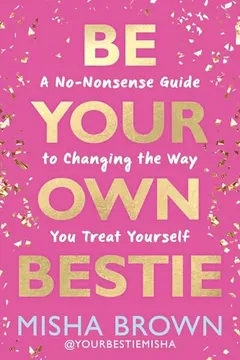
Be Your Own Bestie is memoir-led self-help, organized around the S.A.S.S. sequence but powered by scenes from Brown’s life and friendships. The framework gives readers a clear route through self-examination, self-affirmation, boundary setting, and life design. Its most persuasive idea is not simply that people should love themselves. It is that self-friendship changes what they are willing to tolerate, what they notice, and how they respond to their own mistakes.
Humor does important work. It makes difficult material, including addiction, homophobia, body shame, and relationship betrayal, easier to approach without draining it of seriousness. The stories also create a social model of change: Brown often learns about himself by seeing another person’s defenses, pain, or courage. That makes self-respect feel relational rather than solitary. Friends can offer a mirror, but the person living the life still has to choose what to do with what they see.
The book is strongest when it distinguishes compassion from compliance. Readers can understand how someone became hurtful and still set limits; they can also admit their own role in a pattern without reducing themselves to a failure. The stories of Kate, Bean, and Mel show that boundaries can preserve connection, alter it, or end it, depending on what safety and dignity require.
Some claims need a careful reading. A confident comeback is not always wise, and not every risky dream is a good bet. The idea that other people’s doubts reflect their own limitations can also overlook legitimate criticism. Brown’s best guidance accounts for this: listen, reflect, and decide whether feedback fits the person one wants to become. Finally, self-care cannot individually solve structural burdens such as unequal caregiving or discrimination. The book’s practical value lies in helping readers identify their choices while staying alert to the conditions that constrain them. Its optimism is most credible when treated as an invitation to act, not a promise that life will reward every act of courage.
Glossary
S.A.S.S.
Four-part self-trust processBrown’s framework for treating oneself as a trusted friend. The letters refer to Self-Reflection Is a Bitch, Affirm the Shit Out of Yourself, Stand Your Ground, and Sculpt the Life You Want. The sequence moves from understanding what is not working to building self-belief, protecting personal limits, and making choices that better fit one’s values.
inner-saboteur
Self-critical protective voiceBrown’s name for the inner voice that insists a person is incapable, unworthy, or likely to fail. He frames it not only as negative self-talk but also as a possible defense against rejection or disappointment. Recognizing the voice as a learned protective habit can help separate its warnings from evidence about a person’s actual abilities.
your wig
A confidence aidBrown’s metaphor for a temporary cue or support that helps someone act with confidence before they feel fully confident. It comes from his friend Lisa, whose experience wearing a wig helped her feel comfortable joining social activities while living with alopecia. The aid might be clothing, a reminder, or a practiced version of oneself, and need not become permanent.
Self-Love Plan
Structured self-care commitmentA personal plan for intentionally prioritizing time and attention for oneself. Brown suggests choosing a commitment period, such as six weeks, six months, or a year, then building regular personal time, a more substantial monthly activity, and check-ins about choices and needs. It is designed to support self-understanding and healthier decisions, not to guarantee a particular outcome.
Download PDF
Download EPUB
.epub digital book format is ideal for reading ebooks on phones, tablets, and e-readers.








