

Key Takeaways
Practice can weaken old brain patterns and strengthen new ones
Repeated experience reshapes habits. Neuroplasticity is the brain's capacity to alter its connections as we learn and repeat actions. Matthews argues that early experiences and repeated reactions become familiar pathways, shaping what we notice and how we respond. He describes a life that seemed to narrow after painful treatment as a teenager, then credits psychological training with helping him build confidence and advance in the Royal Air Force.
Change takes repetition. The practical message is not that every thought instantly rewires the brain, but that repeated practice can make a different response easier to access. Matthews also describes mental filters that exclude, generalize, or reinterpret information. These filters help explain why people can encounter the same event yet make different sense of it.
What's useful here is the move from fixed identity to learned pattern. That aligns with research on skill acquisition: practice changes performance, and repetition makes some actions more automatic. The author's own story gives the idea emotional weight without proving that one method works for everyone. Neuroplasticity is not a blank cheque, however. It does not mean people can choose any outcome simply by thinking differently. Biology, resources, social conditions, and the quality of practice all shape what change is possible.
Treat a stress surge as a signal to pause, not a command
Threat can narrow judgment. The book describes an amygdala hijack as a strong stress response that pushes rapid defensive reactions ahead of deliberate reasoning. The amygdala helps detect emotionally significant information, while other brain systems support reflection and planning. In a perceived threat, a person may feel a racing heart, sweaty palms, anger, or fear, then react before considering the consequences.
Create a gap before acting. Matthews encourages readers to notice these bodily clues and recognize when a situation has become emotionally charged. A pause, a few steady breaths, or stepping back from the exchange can make room to assess whether the danger is immediate or mainly psychological. The goal is not to eliminate emotion, but to avoid letting its first impulse dictate the response.
The alarm metaphor is helpful because it treats stress as information rather than a character flaw. Emotion regulation research similarly distinguishes noticing a feeling from acting on it, and that small interval can support more deliberate choices. Still, the amygdala is not a lone switch that simply shuts down rational thought. Stress responses involve interacting brain and body systems, and can sometimes protect people from real danger. The practical test is whether a pause improves judgment in the particular situation, not whether calmness is always the right response.
Name your emotions early, then choose your response deliberately
Notice the whole pattern. Matthews presents emotional skill as more than controlling outbursts. It includes recognizing one's own feelings, observing the behaviors that follow, noticing what others may be feeling, and handling interactions with care. A person might track whether conflict brings a tight throat, racing thoughts, avoidance, or a raised voice, then note the situation in a journal.
Listen before interpreting. The book also recommends observing other people with curiosity, asking clarifying questions, and checking whether an interpretation is accurate rather than assuming it is. During a tense exchange, the suggested response is to slow down, listen, and identify what emotional stake may be affecting the conversation. This makes emotional awareness a practical social skill, not merely private introspection.
The emphasis on observing both bodily sensations and behavior resembles emotional granularity, the ability to distinguish among specific feelings rather than treating all distress as one undifferentiated state. More precise labels can make a response easier to select. The outward-looking advice also counters a common bias: assuming that other people experience a situation as it appears from one's own perspective. Body language, however, is ambiguous. Curiosity and direct questions are safer guides than confidence in reading a room from gestures alone.
Turn vague wishes into specific outcomes and daily evidence
Make the destination observable. Matthews recommends writing goals in positive, specific terms, checking their consequences, and deciding what evidence would show that progress has occurred. Instead of a broad wish for a better social life, a person could identify a situation, a next action, and what success would look or feel like. The book calls this outcome-focused goal setting: defining a result clearly enough to guide attention and action.
Review, then adjust. Its daily journal asks readers to record events, rate the day, identify what worked, and choose a next step. Matthews suggests beginning with a few goals for the coming year, then reviewing smaller actions regularly. If a goal feels too large or unmotivating, break it down or revise it. The journal turns reflection into feedback rather than a verdict on character.
This approach makes intentions testable. In behavior science, specific plans often bridge the gap between wanting a result and noticing an opportunity to act; regular review can reveal friction that vague ambition conceals. The book's attention to consequences is also important, since a goal can succeed on paper while damaging relationships or health. Its less convincing premise is that unconscious programming will then deliver the outcome. Goals help direct attention, but progress still depends on choices, skills, opportunity, and practical constraints.
Act out the person you want to become, not just affirm it
Words work best with behavior. Matthews recommends positive affirmations, visualization, and hypnosis as ways to rehearse desired responses. He describes hypnosis as a focused, relaxed state in which a person works with meaningful suggestions, often alongside cognitive behavioral methods that examine and change thought and behavior patterns. Suggestions are meant to connect to a personal goal, not merely repeat a generic slogan.
Practice in real life. The book's acting exercise reverses the common urge to wait for confidence before taking action: behave in a small, credible way that reflects the quality being developed. It also argues that memory is reconstructed when recalled. That may make reflection open to new interpretations, but it does not make invented details true. Reframing an experience should not be confused with changing historical facts.
The strongest element is behavioral rehearsal. Acting despite self-doubt can produce new evidence about one's capabilities, while cognitive behavioral approaches test thoughts against experience. Hypnosis may help some people focus on imagery and suggestion, but it is not unconscious mind control, and results vary by person and problem. The memory claim needs particular care: remembering can alter later recollection, which is precisely why deliberately reshaping details is risky. A useful reframe changes the meaning assigned to an event while preserving uncertainty about what actually happened.
Pair a physical cue with a practiced state of calm
Build a reliable reminder. Anchoring is a technique in which a repeatable cue is associated with a chosen emotional state. Matthews suggests recalling or imagining a useful state, making it vivid, and pairing it with a small physical action that can be repeated later. The cue might be a specific touch or gesture. Rehearsal is central: the action is not treated as a magic switch, but as a prompt to recall a practiced response.
Use it at the first warning. The book describes a young soccer player who tended to foul when anger rose. He practiced using an elastic band on his wrist as a cue to return to a more controlled state, triggered by early signs such as facial heat and rising self-talk. The broader lesson is to set the cue before pressure peaks, not after the reaction has taken over.
A practiced cue can function like a compact retrieval prompt: it reminds someone of a state, skill, or routine that has been rehearsed in advance. This resembles pre-performance routines used in sport, where consistent actions help focus attention under pressure. The technique is most plausible as a reminder, not as proof that a touch reliably releases particular brain chemicals or guarantees control. It should support, rather than replace, treatment or professional help when anger, trauma, or substance-related risk is serious.
Protect sleep, movement, and recovery before demanding peak performance
Support the conditions for focus. Matthews links sleep, exercise, stress management, and diet with mood and mental performance. He recommends regular movement, adequate sleep, time outside, and planned periods of rest. His suggested workplace shorthand for recovery is REST: retreat, eat well, sleep, and treat oneself. A walk, for example, can provide both movement and distance from a problem that has become mentally crowded.
Avoid the chemical quick-fix story. The book discusses dopamine, serotonin, oxytocin, and noradrenaline as contributors to motivation, mood, connection, and alertness. It offers many ways to influence these systems, but readers should not treat them as simple controls that can be adjusted at will. Matthews advises consulting a doctor about supplements or symptoms. The more dependable takeaway is to build sustainable health routines rather than chase a particular chemical effect.
This section is strongest when it treats recovery as infrastructure, not a reward earned after work is finished. Sleep and physical activity have broad links to cognition and health, while breaks can help restore attention. The neurotransmitter explanations are less reliable as a guide to individual behavior: complex feelings do not map neatly onto one chemical, and a supplement or food cannot guarantee a mood change. The book's routine-level advice is more useful than its claims about engineering a precise chemical balance.
Match challenge to skill, and reserve effort for high-value work
Look for the workable edge. The book describes flow, or being deeply absorbed in an activity, as more likely when challenge and skill are well matched. Clear goals and immediate feedback help a person adjust while working. If a task is too easy, boredom can set in; if it overwhelms current ability, anxiety may take over. Matthews suggests applying this idea beyond elite sport to ordinary activities that demand attention.
Choose where effort counts. He also invokes the 80/20 principle, the idea that a minority of efforts may produce a majority of results, and encourages readers to identify strengths and focus on work with greater payoff. Dream incubation complements this: frame a question, then allow attention to move elsewhere before returning to it. The book uses Einstein's shower as an example of insight arriving during a break.
The flow model offers a useful way to diagnose why a task feels flat or overwhelming, and feedback gives effort a direction. The Pareto ratio is best treated as a heuristic, not a scientific law that applies identically to every person or project. Measuring which activities actually matter prevents it from becoming an excuse to ignore necessary but less glamorous work. Incubation can support creativity by giving a problem time outside focused effort, though an idea that appears in the shower still needs evaluation.
Choose meaning and action where your control still reaches
Purpose can steady attention. Matthews draws on Viktor Frankl, who endured Nazi concentration camps and later argued that people can find meaning through their stance toward hardship. The book distills this into purposeful daily work, love, and courage in adversity. Meaning is presented not as a guaranteed route to happiness, but as a reason to keep acting when circumstances are painful.
Separate judgment from circumstance. The book also turns to Stoicism, an ancient philosophy that emphasizes examining one's judgments, taking responsibility for one's actions, and distinguishing these from events outside one's control. A perspective exercise asks readers to imagine their lives from far above, widening the frame until immediate troubles appear in the context of a larger human world. The intention is to clarify priorities, not deny grief or injustice.
The pairing of purpose with a boundary around control is especially useful under uncertainty. Acceptance in this sense is not approval; it is a way to stop spending all available effort fighting facts that cannot be changed, while preserving agency over the next choice. Frankl's experience gives the argument gravity, but his survival should not be turned into a demand that people find meaning in every trauma. Some suffering needs practical support, social change, or clinical care, not a more disciplined attitude.
Measure trust alongside output, especially when teams face change
Performance has a social climate. Matthews argues that organizations often track output while overlooking whether people trust one another. He warns that a high performer who damages colleagues can be more costly than a steadier employee who helps the group succeed. His suggested leadership behaviors include recognizing good work promptly, setting difficult but achievable challenges, making time for relationships, and supporting growth beyond narrow job skills.
Design for learning and safety. The book's Organizational Neurology approach says that change can feel threatening and that workplaces should account for how people learn and respond under pressure. It applies this idea to leadership, branding, and safety, arguing that repeated experience shapes whether people trust a manager, employer, or brand. In practice, this points toward clear expectations, feedback, and attention to whether employees can learn and raise concerns.
The argument that trust belongs beside performance has strong relevance to organizational psychology: people need enough interpersonal safety to ask questions, report mistakes, and learn together. Recognition and achievable challenges can also strengthen engagement when they are fair and specific. Still, the neuroscience label does not by itself validate a management prescription. Trust and safety need observable measures, and teams differ in context. Leaders should test whether a practice improves cooperation and reliable work rather than assuming a brain-based explanation guarantees results.
Analysis
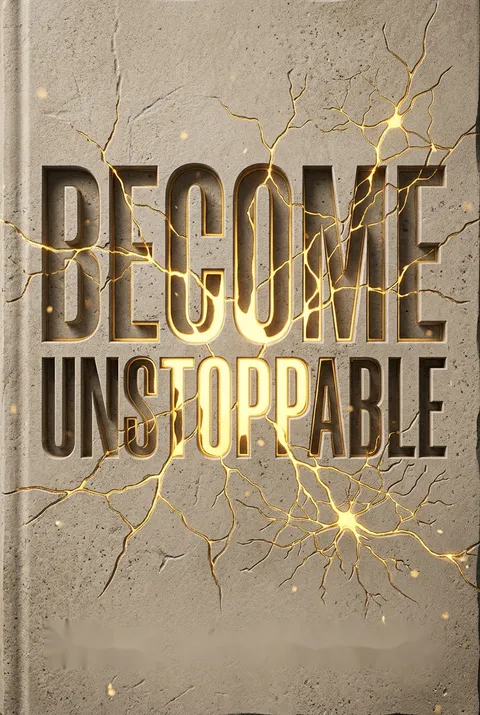
Become Unstoppable is a self-help manual that combines popular neuroscience, cognitive behavioral ideas, hypnosis, Stoicism, coaching exercises, and workplace advice. Its organizing claim is that repeated experience shapes habitual responses, and that deliberate practice can expand a person's available choices. The book's narrative gives this claim a personal anchor: Matthews recounts a painful adolescence, an introduction to mental training, and a subsequent military career. The narrative makes the possibility of change concrete, though one person's trajectory cannot establish a method's general effectiveness.
The most actionable material is often less exotic than its neuroscience vocabulary suggests. Self-monitoring, specific goals, regular review, rehearsal, exercise, adequate sleep, and planned recovery are understandable practices with plausible routes to better functioning. The book is also right to connect emotional self-awareness with interpersonal skill and to caution that high output can coexist with harmful conduct. Its blend of Stoic reflection and modern behavioral tools gives readers both a way to interpret experience and a way to test new behavior.
Its scientific claims, however, vary substantially in strength. Neuroplasticity is real, but it does not mean that any desired identity can be installed through repetition alone. Brain chemicals are described as if complex states such as confidence or happiness could be dialed up through specific activities; that is too simple to serve as medical guidance. The claim that the unconscious cannot distinguish imagination from reality is also overstated, and the advice to reconstruct memories risks confusing reinterpretation with factual alteration. Claims about hypnosis and highly precise success rates require careful qualification, rather than being treated as guarantees.
The best reading is therefore practical but discerning. Use the exercises as experiments: define a behavior, try it consistently, observe what changes, and revise it. Keep the humane insight that patterns are learnable, while resisting the promise that neuroscience can make success inevitable. The book offers a large toolbox, not a single validated mechanism, and readers should seek qualified care for significant mental or physical health concerns.
Glossary
Neuroplasticity
Experience-shaped brain changeThe brain's capacity to alter the strength and organization of its connections in response to experience, learning, and use. Matthews uses the term to explain how repeated thoughts and actions can become easier and more automatic, while less-used patterns may weaken. It supports the book's central argument for practicing new responses, but does not imply unlimited or effortless change.
Amygdala Hijack
A rapid stress reactionDaniel Goleman's term for a strong emotional response in which perceived threat drives an immediate defensive reaction before reflective judgment has fully caught up. Matthews applies it to situations involving fear, anger, or pressure, and encourages readers to notice bodily signs of arousal and pause before acting. It is a useful shorthand, not a complete account of brain function.
Anchoring
A cue for a chosen stateA technique for pairing a repeatable stimulus, often a small gesture or touch, with a deliberately recalled emotional state. Once practiced, the cue is intended to help a person retrieve that state in a demanding situation. Matthews describes using anchors for calm, confidence, learning, and sports performance. The technique is best understood as a learned prompt rather than a guaranteed switch.
Outcome-focused goals
Specific, testable aimsA goal-setting approach in which a person states a desired result positively, describes it in concrete terms, considers its consequences, and decides what observable evidence would indicate progress. Matthews recommends pairing these aims with immediate action and regular review in a journal. The method is meant to focus attention and guide behavior, not to make outcomes automatic.
Cognitive Behavioural Hypnotherapy (CBH)
CBT combined with hypnosisAn approach that combines cognitive behavioral methods, which examine links among thoughts, feelings, and actions, with hypnosis, used to support focused attention and meaningful suggestion. Matthews presents it as a way to reinforce change through imagery and practice. The book reports strong claims about its effectiveness, but outcomes depend on the person, the problem, and the quality of the evidence.
The Learning State
Broad external attentionMatthews's exercise for shifting attention outward before learning. The reader fixes their gaze on a point, allows peripheral vision to widen, and notices surrounding sights and sounds. The proposed purpose is to reduce inward self-talk and become more receptive to new information. The book contrasts this with inward-focused downtime used for relaxation and imagination.
Organizational Neurology
A brain-based workplace approachMatthews's named approach to applying ideas about learning, threat, trust, and behavior to leadership and organizational change. It argues that workplace practices should account for how people react to change and develop skills. The book applies it to performance, safety, branding, and culture. The label describes the author's framework, not a single standardized scientific discipline.
Download PDF
Download EPUB
.epub digital book format is ideal for reading ebooks on phones, tablets, and e-readers.








