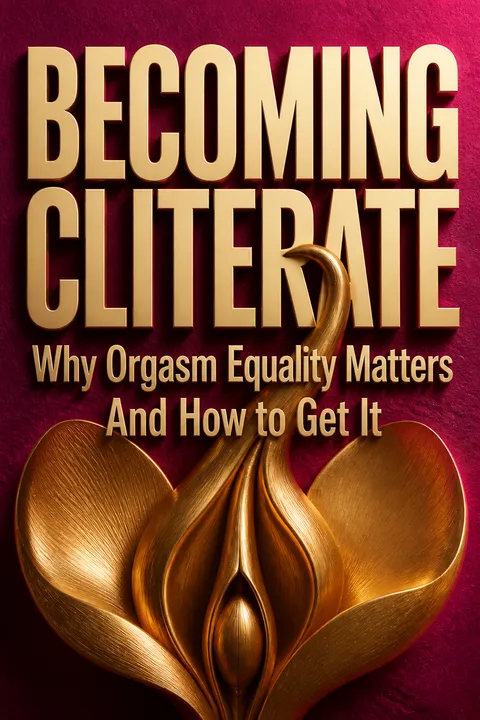


Key Takeaways
Close the orgasm gap by treating her pleasure as part of sex
The gap is measurable. In one survey, 64% of women and 91% of men said they had orgasmed during their most recent sexual encounter. Another survey found that 57% of straight women reached orgasm most or every time they had sex with a partner, compared with 95% of their partners. In Mintz's anonymous class polls, 55% of men, but only 4% of women, said they usually orgasmed during first-time hookup sex.
Culture shapes the encounter. Mintz connects the disparity to sexual routines that prioritize intercourse, men's pleasure, and the idea that women should orgasm from penetration. Shame, body-consciousness, and weak communication add to the problem. These reported figures come from different surveys and samples, but together they challenge the assumption that an individual woman is unusually difficult to please.
What's striking is the shift from diagnosing a woman to examining the sexual routine around her. That resembles a broader sociological insight: unequal outcomes can persist without any single person intending harm, simply because familiar practices keep directing attention and resources toward one group's needs. Orgasm rates make that pattern visible, though orgasm is not a complete measure of sexual wellbeing. A more useful aim is shared agency and pleasure, not a scorecard that makes every encounter another performance test.
Most women need clitoral stimulation, not penetration alone, to orgasm
The anatomy changes the answer. The clitoris is not just the small visible glans. Much of the organ, including its shaft and legs, lies inside the body; erectile tissue in the clitoris and nearby bulbs engorges during arousal. Mintz cites two surveys finding that about 15% of women could orgasm from thrusting alone. Among women who can orgasm, her account reports that 95% need clitoral stimulation.
There is no universal technique. The book describes a connected clitoris-urethra-vagina, or CUV, complex around the front wall of the vagina. This helps explain why some women enjoy internal stimulation, but it does not make a so-called G-spot a guaranteed source of pleasure. Sensitivity and preference vary, so anatomy explains why penetration alone often falls short, not what every individual will like.
The anatomical correction is powerful because it replaces a moralized idea of female deficiency with a practical account of how bodies differ. It also guards against a common error in popular science: turning a useful average into a rule for every person. The clitoris is central to many women's orgasm, but pleasure is shaped by sensation, context, and preference as well as anatomy. Accurate body knowledge is a starting point for exploration, not a substitute for listening to the person whose body is involved.
Stop calling penetration sex, because words help decide whose pleasure counts
The labels set priorities. In common usage, sex often means penile-vaginal intercourse, while clitoral touch and oral sex are treated as preliminary activities. That makes the act most likely to produce a man's orgasm the official event, and a common route to a woman's orgasm an optional extra. Mintz also distinguishes the vulva, the external genitals, from the vagina, the internal canal. Calling everything a vagina makes much of the anatomy disappear from everyday conversation.
The pattern has a history. The book traces cycles of clitoral knowledge being recognized and then pushed aside. In the Victorian era, doctors used genital stimulation to treat the supposed illness of hysteria; early electric vibrators later appeared as household massagers. Freud's influence helped popularize the notion that adult women should orgasm vaginally. Naming pleasure accurately is one way to resist that inherited script.
Language does more than describe sexual activity. It supplies categories that shape expectation, attention, and what partners regard as a complete encounter. This is a useful application of social construction: changing a label can make neglected experiences easier to discuss and normalize. But vocabulary alone cannot redistribute effort. Calling oral or clitoral stimulation sex matters most when the partners also treat it as worthwhile, consensual, and responsive to the person receiving it.
Learn your own route before asking a partner to follow it
Solo exploration supplies a map. Mintz encourages women to examine their vulva, notice what kinds of touch feel good, and experiment without treating orgasm as a test. In her class poll, 11% of women had never masturbated, and about a third of those who had reported feeling guilty about it. She describes self-pleasure as useful practice, not a substitute for partnered sex. Women in the book commonly focus on external stimulation; only a small minority report masturbating solely through vaginal penetration.
Transfer what works. Mintz reports that women often reach orgasm more quickly alone, about four minutes on average, than with a partner, where she gives a range of 15 to 45 minutes. Solo touch allows a person to control pressure, rhythm, and location. A hand, a vibrator, or another preferred method can then be included in partnered sex, if desired.
Self-exploration turns vague advice into usable knowledge. In learning theory, immediate feedback helps people identify which actions produce a desired result; solo touch offers that feedback without requiring a partner to guess. The point is not to standardize masturbation or prescribe a single route. It is to treat bodily preference as information that can be shared. For people with trauma histories, pain, or medical concerns, experimentation may require gentler pacing or professional support.
Bring attention back to sensation when self-monitoring interrupts pleasure
The inner critic competes with sensation. Mintz uses the term spectatoring for monitoring and judging oneself during sex, such as worrying about appearance, performance, or taking too long. Cultural shame and body dissatisfaction can intensify that mental commentary. She argues that believing one's pleasure matters is important, while pressure to achieve orgasm can itself get in the way.
Practice present attention. The book describes mindfulness as focusing on what is happening in the present moment, rather than getting caught in distracting thoughts. Everyday activities, such as eating or showering, can be used to practice noticing sensation. During sex, a person can acknowledge a distracting thought without judging it, breathe, and redirect attention to touch, sound, or other immediate sensations.
This advice connects sexual pleasure with attention regulation: the body may be receiving stimulation while the mind is busy evaluating it. Mindfulness offers a practical way to notice that split and return attention without demanding a blank mind. There is an important limit, though. Self-talk cannot by itself undo social pressures or make an inattentive partner responsive. Individual skills are most effective when paired with conditions that support safety, consent, and mutual care.
Build partnered sex around what works, not a fixed intercourse script
There is more than one sequence. Mintz describes alternatives to the familiar routine of preliminary touching, intercourse, a man's orgasm, and the end of sex. Partners can focus on the woman's pleasure first, take turns, share stimulation, or let one person receive pleasure while the other gives. Clitoral stimulation may happen before, during, or after intercourse, and intercourse need not be included. The method should match the preferences of both people, not a standard script.
Allow enough time and comfort. The book reports that partners in one survey spent an average of five minutes warming up, while many women need longer to become aroused. It cites a finding that 20 or more minutes of clitoral stimulation was associated with orgasm for about 92% of women in the study. That is not a guarantee or a timer to obey. Lubrication, comfort, communication, and stopping if something hurts matter too.
The useful innovation is not a replacement script but the permission to choose among sequences. That resembles user-centered design: start with the needs of the person using the system rather than forcing everyone through the same workflow. Time estimates can make invisible effort concrete, but they can also become a new performance target. The measure of a good encounter is not compliance with a duration or orgasm quota. It is whether the people involved can adjust freely and enjoy what they choose.
Ask, demonstrate, and reflect instead of expecting a partner to guess
Clear requests beat mind-reading. Mintz identifies assumptions such as expecting a partner to know what is wanted, or believing that discussing a problem is useless, as obstacles to communication. Her practical tools include stating needs directly, using I-statements rather than accusations, checking assumptions, and reflecting back what a partner has said. Difficult conversations work better when both people have time and are calm.
Make feedback usable. During sex, a person can guide a partner's hand, use simple words about pressure or rhythm, and say when something feels good. Talking beforehand can establish preferences and consent; talking afterward can clarify what worked. Mintz also recommends raising serious dissatisfaction outside the bedroom, rather than making the bed the setting for a stressful argument.
Sexual communication functions like a feedback loop: one person offers information, the other responds, and both update their understanding. This is especially important when preferences vary between people and encounters. The approach also reframes guidance as collaboration rather than criticism. Still, communication cannot guarantee compatibility. A partner's response to a clear request is itself informative: curiosity and respect support intimacy, while persistent disregard for another person's pleasure is not a failure of phrasing.
Normalize pleasure education so clitoral knowledge survives cultural amnesia
Cliteracy means shared knowledge. Mintz uses the term for understanding the clitoris and women's routes to pleasure, and for being able to discuss them openly. She notes that clitoral knowledge has repeatedly surfaced and faded from public awareness. Her proposals range from using accurate anatomical language and sharing reliable information to challenging media myths and teaching sexual communication alongside anatomy.
Education can change the default. At the time of publication, the book reports that 23 U.S. states mandated sex education and 13 required medical accuracy. Mintz contrasts risk-focused instruction with Dutch programs that taught students that pleasurable sex is broader than intercourse and that understanding one's own body matters. She also cautions against making orgasm the sole measure of a good encounter. Pleasure can be real without a climax, and partners need not experience every encounter identically.
What's striking is the book's move from personal technique to public education. When accurate language and anatomy are available early, fewer people have to correct misinformation alone in the bedroom. The approach also treats sexual knowledge as a shared responsibility, including for partners who do not have a clitoris. One tension remains: asking individuals to spread the message can shift too much cultural labor onto women. Durable change requires partners, educators, and institutions to participate.
Analysis
Becoming Cliterate is both a practical guide to sexual pleasure and an argument about how culture shapes bodily expectations. Its central move is to recast many women's difficulty reaching orgasm with partners as a predictable outcome of a routine organized around intercourse, rather than evidence of personal failure. Anatomy explains why clitoral stimulation is important for many women; self-exploration identifies individual preferences; attention and communication help make those preferences actionable. The narrative then widens from bedroom practice to vocabulary, education, and cultural memory.
The book's most durable contribution is its insistence that knowledge and agency belong together. Knowing that the clitoris matters does not automatically help someone ask for stimulation, ignore shame, or negotiate a new sexual routine. Mintz therefore pairs anatomy with body image, mindfulness, self-pleasure, and communication. The examples of partners who respond differently to honest disclosure show that pleasure is partly relational: information can improve a sexual encounter, but the other person's willingness to engage matters too.
The evidence needs to be read with attention to its sources. The book draws on published surveys, research reviews, and anonymous polls of the author's students. Those figures make a compelling case that orgasm disparities are widespread, but they do not describe every population or every kind of sex. The book's own anatomy discussion recognizes variation and ongoing scientific debate, especially around categories such as vaginal and clitoral orgasm. Its strongest claim is not that all women need the same act, but that intercourse alone is an unreliable default and preferences must be discovered rather than presumed.
The book also resists turning orgasm into another compulsory achievement. That distinction matters: equality is not identical outcomes in every encounter, nor a demand that every sexual experience end in climax. The larger goal is equitable attention, informed choice, and the freedom to define satisfying sex with a partner. Its cultural critique is most persuasive when it connects public language to private practice, while leaving room for individual difference, consent, and the possibility that some sexual routines simply will not suit some people.
Review Summary
Becoming Cliterate receives high praise for its empowering, informative approach to female sexuality and orgasm. Readers appreciate its humor, accessibility, and focus on the clitoris. Many find it eye-opening, challenging cultural myths about sex. The book is lauded for promoting communication, body positivity, and equal pleasure. Some criticize its heteronormative focus, while others wish they had read it earlier. Overall, it's widely recommended for both women and men seeking to improve their sex lives and understanding of female anatomy.
People Also Read

Glossary
Cliteracy
knowledge of clitoral pleasureThe book's term for knowing the clitoris, understanding how it can contribute to women's pleasure and orgasm, and being able to talk about that knowledge. Cliteracy includes accurate anatomy, awareness of personal preferences, and recognition that clitoral stimulation deserves consideration in partnered sex.
Orgasm equality
equal regard for pleasureMintz's term for valuing women's and men's routes to sexual pleasure equally. It does not require each partner to orgasm in the same way or during every encounter. It challenges routines that treat intercourse and men's orgasms as central while making women's pleasure optional.
Pleasure gap
unequal orgasm ratesThe recurring difference between men's and women's reported orgasm rates, especially in heterosexual partnered sex and casual hookups. Mintz treats the gap as a cultural and relational problem shaped by intercourse-centered expectations, limited attention to clitoral stimulation, body shame, stigma, and poor communication.
Traditional sexual script
intercourse-centered sexual routineA familiar sequence in which preliminary touching prepares a woman for intercourse, intercourse is treated as the main sexual event, the man orgasms, and the encounter ends. Mintz argues that this script often leaves little time or attention for the stimulation many women need to orgasm.
Spectatoring
self-monitoring during sexA term for mentally observing and evaluating oneself during sexual activity instead of attending to bodily sensation. Examples include worrying about appearance, whether one is performing well, or taking too long. Mintz argues that this kind of self-conscious monitoring can distract from pleasure and make orgasm more difficult.
Mindfulness
attention to the presentIn the book, mindfulness means bringing attention to immediate experience, including bodily sensations, without getting stuck in judgment or distracting thoughts. Practicing it in everyday activities can help a person notice when attention has wandered during sex and gently return focus to the present.
clitoris-urethra-vagina (CUV) complex
connected erectile and genital tissuesA term used by some researchers for structures around the front wall of the vagina that may be involved in sexual sensation and orgasm. The complex includes parts of the vaginal wall, urethral area, surrounding erectile tissue, and internal clitoral structures. It reflects the anatomical connections that make simple orgasm categories difficult.
vaginal tenting
arousal-related vaginal expansionThe changes in the vagina that occur with arousal. The vaginal canal lubricates, lengthens, and changes shape, creating more room for penetration. Mintz explains that entering before sufficient arousal or lubrication can cause discomfort or pain, and encourages partners to attend to readiness rather than assume it.
Good Enough Sex
sex without perfection pressureA model cited by Mintz to counter the expectation that every sexual encounter must be exceptional and equally satisfying for both partners. Some encounters may be very good for one person and merely adequate for the other. The model treats this variation as ordinary, not as automatic evidence that the relationship or sex has failed.
FAQ
What's Becoming Cliterate about?
- Focus on Orgasm Equality: Becoming Cliterate by Laurie Mintz addresses the orgasm gap between men and women, advocating for "orgasm equality." It explores cultural misconceptions about female pleasure and offers practical advice for women to achieve orgasms.
- Cultural Analysis: The book examines societal norms that prioritize male pleasure, contributing to women's sexual dissatisfaction. Mintz argues that understanding these cultural issues is crucial for women to reclaim their sexual experiences.
- Practical Skills: It provides actionable techniques for women to enhance their sexual experiences, including self-exploration and communication with partners, empowering them to take control of their sexual pleasure.
Why should I read Becoming Cliterate?
- Empowerment Through Knowledge: The book equips women with knowledge to understand their bodies and advocate for their sexual needs, emphasizing that knowledge is power in achieving sexual satisfaction.
- Addressing Common Issues: It tackles common sexual issues women face, such as difficulty reaching orgasm and performance pressure, offering a safe space to explore these topics without shame.
- Cultural Change: By reading, you join a movement to change the cultural narrative around female pleasure, contributing to a broader societal shift towards sexual equality.
What are the key takeaways of Becoming Cliterate?
- Understanding the Pleasure Gap: Recognizing the "pleasure gap" between men and women, where men often experience more orgasms, is a reflection of cultural attitudes rather than individual shortcomings.
- Importance of Clitoral Stimulation: Most women require clitoral stimulation to achieve orgasm, which is often overlooked. Mintz emphasizes prioritizing clitoral health and stimulation.
- Communication is Key: Effective communication with partners about sexual needs is crucial for achieving orgasm, encouraging women to express their desires openly.
What are the best quotes from Becoming Cliterate and what do they mean?
- "There can’t be true quality without equality.": This quote highlights the need for recognizing and valuing women's sexual needs equally to men's, calling for a cultural shift towards understanding female pleasure.
- "The clitoris is the key to women’s orgasms.": It underscores the importance of clitoral stimulation in achieving orgasm, challenging the misconception that penetration alone suffices for female pleasure.
- "You don’t have to have a clitoris to be cliterate.": This emphasizes that understanding and advocating for female pleasure is important for everyone, encouraging men to educate themselves about women's sexual needs.
What is the "pleasure gap" mentioned in Becoming Cliterate?
- Definition of the Pleasure Gap: The "pleasure gap" refers to the disparity in orgasm rates between men and women during sexual encounters, with women often reporting difficulty reaching orgasm.
- Cultural Influences: Societal norms prioritize male pleasure, leading to women feeling inadequate or pressured to perform sexually, contributing to the gap.
- Statistical Evidence: Mintz provides statistics showing a significant percentage of women do not orgasm during casual sex, illustrating the extent of the pleasure gap.
How does Becoming Cliterate suggest women increase their "cliteracy"?
- Self-Exploration Techniques: Encourages women to explore their bodies through masturbation, understanding what feels good, with practical exercises to learn about anatomy and preferences.
- Communication with Partners: Advocates for open communication about what women need to achieve orgasm, including discussing preferences for clitoral stimulation.
- Education on Anatomy: Provides detailed information about female anatomy, particularly the clitoris, to help women understand their bodies better.
How does communication play a role in achieving orgasm according to Becoming Cliterate?
- Essential for Satisfaction: Communication is vital for achieving sexual satisfaction and orgasm, empowering women to express their needs and desires to partners.
- Overcoming Misconceptions: Many women feel pressured to conform to norms prioritizing male pleasure, leading to a lack of communication about their needs. Speaking up reshapes these dynamics.
- Building Trust: Effective communication fosters trust and intimacy, enhancing sexual experiences. Women are encouraged to discuss their preferences openly for a fulfilling relationship.
How does Becoming Cliterate address cultural myths surrounding female orgasms?
- Debunking Myths: Systematically debunks myths about female orgasms, such as the idea that women should orgasm solely from penetration, which contributes to the pleasure gap.
- Historical Context: Provides a historical overview of how women's sexuality has been misunderstood, highlighting the need for a cultural shift in perceiving female pleasure.
- Empowerment Through Knowledge: Educates women about their bodies and the realities of female orgasms, empowering them to challenge these myths.
What practical exercises does Becoming Cliterate recommend for women?
- Self-Exploration: Includes exercises for women to explore their bodies through masturbation, helping them understand what feels pleasurable.
- Mindfulness Techniques: Suggests mindfulness practices to help women focus on sensations during sexual encounters, enhancing their ability to experience pleasure.
- Communication Skills: Provides strategies for effectively communicating needs and desires to partners, including preferences for clitoral stimulation.
What is the significance of the clitoris in Becoming Cliterate?
- Central to Female Pleasure: The clitoris is key to female orgasms, highlighting the importance of clitoral stimulation for sexual satisfaction.
- Anatomical Understanding: Offers detailed information about the clitoris's anatomy, empowering women to explore their bodies and communicate their needs.
- Cultural Awareness: Discusses how cultural narratives often overlook the clitoris, aiming to challenge these narratives and promote sexual equality.
How does Laurie Mintz suggest women can communicate their sexual needs?
- Use “I” Statements: Advises starting sentences with “I” to avoid sounding accusatory, fostering constructive communication.
- Meta-Communication: Encourages discussing the communication itself, helping maintain a positive dialogue about sexual needs.
- Kitchen-Table Talks: Suggests having discussions about sexual needs in non-sexual settings, allowing for open and honest communication.
How can couples use the information in Becoming Cliterate to improve their sexual experiences?
- Implementing New Sexual Scripts: Couples can adopt the four sexual plays introduced to create more equitable and satisfying sexual encounters.
- Enhancing Communication: Provides tools for improving sexual communication, essential for understanding each partner’s needs.
- Prioritizing Female Pleasure: By focusing on clitoral stimulation and understanding anatomy, couples can ensure both partners achieve satisfaction, enhancing intimacy.
Download PDF
Download EPUB
.epub digital book format is ideal for reading ebooks on phones, tablets, and e-readers.








