

Key Takeaways
Untangle the gospel from the rules that claimed to represent it
A faith in the fishbowl. Jinger Duggar Vuolo grew up in a large, conservative Christian family whose life was filmed from the time she was ten. She describes the experience as living inside a public fishbowl: strangers had expectations about who she should be, while her religious community offered its own detailed script. Bill Gothard’s teachings shaped that script, adding specific rules to biblical principles and presenting them as God’s path to a successful life.
A third way forward. Vuolo does not abandon Christianity, but she rejects the idea that she must choose between total independence and strict religious control. She calls her process disentanglement: separating what she believes is the gospel of Jesus from teachings she considers human inventions. Her story is a personal account of keeping her faith while re-examining its authorities.
The memoir’s central distinction is useful beyond this particular religious movement: a belief system can contain both genuine sources of meaning and damaging interpretations of them. Treating those as inseparable forces a false choice between preserving everything and rejecting everything. At the same time, disentanglement is not a neutral procedure. Vuolo tests teachings against her Christian reading of Scripture and keeps Jesus as the standard. Readers from other traditions may use different authorities, but the underlying task remains recognizable: identify what a community has added to its core commitments.
Treat promises of guaranteed blessings as a warning sign
Rules promised control. Gothard’s Seven Basic Life Principles offered followers a seven-part guide to purpose, authority, responsibility, suffering, stewardship, moral choices, and success. The system appealed to families seeking order amid cultural change. Its rules were concrete, and its promises were powerful: follow the right pattern, and God would bless you with success, health, and security.
The guarantee became a burden. Vuolo understood life as a spiritual cause-and-effect ledger. Good choices would bring good outcomes; suffering might mean she had violated a rule or displeased God. That logic could make obedience feel reassuring, but it also made ordinary uncertainty frightening. If an illness or hardship arrived, the believer could blame themselves for failing to follow a rule, even when the reason for suffering was unknowable.
A promised formula can feel especially persuasive when it turns uncertainty into something manageable. Yet a guarantee of success creates a cruel reverse inference: if the promised outcome does not arrive, the person must have failed. That is a poor way to interpret complex events, whether religious or secular. The nuance is that habits and choices do affect outcomes, and some consequences are predictable. The problem is claiming certainty about divine reward, or treating every hardship as evidence of personal moral error.
Authority earns trust through service, limits, and accountability
Protection became conditional. Gothard’s umbrella of authority described parents, pastors, government officials, and employers as protectors delegated by God. Vuolo understood that disobeying them could remove her spiritual protection and expose her to harm. The model made decisions feel simple, but it also made human authority seem nearly absolute. Her parents sometimes used their influence well, such as when they encouraged her to eat during a period of restrictive eating. Their care, however, did not make every authority unquestionable.
Leadership should serve. Vuolo contrasts the umbrella model with Jesus washing his disciples’ feet and teaching that leaders should serve those in their care. She also recalls her mother-in-law’s parents opposing her relationship with a pastor without giving a clear reason. The couple married and built a family. The story illustrates the risk of treating parental disapproval as an automatic command.
The strongest insight here is structural: authority is safer when it includes duties, boundaries, and accountability, rather than relying on a leader’s claim to good intentions. Service is not merely a warm leadership style; it changes who benefits from power. Still, the answer is not to treat all authority as suspect. Parents and institutions can provide real protection and wisdom. The practical question is whether their guidance can be questioned, whether those affected retain agency, and whether leaders answer for harm.
Read whole passages before turning Scripture into personal instructions
Context changes the message. Vuolo recalls learning to treat individual Bible verses as support for rules rather than reading passages to understand their original meaning. She sometimes looked for a personal instruction in every detail. The story of David and Goliath became a puzzle about what the stones meant for her, while a warning about a ruler’s rich food became a reason to fast.
A private message is not a shortcut. Gothard used the term rhema for a portion of Scripture understood as a specific message for an individual. Vuolo also describes proof-texting: starting with a claim, then selecting verses to make it appear biblical. Conversations with Ben Seewald and her future husband, Jeremy, helped her attend to whole passages and ask what Scripture says about God, rather than assuming every reading contains a hidden personal directive.
This is an argument for interpretive discipline: a text’s meaning cannot be reduced to whatever thought it sparks in a reader. Context protects both the text and the reader from using sacred language to ratify a preferred conclusion. Personal reflection still has value, but it is different from claiming that a private association is the text’s intended meaning or a binding command. That distinction matters in any tradition where leaders can present their own applications as if they carry the authority of the source.
Keep biblical commands distinct from rules that merely feel safer
Preferences became obligations. Vuolo was taught that modesty required particular clothing, that certain music and foods were spiritually dangerous, and that women should have as many children as possible. She came to see that these specific prescriptions went beyond the biblical principles they claimed to apply. Scripture may call for modesty or love, she argues, without specifying skirt length, musical genre, or a family’s size. She also rejects the idea that a woman’s purpose is limited to marriage and motherhood.
Disagreement can be faithful. Christian liberty is her term for freedom to make different choices on matters Scripture does not settle, while remaining committed to its central teachings. She points to Romans 14, where Christians disagree about eating meat and are told not to condemn one another over the issue. Courtship rules, birth control, food, and clothing likewise should not automatically be treated as universal tests of faith.
The distinction between core commitments and local customs helps explain how communities can remain coherent without demanding uniformity. It also makes room for conscience without turning one person’s discomfort into everyone’s law. But liberty is not a license to ignore consequences: choices about family size, relationships, or dress can affect other people and deserve thoughtful discussion. The key is to make the case honestly, distinguishing a moral conviction from a rule that a group finds comforting or culturally familiar.
A guilty conscience is not always God's voice
Conscience can be trained badly. Vuolo describes an overactive conscience: a persistent sense of guilt that treats non-sinful choices as disobedience. After becoming a Christian, she worried that playing broomball instead of reading the Bible might anger God, or that enjoying a family movie was spiritually irresponsible. At times, she fasted because she believed eating would displease God, even though fasting was not a biblical command for her.
Fear shaped ordinary rituals. She also dreaded Communion, fearing that an unremembered sin could bring punishment or death. She later understood the practice as a remembrance of Christ, not a trap for imperfect people. Her point is not that conscience should be ignored. It is that guilt can reflect a mistaken standard, especially when a person has been taught that God punishes hidden or accidental failures.
The distinction between moral perception and moral reality is important. A conscience can alert someone to harm, but it can also absorb a community’s excessive rules and produce distress where no wrongdoing has occurred. That resembles a faulty alarm: the response feels urgent, yet urgency alone does not prove danger. Still, dismissing every uncomfortable feeling would also be unwise. The useful step is to ask what standard the guilt is enforcing, where that standard came from, and whether the conduct actually harms anyone.
Stop performing goodness; honest relationships need room for a real self
A public script followed her home. On television, Vuolo learned to present a cheerful, composed version of herself. Gothard’s teachings added pressure to be agreeable and constantly encouraging as a wife. In her first year of marriage, she often answered Jeremy’s questions with whatever he wanted, even about trivial choices. She feared that expressing dissatisfaction might threaten the relationship. He encouraged her to share her actual opinions instead of mirroring his.
Connection required practice. Moving away from her family also exposed how little experience she had building one-on-one friendships. At a brunch with a kind church member, anxiety made her focus on saying the right thing rather than getting to know the other person. Vuolo came to see that honesty, including admitting weakness, can make a relationship more mutual. She regrets keeping people at a distance, and describes learning to ask for help as part of serving others.
Performance can look like kindness while quietly preventing intimacy. A person who is always monitoring their image has little attention left for curiosity about someone else. The shift toward honest self-disclosure is not a demand to reveal everything, or to treat vulnerability as a cure for anxiety. It depends on safe relationships and personal boundaries. Vuolo’s example shows how ordinary choices, such as expressing a preference or asking for support, can replace a role with a more reciprocal connection.
Judge teachings by their fruit, not their certainty or claims
Charisma is not evidence. Vuolo once admired Gothard as a uniquely wise Christian teacher. She later reconsidered that trust as she studied his claims and learned of accusations by women involved in his ministry. More than thirty women had come forward by 2014; Gothard resigned that year. In 2016, ten women filed a lawsuit alleging sexual misconduct. The suit was dropped in 2018, and the book does not present a court conviction. The organization’s board said its inquiry found no criminal activity, while describing his actions as inappropriate.
Rules can protect leaders. Vuolo criticizes teachings that made women responsible for men’s fidelity, discouraged wives from expressing needs, and framed external rule-following as proof of righteousness. Her concern is that a leader can demand strict control from followers while evading the standards imposed on them. She urges readers to notice both the teachings and the relationships those teachings create.
This account calls for two kinds of scrutiny at once: careful treatment of allegations and serious attention to power. A dropped lawsuit is not a conviction, and allegations should not be rewritten as established legal findings. Nor does the absence of a conviction settle every question about whether a leader is fit to wield influence. Transparent processes, independent oversight, and meaningful protection for people with less power are stronger safeguards than a leader’s reputation for certainty.
Build faith around Jesus, not a substitute system of control
The center of the story changed. Vuolo says her faith deepened when she began reading the Bible as a story about God, rather than a manual for controlling every personal decision. She came to see Jesus, not a teacher’s rules or her own performance, as the source of salvation and freedom. This is why she distinguishes her journey from rejecting Christianity: she has discarded teachings she believes distorted the faith while remaining committed to Christ.
Disentanglement takes work. Her closing counsel is to approach change with humility, compare teachers’ claims with Scripture, and accept that questioning a community may cost belonging or influence. The process is not a new promise that life will be easy. It is a continuing effort to separate inherited assumptions from convictions she can defend, while relying on the faith she believes holds her through uncertainty.
The ending is specific to Vuolo’s Christian convictions, not a universal prescription that every person should arrive at the same theology. Its broader contribution is a model of religious repair: preserve what remains credible, examine who benefits from a teaching, and avoid replacing one unquestioned authority with another. The memoir also makes clear that belonging is part of the cost. Honest reassessment can clarify belief, but it may not restore every relationship or remove uncertainty.
Analysis
This is a theological memoir with a practical argument: harmful religious control and unbounded personal autonomy are not the only options. Vuolo calls her alternative disentanglement, preserving Christian faith while separating it from teachings she regards as man-made. The narrative earns that claim through specific shifts in her life: a childhood under public scrutiny, fear shaped by rules, new encounters with Christians outside her subculture, close Bible study, marriage, and life in a more varied church community.
The book’s sharpest contribution is its attention to how interpretation becomes power. Rules about clothes, food, courtship, family size, and submission do not merely organize behavior. When presented as God’s commands, they can make disagreement feel spiritually dangerous and leaders seem indispensable. The contrast between an authority that demands obedience and one that serves and accepts accountability gives readers a practical way to evaluate institutions, not only doctrine.
Its method is also distinctly theological. Vuolo treats Scripture as the final authority and reads it through her Christian understanding of Jesus. That makes the book compelling for readers who share, or are curious about, that framework. It also limits its reach as a general account of religious harm: someone who no longer trusts Scripture may not accept her proposed route out of fear. The memoir acknowledges that difference without making secular freedom its destination.
There is a further tension in the narrative. Rules can be oppressive, but they can also offer structure, community, and a sincere attempt to live responsibly. The problem is not simply having strong convictions. It is confusing interpretations with commands, promising outcomes no system can guarantee, and insulating leaders from scrutiny. By holding personal testimony alongside textual argument and reported allegations, the book asks readers to consider both what a belief says and what it does to people. Its most durable lesson is methodological: inspect the source, the interpretation, the incentives, and the lived consequences before surrendering judgment.
Review Summary
Becoming Free Indeed received mixed reviews from readers. Many appreciated Jinger's vulnerability in sharing her journey away from IBLP teachings, praising her grace and biblical approach. However, some felt the book lacked depth and personal details, focusing too heavily on theology rather than memoir. Critics noted that Jinger seemed to have moved from one conservative Christian ideology to another, rather than fully deconstructing her beliefs. Positive reviewers found the book helpful for those leaving similar religious backgrounds, while others felt it was more of a promotion for her new church.
Glossary
Disentanglement
separating faith from errorVuolo’s term for examining a faith shaped by harmful or inaccurate teachings, then separating those teachings from what she understands as the gospel of Jesus. Unlike her use of deconstruction, disentanglement preserves her Christian faith while rejecting particular rules, interpretations, and authorities she believes misrepresented it.
Seven Basic Life Principles
Gothard's seven-part life systemA framework taught by Bill Gothard through the Institute in Basic Life Principles. It organized Christian living around design, authority, responsibility, suffering, ownership, freedom, and success. Vuolo says its practical rules offered certainty and promised blessings, but also encouraged fear, self-scrutiny, and the belief that hardship could result from failing to obey.
Umbrella of authority
authority as spiritual protectionGothard’s model in which parents, church leaders, government officials, and employers act as authorities delegated by God. Obedience was presented as a form of protection, while disobedience could leave someone spiritually exposed to harm. Vuolo argues that this model gives human authorities too much power and can make them seem beyond question.
Rhema
personalized scriptural messageIn the teaching Vuolo describes, a rhema is a verse or portion of Scripture understood as a specific message from the Holy Spirit for a present need or decision. She became concerned when personal associations with a passage were treated as authoritative instructions, especially when a teacher claimed such insights revealed new rules for others.
Proof-texting
verses detached to support claimsThe practice of beginning with a conclusion and selecting brief biblical passages to support it, without adequately considering their context or the larger argument. Vuolo says this can make a teacher’s own opinions appear to carry scriptural authority, because the audience hears Bible verses without examining what those passages mean in context.
Christian liberty
freedom on nonessential questionsThe freedom Vuolo sees in Scripture for Christians to make differing choices on matters the Bible does not explicitly settle, provided those choices do not conflict with essential Christian teachings. She connects the idea to Romans 14, where believers disagree about food and are cautioned against judging one another over the disagreement.
Truth by analogy
rules inferred from storiesA way of arguing from a story or personal experience to a general rule. Vuolo says Gothard often used accounts of people experiencing hardship to claim that a particular behavior would lead to similar consequences for others. Such stories may illustrate a possibility, but they do not by themselves establish a universal biblical command or causal rule.
Overactive conscience
guilt beyond biblical commandsVuolo’s description of a conscience trained to treat actions as sinful even when Scripture does not condemn them. She recalls feeling guilty about ordinary activities, such as playing a family game instead of reading the Bible. The problem, in her account, was not having a conscience, but mistaking learned anxiety for God’s direct instruction.
FAQ
What's "Becoming Free Indeed" about?
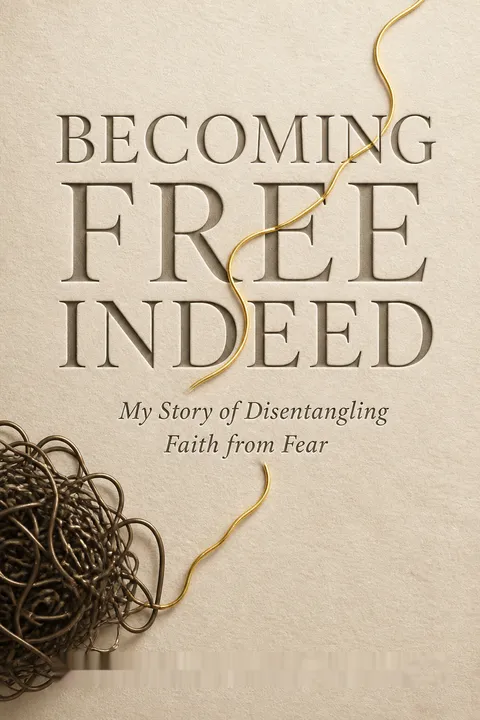
- Author's Journey: "Becoming Free Indeed" by Jinger Duggar Vuolo is a personal memoir detailing her journey of disentangling her faith from fear and the teachings of Bill Gothard.
- Religious Upbringing: The book explores Jinger's upbringing in a conservative Christian family, her experiences on reality TV, and her exposure to the teachings of the Institute in Basic Life Principles (IBLP).
- Spiritual Transformation: It highlights her spiritual transformation as she questions and ultimately rejects the legalistic teachings she grew up with, finding a more authentic faith.
- Personal Reflections: Jinger shares personal stories, struggles, and insights as she navigates her faith journey, aiming to help others who may be experiencing similar challenges.
Why should I read "Becoming Free Indeed"?
- Insightful Memoir: The book offers a candid look into the life of someone raised in a high-profile, conservative Christian family, providing unique insights into the challenges and transformations she faced.
- Relatable Journey: Readers who have experienced similar religious upbringings or are questioning their faith may find Jinger's journey relatable and encouraging.
- Critical Examination: It provides a critical examination of the teachings of Bill Gothard and the IBLP, offering a perspective on the impact of legalistic religious systems.
- Encouragement and Hope: Jinger's story is one of hope and encouragement, showing that it's possible to find a more authentic and freeing faith.
What are the key takeaways of "Becoming Free Indeed"?
- Disentangling Faith from Fear: Jinger emphasizes the importance of separating genuine faith from fear-based teachings and legalism.
- Questioning Authority: The book encourages readers to critically examine religious teachings and leaders, ensuring they align with biblical truth.
- Personal Growth: Jinger's journey highlights the value of personal growth and the courage to change long-held beliefs.
- True Freedom in Christ: The ultimate message is finding true freedom and peace in a relationship with Jesus, free from the constraints of man-made rules.
How did Jinger Duggar Vuolo's upbringing influence her faith journey?
- Conservative Background: Jinger was raised in a conservative Christian family, heavily influenced by the teachings of Bill Gothard and the IBLP.
- Reality TV Exposure: Her family's reality TV show, "19 Kids and Counting," brought her beliefs and lifestyle into the public eye, adding pressure to conform.
- Legalistic Teachings: The teachings she grew up with emphasized strict adherence to rules, which she later found to be fear-based and not aligned with true biblical teachings.
- Desire for Authentic Faith: Her upbringing instilled a desire for a genuine relationship with God, which ultimately led her to question and redefine her beliefs.
What role did Bill Gothard and the IBLP play in Jinger's life?
- Influential Teachings: Bill Gothard and the IBLP played a significant role in shaping Jinger's early beliefs, promoting a legalistic approach to Christianity.
- Seven Basic Principles: The IBLP's teachings included seven basic life principles that were presented as keys to a successful Christian life.
- Umbrella of Authority: Gothard's concept of the "umbrella of authority" emphasized strict obedience to authority figures, which Jinger later questioned.
- Rejection of Teachings: Over time, Jinger came to see these teachings as fear-based and not reflective of the true gospel, leading her to reject them.
How did Jinger's relationship with Jeremy Vuolo impact her faith?
- New Perspectives: Jeremy introduced Jinger to new perspectives on Christianity, encouraging her to question the teachings she grew up with.
- Biblical Focus: He emphasized a focus on the Bible itself, rather than man-made rules, which helped Jinger see the gospel in a new light.
- Supportive Partner: Jeremy supported Jinger's journey of disentanglement, providing a safe space for her to explore and redefine her beliefs.
- Shared Faith Journey: Together, they navigated their faith journey, ultimately finding a more authentic and freeing relationship with God.
What is the "umbrella of authority" concept mentioned in "Becoming Free Indeed"?
- Authority Structure: The "umbrella of authority" is a concept taught by Bill Gothard, emphasizing strict obedience to authority figures as a form of protection.
- Protection from Harm: It suggests that stepping out from under this "umbrella" exposes individuals to spiritual harm and attacks from Satan.
- Critique of the Concept: Jinger critiques this concept as fear-based and not biblically supported, leading to unnecessary guilt and control.
- Personal Impact: The concept played a significant role in Jinger's upbringing, contributing to her fear and anxiety, which she later worked to overcome.
How does Jinger Duggar Vuolo define true freedom in "Becoming Free Indeed"?
- Freedom in Christ: True freedom is found in a relationship with Jesus Christ, free from the constraints of legalism and man-made rules.
- Biblical Understanding: It involves understanding and embracing the gospel, focusing on God's love and grace rather than fear and guilt.
- Personal Transformation: Jinger's journey highlights the transformative power of true freedom, leading to peace and authenticity in her faith.
- Rejecting Legalism: True freedom rejects the legalistic teachings she grew up with, allowing her to live a life centered on Christ's love and truth.
What are some of the challenges Jinger faced in her journey of disentanglement?
- Fear of Rejection: Jinger feared being rejected by her community and losing relationships as she questioned and rejected long-held beliefs.
- Emotional Struggles: The process of disentanglement was emotionally exhausting, requiring her to confront deeply ingrained fears and anxieties.
- Public Scrutiny: As a public figure, Jinger faced additional scrutiny and criticism for her changing beliefs and lifestyle.
- Personal Growth: Despite these challenges, Jinger's journey led to significant personal growth and a deeper understanding of her faith.
How does "Becoming Free Indeed" address the concept of legalism?
- Critique of Legalism: The book critiques the legalistic teachings of Bill Gothard and the IBLP, highlighting their fear-based nature.
- Personal Experience: Jinger shares her personal experiences with legalism, including the guilt and anxiety it caused in her life.
- Biblical Perspective: She contrasts legalism with a biblical perspective, emphasizing grace, love, and true freedom in Christ.
- Encouragement to Others: Jinger encourages readers to examine their own beliefs and reject legalism in favor of a more authentic faith.
What are the best quotes from "Becoming Free Indeed" and what do they mean?
- "If the Son sets you free, you will be free indeed." This quote from John 8:36 encapsulates the book's message of finding true freedom in Christ.
- "The cross is where God’s perfect justice and mercy meet." This highlights the centrality of the gospel in Jinger's journey and the transformative power of Jesus' sacrifice.
- "I am not in charge of my life." This reflects Jinger's realization of God's sovereignty and her need to trust Him rather than rely on her own efforts.
- "Love does not seek its own benefit." This quote emphasizes the importance of self-giving love, inspired by Jesus' example, in Jinger's relationships and faith journey.
How does Jinger Duggar Vuolo's story inspire others facing similar challenges?
- Relatable Journey: Jinger's story is relatable for those who have experienced similar religious upbringings or are questioning their faith.
- Encouragement to Question: She encourages readers to critically examine their beliefs and seek a more authentic relationship with God.
- Hope and Freedom: Her journey offers hope and a path to true freedom, showing that it's possible to overcome fear and legalism.
- Personal Growth: Jinger's story inspires personal growth and transformation, demonstrating the power of God's love and grace.
Download PDF
Download EPUB
.epub digital book format is ideal for reading ebooks on phones, tablets, and e-readers.








