

Plot Summary
A Bride Runs East
After the defeat of the Fortuna trafficking ring, Selene Bowers1 faces the marriage oath she once tried to escape. She is now in love with Memnon,2 the two-thousand-year-old sorcerer2 she woke from enchanted sleep, and that love has restored the oath’s force. To make their wedding hers as well as his, Selene1 travels alone through a ley line to the Sarmatian steppe where she once lived as Roxilana,1 Memnon’s queen.1
She visits the place where they buried their lost child, then hides herself with magic and runs across the open grassland. Memnon2 tracks her with his power and catches her only after she breaks his first spell and bolts again. Their ancient wedding chase becomes a choice to meet the past together.
Selene’s flight turns a compulsory marriage into a ritual she can shape. Her decision to visit the old burial place matters as much as the chase: she is not pretending that love cancels grief or Memnon’s violence. By returning to Sarmatia on her own terms, she makes room for the woman she is now and the queen she remembers being. Memnon’s pursuit echoes the old custom, but his willingness to follow her playfulness rather than simply enforce the oath signals a changed intimacy. Their past remains powerful, yet Selene is no longer only its surviving remnant.
Rome, Then the Vows
Memnon2 takes Selene1 from the steppe through a ley line to Rome, where he arranges for her to choose a wedding dress and his ring. Their choices are small acts of tenderness amid the oath’s tightening pain, which grows until they reach a coastal ceremony in California. They exchange rings and revive their old Roman vows, then the officiant presents annulment papers Memnon2 arranged in case Selene1 wants out.
Selene1 uses a truth spell to hear that Memnon2 would respect her decision but would still claim their bond as eternal. She burns the papers. The marriage license ends the oath’s physical torment, but Memnon’s2 Sarmatian blood rite binds their lives and magic together again, a consequence he says he had forgotten.
The scene’s central tension is not whether Selene loves Memnon, but whether love can coexist with her freedom. The annulment papers give that question a concrete test: Memnon offers an exit, but admits that his possessiveness would survive it. Selene’s refusal is neither a clean endorsement of his past behavior nor a simple surrender to fate. It is a risky decision made with knowledge of what he is. The blood rite complicates the choice further, because inherited intimacy and magical obligation remain difficult to separate. Their union is tender, but it is never presented as uncomplicated.
The Palace Remembers
After the wedding, Selene1 returns to Henbane Coven, where grateful witches leave offerings outside her room for helping end the Fortuna ring. Her best friend, Sybil,4 is away with the Marin Pack after becoming a werewolf to escape a forced bond, and Selene1 begins investigating Eislyn,3 the fairy3 who once framed her as Memnon’s2 betrayer.
Library records identify Eislyn3 as an exiled princess3 who attempted to overthrow her father. They also reveal that the Khuno River palace where Memnon2 was entombed was built for Eislyn.3
Selene1 and Memnon2 travel there and find it partly rebuilt, with a new fae ward and workers restoring the ruins. In Memnon’s2 tomb, they discover Eislyn’s3 note. Selene1 answers it with a spell and leaves petty hexes throughout the palace.
Research changes Eislyn from an old personal enemy into a political actor with a history of exile and ambition. The palace itself makes that history tangible: it is both the site of Selene and Memnon’s ruin and evidence of what Eislyn lost. Selene’s humor and small hexes offer emotional relief, but they also reveal a deliberate refusal to let Eislyn control the tone of every encounter. Memnon’s growing power instability complicates their investigation. His anger is justified by the murders and betrayal, yet the magic that arms him also threatens to consume the judgment he needs.
A Demon on the Road
As Selene1 begins accepting Memnon’s2 gifts, including a car and a private home, someone steps into her path on a foggy road. She crashes, is dragged into the woods by an apparently helpful stranger, and realizes through her bloodied face that he is a demon. Concussed and struggling to think, she stabs him with the daggers Memnon2 gave her, while Nero7 attacks from behind.
Selene’s1 magic injures the demon but cannot kill it, because dark magic feeds its strength. She bargains with the Hungering Ones, whose power pins the creature in the earth, then uses a truth spell to learn its name and that its bondmaster ordered her tortured and killed. Memnon2 arrives, interrogates the demon, and carries Selene1 to their new home.
The attack puts Selene’s competence under pressure by making her physically injured and cognitively impaired. She survives not through strength alone but by remembering which tools fail against demons and by negotiating with a force she barely understands. The Hungering Ones’ price makes every practical victory morally unstable. Memnon’s arrival is a rescue, but his retaliation is frightening and his magic is already difficult to contain. The scene also turns danger into a question of motive: someone has commissioned the attack, suggesting that the Fortuna conflict has not ended so much as exposed another network.
A Home Built for Her
At their new house, Memnon2 shows Selene1 a hidden, three-floor library stocked with books and her old journals. The gift helps Selene1 recognize that transcription, research, and spellbooks might be more than habits; they could become her vocation.
She later visits Henbane’s apothecary for contraception and, after Memnon2 leaves a series of personal gifts, chooses to return to him. Thanksgiving brings a harder test. Selene’s parents,8 Olivia8 and Benjamin,9 arrive home early, and Memnon2 introduces himself as their daughter’s husband before explaining his ancient history with her.
Selene1 tells her mother8 that she remembers her previous life and loves Memnon2 now. Her mother8 remains wary but listens, while her father9 welcomes Memnon.2 Selene1 comes away with her family’s concern still intact, but no longer has to hide her marriage.
Memnon’s library is not simply an extravagant present. It reflects Selene’s intellectual life back to her as something worth building a future around, while his attention to her journals honors the parts of her identity that survived memory loss. Meeting her parents exposes a different vulnerability: Selene must translate an impossible supernatural history into family terms without pretending the relationship is safe or ordinary. Olivia’s resistance protects her daughter’s autonomy, even when Selene wishes for approval. Benjamin’s warmth gives Memnon a form of family acceptance he has lost. The scene grounds immortal romance in practical attachments and ordinary care.
Ink, Blood, and Leverage
Selene1 asks Memnon2 to recreate the Sarmatian tattoos she lost, including the clan’s dragon emblem over her heart. He hesitates to pierce her skin, then agrees after she promises to grant him a request in return.
Memnon2 asks her to remove her contraception, revealing how deeply he wants the child they lost in their first life. Selene1 considers the possibility without making a promise about motherhood, and they agree to proceed without an unbreakable vow. During the tattooing, Memnon2 tells her he wants to give her gentleness, not simply claim her.
The finished dragon matches her memory and restores a visible link to their shared past. He then uses the favor to press for unprotected sex, while Selene1 retains her own contraceptive options and negotiates the terms.
The tattoo turns memory into a chosen mark rather than a burden imposed by magic. Selene wants the emblem because she recognizes that her former life belongs to her, not because she wants to disappear into Roxilana. The exchange about children makes that distinction more delicate. Memnon’s grief gives his wish emotional depth, but his desire could still become coercive; Selene therefore bargains, questions, and keeps practical agency. Their intimacy is built through negotiation as much as passion. The scene treats reproductive choice as a place where affection cannot substitute for consent, even when both partners are haunted by the same loss.
The Ledger of Bonds
Olga,12 a Henbane witch who records the last words of the dead, shows Selene1 entries naming Memnon2 and Adan Quintana.16 The deaths occurred after the Fortuna auction, so Selene1 asks Memnon2 what he is doing. At his office, she watches him confront Kincaide Cole,14 a wealthy man who bought a forced bond with Irina Rusu.15
Memnon2 stops Cole’s14 heart, then revives him, using the interruption to break the bond and confirm that Irina15 can speak freely again. He extracts information about other conspirators from Cole’s14 mind and arranges for the authorities to arrest him.
Selene1 recognizes that Memnon2 has inherited the Fortuna empire but is using its records to free victims. She still sees the danger in his methods, yet understands that his power is being directed against the people who profited from captivity.
Memnon’s intervention resists an easy moral division between heroic rescue and monstrous violence. He saves Irina by making her trafficker experience helplessness, but he does so through a procedure that treats death as leverage. Selene’s response is correspondingly unsettled: she can value the result without ignoring the means. The ledger converts a hidden economy of coercion into names, dates, and evidence, making accountability possible even in a supernatural world where money and power can erase ordinary consequences. Memnon’s choice to use the empire rather than merely possess it reveals a political instinct, though not a humane temperament.
The First Moon
On the night of the full moon, Selene’s friend Sybil4 calls from Last Rites Cemetery, terrified of her first Sacred Seven as a newly turned werewolf. Selene1 crosses into pack territory despite the danger and finds Sybil4 frightened, cold, and unsure whether she ever wanted the transformation.
She helps her toward the Marin Pack while Sybil’s4 body begins to change, then summons pack alpha Kane Halloway5 for help. Kane5 arrives in wolf form and guides Selene1 away before Sybil’s mate,10 Sawyer,10 can mistake her for a threat.
Kane5 carries Selene1 across the boundary as his wolf fights to control him. A demon attacks them on coven ground. Kane5 draws it off Selene,1 but the creature bites her and leaves demon venom in her blood before she traps it in a spell circle.
Sybil’s crisis is not framed as a straightforward transformation into power. She chose the bite under pressure, and now has to face the bodily cost and social rules that follow. Selene’s loyalty means staying with her even when she is afraid of the wolf’s strength. Kane, meanwhile, acts protectively without gaining control over Selene’s choices, a contrast to the possessive expectations of both pack hierarchy and Memnon’s world. The demon attack interrupts an intimate friendship scene with a reminder that Selene’s enemies can reach her anywhere. Her willingness to help Sybil has real physical consequences.
The Meadow Falls Silent
Memnon2 arrives as demon venom sickens Selene1 and uses a Moche spell to force the toxin from her body. Before they can leave the woods, screams draw them to Slain Maiden’s Meadow, where demons are killing witches and feeding on their bodies.
Memnon’s2 power restrains the attackers, but Selene1 creates mushroom rings from the earth’s hidden fungi and turns them into prison circles, letting the surviving witches escape. Memnon2 heals those he can, though many are already dead. A trapped demon identifies Eislyn3 as the force behind the assault.
The next day, Henbane announces it will close after the repeated murders and demon attacks. Officers question Selene,1 while her coven sisters thank her for saving them. The victory has kept more witches alive, but their school and their sense of safety are gone.
The massacre converts Selene’s developing magical knowledge into public action. Her mushroom circles are both practical containment and an alternative to Memnon’s broad, indiscriminate force: she protects survivors without treating every person in the field as a target. The cost remains devastating. Henbane’s closure demonstrates that safety is not restored simply because the immediate attackers are trapped. Selene’s new recognition as a hero is complicated by grief and guilt, especially because the demons came for her through Eislyn’s vendetta. The chapter forces community care to operate after institutions fail, rather than pretending solidarity can undo the dead.
Eislyn Drinks with Selene
After the high priestess11 warns Selene1 that dangerous forces are stirring beneath Henbane, Eislyn3 appears inside Selene’s1 warded room. She drinks with Selene,1 probes her about the past, and hints that Selene’s1 use of dark magic may have caused their miscarriages in Sarmatia.
Selene1 attacks with her daggers, but Eislyn3 binds her with fae magic and escapes after striking her head. Memnon2 finds Selene1 and tries to read the encounter from her memories, but something blocks him.
They realize the purple wine Eislyn3 gave Selene1 has altered their bond, leaving Memnon2 unable to reach her as before. Selene1 also concludes that Eislyn3 wants Memnon2 for a larger purpose than romantic possession: she intends to claim the throne she lost in the Otherworld.
Eislyn’s visit is a contest over interpretation. She tries to make Selene experience the past as evidence of guilt, not merely tragedy, and the possible connection between dark magic and pregnancy loss threatens to make Selene distrust her own former choices. The wine adds a more immediate violation by changing Selene’s magic and weakening the private channel she and Memnon rely on. Their relationship has become a source of comfort, so disrupting it is a strategic attack. The revelation of Eislyn’s political ambition reframes her fixation on Memnon: she wants not only his love or obedience, but the power his presence can lend her claim.
A Grimoire and a Warning
With Henbane closing, the high priestess11 summons Selene1 and explains that Eislyn3 can end her exile by destroying the scroll that records her banishment, kept in the Flora Kingdom’s House of Scrolls. She gives Selene1 a powerful grimoire containing a spell she will need, though Selene1 does not yet know its full purpose.
Selene1 contacts the Bargainer,6 a fae king6 Memnon2 summoned earlier, and persuades him to investigate stealing the scroll. That night, demons surround the couple’s home. Memnon2 leaves their bedroom to fight them and is captured by Eislyn,3 who forces a bond on him and commands his magic.
Selene1 wakes to demons breaking into the house, hides herself and Nero,7 then escapes through the hidden library on a flying rug. She flees toward Sybil,4 carrying the grimoire’s secret spell and no certainty that Memnon2 is alive.
The high priestess’s warning gives Selene a clear political objective, but the simultaneous threat exposes the limits of information. Knowing what Eislyn needs does not mean Selene can prevent her from acting. The grimoire functions as an inheritance of knowledge that Selene must learn to interpret under pressure. At home, the hidden library becomes an escape route, making Memnon’s loving gift useful in a crisis without erasing its emotional meaning. Selene’s survival depends on independent preparation, her bond with Nero, and the ability to improvise. Memnon’s capture shifts the story from investigating a plot to rescuing someone whose power has become a weapon against her.
The Coven Takes Flight
Sybil4 brings Selene1 to a gathering of Henbane witches, where foresightful Cordelia13 leads a spell circle to protect their friend. The shared ritual blesses bottles of water, though Selene1 does not yet know why that preparation matters.
As the witches raise their power, Cordelia13 receives a vision that the judgment scrolls will burn, demons will come, and Selene1 will be betrayed. Selene1 follows a magical trail toward Memnon,2 but gunfire knocks her from her broom and leaves her badly wounded. Demons seize her, then recoil when her blood burns their mouths.
The witches dive from the sky and douse the attackers with the blessed water, driving them away. Selene1 heals herself as best she can. Memnon2 arrives under Eislyn’s3 control, and his commands force Selene1 to fight him rather than flee.
The coven’s spell circle answers the isolation of Henbane’s closure with collective action. Its power is not abstract comfort: the witches prepare a specific defense that later drives demons from Selene. Cordelia’s vision warns without removing uncertainty, and the prophecy itself becomes useful only when Selene and her sisters interpret its clues. The gunshot ambush makes Selene’s body the site of the conflict again, while the holy water demonstrates that shared preparation can compensate for depleted individual magic. Memnon’s forced attack is the cruelest inversion of their bond so far: the person who has repeatedly protected Selene becomes the danger she must survive.
A Heart Stopped Twice
Bound to Eislyn,3 Memnon2 attacks Selene1 and stops her heart, then uses his power to revive her. Once the command briefly loosens, he gives her a dagger and silently offers his own death as a way to break the bond. Selene1 refuses to kill him and refuses his demand that she run away. He puts her to sleep and leaves her in the woods, believing distance is the only way to keep her safe.
Selene1 wakes alone with Nero7 and calls for the Bargainer.6 She explains that Memnon2 has been forced to serve Eislyn3 and that the fairy intends to destroy her banishment scroll. The Bargainer6 agrees to help her enter the Otherworld. Selene1 chooses to follow Memnon2 rather than honor his attempt to sacrifice their partnership for her protection.
Memnon’s act is horrifying precisely because it is not voluntary, but Selene still has to live through its physical and emotional reality. His proposed death would preserve her life at the cost of the very relationship they have built, repeating the old pattern of one partner deciding what sacrifice the other should bear. Selene’s refusal changes that pattern. She does not confuse forgiveness with passivity; she uses her survival to plan a rescue. Calling the Bargainer also extends her alliance beyond Memnon, giving her access to a power that is not defined by their romance or their shared past.
The Scrolls Beneath Gaya
Selene,1 Nero,7 and the Bargainer6 enter the Flora Kingdom through a ley line and identify Gaya’s Hill from an inscription on Eislyn’s3 old necklace. Inside the House of Scrolls, they find Memnon2 has already paralyzed the guards and begun burning the judgments, not knowing which one belongs to Eislyn.3
The Bargainer6 explains that the purple wine, called lilac wine, changed Selene’s1 earthly magic into fae magic and made Memnon2 immortal, allowing his power to affect the fae. Selene1 reaches Memnon2 as fire spreads and cuts their wrists, offering a forged bond that can override Eislyn’s3 commands.
Though he cannot consent directly, Memnon2 presses against her by falling into the bond’s required contact. Selene1 commands him to act freely. His magic extinguishes the fire, and his mind returns to her, though Eislyn’s3 scroll may already be lost.
The House of Scrolls brings together the novel’s systems of power: legal judgment, magical compulsion, and the intimate bond between Selene and Memnon. Lilac wine explains why Eislyn could transform Memnon into the instrument of her coup, while the forged bond offers a counterforce grounded in mutual trust. Selene’s solution depends on knowing the rules well enough to find a loophole, not on overpowering Memnon. The rescue remains uncertain because the scrolls are already burning. Even after restoring Memnon’s agency, Selene cannot undo every consequence of his compelled actions, which keeps victory morally and politically unfinished.
The Last Ride
The palace is already under attack when Selene1 and Memnon2 ride toward it. Selene1 stays back at first, then enters the battle and traps demons in mushroom circles as Memnon’s2 magic captures friend and foe alike. A spell from the high priestess’s grimoire lets Selene1 identify sorcery as a curse and strip it from Memnon,2 restoring his conscience but leaving him powerful.
Eislyn3 escapes the palace and flees by ley line to the Khuno River palace, where Selene1 follows after fighting off a demon. In the rainforest, Selene1 and Eislyn3 clash with blades and magic. Selene1 wounds her, but Eislyn3 shoots Selene1 and knocks Nero7 aside. Selene1 stabs Eislyn,3 then offers her to the Hungering Ones, who drag the fairy beneath the earth.
The final confrontation resolves the story’s two linked threats: Eislyn’s political coup and the curse that has made Memnon’s power steadily consume his conscience. Selene does not simply accept the terrifying force that has protected her; she risks losing Memnon to restore his capacity for moral choice. The battle also shows her growing into a strategist, using terrain, fungi, and the rules of different magical systems rather than relying on one decisive spell. Eislyn’s defeat comes through the same dangerous bargain that once bound Selene to the Hungering Ones. Justice arrives, but it remains entangled with a force whose claims are not fully understood.
A Future Still Unwritten
Memnon2 finds Selene1 and Nero7 alive in the rainforest and heals them after Eislyn3 disappears into the earth. The Bargainer6 survives the battle and returns to collect on his deal, while Memnon2 and Selene1 face the fact that their enemy is gone but the Hungering Ones still exist beneath them. Memnon2 refuses to call this an ending; their lives, magic, and love continue beyond the immediate victory.
Selene1 has also learned that her powers have changed through fae magic, and the couple must discover what their extended lifespan means. The story closes its central conflict without pretending every supernatural debt has been settled. Selene1 and Memnon2 are together, but the future remains a place they will have to make rather than inherit.
The resolution is deliberately secure in relationship but unsettled in cosmology. Eislyn’s removal ends the immediate cycle of pursuit, yet the Hungering Ones, the Bargainer’s payment, and the couple’s altered lifespan leave consequences beyond the final battle. This balance prevents immortality from functioning as a simple reward. Selene and Memnon have survived because they learned to share agency, accept help, and revise inherited rules, but their future will still require attention and negotiation. The ending’s promise is not that danger has vanished; it is that neither character must face it alone or repeat the old sacrifices unchanged.
Epilogue
Five years later, Henbane has reopened, and Selene1 graduates alongside Sybil,4 pregnant and already working as a published author of magical books. Memnon,2 her parents,8 Nero,7 and the surviving coven sisters celebrate with her. During the ceremony, Selene1 realizes that the pains she has been dismissing are contractions.
At a witch-run midwifery clinic, labor lasts through the night, and Memnon2 stays at her side. When the midwife is delayed by another birth, he helps deliver their son himself. Selene1 and Memnon2 name him Rome, after the city where their story began. Their family is the life they once lost, made possible at last, though the couple still suspects their child may share their unusually long lifespan.
The epilogue turns the novel’s repeated losses into a future that is concrete rather than merely promised. Selene’s graduation fulfills the goal that once organized her life, while her published grimoires transform her history of memory-keeping into a vocation. Her pregnancy and the birth of Rome revisit the grief of the children she and Memnon lost, but do not erase it; the name itself ties new life to the place where their bond first began. Memnon’s role during labor also reverses his habitual command: he remains present, attentive, and useful without controlling Selene’s experience. Their happiness is hard-won, not untouched by danger or uncertainty.
Analysis
Bedeviled repeatedly asks whether love can remain intimate without becoming another form of control. Selene1 and Memnon2 are soul mates, but fate alone does not make their relationship ethical. Their marriage begins under an oath, Memnon’s2 protectiveness can become coercion, and Selene1 has also used a forged bond to command him. The story allows passion and danger to coexist, then makes the characters confront the difference between chosen surrender and imposed obedience. Selene’s1 most important acts are not simply accepting Memnon2 or resisting him. They are the decisions to set terms, refuse his self-sacrifice, and use their bond to restore his freedom.
The novel also links private relationships to political economies. The Fortuna ledger turns forced bonds into a business with clients, records, and layers of authority. Memnon’s2 takeover of that empire does not cleanse its history, but he redirects its infrastructure toward freeing victims. His methods remain brutal, leaving Selene1 to distinguish effective action from uncomplicated heroism. Eislyn3 extends the same logic into dynastic politics: she manipulates families, armies, and identities to make power look inevitable. Her defeat comes when Selene1 refuses to play only the role Eislyn3 has assigned her.
Memory and magic are treated as forms of agency. Selene’s1 earlier amnesia separated her from her own history, while her recovered memories can threaten to reduce her to Roxilana. Restoring her tattoos, writing grimoires, and pursuing an education let her carry the past without surrendering the present. Memnon’s2 sorcery offers a parallel problem: he believes cruelty is the price of power until Selene1 recognizes the damage as a curse that can be broken. Their survival depends on revising what they thought was permanent.
The ending grants a family and a future, but not a clean escape from consequence. The Hungering Ones remain below, the couple’s lifespan has changed, and the political order of the Otherworld has been shaken. The novel’s happiness is therefore not a return to innocence. It is a life built after violence, with love functioning not as rescue from every danger but as a reason to keep choosing, negotiating, and returning.
Review Summary
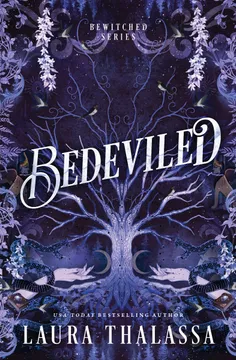
Bedeviled receives mixed reviews as the concluding book in Laura Thalassa's Bewitched series, with an overall rating of 4.23/5. Fans praise the emotional payoff of Selene and Memnon's relationship, the improved friendship between Selene and Sybil, and the satisfying epilogue. Critics cite repetitive plot structure, slow pacing in the first half, excessive spice scenes, and Selene's frustrating decision-making. The crossover appearance of The Bargainer divided readers, and some felt the ending failed to honor Selene's earlier characterization.
Characters
Selene Bowers
The returning queenSelene is a young witch whose lost memories return with the knowledge that she once lived as Roxilana, a Sarmatian queen and Memnon’s2 wife. She is quick-witted, stubborn, and more comfortable with a cutting joke than an open confession. Her magic is powerful but not limitless, and she learns through study, experimentation, and hard consequences. Selene wants her own education, friendships, and choices even as she discovers how deeply her former life still shapes her. Loyalty is her clearest instinct: she risks herself for Sybil4, her coven, Nero7, and eventually Memnon2. Her central struggle is not whether to love her soul mate, but how to love him without surrendering her judgment or present-day identity.
Memnon
The cursed sorcererMemnon is an ancient Sarmatian king and sorcerer whose devotion to Selene1 spans their former life and their reunion in the present. He is strategic, possessive, and capable of terrible violence, traits shaped by a lifetime of conquest and by magic that erodes his conscience as it grows stronger. He can be unexpectedly attentive: he studies Selene’s1 interests, builds a library for her, and tries to meet her family. Yet his instinct to protect can become an attempt to decide for her. Selene1 challenges that reflex and demands room to act. Memnon’s greatest vulnerability is the tension between loving her intensely and fearing that his own power will make him unworthy of that love.
Eislyn
The exiled fae princessEislyn is an ancient fairy with the polished manners of a courtier and the patience of a political schemer. She once advised Memnon’s2 family, but her interest in power reaches beyond the human kingdoms she has influenced. Her beauty and composure conceal a capacity for long deception, and she treats other people as pieces to be arranged around her ambitions. Selene1 knows her as both a personal enemy and a force whose plans have shaped centuries of history. Eislyn’s need to regain status seems inseparable from her desire to control the people she considers useful. She is most dangerous when she appears calm, because she has usually prepared several ways to make another person act for her.
Sybil Andalucia
Selene’s fierce best friendSybil is Selene’s1 closest friend, a lively witch whose humor helps them survive fear and grief. Her bond with Selene1 is sibling-like: she teases, argues, and shows up when the stakes are high. After coercion and captivity, she faces the difficult consequences of becoming a werewolf, including the pain of shifting and the strict expectations of pack life. Sybil’s uncertainty does not make her weak; it makes her honest about a choice made under pressure. She wants to retain her witch identity and her place in the coven while learning what her new body can do.
Kane Halloway
The protective alphaKane is a werewolf alpha, Selene’s1 friend, and a former romantic possibility who has not entirely put aside his feelings. His status gives him authority within the pack, but Selene1 refuses to treat that authority as a claim over her. Kane can be territorial and overbearing, especially when his wolf instincts rise, yet he is also brave, protective, and willing to help Selene1 and Sybil4 at personal risk. His loyalty is tested by the difference between caring for someone and deciding what is best for them.
The Bargainer
The reluctant fae kingThe Bargainer is a powerful fae king who has withdrawn from public affairs but remains difficult to ignore. He is sharp-tongued, transactional, and alert to the political consequences of every favor. Selene’s1 persistence draws him into the conflict over Eislyn3, though he insists that help must come at a price. His knowledge of fae customs and realms gives Selene1 access to information she cannot find in Henbane’s books. Beneath his complaints, he understands the danger of allowing a rival claimant to build an army unchecked.
Nero
Selene’s panther familiarNero is Selene’s1 large panther familiar, a watchful companion with a stubborn streak and a talent for acting before anyone else notices danger. He fights beside Selene1, senses intruders, and stays close when her safety is uncertain. His loyalty does not make him obedient in every small matter, which gives their bond a lively, familiar texture. Selene1 speaks to him as a person, and his steady presence offers comfort that is not based on words or promises.
Olivia Bowers
Selene’s wary motherOlivia is Selene’s mother8, a witch who knows enough about the supernatural world to recognize danger but not enough to make her daughter’s story easy to believe. She is protective, direct, and willing to challenge Selene1 when she fears that love or fate is narrowing her choices. Their relationship carries the ache of Selene’s1 memory loss and withheld truths, but Olivia’s concern comes from wanting her daughter safe, not obedient.
Benjamin Bowers
Selene’s steadfast fatherBenjamin, whom Selene1 affectionately calls her dad, is a warm, affectionate presence who meets the extraordinary with disarming openness. His instinct is to welcome people and offer practical care, whether that means sharing a meal or checking the protective wards around Selene’s1 home. Violence frightens him, but he does not withdraw from his daughter when her life becomes dangerous. His acceptance gives Memnon2 a rare experience of being treated as family.
Sawyer
Sybil’s lycan mateSawyer is Sybil’s4 werewolf boyfriend and packmate. His bite changes her life and helps her escape a forced bond, but the new relationship also brings the weight of pack custom and territorial instincts. He cares for Sybil4 and wants to protect her, though that protectiveness can feel restrictive as she adjusts to her new identity.
The High Priestess
Henbane’s watchful leaderHenbane’s high priestess leads the coven and carries the authority of a long life steeped in magic. She sees more than she explains, listening to the Hungering Ones and recognizing the political threat posed by Eislyn3. Her warnings and the grimoire she gives Selene1 provide crucial knowledge, but she cannot prevent every tragedy. She represents the limits of institutions that are powerful yet vulnerable.
Olga
Keeper of last wordsOlga is a Henbane witch known for her unsettling ledger of people’s final words. She is unusual and observant, and her records connect private deaths to larger supernatural crimes. Though Selene1 has reason to distrust her because of earlier harm, Olga’s willingness to share what she knows makes her an important source of evidence.
Cordelia
The coven’s foresightful witchCordelia is a witch with foresight whose predictions help Selene’s1 coven prepare for danger. She brings people together without claiming authority over them, organizing a leaderless spell circle that turns shared power into practical protection. Her visions offer warnings, not easy answers, and she trusts the group to act on what they learn.
Kincaide Cole
A wealthy bond buyerKincaide is an ambitious supernatural businessman who bought a bond with a woman named Irina15. He presents himself as frightened and uninformed when confronted, but the evidence around him exposes the way wealth can disguise coercion. His encounter with Memnon2 shows how the trafficking system relies on clients who prefer not to ask what their power costs.
Irina Rusu
A woman under bondIrina is a young woman bound to Kincaide Cole14, subject to restrictions that keep her from speaking freely. Her voice on the phone provides a stark measure of what the bond has taken from her. She represents the individual lives hidden inside the traffickers’ lists and contracts.
Adan Quintana
A demon’s bondmasterAdan is the supernatural who commands a demon sent to attack Selene1. His connection to the wider network makes him a link between a personal threat and the trafficking system’s hierarchy. He is known to Selene1 first through the demon’s testimony and the record of his dealings.
Merlin
Sybil’s barn owlMerlin is Sybil’s4 barn owl familiar. He accompanies her through the upheaval of her transformation and remains a familiar marker of her life as a witch, even as pack life reshapes her routines.
Plot Devices
The Soul Bond
Love with binding forceSelene1 and Memnon’s2 connection carries thought and emotion between them, but magic can also make a bond a source of control. Their marriage oath compels them to wed, the Sarmatian blood rite ties their lives and powers together, and a forged bond later becomes the means to resist Eislyn’s3 forced command. The bond therefore changes function across the story: it can threaten Selene’s1 autonomy, comfort her in danger, and become a tool they reshape together. Its most important test is whether intimacy can survive without becoming ownership.
Ley Lines
Roads between worldsLey lines are magical passages connecting distant places and other realms. Selene1 uses them to return to ancient Sarmatia and to travel between Earth and the Flora Kingdom. They respond to offerings such as secrets, blood, or other personal tokens, making every journey a negotiation rather than simple transportation. Their shifting branches complicate Selene’s1 pursuit of Eislyn3, but the line’s appetite for stories ultimately gives Selene1 a way to find the route to the Khuno River palace.
Demonic Bonds
Trafficking through magicA supernatural bond can bind a demon or another being to a human master, sometimes against the victim’s will. The Fortuna ledger records bonds and the people connected to them, exposing a network that exploits both victims and demons. Selene1 and Memnon2 encounter the system through attacks, records, and Memnon’s2 attempts to break bonds by killing and sometimes reviving the master. The device makes coercion legible as both an intimate relationship and an organized business, while raising difficult questions about what justice looks like when ordinary legal remedies cannot undo magical captivity.
Lilac Wine
Magic changed into fae powerEislyn3 gives Selene1 and Memnon2 a purple fae elixir called lilac wine. It transforms their mortal magic into fae magic, extends their lives, and weakens the familiar channel between them. The change allows Memnon’s2 power to affect fae and lets Eislyn3 use him as a weapon in her attempt to claim the Flora Kingdom. The drink initially appears to be a mysterious side effect of Selene’s1 encounter with Eislyn3; the Bargainer6 later explains its role in the larger scheme. Its consequences remain important even after the immediate crisis is over.
The Grimoire Spell
A curse-breaking remedyThe high priestess11 gives Selene1 a small, unusually potent grimoire whose central spell treats a sorcerer’s destructive power as a curse rather than an inevitable nature. Selene1 memorizes it without initially knowing when she will need it. In the Otherworld, she uses the incantation to burn away the curse consuming Memnon’s2 conscience, accepting the danger that the spell may also kill him. Its payoff grows from the book’s earlier account of how a sorcerer’s increasing power erodes compassion.
Download PDF
Download EPUB
.epub digital book format is ideal for reading ebooks on phones, tablets, and e-readers.








