

Plot Summary
The Man With Three Bottles
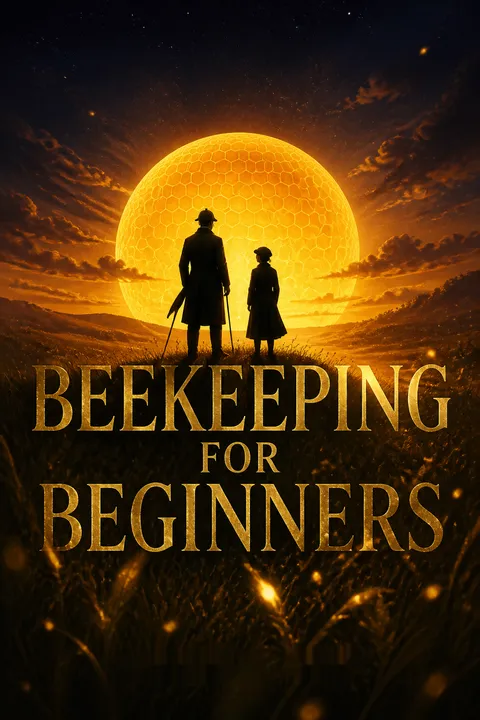
In April 1915, Sherlock Holmes has been sent back to his Sussex apiary after wartime officials decide that his work against spies is too dangerous for a man of his stature. At fifty-four, barred from useful cases and convinced that idleness has made him expendable, he carries a vial of poison while marking bees to locate a wild colony.
A teenager in oversized men's clothes walks straight into his field of work, then identifies which painted bees likely belong to a feral hive. Her deductions are so clean that Holmes's irritation gives way to astonishment. When the apparent boy angrily removes her cap and reveals herself as Mary Russell, the interruption has already supplied Holmes with a new problem and delayed his decision to die.
Holmes's crisis begins not with a dramatic defeat but with the loss of work that has organized his identity. His poison vial sits beside equipment meant to restore a hive, making the contradiction physical: he is preparing both destruction and renewal. Russell does not rescue him through comfort or sentiment. She earns his attention by observing accurately, forcing him to recognize a mind rather than a nuisance. That distinction matters to Holmes, who has been treated as a fragile public figure instead of a capable person. Their first connection is therefore intellectual, but its consequence is emotional: curiosity gives him a reason to remain.
A Detective in the Making
Holmes soon discovers that Russell is an orphan with a substantial inheritance, living on her Sussex estate under the care of an aunt she dislikes. She hopes to attend Oxford and study theology, but Holmes decides to teach her the sciences and train her as a detective before university claims her attention.
When Dr Watson visits, Holmes explains the plan; Watson is startled by the choice of a girl apprentice, while Holmes is delighted to have found a mind worth challenging.
Their conversation also places the household in wartime: after the Lusitania's sinking, Watson is leaving for America to support the British war effort. He departs before meeting Russell. Mrs Hudson, who has watched Holmes grow brighter and drink less since their meeting, recognizes how much the new pupil has already changed his days.
Holmes turns private interest into commitment by making Russell's intelligence the basis of a working relationship. His choice is also a challenge to the assumptions surrounding both age and gender: he sees a student, not a child to be protected from serious thought. Watson's alarm supplies a useful counterpoint, revealing how unusual the arrangement appears even to Holmes's oldest friend. Meanwhile, the war presses into the domestic scene through Watson's departure and the Lusitania disaster. Mrs Hudson's observations suggest that Holmes's renewed energy is not merely professional appetite. Russell has interrupted his isolation before she has even begun formal lessons.
The Hive's Ruthless Queen
When Russell returns with a fading bruise, Holmes offers no fuss; instead, he introduces her to the bees. He shows her how a beekeeper removes an aging queen and installs a replacement inside a cage, allowing the colony time to accept her.
Russell questions the cruelty of the act, then places her bare hand among the bees and discovers their warmth without being stung. The lesson joins calm, necessary intervention with the obligation to keep feeling wonder. Away from the apiary, Russell has endured a cousin's bullying: a fall and injuries, a broken pair of spectacles, and soup that makes her ill after he mixes something into it as punishment.
Her aunt's intervention ends a confrontation, but Russell remains wary of her home. The lost legal papers from the Lusitania also leave her inheritance unfinished until a June appointment.
The hive lesson gives Russell a model of power that is neither gentle in every action nor careless about its consequences. Holmes can remove a queen and still insist that wonder matters; his method asks her to distinguish necessary harm from cruelty for its own sake. That distinction resonates with Russell's household, where her cousin uses smaller acts of domination to humiliate and frighten her. Her questions show that she is not simply absorbing Holmes's authority; she tests the ethics behind his actions. The lost inheritance papers add practical vulnerability to her emotional strain. For Russell, learning to observe is becoming a way to resist being defined by other people's decisions.
Silk Thread on the Stairs
After Russell misses a Saturday experiment and returns looking unwell, Holmes stops treating her injuries as separate mishaps. He slips into her aunt's house at night to test his suspicion, searching the kitchen and sitting rooms before examining the staircase where Russell once fell.
He finds hidden money and jewelry, sleeping powder, and traces of a burned letter, but none proves that the aunt has tried to harm her niece. On the stairs, however, Holmes spots a fine strand of embroidery floss stretched where Russell's foot could catch it.
The discovery fits the pattern of injuries arriving on weekends, when her cousin visits. Holmes leaves without waking Russell, unwilling to expose his investigation or make her feel watched, but the thread converts his concern into a case.
Holmes's investigation demonstrates the value and limits of inference. The house contains details that invite suspicion, but he refuses to treat suggestive objects as proof against the aunt. The thread matters because it connects a physical mechanism to a recurring pattern, not because it confirms every suspicion he has formed. His choice to leave Russell unaware protects her from immediate distress, yet it also places him in control of what she is allowed to know. The tension between care and concealment echoes the hive lesson: intervention may prevent harm, but the person intervened upon can still be denied agency. Holmes's affection is expressed through exacting attention, not open reassurance.
Blackout Across the East End
Holmes follows Russell to London as she travels to complete the paperwork for her inheritance. He changes disguises, recruits members of his old surveillance network, and keeps watch while she visits an optician, a bookshop, and the ladies' club where she will sleep. During the blackout, a German zeppelin crosses the city and sets fires in the East End.
Holmes climbs to a rooftop to see the attack, then returns to his post. Before dawn, a messenger delivers a note to the club, and Russell leaves soon afterward. Holmes and his agents trail her through streets crowded with fire crews, residents, and gawkers. She heads toward Spitalfields Market, near the bombing's devastation, while Holmes struggles to reach her through the press of people.
The London sequence turns Holmes's private worry into a public operation. His disguises and network show that his old skills have not vanished; they have been waiting for a purpose. Yet surveillance also exposes the imbalance between protector and subject. Holmes sees Russell as inexperienced and vulnerable, while Russell moves through the city on her own errand and does not know he is following. The zeppelin raid sharpens that tension by making danger indiscriminate: smoke, damaged streets, and crowds complicate every calculation. The note redirects Russell toward the East End, but the bombing gives that destination a second meaning, creating cover for someone who wants an ordinary death to disappear among wartime casualties.
Peas and a Falling Coconut
At the crowded market, Holmes spots Russell's cousin hidden above a stall with a heavy coconut ready to drop on her. Holmes tackles a porter carrying baskets of peas, scattering the load and making Russell jump clear of the danger.
He then reaches the cousin, binds him, and questions him out of Russell's sight. The young man admits that he made Russell ill by tampering with her soup, then confirms Holmes's suspicion that the bombing inspired a plan to kill her and make her death seem accidental or part of the devastation.
He denies his mother's involvement. Holmes threatens him into leaving Sussex and enlisting, rather than turning the matter over to police. Russell notices one of the agents watching her, but Holmes lets her go, relieved that she is beginning to see danger for herself.
The climax makes Holmes's methods visible in action: he reads a crowded market as a set of angles, then uses an absurd burst of flying peas to interrupt a planned killing. His intervention protects Russell, but his decision to keep the truth from her preserves the older pattern of paternal control. He chooses private coercion over prosecution, believing enlistment will remove the cousin and perhaps discipline him. That resolution is practical, morally uneasy, and characteristically Holmesian. Russell's glance toward the suspicious agent suggests that protection cannot remain invisible forever. The final emotional shift is not simply Holmes's relief that she survived; he feels joy because his world has regained both purpose and the capacity to surprise him.
Analysis
The story's central transformation is not Russell's training alone, but Holmes's return to purposeful attention. At the opening, he believes that a life without cases has become a burden. Russell interrupts that conclusion by giving him a problem he cannot dismiss, and his renewed energy grows from recognizing her as an intellectual equal in potential, even as she remains his pupil. The movement from apiary to London expands the scale of his concern: he begins with a stranger's clever observation, then investigates the danger embedded in her family life and risks exposure to protect her.
Beekeeping gives the narrative a precise moral vocabulary. A colony can require harsh intervention, but the beekeeper must understand the system and remain attentive to the vulnerable beings within it. Holmes applies that reasoning to Russell, yet the story also shows the cost of his approach. He watches her secretly and withholds the truth, assuming that his knowledge entitles him to decide what she should face. His care is sincere, but it can reproduce the very paternalism that has made Russell's life difficult.
Russell's intelligence is therefore more than a talent Holmes discovers. It is her means of resisting the narrow roles offered to her as a young woman, an orphan, and an inheritance-holder. Her questions about the queen, her refusal to accept condescension, and her notice of the agent's suspicious behavior all mark an emerging independence. The final rescue does not erase the unequal terms of Holmes's intervention. Instead, it leaves the relationship alive with productive friction: he has regained a reason to act, while Russell is learning to see the watchers as clearly as they see her. The story treats wonder not as innocence untouched by danger, but as an alert capacity to keep looking after danger has become familiar.
Review Summary
Beekeeping for Beginners receives mixed reviews, with an average rating of 4.13 out of 5. Many fans of the Mary Russell series appreciate the short story's insight into Holmes' perspective on meeting Russell. Some readers find it enhances their understanding of the characters' relationship, while others feel it adds little new information. Critics note issues with narrative flow and character inconsistencies. New readers may struggle without prior series knowledge. Overall, fans generally enjoy the story as a companion piece to The Beekeeper's Apprentice.
People Also Read
Characters
Sherlock Holmes
Restless master detectiveHolmes is a celebrated investigator whose long career has taught him to turn tiny details into elaborate conclusions. Now living in Sussex, he keeps bees and studies their colonies, but enforced retirement has left him feeling useless and dangerously detached from life. Russell first interests him because she sees what others miss and refuses to flatter his reputation. He approaches teaching as a demanding apprenticeship, using chemistry, observation, and practical tests rather than encouragement alone. His care is real but often expressed through control: he investigates without permission and withholds information if he believes disclosure would harm his pupil. The bees give him a language for managing danger, though his own conduct continually tests the difference between guidance and interference.
Mary Russell
Analytical young apprenticeRussell is a fifteen-year-old orphan with a sharp mind, a substantial inheritance, and an independent streak that can make her seem older than she is. She lives on her Sussex estate with an aunt and has ambitions of studying theology at Oxford, while the war makes her long to serve in a more direct way. Her first encounter with Holmes begins in irritation, but her reasoning earns his respect. She welcomes difficult lessons and questions their logic rather than accepting authority at face value. At home, she must navigate relatives who treat her independence as provocation. Her growing investigative discipline offers a way to act on her intelligence without surrendering the skepticism and moral curiosity that distinguish her.
Dr Watson
Loyal friend and chroniclerWatson is Holmes's longtime friend, a doctor and writer who knows his habits well enough to notice the return of genuine enthusiasm. He worries that Holmes's new student is too young and that the arrangement is too unconventional, but he also understands Holmes's hunger for intellectual work. The war draws Watson away from Sussex: after the Lusitania disaster, he sails to America to support the British cause. His brief visit frames the change Russell has brought into Holmes's life, even though he leaves before meeting her.
Mrs Hudson
Protective housekeeperMrs Hudson is Holmes's longtime housekeeper and one of the few people who sees the daily texture of his life. She welcomes Russell warmly, notices her awkward clothes and bruises, and answers distress with practical care, especially food. Her observations of Holmes are equally perceptive: she sees that his mood and habits improve after Russell enters his world. She offers an affectionate domestic counterweight to his reserve, though she cannot make him explain every decision.
Mary's aunt
Distant legal guardianRussell's aunt is the adult responsible for her on the family estate, a role complicated by the girl's wealth and independence. She is reserved, difficult to read, and not well liked by the local community. Her presence shapes Russell's domestic life, while Holmes finds that the household offers clues without immediately yielding a clear account of the aunt's intentions. She remains an important source of uncertainty because Holmes must distinguish what he can prove from what he merely suspects.
Mary's cousin
Entitled university bullyRussell's cousin is the aunt's son, a university student who visits the Sussex estate only occasionally. He is selfish, resentful of Russell's independence, and unwilling to serve in the war. His treatment of her reveals how ordinary family authority can become a tool for intimidation. He functions as a domestic threat rather than a grand criminal, which makes his actions especially unsettling within the supposedly safe household.
Patrick
Russell's farm managerPatrick manages Russell's farm and drives her to the station for her London trip. His brief, practical presence shows that Russell's estate has working responsibilities and staff beyond the immediate household.
Marilyn White
Resourceful surveillance agentMarilyn White is one of the women Holmes employs to follow Russell in London. She is alert, prepared, and willing to take a night watch, bringing Holmes food and a blanket when he has been keeping vigil. Her competence helps make the surveillance operation possible, while her visible presence eventually draws Russell's notice.
Billy Mudd
Holmes's absent field allyBilly Mudd learned surveillance work from Holmes and once helped organize his network of street observers. The war has taken him away from that work, leaving Holmes to rely on other agents during the London investigation.
Plot Devices
The Beekeeping Rules
Lessons in managed powerHolmes's apiary supplies both practical instruction and a structure for thinking about human conduct. Replacing a queen requires removing the old one, then introducing a newcomer slowly enough for the colony to accept her. The lesson teaches Russell that care may involve decisive action, but the beekeeper must remain calm and attentive to the creatures affected. Holmes's emphasis on wonder complicates his own ruthlessness and gives the story a recurring measure for his behavior. The hive is not merely a hobby: it gives Holmes purpose during retirement and becomes the language through which he and Russell begin to understand one another.
The Lost Lusitania Papers
An unfinished inheritanceRussell believes her will is settled until she learns that important legal papers concerning her father's properties went down with the Lusitania. The loss forces her to make a new appointment with a solicitor in London, creating a definite date and destination for her journey. It also makes the inheritance more than background wealth: the paperwork is incomplete, and the people around Russell may have an interest in what happens before it is corrected. The device links a major wartime disaster to a vulnerable young woman's immediate legal circumstances.
The Staircase Thread
A hidden injury mechanismHolmes finds a nearly invisible strand of embroidery floss arranged across a stair baluster and rail, where it could catch Russell's foot. The detail gives him a physical explanation for one of her apparent accidents and helps him connect her injuries to a recurring pattern. It also demonstrates why Holmes distrusts a household's surface account of events: a harmless-looking thread can become evidence when its position is considered alongside timing and consequence. The device points toward deliberate harm without, by itself, proving who placed it.
Holmes's Disguises
Surveillance without recognitionHolmes changes clothing, appearance, and even gender presentation as he follows Russell through London. He also uses a network of agents who take turns watching her, allowing the surveillance to continue without one conspicuous figure staying close. These methods turn the city's streets, train stations, shops, and blackout-darkened avenues into an investigative system. They reveal the reach of Holmes's old skills while creating a tension between his protective intent and Russell's lack of consent or knowledge.
The Zeppelin's Cover
Disaster as concealmentA German air raid sets fires in London's East End on the night before Russell's legal appointment. The bombing brings crowds, smoke, and confusion into the streets, and Holmes realizes that someone could exploit the chaos to make a planned death look like a wartime casualty. That possibility gives the attack a plot function beyond atmosphere: it changes the risks of Russell's journey and shapes Holmes's interpretation of the market where she is headed. The danger of the air raid is real, even as it offers a potential criminal cover.
Download PDF
Download EPUB
.epub digital book format is ideal for reading ebooks on phones, tablets, and e-readers.








