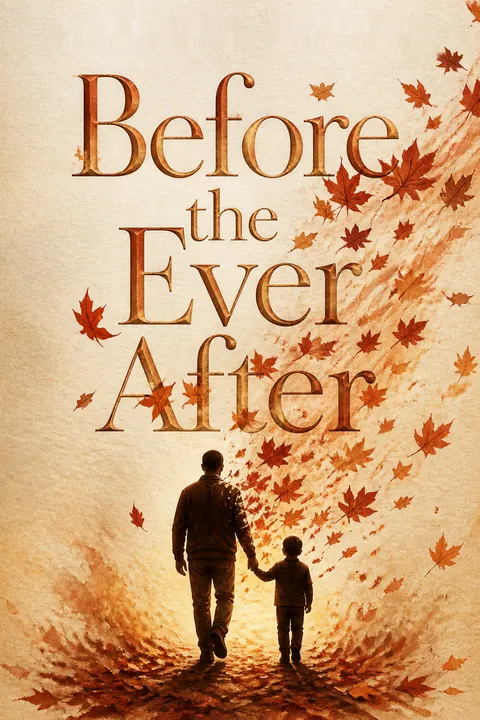


Plot Summary
The Star in Maplewood
Zachariah Johnson, known to fans as number 44, is a celebrated professional tight end. To his son ZJ, he is the father who turns a yard into a football field, runs snowy races, and makes up songs on the drive home. ZJ's mother, Lisa, and his closest friends, Ollie, Darry, and Daniel, share a warm household life shaped by football.
Yet ZJ is beginning to imagine an identity of his own: he writes songs and plays guitar rather than dreaming of a professional career. His father's body pays for the game in bruises and pain after each match, but Zachariah insists he loves football completely. The family still believes the cost is temporary.
The novel first makes football a source of affection, not merely a dangerous sport. Zachariah's fame gives ZJ a public identity before the boy can define himself, while private rituals such as racing and songwriting offer a more intimate inheritance. The father's injuries are visible but normalized, folded into the excitement of games and family life. That normalization matters: the coming crisis does not arrive from nowhere, but from a cost everyone has learned to accept. ZJ's music is already a quiet alternative to football, though he has not yet needed it as a way to reach his father.
The Familiar Face Vanishes
Before the change becomes undeniable, Zachariah repeats a joke about his football position, then grows angry when ZJ points out that he has told it before. On New Year's Eve, ZJ's friends are sleeping over while the boys wait for the millennium. Zachariah comes into their room, fails to recognize Ollie, Darry, and Daniel, and storms away after ZJ assumes he is pretending.
The boys abandon their celebration and go to bed unsettled. In the morning, they try to explain the outburst as drunkenness or a joke, but Daniel believes something is wrong. Soon the friends hesitate to visit ZJ's house, and the Friday gatherings that once filled it begin to disappear.
The frightening change is first registered socially. Zachariah does not simply forget a fact; he loses his place in a room where he has long been loved and known. ZJ's instinct to defend his father protects the image of home, while Daniel's concern exposes the limits of that defense. The boys' retreat makes the illness affect more than one family: it thins ZJ's ordinary support just as he needs it. The millennium's imagined end becomes an ironic backdrop. The world does not vanish, but the familiar rules of ZJ's household begin to fail.
Doctors Cannot Name It
Zachariah's headaches worsen, sometimes blurring his vision and sending him to bed in a dark room. He repeats himself, forgets details of his life, and eventually looks at ZJ without recognizing his own son. Doctors order tests and tell him not to drive. He misses games, then must stop playing while they investigate.
Lisa tries to explain what the doctors do not know, while ZJ keeps asking when his father will return to himself. She hears of other football players with headaches, memory loss, and sudden changes in behavior, and suspects their injuries are connected. A new doctor raises repeated blows to the head as a possible cause, but offers no quick repair, only more tests and uncertain treatment.
Medical uncertainty becomes its own pressure: every appointment promises an explanation, then gives the family another interval of waiting. ZJ interprets knowledge as a route back to normal life, so the lack of a clear answer feels like a second injury. Lisa, meanwhile, connects her husband's symptoms to a pattern among other players, challenging the comforting idea that Zachariah's case is isolated. Football's public language celebrates resilience and return to play; the family's private experience is a body and mind that cannot simply be willed back into shape. The novel keeps the diagnosis unsettled because the family's immediate problem is living with damage they cannot yet name.
Sirens Bring Him Home
During a night when medicine, ice, darkness, and quiet fail to ease Zachariah's pain, he runs out of the house still holding his head and shouting that he does not know where he is. Lisa calls for help. ZJ hides beneath the dining table, pressing his fingers over his ears as sirens approach.
Two police officers bring Zachariah home; one recognizes the former football star, but fame cannot explain or stop his suffering. Zachariah lies down, moaning, while ZJ falls asleep under the table and Lisa finds him there at dawn. The episode makes the family's private fear public and urgent. Doctors in several states recommend a specialist in Philadelphia, beginning a new round of appointments.
The scene turns symptoms into an emergency without offering the emotional relief of a cure. ZJ's hiding place is a child's attempt to make the crisis smaller, but sound and fear reach him anyway. The officers' recognition of Zachariah as an athlete briefly restores his public identity, then underscores its uselessness against pain. Lisa must act for her husband while also caring for a frightened son, a double responsibility the story rarely romanticizes. The Philadelphia referral offers movement, not certainty. The family can travel toward expertise, but no one can promise that expertise will return the father ZJ remembers.
Songs Fill Empty Rooms
Lisa drives Zachariah to specialists and tries medications that bring side effects without dependable relief. When his parents are away, ZJ walks through their oversized house touching trophies, helmets, and shoes, then cries in the quiet.
His friends eventually return, making grilled cheese and filling the kitchen with their noise rather than forcing him to explain. ZJ also writes songs from memories he and his father once turned into shared jokes and rhythms.
Zachariah has brighter stretches, but even a commercial audition becomes impossible: after dozens of attempts, he cannot deliver a simple line or complete the action. His changing abilities make it clear that the family cannot rely on talent, fame, or effort to restore the life they had.
The household's scale becomes emotionally inverted: the large house that once displayed success feels empty when its central relationship falters. Food and friendship answer that emptiness in practical ways, especially when Ollie cooks and the boys stay near ZJ without demanding disclosure. Music is more fragile and more powerful. It cannot repair Zachariah, but it preserves a shared activity that does not depend on his professional competence. The failed audition strips away the reassuring fantasy that he can simply transfer his athletic fame into another career. The family must learn to measure connection in brief acts of recognition rather than performance.
A Birthday Selects Its Guests
For Zachariah's thirty-fifth birthday, Lisa and ZJ decorate the house with streamers and a papier-mâché mountain. They invite people who still visit, not those who have drifted away or spoken about Zachariah to reporters. ZJ watches the driveway, afraid his friends will not come. Ollie arrives first on his bike, followed by Daniel and Darry, and their arrival changes the party for him.
The grown-ups dance late into the night; Zachariah has a good evening beside Lisa, and Ollie dances alone as if holding an invisible partner. The celebration cannot conceal the uncertainty that shadows each of Zachariah's good days, but it gives the family a few hours among people who keep showing up.
The guest list becomes a quiet measure of loyalty. ZJ sees that public admiration and actual care are not the same: some people who once crowded around his father have vanished, while his friends arrive without ceremony. Their late entrance answers ZJ's fear through action rather than reassurance. Zachariah's good evening is precious precisely because it is not presented as a cure or a stable return. The party lets joy exist beside uncertainty without making either one cancel the other. Ollie's dancing extends that temporary warmth, showing how friendship can create room for happiness even when no one can promise what the next day will bring.
ZJ Walks Off the Field
At a pickup game, ZJ tries to pass his father's football, but Everett, a bigger boy who prefers tackling, knocks him down. ZJ tastes blood, checks his mouth, and leaves without taking the ball back. Later, Everett asks why Zachariah no longer plays. ZJ explains that his father's head is no longer right, though neither boy knows whether it will improve.
Everett says he hopes it does. Weeks later, ZJ meets Everett training to become a professional player. ZJ gives him Zachariah's football and wishes him luck, while his friends watch in surprise. The gesture releases a piece of his father's sporting legacy without requiring ZJ to carry it himself.
ZJ's decision is neither a rejection of his father nor a simple moral lesson about sport. The tackle makes the physical risk personal, and the blood on his mouth links play to the injuries he has watched his father accumulate. Leaving the field is the first clear choice ZJ makes about the identity others expect him to inherit. Giving Everett the ball complicates that refusal: ZJ does not declare that football has no meaning, since Everett's dream remains real to him. Instead, he separates love for his father from obligation to repeat his career.
A Song Comes Back
The family continues trying treatments, including new medicines and other approaches, while doctors ask for more time. Then one spring morning Zachariah comes downstairs dressed and whistling, carrying the pad where he and ZJ keep their songs. He wants to write again. ZJ opens to a blank page, and the two begin working together.
Later, Zachariah seems clearer while listening to music with Lisa, recognizes the moment, and draws ZJ close. These returns are real but temporary; ZJ cannot make them last by wishing. Still, the shared songs give father and son a way to meet in the present, even as ZJ understands that memory may shift again.
The reprieve is meaningful because it does not erase the waiting that came before it. Zachariah's return to the songbook restores a shared practice rather than a whole former life. ZJ's role changes too: he is not only a child hoping adults will solve the crisis, but a musician able to offer his father something immediate and recognizable. The novel resists treating art as medicine. Music does not stabilize Zachariah's memory, yet it creates a moment of mutual attention. That distinction keeps hope honest: a moment can matter deeply without becoming a promise about the future.
The Window Breaks
Late at night, glass shatters twice. ZJ finds Zachariah standing at the broken window with his arm cut, insisting he must reach a plane. Lisa calls for help as police and medical workers fill the house. Zachariah is taken away, leaving ZJ behind with his uncle Sightman.
In the morning, Sightman makes him breakfast and tells him that family is coming to help. ZJ wants to go to school so lessons can occupy his mind, but he refuses to pretend his father is fine. At school, Ollie, Darry, and Daniel gather around him, promising to stay with him. Their presence carries him through another frightening change in the household.
The broken window makes the crisis material: the boundary between home and outside gives way, and Zachariah's confusion becomes impossible to contain within the family. ZJ sees the blood and hears his father's urgency, but cannot interpret the plane or prevent the emergency. Sightman's breakfast and the friends' physical closeness offer a counterweight to helplessness, not a solution. ZJ's insistence that his father is not fine shows growing honesty; he no longer protects others by accepting comforting explanations. The scene shifts care outward to a wider circle, making support something people do through food, presence, and shared attention.
Music at His Bedside
At the hospital, ZJ can visit Zachariah only with an adult, but Lisa lets them have time together. His father moves slowly and struggles for words; still, he recognizes ZJ as his son and asks to hear one of his songs. ZJ plays, and Zachariah smiles and recalls parts of their music.
Lisa listens nearby, while grandmothers, Auntie Nan, Sightman, Bernadette, and ZJ's friends help hold the family together outside the hospital room. The doctors have not explained what happened to Zachariah's brain. ZJ cannot promise what comes next, but he can play for his father now. The story closes with their connection intact, not with a cure or a restored career.
The ending offers relational continuity instead of medical closure. Zachariah's recognition and response to music matter, but the text does not turn them into proof of recovery. ZJ's guitar is both an expression of his own identity and a bridge to his father, making their connection reciprocal rather than dependent on Zachariah's former strength. The wider network of relatives and friends prevents the hospital room from becoming the family's only world. By ending in uncertainty, the novel honors the difference between hope and prediction. Its resolution is modest but concrete: ZJ can still reach his father through a song, and he does not have to face the waiting alone.
Analysis
Before the Ever After places a child inside a crisis that adults cannot explain, then refuses the consoling structure of a clear diagnosis followed by recovery. ZJ's perspective makes uncertainty concrete: a father misses a game, forgets friends, cannot finish an audition, or recognizes his son only through a familiar song. Each change revises the meaning of home without erasing the affection that built it. The book's verse form suits this experience. Brief scenes and recurring images of songs, trees, footballs, and remembered jokes resemble the way ZJ gathers evidence, not as a clinician but as a child trying to understand what has happened to someone he loves.
Football is both a source of intimacy and the mechanism of risk. Zachariah's devotion is genuine, which keeps the story from reducing him to a cautionary example; the repeated blows nevertheless expose the cost hidden beneath public celebrations of toughness. ZJ's refusal to follow him into the sport is not a rejection of his father. It is a way to love him without repeating the danger. His music gives that distinction form: songs preserve shared history while letting ZJ become someone in his own right.
The book also treats care as collective work. Lisa seeks answers and protects her son, while friends and relatives offer food, company, and presence rather than false certainty. Their support does not resolve the illness, but it gives the family room to endure it. The author's note names CTE and connects it to repeated head trauma, while the story leaves the diagnosis unsettled. That contrast preserves the family's experience of living through a problem before institutions can fully explain it. The ending's hope is therefore neither cure nor denial. It is the continuing possibility of connection, held in a song ZJ can still play and a family that gathers around him.
Review Summary
Before the Ever After is a heartfelt, lyrical novel-in-verse by Jacqueline Woodson. It follows ZJ, a 12-year-old boy whose father, a former NFL star, suffers from CTE. Set in the late 1990s, the story explores themes of family, friendship, loss, and hope. Readers praise Woodson's poetic writing style, emotional depth, and ability to tackle complex issues for a middle-grade audience. Many reviewers were moved to tears and consider it a potential award-winner. The book is recommended for both young readers and adults.
People Also Read


Characters
ZJ
A son finding his own voiceZJ, short for Zachariah Johnson Jr., is the observant twelve-year-old at the center of the story. Being the son of a famous football player makes others see his father before they see him, but ZJ's instinct is toward music: he sings, plays guitar, and turns small memories into songs. He loves Zachariah without wanting to copy his career. As the family changes, ZJ notices what adults cannot explain and struggles to remain a child while feeling responsible for the people he loves. His friendships and songwriting give him ways to accept help and express fear when ordinary conversation feels inadequate.
Zachariah Johnson
A father shaped by footballZachariah is ZJ's father and a celebrated professional tight end. He is physically imposing, playful, affectionate, and deeply invested in football, a game he loves with his whole being. His fame places pressure on his family, but at home he values ordinary closeness: running with ZJ, sharing jokes, and making music together. He encourages his son's interests even when they differ from his own. Zachariah's sense of self is closely bound to sport and to being a dependable provider, which makes vulnerability difficult for him. His relationship with ZJ is tender and teasing, built through routines that give father and son a language of their own.
Lisa
A mother holding the familyLisa is ZJ's mother and Zachariah's wife. She manages appointments, drives her husband, watches over their son, and tries to keep the house functioning while living with uncertainty herself. Her care is practical rather than idealized: she makes meals, protects ZJ when she can, and admits when she does not know what will happen. Lisa also questions the medical community's response when she hears that other football players are suffering similar changes. Her steadiness does not mean she is unafraid. She must balance protecting her family with telling them enough of the truth to face what is happening.
Ollie
A loyal friend and cookOllie is one of ZJ's closest friends, recognizable by his bright red Afro and green eyes. Adopted as a baby by Bernadette and her husband, he has grown up secure in their love while still feeling the questions people ask about his identity. Ollie is quick with numbers, generous with food, and comfortable in ZJ's home. His loyalty is often practical: he arrives, opens the refrigerator, and helps make an ordinary day possible. He cares deeply about Zachariah, whose affection has made Ollie feel included in ZJ's family.
Darry
A fast runner and dancerDarry is one of ZJ's three closest friends. He is a gifted runner and dancer, with a talent for moving easily to music. Though he often brings energy to the group, he can be quiet about his own worries. His trust in ZJ and the other boys lets him ask for their company when his family life becomes difficult. Darry's presence helps make the Fantastic Four feel like a chosen family, not just a group of boys who share games.
Daniel
A fearless, attentive friendDaniel is the first of ZJ's friends to say yes to a race, and his fearlessness carries over to his bike and skateboard tricks. School is not his strongest area, but he reads people closely and listens without pretending to have easy answers. When Zachariah's behavior frightens the boys, Daniel is willing to acknowledge that something is wrong. His attentiveness gives ZJ a friend who can make room for fear without turning it into shame.
Bernadette
Ollie's devoted motherBernadette is Ollie's mother, who raised him after finding him as a baby with her late husband. She is warm, grounded, and close to Lisa, sharing ordinary visits and conversations with her. Bernadette teaches Ollie to cook and gives him the security to be himself, even when others ask intrusive questions about his background. Her friendship with Lisa extends the circle of adults who care about ZJ.
Sightman
A trusted family friendSightman is one of Zachariah's former football friends and an uncle-like presence to ZJ. He knows the family's history and offers steady, practical care when Lisa and ZJ need help. His warmth does not require him to pretend everything is fine. Sightman can feed ZJ, keep him company, and make clear that the family has people ready to stand beside them.
Everett
A boy chasing football's dreamEverett is an older boy who prefers tackling to two-hand touch and dreams of playing professional football. His ambition resembles the path Zachariah once followed, but he is not simply a bully or a symbol of danger. After hurting ZJ, Everett tries to understand why Zachariah left the game and expresses genuine concern. He represents a future in football that ZJ can respect without choosing for himself.
Auntie Nan
Zachariah's close sisterAuntie Nan is Zachariah's older sister and one of the relatives who joins the family when support is needed. She belongs to the close-knit network linking ZJ to his father's side of the family.
Nana B
ZJ's paternal grandmotherNana B is Zachariah's mother. ZJ remembers her as a loving grandmother with whom he shares family stories and visits. She is part of the older generation surrounding him and his father.
ZJ's maternal grandmother
A loving family elderZJ's maternal grandmother lives near Nana B and keeps close ties with the family. Her calls offer ZJ a place to express worry about his father, even when neither of them has answers.
Plot Devices
Football
Love with a physical costFootball first binds Zachariah to ZJ through games, stories, and shared admiration. It also supplies the repeated physical impacts surrounding Zachariah's health changes. ZJ's eventual decision to leave a pickup game and pass his father's ball to Everett separates the game itself from the obligation to inherit his father's career. Football therefore carries affection, danger, fame, and choice at once.
Songs and the guitar
A bridge through memoryZJ turns daily observations and family memories into songs, sometimes writing with Zachariah and sometimes playing alone. Music gives father and son a shared activity that can continue when conversation or memory falters. It does not cure Zachariah or guarantee that he will recognize a song, but it allows moments of attention and connection. ZJ's music also helps him develop an identity separate from his father's fame.
The Fantastic Four
Friendship made practicalZJ, Ollie, Darry, and Daniel call themselves the Fantastic Four. Their friendship appears in races, games, meals, and visits, then becomes a concrete support system as ZJ's home grows quieter. They do not solve the medical crisis. They show up, make food, listen, and keep ZJ from carrying his fear alone. Their bond also gives the story a second family structure beyond ZJ's household.
Repetition and memory
A changing chorusRepeated jokes, questions, and remembered stories make Zachariah's changing memory audible in everyday life. At first, repetition can belong to play or to a song; later, it frightens ZJ because it marks a loss of orientation. The device lets readers experience the difference between a chosen refrain and a symptom that Zachariah cannot control. It also reflects ZJ's effort to preserve shared memories by writing them down.
Waiting for answers
Uncertainty without pauseTests, referrals, and treatment attempts give the family a sequence of possible explanations without a dependable resolution. Waiting affects daily life: Lisa drives Zachariah to appointments, ZJ listens for news, and the family adjusts to shifting symptoms. The doctors' uncertainty prevents the story from offering a simple recovery arc. In the author's note, the book identifies chronic traumatic encephalopathy as a disease linked to repeated head blows, while the story itself leaves Zachariah's condition unnamed.
FAQ
Synopsis & Basic Details
What is Before the Ever After about?
- Football star's decline: The story follows ZJ as his father, a famous football player named Zachariah Johnson, experiences severe health issues due to repeated head injuries.
- Family's struggle with CTE: It explores the impact of Zachariah's condition, likely CTE, on his family, particularly ZJ, as they navigate the challenges of his memory loss, headaches, and personality changes.
- Friendship and healing: The novel also focuses on the power of friendship and music as ZJ and his friends cope with the changes in their lives and find ways to support each other.
Why should I read Before the Ever After?
- Emotional exploration of CTE: The book offers a poignant and personal look at the effects of CTE on individuals and their families, raising awareness about the long-term consequences of head injuries in sports.
- Celebration of friendship and resilience: It highlights the importance of strong friendships and the ability to find strength and hope in the face of adversity, making it an inspiring read.
- Verse novel format: Woodson's use of verse creates a unique and accessible reading experience, allowing for deeper emotional resonance and impactful storytelling.
What is the background of Before the Ever After?
- Late 1990s setting: The story is set in the late 1990s and early 2000s, a time when the understanding of CTE was still emerging, and the long-term effects of football-related head injuries were not widely recognized.
- Cultural context of football: The novel is deeply rooted in the cultural context of American football, exploring the hero worship and the pressures placed on athletes, as well as the potential dangers of the sport.
- Emergence of CTE awareness: The Author's Note directly addresses the historical context of CTE discovery and acknowledgement, adding a layer of non-fiction to the fictional narrative.
What are the most memorable quotes in Before the Ever After?
- "He's not my hero, he's my dad": This quote encapsulates ZJ's complex relationship with his father, highlighting the distinction between public perception and personal connection. It emphasizes the importance of family over fame.
- "When you love a thing, little man, you gotta love it with everything you got": This quote reveals Zachariah's passion for football and his philosophy on life, which becomes ironic as his love for the game contributes to his decline.
- "It's all gonna be right in the morning": This recurring phrase, initially offering comfort, becomes a poignant reminder of the family's struggle and the uncertainty of their future, highlighting the false hope and eventual acceptance.
What writing style, narrative choices, and literary techniques does Jacqueline Woodson use?
- Verse novel format: Woodson employs free verse to create a lyrical and emotionally resonant narrative, allowing for concise and impactful storytelling. The fragmented lines mirror the fragmented memories and experiences of the characters.
- First-person perspective: The story is told from ZJ's point of view, providing an intimate and personal glimpse into his thoughts, feelings, and observations. This allows readers to connect deeply with his emotional journey.
- Repetition and motifs: Woodson uses repetition of phrases and motifs, such as the "little man" nickname and the image of trees, to emphasize key themes and emotional states, creating a sense of rhythm and depth.
Hidden Details & Subtle Connections
What are some minor details that add significant meaning?
- Lemon cakes and football glasses: The "Used to Be" section details lemon cakes and football glasses, symbolizing the loss of normalcy and the disintegration of family traditions due to Zachariah's illness.
- Ollie's note in plastic bag: Ollie's note from his abandonment, kept in a plastic bag, highlights his vulnerability and the importance of found family, contrasting with the biological family struggles of ZJ.
- Crabby the crab apple tree: The naming of the crab apple tree as "Crabby" foreshadows the growing tension and unhappiness within the Johnson household as Zachariah's condition worsens.
What are some subtle foreshadowing and callbacks?
- "Sometimes a player needs to rest": Zachariah's line about needing rest early in the book foreshadows his eventual forced retirement and the underlying health issues that necessitate it.
- "Careful what you wish for": ZJ's reflection on wishing for his dad to be home more often foreshadows the unintended consequences of his wish, as his father's presence becomes associated with illness and decline.
- "Deep water": Grandma's saying about "deep water" foreshadows the family's increasing troubles and the overwhelming nature of Zachariah's condition, symbolizing the uncharted territory they are navigating.
What are some unexpected character connections?
- Everett as a mirror: Everett, the football-obsessed boy, serves as a mirror to Zachariah's younger self, highlighting the cyclical nature of dreams and the potential dangers of pursuing them at all costs.
- Bernadette and Lisa's bond: The friendship between Bernadette and Lisa, two mothers from different backgrounds, underscores the universal experience of motherhood and the shared anxieties about their children's well-being.
- Daniel's unique smarts: Daniel's "nother kind of smart" is revealed through his puzzle-solving ability, highlighting the value of emotional intelligence and empathy in supporting others, especially ZJ.
Who are the most significant supporting characters?
- Ollie's resilience: Ollie's backstory as an abandoned child adds depth to the theme of family and belonging, showcasing his resilience and ability to find love and support in unconventional ways.
- Daniel's empathy: Daniel's consistent support and genuine concern for ZJ's well-being make him a crucial emotional anchor, demonstrating the power of empathy in navigating difficult times.
- Darry's joy as escape: Darry's passion for dance provides a counterpoint to the heavy themes of illness and loss, offering moments of joy and escape for ZJ and the group, highlighting the importance of finding light in darkness.
Psychological, Emotional, & Relational Analysis
What are some unspoken motivations of the characters?
- Lisa's protective instinct: Lisa's unspoken motivation is to protect her son from the full extent of his father's illness, shielding him from the harsh realities while also preparing him for the future.
- Zachariah's desire for normalcy: Zachariah's unspoken motivation is to maintain a sense of normalcy and control in his life, clinging to familiar routines and memories as his condition deteriorates.
- ZJ's need for connection: ZJ's unspoken motivation is to connect with his father on a deeper level, seeking validation and understanding as he grapples with his own identity and the loss of his father's former self.
What psychological complexities do the characters exhibit?
- ZJ's identity crisis: ZJ experiences an identity crisis as he struggles to reconcile his own aspirations with the expectations placed upon him as the son of a famous athlete, leading to internal conflict and self-doubt.
- Zachariah's denial and frustration: Zachariah exhibits denial and frustration as he grapples with his declining cognitive abilities, leading to outbursts of anger and confusion, highlighting the psychological toll of his condition.
- Lisa's emotional burden: Lisa carries a heavy emotional burden as she tries to balance her roles as caregiver, wife, and mother, often suppressing her own needs and emotions to prioritize the well-being of her family.
What are the major emotional turning points?
- The first memory lapse: The first time Zachariah forgets ZJ's name marks a significant turning point, shattering the illusion of normalcy and forcing the family to confront the reality of his condition.
- The audition failure: Zachariah's inability to perform a simple line in a commercial audition is a devastating blow to his self-esteem, highlighting the loss of his former abilities and the erosion of his identity.
- The window incident: The night Zachariah breaks the window is a climactic emotional turning point, signaling a complete breakdown and the need for professional intervention, forcing the family to confront the severity of his illness.
How do relationship dynamics evolve?
- ZJ and Zachariah's bond: The relationship between ZJ and Zachariah evolves from one of admiration and mentorship to one of empathy and caregiving, as ZJ takes on a more supportive role in his father's life.
- Lisa and Zachariah's partnership: Lisa and Zachariah's partnership is tested by the strain of his illness, but their love and commitment deepen as they navigate the challenges together, highlighting the resilience of their bond.
- The Fantastic Four's support: The Fantastic Four's friendship is strengthened by their shared experience of supporting ZJ, as they learn to navigate the complexities of grief, loss, and the changing dynamics of their group.
Interpretation & Debate
Which parts of the story remain ambiguous or open-ended?
- The exact nature of Zachariah's condition: While CTE is implied, the novel never explicitly states the diagnosis, leaving room for interpretation and emphasizing the uncertainty surrounding brain injuries in sports.
- ZJ's future: The ending offers a sense of hope, but ZJ's future remains open-ended, leaving readers to imagine his path and the impact of his experiences on his personal growth and artistic pursuits.
- The long-term effects on the family: The novel concludes with a sense of acceptance, but the long-term effects of Zachariah's illness on the family's relationships and emotional well-being are left to the reader's imagination.
What are some debatable, controversial scenes or moments in Before the Ever After?
- Zachariah's outbursts: Zachariah's moments of anger and confusion may spark debate about the portrayal of individuals with cognitive impairments and the challenges of caregiving.
- The decision to continue playing football: The novel may prompt discussion about the ethical considerations of allowing young athletes to participate in sports with a high risk of head injuries, even with protective gear.
- The role of the NFL: The lack of explicit criticism of the NFL may be seen as a missed opportunity to address the systemic issues surrounding player safety and the long-term consequences of head injuries in professional sports.
Before the Ever After Ending Explained: How It Ends & What It Means
- Music as a lifeline: The ending emphasizes the power of music as a source of connection and healing, as ZJ and Zachariah find solace in their shared love of music and the songs they create together.
- Acceptance and hope: The ending suggests a sense of acceptance and hope, as the family learns to navigate their new reality and find moments of joy amidst the challenges of Zachariah's illness.
- Legacy beyond football: The ending highlights the enduring legacy of Zachariah's love and lessons, which live on in ZJ and the family, transcending his achievements on the football field and emphasizing the importance of human connection.


Download PDF
Download EPUB
.epub digital book format is ideal for reading ebooks on phones, tablets, and e-readers.








