

Key Takeaways
Turn a one-note soccer joke into a story about why people need change.
A small premise, enlarged. Ted Lasso began as a 2013 NBC Sports advertisement: an American coach who barely understood soccer was sent to England to help sell Premier League broadcasts to U.S. viewers. The first video drew more than a million views in less than a day. A second ad made Ted’s enthusiasm for England and the sport more visible, prompting the creators to imagine a series.
The character deepens. The show kept the fish-out-of-water setup but made Ted more than a clueless comic. His strained marriage gave him a reason to leave home, while Rebecca’s attempt to sabotage her football club gave the story conflict. What began as a way to explain soccer became a story about a group of people confronting pain, ambition, and change.
The origin shows how a commercial constraint can become a creative advantage. A clear comic premise gives new viewers an easy entry point, while the emotional story supplies reasons to stay. That resembles a strong adaptation strategy: preserve the recognizable hook, then discover what human question it can carry. Still, a viral launch is not proof that a premise has depth. The crucial move was not simply extending the ad, but changing the character’s center of gravity from ignorance played for laughs to curiosity, vulnerability, and relationships.
Make kindness believable by giving the kind person pain, flaws, and work to do.
Optimism has a cost. Ted’s genial manner is not proof that he is untouched by hardship. He is separated from his son, struggling with his marriage, and hiding anxiety that becomes visible in panic attacks. His cheer can help other people, but it can also keep him from facing his own feelings. That tension prevents the show’s central good-hearted character from becoming a flawless mascot.
Pain belongs in the story. Rebecca’s revenge begins in the hurt of her divorce. Jamie’s arrogance is tied to an abusive father, while Roy must face the end of his playing career. Their struggles give kindness something to respond to. Forgiveness matters because people have caused harm, and because repair requires more than a sunny mood.
This distinction matters beyond television. In psychology, acceptance-based approaches ask people to make room for difficult feelings rather than deny them in the name of positivity. Ted’s cheerful habits are compelling partly because the show reveals their limits: kindness toward others cannot substitute for attending to one’s own distress. The story also resists a simplistic equation between suffering and virtue. Pain may explain behavior, but it does not erase responsibility. A generous response can open a door to repair without pretending the injury never happened.
Treat your first read of a person as a question, not a verdict.
The pilot invites snap judgments. Ted looks like a folksy buffoon; Rebecca seems like a cold schemer; Higgins appears timid, Roy hostile, Jamie self-absorbed, and Nate insignificant. The series lets these familiar types register, then complicates them. Ted’s confidence hides distress. Rebecca’s anger grows from betrayal. Roy’s fury protects a softer interior, and Nate’s overlooked intelligence coexists with deep insecurity.
Curiosity changes the plot. Ted’s attention to people often begins with small acts, such as remembering Nate’s name and asking Rebecca how she is coping. Those moments do not instantly solve anyone’s problems. They create chances for people to be seen beyond their public role, and for the audience to revise its own assumptions as new evidence appears.
The show turns a simple moral into a viewing technique: notice what a first impression leaves out. Social psychology describes confirmation bias as the tendency to favor evidence that supports an existing belief. Once a person is labeled arrogant or weak, later behavior can be interpreted to fit the label. The series counters that habit by revealing context and contradiction. Curiosity is not the same as excusing conduct, though. It is a way to understand more accurately before deciding what accountability or compassion requires.
Build relationships that lend people courage, then let them choose their direction.
Support is not control. Ted helps Nate trust his tactical ability, but Nate’s growing insecurity eventually turns against him. Rebecca gives Keeley a professional opportunity, while Keeley’s warmth helps Rebecca recover parts of herself that her marriage had stifled. Roy, whose identity is tied to playing, receives support as he faces retirement and considers what life can contain beyond the pitch.
Good guidance makes room. The show repeatedly treats mentorship as a relationship that helps someone recognize their abilities, not a command to follow the mentor’s path. Keeley eventually leaves Richmond to build her own company. Sam chooses his own next step rather than making a career decision for a romantic relationship. Support can strengthen independence, even when it means separation.
This is close to a central idea in self-determination theory, a psychological account of motivation that emphasizes competence, connection, and autonomy. People tend to grow when they feel capable, supported, and free to make meaningful choices. The examples also suggest a useful test for mentors: does their help increase another person’s agency? The show is strongest when it answers yes. Its weaker moments remind viewers that encouragement alone cannot resolve every power imbalance or replace the hard conversations that repair trust.
Give untested talent a real audition, not a résumé-shaped ceiling.
The cast was built by discovery. Hannah Waddingham had major stage experience but was widely recognized on screen for a small, severe role. She won Rebecca after auditioning, and the creators recognized a fuller range in her than her existing screen image suggested. Juno Temple, known for dramatic work, was invited to play Keeley despite doubts that she would be interested in comedy.
Actors helped rewrite the possibilities. Brett Goldstein joined as a writer, then taped himself for Roy Kent, a role no one had initially imagined for him. Toheeb Jimoh made Sam Nigerian in his audition to draw on his own background. Cristo Fernández’s exuberant audition inspired the writers to reshape another character around him. Casting became an act of discovery, not just matching a fixed description.
The production’s casting stories make a case for evidence gathered through performance rather than reputation alone. A résumé records past opportunities, not the full range of someone’s abilities. Auditions can reveal chemistry, timing, and unexpected interpretation that credentials miss. The principle has limits: auditions are subjective, and access to them is unequal. Still, the show’s results suggest that inviting candidates to make a role their own can uncover strengths that a narrow casting brief would screen out.
Keep the room open enough for the best idea to win.
The script stayed alive. The creators drew on their improv backgrounds, rewriting scenes during filming and adjusting dialogue to fit the British actors’ voices. Performers could offer ideas, add personal skills, or change how a character landed. Jeremy Swift’s interest in jazz, for instance, helped shape Higgins’s life beyond his office role. The writers also used actors’ strengths to refine characters rather than insisting that every performance fit an untouched blueprint.
Collaboration had a working culture. Sudeikis asked writers about people who had mentored them, and the room drew on personal experience to build character relationships. Cast and crew described a welcoming set where ideas could come from different departments. The same openness required careful direction: the show’s commitment to decency influenced which jokes survived, including jokes that made a character’s vulnerability the punch line.
The process resembles psychological safety, a workplace condition in which people can offer ideas, ask questions, and take interpersonal risks without expecting humiliation. That is especially valuable in comedy, where a weak suggestion can still lead to a better one. But collaboration is not automatically egalitarian. The production depended heavily on Sudeikis’s creative judgment, and an open room still needs someone to make decisions. The useful balance is clear purpose with genuine permission to contribute, not endless consensus.
Use the game as a stage for human conflict, not the whole plot.
Soccer carries the emotion. The creators described the series as an ensemble and workplace comedy rather than a technical account of the sport. Matches give relationships visible stakes: Jamie’s decision to pass, Roy’s final moments as a player, and Sam’s rise from homesick newcomer to team leader matter because the audience understands what those actions mean to the people involved.
Authenticity still mattered. Coach Chris Powell advised the production, and soccer scenes became more organized in later seasons with a dedicated action director. Since the crew often could not film matches in major stadiums, it shot play on smaller pitches and used visual effects to build stadiums and crowds around the actors. The sport served the drama, but believable football helped viewers stay inside it.
Sports stories work because rules make choices legible. A pass, a missed penalty, or a place on the bench can compress ambition, loyalty, and status into an action the audience can see. That is why the show needed more than a football-shaped backdrop: inaccurate movement can weaken the emotional illusion. At the same time, technical authenticity is not the same as narrative priority. The production’s careful division of labor between match action and character scenes reflects a broader craft lesson: realism serves the story when it clarifies stakes.
Recognize the moment that makes a good story feel urgently necessary.
Timing amplified the welcome. Ted Lasso premiered in August 2020, during a period of pandemic isolation, political conflict, and fear. Viewers were spending more time at home, and many described the show as comfort or company. Its mix of laughter, emotional struggle, and decency met a particular appetite, helping an unfamiliar series on a young streaming service build a large audience.
The moment was not the whole explanation. The creators had developed the show years earlier as a response to increasingly hostile public discourse. Its appeal was not simply that it arrived during quarantine: the characters had real losses and conflicts, and the series kept comedy at its center. Nielsen estimated that viewers watched 16.9 billion minutes of the show in 2023, a measure of its sustained reach, not a simple measure of why people loved it.
Cultural timing can turn a modest work into a shared reference point. During collective stress, stories can provide routine, emotional rehearsal, and a sense of companionship without solving the crisis outside the screen. Yet timing is an amplifier, not a complete cause. A comforting show still needs characters and craft that reward attention after the immediate moment passes. The distinction helps avoid two errors: treating popularity as pure luck, or claiming that a story alone can heal conditions created by institutions and real-world events.
End a story by honoring its promise, even when the finale gets crowded.
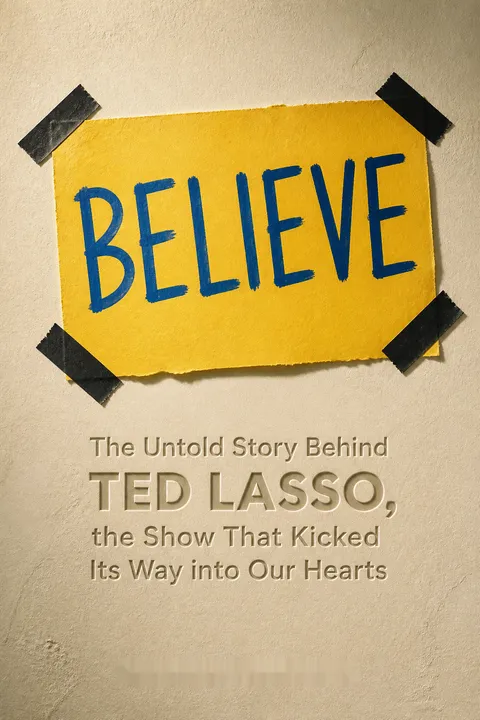
The planned arc reaches home. Sudeikis had imagined a three-season story, and the finale brings Ted back to Kansas while leaving Richmond’s people more able to support one another. Rebecca releases her attachment to Rupert, Nate returns to the team, and the players rebuild the torn Believe sign together. The ending follows the series’ basic promise: change is possible through choices and relationships, not through winning alone.
Closure was generous, and uneven. The final season expanded its episodes and storylines, giving many characters their own turns but drawing criticism for diffuse plots and unresolved arcs. The finale offers emotional satisfaction, yet some developments feel rushed or crowded. The book presents both truths: the show ended in a way consistent with its hopeful identity, while its effort to give everyone a send-off sometimes strained the storytelling.
A finale is judged against two competing demands: narrative economy and emotional recognition. This ending favors the second, returning to central images and giving a large ensemble a place in the final picture. That choice suits a show built around community, but breadth can dilute causality when too many arcs compete for resolution. The useful distinction is between a satisfying emotional destination and a fully earned route to it. Viewers can value the former while still noticing where the season’s plotting asks them to fill in gaps.
Analysis
Believe is a behind-the-scenes history and critical reading of Ted Lasso, but its deepest subject is how a television project became an unexpectedly consequential piece of popular culture. Its narrative moves from a disposable-looking sports advertisement to a carefully developed ensemble, then through pandemic-era success, production pressures, and a contested final season. The book’s strongest argument is that the show’s kindness mattered because it was built into its working methods and dramatic structure, not merely delivered as dialogue. Characters face anxiety, grief, abusive family dynamics, career loss, and betrayal. Their improvement comes through choices and relationships, while the creative team’s collaborative approach mirrors that ethic.
The book also shows how much the series depended on a precise balance. A broad comic premise made it accessible; patient characterization gave it emotional weight; soccer supplied a framework for teamwork and competition without requiring every viewer to be a fan. The production’s technical work, from specialist coaching to digital stadium construction, demonstrates that a supposedly secondary element still needs credibility when it carries dramatic stakes. Casting discoveries and actor contributions further show that the work grew through collaboration rather than simple execution of a fixed plan.
Its account of the show’s popularity is most persuasive when it resists a single explanation. The pandemic gave audiences unusual time and an acute need for relief, but the series had been conceived earlier as a response to public hostility. Good timing explains why its welcome was so intense, not why its characters remained memorable. The book’s discussion of season three is valuable precisely because it does not make success a shield against criticism. Its sprawling episodes and uneven subplots test the limits of narrative generosity. The finale’s hope feels faithful to the series, even where its route to closure is less disciplined. Taken together, the story suggests that warmth can be artistically serious, but only when it makes room for conflict, consequence, and the possibility that people do not change neatly.
Review Summary
Believe receives mostly positive reviews from Ted Lasso fans, praised for its behind-the-scenes insights and interviews. Readers appreciate learning about the show's creation, casting, and production. Some find it repetitive or lacking critical analysis, especially of the final season. The book's format, primarily quotes from cast and crew, divides opinions. Many recommend it for die-hard fans but suggest it may not appeal to casual viewers. Overall, it's seen as a fun, nostalgic companion to the beloved series, though some wish for more depth or visual elements.
Glossary
The Lasso Way
Kindness in actionA name for the show’s ethic of treating people with care, curiosity, forgiveness, and respect, including in a competitive workplace. It is not a formal step-by-step method. The series tests the ethic through mistakes and conflicts, showing that decency can shape relationships without making pain, responsibility, or difficult choices disappear.
rom-communism
Hope without a fixed endingTed’s playful label for a romantic-comedy outlook in which people can trust that life may work out without insisting that it follow their preferred script. In the show, the idea emphasizes loosening expectations and allowing relationships to take forms other than the conventional romantic pairing or predictable happy ending.
Believe sign
A team’s shared hopeThe handmade sign in Richmond’s locker room that becomes a recurring visual symbol of the team’s collective belief and its connection to Ted. Its damage and eventual reconstruction carry emotional meaning because characters attach personal memories to it. The sign represents shared commitment, not a promise that every match or personal struggle will end in victory.
Total Football
Fluid team movementA Dutch approach to soccer associated with players moving flexibly between positions and maintaining a coordinated team shape. In the series, Ted encounters the idea during a visit to Amsterdam and uses it to rethink how Richmond can play together. The concept serves both as a tactical idea and as a metaphor for trust and adaptability among teammates.
Download PDF
Download EPUB
.epub digital book format is ideal for reading ebooks on phones, tablets, and e-readers.








