Plot Summary
Encounter in the Bookstore
Jeremy Walker, a celebrated children's author and artist, is at a San Francisco book signing when he notices a strikingly poised, beautiful teenage girl in a school uniform. She stands apart from the crowd, her presence both innocent and knowing, and Jeremy is instantly captivated. The girl, Belinda, is mysterious—her age, background, and intentions unclear. Their brief interaction, charged with mutual curiosity and unspoken desire, sets off a chain of events that will upend Jeremy's carefully ordered life. The encounter is both a literal and symbolic crossing of boundaries, as Jeremy's fascination with Belinda blurs the lines between art, longing, and taboo.
Seduction and Surrender
Jeremy's infatuation with Belinda quickly escalates. At a hotel party, their flirtation becomes physical, and Jeremy, despite his guilt and awareness of the risks, succumbs to her advances. Their first sexual encounter is both passionate and fraught, leaving Jeremy exhilarated and ashamed. Belinda's poise and experience unsettle him—she is at once childlike and worldly, vulnerable yet in control. The aftermath is marked by confusion and longing, as Jeremy realizes he is both enthralled and endangered by this enigmatic girl. The seduction is not merely sexual but existential, drawing Jeremy into a world where his own boundaries and certainties dissolve.
The Artist's Obsession
Haunted by Belinda's image, Jeremy channels his obsession into his art. He invites her to model for him, and she becomes the center of a new series of paintings—nude, vulnerable, and powerful. Their relationship deepens, blending eroticism, affection, and creative inspiration. Jeremy's work takes on a new intensity, as he seeks to capture the elusive essence of Belinda. The act of painting becomes a form of possession, a way to hold onto her even as she remains fundamentally unknowable. The studio becomes a sanctuary and a crucible, where art, love, and transgression intermingle.
A Night Visitor Returns
Belinda reappears at Jeremy's home, seeking refuge after her room in a communal house is broken into. She reveals glimpses of her precarious existence—living among drifters, hiding from an unnamed past, fiercely independent yet clearly in need. Jeremy, torn between paternal concern and erotic desire, offers her shelter. Their domestic life is both idyllic and tense, as Belinda's moods shift and her secrets remain guarded. The intimacy of their shared space intensifies their bond, but also heightens Jeremy's anxiety about the consequences of their relationship and the mystery of Belinda's origins.
Living with Secrets
As Belinda settles into Jeremy's home, their relationship oscillates between tenderness and volatility. She refuses to discuss her family or past, warning Jeremy not to pry. He is both comforted and tormented by her presence—she is loving, playful, and sexually assertive, yet emotionally elusive. Jeremy's art flourishes, inspired by Belinda's beauty and complexity, but he is increasingly aware of the risks: legal, moral, and emotional. The secrecy that binds them is also a source of tension, as Jeremy's need to know the truth about Belinda grows, threatening the fragile equilibrium they have found.
The Haight and the Hunt
When Belinda disappears, Jeremy is consumed by worry. He scours the Haight-Ashbury district, haunted by fears for her safety among the city's lost and desperate youth. The search is both literal and symbolic—a quest for the girl who has become his obsession, and for meaning in the chaos she brings. Jeremy's anxiety is compounded by his own guilt and the realization that he is powerless to protect Belinda from the dangers of her world, or from the consequences of their relationship. The city becomes a labyrinth of longing and dread, as Jeremy confronts the limits of his love and control.
Art, Truth, and Scandal
Jeremy's series of paintings featuring Belinda—nude, erotic, and haunting—attracts the attention of the art world and the public. Critics are divided: some hail the work as a breakthrough, others denounce it as obscene. The paintings become a lightning rod for debates about art, sexuality, and exploitation. Jeremy is both exhilarated and terrified by the response, aware that the truth about his relationship with Belinda could destroy him. The scandal grows, fueled by rumors and media coverage, as the boundary between art and life, muse and lover, becomes ever more blurred and perilous.
The Past Unveiled
Through a combination of investigation and confession, the truth about Belinda's past comes to light. She is the daughter of Bonnie, a famous actress, and G.G., a renowned hairdresser. Her childhood was marked by privilege, chaos, and neglect—her mother's addictions, her father's absence, and a series of betrayals and traumas. Belinda's flight from home was an act of survival and rebellion, a refusal to be controlled or erased by her family's dysfunction. The revelation of her identity brings both relief and new dangers, as the forces that shaped her life close in.
The Mother's Bargain
Belinda's mother, Bonnie, tracks her down and confronts Jeremy. In a tense and surreal encounter, Bonnie offers a deal: Jeremy can keep Belinda, provided he keeps her hidden and safe until she is of age. In exchange, Bonnie will not expose him or press charges, but she demands the negatives of incriminating photographs. The bargain is both a reprieve and a trap, forcing Jeremy to become Belinda's jailer as well as her lover. The encounter exposes the moral bankruptcy and desperation of all involved, as love, power, and self-preservation collide.
The Notebook Confession
After a violent argument, Belinda flees, leaving Jeremy devastated. Days later, he receives a notebook from her—a long, confessional letter recounting her life story, her feelings for Jeremy, and her reasons for running. The letter is a reckoning with the past: her mother's manipulations, her affair with her stepfather, her struggles for autonomy, and her longing for love and meaning. Belinda's voice is raw, honest, and self-aware, refusing both victimhood and blame. The confession is both an act of love and a final assertion of her independence, offering Jeremy understanding but not absolution.
The World's Judgment
The story of Jeremy and Belinda explodes into public view. The paintings are exhibited to both acclaim and outrage; the media seizes on the scandal, and Jeremy faces legal threats, professional ruin, and social ostracism. Friends and enemies alike are drawn into the maelstrom, as the boundaries between private and public, art and pornography, love and abuse are debated and distorted. Jeremy is forced to confront the consequences of his choices, the limits of his power, and the cost of his obsession. The world's judgment is harsh and unrelenting, but also reveals the hypocrisies and complexities of desire, art, and morality.
The Great Escape
With the authorities closing in and the media frenzy at its peak, Jeremy and Belinda, aided by loyal friends, orchestrate a daring escape. Disguised and pursued, they evade the police and the press, seeking refuge and a chance to reclaim their lives. The escape is both literal and symbolic—a flight from judgment, shame, and the past. In the crucible of crisis, their love is tested and transformed, as they confront the realities of freedom, responsibility, and the future. The journey is perilous, but also redemptive, offering the possibility of renewal and self-determination.
Reunion at the Premiere
Belinda and Jeremy are reunited at the premiere of Final Score, the film that marked the beginning of Belinda's journey into adulthood and exile. The event is a spectacle of media, art, and celebrity, but also a deeply personal moment of recognition and reconciliation. Surrounded by friends and adversaries, Belinda and Jeremy affirm their love and commitment, defying the forces that sought to destroy them. The premiere is both an ending and a beginning, a public vindication and a private homecoming, as the lovers reclaim their story and their future.
Flight to Freedom
In a whirlwind of secrecy and celebration, Belinda and Jeremy marry in Reno, witnessed by their closest allies. The ceremony is both absurd and profound, a ritual of defiance and hope. The marriage grants them legal protection and a measure of legitimacy, but also marks a new chapter in their lives—a commitment to each other and to the uncertain path ahead. The flight to freedom is both literal and emotional, as they leave behind the wreckage of the past and embrace the possibilities of love, art, and self-invention.
Marriage in White Mink
The newlyweds, draped in white mink, become symbols of both scandal and resilience. Their union is celebrated and commodified, photographed and broadcast to the world. The marriage is a culmination of their journey—a triumph over adversity, a reclamation of agency, and a testament to the power of love and art to transcend shame and judgment. Yet beneath the surface, questions remain: about the cost of freedom, the meaning of forgiveness, and the possibility of healing. The white mink is both armor and costume, a sign of survival and transformation.
The Price of Power
As the media storm subsides, Belinda is confronted by the demands of her family, the lure of fame, and the challenge of defining herself beyond victimhood or muse. She is offered a chance to return to the world she fled—acting, celebrity, reconciliation with her mother—but must decide what she truly wants. The price of power is steep: to forgive, to let go, to risk love and art in the face of uncertainty. Belinda's journey is one of self-discovery and self-assertion, as she claims her story and her future on her own terms.
The Final Score
The story comes full circle as Belinda and Jeremy, now free from pursuit and judgment, begin to build a life together. The past is not erased, but integrated—its pain and beauty transformed into art, memory, and meaning. The lovers are surrounded by friends, opportunities, and the promise of new adventures. The final score is not a simple victory, but a hard-won peace—a recognition of the complexity of love, the necessity of truth, and the possibility of redemption. The world's judgment fades, but the lessons endure.
Out of the Dream
In the aftermath, Jeremy and Belinda find themselves in a new world—one shaped by their choices, their art, and their love. The house of the past is left behind, its ghosts exorcised by the act of creation and confession. The future is uncertain, but open, filled with the promise of new discoveries and new dreams. The story ends not with closure, but with possibility—a testament to the resilience of the human spirit, the power of art to heal and transform, and the enduring mystery of love.
Characters
Jeremy Walker
Jeremy is a successful children's author and painter, celebrated for his evocative illustrations of young girls. Middle-aged, sensitive, and deeply introspective, he is both drawn to innocence and tormented by desire. His encounter with Belinda awakens a passion that is both creative and destructive, leading him to cross moral and legal boundaries. Jeremy's relationship with Belinda is a crucible for his own fears, guilt, and longing for meaning. He is at once paternal and erotic, protector and transgressor, artist and lover. Over the course of the story, Jeremy is forced to confront the consequences of his obsession, the limits of his power, and the possibility of redemption through truth, art, and love.
Belinda Blanchard
Belinda is a teenage runaway with a complex past—daughter of a famous actress and a renowned hairdresser, child star, and victim of familial neglect and betrayal. She is precocious, beautiful, and fiercely independent, yet deeply wounded. Belinda's relationship with Jeremy is both a refuge and a risk, offering her love, safety, and the chance to define herself beyond her family's dysfunction. She is both muse and agent, object and subject, navigating the dangers of the adult world with intelligence and resilience. Through her confessional letter, Belinda claims her story, refusing both victimhood and blame, and ultimately chooses her own path toward healing and selfhood.
Bonnie Blanchard
Bonnie is Belinda's mother, a once-glamorous actress whose life has been marked by addiction, narcissism, and emotional volatility. She is both victim and perpetrator, loving and destructive, desperate to maintain control over her daughter and her own narrative. Bonnie's confrontation with Jeremy is a study in power, denial, and self-preservation—she is willing to bargain, threaten, and ultimately abandon Belinda to protect herself and her career. Her relationship with Belinda is fraught with jealousy, dependence, and unresolved grief, casting a long shadow over her daughter's life and choices.
G.G. (George Gallagher)
G.G. is Belinda's biological father, a celebrated hairdresser and a gentle, loving presence in her life. He is marginalized by Bonnie's manipulations and the legal system, but remains steadfast in his support for Belinda. G.G. represents an alternative to the chaos and cruelty of Belinda's maternal family—a source of unconditional love, acceptance, and stability. His own struggles with identity and loss mirror Belinda's, and his reunion with her is a moment of healing and affirmation. G.G. is also a bridge between worlds—art, celebrity, and ordinary kindness.
Marty Moreschi
Marty is Bonnie's husband and Belinda's former lover, a television producer whose charm and ambition mask a deep insecurity and capacity for harm. He is both seducer and victim, caught in the web of Hollywood power games and personal failings. Marty's relationship with Belinda is exploitative and damaging, yet also marked by genuine affection and regret. His willingness to bargain, threaten, and manipulate reflects the moral bankruptcy of the world he inhabits. Marty's ultimate fate is a cautionary tale about the costs of ambition, denial, and the refusal to face the truth.
Alex Clementine
Alex is Jeremy's oldest friend, a charismatic actor whose career has spanned decades and scandals. He is both confidant and critic, offering Jeremy support, perspective, and tough love. Alex's own history of reinvention and survival mirrors the themes of the story—art, truth, and the price of fame. He is a voice of reason and compassion, helping Jeremy navigate the storms of scandal and self-doubt. Alex's presence is a reminder of the enduring power of friendship, loyalty, and the possibility of starting over.
Susan Jeremiah
Susan is a talented filmmaker who becomes both mentor and ally to Belinda. She represents the possibility of art as liberation and self-expression, offering Belinda a path beyond victimhood or muse. Susan's own struggles with the industry, her relationships, and her commitment to truth and beauty make her a complex and inspiring figure. She is instrumental in orchestrating Belinda's escape and in affirming the value of her story and her art. Susan is a symbol of creative resilience and the power of women's solidarity.
Blair Sackwell
Blair is a larger-than-life fashion mogul and longtime friend of Belinda's family. He is both comic relief and moral center, unafraid to speak uncomfortable truths and to take risks for those he loves. Blair's loyalty, resourcefulness, and irreverence are crucial in helping Belinda and Jeremy escape the forces arrayed against them. He is a survivor of his own battles with the industry and with illness, and his presence is a testament to the power of friendship, humor, and defiance in the face of adversity.
Dan Franklin
Dan is Jeremy's lawyer and friend, a voice of reason and caution amid the chaos. He is deeply concerned for Jeremy's safety and reputation, and is often the one to articulate the risks and consequences of his actions. Dan's pragmatism and loyalty are a counterpoint to Jeremy's passion and impulsiveness. He is both protector and critic, helping to navigate the legal and ethical minefields of the scandal. Dan's presence underscores the importance of boundaries, accountability, and the rule of law.
Sheila
Sheila is Jeremy's neighbor, a minor but significant presence who observes the unfolding drama and offers moments of support and perspective. She represents the ordinary world—the community of bystanders, witnesses, and friends who are affected by, and respond to, the scandal. Sheila's kindness and common sense are a reminder of the importance of empathy, connection, and the everyday acts of care that sustain us in times of crisis.
Plot Devices
Dual Narrative and Confessional Structure
The novel employs a dual narrative structure, alternating between Jeremy's first-person account and Belinda's confessional letter. This device allows for a deep exploration of subjectivity, memory, and the unreliability of perception. The confessional mode invites the reader into the intimate, often contradictory thoughts and feelings of the protagonists, blurring the line between victim and perpetrator, love and exploitation. The structure also enables the gradual revelation of secrets, traumas, and motivations, building suspense and emotional complexity. The interplay of voices creates a tapestry of truth and ambiguity, challenging the reader to question easy judgments and to empathize with flawed, wounded characters.
Art as Mirror and Catalyst
Art is both subject and engine of the plot. Jeremy's paintings of Belinda are not merely illustrations, but active agents in the story—provoking desire, scandal, and transformation. The act of creation is depicted as both redemptive and dangerous, a way to possess and understand the beloved, but also to expose and exploit. The paintings become a battleground for competing claims of ownership, agency, and meaning. They are mirrors of the characters' inner lives, as well as catalysts for public judgment and personal reckoning. The tension between art and life, representation and reality, is a central theme, explored through the evolving relationship between artist and muse.
Scandal, Pursuit, and Escape
The plot is propelled by a series of escalating external threats: legal danger, media scandal, familial pursuit, and the risk of violence or exposure. These pressures force the characters to confront their own motives, fears, and desires, and to make choices that define their identities and relationships. The motif of escape—literal and metaphorical—recurs throughout: from home, from judgment, from the past, from the self. The pursuit is not only by the authorities, but by the ghosts of memory, shame, and longing. The resolution comes not through victory over these forces, but through acceptance, confession, and the forging of new paths.
Foreshadowing and Symbolism
The novel is rich in foreshadowing and symbolic imagery: the carousel horse, the communion veil, the white mink, the locked house, the burning of books. These motifs recur, linking past and present, innocence and experience, love and loss. The symbols serve as touchstones for the characters' emotional journeys, marking moments of transition, revelation, and healing. The use of art, costume, and ritual underscores the themes of performance, identity, and the search for authenticity. The foreshadowing creates a sense of inevitability and tragedy, even as the story moves toward hope and renewal.
Analysis
Belinda is a provocative, deeply psychological exploration of obsession, art, and the boundaries of love. At its core, the novel interrogates the power dynamics between artist and muse, adult and child, lover and beloved—refusing easy answers or moral certainties. Through its confessional structure and dual perspectives, the book immerses the reader in the emotional and ethical ambiguities of its characters, challenging us to empathize with their pain, longing, and self-deception. The story is as much about the search for selfhood and meaning as it is about transgression and scandal. It exposes the ways in which trauma, secrecy, and the hunger for connection can drive us to both create and destroy. Ultimately, Belinda is a meditation on the redemptive possibilities of truth, art, and love—however flawed or forbidden. It asks us to consider what it means to see and be seen, to forgive and be forgiven, and to step out of the dream of the past into the uncertain light of the future.
Last updated:
Review Summary
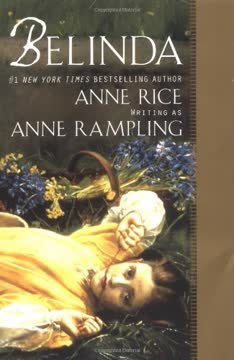
Belinda by Anne Rampling generates deeply polarized responses. The novel depicts a relationship between 44-year-old children's book illustrator Jeremy Walker and 16-year-old Belinda. Critics condemn it as glorifying pedophilia, noting disturbing comparisons to Lolita and problematic portrayals of statutory rape. Some reviewers found it offensive, implausible, and poorly written. However, supporters praise the character development, vivid prose, and examination of taboo relationships, arguing Belinda is portrayed as mature and worldly. Many acknowledge the controversial age gap while appreciating Rice's storytelling craft. The book divides readers on whether it's exploitative or a legitimate exploration of complex themes.