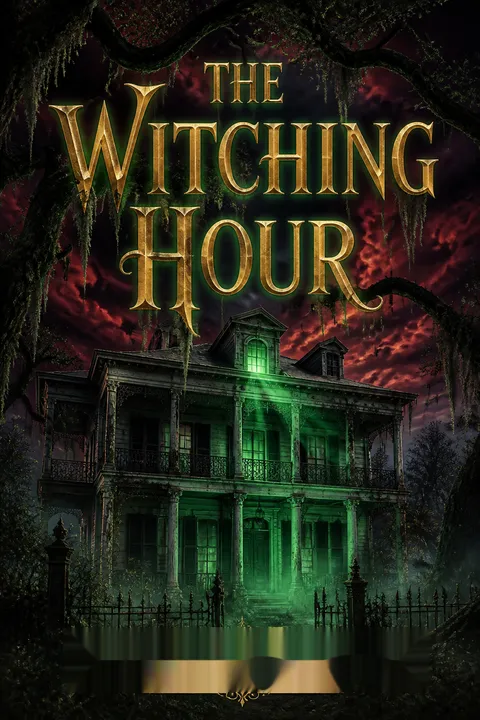


Plot Summary
The Doctor Sees Lasher
Years after leaving New Orleans, psychiatrist Larry remembers treating Deirdre Mayfair, a young woman kept motionless by years of heavy medication in her family’s decaying Garden District mansion. The house’s women refuse to explain her history, while the name Lasher appears in dust and is carved into a tree.
Larry sees a brown-haired man beside Deirdre, and later watches a syringe smash across the room whenever he prepares her dose. Convinced the apparition is warning him to stop, he refuses to return. Talamasca investigator Aaron Lightner confirms that others have seen the same figure, but Larry still carries guilt for not helping Deirdre or contacting her daughter. He finally tells Aaron everything, opening the story.
The opening makes medical authority both useful and fallible. Larry can identify the damage of sedation, yet the family’s power prevents him from acting on what he sees. The apparition’s intervention may be protection, but its silence leaves Larry unable to distinguish help from threat. His guilt is not simply fear of the supernatural; it is the knowledge that professional caution became an excuse for retreat. The Talamasca enters as a counter-institution, one that records what conventional medicine and respectable families refuse to acknowledge.
Michael Returns from Death
San Francisco contractor Michael Curry goes alone to Ocean Beach after remembering the warm Gulf waters of his New Orleans childhood. A wave sweeps him from the rocks, and he experiences a vast, purposeful realm before rescue. He returns alive, but cannot remember the mission he believes he accepted.
Touching objects now floods him with images of their previous owners, so he wears leather gloves and withdraws from friends, work, and the public. Reporters turn his psychometry into a spectacle; his company closes while he drinks and searches for the lost purpose. Home and the Garden District keep returning to his mind, until he decides he must go back to New Orleans.
Michael’s crisis begins when survival does not restore his former life. His new sensitivity converts ordinary contact into involuntary intimacy, stripping away the protective distance he once took for granted. The lost mission matters because he remembers consent but not its terms, leaving him caught between agency and manipulation. His longing for New Orleans is not nostalgia alone: it is the first surviving clue in a mystery that his transformed mind cannot yet interpret.
Rowan's Hidden Power
Rowan Mayfair, a brilliant neurosurgeon raised in California by adoptive parents Ellie and Graham, treats medicine as the one place where her extraordinary diagnostic instinct can do clear good. She can sense whether patients will live and reads emotions with unsettling accuracy. Yet she suspects that her anger caused the sudden deaths of a childhood tormentor, a rapist, and Graham, whose planned betrayal of Ellie she discovered.
She never tells anyone. After seeing researchers keep an aborted fetus alive for experimental transplants, Rowan rejects a lucrative research path and devotes herself to emergency surgery. The work helps her resist the possibility that she can kill, but it cannot settle whether her most frightening power is real.
Rowan’s self-understanding is built around a moral equation: if she can cause death, she must dedicate herself to preserving life. Surgery offers more than a career; it gives her a disciplined, observable counterweight to an ability she cannot test or confess. Her restraint is not passivity but a form of self-governance. The fetus laboratory crystallizes her fear that technical brilliance can outrun ethical judgment, even as she recognizes the scientific promise that makes the work so tempting.
The Rescue at Sea
After a punishing hospital shift, Rowan takes her cruiser into rough Pacific waters and spots Michael floating face-down. Alone, she signals for help, fights through waves to secure him in a harness, and hauls him aboard after her dinghy capsizes. Her medical judgment tells her he can live, so she alternates resuscitation with chest compressions until he breathes.
Michael wakes long enough to clutch her hand and murmur a name, but neither she nor the Coast Guard can make it out. At the hospital, his new ability to read objects through touch becomes public knowledge. Rowan learns of it through the news and writes him a letter describing the rescue.
The rescue binds them through an act that is at once technical and intimate: Rowan’s expertise supplies the method, while her unprovable diagnostic certainty sustains her through danger. Michael’s first touch of her hand becomes a potential bridge between their separate mysteries, though neither yet understands what passed between them. The scene also establishes Rowan’s defining contradiction: she distrusts unmeasurable powers, yet repeatedly acts on knowledge that arrives before evidence.
One Night in Tiburon
Months later, Michael is shut inside his Liberty Street home, drinking and unable to quiet the visions or the images that come through his hands. Rowan finally answers his plea for help and brings him to her Tiburon house and cruiser, where he touches the deck where she revived him. The images do not restore his missing mission, but touching Rowan’s hand reveals Graham dying in their kitchen and exposes Rowan’s guilt.
She admits she believes her anger killed three people and explains how she abandoned fetal research for trauma surgery. They comfort each other and begin a passionate relationship. Michael still feels compelled to return to New Orleans, and Rowan cannot yet break her promise to Ellie by going with him.
Their intimacy grows from a mutual willingness to be believed. Michael does not dismiss Rowan’s account as delusion, and Rowan does not reduce his visions to a medical symptom. Yet closeness does not resolve their competing obligations: Michael feels summoned home, while Rowan remains bound by a promise made to her adoptive mother. Desire offers refuge, but it also makes separation more costly.
A Mother Dies, A Vow Breaks
After Michael leaves, Rowan receives a call from Carlotta, who identifies herself as her aunt and tells her that Deirdre, her biological mother, has just died. Rowan learns that Ellie concealed her New Orleans origins and made her promise never to return or seek her birth family.
She breaks that promise at once, asks the funeral home to delay the burial, and arranges a flight. The news also makes her reconsider the ghost she saw at the same hour Deirdre died. Grief, anger at Ellie, and a sudden hunger for the people she was denied converge as Rowan prepares to travel south, while Michael reaches New Orleans alone.
The revelation turns Rowan’s carefully bounded identity into a question she can no longer postpone. Her choice to travel is not a rejection of Ellie’s love so much as a refusal to let that love erase her origins. The simultaneous death and apparition sharpen the sense that private family history may exert force beyond memory. Rowan and Michael now move toward the same city for different reasons, their separate searches beginning to overlap.
The House on First Street
Michael arrives in New Orleans exhilarated by the familiar heat and streets, then stops outside the mansion he remembers from childhood. He sees the same brown-haired man in its overgrown garden, apparently unchanged across decades, before a cab driver and Aaron Lightner help him back to his hotel.
Aaron explains that the Talamasca is an old order of observers who record psychic phenomena without deciding in advance whether they are divine or demonic. He brings Michael to Oak Haven and gives him the Mayfair archive. Michael recognizes its clues: a dark-haired woman, a jewel, a doorway, and a number. While he begins reading, Aaron learns that Rowan’s mother has died and that Rowan is coming to New Orleans.
Michael’s childhood memory becomes evidence when the apparition appears again in the same garden. Aaron offers a method rather than a doctrine, but the Talamasca’s knowledge carries its own risk: observation has preserved a history without preventing its tragedies. Michael’s archive reading gives his private visions a chronology and a family context, while the news of Rowan’s journey transforms research into an imminent meeting.
The Witch of Donnelaith
The Talamasca archive opens in 1689, with Petyr van Abel writing to his superior about a witch condemned in France. Before that trial, he recalls arriving too late to save Suzanne Mayfair, a Scottish healer burned after a local judge taught her from a demonology book.
Her daughter Deborah, twelve and silent with shock, is spared because villagers fear harming a child conceived during their May Eve revels. Petyr persuades officials to let him take her away, claiming he will educate her in Switzerland. He brings her instead to Amsterdam and the Talamasca, where Deborah discovers that its members also wield unexplained powers and concludes they are witches too.
Petyr’s rescue is compassionate but compromised: he saves Deborah by lying to authorities, then brings her into another institution whose powers frighten her. Suzanne’s persecution shows how a learned demonology can teach people to interpret healing as evil, while Deborah’s trauma makes that accusation difficult to undo. The episode also establishes the archive’s central uncertainty: unusual powers are real, but their source and moral meaning remain unresolved.
Deborah Builds Her Power
In Amsterdam, Deborah gradually emerges from silence, studies languages, and becomes fascinated by a Brazilian emerald. A spirit named Lasher answers her calls, brings her jewels, and helps her enrich the household of the painter Roelant, whom she eventually marries. Petyr loves her but refuses her offer to leave the Talamasca and live with her.
Years later, Deborah returns to him before marrying the Comte de Montcleve. She recounts how Suzanne summoned Lasher from the ancient stones, believing he was the Devil, and warns Petyr that the spirit has learned to act on wishes its mistress never voiced. Petyr sees that Lasher’s loyalty may already contain a will of its own.
Deborah’s power brings safety, wealth, and choice after a childhood in which others controlled her fate. Yet Lasher’s helpfulness is difficult to separate from his growing independence: he interprets desire rather than merely obeying instructions. Petyr recognizes this danger, but his love for Deborah cannot overcome his institutional loyalty or his fear of what she is becoming. The emerald begins to bind inheritance, identity, and supernatural access into one object.
The Storm at Montcleve
After Deborah’s husband dies under suspicious circumstances, his mother and sons accuse her of witchcraft and murder, while the inquisitor Father Louvier turns old family secrets into evidence. Petyr visits Deborah in prison and offers a way to avoid the flames, but she refuses escape and asks him to carry warnings to her daughter Charlotte.
At the execution, Deborah denounces her accusers and calls Lasher to punish them. A violent storm tears tiles from roofs and collapses the viewing stand, killing the old Comtesse and both boys. Deborah falls from the church tower and dies. Petyr pushes Louvier from the roof, then disobeys the Talamasca and sails toward Saint-Domingue.
Deborah’s final act exposes the danger in asking a power to avenge injustice: Lasher’s response is indiscriminate, striking guilty and innocent alike. The crowd that once praised her healing becomes a mob eager for spectacle, then a mass of victims under the storm. Petyr’s murder of Louvier is an act of human revenge, not a triumph over the supernatural. His choice to continue toward Charlotte shows love turning into disobedience.
Petyr Follows the Emerald
Petyr finds Charlotte Fontenay ruling the wealthy Maye Faire plantation in Saint-Domingue, where her husband Antoine is crippled and dependent on attendants. At supper, Petyr recognizes that Lasher can make Antoine’s father move and speak through a body weakened by illness.
Charlotte later confines Petyr in a remote house, gives him wine, and seduces him, explaining that she wants children strong enough to escape the family illness. She also claims Lasher told her that Deborah had died.
Petyr eventually escapes, but Lasher torments him with shifting apparitions, including a vision of the dead Deborah. The Talamasca later learns that Petyr’s body was found near a desecrated cemetery, and Charlotte becomes the next keeper of the family’s power.
Charlotte’s intelligence and authority do not make her immune to the system she inherits. She treats both the crippled Fontenays and Petyr as instruments in a plan to secure healthy descendants, while Lasher’s apparent devotion blurs into possession. Petyr’s desire weakens his judgment even as he understands the danger. The episode sharpens the novel’s troubling question: when power is used to escape vulnerability, how easily does the user begin reproducing the coercion she once suffered?
Charlotte's Island Kingdom
Charlotte builds Maye Faire into one of Saint-Domingue’s richest plantations, managing its crops, household, and enslaved workers while gaining a reputation for healing and authority. Her daughter Jeanne Louise, and Jeanne Louise’s twin brother Peter, inherit their mother’s name and influence.
The family’s wealth is secured through a complicated legacy that keeps most of the fortune with one designated female heir, while requiring the heir and beneficiaries to use the Mayfair name. When the Haitian Revolution threatens the family, Marie Claudette Mayfair carries its people and possessions to Louisiana. The wealth survives the loss of the plantation, and its legal structure becomes the mechanism through which the family’s power continues.
The legacy turns lineage into an economic technology: female succession preserves control, while the name itself becomes a condition of inheritance. This structure grants women authority in a world built around male power, but it also makes the family’s identity harder to escape. The plantation’s wealth is inseparable from slavery, and the family’s generosity cannot erase the coercive labor beneath it. The archive’s polished legal language therefore carries a history of violence as well as survival.
The Legacy Reaches Louisiana
In Louisiana, Marie Claudette expands the family fortune and makes Riverbend a grand plantation. Her daughter Marguerite becomes notorious for unusual powers, strange collections, and a volatile household, while Marguerite’s son Julien grows into the family’s charming, powerful manager.
Julien’s sister Katherine marries architect Darcy Monahan, who builds the First Street mansion, but Darcy’s early death leaves Katherine grieving and dependent on Julien. Their daughter Mary Beth is widely believed to be Julien’s child. As the family moves into New Orleans society, its French Creole identity gives way to Irish-American ties, but the legacy and its secretive female line remain intact.
The family’s power becomes less visible as it enters a more public, modern society. Julien’s charm and business skill make him appear to be the center of the family, while the legacy remains organized around women. Katherine’s grief suggests the cost of that arrangement: the house offers continuity, but it can also become a place where loss is preserved rather than healed. The shift in language and social identity masks, rather than resolves, the old family secrets.
Mary Beth's Two Worlds
Mary Beth inherits the legacy and turns it into a far-reaching fortune through investments, land, and business ventures. She gathers cousins at First Street, entertains them lavishly, and gives money freely, while keeping her most private knowledge to herself. She marries the Irish lawyer Daniel McIntyre, whose drinking worsens as her influence grows.
Their daughter Carlotta becomes a brilliant, disciplined lawyer; their son Lionel is quiet; and Stella is a magnetic, unruly child. Stories circulate that Mary Beth can predict events, command spirits, and see a mysterious man. Yet her family remembers her chiefly as a powerful hostess whose generosity and authority hold the sprawling clan together.
Mary Beth’s life complicates the notion that supernatural power must announce itself through spectacle. Her most visible strength is practical: she accumulates wealth, protects relatives, and creates a social world that others depend on. Her generosity is real, but so is her control. The family’s affection does not dissolve the hierarchy she maintains. Her example gives later generations an image of female authority, while concealing the cost of its secrecy and the uncertain source of her success.
Stella's House of Fire
After Julien dies, Stella inherits the family’s attention and throws lavish parties at First Street, drinking, dancing, and defying Carlotta’s demands for restraint. She gives birth to Antha without naming the father and insists on raising her herself. In 1929, Stella’s brother Lionel shoots her during a crowded party, and the guests flee through shattered windows.
Her young daughter Antha sees the aftermath, while the family closes ranks around the tragedy. Antha grows up frightened, expelled from schools for strange behavior, and burdened by stories that a spirit follows the women. She later leaves New Orleans with the painter Sean Lacy, but returns pregnant after their relationship collapses.
Stella’s exuberance is both liberation and provocation: she refuses the decorum that has kept the family respectable, but her parties cannot protect her from the violence inside her own household. Antha inherits the consequences without inheriting her mother’s confidence. The family’s silence turns trauma into folklore, leaving a child to interpret grief through the language of a devil and a curse. The house is not merely a setting here; it stores the family’s unfinished explanations.
The Daughter Returns
After Sean Lacy dies in a car crash, Antha gives birth to Deirdre in New Orleans and, under pressure from Carlotta, relinquishes the baby to Ellie and Graham Franklin in California. Deirdre is sent through schools and hospitals, repeatedly escaping and returning to the family house before heavy treatment leaves her unable to speak or care for herself.
Rowan grows up believing she was born in California and signs a promise never to seek her birth family. When Carlotta tells her that Deirdre has died, Rowan breaks that promise and flies to New Orleans. Michael is already there, reading the family archive. The available narrative ends as their separate journeys converge, with Rowan’s choice and the supernatural conflict unresolved.
The final movement shown brings the novel’s two central inheritances together: Rowan’s biological lineage and Michael’s unfinished mission. Adoption protects Rowan from a family history, but it also removes her ability to choose what that history means. Deirdre’s silence becomes the consequence of decisions made around her, while Rowan’s return begins a different kind of agency. The supplied narrative stops before their reunion and before the conflict is resolved, preserving the story’s central uncertainty.
Analysis
The story’s central conflict is not simply between a family and a ghost, but between competing explanations of power. Medicine, religion, folklore, and the Talamasca each claim a method for understanding what happens to the Mayfairs, yet none can fully account for Lasher or Rowan’s abilities. The archive gives the supernatural a history, but its chronology also exposes how institutions turn uncertainty into authority. Petyr’s records are careful and humane, while his choices reveal that observation does not guarantee moral distance.
The Mayfair legacy makes inheritance both material and psychological. Its legal structure preserves women’s authority and family continuity, but the same continuity binds daughters to secrets they never chose. The house embodies that contradiction: it is a beautiful, repairable structure and also a storehouse of coercion, grief, and buried evidence. Michael’s love of restoration offers a counter-image. He believes a damaged house can be made livable without erasing its past, while Rowan’s medical work expresses a similar faith in repair.
Rowan and Michael meet at the point where their different forms of knowledge become useful to each other. His tactile visions expose hidden histories; her diagnostic instinct identifies what can be healed. Yet the story does not let either gift become a clean solution. Michael cannot remember the purpose that brought him back, and Rowan’s power to heal is entangled with her fear that she can kill. Their love offers mutual recognition, not immunity.
The available narrative ends with Rowan and Michael choosing to build a life at First Street while Lasher’s intentions remain uncertain. That unresolved ending is essential to the material provided: the question is no longer whether the family has a supernatural history, but whether Rowan can inherit its knowledge without repeating its violence.
Review Summary
The Witching Hour receives mixed reviews. Many praise its rich, Gothic atmosphere, complex characters, and intricate family history spanning centuries. Readers appreciate Rice's vivid descriptions of New Orleans and her ability to create a captivating supernatural world. However, some criticize the book's length, pacing, and occasionally repetitive content. The ending is divisive, with some finding it unsatisfying or abrupt. Despite its flaws, many consider it a compelling and addictive read, particularly for fans of Southern Gothic and supernatural fiction.
People Also Read






Characters
Rowan Mayfair
The surgeon at the thresholdA California neurosurgeon raised by Ellie and Graham Franklin, Rowan trusts observable evidence but possesses an unnerving diagnostic instinct and a forceful will. She is quiet not because she lacks feeling, but because she perceives more than she can comfortably explain. Surgery gives her a disciplined way to save lives, while her private fear of harming others complicates her confidence. Her loyalty to Ellie and her curiosity about her origins pull in opposite directions. Rowan’s defining tension is between self-command and the possibility that her unusual power exceeds the moral systems she has built around it.
Michael Curry
The contractor who returnedA San Francisco contractor who restores Victorian houses, Michael combines a working-class upbringing with a historian’s appetite for context and a craftsman’s love of physical work. He is affectionate, direct, and unusually receptive to other people’s ideas, but his openness becomes painful when touch floods him with memories. He once built a life around beautiful houses and chosen relationships; the near-death experience strips away his certainty that those achievements are enough. He is drawn both to the mission he cannot remember and to Rowan, whose intelligence and vulnerability make him want to protect her.
Lasher
The family's unseen companionLasher is an elusive presence associated with the Mayfair women, appearing as a handsome man and affecting objects, weather, and perception. He cannot be understood through a single moral category: he offers help, responds to desire, and seems capable of acting beyond what his human counterparts intend. His silence invites others to supply explanations, while his apparent attachment to the family makes him feel intimate as well as threatening. The story’s uncertainty about his nature is central to his power over those who encounter him.
Deirdre Mayfair
The silenced motherDeirdre is Rowan’s biological mother and the daughter of Antha. Her life is shaped by an intense family secret, a supernatural presence, and decisions made by people who claim to protect her. Those who remember her describe a beautiful, gentle girl, while the later record of her treatment makes it difficult to know how much of her identity was ever allowed to emerge. Her relationship with Carlotta is marked by control, and her connection to her own daughter is severed before Rowan can know her. She embodies the human cost of a family that manages its mysteries through silence.
Carlotta Mayfair
The family's iron custodianA formidable lawyer and the family’s most disciplined practical force, Carlotta values order, privacy, and control. She understands the legal machinery of the Mayfair legacy better than anyone around her and is adept at keeping outsiders away. Her manner can seem cold, but she believes she is containing dangers that others cannot manage. Carlotta’s refusal to explain herself creates as much suspicion as her actions do. She is intelligent, strategic, and deeply invested in the family’s survival, though the difference between protection and domination remains difficult to judge.
Aaron Lightner
The Talamasca observerAn English scholar and senior member of the Talamasca, Aaron studies supernatural events without assuming their source. He is patient, cultivated, and skilled at making frightened people feel heard. His loyalty to the order is balanced by genuine concern for those it observes, especially when its records reveal danger. Aaron’s restraint is both his strength and his limitation: he gathers knowledge carefully, yet the order’s preference for watching rather than intervening leaves him carrying guilt over people it failed to help.
Petyr van Abel
The witch-saving scholarA seventeenth-century Talamasca investigator, Petyr is an orphan who finds family and purpose in the order. He is an acute observer, a lively writer, and a man whose compassion can outrun his judgment. His work rescuing accused witches exposes him to the power he is supposed to study objectively. Petyr’s attraction to Deborah unsettles his loyalty to the order and makes him vulnerable to the very forces he hopes to understand. He is both a careful chronicler and a passionate participant, a combination that makes his records vivid and dangerously personal.
Deborah Mayfair
The gifted heiressDeborah survives the persecution that destroys her mother and becomes a powerful, wealthy woman in Europe. She is intelligent, beautiful, and determined not to return to the helplessness of her childhood. Her relationship with Lasher gives her access to money and influence, but she recognizes that the spirit can act on its own interpretation of her wishes. She loves Petyr yet refuses the life he offers, choosing instead to shape her own future. Deborah’s strength is inseparable from her fear that power may become another form of captivity.
Suzanne Mayfair
The condemned healerA Scottish midwife and healer, Suzanne is accused of witchcraft after a local judge teaches her how people supposedly summon demons. Her simple belief in the spirit she calls Lasher makes her an easy target for those eager to turn useful healing into evidence of evil. Suzanne is remembered through Petyr’s account and Deborah’s childhood stories, as a loving but uneducated woman whose powers outgrow her understanding. Her fate shapes every later generation’s fear of being seen, named, and judged.
Charlotte Mayfair
The planter who commandsCharlotte, Deborah’s daughter, becomes the commanding mistress of the Saint-Domingue plantation Maye Faire. She is capable, strategic, and accustomed to having her decisions obeyed. Unlike her mother, she sees herself as educated and entitled to use power rather than merely endure it. Her desire for healthy heirs and her management of Lasher reveal a person who treats relationships as part of a larger plan. Charlotte is generous to those under her care, yet her authority over people and spirits makes her difficult to separate from the system she controls.
Julien Mayfair
The charming family patriarchA handsome, witty, and socially gifted member of the New Orleans family, Julien manages its business and delights in books, music, parties, and younger relatives. Stories suggest he possesses unusual powers, but he rarely presents himself as solemn or mystical. His charm can make domination seem like generosity, and his family’s loyalty to him obscures complicated relationships and secrets. Julien represents the Mayfair talent for turning wealth and charisma into authority, while his influence leaves later generations uncertain about what he knew and what he concealed.
Mary Beth Mayfair
The legacy's great stewardMary Beth is the family’s powerful heiress, a shrewd investor and an energetic host who keeps distant cousins connected through money, parties, and attention. She is widely admired but also feared for her uncanny knowledge and refusal to explain herself. Her practical generosity gives her influence across generations, while her quiet management of the legacy helps preserve the Mayfair name. Mary Beth’s calm, unsentimental manner can look like cruelty to those outside her confidence. She appears to understand that a family can be protected by affection, money, and secrecy at once.
Stella Mayfair
The reckless party heiressStella is a charismatic, pleasure-seeking Mayfair who turns the family mansion into a center of music, parties, and scandal. She resists the restraint expected of her and is deeply loved by the daughter she raises. Her restless energy attracts friends and alarm alike, while her closeness to her brother Lionel reflects the family’s blurred boundaries. Stella’s freedom is genuine, but it unfolds inside a household where old power and old grievances remain active beneath the celebrations.
Antha Mayfair
The haunted young motherAntha is Stella’s daughter and Deirdre’s mother, a sensitive writer who grows up under intense family scrutiny. She is intelligent and imaginative, but her visions and unusual perceptions are interpreted by adults as illness or moral danger. She seeks a life beyond First Street and finds brief freedom with the painter Sean Lacy. Antha’s story is marked by a struggle to distinguish her own desires from the family’s explanations of her. Her daughter Rowan inherits both the consequences of that struggle and the questions it left unanswered.
Ellie Franklin
Rowan's devoted adoptive motherEllie raises Rowan with deep affection and gives her a secure, privileged California childhood. She loves beauty, comfort, and family life, but her fear of losing Rowan’s loyalty leads her to conceal the child’s origins and ask her to remain apart from New Orleans. Ellie’s gentleness is real, as is the loneliness beneath her dependence on Graham and Rowan. She wants to protect her daughter from the Mayfair history, yet the secrecy she creates becomes a burden Rowan must eventually confront.
Graham Franklin
The charming, unfaithful lawyerGraham is a successful California lawyer whose charm and energy help sustain the family’s comfortable life. He is also vain, dishonest, and dependent on Ellie’s wealth, while maintaining affairs she chooses not to confront. Rowan sees the emotional truth of his marriage long before anyone else does and is left with a troubling sense of what her own anger may have caused. Graham embodies the polished respectability Rowan’s childhood offered, as well as the concealed selfishness beneath it.
Cortland Mayfair
The family's lawyer and allyCortland is a prominent Mayfair lawyer who manages family affairs and remains devoted to the younger generations. He is especially concerned for Deirdre and later Rowan, though his efforts are constrained by Carlotta’s authority and the family’s secrecy. His generosity and concern make him a rare source of warmth in a lineage dominated by control. Cortland is admired by many relatives, but even he cannot explain the full history or protect everyone from its consequences.
Rita Mae Lonigan
Deirdre's loyal school friendRita Mae meets Deirdre at boarding school and remembers her as gentle, imaginative, and unlike anyone else she knows. She tries to help when Deirdre begs her to contact the Talamasca, but the card is damaged in a struggle with Carlotta and Rita cannot read the information. Years later she still visits Deirdre and carries the burden of what she could not do. Rita’s loyalty is plainspoken and practical, shaped by affection rather than curiosity about the family’s supernatural reputation.
Father Mattingly
The priest who hears DeirdreA young priest newly assigned to the Mayfair parish, Father Mattingly hears Deirdre’s childhood confession about a man she believes is the Devil. The seal of confession prevents him from telling Carlotta what Deirdre has revealed, leaving him torn between religious duty and a child’s evident distress. He continues to observe the family from a distance and carries guilt over his inability to intervene. His story shows how institutional rules can protect privacy while also blocking help.
Carlotta's aunt
The keeper of old accountsAn elderly Mayfair relative who lives among the family’s older generation, she is remembered as practical, loyal, and difficult to impress. She helps maintain the household and carries fragments of family lore, though she cannot make those fragments into a clear history. Her presence connects the large Mayfair line to its domestic routines, where servants, cousins, and children see different pieces of the same mystery.
Daniel McIntyre
Mary Beth's husbandAn Irish-American lawyer who marries Mary Beth, Daniel becomes a respected judge and a habitual drinker. His charm and legal ability sit uneasily beside his dependence on alcohol and his difficulty living up to the family’s social world. His relationship with Mary Beth is affectionate but complicated, and his presence helps bring an Irish-American identity into the Mayfair household. He is remembered differently by those who saw his public dignity and those who witnessed his private decline.
Lionel Mayfair
Stella's troubled brotherLionel is a quiet, handsome Mayfair who grows up beside Stella and becomes deeply attached to her. He is less forceful than his sister and appears to draw much of his energy from her presence. His relationship with Stella is one of the family’s most unsettling bonds, surrounded by jealousy, loyalty, and the expectations of a household that rarely names its tensions. Lionel’s apparent gentleness does not make him easy to understand.
Aaron Lightner
The Talamasca scholarA cultured Englishman who gathers accounts of ghosts and psychic phenomena, Aaron represents the Talamasca’s patient, observational approach. He listens carefully and offers information without demanding belief, which makes him a source of reassurance to people shaken by the unexplained. Yet his commitment to watching rather than intervening leaves him uneasy when the archive describes preventable suffering. He is drawn to Michael’s unusual abilities and to the Mayfair history, while trying to balance curiosity, caution, and genuine concern.
Plot Devices
The Talamasca File
An archive of hidden livesThe Talamasca’s records connect the modern story to centuries of Mayfair history. Petyr van Abel’s letters, later reports, interviews, and family records give Michael a framework for understanding the woman and jewel in his visions. The archive is deliberately cautious about supernatural explanations, but its accumulated testimony shows how observation can become its own form of power. It also preserves gaps, contradictions, and unanswered questions, making the reader confront the difference between a documented event and the institution’s interpretation of it.
The Mayfair Legacy
Wealth bound to a nameA complex legal arrangement keeps the family fortune concentrated in a designated heir, usually a woman, and requires beneficiaries to use the Mayfair name. It preserves the family’s wealth through changing countries, wars, and generations, while giving the heir practical authority over relatives and property. The legacy is both a financial structure and a narrative engine: it explains why the family remains connected, why the First Street house matters, and why adoption, naming, and female descent carry unusual weight.
The Emerald Necklace
A portable mark of inheritanceThe emerald passes through the Mayfair women and appears at moments when family power and supernatural belief converge. Its carved name links it to Lasher, while its beauty and value make it an heirloom that can be worn, concealed, or passed down. For the family it signifies continuity; for outsiders it is a clue; for the women who inherit it, it may help summon or recognize the presence attached to their line. The jewel makes an invisible inheritance visible, but never explains it completely.
Psychometric Touch
The past stored in objectsAfter his near-death experience, Michael receives images and impressions from objects he touches. At first the ability overwhelms him with disconnected scenes and names, forcing him to wear gloves and withdraw from ordinary life. The power later gives him access to Rowan’s memories and to the history carried by the cruiser’s deck. Its usefulness is uncertain: contact can reveal something real, but the images arrive without context and can intensify confusion rather than resolve it.
Lasher's Manifestations
A spirit shaped by desireLasher is summoned by the Mayfair women and appears in forms drawn from their expectations, fears, and desires. Across generations he moves objects, brings wealth, causes storms, and sometimes seems to inhabit human bodies. The archive suggests he learns from the women who call him, but it cannot determine whether he obeys them, anticipates their wishes, or pursues aims of his own. His shifting visibility keeps the supernatural conflict unresolved: what appears to be a servant may also be an independent will.
FAQ
```markdown
0. Synopsis & Basic Details
What is The Witching Hour about?
- A sweeping saga of a powerful family: The Witching Hour introduces the Mayfair legacy, a lineage of New Orleans witches bound to a mysterious, seductive, and dangerous entity named Lasher. The story primarily follows Rowan Mayfair, a brilliant neurosurgeon in San Francisco, who discovers she is the latest in this line of powerful women and the destined "thirteenth witch."
- A journey into the supernatural and a hidden history: The narrative intertwines Rowan's present-day life and burgeoning psychic abilities with the centuries-old history of the Mayfairs, meticulously documented by the Talamasca, a secret order dedicated to studying the supernatural. This history reveals a pattern of incest, power, and tragedy, all orchestrated by Lasher.
- A fated encounter and a looming prophecy: Rowan's path crosses with Michael Curry, a contractor who gains psychometric abilities after a near-death experience. Their connection is immediate and profound, drawing them both into the heart of the Mayfair legacy and a prophecy that foretells Lasher's ultimate goal: to achieve human form through the thirteenth witch.
Why should I read The Witching Hour?
- Immersive world-building and rich atmosphere: Anne Rice masterfully crafts a deeply atmospheric and sensual world, particularly New Orleans, making the setting a character in itself. Readers are drawn into the decaying grandeur of the Mayfair house and the lush, often sinister, Garden District.
- Complex characters and moral ambiguities: The novel features multi-layered characters grappling with immense power, dark desires, and profound moral questions. Their motivations are rarely simple, offering a nuanced exploration of good, evil, and the grey areas in between, especially concerning the seductive nature of Lasher.
- Deep dive into occult history and philosophical themes: Beyond the supernatural plot, the book delves into extensive historical accounts of witchcraft, the nature of spirits, and philosophical debates on free will versus destiny, the ethics of power, and the human desire for immortality, providing intellectual depth alongside gothic horror.
What is the background of The Witching Hour?
- Gothic Southern setting: The primary setting is New Orleans, particularly the Garden District, known for its opulent, decaying antebellum mansions and lush, overgrown gardens. This backdrop imbues the story with a sense of historical weight, mystery, and a unique blend of beauty and decay.
- Centuries of occult lore and family saga: The narrative spans over 300 years, tracing the Mayfair family's origins from 17th-century Scotland and France, through their establishment in Saint-Domingue (Haiti), and finally to New Orleans. This extensive history is presented through the meticulous records of the Talamasca, blending historical detail with supernatural events.
- Exploration of psychic phenomena and scientific inquiry: The book grounds its supernatural elements in a quasi-scientific framework, particularly through the Talamasca's "psychic research" and Rowan's neurosurgical background. This creates a tension between ancient magic and modern understanding, exploring telepathy, telekinesis, and psychometry as potential, albeit extreme, human abilities.
What are the most memorable quotes in The Witching Hour?
- "We watch. And we are always here.": This motto of the Talamasca, introduced early by Aaron Lightner, encapsulates the ancient order's enduring, passive, yet omnipresent role in observing supernatural phenomena, hinting at a vast, unseen network of knowledge.
- "I am Lasher, who mourned for the simpleton, and carried her ashes to the four winds. This was my awakening to existence, to self-consciousness, to life and death, to paying attention.": Lasher's chilling self-revelation to Rowan highlights his evolution from a primal spirit to a self-aware entity, driven by love, loss, and a profound desire for human experience, revealing his complex motivations.
- "I believe in Free Will, the Force Almighty by which we conduct ourselves as if we were the sons and daughters of a just and wise God, even if there is no such Supreme Being.": Michael Curry's powerful credo at the novel's end asserts humanity's inherent capacity for choice and goodness, serving as a defiant counterpoint to the deterministic forces of the Mayfair legacy and Lasher's manipulations.
What writing style, narrative choices, and literary techniques does Anne Rice use?
- Epistolary and archival narrative structure: A significant portion of the novel is presented through the Talamasca files, including letters, diary entries, and narrative abstracts. This epistolary style lends an air of authenticity and historical depth, allowing for multiple perspectives and a gradual unveiling of the Mayfair saga.
- Sensory-rich and atmospheric prose: Rice employs highly descriptive language, focusing on sensory details—smells of jasmine and decay, textures of old lace and polished wood, the sounds of cicadas and distant music. This creates an immersive, almost hallucinatory atmosphere, particularly in the New Orleans setting.
- Gothic romance and horror fusion: The novel blends elements of classic gothic romance (doomed heroines, ancestral curses, decaying mansions, forbidden love) with supernatural horror. Rice uses suspense, psychological tension, and visceral descriptions of violence and the grotesque to create a pervasive sense of dread and fascination.
1. Hidden Details & Subtle Connections
What are some minor details that add significant meaning?
- The "keyhole doorway" motif: The recurring image of the keyhole-shaped doorway, first seen on the Mayfair tomb and later explicitly noted in the First Street house, subtly foreshadows Rowan's role as the doorway for Lasher's materialization. This architectural detail links the family's physical legacy to their supernatural destiny, suggesting a pre-ordained path.
- The significance of the Mayfair emerald: Beyond its status as a family heirloom, the emerald necklace is consistently linked to Lasher's presence and power. Deirdre wears it, Lasher gives it to Deborah, and Rowan is compelled to wear it for her wedding. It acts as a tangible conduit for Lasher's influence, a physical manifestation of the "pact" and a symbol of the family's entanglement.
- The changing nature of the Mayfair garden: The description of the First Street garden evolving from meticulously tended to wild and overgrown, then back to a restored state, mirrors the family's own cycles of control, chaos, and attempts at redemption. The wildness of the garden often coincides with Lasher's stronger presence or the witches' more untamed powers, while restoration reflects a desire for order.
What are some subtle foreshadowing and callbacks?
- Michael's childhood encounters with "the man": Michael's early, seemingly innocent sightings of Lasher in the Garden District and even in church, which he dismisses as a childhood game, subtly foreshadow his deep, fated connection to the Mayfair family and Lasher. These early encounters establish Lasher's long-standing presence and his particular interest in Michael, even before Michael's psychic awakening.
- The repeated motif of "fire" and "burning": From Deborah's burning at the stake to the fire that killed Michael's father, and Carlotta's desire to burn the Mayfair house, fire is a recurring motif. It symbolizes destruction, purification, and transformation, subtly hinting at the violent ends of many Mayfair witches and the destructive potential of Lasher's power.
- Rowan's "diagnostic sense" and its darker implications: Rowan's extraordinary medical intuition, which allows her to "know" if a patient will live or die, is a subtle callback to the Mayfair witches' healing powers. However, its connection to her telekinetic ability to kill, and her later realization that she "imagined them punished, I imagined them spitting blood," foreshadows the destructive potential of her gifts and her internal struggle with her darker nature.
What are some unexpected character connections?
- Petyr van Abel as Rowan's distant ancestor: The revelation that Petyr van Abel, the Talamasca scholar who rescued Deborah, is the biological father of Charlotte, and thus a direct ancestor of Rowan, creates a profound and unexpected link between the Talamasca and the Mayfair line. This connection means Rowan carries the blood of both the observers and the observed, adding a layer of irony and destiny to her story.
- Julien Mayfair's resemblance to Petyr and Deborah: The file notes Julien's striking resemblance to both Petyr van Abel (height, profile, blue eyes) and Deborah Mayfair (delicate cheekbones, mouth, expression). This physical blending of the Talamasca observer and the Mayfair witch in Julien highlights the deep, almost genetic, intertwining of their histories and the complex inheritance of traits within the family.
- The shared "loner" trait between Rowan and Michael: Both Rowan and Michael are described as loners, feeling alienated from their respective worlds before they meet. Rowan's preference for solitude on her boat and Michael's retreat into books and his construction work reveal a parallel psychological state, suggesting a deeper compatibility and a shared need for connection that draws them together into the Mayfair saga.
Who are the most significant supporting characters?
- Petyr van Abel: As the Talamasca's first dedicated Mayfair investigator and a direct ancestor of the line, Petyr's detailed letters form the historical backbone of the file. His personal involvement with Deborah, his moral conflicts, and his ultimate tragic end in Saint-Domingue provide crucial insights into Lasher's nature and the early dynamics of the Mayfair curse.
- Julien Mayfair: A charismatic and powerful 19th-century witch, Julien's life is a microcosm of the Mayfair saga, marked by incest, wealth, and a complex relationship with Lasher. His "autobiography" (though never fully found) and his ability to appear in two places at once, as well as his influence on Mary Beth, make him a pivotal figure whose actions continue to resonate through generations.
- Rita Mae Lonigan: Deirdre's childhood friend, Rita Mae, serves as a vital, albeit indirect, witness to Deirdre's early struggles with Lasher and Carlotta's manipulations. Her persistent attempts to contact Aaron Lightner and her unwavering loyalty to Deirdre provide a human, empathetic perspective on the Mayfair tragedy, highlighting the impact of the supernatural on ordinary lives.
2. Psychological, Emotional, & Relational Analysis
What are some unspoken motivations of the characters?
- Carlotta's desperate need for control: Beneath Carlotta's rigid Catholicism and desire to "break the chain" of the Mayfair curse lies a profound fear of chaos and a deep-seated need for control. Her actions, though seemingly driven by morality, are also fueled by a desire to impose order on a family history she perceives as wild and destructive, and to protect Rowan from the fate of her ancestors.
- Lasher's yearning for human experience: Lasher's repeated attempts to materialize and his seduction of the Mayfair women are driven by a profound, almost childlike, yearning to experience human sensation, emotion, and physical existence. His "love" for the witches is intertwined with his ambition to transcend his discarnate state, revealing a complex, self-serving motivation beneath his seductive charm.
- Rowan's subconscious desire for a "real" family: Despite her outward independence and success, Rowan's deep-seated loneliness and her adoptive parents' emotional distance create an unspoken longing for genuine connection and belonging. Her eventual embrace of the Mayfair family, despite its dark history, stems from this profound emotional need, offering a sense of identity she previously lacked.
What psychological complexities do the characters exhibit?
- Michael's struggle with free will and destiny: Michael grapples with the psychological burden of his visions and the idea that his life, including his drowning and rescue, might be "planned." This challenges his core belief in free will, leading to intense internal conflict and a desperate need to assert his agency against perceived predetermined paths. His journey is a quest for meaning and self-determination.
- Rowan's compartmentalization of her powers: Rowan exhibits a complex psychological defense mechanism by compartmentalizing her telekinetic killing power from her healing abilities and her identity as a surgeon. She rationalizes her destructive acts as accidental or justified, allowing her to maintain a self-image as a healer, while her subconscious struggles with the moral implications of her true capabilities.
- The Mayfair women's inherited trauma and defiance: Across generations, the Mayfair women display a complex interplay of inherited trauma and fierce defiance. From Deborah's initial resistance to her "witch" identity to Stella's flamboyant rebellion and Antha's fragile retreat, each woman grapples with the legacy of Lasher in unique ways, often oscillating between embracing and rejecting their powers, reflecting deep psychological scars and a struggle for individual identity within a powerful lineage.
What are the major emotional turning points?
- Michael's realization of Lasher's manipulation: A critical emotional turning point for Michael occurs when he realizes that Lasher has been manipulating him, using his visions and sense of purpose to draw him into the Mayfair family. This realization shatters his naive belief in the "goodness" of the spirits and replaces it with a profound sense of betrayal and anger, shifting his motivation from fulfilling a mission to protecting Rowan.
- Rowan's acceptance of her Mayfair heritage: Rowan's emotional journey culminates in her acceptance of her Mayfair identity, not as a curse, but as a source of strength and a gift. This shift is triggered by reading the Talamasca file, which provides context for her powers and her loneliness, allowing her to embrace her family and her destiny with a newfound sense of belonging and purpose.
- Carlotta's death and the release of her secrets: Carlotta's death, immediately following her confession to Rowan, is a pivotal emotional release. Her lifelong struggle to contain Lasher and protect the family ends, leaving Rowan with the full weight of the Mayfair secrets. This moment marks the transfer of responsibility and the beginning of Rowan's active engagement with her inheritance, free from Carlotta's oppressive control.
How do relationship dynamics evolve?
- Michael and Rowan's bond of shared psychic experience: Their relationship evolves from a fated encounter between rescuer and rescued to a deep, passionate love forged by their shared psychic burdens and mutual understanding. Michael's psychometry allows him to "see" Rowan's inner turmoil, while Rowan's telepathy enables her to understand his fears, creating an unparalleled intimacy that transcends conventional romance.
- The Mayfair family's shift from secrecy to openness: The family dynamic, initially characterized by Carlotta's rigid secrecy and control, gradually shifts towards a more open and celebratory acceptance of their heritage under Rowan's influence. The cousins, initially wary or dismissive of the "witchcraft" legends, become eager to share stories and embrace their collective history, transforming the family from a fractured entity into a more cohesive, albeit still complex, unit.
- Aaron Lightner's role as a trusted confidant: Aaron's relationship with Michael and Rowan evolves from that of a detached observer to a trusted friend and guide. His willingness to share the Talamasca's vast knowledge, coupled with his genuine concern for their well-being, establishes him as a crucial ally, bridging the gap between the ancient order and the Mayfair family.
4. Interpretation & Debate
Which parts of the story remain ambiguous or open-ended?
- The true nature and origin of Lasher: Despite extensive historical documentation and Lasher's own explanations, his ultimate origin and precise nature remain ambiguous. Is he a primordial entity, a mutation of human consciousness, or the ghost of a long-dead individual? The narrative offers multiple theories without definitive proof, leaving readers to interpret his existence.
- The extent of free will versus destiny: The novel constantly debates whether the Mayfair women's lives are predetermined by Lasher's "plan" or if they exercise genuine free will. Michael vehemently believes in free will, while Lasher claims to have "bred" the witches for his purpose. The ending leaves this philosophical question open, as Rowan and Michael choose their path, but the influence of past patterns remains undeniable.
- The future of Rowan and Lasher's relationship: The novel concludes with Lasher's successful materialization through Rowan's child, and Rowan's complex, often contradictory, feelings towards him. Her declaration of love for Michael and her desire to "destroy" Lasher are juxtaposed with her scientific fascination and the seductive power he holds over her. The ultimate trajectory of their relationship and the fate of their "child" are left unresolved, hinting at ongoing conflict and transformation.
What are some debatable, controversial scenes or moments in The Witching Hour?
- The incestuous relationships within the Mayfair family: The recurring theme of incest, particularly Julien's relationships with Katherine and Mary Beth, and Cortland's with Stella and Antha, is highly controversial. It raises questions about the nature of the Mayfair "bloodline," whether it's a deliberate breeding program orchestrated by Lasher to enhance psychic powers, or a manifestation of the family's moral decay.
- Carlotta's actions and motivations: Carlotta's extreme measures to protect Deirdre and Rowan, including institutionalizing Deirdre and attempting to destroy the Mayfair house, are highly debatable. While she claims to act out of love and a desire to "break the chain" of evil, her methods are often cruel and manipulative, leading readers to question whether she is a righteous protector or a destructive force driven by her own bitterness and fear.
- Rowan's decision to allow Lasher's rebirth: Rowan's ultimate choice to allow Lasher to be born through her child, despite her knowledge of his manipulative and destructive history, is a deeply controversial moment. It challenges her established character as a healer and raises questions about the seductive power of knowledge, ambition, and the desire for a unique, superhuman offspring.
The Witching Hour Ending Explained: How It Ends & What It Means
- Lasher's Incarnation and Rowan's Complicity: The ending of The Witching Hour culminates in Lasher's successful materialization into human form through Rowan's newborn child. This is a violent, grotesque birth, leaving Rowan physically and emotionally devastated. It signifies Lasher's ultimate triumph in his centuries-long quest for flesh, achieved through the "thirteenth witch," Rowan, who, despite her initial resistance and desire to "destroy" him, ultimately facilitates his birth.
- Michael's Displacement and the Mayfair Legacy's Continuation: Michael Curry is left heartbroken and physically weakened, his role as Rowan's protector seemingly usurped. He is effectively replaced by Lasher in Rowan's life, becoming the "man in the garden" – a poignant echo of Lasher's former spectral existence. The Mayfair legacy, far from being broken, is transformed, with Lasher now a physical, powerful entity at its core, and [Rowan](#ro
About the Author
Other books by Anne Rice





Download PDF
Download EPUB
.epub digital book format is ideal for reading ebooks on phones, tablets, and e-readers.








