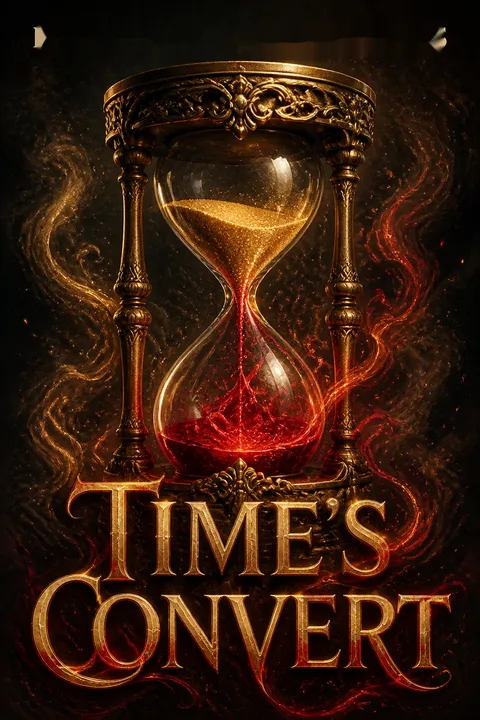


Plot Summary
Phoebe Chooses Everlasting Life
At a Paris dinner arranged by Freyja,7 Phoebe Taylor1 says farewell to her parents and sister20 before becoming a vampire. Her diplomat father19 tries once more to make her reconsider, but Phoebe1 insists that her choice belongs to her heart. She secretly calls Marcus,2 her fiancé,2 despite the rule that they must not speak during her first ninety days as a vampire.
The next morning, Miriam6 drains Phoebe1’s human blood and offers her own in return. Phoebe1 wakes burning with pain, chooses life, and begins a new existence with heightened senses and a changed heartbeat. The transformation is not only a sacrifice for Marcus.2 Phoebe1 has long wanted the seemingly abundant time and unhurried attention she has seen in his family.
Marcus Runs Toward Paris
At Les Revenants, Diana Bishop3 and Matthew de Clermont4 are woken by Ysabeau,5 who has followed Marcus2 as he races toward Paris to reach Phoebe.1 Phoebe1 is safe, but Marcus2 cannot bear the enforced separation and fears that her transformation may go wrong.
Matthew4 restrains him after Marcus2 lashes out at the household, and Diana3 reminds him that respecting Phoebe1’s choice matters more than deciding what she needs. Meanwhile, Marcus2’s memories begin to distort Diana’s perception of time.
Their young son21 Philip21 reaches toward the strands around Marcus2 and briefly stops a clock while trying to ease his distress. Diana3 realizes that her children may have inherited her weaving magic, and Marcus2’s buried past is becoming an immediate family concern.
The opening links two kinds of rebirth: Phoebe’s deliberate transformation and Marcus’s involuntary return to memories he has avoided. His panic can look like devotion, but Diana identifies its controlling edge: love does not grant him superior knowledge of Phoebe’s wishes. Philip’s accidental timeworking makes memory a physical force in the present. The family’s central problem is thus established as a question of care: when does protection become an attempt to manage another person’s life?
The House in Hadley
Marcus2’s memories take Diana3 back to Hadley, Massachusetts, where the child Marcus MacNeil2 lives under Obadiah13’s harsh rule. His father13 returns from war changed, drinks heavily, and beats Marcus2 for small acts of disobedience.
Marcus2 finds kindness with his mother Catherine,14 his sister Patience, and the family friend Zeb Pruitt, who teaches him practical skills and offers refuge from Obadiah13’s moods. His curiosity about medicine grows through visits to surgeon Thomas Buckland, while his friendship with Zeb gives him a model of courage unlike his father13’s obedience to authority.
Obadiah13’s violence leaves Marcus2 distrustful of rules, but it also makes him protective of those with less power. Years later, those childhood lessons shape his choices as a soldier and physician.
Obadiah’s household makes obedience feel less like moral order than a weapon wielded by the strongest person in the room. Marcus’s resistance forms through small acts of attention: learning medicine, noticing his mother’s fear, and trusting Zeb’s care. The contrast between birth father and chosen mentors is not simply sentimental. It establishes the book’s argument that parenthood is a practice of responsibility, not a title secured by blood. Marcus’s later rebellion carries both courage and the risk of repeating what he endured.
Liberty Has a Cost
When news arrives that fighting has begun at Lexington, Marcus2 wants to join the militia, but Obadiah13 takes back the family gun and sends him home. Marcus2 later runs away to Boston and fights at Bunker Hill.
He kills a British soldier, watches comrades die, and helps treat the wounded under Sarah Bishop,11 a healer who directs him toward medicine rather than further bloodshed. After returning to Hadley, he deliberately contracts smallpox through inoculation so the army will accept him.
As he recovers, he studies Thomas Paine’s18 Common Sense and debates the meaning of equality with Zeb and Joshua Boston. Marcus2’s political convictions deepen, but so does his understanding that declarations of liberty coexist with slavery, fear, and the bodily cost of war.
The revolutionary ideal reaches Marcus first as an invitation to act, then as a demand to reckon with consequences. Killing at Bunker Hill breaks the clean separation between righteous cause and personal violence. Sarah’s intervention redirects his courage toward healing, while his inoculation shows that his later medical vocation also requires deliberate risk. Paine gives Marcus language for freedom, but Joshua exposes the exclusions hidden inside its universal claims. His politics grow more serious because they are tested against actual bodies.
The Shot Beneath the Elm
After surviving smallpox, Marcus2 returns to Hadley and finds Obadiah13 assaulting Catherine14 while Patience tries to intervene. Marcus2 retrieves the rifle he has hidden and shoots his father13 when Obadiah13 turns on his daughter. Catherine14 and Patience survive, but Marcus2 knows the gunshot will bring suspicion and that his presence could endanger them.
Zeb and Joshua help him leave town under a false identity, Galen Chauncey, so the family can deny responsibility for the killing. Marcus2 heads south toward the Continental Army, carrying Paine’s pamphlet and the knowledge that he has exchanged the possibility of returning home for his family’s safety. His first act of independence is inseparable from loss.
Marcus’s defining act is neither a clean escape nor uncomplicated vengeance. He kills Obadiah in response to an immediate threat, then leaves so the survivors will not be implicated. The decision protects Catherine and Patience while severing Marcus from the home he hoped to reclaim. His assumed name preserves part of his mother’s identity, making reinvention a form of loyalty as well as concealment. The scene also complicates inherited authority: the father’s claim over the household ends when it becomes a danger to the people it should protect.
A Second Life at Yorktown
Using the name Galen Chauncey, Marcus2 joins the army, first as a gunner and then as a medical assistant under Dr. Otto. At Brandywine, he helps treat the wounded and meets Matthew de Clermont,4 a French vampire serving the American cause. Years later, a fever nearly kills Marcus2 in a hospital near Yorktown.
Matthew4 finds him, nurses him, and offers a second life as a vampire in exchange for the willingness to live by taking human blood. Marcus2 accepts, then discovers that his new strength and senses arrive with hunger, anger, and little understanding of vampire customs. Matthew4 takes him north to learn survival among the Oneida, where Marcus2 must hunt, control his new body, and absorb the truth that he has left human life behind.
Marcus accepts transformation while feverish and desperate, so the offer of immortality cannot be separated from the promise of education and a future as a physician. Matthew saves him, but cannot make the choice comprehensible after the fact; Marcus awakens with power before he has the language to understand it. The resulting anger echoes his childhood resistance to imposed authority. The Oneida training offers a different model: discipline grounded in practice and community, rather than punishment designed to enforce submission.
A De Clermont Name
After the war, Matthew4 sends the newly made Marcus2 to France aboard a ship commanded by his cousin Gallowglass. In Paris, Freyja7 takes charge of his education, arranging lessons in languages, fencing, medicine, and social manners.
Marcus2 meets Philippe,12 Matthew’s formidable father,12 and learns that vampire family life runs on rules, names, and long obligations. Philippe12 accepts him into the clan but restricts his choices, including where he may study and whom he may sire.
Marcus2’s grandmother5 Ysabeau5 offers a more personal welcome, while Philippe’s12 chair from Philadelphia reminds him of home. Marcus2 gains a family and the chance to study medicine, yet he recognizes the familiar danger of being managed by powerful elders. He keeps Common Sense close as a private measure of freedom.
The de Clermonts offer Marcus what he lacked in Hadley: resources, education, and a durable place in a family. Yet those gifts arrive inside a hierarchy that expects obedience. Philippe’s rules are not equivalent to Obadiah’s beatings, but Marcus experiences the resemblance before he can judge the difference. The chair and Paine’s book function as counterweights to aristocratic belonging, carrying memories of a more egalitarian promise. Marcus’s conflict is not whether he wants family, but whether intimacy can survive without control.
Paris Divides His Loyalties
As France moves toward revolution, Marcus2 falls in love with Veronique,15 an independent vampire who runs a tavern and refuses to be absorbed into any clan. He also befriends Jean-Paul Marat, whose demands for equality grow more radical as the political crisis deepens. Marcus2 works with Lafayette and admires the hope represented by the Revolution, but Philippe12 warns that creatures must not interfere in human politics.
When Marat’s writings call for mass executions, Philippe12 orders Marcus2 to take him to London. Veronique15 refuses to leave Paris, believing the city and its struggle are inseparable from her own life. Marcus2 departs with Marat, torn between the woman he loves and a family that claims responsibility for him.
The conflict is not a simple contest between conservative family and revolutionary outsiders. Marcus shares the revolutionaries’ objections to hereditary power, yet Marat’s call for executions turns equality into a justification for eliminating opponents. Veronique’s refusal to be moved by Marcus’s protection exposes the cost of his assumption that love authorizes rescue. The separation forces Marcus to confront competing loyalties without a rule that can settle them: political conviction, personal attachment, and family obligation each demand a different kind of fidelity.
The Son Marcus Made
In 1793, Marcus2 reads that yellow fever is devastating Philadelphia and leaves England to help. He finds the city emptied by death and encounters his old friend Claes Vanderslice,17 who is dying from the fever.
Marcus2 offers him vampire blood, despite the family rule against making children without Philippe’s12 permission. Vanderslice17 survives as Marcus’s son,17 but his early vampire years bring reckless appetites and poor judgment. In New York, Marcus2 encourages him to pursue business, while Vanderslice17 falls in with ruthless partners.
He is eventually murdered, and Marcus2 cannot revive him. The loss makes Marcus2 regret breaking the rule, but does not extinguish his desire to protect people from lives cut short. That impulse later fuels a far larger family in New Orleans.
Marcus’s choice to transform Claes grows from gratitude: the friend who once shared food and shelter is now someone he can save. But rescue becomes a promise Marcus cannot keep. He mistakes survival for a gift without considering the vulnerability of a newly made vampire or his own limits as a parent. Claes’s death does not prove that compassion was wrong; it proves that good intentions cannot guarantee outcomes. This distinction becomes crucial when Marcus later turns rescue into an expanding social project.
New Orleans Blood Debt
After Thomas Paine’s18 death, Marcus2 moves to New Orleans and builds a medical practice and a lively household with the gambler Ransome Fayreweather.16 Marcus2 turns Ransome16 and then helps create a diverse vampire family, believing that their shared life offers vulnerable people a chance to survive.
The growing household attracts attention during a yellow fever epidemic. Matthew4 arrives with Juliette and orders Marcus2 to stop making vampires. When Juliette feeds dangerously on a child, Marcus2 intervenes; the confrontation ends with the child dead.
Soon Marcus2’s children are killed one by one, by Juliette’s brutality and Matthew’s4 precise violence. Matthew4 says he is enforcing Philippe’s12 prohibition. Marcus2 remains alive, but loses the family he built and carries the memory of its funerals.
New Orleans turns Marcus’s youthful ideal of fraternity into a household with real power, real dependencies, and real risks. Matthew’s intervention may prevent a wider catastrophe, but its method repeats the family’s paternal logic at its most coercive: the elder decides, the younger bears the loss. Marcus’s grief is sharpened by the fact that he had tried to provide what he lacked, only to reproduce a system that made other people’s lives contingent on his judgment. His later reluctance to become a father again is therefore earned, not abstract.
The Griffin in the Nursery
Back in the present, Diana3 and Matthew4 discover that Philip21 can weave time and that his familiar is Apollo, a griffin summoned by his first spell. Matthew4 fears the goddess and the danger the creature may bring, while Diana3 worries that the twins’ magic could escape their control.
When Phoebe1’s new vampire life unfolds in Paris, Diana3 also watches Marcus2’s memories uncoil and sees how deeply he distrusts patriarchal decisions.
On July 1, Matthew’s4 effort to secure Philip21 in a chair triggers Diana’s3 forgotten memories of her parents repeatedly spellbinding her as a child to suppress her magic. She realizes that their protection felt like betrayal, even though they meant well. Matthew4 admits he destroyed the twins’ blood and hair samples rather than test them.
Diana’s crisis reframes restraint as an inherited family technology. Her parents used magic to prevent danger, but the repeated limits also deprived her of agency and left fear embedded in her body. Matthew’s decision not to test the twins is therefore more than a gesture of trust; it rejects the premise that children must be classified before they can be loved safely. Apollo’s presence makes that choice concrete. The parents cannot remove uncertainty, so they must teach within it.
Phoebe’s First Night Out
During Phoebe’s1 first weeks, she struggles with sensory overload, impatience, and the new instincts of a vampire. Her first feeding lesson ends with her bonding to a cat, Persephone, rather than killing it.
Miriam6 later helps her feed from a human donor, Sonia, and Phoebe1 chooses her full name while insisting on keeping Taylor.1 At thirty days, Jason takes her into Paris, where the city lights overwhelm her and she attacks a tourist before Freyja7 intervenes in her police uniform.
Phoebe’s1 next outing brings her unexpectedly face to face with her sister20 Stella.20 Stella20 taunts her about Marcus,2 and Phoebe1 responds with anger instead of her former habit of yielding. She still avoids feeding from a human, but her old self is no longer in charge.
Phoebe’s early development is a struggle to distinguish appetite from feeling without denying either. Her attachment to Persephone shows that the new predator has not erased her capacity for tenderness, while the attack on a tourist reveals how little control she yet has over sensory overload. Her clash with Stella is a different kind of feeding scene: Phoebe refuses the familiar role of appeaser. The change is liberating, but not yet wisdom. Independence must be learned alongside restraint.
A Father Falls Ill
At sixty days, Phoebe’s father,19 Edward Taylor,19 suffers a major heart attack in Paris. Miriam6 fears Phoebe1 is too young and lightstruck to visit a hospital, but Marcus2 refuses to keep her from her family. He and Matthew4 bring Diana3 to Paris, where Diana3 disguises Phoebe1’s appearance so she can enter the Salpêtrière.
Phoebe1 sits beside Edward19 while surgeons operate, and Stella’s20 insistence that vampire blood could save him nearly provokes Phoebe1 into losing control. The operation succeeds, though Edward’s19 condition remains fragile.
His illness forces Phoebe1 to confront grief without using immortality as a cure for everyone she loves. She leaves Paris with Marcus2 and Françoise8 for Sept-Tours, where Ysabeau5 insists that Phoebe1 needs care and space, not a mate constantly deciding for her.
Edward’s illness tests whether Phoebe can remain connected to human love without trying to abolish human mortality. Stella’s demand turns the vampire body into an imagined remedy, but Phoebe’s grief is not a problem that blood can solve. Marcus’s insistence on telling her respects her agency, while Ysabeau’s separation of the lovers checks his tendency to make himself indispensable. The episode also gives Phoebe a first experience of loss as a vampire, when heightened feeling and power offer no exemption from helplessness.
Baldwin Meets the Children
At Matthew’s4 birthday gathering, Becca22 bites her father4 and later bites Baldwin9 when he refuses her blood drink. Baldwin9 demands that Matthew4 test the twins for blood rage and threatens Diana3 with the promise she once made to spellbind dangerous relatives.
Matthew,4 Marcus,2 and Diana3 resist, while Jack10 explains that trust helped him recover self-control better than coercion ever did. On Independence Day, Diana3 binds the arguing men with a spell and tells Baldwin9 that she will not tie her children into obedience.
Jack’s10 plea for trust helps Baldwin9 relent. During the fireworks, Marcus2 reveals that Matthew4 bought the MacNeil farm from Catherine14 years earlier and maintained it for Marcus.2 Marcus2 finally sees that this hidden intervention preserved a home rather than merely controlling his choices.
The family conflict condenses the novel’s debate into a child’s bite and an adult’s response. Baldwin treats risk as a reason to control; Jack’s experience supplies evidence that belonging and trust can support regulation without erasing autonomy. Diana’s binding spell is pointedly temporary and directed at the powerful adults, reversing the usual flow of discipline. Matthew’s preserved farm further complicates the idea of hidden influence: care can outlast its giver, but it becomes ethical only when it leaves the recipient free to choose what to do with it.
Ninety Days End
On Phoebe’s1 ninetieth day as a vampire, Baldwin9 conducts the formal betrothal ceremony at Sept-Tours. Miriam6 consents, and Marcus2 arrives with Freyja7 after Phoebe1 has spent weeks learning vampire life under Ysabeau,5 Françoise,8 and Marthe.
Phoebe1 sees Marcus2 without the dark glasses and disguises that had muted his presence, and her senses fix on him at once. She chooses him as her mate, making their bond official. Once the family gives them privacy, they make love and exchange blood from Marcus’s heart vein.
Phoebe1 receives his memories and feelings, including truths she will need time to understand, while Marcus2 experiences her love in return. Their reunion fulfills the promise that began before her transformation, but it also begins a more honest intimacy.
The ceremony gives tradition a form Phoebe can choose rather than merely endure. Her consent matters because the ninety-day separation has tested her identity apart from Marcus, while the formal witnesses make the commitment socially legible to the clan. Their exchange of heart blood is not a shortcut to perfect understanding. It reveals more than either can immediately absorb, making intimacy a long practice of interpretation. The reunion resolves their separation without pretending that love removes the need for individual judgment.
Home in Hadley
Ten days later, Marcus2 brings Phoebe1 to the MacNeil farm in Hadley, the place he left after killing Obadiah.13 Matthew4 has preserved the modest house and cared for the land, and Philippe’s12 old chair waits inside with a note from Matthew.4 Marcus2 moves through the rooms where Catherine14 raised him, recognizing the kitchen, his childhood bed, and the spot where he shot his father.13
A neighbor mistakes the couple for trespassers, then welcomes them and asks whether they will stay. Marcus2 is uncertain, but Phoebe1 offers to make a life there with him, even without modern comforts. He accepts the possibility of home without demanding that the past disappear. Together they choose the farm and the future it can hold.
The return does not erase the violence attached to the house; it changes who can inhabit its meaning. Phoebe neither urges Marcus to forgive Obadiah nor treats the farm as a cure. Her willingness to stay gives him companionship without taking ownership of his memories. Matthew’s preservation of the property now reads as an invitation rather than an order because Marcus is free to accept or refuse it. The final homecoming answers the novel’s opening desire for time: not endless escape from loss, but enough time to choose where to live with it.
Analysis
Time’s Convert treats immortality less as escape from loss than as an enlargement of responsibility. Phoebe1 chooses vampire life partly because she wants more time, but the novel refuses to present endless duration as effortless freedom. Her body becomes powerful before her judgment is ready; she must learn to feed without confusing need with entitlement, and to love Marcus2 without letting the relationship swallow her identity. The ninety-day separation gives that learning a social structure, while its eventual breach over Edward19’s illness demonstrates that custom cannot answer every emergency.
Marcus2’s history supplies the book’s deeper argument about freedom. As a child, he lives under Obadiah13’s violence. As an adult, he resists the de Clermont patriarchs who offer protection through control. His medical work turns compassion into service, but his repeated attempts to save friends by making them vampires show how easily benevolence can reproduce domination. The deaths in New Orleans force him to face the consequences of acting as if his good intentions were sufficient authority. His later return to Hadley matters because he comes back by choice, not because an elder orders him there.
Diana3’s parental crisis parallels Marcus2’s history without making the situations identical. Her parents used magic to restrain her because they feared what she might do; Matthew4 and Diana3 face the same temptation to classify or bind their children before their gifts are understood. Diana3’s recovered memories expose the psychological price of protection imposed without consent. Jack10’s testimony and Matthew4’s refusal to test the twins offer a different model: care can set boundaries while allowing a child to remain unknowable.
Across these intertwined lives, inheritance is presented as both material and psychological. A family passes down names, land, rules, stories, and wounds. None is automatically virtuous. What matters is whether those inheritances can be questioned, revised, or freely accepted. Phoebe1’s decision to join Marcus2 at the MacNeil farm brings the book’s answer into focus: home is not where the past has been erased, but where its survivors can choose a future together.
Review Summary
Time's Convert receives mixed reviews. Many readers enjoyed revisiting familiar characters and learning Marcus's backstory, but some found the pacing slow and the plot lacking compared to the original trilogy. The historical elements, particularly the American and French Revolutions, were praised by some but felt tedious to others. Fans appreciated seeing Diana and Matthew's family life, while new readers struggled without prior knowledge of the series. Overall, the book is seen as an enjoyable but not essential addition to the All Souls world.
People Also Read





Characters
Phoebe Taylor
The chosen immortalPhoebe is an art historian engaged to Marcus Whitmore2, and her decision to become a vampire is both an act of love and an appetite for a different experience of time. She is observant, intellectually curious, and accustomed to managing family tension by yielding. Her transformation strips away some of that old social caution while confronting her with hunger, sensory overload, and the cost of leaving human life behind. Phoebe’s artistic eye gives her a way to notice change in light, color, and texture, while her interest in names and objects reflects a desire to preserve personal meaning. Her growth depends on learning self-command without confusing obedience with maturity.
Marcus Whitmore, born Marcus MacNeil
The healer remadeMarcus is a vampire physician born to Catherine14 and Obadiah MacNeil13 in eighteenth-century Massachusetts. He is curious, compassionate, politically idealistic, and quick to resist anyone who claims unquestioned authority over him. His childhood under an abusive father13 makes him fiercely protective of the vulnerable, but his urge to save others can outrun his judgment. He carries several names and identities, each connected to a life he has tried to leave or preserve. Medicine gives his empathy practical form; Paine’s18 political writing gives it an ideal. His relationship with Phoebe1 asks him to replace anxious supervision with respect for her independent choices.
Diana Bishop
The witch who chooses trustDiana is a historian, witch, weaver, and Matthew’s4 wife. She studies the past by gathering fragments and making them intelligible, a habit that shapes how she approaches Marcus’s2 memories and her children’s magic. Her first instinct is often to protect by anticipating danger, but her own childhood history makes that impulse complicated. Diana is practical, intellectually rigorous, and willing to challenge vampire authority when it threatens a child’s autonomy. Her parenting requires her to practice magic openly rather than hide it, and to accept uncertainty where she once sought control.
Matthew de Clermont
The guarded vampire fatherMatthew is an ancient vampire, physician, and head of the Bishop-Clairmont household. He is disciplined and protective, with a long history of violence and responsibility that makes him wary of uncontrolled risk. His care for Marcus2 and his own children is sincere, yet he can mistake a safety plan for a moral certainty. Matthew’s work in medicine and genetics reflects a desire to understand what his kind are and how they might live alongside others. As husband to Diana3 and father4 to Marcus2, he must distinguish guidance from command and allow younger family members to make consequential choices.
Ysabeau de Clermont
The family’s keen matriarchYsabeau is Matthew’s mother4 and the de Clermont family’s formidable matriarch. She reads emotional danger quickly, understands the uses of custom, and can be both exacting and unexpectedly tender. Her long partnership with Philippe12 gives her a deep sense of what families preserve, but she does not assume that every inherited rule is wise. She guides Phoebe1 through vampire life and offers Marcus2 a perspective on the family he resists. Ysabeau’s authority rests less on loud commands than on close observation, long memory, and an ability to wait until someone is ready to hear what she knows.
Miriam
Phoebe’s exacting makerMiriam is an ancient vampire, Marcus’s2 colleague, and the maker Phoebe1 chooses for her transformation. She approaches vampire development with scientific precision and a mother’s uncompromising watchfulness. Her blunt rules can feel punitive, but she wants Phoebe1 to learn feeding and self-control before independence exposes her to danger. Miriam’s memories carry the grief of a long life and the weight of promises made to her lost mate. She is not naturally indulgent, yet Phoebe’s1 progress matters deeply to her.
Freyja de Clermont
The fierce vampire auntFreyja is Marcus’s aunt2 and a powerful vampire who oversees much of Phoebe’s1 early transformation. Her wit and confidence soften the household’s rigid routines without removing their purpose. She believes that a newborn vampire needs close care, practical training, and room to discover what makes life worthwhile. Freyja’s own history includes royalty, danger, and a long familiarity with power, which makes her attentive to the risks Phoebe1 will face as a prominent member of the de Clermont family.
Françoise
The household’s steadfast guideFrançoise is a vampire servant who has chosen a life of work and loyalty within the de Clermont household. She is laconic, observant, and highly skilled at anticipating what others need. Her practical care helps Phoebe1 learn the routines of vampire life, while her account of the freedom she values challenges Phoebe’s1 assumptions about ambition and independence. Françoise understands that service can be a chosen identity rather than a sign of weakness.
Baldwin de Clermont
The clan’s hard-edged leaderBaldwin is Matthew’s brother4 and head of the de Clermont clan. He prizes order, hierarchy, and the survival of the family, and tends to interpret uncertainty as a reason for stricter control. His suspicion of the Bishop-Clairmont household reflects genuine concern about blood rage and political exposure, but his methods can threaten the trust he wants to preserve. His dealings with Phoebe1 and Diana3 reveal the strain between inherited clan authority and a younger generation determined to raise children differently.
Jack Blackfriars
The wounded son learning trustJack is a vampire adopted into Diana3 and Matthew’s4 family after a childhood marked by hunger and fear. His past makes him vulnerable to blood rage and sharp reactions, but he is deeply affectionate toward the twins. He knows what it means to be treated as a danger rather than a child, which gives him unusual moral clarity during arguments over Becca22 and Philip21. Jack’s relationship with the family is built through care and trust, not a claim of biological inheritance.
Sarah Bishop
The blunt witch mentorSarah is Diana’s aunt3, a witch with little patience for needless ceremony or self-deception. She speaks plainly, supports Diana3 even when she dislikes being asked to soothe her fears, and offers a grounded counterweight to vampire custom. In Marcus’s2 memories, an earlier Sarah Bishop also appears as a healer during the Revolutionary War, directing him toward medical service. The family connection makes her presence a bridge between Marcus’s2 past and Diana’s3 present.
Philippe de Clermont
The absent patriarchPhilippe is Matthew’s father4, Ysabeau’s mate5, and the powerful patriarch whose decisions shape the de Clermont family long after his death. He is a strategist who studies people closely and often anticipates their choices. His authority can protect the family, but it can also leave those he loves feeling managed. As a ghost, he remains part of the family’s conversation about parenting, loyalty, and the difference between guidance and control.
Obadiah MacNeil
Marcus’s violent birth fatherObadiah is Marcus’s father2, a former soldier whose wartime experience and drinking make life at home unpredictable. He believes in strict patriarchal authority and uses violence to enforce it. His presence shapes Marcus’s2 distrust of rules and his instinct to protect his mother14 and sister. Obadiah’s character shows how public ideals and private conduct can diverge sharply inside a family.
Catherine MacNeil
Marcus’s steadfast motherCatherine is Marcus’s mother2, a practical and loving woman trying to keep her children safe in a household made precarious by Obadiah’s13 behavior. She values learning and hopes Marcus2 might attend Harvard, even when his own ambitions point elsewhere. Her care and the small details of home remain central to Marcus’s2 memories. She represents both the family Marcus2 loses and the life he hopes his sister can still build.
Veronique
The fiercely independent loverVeronique is a centuries-old vampire who runs a Paris tavern and resists being claimed by any family or political faction. Her commitment to the city and its revolutionary hopes draws Marcus2 close, while her refusal to be directed by him exposes the limits of his protective instincts. Veronique values independence as a lived condition, not a slogan, and expects love to respect her decisions.
Ransome Fayreweather
The New Orleans risk-takerRansome is a charismatic gambler and entrepreneur who befriends Marcus2 in New Orleans. His humor, appetite for pleasure, and faith in possibility draw Marcus2 out of isolation. Ransome sees a vampire family as a path to freedom and belonging, but he is far more comfortable with risk than Marcus2. Their partnership gives Marcus2 companionship while testing the limits of his judgment.
Claes Vanderslice
Marcus’s first chosen sonClaes, often called Vanderslice or Lucky, is Marcus’s2 former comrade and first vampire child. He is sociable, humorous, and eager for the pleasures that money and freedom seem to promise. Marcus’s2 gratitude for Claes’s friendship shapes the decision to offer him a second life. Their bond brings Marcus2 face to face with the difference between saving someone and knowing how to guide them.
Thomas Paine
The revolutionary consciencePaine is the political writer whose arguments about liberty and inherited power shape Marcus’s2 thinking from the Revolutionary War onward. Marcus2 carries his work as both a political guide and a personal keepsake. Their friendship allows Marcus2 to test revolutionary ideals against slavery, inequality, and the unfinished promises of the new republic.
Edward Taylor
Phoebe’s doubtful fatherEdward is Phoebe’s father1, a career diplomat who loves his daughter and worries about the permanence of her choice to become a vampire. He is accustomed to negotiating delicate situations, but his concern cannot decide Phoebe’s1 future for her. His relationship with Phoebe1 makes the cost of leaving human family emotionally immediate.
Stella Taylor
Phoebe’s sharp-edged sisterStella is Phoebe’s younger sister1, confident in her tastes and accustomed to having her opinions heard. She views Phoebe’s1 transformation through a practical, worldly lens and struggles to understand the changes in her sister1. Their encounters reveal how old family roles can persist even when one sibling has become something entirely different.
Philip Bishop-Clairmont
The time-touching twinPhilip is Diana3 and Matthew’s4 young son, a Bright Born child whose witch and vampire inheritance gives his early life unusual possibilities. He reaches toward time while trying to comfort Marcus2 and forms a bond with Apollo, a griffin familiar. His parents must protect him without treating his emerging gifts as a problem to be suppressed.
Rebecca Bishop-Clairmont
The fierce-hearted twinRebecca, usually called Becca, is Philip’s twin sister21. She is spirited, determined, and strongly attached to the people around her. Her biting and intense reactions alarm the family, especially given the history of blood rage in Matthew’s4 line. Becca’s behavior forces the adults to consider how to teach restraint without defining a child by a feared possibility.
Plot Devices
The ninety-day separation
A test of chosen loveVampire custom keeps Phoebe1 and Marcus2 apart for ninety days after her transformation, giving her time to develop beyond the first, volatile stage of vampire life before she commits to mating. The rule heightens Marcus’s2 anxiety and gives Phoebe1 a separate space in which to learn hunger, independence, and self-command. Its formal ending at the betrothal ceremony turns reunion into a deliberate choice rather than a reaction to new vampire desire. The separation also exposes the tension between tradition that protects and tradition that controls.
Bloodlore
Memory carried in bloodVampires can absorb memories and emotional impressions through blood, especially through the heart vein shared by mates. Phoebe1 learns Miriam’s6 history while feeding from her, and her eventual exchange with Marcus2 opens access to a lifetime she cannot immediately understand. Bloodlore gives the story a physical means of transmitting intimacy, but it is not a perfect archive: impressions can be fragmented, emotionally charged, and open to interpretation. The device makes knowing another person both an act of trust and an ongoing task.
Diana’s woven time
Memory becomes visibleAs a weaver, Diana3 can perceive the threads linking past, present, and future. Marcus’s2 memories tangle those strands, while Philip’s21 emerging magic briefly alters time itself. This device makes family history more than recollection: unresolved events affect the household’s present, and a child can physically respond to emotional distress he cannot yet explain. Diana’s3 weaving also links her scholarly work with her magical identity, although she must learn that understanding a pattern does not mean she can control every person within it.
The maker’s blood
Transformation with a costA vampire becomes a maker by replacing a human’s blood with vampire blood, a process that can be painful and dangerous. The newborn must adapt to heightened senses, hunger, strength, and emotional volatility, then gradually learn to feed beyond the maker. Phoebe’s1 carefully planned transformation and Marcus’s2 fevered rebirth show different conditions of the same change. The process makes vampirism a form of rebirth without erasing the person’s prior history. It also creates permanent responsibilities between maker and child.
Common Sense
A pocket-sized moral compassThomas Paine’s18 pamphlet is Marcus’s2 recurring physical link to the ideals that first drew him toward the American Revolution. He carries and rereads it through war, exile, and changing identities, using its arguments to measure the distance between declared equality and actual social arrangements. The worn book also anchors Diana’s3 effort to understand Marcus’s2 memories and appears again when he confronts the past. It is not a simple answer to political conflict; it is a standard Marcus2 keeps testing against experience.
FAQ
Synopsis & Basic Details
What is Time's Convert about?
- A Vampire's Origin: Time's Convert delves into the complex backstory of Marcus Whitmore, a vampire and son of Matthew de Clermont, tracing his life from his human origins in colonial America through his transformation and centuries of existence. The narrative explores his experiences during the American and French Revolutions, his attempts to build a family, and the profound impact of his past on his present.
- A Fledgling's Journey: Simultaneously, the novel follows Phoebe Taylor, a modern warmblood, as she undergoes the arduous and transformative process of becoming a vampire to be with Marcus. Her journey is one of intense sensory and emotional adjustment, guided by the de Clermont matriarchs, as she grapples with her new identity and the ancient traditions of vampire society.
- Love Across Time: At its core, the book is a story of enduring love and the challenges of forging a lasting partnership across vast stretches of time and different species. It explores how individual choices, family legacies, and historical events intertwine to shape identity and destiny, culminating in Marcus and Phoebe's reunion and their shared future.
Why should I read Time's Convert?
- Rich Historical Immersion: Readers seeking a deep dive into historical periods, particularly the American and French Revolutions, will find Marcus's firsthand accounts captivating. The novel offers a unique perspective on these pivotal moments through the eyes of an immortal, revealing subtle details and personal impacts often missed in traditional histories.
- Profound Character Development: The book excels in psychological depth, offering a nuanced exploration of Marcus's trauma, his search for belonging, and his evolution as a healer and father figure. Phoebe's journey of self-discovery as a new vampire provides a compelling parallel, showcasing her resilience and agency in adapting to a radically altered existence.
- Expanded All Souls Universe: For fans of Deborah Harkness's All Souls series, this novel enriches the lore by providing crucial backstory for beloved characters like Marcus, Matthew, and Ysabeau. It deepens the understanding of vampire society, blood rage, and the intricate web of de Clermont family dynamics, offering fresh insights into the broader narrative.
What is the background of Time's Convert?
- Revolutionary War Context: The novel is deeply embedded in the American Revolutionary War, portraying Marcus's experiences as a soldier and surgeon. It highlights the brutal realities of war, the spread of diseases like smallpox, and the philosophical ideals of liberty and equality that shaped the nascent United States, often contrasting them with the realities of slavery and social hierarchy.
- Enlightenment and French Revolution: Marcus's later life in France is set against the backdrop of the French Revolution, exploring the radical shifts in political thought and the escalating violence of the Terror. The narrative touches on key figures like Thomas Paine and Jean-Paul Marat, examining the complexities of revolutionary fervor and its impact on individuals and society.
- Vampire Social Structures: The book provides extensive detail on the intricate social and traditional structures of vampire society, particularly the de Clermont family. It illustrates the strict rules governing vampire creation, mating, and inter-species relations, emphasizing the "hidden hand" of powerful elders like Philippe and Baldwin in shaping the lives of younger vampires.
What are the most memorable quotes in Time's Convert?
- "Time makes more converts than reason." (Epigraph, Thomas Paine): This quote, serving as the novel's epigraph, encapsulates a central theme: the slow, inexorable power of time to change perspectives and beliefs, often more effectively than logical argument. It foreshadows the profound transformations characters undergo, particularly Marcus's long journey of self-acceptance and Phoebe's adaptation to immortality.
- "To be a vampire you must choose life—your life, not someone else's—over and over again, day after day." (Ysabeau, Chapter 35): Ysabeau's profound wisdom distills the essence of vampire existence, emphasizing relentless self-preservation and agency. This quote highlights the core theme of choosing one's path and identity, even in the face of immortality, and resonates deeply with Phoebe's journey of self-determination.
- "The only true fence against the world and all its dangers is a thorough knowledge of it." (Matthew, Chapter 37): Matthew's pragmatic insight underscores the importance of understanding the world's complexities, rather than seeking to control or hide from them. This quote reflects the de Clermont family's long history of navigating dangerous realities and serves as a guiding principle for raising the Bright Born twins, emphasizing knowledge as the ultimate protection.
What writing style, narrative choices, and literary techniques does Deborah Harkness use?
- Sensory-Rich Prose: Harkness employs highly descriptive and sensory language, particularly in Phoebe's transformation, to immerse the reader in the heightened perceptions of a new vampire. Details like "velvet darkness," "searing cold," and the "scent of life" (Chapter 2) make the experience visceral, enhancing the reader's understanding of Phoebe's altered reality.
- Intertextual Allusions: The narrative is rich with literary and historical allusions, from direct quotes from Thomas Paine's "Common Sense" to references to classical mythology (Apollo, Persephone) and historical figures (Dr. Franklin, Lafayette). This intertextuality deepens the thematic layers, connecting the characters' personal struggles to broader human intellectual and historical currents.
- Alternating Perspectives & Pacing: While the existing summary notes the dual narrative, Harkness also masterfully manipulates pacing within these timelines. Phoebe's chapters often feel immediate and sensory-driven, reflecting her newness, while Marcus's historical sections can shift from rapid, action-packed sequences (battles) to slow, reflective periods (quarantine, philosophical debates), mirroring his long life and varied experiences.
Hidden Details & Subtle Connections
What are some minor details that add significant meaning?
- Freyja's Communication Style: Freyja's insistence on writing longhand emails and her disdain for "instant communication" (Chapter 1) subtly highlights the vampire perspective on time. It contrasts sharply with human urgency and foreshadows Phoebe's own eventual detachment from the human concept of time, emphasizing the vastness of immortal existence.
- The Black Clock on the Mantel: Marcus's recurring memory of his mother's "black clock on the mantel" (Chapter 5, 6) symbolizes the rigid, controlling nature of his childhood under Obadiah. Its stillness when Philip manipulates time (Chapter 5) underscores the deep-seated trauma associated with his past, revealing how even inanimate objects can hold powerful emotional resonance.
- Persephone's Name: Phoebe naming her first cat "Persephone" (Chapter 10) is a subtle nod to the Greek myth of the queen of the underworld, symbolizing Phoebe's own journey into a new, darker existence and her "rebirth" as a vampire. It hints at her growing comfort with the predatory aspects of her nature and her acceptance of her new reality.
What are some subtle foreshadowing and callbacks?
- Philip's Time-Weaving: Philip's instinctive ability to "play with time" (Chapter 5) by grabbing Marcus's "red and white" threads of memory foreshadows the deeper magical abilities of the Bright Born twins. It subtly hints at the profound impact of Marcus's unresolved trauma on the fabric of reality and the unique nature of his children's powers.
- Diana's Spellbinding Trauma: Diana's visceral reaction to the idea of spellbinding her children (Chapter 5, 20) and her later revelation that her own parents repeatedly spellbound her (Chapter 29) is a powerful callback to her past. It explains her deep-seated fear of magic and control, adding a layer of personal resonance to the debate with Baldwin over the twins' powers.
- Marcus's "Man of the World" Comment: Marcus's early declaration that he is a "man of the world" (Chapter 16) is a subtle foreshadowing of his later extensive travels and diverse experiences. It also serves as a callback to his youthful idealism, contrasting with the more jaded perspective he gains after his New Orleans family is destroyed, highlighting the evolution of his character.
What are some unexpected character connections?
- Françoise's De Clermont History: Françoise's seemingly simple role as a retainer is revealed to be one of deep, centuries-long service to the de Clermont family, including attending on Ysabeau, Verin, and even Philippe (Chapter 11). This unexpected depth highlights her quiet power and loyalty, showing her as a "protector" and "keeper of secrets" who has witnessed and influenced major family events.
- Sarah Bishop and Marcus's Past: The revelation that Diana's ancestor, Sarah Bishop, was the healer who advised Marcus after Bunker Hill (Chapter 9) creates an unexpected intergenerational connection. This subtle link underscores the interconnectedness of the All Souls universe and provides a historical root for the Bishop-Clairmont family's blended lineage, emphasizing the "familial magic" theme.
- Dr. Franklin's Widespread Influence: Benjamin Franklin appears as a recurring figure in Marcus's past, connected to Fanny, Philippe, and even Dr. Guillotin (Chapter 22, 26). This unexpected network of relationships highlights Franklin's pervasive influence across continents and disciplines, subtly reinforcing the idea of a hidden, interconnected world of creatures and influential humans.
Who are the most significant supporting characters?
- Françoise: Beyond her role as a loyal retainer, Françoise serves as a crucial mentor for Phoebe, teaching her practical vampire survival skills and the dignity of self-chosen service (Chapter 11). Her blunt honesty and deep historical knowledge provide Phoebe with a grounded perspective on vampire life, contrasting with the more aristocratic de Clermonts.
- William Graham: William, Catharine Macaulay Graham's husband, becomes a significant friend and intellectual companion for Marcus in England (Chapter 27). Their shared medical interests and William's grounded perspective offer Marcus a sense of normalcy and intellectual camaraderie, highlighting Marcus's enduring identity as a healer amidst his revolutionary and vampire lives.
- Thomas Paine: Paine's recurring presence in Marcus's life, from his influential pamphlet "Common Sense" to their later friendship in New York (Chapter 30, 32), solidifies his role as a "true father" figure for Marcus. Paine embodies the ideals of liberty and equality that Marcus champions, and their philosophical debates underscore Marcus's intellectual development and his lifelong pursuit of justice.
Psychological, Emotional, & Relational Analysis
What are some unspoken motivations of the characters?
- Phoebe's Quest for "More Time": Beyond her love for Marcus, Phoebe's initial motivation for becoming a vampire is an unspoken craving for "inexhaustible supply of time" (Chapter 1). This reveals a deeper, almost existential, desire to escape the frantic pace of human life and fully experience existence, adding a layer of personal ambition to her transformation.
- Marcus's Need for Found Family: Marcus's repeated attempts to create new "families" (the Philadelphia Associators, his New Orleans "children") stem from an unspoken, deep-seated need for belonging and acceptance, a void left by his traumatic childhood and the loss of his birth family. This motivation drives his often-reckless choices in siring new vampires, highlighting his yearning for connection.
- Matthew's Guilt and Control: Matthew's intense desire to control the lives of his vampire children, particularly Marcus and the twins, is implicitly driven by his own past failures and the trauma of blood rage. His "ferocity" in farewells (Chapter 3) and his struggle to "let go" (Chapter 29) reveal a deep-seated fear of repeating past mistakes and losing those he loves.
What psychological complexities do the characters exhibit?
- Marcus's Disordered Memory: Marcus's vampire memory is not linear but a "jumbled mess" (Chapter 5), a psychological complexity that reflects his trauma. His struggle to recall major events while minor details stand out (Chapter 5) is a coping mechanism for his past, making his journey of confronting his history a profound act of psychological integration.
- Phoebe's Sensory Overload and Volatility: As a fledgling, Phoebe experiences extreme sensory sensitivity and emotional volatility, leading to "terrible twos" behavior (Chapter 7). This psychological complexity highlights the overwhelming nature of vampire transformation, where heightened senses and raw emotions can lead to unpredictable and destructive outbursts, challenging her self-control.
- Diana's Inherited Fear of Magic: Diana's "blinding panic" (Chapter 5) and "deathly afraid" (Chapter 8) reactions to her children's magic reveal a deep-seated psychological complexity rooted in her own spellbound childhood. Her struggle to overcome this inherited fear and embrace her children's powers is a central emotional arc, demonstrating her growth as a mother and a witch.
What are the major emotional turning points?
- Marcus's Patricide: The moment Marcus kills his father, Obadiah (Chapter 11), is a pivotal emotional turning point, severing his ties to his past and propelling him into a life of flight and new identities. This act, born of protection and desperation, leaves a lasting scar on his psyche, shaping his future relationships and his understanding of duty and freedom.
- Phoebe's First Human Feeding (Refusal): Phoebe's initial refusal to feed from Sonia (Chapter 21), despite her hunger, marks a significant emotional turning point. It demonstrates her moral compass and her struggle to reconcile her human ethics with vampire necessity, highlighting her agency and the conscious choices she makes in her transformation.
- Diana's Rejection of Spellbinding: Diana's defiant declaration, "I won't tie up my children" (Chapter 29), after reliving her own spellbinding trauma, is a major emotional turning point. It signifies her breaking a generational cycle of control and fear, choosing trust and freedom for her children, and asserting her authority as a mother against Baldwin's traditional demands.
How do relationship dynamics evolve?
- Marcus and Philippe: From Obedience to Understanding: Marcus's relationship with Philippe evolves from initial, reluctant obedience to open defiance, and eventually to a grudging understanding and respect. Philippe's "hidden hand" (Chapter 24) in Marcus's life, though initially resented, is later recognized by Marcus as a form of protection, leading to a complex, nuanced paternal bond.
- Phoebe and Miriam: Clinical to Maternal Pride: Miriam's relationship with Phoebe begins with a clinical, data-driven approach to siring, marked by emotional distance. However, as Phoebe progresses, Miriam's "pride" (Chapter 23) in her daughter's achievements becomes evident, evolving into a fierce, protective maternal bond that transcends their initial transactional dynamic.
- Diana and Matthew: Shared Parenthood Challenges: Their relationship deepens through the shared challenges of raising their magical Bright Born twins. Matthew's initial desire to control and test the children's blood is tempered by Diana's insistence on freedom and trust (Chapter 29), leading to a more balanced and mutually supportive partnership in their parenting journey.
Interpretation & Debate
Which parts of the story remain ambiguous or open-ended?
- The Full Extent of Bright Born Powers: While Philip and Becca exhibit early magical abilities and familiars, the ultimate scope and implications of their unique Bright Born powers remain largely ambiguous. The narrative hints at their potential to "change the course of events" (Chapter 26) but leaves their future development and impact on the creature world open-ended.
- Veronique's Ultimate Fate: Marcus's former lover, Veronique, defiantly chooses to stay in revolutionary Paris, refusing to flee with him. Her ultimate fate is left unresolved, creating an emotional ambiguity for Marcus and the reader. It prompts debate about the true cost of her revolutionary ideals and whether her choice was one of courage or tragic stubbornness.
- The Long-Term Impact of Marcus's New Orleans Family: While Matthew's intervention "cleans up" Marcus's New Orleans family, the narrative leaves open the long-term psychological and emotional impact of this destruction on Marcus. It raises questions about whether he truly healed from this trauma or if it remains a hidden wound, influencing his future choices as a sire.
What are some debatable, controversial scenes or moments in Time's Convert?
- Marcus's Patricide: The scene where Marcus kills his father, Obadiah (Chapter 11), is highly controversial. While presented as an act of protection for his mother and sister, it forces readers to debate the justification of violence, even in self-defense, and the lasting moral implications of such an act on Marcus's character.
- The De Clermonts' "Hidden Hand" Interventions: The pervasive "hidden hand" (Chapter 24) of Philippe and Matthew in manipulating Marcus's life, from his education to his relationships, is a debatable aspect. Readers might question whether these interventions, though often framed as protective, are benevolent or a form of oppressive control, undermining Marcus's agency and freedom.
- The Ethics of Vampire Creation (Marcus's Choices): Marcus's decision to sire Vanderslice and later his New Orleans "children" (Chapter 31, 32) is a controversial moment. It sparks debate about the ethics of bestowing immortality, especially given the risks of blood rage and the potential for creating dangerous, uncontrolled vampires, forcing readers to weigh his compassionate intentions against the devastating consequences.
Time's Convert Ending Explained: How It Ends & What It Means
- A Symbolic Homecoming: The novel concludes with Phoebe and Marcus returning to Marcus's childhood home in Hadley, Massachusetts (Chapter 38). This "homecoming" is symbolic, representing Marcus's acceptance of his past and his integration of his human and vampire identities. The house, lovingly preserved by Matthew, becomes a physical manifestation of healing and the possibility of building a new future on old foundations.
- Breaking Generational Cycles: The ending signifies a conscious breaking of negative generational cycles. Marcus, having confronted his trauma and forgiven Matthew, chooses a different path for his own "family" with Phoebe. Their decision to embrace the "memories and ghosts" of Hadley, rather than flee them, symbolizes a commitment to honesty and healing, contrasting with Philippe's and Matthew's past attempts to control or erase difficult histories.
- "Evermore" as Conscious Choice: The repeated motif of "Evermore" (Chapter 36, 38) in the final chapters, particularly in Phoebe and Marcus's shared bloodsong, signifies not just eternal life but a conscious, active choice to embrace their future together. It represents a love that transcends time and trauma, built on mutual respect and shared agency, promising a future where they actively shape their destiny rather than being passively converted by time or circumstance.
All Souls Series
About the Author
Other books by Deborah Harkness

Download PDF
Download EPUB
.epub digital book format is ideal for reading ebooks on phones, tablets, and e-readers.








