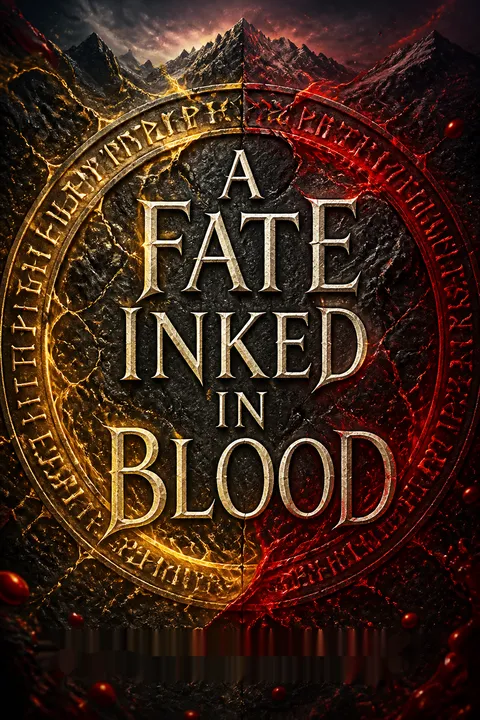


Plot Summary
A Fish in the Fjord
Twenty-year-old Freya endures her husband Vragi’s insults while gutting fish for the village he once saved from famine. His sea magic now lets him monopolize the catch, and her mother and brother depend on the wealth he provides. Freya dreams instead of fighting beside her brother Geir, but her father taught her to hide the divine power that once burst from her when she called on Hlin.
After Vragi leaves a mountain of fish rotting on the beach, Freya returns as many as she can to the water. One strikes a bathing warrior, Bjorn, who flirts with her despite the silver wedding ring on her hand. Before riding away, he claims he will kill her husband and free her.
Freya’s first act of defiance is not directed at the man hurting her, but at the waste he creates. Returning the fish gives her a small, concrete chance to protect vulnerable life when her marriage offers her no authority over her own. Bjorn’s arrival makes that private ethic visible to someone outside her family, and his flirtation briefly lets her experience attention without an immediate demand attached. Yet Freya rejects his offer to kill Vragi. Her restraint is not passivity: she is already calculating how any rebellion might injure the people who rely on her.
The Shield Revealed
Jarl Snorri arrives with Vragi, Geir, and Bjorn, who is revealed as Snorri’s son and heir. Snorri forces Freya to prove her fighting skill against Bjorn, ordering the duel to end only when one of them dies. Bjorn’s flaming axe overwhelms her until she calls on Hlin; a silver shield blasts him into a tree and exposes the magic she has concealed since childhood.
Snorri explains that a seer foretold a shield maiden who could unite Skaland beneath the ruler controlling her fate. He demands Freya as his second wife. To protect Geir’s place in Snorri’s war band and preserve Ingrid’s future, Freya accepts. When Vragi threatens Ingrid, Freya throws Bjorn’s burning axe into her husband’s skull, saving her friend but badly burning her hand.
The duel converts Freya’s hidden gift into public property before she has any chance to decide what it means. Snorri treats prophecy as political authorization, while Freya treats her new bargaining power as something she can spend to protect Geir and Ingrid. Her agreement is therefore both coerced and purposeful. Killing Vragi is the first time she uses violence outside the immediate logic of a battlefield, and the distinction will trouble her later. In the moment, however, his death ends a system of daily abuse and prevents him from turning his spite against another woman.
A Marriage by Oath
At Snorri’s hall, healer Liv tends Freya’s burns with honey and medicinal moss, which grows over her ruined palm and leaves it functional but scarred. Snorri tests her magic, then orders an immediate wedding so the other jarls cannot claim her.
His first wife, Ylva, refuses to watch him consummate another marriage, and Freya proposes a blood oath instead: she will serve Snorri’s line if he never touches her. Ylva binds them with runes, while Snorri swears loyalty to Ylva.
During Freya’s public marking, Ylva’s ritual nearly tears Freya’s chest open. Hlin claims her with a pulsing shield tattoo, and a second, distorted mark appears on her burned palm. A vision warns Freya that she must sacrifice at the sacred mountain under the full moon or die.
The oath scene gives Freya a narrow but meaningful boundary within a marriage imposed for political control. She cannot refuse Snorri without putting her family at risk, but she negotiates away his access to her body and prevents the marriage from becoming a sexual bargain. Ylva’s participation complicates the apparent rivalry: she is both enforcer of the arrangement and a wife protecting a bond she values. The ritual then makes Freya’s body the site where public destiny and private injury collide. Her new marks are celebrated by others, but the scars remain hers to inhabit.
Fire on the Fleet
On the night of the wedding, Jarl Gnut’s forces attack Halsar, hoping to seize the newly revealed shield maiden. Snorri orders Freya to stay inside the great hall, but she climbs into its smoky rafters and spots a second enemy force approaching from behind. When arrows prevent her from warning Bjorn directly, she shoots one attacker and escapes across rooftops.
Bjorn finds her in a pigsty, and she persuades him to help draw the invaders away by burning their ships. They swim to the dock and ignite three vessels. Gnut’s warriors abandon the assault to save their fleet, giving Snorri time to form a shield wall and drive them off. Eighteen people die, but the warning and diversion prevent a far greater slaughter.
Freya’s first public victory comes from refusing the role Snorri assigns her. He wants to preserve her as a political asset; she sees people trapped inside the hall and acts before she can be reduced to one. The plan is effective because she understands what the attackers value: their ships are not merely transport but their route home. Her choice to risk herself does not produce a clean triumph, however. The eighteen deaths keep her from mistaking tactical success for moral immunity, and the blame directed at her foreshadows the cost of being made a symbol.
Training Under Fire
After the raid, Snorri commands Bjorn to train Freya and guard her, while Bjorn resents being tied to his father’s prophecy. Their lessons begin with shield endurance and arguments, then reveal that Freya’s magic can protect even a cooking pot and repel Bjorn’s divine axe. A captured woman, Ragnhild, proves to be a spy serving King Harald of Nordeland; Bjorn kills her before she can send a vision to her master.
Snorri prepares to gather support at Fjalltindr, where the jarls will meet for a sacred festival. On the road, a burning specter warns Freya to make an offering on the mountain at the full moon. Snorri calls it a divine test, while Bjorn suspects it also signals that enemies will try to kill her.
Training turns Freya’s magic from an emergency response into a skill she can examine and choose to use. Bjorn’s challenge to test the shield is risky, but it recognizes that she needs confidence grounded in experience rather than praise from Snorri. The captured spy expands the conflict beyond local rivals: Freya’s identity has become intelligence that travels between rulers. The specter adds another pressure, because its warning is specific enough to demand action but too cryptic to clarify what success requires. Freya is learning to fight while still being denied reliable knowledge of the war around her.
The Path to Helheim
At Hammar, hostile jarls guard the ordinary route to Fjalltindr, so Snorri sends Freya and Bjorn through a forbidden path inside the mountain. Skald Steinunn follows to record Freya’s deeds, but Bjorn distrusts her probing questions and sends her back before they enter.
The tunnels are filled with steam vents, rotting animals, and treasure stolen from the temple. When Bjorn accidentally knocks a jeweled cup down the stairs, its endless clattering wakes the draug, undead raiders bound to guard the stolen wealth.
Freya’s ordinary sword cannot harm them, but her shield magic throws one aside. Bjorn’s divine fire can destroy them, and together they fight upward, with Freya guarding his back even when a draug closes its hands around her throat.
The mountain strips away the assumptions that have protected Freya so far. Her shield can stop force, but it cannot solve every threat, and her mortal weapon fails against bodies that no longer obey mortal rules. The episode also tests the partnership she and Bjorn have built through banter and training: survival depends on trusting each other’s abilities rather than competing for control. The treasure functions as a moral trap, too. Their danger is linked to earlier greed, and passing through the tunnels requires resisting the temptation to turn someone else’s violation of sacred ground into an opportunity for profit.
The Jarl of Ash
Deeper in the tunnels, Bjorn challenges the draug leader to single combat, hoping to draw the rest away from Freya. The leader forces him to use a mortal weapon, which cannot kill the undead, and Bjorn’s borrowed shield and axe break under the assault.
Freya understands that Bjorn’s plan depends on the leader’s death ending the curse on his followers. She calls on Hlin to shield her hand, lifts Bjorn’s divine axe without being burned, and throws it into the jarl’s chest. The leader and the draug bound to him crumble into ash.
Freya then curses the remaining treasure-seekers to Helheim, and black roots drag them underground. At the summit, the pair pass the temple’s gate by submitting to the gods; Freya sacrifices a bull, and the gods appear to acknowledge her.
Freya’s decisive act rests on interpreting Bjorn rather than obeying him. She realizes he has chosen a contest he cannot win by ordinary means, then finds a way to wield the divine weapon he has made available to her. The scene marks a shift from protection as defense to protection as judgment: she does not merely block harm but determines who is allowed to remain. Her curse on the surviving draug anticipates a frightening expansion of her power. The gods’ appearance validates her importance without explaining its purpose, deepening rather than resolving her unease.
A Choice at Fjalltindr
At Fjalltindr, Freya learns that Harald has come to the sacred gathering, bringing the ruler who once held Bjorn in Nordeland. Snorri threatens war against him, while Freya makes offerings and asks the gods to protect people she loves.
During the night’s revels, Bjorn slips away to consult a seer. The seer’s warning suggests an unattended stronghold is in danger. Snorri wants to stand firm and pursue his ambition, but Freya reminds his warriors that vengeance means little if their families die at home.
Her appeal turns the group back toward Halsar. She and Bjorn descend with the others, only to find the settlement burned. Survivors emerge from the forest, but healer Liv is dead, and the losses harden Snorri’s resolve to take Gnut’s fortress, Grindill.
Freya’s speech is the first time she uses her public position to redirect a group rather than merely survive its decisions. She does not argue that revenge is unjustified; she insists that it must remain subordinate to the people it claims to defend. The return to Halsar exposes the limits of her intervention. She can change what Snorri’s warriors choose in one moment, but she cannot undo the violence already set in motion by competing rulers. Liv’s death gives that failure a personal shape, while Snorri converts communal grief into a new campaign.
Grindill’s Broken Gate
Snorri’s forces join Jarl Bodil’s women and attack Grindill, Gnut’s heavily fortified stronghold. Freya’s frozen toes make each step painful, but she refuses to delay the assault. Her shield magic protects the warriors carrying a fallen tree as a battering ram, until Bodil drops her own shield to catch Freya when she stumbles.
A child of Thor strikes Bodil with lightning, then blasts open the gate. Freya deflects another bolt into the wall and rushes inside, consumed by fury.
She kills anyone in her path, then chases Gnut, but Bjorn kills the jarl first, preventing archers from striking Freya from behind. The remaining defenders surrender. The victory gives Snorri Grindill, but Steinunn’s later song shows Freya how terrifying her rampage looked to those inside.
The siege makes Freya’s protective gift both indispensable and dangerous. Her shield keeps the attackers alive, but its effectiveness depends on her balance and concentration; when she stumbles, Bodil pays for it. Grief then strips away Freya’s distinction between defense and punishment. She experiences her violence as justice, while Steinunn’s song will later reveal the same actions from the victims’ viewpoint. Bjorn’s intervention is not an attempt to deny Freya her strength. It prevents her rage from becoming a vulnerability that an enemy can exploit.
The Song of Blood
Freya withdraws to her room after Grindill falls, avoiding Steinunn’s questions and the people who now watch her with fear. Her brother Geir arrives with Ingrid, his new wife, and accuses Freya of acting spoiled despite the sacrifices made for her.
Bjorn attacks Geir, but Freya stops him and walks away from her family’s demands. She considers accepting Snorri’s rule as the price of keeping everyone safe. Instead, she attends Steinunn’s performance.
The skald’s magic shows the siege through the eyes of Grindill’s defenders, including the moment Bodil dies and Freya’s subsequent killing spree. Horrified, Freya recognizes that her legend may inspire obedience through terror. Bjorn offers to leave Skaland with her, but Freya refuses while her family remains under Snorri’s control.
Steinunn’s song forces Freya to confront a gap between intention and impact. She had understood the assault as a response to Gnut’s violence, but the victims experienced her as an unstoppable threat. This is not a simple correction of a false memory: the song reveals a perspective she had no capacity to hold while grieving Bodil. Geir’s accusation compounds the pressure by making family loyalty feel less reciprocal than Freya has believed. Bjorn offers escape, but Freya’s refusal shows that care still governs her choices, even as she begins to question whether sacrifice is being mistaken for love.
The Mother’s Bargain
Ylva secretly arranges for Freya and Bjorn to visit Freya’s mother, Kelda, so Freya can learn about Hlin. Kelda explains that when Geir was a dying infant, a mysterious woman offered to save him in exchange for a child conceived that night. Another divine visitor later returned Geir and asked to make Kelda’s unborn child a vessel. That child was Freya.
Kelda had believed the bargain would grant Freya the life-giving magic of Freyja, not a gift tied to war. She then realizes Freya loves Bjorn and demands she end the relationship to protect Geir. Freya refuses to let her mother dictate the choice, telling Kelda that she has repeatedly placed Freya’s welfare behind the family’s needs. She leaves, furious and hurt, without reconciling.
Kelda’s account reframes Freya’s hidden heritage as the result of a desperate family bargain, not a simple divine blessing. Her mother acted to save Geir, and Freya has spent her life bearing the consequences of a choice she never made. Yet the confrontation is not only about the past. Kelda again asks Freya to sacrifice her desire for the family, revealing how love can become coercive when one person is expected to absorb every cost. Freya’s refusal marks a break in the pattern: she does not deny her attachment, but insists that the decision belongs to her.
Skade’s Arrow
On the ride back, Bjorn tells Freya that his mother once foresaw thousands dead in Freya’s wake, then offers to help her escape. Freya chooses to return to protect her family, but King Harald’s hunter, Skade, reaches Kelda’s farm first. Freya and Bjorn hide nearby as Skade questions Kelda about her daughter.
Kelda directs the hunters away, but Skade calls her a traitor and shoots her through the heart as she leaves. Freya reaches her mother too late; Kelda dies in her arms. Grief turns immediately to rage, and Freya blames Ylva for revealing their destination. Bjorn warns that the evidence is circumstantial, but Freya rides for Grindill alone, determined to make Ylva answer for the death.
Freya’s attempt to protect Kelda brings her back into danger, but the outcome is not proof that her choice was foolish. Skade’s attack demonstrates that the powerful men pursuing Freya can reach her loved ones whether she stays near them or not. Kelda’s final act is protective, though it comes after a lifetime in which she has often asked Freya to bear the burden. Freya cannot absorb that complexity in the moment. She turns grief into a clear target, choosing accusation and vengeance because they feel more manageable than the fact that she could not save her mother.
The Betrayal Accusation
Freya rides into Grindill and attacks Ylva, accusing her of betraying Snorri and exposing Kelda’s location. Ylva denies it, and Snorri refuses to punish her without a trial, despite Freya’s account of the suspicious meetings and rune message.
Before they can settle the dispute, a messenger reports that Harald’s army has landed nearby and demands Freya. Snorri orders his people to prepare for battle; Bjorn urges retreat, and Snorri strikes him for calling the fight unwinnable.
Geir is seized, and Snorri reveals that Ingrid is also a hostage and pregnant. Freya chooses to stay and fight rather than abandon them. Harald appears outside Grindill and offers peace if Freya surrenders, but Snorri refuses, and Freya raises her shield around the fortress.
The confrontation makes Freya’s private grief part of a public crisis, but her certainty about Ylva does not become proof simply because it feels emotionally convincing. Snorri’s insistence on a trial is a restraint Freya resents, yet it also leaves open the possibility that she has misread the evidence. The arrival of Harald’s army collapses her options into another impossible choice. Snorri uses Geir and Ingrid to make her stay, while Bjorn argues that survival requires retreat. Freya’s decision is not simply obedience: she is acting for the unborn child as well as for the family members who have hurt her.
Over the Waterfall
Harald’s forces surround Grindill, and Tora’s lightning repeatedly shatters against Freya’s shield, flinging civilians away and killing some of them. Facing the same death-filled future her visions have suggested, Freya jumps from the wall into the trench, hoping her apparent death will end the struggle over her.
Bjorn follows rather than let her die alone. He throws his axe at Tora, then pulls Freya into the river as the weapon vanishes and lightning strikes behind them.
They go over the falls, with Freya’s magic shielding their bodies from the impact. Downstream, Bjorn explains that both armies saw them plunge to their deaths, so Snorri cannot punish her family for an escape no one witnessed. Freya must choose whether to trust him and leave Skaland behind.
Freya’s leap is a desperate attempt to remove herself from the machinery that turns her into a cause for war. It is both self-sacrificial and strategic: she believes the fighting will stop if no ruler can possess her. Bjorn refuses to treat her death as an acceptable political solution, following her into the river and trusting her shield to save them. Their escape depends on mutual risk rather than prophecy or command. For the first time, Freya can imagine a future not organized around keeping other people alive, though the price of that freedom is abandoning them without knowing what follows.
A Future in the Cave
Freya and Bjorn follow a warm stream to the cave where Bjorn once lived with his mother, Saga. There, he describes her visions and the night a fire destroyed their home, but says he is willing to leave revenge behind for a life with Freya. They make love and imagine a home beyond Skaland, with children and work neither of them has known.
The next morning, Freya presses Bjorn about what he has withheld, and he cannot give her a clear answer. King Harald then appears with Skade, Tora, and Steinunn. Harald reveals that he and Bjorn have worked together, that Bjorn is a Nordelander, and that their plan involved taking Freya away from Snorri. Bjorn insists he loves her, but his secret allegiance makes their shared future feel built on a lie.
The cave offers a tender counterworld to the public arena of marriage, war, and prophecy. Bjorn’s remembered childhood becomes part of the future he wants to build, and Freya finally allows herself to imagine desire without immediate punishment. Yet their intimacy arrives before trust has been fully tested. Freya’s questions on waking expose the difference between feeling loved and knowing the truth. Harald’s arrival turns the cave from refuge into a place of reckoning. The betrayal wounds precisely because Bjorn has been the one person who seemed not to treat Freya as an instrument.
Hel’s Voice Unleashed
Freya demands the truth, and Bjorn identifies Harald as his father, not Snorri. He claims Snorri tried to kill Saga and him, while Harald protected them, and says he planned to remove Freya from Snorri’s control. Before Freya can decide what to believe, anger overtakes her. She curses everyone present to Helheim, and black roots surge from the earth, killing Harald’s ordinary warriors.
Harald, Bjorn, Skade, and Tora survive because they carry divine blood. Harald recognizes Freya as a child of both Hlin and Hel, explaining why her power can condemn souls as well as protect bodies. Freya flees in horror, but Steinunn catches her and drugs her with smoke. When Freya wakes, she is bound aboard Harald’s ship, sailing for Nordeland.
The revelation changes the meaning of Freya’s power from defense to dominion over the dead. Her curse is triggered by betrayal, but it does not distinguish between the people she hates and the people merely standing nearby. That indiscriminate consequence makes her fear of becoming a monster more than a prediction from a song. Harald’s explanation may be self-serving, and Bjorn’s account remains unverified, leaving Freya surrounded by competing claims. Steinunn’s betrayal removes Freya’s last chance to investigate freely. The book ends with her captured, newly aware that her own anger can do what no army could.
Analysis
The novel makes Freya’s central struggle a contest over who gets to interpret her actions. Snorri calls her a king-making instrument, rival jarls call her a threat, and even the prophecy seems to place her worth in what she can deliver to a ruler. Freya’s own understanding begins with protection: she rescues fish, risks herself for the people in Halsar, and repeatedly accepts coercion to shield her family. But the story refuses to treat protective intent as an automatic moral defense. Steinunn’s song forces Freya to see how her retaliation appears to those she attacks, while the final curse reveals that anger can exceed its intended target and impose a fate she never meant to choose.
The romance with Bjorn offers a countermodel to possession. In moments of care, he attends to Freya’s pain without demanding obedience, and she experiences that as a freedom absent from her marriages and family bargains. Yet his concealment of his allegiance fractures the distinction she had trusted between love and political use. His claim to love her may be sincere, but sincerity cannot replace informed choice. The late revelation therefore unsettles both the romance and the prophecy: Freya must decide what to believe without the person she trusted most providing a clean account.
Fate in this book is not a simple opposition between destiny and free will. The Norns’ weave makes consequences difficult to predict, while divine blood gives Freya unusual power to alter them. That freedom is not liberating by itself; it creates responsibility without certainty. Freya cannot know whether leaving, staying, fighting, or loving will save others. The ending leaves her bound for Nordeland, carrying both a terrifying new power and unanswered questions about Bjorn, Harald, Saga, and her own origins. Her story’s defining question is no longer whether she can become the shield others need, but whether she can act without letting anyone else turn her into their weapon.
Review Summary
A Fate Inked in Blood receives mixed reviews, with an overall rating of 3.95 out of 5. Many readers praise the Norse mythology-inspired world-building, engaging romance, and well-developed characters. The chemistry between protagonists Freya and Bjorn is frequently highlighted as a strong point. Some criticize the predictable plot twists and slow pacing in parts. While some find the writing captivating, others feel it lacks depth. The book's spicy scenes and Viking setting appeal to many readers, but others find the characters frustrating or the story formulaic.
People Also Read



Characters
Freya
The Unfated Shield MaidenFreya is a farmer’s daughter raised to hide her divine magic and trained to endure a marriage that leaves her little room to choose. She is sharp-tongued, physically capable, and quick to act when someone vulnerable is threatened. Her protective instinct is both her strength and her vulnerability: she repeatedly accepts pain or danger to shield relatives and strangers, even when they do not return her loyalty. Beneath her ambition to fight is a deeper need to own her decisions. Freya’s struggle is not simply whether she can become a warrior, but whether she can distinguish love from obligation and power from the right to control others.
Bjorn
The Fire-Wielding HeirBjorn is Snorri’s famed son, gifted by Tyr with a weapon of divine fire and a reputation for reckless courage. His humor and flirtation conceal a guarded relationship to family, loyalty, and the past. He respects Freya’s force of will, even when he provokes her, and his practical instincts often temper her impulsive choices. Years spent away from Skaland have left him between worlds, unsure where he belongs and wary of being used as a political instrument. His deepest conflict concerns whether inherited duty can be separated from the loyalties he chooses for himself.
Snorri
The Prophecy-Seeking JarlSnorri rules Halsar and is determined to unite Skaland under his authority. He interprets a seer’s prophecy as both a promise of kingship and permission to shape Freya’s life around his ambition. Charismatic and capable of inspiring warriors, he also treats sacrifice as an acceptable cost when others pay it. His affection for his family coexists with a ruler’s habit of measuring people by usefulness and loyalty. Snorri believes a strong king can protect his people, but his certainty repeatedly blinds him to the harm caused by pursuing power before securing the lives already in his care.
Ylva
The Jarl’s Runic WifeYlva is Snorri’s first wife, a politically astute woman who practices rune magic and understands the risks surrounding Freya’s arrival. She is proud, disciplined, and fiercely protective of her household, especially her son Leif. Her sharp treatment of Freya is shaped by more than jealousy: she is asked to accept a marriage that alters her place while helping her husband pursue a dangerous destiny. Ylva can be both threatening and perceptive, and her view of power is more attentive than Snorri’s to the people who may be crushed beneath it.
Geir
Freya’s Ambitious BrotherGeir is Freya’s older brother and a respected warrior in Snorri’s service. He loves his sister, but his ambitions, pride, and reliance on Snorri make him willing to ask Freya for sacrifices he would struggle to make himself. His relationship with Ingrid gives him hopes beyond battle, while his place in the war band ties those hopes to political favor. Geir’s affection is genuine, but it does not always prevent him from treating Freya’s loyalty as a resource he can count on.
Ingrid
Freya’s Childhood FriendIngrid is Freya’s childhood friend and Geir’s beloved. Gentle and less practiced in conflict than Freya, she nevertheless carries her own hopes for marriage and family. She appreciates Freya’s sacrifices but sometimes tries to ease her own guilt by framing them as gifts from the gods. Ingrid’s dependence on Geir and the power of the jarls leaves her vulnerable, while her friendship with Freya makes her one of the people Freya most fears failing to protect.
Kelda
Freya’s Protective MotherKelda raised Freya and Geir on a farm, teaching practical skills and urging caution around divine power. Her choices are shaped by the terror of losing a sick child and the belief that family survival comes first. She loves Freya, but has often expected her daughter to accept the cost of decisions made for the household. Kelda’s knowledge of Freya’s conception and the divine bargain behind it reveals how fear and care can become entangled.
Liv
The Healer of HalsarLiv is a healer gifted by Eir, direct in manner and skilled at easing pain. She treats Freya’s burned hand and cares for the people of Halsar without romanticizing the violence that creates her patients. Her experience has made her skeptical of glory and sensitive to the human cost of war. Liv’s practical compassion offers Freya a model of service that is neither obedience nor ambition.
Steinunn
The Skald Who SeesSteinunn is Snorri’s skald, a gifted singer whose magic lets listeners experience events through the perceptions of those involved. She seeks recognition for her songs and has spent much of her life serving powerful patrons. Her work can preserve experience, but it also gives rulers a tool for shaping public memory. Steinunn is attentive to stories and guarded about her own, which makes her both an artist and an uneasy participant in the political struggle around Freya.
Harald
King of NordelandHarald rules Nordeland, Skaland’s powerful neighbor, and understands that a united Skaland could threaten his kingdom. He is controlled in public and skilled at presenting political choices as reluctant necessities. Harald values loyalty and sees extraordinary magic as a force that could protect his people, but his methods involve secrecy and strategic pressure. His history with Bjorn and his interest in Freya place him at the center of the conflict between political survival and individual freedom.
Saga
Bjorn’s Seer MotherSaga is Bjorn’s mother and a seer whose foretellings shaped the expectations of rulers around her. Her visions carry political consequences, but the future she sees is not necessarily understood by those who hear it. As Bjorn’s parent, she is associated with both his earliest fears and his sense of loyalty. Her place in the story connects prophecy to the intimate cost of being treated as a source of information.
Bodil
The Truth-Speaking JarlBodil is a warrior and jarl who can sense deception, though her gift does not tell her why someone is lying. She values candor, competence, and practical judgment, and she offers Freya training from the perspective of women who fight. Bodil is politically alert without being seduced by Snorri’s promises of glory. Her questions encourage Freya to examine what kind of leader she wants to become, rather than merely accepting the role others assign her.
Leif
Ylva’s Young SonLeif is Snorri and Ylva’s teenage son and Bjorn’s younger half-brother. He is frank, observant, and more concerned with the cost of political ambition than with inheriting power. Leif’s irritation at the adults’ feuds suggests he has grown up navigating tensions he did not create. He wants a place in his family and community without pretending that every decision made by a jarl is wise.
Skade
Harald’s Relentless HunterSkade is Harald’s warlord and a child of Ullr, armed with arrows that do not miss their intended target. She is efficient, composed, and loyal to the commands of her king. Her skills make her dangerous even when she appears unarmed, and her manner suggests she sees pursuit as a task to complete rather than a personal feud. Skade’s presence gives Harald a way to reach people who believe distance or concealment will keep them safe.
Tora
The Lightning-Wielding WarriorTora is a child of Thor and one of Harald’s formidable allies. She can call lightning, making her a threat to both individual fighters and entire defensive walls. Her power makes ordinary tactics unreliable, while her composure in battle contrasts with the destruction she causes. Tora represents the way divine gifts can magnify the force of a ruler’s military decisions.
Gnut
The Rival JarlGnut rules the neighboring territory of Grindill and resists Snorri’s efforts to unify Skaland. He is a calculating opponent whose attacks target both military strength and civilian security. His fortress gives him a strong defensive position, and his willingness to strike vulnerable settlements makes him a practical rather than symbolic threat to Freya’s people.
Vragi
Freya’s Cruel HusbandVragi is a child of Njord who uses his control of sea life to enrich himself at the expense of Selvegr’s other fishers. Once celebrated for ending a famine, he now relies on reputation and influence to shield his greed. He treats Freya as a servant and resents her independence, while her family’s dependence on his wealth gives him leverage over them.
Ragnhild
The Captured SpyRagnhild is an elderly woman serving Harald as a spy and carries the mark of Hoenir. Her ability to transmit visions makes her a strategic threat despite her age and captivity. She illustrates how divine gifts can turn people into tools of intelligence and conflict.
Ragnar
Snorri’s Veteran WarriorRagnar is an experienced warrior in Snorri’s service who helps investigate threats and carry out the jarl’s orders. Practical and deferential to rank, he represents the dependable military structure that supports Snorri’s rule.
Birger
The Farm’s WatchmanBirger is the armed man Snorri places at Kelda’s farm while Freya is away. He tends the animals and property, but his presence also signals that Freya’s family is being monitored and held within the jarl’s reach.
Plot Devices
Saga’s Foretelling
Turns a woman into a crownA seer predicts that a shield maiden born under a blood moon will help unite Skaland beneath the ruler who controls her fate. Snorri treats the prophecy as a mandate to claim Freya and build political power around her. Other jarls interpret the same possibility as a threat and seek to kill or capture her. The foretelling drives the plot, but its language is open to competing interpretations, allowing ambition to masquerade as divine certainty. Its importance lies not only in what it predicts, but in how people use the prediction to justify their choices.
Divine Blood
Makes magic personal and dangerousChildren conceived in the presence of a god may receive divine blood and a corresponding power. Freya’s Hlin-gifted magic creates protective shields, while Bjorn’s blood from Tyr manifests as a burning axe. Tattoos mark divine lineage, and a public ritual formally claims Freya. Her power later proves broader and more frightening than protection alone: after she curses a group of warriors, roots rise from the earth and drag them into Helheim. This device connects bodily inheritance to political value, combat ability, and the risk that power can exceed its holder’s intentions.
The Norns’ Weave
Makes choice a source of dangerThe Norns weave the fates of mortals, while children of the gods are unfated and able to alter their own paths and those around them. This distinction is used to explain why Freya matters to rulers, but it also gives her no reliable way to know whether a decision will change the future or fulfill it. Snorri treats fate as a promise he can control; Freya gradually recognizes that his control depends on threats and political leverage, not simply divine design. The device turns each choice into a moral burden because consequences cannot be dismissed as already decided.
Runes and Blood Oaths
Binds loyalty beyond persuasionRunic magic can ward spaces, transmit memories, and bind people to promises. Ylva uses blood to create an oath that obliges Freya to serve Snorri’s family while forbidding Snorri from touching her. The magic gives Freya a negotiated boundary, but it also places her under rules she cannot easily escape. Rune messages later expose military plans, while wards protect a hall from people carrying hostile intent. These devices make power intimate and material: a promise is not merely spoken, but inscribed into bodies, places, and future obligations.
Steinunn’s Songs
Turns memory into public forceSteinunn’s skaldic magic lets listeners experience events through the perceptions of people who witnessed them. Her songs can preserve a battle’s emotional truth and spread Freya’s reputation across Skaland, strengthening Snorri’s political cause. The same magic also unsettles Freya by showing her violence through the eyes of Grindill’s defenders. Song therefore works as both testimony and propaganda: it makes events vivid, but those who commission the performance still hope to shape what the audience does with what it sees.
FAQ
Synopsis & Basic Details
What is A Fate Inked in Blood about?
- Forced marriage, revealed magic: Freya, unhappily married and secretly a child of the goddess Hlin, is thrust into a political marriage with Jarl Snorri after her magic is revealed.
- Prophecy, power, and war: Snorri believes Freya is the key to uniting Skaland and becoming king, setting off a chain of events involving betrayal, battles, and the looming threat of war with Nordeland.
- Freya's journey of self-discovery: The story follows Freya as she navigates her newfound power, complex relationships, and the dangerous path laid out for her by prophecy, ultimately seeking to control her own destiny.
Why should I read A Fate Inked in Blood?
- Norse-inspired world: The novel offers a rich, immersive experience with its detailed world-building, drawing heavily from Norse mythology and Viking culture.
- Complex characters and relationships: Readers will be drawn into the intricate relationships between Freya, Bjorn, Snorri, and other characters, exploring themes of loyalty, betrayal, and love.
- Action-packed plot with high stakes: The story is filled with battles, political intrigue, and magical elements, keeping readers engaged and invested in Freya's journey.
What is the background of A Fate Inked in Blood?
- Norse mythology and Viking culture: The story is deeply rooted in Norse mythology, featuring gods, goddesses, and magical elements inspired by Viking beliefs and sagas.
- Skaland's political landscape: The setting is a fractured land of jarls vying for power, creating a volatile political climate where alliances shift and betrayals are common.
- Emphasis on fate and destiny: The concept of fate, as woven by the Norns, plays a significant role, influencing characters' decisions and shaping the course of events.
What are the most memorable quotes in A Fate Inked in Blood?
- "My fate is my own to weave.": Bjorn's defiance of predetermined destiny highlights the theme of free will versus fate, a central conflict in the story.
- "All is fated except the lives of the children of the gods.": Snorri's statement encapsulates the unique position of characters like Freya and Bjorn, whose choices can alter the course of events.
- "You are to be a king-maker, Freya...and as your husband, the one who decides your fate, I will be that king.": Snorri's declaration reveals his manipulative intentions and sets the stage for Freya's struggle for autonomy.
What writing style, narrative choices, and literary techniques does Danielle L. Jensen use?
- Fast-paced and action-oriented: Jensen's writing style keeps the plot moving forward with frequent battles, political maneuvering, and magical displays.
- First-person perspective: The story is told from Freya's point of view, allowing readers to intimately experience her thoughts, emotions, and struggles.
- Foreshadowing and symbolism: Jensen uses subtle foreshadowing and recurring symbols (like fire and water) to hint at future events and deepen the story's themes.
Hidden Details & Subtle Connections
What are some minor details that add significant meaning?
- Lemon juice's ironic purpose: Freya's use of lemon juice to prevent conception highlights her defiance and desire for control over her own body in a patriarchal society.
- Geir's new sword and mail: Geir's acquisition of new weapons and armor symbolizes his growing status as a warrior and his increasing dependence on Vragi's wealth, creating a conflict of loyalty.
- The silver rings in Geir's beard: The silver rings decorating Geir's beard represent his growing status and wealth as a warrior, but also subtly hint at the price he pays for it, including compromising his sister's happiness.
What are some subtle foreshadowing and callbacks?
- Vragi's comment about ugly women: Vragi's demeaning remark about marrying an ugly woman skilled in practical tasks foreshadows Freya's later embrace of her warrior abilities and rejection of societal expectations.
- Bjorn's burn scar: Bjorn's faded burn scar from childhood foreshadows his connection to fire and his understanding of Freya's pain after wielding Tyr's axe.
- The flying fish: The initial mention of flying fish as a potential threat becomes a darkly humorous callback when Bjorn suggests Vragi could die from one, highlighting the unpredictable nature of fate.
What are some unexpected character connections?
- Ylva and Bjorn's shared history: The revelation of Ylva's past relationship with Bjorn's mother adds complexity to their dynamic and explains Ylva's initial resentment towards Freya.
- Erik's service to Snorri: Erik's past as one of Snorri's warriors explains Snorri's initial interest in Freya and the prophecy, as well as Erik's desperate desire to keep Freya's magic a secret.
- Steinunn's connection to Bragi: Steinunn's lineage as a child of Bragi, the god of poetry and music, explains her unique ability to craft powerful and evocative songs that influence the emotions and beliefs of others.
Who are the most significant supporting characters?
- Ylva: As Snorri's first wife, Ylva wields considerable influence and represents the established order that Freya disrupts, making her a key player in the political landscape.
- Geir: Freya's brother, Geir, embodies the societal pressures and familial obligations that constrain Freya, highlighting the challenges she faces in pursuing her own desires.
- Ingrid: As Freya's best friend and Geir's love interest, Ingrid represents the ordinary life that Freya is forced to leave behind, serving as a reminder of what she has sacrificed.
Psychological, Emotional, & Relational Analysis
What are some unspoken motivations of the characters?
- Snorri's fear of losing power: Beyond ambition, Snorri's actions are driven by a deep-seated fear of losing his power and influence, making him ruthless in his pursuit of the prophecy.
- Bjorn's guilt over his past: Bjorn's desire to protect Freya stems from a deep-seated guilt over his past as a prisoner in Nordeland and his inability to protect his mother.
- Ylva's desire for validation: Ylva's actions are motivated by a need for validation and recognition, stemming from her insecurities about sharing Snorri's attention with Freya.
What psychological complexities do the characters exhibit?
- Freya's internal conflict: Freya struggles with a deep-seated internal conflict between her desire for personal freedom and her sense of responsibility towards her family and community.
- Bjorn's self-destructive tendencies: Bjorn exhibits self-destructive tendencies, often putting himself in harm's way as a way to atone for his past and prove his worth.
- Snorri's fanaticism: Snorri's unwavering belief in the prophecy borders on fanaticism, blinding him to the potential consequences of his actions and making him a dangerous leader.
What are the major emotional turning points?
- Freya's decision to save Ingrid: Freya's decision to sacrifice herself to save Ingrid marks a turning point in her character development, demonstrating her selflessness and willingness to prioritize others' well-being.
- Bjorn's confession of love: Bjorn's confession of love to Freya represents a major emotional turning point, forcing both characters to confront their true feelings and make difficult choices about their future.
- The burning of Halsar: The destruction of Halsar serves as a major emotional turning point, forcing the characters to confront the devastating consequences of their actions and make difficult choices about their future.
How do relationship dynamics evolve?
- Freya and Vragi: The relationship between Freya and Vragi evolves from one of resentment and oppression to one of indifference and ultimately, violent release.
- Freya and Bjorn: The relationship between Freya and Bjorn evolves from initial distrust and antagonism to a deep bond of love and loyalty, forged through shared experiences and mutual respect.
- Snorri and Bjorn: The relationship between Snorri and Bjorn deteriorates as Bjorn increasingly questions his father's motives and actions, leading to a conflict of loyalty and ultimately, a break in their bond.
Interpretation & Debate
Which parts of the story remain ambiguous or open-ended?
- The true nature of Hlin: The true nature and intentions of the goddess Hlin remain ambiguous, leaving readers to question whether she is a benevolent protector or a manipulative force.
- The reliability of prophecy: The reliability of the seer's prophecy is constantly questioned, leaving readers to wonder whether fate is predetermined or if characters have the power to change their destinies.
- The ultimate fate of Skaland: The ending leaves the ultimate fate of Skaland open-ended, with readers unsure whether Freya and Bjorn will succeed in creating a better future for their people.
What are some debatable, controversial scenes or moments in A Fate Inked in Blood?
- Freya's murder of Vragi: Freya's decision to kill Vragi is a controversial moment, raising questions about the morality of violence and the justification for taking a life.
- Snorri's treatment of his people: Snorri's willingness to sacrifice his people for his own ambitions is a controversial aspect of his character, sparking debate about the qualities of a good leader.
- Bjorn's initial betrayal of Freya: Bjorn's initial betrayal of Freya is a controversial moment, raising questions about his true motives and the nature of his relationship with Harald.
A Fate Inked in Blood Ending Explained: How It Ends & What It Means
- Escape from predetermined fate: Freya and Bjorn's decision to abandon their predetermined roles and flee Skaland represents a triumph of free will over fate, suggesting that individuals have the power to shape their own destinies.
- Rejection of power and ambition: Their choice to leave behind the pursuit of power and glory signifies a rejection of societal expectations and a prioritization of personal happiness and freedom.
- Uncertain future, hopeful beginning: While the ending leaves their future uncertain, it offers a hopeful beginning, suggesting that true fulfillment lies in forging one's own path, even if it means sacrificing everything else.
Saga of the Unfated Series

About the Author
Other books by Danielle L. Jensen




Download PDF
Download EPUB
.epub digital book format is ideal for reading ebooks on phones, tablets, and e-readers.








