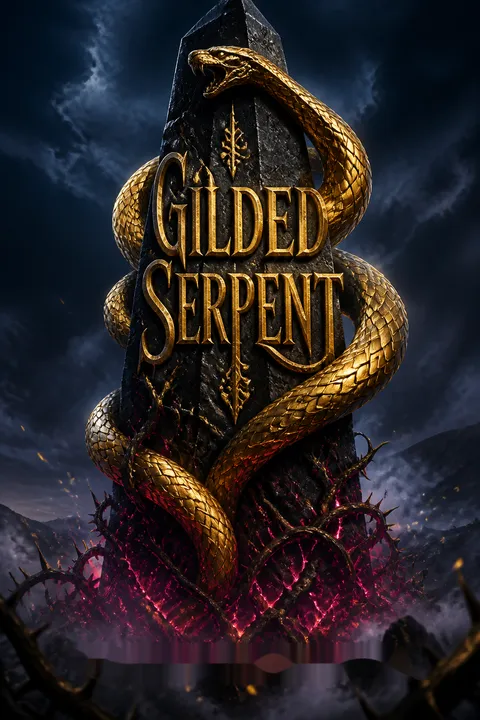


Plot Summary
Urcon's Bloody Reckoning
In rain-soaked Aracam, Teriana1 watches Imperatrix Ereni20 struggle to execute Urcon, the frail tyrant whose armies stole children and terrorized Arinoquia for years. The crowd stones him before he reaches the platform; when Ereni's20 first axe blows fail, Marcus2 orders his soldiers to witness the killing rather than look away.
Urcon finally dies, but Marcus2 warns Teriana1 that the old ruler was only one part of the machinery of oppression. The legion commander2 must now keep peace among the clans that united to defeat Urcon, while hiding his doubts about the Empire's orders. He asks Teriana,1 a merchant and ship captain, to inventory the vast treasure found in Urcon's fortress, placing her at the center of the political settlement.
The execution makes liberation look less like a clean ending than a test of what follows it. Marcus refuses to let his soldiers avert their eyes, forcing them to witness the violence their intervention helped produce. Teriana's revulsion complicates the crowd's hunger for vengeance without softening Urcon's crimes. The old tyrant's weakness also raises a political question: who ruled through him, and who benefits after his death? Marcus understands that removing one man cannot automatically dismantle the habits, institutions, and appetites that sustained him.
Gold Divides the Victors
While Teriana1 and Servius11 count Urcon's stolen wealth, they find freshly minted Cel coins among the treasure, an unsettling clue that someone has supplied the tyrant. At the division, Marcus2 claims the legions' customary share, provoking Ereni20 to hold a blade to his throat.
He refuses to retreat, arguing that his soldiers' losses entitle them to their portion. Once the clans disperse with their gold, he offers Ereni20 control of Urcon's territory and ports in exchange for military support and a share of future taxes.
She accepts, then reveals why the Katamarcan queen treated Teriana's1 letter as authoritative: Teriana1 is heir to the Maarin trade consortium. Marcus2 realizes she has concealed both her influence and her efforts to rally the West against his invasion.
The wealth is not merely a prize. It is the material test of whether allies recognize one another as equals. Marcus uses law and the threat of force together, exposing how easily an alliance can become coercion when one side controls the soldiers. Teriana's inherited influence unsettles the roles each has assumed: she is not simply a captive guide, and he is not merely a commander negotiating on behalf of his men. The freshly minted coins also connect Urcon's rule to distant powers, suggesting that political violence rarely stays local.
The Marks Between Them
Marcus2 confronts Teriana1 with the note she sent to Queen Erdene and demands to know what else she has withheld. Teriana1 admits that Ashok, the attacker who kidnapped her, is corrupted: one of the Seventh god's chosen, able to drain life and age his victims. She then explains that all seven gods mark individuals with powers, a secret she kept because the Empire might hunt them.
Marcus2 is hurt by the deception but understands why she feared him as an agent of conquest. Outside the legion camp, Astara,21 a winged shifter sent by the Gamdeshian princess, confirms that the West heard Teriana's1 warning and is watching the invasion. She also reports that Derin's armies have invaded Mudamora, where Lydia4 has gone to serve as a healer.
The confession turns secrecy from a lovers' quarrel into a survival strategy shaped by unequal power. Teriana knows the Empire could convert sacred gifts into military intelligence, while Marcus has been trained to regard every withheld fact as a risk to his soldiers. Neither response is irrational, which is precisely why trust cannot be restored by affection alone. Astara's visit widens the conflict beyond the couple: Teriana's private warnings have become the first fragile channel between threatened nations, even as the news from Mudamora shows how many fronts are already collapsing.
Emmy's Empty Light
In snowbound Mudaire, Lydia4 returns to find the city nearly abandoned and the temple fortified. A starving child approaches her, but Lydia's4 healer's mark shows the girl has no living essence; a soldier kills and burns her before Lydia4 can intervene.
Grand Master Quindor18 then shows Lydia4 Emmy, an orphan she once healed, now dead but walking, speaking with the child's memories intact. Lydia4 tries to restore her and is violently drained instead.
Quindor18 argues the blighters are corpses animated by the Corrupter, not patients who can be saved, and sends Lydia4 to identify them on patrol. Elsewhere, Bercola warns Killian3 that Lydia4 may be corrupted, but Killian3 rejects the claim and sends her from his thoughts only because King Serrick14 orders him south to Rotahn.
Lydia's mark gives her certainty that the child and Emmy are dead, but sight does not tell her what moral response is adequate. The child appears frightened and intelligent, while the authorities insist that appearance is a weapon designed to weaken faith. Quindor's certainty protects the temple from ambiguity, yet it also makes Lydia's compassion look dangerous. Meanwhile, Bercola's warning frames the same uncertainty through Killian's fear of losing someone he loves. The two protagonists are pulled toward separate duties by leaders who claim that obedience is the only responsible choice.
Lydia Challenges the Crown
On patrol, Lydia4 must identify a blighted mother, then watch soldiers kill her in front of her children. Civilians blame Lydia4 for the execution, confirming her fear that the policy is destroying trust in the healers.
At the palace, she argues that frightened families will hide the sick and that more soldiers in Mudaire could spread the infection. King Serrick14 lets her investigate a cure alone, while High Lady Dareena13 supplies Lena and Gwen24 as assistants.
In Rotahn, Killian3 takes five hundred soldiers to stop Anuk raids and meets Lady Ria, who claims the attacks threaten her people. He wants to return to Mudaire, but increasing raids keep him there. Lydia's4 research finds no historical cure, and the King14 gives her until the arriving healers force him to purge the city.
Lydia's challenge is practical as well as compassionate: mass executions make families less likely to seek help, so the policy intended to contain blight may drive it underground. The King's limited concession gives her responsibility without resources, a familiar political maneuver that turns moral dissent into a private burden. Killian faces a parallel trap in Rotahn. He is told to protect people, yet the information guiding his violence comes from Ria, whose authority he has little reason to question. Both characters act under incomplete knowledge, and their choices carry consequences for civilians who cannot afford elite mistakes.
The Legion's Cracked Line
After an ambush arranged by a traitor, Miki12 is left paralyzed and scheduled for discharge to an island with other injured soldiers. Teriana1 asks Marcus2 to let Quintus11 go with him, but Marcus2 refuses to make an exception.
He later offers Quintus11 a different bargain: remain as Teriana's1 guard, and Marcus2 will record both him and Miki12 as dead so they can eventually escape the legion. Meanwhile, Felix9 warns Marcus2 that their men resent his secrecy and his relationship with Teriana.1
A path-hunter arrives from Bardeen, dying after a beast attack, but confirms a route between the Empire and the Dark Shores. Marcus2 sends a search party, giving Titus10 fresh hope of returning to the Empire and deepening Marcus's2 fear that his mission's freedom is ending.
The legion's discipline is both a source of survival and an instrument that erases the needs of individual soldiers. Marcus's refusal to release Quintus preserves a rule he sees as necessary for fairness, but the rule cannot account for the lovers' dependence or Miki's lost future. His later offer shows the contradiction: he can bend records secretly when he believes escape is worth the risk. The path-hunter turns that private dilemma into an institutional deadline. The way home is also the way back to the system Marcus has been quietly trying to evade.
A City Below the Jungle
Marcus's2 men locate the Bardeen terminus in an abandoned inland city, where old temples preserve images of the displaced people who once lived there. While investigating, Marcus2 and Teriana1 are attacked by a tiger shifter sent by the city's inhabitants.
The temple floor collapses under them, exposing a xenthier stem. With the tiger and armed locals closing in, they jump through it and land in winter-bound Sibern. The shifter follows, but without the gods' power at the other end, he becomes an ordinary man and is left behind as wolves approach.
Marcus2 and Teriana1 reach a roadside shelter just in time to bar the door. The wolves kill the shifter outside, then begin testing the shelter's defenses, leaving the pair stranded far from their army.
The crossing makes the xenthier routes more than a means of travel: they strip away the protections that characters assume are permanent. The shifter's loss of power proves that divine gifts depend on place, while the snow turns Marcus's military confidence into a liability. The abandoned city also reveals the cost of Arinoquian history: the clans' conquest displaced another people, whose descendants now see the Cel army as a new version of the old invasion. The protagonists survive by entering a world they cannot command.
The Teeth Demand Courage
Sibern's wolves besiege the shelters, and Marcus2 and Teriana1 survive by killing one and using its hide for clothing. When their food runs out, they abandon the safer highway for the Sibernese Teeth, a maze of cliffs and suspended bridges that can shorten the journey by weeks.
Marcus's2 fear of heights nearly stops them, but Teriana1 orders him to follow her lead. On a high bridge, a breathing attack leaves him unconscious and dangling from their safety line. Teriana1 finds a shelter, returns for him, then drags him unconscious across the remaining bridges on a litter and harness.
He wakes to find her exhausted and injured. They recover in a cave, eat trapped mice, and eventually resume their journey, choosing each other despite knowing they will soon return to opposing armies.
Their survival reverses the familiar distribution of competence. Marcus can calculate routes and command troops, but his body fails him at height; Teriana's maritime skill lets her move across exposed ropes and carry the man who usually directs her. Her rescue is not a cure for their political conflict, but it changes the emotional terms of it. Trust becomes something enacted under pressure rather than promised in a tent. Their love grows through dependence, even as each recognizes that reaching Celendor will restore the structures that threaten to separate them.
Lydia Draws Out Death
In Mudaire, Lena24 becomes sick with blight while Lydia4 and Gwen24 are alone in the library. Lydia's4 first attempt to heal her feeds the infection, so she changes tactics and draws the blight into her own body.
Her mark eventually destroys it, saving Lena,24 but the effort leaves Lydia4 aged and nearly unconscious. Before help can prevent him, Quindor18 tries the same method on Emmy and dies. Emmy escapes, poisons the temple water, and triggers an assault by blighted soldiers.
Rufina6 reveals herself as Cyntha,23 a healer who serves the Corrupter, and turns Serrick14 and his army into his instruments. Dareena13 pulls Lydia4 from the besieged temple, and they escape Mudaire through a Maarin route. Lydia4 travels south with news of both her cure and Malahi's5 possible survival.
Lydia's discovery depends on treating healing not as a simple transfer of vitality but as a struggle over what life can absorb. Her success is costly and uncertain, yet it breaks the fatal logic that the infected must be executed. Quindor's death shows how devotion can become dangerous when a leader mistakes hope for proof. The coup then transforms his closed temple into a battlefield: Emmy's apparent innocence was also a weapon. Lydia's new knowledge saves one friend but cannot prevent catastrophe, so scientific insight arrives entangled with grief and responsibility.
Ria's False Banner
At Rotahn, Killian3 discovers that Ria's soldiers have attacked Anuk villages wearing his emblem, making him appear responsible for civilian deaths. He confronts Ria, learns King Serrick14 backed the scheme, and escapes the resulting conflict with Sonia19 and Finn. News then reaches him that Mudaire has fallen and Lydia4 is presumed dead.
He leads his men against an Anuk force at a mountain river, where a flood of trees and debris threatens to sweep both armies away. Lydia4 arrives with reinforcements, alive, and warns Killian3 away from a final stand. He and Lydia4 cross the flooded river on a breaking tree trunk and are swept downstream together, surviving as the Anuk battle continues behind them.
Killian's military skill cannot protect him from a war built on manufactured evidence. Ria uses his reputation as a weapon, while Serrick's strategy makes the people of Rotahn pay for royal insecurity. When Killian hears Lydia is dead, his instinct is to spend his own life in battle; her return interrupts that self-punishing impulse without resolving his guilt. The flood makes their survival dependent on improvisation and mutual trust, not rank. Their reunion is therefore less a romantic reprieve than a confrontation with how badly duty has been manipulated.
Derin's Open Secret
After Lydia4 reveals that Rufina6 was masquerading as Cyntha23 and that Malahi5 may still be alive, Killian3 rides with her toward the broken wall between Mudamora and Derin. They follow a river of blight into a valley where eight living mounds feed on the land. A hidden town beyond them contains people from across Reath, not the empty, wholly corrupted realm they expected.
To avoid recognition, Killian3 and Lydia4 pose as Tom and Gertrude, a married couple. They meet Agrippa,7 a Cel legionnaire stranded in Derin, and Baird,8 an enormous summoner who can call weather. Their knowledge of routes through the Liratoras gives the pair a possible way toward Malahi,5 but it also places them among people serving Rufina's6 army.
The town unsettles the simple geography of good and evil. Derin is not a wasteland populated only by monsters; it contains ordinary people trapped by war, poverty, and the absence of safe routes home. The living mounds, by contrast, make the land itself seem occupied. Killian and Lydia's false marriage buys them access but also asks them to perform intimacy while their own relationship remains unresolved. Agrippa and Baird embody another kind of captivity: people who survive by serving powers they fear.
A Princess in Disguise
Lydia4 investigates the blight mounds and finds corrupted tenders woven into their roots, drawing life from the earth. She cannot free one without killing her, and the failed rescue weighs on her. At night, mimics reproduce voices and memories, forcing Lydia4 to relive her mother's escape from Rufina.6
She learns that she is Kitaryia Falorn,4 the infant princess presumed dead, and that her mother carried her to Celendor before dying. The same mimics reveal Agrippa's7 past and his fear of being executed as a deserter.
The revelations explain why Rufina6 hates Lydia's4 family and why Agrippa7 distrusts every promise of safety. Killian3 and Lydia4 now know Malahi5 is held at Rufina's6 fortress, and that their guide may be as dangerous as he is necessary.
The mimics make memory an exposed surface: the past is not private when a creature can turn it into a weapon against the living. Lydia's identity is not simply a hidden title; it reframes her life as an exile created by her mother's attempt to save her. Agrippa's guilt likewise complicates the easy division between cowardice and villainy. His survival depends on choices made under threat, but he remains responsible for the people those choices have harmed. The revelation binds personal history to the political crisis without erasing anyone's agency.
The River Takes Its Toll
Agrippa,7 Baird,8 Killian,3 and Lydia4 join a dangerous river passage through the Liratoras with refugees seeking a way home. Wildmen attack the boat, a child falls into the rapids, and Agrippa7 rescues her but takes an arrow.
Lydia4 heals the child and Agrippa7 in front of the travelers, exposing her healer's mark and making secrecy impossible. Mimics later use a dead Bardenese woman's voice to accuse Agrippa7 of betrayal, revealing how the legion would punish him for desertion.
He admits he fears returning to the Empire because his former brothers would kill him. Killian3 remains wary, but Agrippa's7 actions during the attack complicate his judgment. The group reaches the far side of the mountains with its survivors, then continues toward Helatha, where Malahi5 is imprisoned.
Lydia's healing refuses the clean moral boundary between friend and enemy. She saves a child and the commander of an army that has fought against her people, because the immediate human need overrides strategic convenience. Her public revelation increases the danger to the mission, but concealing her gift would mean letting people die. Agrippa's rescue of the child also complicates his own self-image as a man who only survives by serving himself. The river forces each traveler to reveal what they will risk when someone else's life hangs over the current.
A Bargain at Helatha
At Helatha, Agrippa7 reveals that Malahi5 is imprisoned in Rufina's6 fortress and that a bounty is offered for Killian.3 Rather than storm the stronghold, Killian3 lets Agrippa7 deliver him as a captive, hoping to get close enough to free Malahi.5 He sends Lydia4 with Baird8 to a safe house, believing she will be safer away from Rufina.6
Lydia4 refuses to remain outside the rescue and persuades Baird8 to bring her into the fortress disguised as a servant. Inside, she reaches Malahi,5 whose injuries show the cost of refusing to spread the blight. Rufina6 interrupts them, and Agrippa7 reveals Lydia's4 identity as Kitaryia4 in exchange for his own freedom. Rufina6 takes Lydia4 and keeps Killian3 chained, leaving both lovers in her power.
The plan depends on everyone believing that survival is the highest available value. Killian uses himself as bait because he thinks his life is expendable; Lydia rejects that arithmetic and enters the fortress anyway. Agrippa's betrayal appears to confirm his reputation, but his motives are tied to a genuine desire to escape Rufina's control. That does not absolve him: he trades Lydia's safety for his own future. The scene tests whether loyalty can survive a world where every promise is negotiated under threat, and whether sacrifice is noble when the person sacrificed never consented.
Lydia Takes the Darkness
Rufina6 leaves Lydia4 guarded while she deals with Agrippa's7 demands. Lydia4 breaks a glass against the guard's face, then drains the corrupted woman's stolen life into herself, gaining the strength to move through the fortress. By the time Killian3 is locked below, she has killed the guard and freed Malahi5 with Agrippa7 and Baird.8 Killian3 breaks out of his cell, but Rufina6 threatens to use Lydia4 against him.
He knocks Lydia4 into the dungeon drain to stop her from attacking Rufina,6 then jumps after her as soldiers close in. They escape through the drainage tunnel into the lake and steal a boat. On the open water, Lydia's4 new power overwhelms her; she attacks Killian,3 who binds her to keep her from killing again and rows toward safety.
Lydia's choice is understandable and frightening at once. She uses the same life-taking power she has opposed because the only alternatives appear to be captivity or Killian's death. The result is not a triumphant mastery of darkness but a new dependence on it: she feels its pull almost immediately. Killian's restraint becomes an act of protection that also removes her agency, echoing the paternal control she has resisted throughout the story. Their escape is therefore only physical. The moral and psychological struggle travels with them into the boat.
Lydia's Death Reaches Celendor
Back in Celendrial, Senator Valerius16 tells Teriana1 that Lydia4 is presumed dead after disappearing from Cassius's15 baths, where she had gone to plead for the Maarin. He admits that he prevented her from warning Teriana1 earlier, hoping to protect her from Cassius,15 and now believes that Cassius15 arranged her murder.
Teriana's1 grief turns against herself when she realizes she blamed Lydia4 without proof. At the Domitius home, Marcus's sister17 Cordelia17 confronts him with the truth: he personally killed Lydia4 on Cassius's15 orders.
When Teriana1 asks Marcus2 whether he knows anything about Lydia's4 death, he says he did not order her assassination, concealing that he carried it out himself. He cannot confess without endangering his family, but his lie deepens the danger between them.
The revelation turns the romance's central problem from political opposition into intimate moral debt. Teriana had misjudged Lydia, while Marcus has done something that cannot be repaired by explaining the coercion around it. His evasive answer protects his family from Cassius, but it also protects Marcus from Teriana's judgment. The novel refuses to treat coercion as either full excuse or irrelevant context. A person can be trapped by power and still make choices that destroy another life. Grief gives Teriana a clearer view of her own errors, but not yet of Marcus's.
The Senate Closes Its Hand
Marcus2 reports the Bardeen and Sibern routes to the Senate and asks it to honor the agreement that would free Teriana's1 people. Cassius15 argues that the Sibern route is not a safe retreat, and the senators refuse to declare the contract fulfilled. Teriana1 remains an advisor and prisoner, while Marcus2 is ordered to wait in Celendrial.
Cassius15 sends assassins to the Domitius home; Marcus2 kills them after they seize his family, but one of the attackers confirms that the Twenty-Ninth wants him dead. Commandant Wex helps him escape and warns that he must return to his legion. Teriana,1 meanwhile, asks Valerius16 to arrange a meeting with Cassius,15 hoping to use her influence to secure her people's release rather than wait for Marcus.2
The Senate's ruling shows how legal language can convert a promise into indefinite captivity. Cassius does not openly break the contract; he defines the condition so narrowly that fulfillment can always be postponed. Marcus's violent defense of his family then places him in direct conflict with the same institution he has served. Teriana's decision to approach Cassius is not a return to naïve bargaining. She now understands that power will not honor fairness unless someone can make refusal costly. Both protagonists are forced to act alone where they had hoped for a shared solution.
Titus Claims the Legatus
Marcus2 flees across a chain of xenthier routes, enduring repeated crossings that leave him sick and disoriented, until he reaches Bardeen and the stem back to Arinoquia. Titus's10 men find him before he can rejoin the Thirty-Seventh. They bind him and accuse him of desertion, claiming Felix9 and the legion believe he abandoned them for Teriana.1
Marcus2 has no letter from Wex, no armor, and no witness to prove he was attacked or reached Celendrial. Titus10 promises to speak for him, but admits he may not stop the legion from punishing him. The novel ends with Marcus2 being transported back to Aracam under guard, while Teriana1 remains in Celendrial and the fate of her people, Lydia,4 Malahi,5 and the captured legatus2 is unresolved.
The ending turns homecoming into another captivity. Marcus succeeds in crossing continents but arrives without the proof that could restore his name, leaving the institution to define his actions for him. Titus controls the narrative because he controls the evidence and the soldiers who will judge it. The cliffhanger also preserves the book's central tension: love has repeatedly prompted acts of rescue, yet neither protagonist can escape the systems that make rescue costly. Teriana's independent approach to Cassius and Marcus's return to his men are parallel attempts to reclaim agency, but neither has secured freedom.
Analysis
Gilded Serpent makes the struggle for freedom inseparable from the question of who gets to define a person's obligations. Teriana1 is bound by a bargain that converts her skill and inherited influence into the Empire's access to the West. Marcus2 is bound by a legion that has given him purpose while withholding any ordinary claim to a life of his own. Their love does not dissolve these structures; instead, it reveals how intimate choices are shaped by institutions that treat people as assets, heirs, soldiers, or weapons.
The book's parallel plots examine power through different kinds of bodies. Marcus's2 soldiers are disciplined and numbered. Lydia's4 patients are classified as dead, even when they speak and remember. The corrupted turn divine gifts into instruments of domination, while Lydia4 discovers that healing can require absorbing the danger rather than simply erasing its symptoms. In each case, control begins with a label that makes a person easier to manage.
The novel also resists simple moral accounting. Lydia's4 mercy cannot save everyone, Teriana's1 secrecy is both protective and damaging, and Marcus's2 obedience can shield his men while enabling the Empire's cruelty. Killian's3 duty to Mudamora collides with his love for Lydia,4 while Agrippa's7 instinct for survival repeatedly becomes betrayal. These characters are neither free to choose without consequence nor excused from the choices they make.
The unfinished ending sharpens the book's central question. The routes between worlds have been found, but no one has secured a just way to use them. The Senate rejects the Maarin's freedom, Marcus2 is branded a deserter, and Teriana1 turns toward a new confrontation with Cassius.15 The story closes not on victory but on contested agency: each character must decide what loyalty is worth when the institutions demanding it have already broken faith.
Review Summary
Gilded Serpent receives overwhelming praise from readers, with many calling it the best book in the Dark Shores series. Fans love the multiple POVs, intricate world-building, and character development. The book is described as action-packed, filled with political intrigue and romance. Readers appreciate the complex relationships and moral dilemmas faced by the characters. Many express anticipation for the next installment, citing the cliffhanger ending. Some minor criticisms include pacing issues and the need for a more detailed map. Overall, the book is highly recommended for fans of YA fantasy.
People Also Read




Characters
Teriana
Maarin captain and negotiatorTeriana is a skilled sailor and trader raised aboard the Maarin ship Quincense, with a sharp eye for value and an instinct for choosing her own course. Her loyalty to her crew and people drives her into bargains with the Cel Empire, even when those bargains compromise her principles. She is brave without being invulnerable, and her courage often takes the form of acting before she has a safe plan. Her bond with Marcus2 draws her toward someone she has every political reason to oppose, forcing her to ask whether love can coexist with responsibility to her people. Her irreverence and practical intelligence keep her from becoming merely a symbol of resistance.
Marcus
Legatus seeking a freer lifeMarcus commands the Thirty-Seventh Legion, a force trained from childhood to serve the Cel Empire. Brilliant at logistics and strategy, he hides a fragile body and a history of illness behind discipline and control. His deepest loyalty is to his soldiers, but he has spent years obeying an Empire whose leaders treat them as tools. Teriana1 unsettles his instinct to calculate every risk because she asks him to imagine a life not dictated by the Senate. He is capable of tenderness, but guilt, secrecy, and the belief that he must protect everyone himself repeatedly turn care into control.
Killian
Marked commander of MudamoraKillian is a high-born Mudamorian commander marked by Tremon, the god of war. He is courageous, impulsive, and fiercely protective of those he loves, but his sense of duty can make him punish himself rather than accept limits. His attachment to Lydia4 challenges the oath he has made to Malahi5 and the kingdom he is sworn to defend. He distrusts easy answers and relies heavily on instinct, sometimes mistaking self-sacrifice for honor. His relationships with Finn, Sonia19, and Lydia4 reveal a man trying to learn that protection means listening, not merely putting himself between others and danger.
Lydia
Healer searching for a cureLydia is a thoughtful young healer marked by Hegeria, whose gift lets her perceive life and mend the living. Her instincts lead her to question the killing of blighted people, even when authority insists there is no alternative. She is compassionate but not passive: she researches, argues with kings, and accepts dangerous work when others refuse it. Her bond with Killian3 offers a rare sense of being understood, while her guilt and self-doubt make her vulnerable to the belief that her life matters less than everyone else's. Lydia's struggle is to preserve compassion without surrendering judgment or agency.
Malahi
Mudamorian princess and queenMalahi is the daughter of King Serrick14 and a political leader whose devotion to Mudamora can become severe. She expects loyalty from those around her and is willing to make morally difficult demands in the name of protecting the kingdom. Her relationship with Killian3 is shaped by an oath and a shared history, while her conflicts with Lydia4 reveal how sharply their ideas of necessary sacrifice differ. Malahi is not simply a royal figure waiting to be rescued; she has her own convictions, pride, and capacity to resist those who would use her.
Rufina
Queen of DerinRufina is the ruler of Derin and the central political and supernatural threat facing Mudamora. She commands corrupted followers and pursues power with patience, using other people's fears and loyalties as leverage. Her rule depends on making resistance seem more dangerous than submission. She is perceptive enough to identify emotional weaknesses and ruthless enough to exploit them, but her history also contains a longing for recognition and power after years of feeling used. That history helps explain her choices without excusing the devastation she causes.
Agrippa
Stranded legionnaire and survivorAgrippa is a Cel legionnaire stranded in Derin, where he survives through gambling, paid passage, and service to the people who hold power. He is funny, charming, and alert to danger, but his self-protection has made him capable of betraying those who trust him. His experience of legion life gives him a painful understanding of what desertion costs, while his time in Derin teaches him that obedience can be a survival tactic and a moral failure at once. Agrippa is most dangerous when others mistake his humor for simplicity.
Baird
Giant summoner and guideBaird is an enormous summoner from Eoten Isle who can call on weather and heat, making him an invaluable guide through the Liratoras. He left his homeland after a personal loss and lives under the pressure of being hunted by his own people. His size invites others to underestimate his sensitivity and skill, while his long partnership with Agrippa7 gives him a blunt, protective streak. Baird prefers practical decisions to speeches, but he understands the risks of serving Rufina6 better than most.
Felix
Marcus's oldest legion brotherFelix is Marcus's2 second-in-command and closest friend, a soldier whose loyalty was forged when both boys entered Campus Lescendor. He believes the legion's survival depends on discipline and shared priorities, so Teriana's1 influence on Marcus2 alarms him. Felix can be blunt and stubborn, but his criticism comes from deep attachment to the men and to Marcus2 himself. He wants trust to be earned through action, and he resents being shut out of decisions that could determine whether the Thirty-Seventh lives or dies.
Titus
Rival legion commanderTitus commands the Forty-First Legion and is the son of Lucius Cassius15. He values obedience and the Empire's expansion, and he sees the route back to Celendor as a path to restoring order and influence. His relationship with Marcus2 is strained by their different priorities and by the authority each might hold over the mission. Titus is capable and disciplined, but his ambition makes him especially dangerous when Marcus's2 decisions leave the chain of command unsettled.
Quintus
Legion assassin and bodyguardQuintus is a highly trained soldier whose service has included lethal work for the Empire. He masks grief and guilt with anger, especially after Miki's12 injury threatens the life they have built together. His willingness to protect Teriana1 grows from friendship, but it also forces him to reckon with whether he can keep serving a system that has taken so much from him. Quintus wants freedom, though he does not believe he deserves it.
Miki
Wounded legionnaire and partnerMiki is a warm, popular member of the Thirty-Seventh and Quintus's11 partner. His humor and steadiness make him a source of comfort within a harsh military life. A severe injury threatens his future in the legion and exposes how quickly the institution can define a person by what he can still do. Miki's affection for Teriana1 and his trust in her remain intact even when he faces painful changes he cannot control.
Dareena
High Lady and warrior mentorDareena is a High Lady marked by Tremon and one of Killian's3 most trusted mentors. She is direct, irreverent, and experienced in both politics and battle, which lets her challenge leaders without confusing authority with wisdom. Her loyalty to Mudamora is tempered by a practical understanding of its rulers' flaws. Dareena supports Lydia's4 effort to find a cure and gives her the protection and allies that the temple refuses to provide.
King Serrick
King of MudamoraSerrick is Mudamora's king and Malahi's father5. He prizes control, military strength, and the authority of the crown, especially when the kingdom faces threats on several fronts. His decisions can be pragmatic, but pride and fear narrow his judgment. He trusts established advisers more readily than a young healer challenging accepted policy, even when the cost of refusing her ideas may be severe.
Lucius Cassius
Consul who commands the EmpireLucius Cassius is the Cel Empire's consul and Titus's father10. He treats people and agreements as instruments of political advantage, relying on threats, patronage, and legal technicalities to retain influence. His appetite for expansion places Marcus's2 legion and Teriana's1 people at risk. Cassius is not merely a distant ruler: he understands how to make others carry out his plans while leaving himself room to deny responsibility.
Appius Valerius
Senator and Teriana's allyAppius Valerius is a senator who opposes Cassius's15 excesses and cares deeply about the people caught under the Empire's rule. He is Lydia's father4 and becomes an important source of information and shelter for Teriana1. His kindness is real, but his political caution has consequences: trying to protect one person can mean abandoning another. Valerius believes in reform, though he has learned how little good intentions accomplish without power.
Cordelia
Marcus's politically astute sisterCordelia is Marcus's older sister2, married to Senator Tiberius Egnatius. She is politically sharp and willing to confront uncomfortable truths, including those Marcus2 would rather avoid. Her loyalty to her family does not make her compliant; she sees the danger Cassius15 poses and pushes Marcus2 to recognize the consequences of his choices. Cordelia's pregnancy heightens the stakes she faces, but it does not soften her judgment.
Quindor
Grand Master of the healersQuindor leads Hegeria's healers in Mudaire and believes the blighted cannot be saved. He is disciplined, devout, and burdened by the impossible task of protecting a city with too few healers and too many infected. His certainty is partly a defense against grief: if the dead cannot return, then execution can be framed as mercy. Lydia's4 challenge forces him to confront the possibility that institutional knowledge has limits.
Sonia
Killian's loyal lieutenantSonia is a skilled soldier and one of Killian's3 most dependable companions. She is candid about his faults and does not confuse loyalty with agreement. Her practical judgment helps protect both Killian3 and Finn when his emotions threaten to overtake his decisions. Sonia also serves as a bridge between Killian's3 private grief and the wider obligations of command.
Ereni
Arinoquian imperatrixEreni is a clan leader who helped unite Arinoquia against Urcon. She is proud, politically alert, and determined to ensure her people receive their share of the victory. Her confrontation with Marcus2 shows that she will use force when negotiation threatens her clan's standing.
Astara
Winged Gamdeshian messengerAstara is a shifter sent by Princess Kaira to contact Teriana1. Her ability to travel unseen makes her a valuable link between the isolated western nations. She is guarded but clear that Gamdesh has listened to Teriana's1 warning and is preparing to respond.
Austornic
Young legatus of the Fifty-FirstAustornic is a thoughtful young commander at Campus Lescendor, trusted with the Fifty-First's boys. He is disciplined without being cruel and shows a capacity for independent judgment. His willingness to consider a dangerous assignment reflects both ambition and an awareness of the risks his soldiers face.
Cyntha
Royal healer and adviserCyntha is King Serrick's14 personal healer and a respected figure within the royal household. She is experienced and politically influential, with a harder view of the blight than Lydia's4. Her authority makes her a compelling example of how healing knowledge can be folded into state power.
Lena and Gwen
Lydia's loyal companionsLena and Gwen are former members of Malahi's5 guard who choose to help Lydia4 with her research. They bring practical courage and knowledge of the palace to a task that would otherwise leave Lydia4 isolated. Their friendship steadies her, while their willingness to seek infected people shows the personal risks of challenging the King's14 policy.
Plot Devices
Xenthier stems
Routes between distant worldsXenthier stems are crystal passages that carry travelers between far separated places. They link the Cel Empire to the Dark Shores, but their destinations are uncertain and their routes may be dangerous or strategically unusable. The Senate wants them mapped to send soldiers and supplies, while Marcus2 sees their discovery as both a threat to his men's fragile independence and a possible route home. A stem in an abandoned city sends Marcus2 and Teriana1 to Sibern, and its presence turns the political question of retreat into a personal survival ordeal.
The Seven Marks
Divine gifts with moral costsThe gods grant chosen people distinct abilities, including healing, combat skill, shifting, summoning, and influence over the land. These gifts shape political power across Reath, but their presence does not guarantee moral goodness. A marked person can use a gift in service of the Corrupter, and the cost of using it may affect both body and judgment. The marks explain why Lydia4 can perceive life in the blighted, why Baird8 can alter weather, and why Killian3 is feared as a warrior. They also make power an ethical choice rather than a simple badge of virtue.
The blight
A spreading weapon against lifeThe blight infects people and land, then uses the dead as bodies capable of speech and familiar behavior. Its changing forms undermine trust: families see loved ones, while healers can recognize that life is gone. In Mudaire, the official response of identifying and killing the infected alienates civilians and helps the Corrupter weaken faith in the Marked. Lydia4 discovers that a healer can draw the infection out of a living victim, but the source in Derin is tied to corrupted tenders and living mounds. The blight is both an outbreak and a political strategy.
Mimics
Voices that expose buried memoriesMimics imitate any voice and use private guilt, fear, and memory to lure people outside protective fires. Their attacks are psychological as much as physical: they turn a camp into a place where travelers hear accusations tailored to their secrets. They also reproduce scenes from the past, allowing Lydia4 to recover knowledge of her mother's escape and her own identity. The creatures make listening dangerous, since a familiar voice may be a trap, but their reflections can also reveal truths that characters have hidden from one another.
The legion system
Obedience built through childhoodThe Empire's legions recruit second-born children and train them at Campus Lescendor, where hierarchy, loyalty, and violence are shaped long before adulthood. Soldiers receive numbers that identify them more clearly than family names, and desertion is treated as betrayal of every person in the line. Marcus's2 command gives him status but not freedom, while Quintus11 and Agrippa7 show what the system demands from men whose bodies and consciences have been used in service of the Senate. The institution creates extraordinary discipline, then calls the people it has trained disposable.
Dark Shores Series

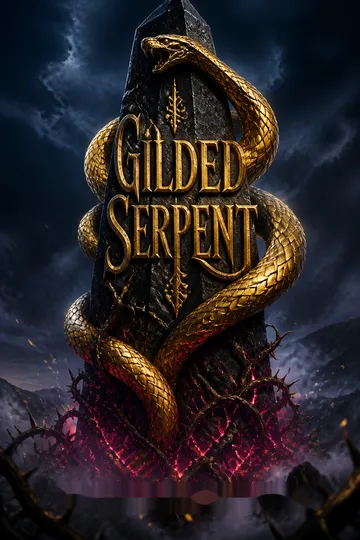
About the Author
Other books by Danielle L. Jensen









Download PDF
Download EPUB
.epub digital book format is ideal for reading ebooks on phones, tablets, and e-readers.








