


Plot Summary
The Bridge's Hidden Teeth
Keris Veliant, Maridrina's unwanted crown prince, reaches Southwatch with his father, King Silas, who has agreed to send him to university in Harendell. The agreement comes with a costly entourage and the familiar threat that Keris will be used for his father's purposes.
While an Ithicanian escort leads the party through the bridge, Keris meets Raina, a soldier who resents the drunken Maridrinians but treats him fairly. Then his companions attack an Ithicanian wagon carrying steel and open a hidden route toward the islands.
Raina fights them and is stabbed from behind. Keris is bound as the raiders escape, learning that his sister Lara helped plan the assault. The bridge crossing was never a passage to freedom. It was the opening move in a conquest.
Keris's wish to escape his family is real, but his father's plans turn that private desire into a weapon against others. His companions' attack exposes the danger of mistaking personal innocence for political innocence: Keris did not design the invasion, yet his passage helps conceal it. Raina's death makes that distinction unbearable. The bridge, a structure that joins islands and economies, becomes a corridor through which trust is converted into vulnerability.
A General Stays Her Hand
On a Valcottan patrol, Lieutenant Zarrah Anaphora, niece of Empress Petra, sees a vast Maridrinian fleet pass her ships and head north toward Ithicana. Her cousin Bermin, the fleet's commander, refuses her plea to warn the islanders, following Petra's order not to intervene.
Zarrah knows a Maridrinian attack means burned homes and dead civilians, but she stays silent. Back in Nerastis, she takes command of the garrison from Bermin and strengthens its patrols, trying to protect border villages without starting a larger battle.
A fresh raid leaves dozens dead, including children. Haunted by her mother's murder at the hands of Silas Veliant, Zarrah decides that killing the new Maridrinian heir could save Valcottan lives and bring the raiding force home.
Zarrah's restraint is not indifference. It is obedience to a strategic order that she believes will eventually protect Valcotta, even as its immediate cost is visible in civilian deaths. Her authority gives her the power to act, but also makes her responsible for the harms she permits. The decision to target Keris grows from a familiar trauma: she turns helplessness into a mission. That transformation gives her purpose, while narrowing her sense of what justice can look like.
The Thief in the Tower
In Nerastis, Keris avoids military councils and spends his nights gambling among ordinary people, where no one treats him as the heir. Zarrah crosses the dangerous Anriot River alone, losing a boot and nearly becoming prey to its alligators, then climbs into the Maridrinian palace to find Keris.
She finds his uniform and a packet of official letters, but an anonymous man confronts her before she can reach the prince. Zarrah sets the repair scaffolding alight as a diversion and jumps across rooftops while he pursues.
When a patrol blocks the river crossing, the stranger pretends she is a woman who cheated him, drawing soldiers away from her. He catches her at an old dam, but she returns only one of the letters before escaping into the night.
Their first encounter is shaped by mutually useful deception. Zarrah sees a route to vengeance and intelligence; Keris sees an enemy he could report, but chooses to shield her from a likely execution. Neither choice is uncomplicated. The fire and rooftop chase reveal their shared capacity for improvisation, while the stolen letters make private grief part of the political contest. Their anonymity allows them to recognize one another's judgment before either must answer for a name.
A Letter Returned
The missing letter belongs to Otis, Keris's brother, and was written by Otis's late wife. Zarrah returns it across the dam, embarrassed that she took a personal keepsake while searching for military secrets. Keris explains that he chased her rather than calling a patrol because he could not bear to see another person executed.
They argue over the war, each defending the losses of their own people, until Keris admits he has no solution beyond escaping his father's reach. Zarrah challenges him to act on the peace he claims to want. Their next meetings grow less guarded, and Keris brings a book about stars to their conversations. The stories recall a part of Zarrah she had abandoned while training to become a weapon.
The returned letter changes the moral texture of their rivalry. Zarrah discovers that Keris risks himself for someone else's grief, while Keris encounters an opponent who refuses to accept noble intentions without action. Their attraction is therefore built not only on physical danger but on a test of character. The star stories matter because they reconnect Zarrah with curiosity and pleasure, capacities she set aside when survival and vengeance became the organizing principles of her life.
A Farmhouse in Flames
When Bermin leads a retaliatory raid across the border, Keris and Otis come upon a burning farmhouse. Valcottan soldiers have killed farmers and trapped a mother with her children upstairs. Keris rides into the attack, fights through smoke, and gets the family out, but kills a soldier who tries to stab the boy.
Zarrah arrives with reinforcements and orders Bermin's men to retreat, only to see Keris leap from the collapsing house. That night, she meets the stranger at the dam and hears how the raid looked from his side: ordinary people dead for rulers' pride. He warns her that another Maridrinian attack is planned by sea in four days. Zarrah decides to risk her command to stop it.
The farmhouse forces both characters to confront the human cost their national stories conceal. Keris's killing is defensive, but it breaks his carefully maintained belief that he can remain uninvolved in violence. Zarrah sees that her own forces can reproduce the same cruelty she condemns in Maridrina. Their cooperation begins not with forgiveness but with a shared refusal to let civilians remain the default payment for political retaliation.
The Ambush at Moonrise
Zarrah places her soldiers along the coast and waits for the Maridrinian longboats Keris predicted. When they land, her archers strike first, and the Valcottans drive the raiders back toward their boats.
Zarrah recognizes the man she fought at the farmhouse and learns he is Prince Otis, Keris's brother, but hatred overtakes caution and she nearly kills him. Bermin pulls her away before she can be overwhelmed. The ambush succeeds, yet the fight leaves both sides wounded and confirms that neither army is ready to abandon its habits.
Keris's warning has saved lives, but secrecy and revenge still govern the next move. In the nights that follow, he seeks Zarrah again, and the boundary between their military arrangement and private desire begins to blur.
The ambush is a practical success and a psychological setback. Zarrah prevents a raid, but the discovery that the opposing commander is a Veliant triggers the old reflex to make one death stand for many. Bermin's intervention keeps her alive, while Keris's intelligence makes him harder for her to dismiss as merely a Maridrinian. Cooperation has begun to work, but it remains fragile because the same inherited hatred can still seize control of either protagonist.
Blue Eyes Unmasked
At a later midnight meeting, Keris and Zarrah enter a crowded Nerastis tavern, where a military roundup forces them through a kitchen and onto the rooftops. He reads to her from his book while they hide together until dawn.
Their closeness deepens the next night, when they finally spend the night together in a rented room. In the morning light, Zarrah sees the unmistakable blue eyes of the Veliant family and recognizes the anonymous man as Keris, Silas's heir.
She recoils, sickened that she has been intimate with her mother's enemy's son. Before she can cross back over the Anriot, Maridrinian soldiers capture her. Keris claims her as valuable political leverage and orders his men to keep her alive, masking his wish to protect her as strategy.
The revelation does not make Keris a different person, but it changes what Zarrah's intimacy means. A relationship formed in anonymity is suddenly judged through inherited guilt and the visible mark of a dynasty. Her reaction is psychologically credible because her hatred is rooted in a specific childhood atrocity, not an abstract national rivalry. Keris's choice to disguise care as political calculation shows both his ingenuity and his fear that honest attachment will be used against them.
A Poisoned Prisoner
Otis protests when Keris keeps Zarrah instead of executing her, but Keris insists that only Silas can decide her fate. On the road north, Zarrah's wound from the coastal fight worsens. Keris realizes Otis's poisoned blade carried nightbloom, a slow and usually fatal toxin, and orders a healer to treat her.
While feverish, Zarrah learns that Keris's father murdered his mother in front of him after she tried to retrieve Lara from the Red Desert. Rather than escape when Keris later offers a route out, Zarrah chooses to remain near Silas, hoping for a chance to kill him. Keris takes her to Vencia, where he presents her as a prisoner valuable enough to bargain for trade and political concessions.
The poison makes the danger intimate and irreversible: Zarrah is not simply a captive but a body whose survival depends on the family she despises. Keris's care complicates her judgment without erasing the violence of his house. His confession creates a painful parallel between their childhood losses, but shared trauma does not automatically produce trust. Zarrah chooses proximity to Silas because vengeance still seems more valuable than safety, while Keris tries to preserve her life without yet being able to change her purpose.
The Harem's Locked Door
At Vencia's palace, Keris delivers Zarrah to the harem overseen by Coralyn, the woman who helped raise him. Coralyn keeps Zarrah under guard but insists that the household treat her as a royal prisoner rather than a disposable enemy.
The harem's children, especially Keris's young sister Sara, reveal a gentler side of the prince that his public reputation hides. Zarrah studies the palace and its routines while Coralyn sets strict conditions for her conduct.
Meanwhile, Keris tries to use Zarrah's capture to negotiate a trade agreement with Valcotta and asks Coralyn for help learning what happened to his missing sisters. Their plans intersect with the imprisoned Ithicanian king, Aren, whose presence in the palace gives Keris a possible route to Zarrah's escape.
The harem complicates the book's picture of power by showing women building a system of mutual protection inside a royal institution designed to confine them. Coralyn's hospitality is not simple kindness; it is disciplined control and political calculation. Sara's affection for Keris reveals what he is capable of when he is not performing the prince his father expects. Zarrah's confinement also shifts her from battlefield action to observation, forcing her to treat patience as a survival skill.
Mercy in the Cell
Serin tells Zarrah that her closest friend and second-in-command, Yrina, was captured while trying to reach her and that Keris killed her to gain Silas's favor. Grief sends Zarrah into Keris's room, where she attacks him.
He explains that his father had ordered him to kill Yrina rather than leave her to Serin's torture; Yrina chose to take the knife herself after hearing Keris was trying to free Zarrah. Keris admits he kept the truth from Zarrah because he feared losing her trust.
She condemns the concealment but understands that Yrina acted out of loyalty. Their grief draws them together briefly, then Zarrah tells Silas that Lara may be seeking Aren, trading information for the return of Yrina's remains. Serin reveals the body was burned and discarded.
Yrina's death exposes the difference between an act and the story told about it. Serin weaponizes Zarrah's grief by framing Keris as a willing executioner, and Keris's delay in telling the truth gives the lie room to work. Yet his mercy does not absolve his secrecy. Zarrah's demand for honesty marks a new standard for intimacy: protection that withholds painful facts is still a form of control. The loss also sharpens her awareness that loyalty can require defiance of one's own rulers.
A Brother Falls
Zarrah discovers a hidden exit behind the harem's tapestry and begins loosening its stonework, hoping to reach Silas. During a later attempt, she overhears Serin tell Otis that Zarrah was responsible for sinking his wife Tasha's ship. Serin pushes Otis's grief toward murder, while Zarrah abandons her chance at Silas and rushes to warn Keris.
Otis attacks his brother in Keris's rooms, demanding that Keris kill Zarrah or be treated as a traitor. Zarrah intervenes, but Keris and Otis struggle near the broken window. Keris's attempt to stop his brother sends Otis over the edge. Otis dies below, leaving Keris devastated and giving Serin another opening to claim that the heir is dangerous and unfit.
The brothers' fight shows grief being converted into political machinery. Otis's loss is genuine, but Serin directs it toward an outcome that serves his own power. Zarrah's decision to leave the assassination attempt and help Keris marks a decisive shift: she values his life beyond the immediate satisfaction of revenge. Otis's death is still not a clean victory. Keris survives the confrontation but inherits guilt, public suspicion, and the knowledge that love did not prevent catastrophe.
The Dinner of Masks
Keris, Coralyn, and the harem use a diplomatic dinner to bring Aren into contact with allies while distracting Silas and his guests. Lara and her sisters enter disguised as dancers, then reveal themselves and attack the guards.
Zarrah fights beside them, helping free Aren as Coralyn detonates an explosive and takes responsibility for the escape. Keris hides Zarrah inside a false-bottomed book chest, then leaves Vencia with her while the palace searches for the fugitives.
A guard Serin sends to search Keris's room discovers Zarrah, but she kills him and conceals his body until Keris returns. Together they carry the corpse out with Keris's books, risking discovery at the harbor. They pass inspection, and the ship finally clears Vencia's breakwater.
The escape succeeds because several groups pursue different goals through the same performance. Lara wants Aren, Coralyn wants to protect her household and Keris, and Keris wants Zarrah alive and free. Their cooperation is strategic rather than harmonious, which makes it precarious. The book chest turns Keris's scholarship into literal concealment, while Zarrah's killing of the searching guard shows she is no longer a passive object being transported. Her survival now depends on her own action as much as his.
A Coffin of Books
Once the ship is safely at sea, Keris frees Zarrah from the chest and they dispose of the guard's body in the waves. During weeks of travel, he reads to her and tells her about his family, while she speaks about her childhood and the training that shaped her. They make love, knowing their time together is limited. Keris asks her to abandon their nations and build a life with him elsewhere.
Zarrah admits that her heart wants to say yes, but she must return to Valcotta, repay her debt to Aren, and try to stop the Empress from escalating the war. At Nerastis, she leaves the ship by lowering herself into the water with a buoyant cask. Keris watches her go, then chooses to return to Maridrina and fight for the crown.
Their separation is not caused by a failure of love but by competing obligations that both take seriously. Keris offers escape from inherited systems; Zarrah sees that leaving would preserve her happiness at the cost of everyone still trapped in the conflict. Their intimacy gives each a glimpse of a life outside duty, but it also clarifies what duty asks them to sacrifice. Choosing differently does not make either choice painless or morally pure.
The Empress Chooses War
Back in Nerastis, Zarrah finds Bermin commanding the garrison and learns the Empress ordered no rescue when she was captured. She arranges a costly shipment of grain for Ithicana, honoring the promise she made to Aren, then sails to Pyrinat to ask Petra for help. Petra refuses to aid the Ithicanian king and orders Zarrah to lead captured Maridrinian ships against Vencia once Silas commits his reserves elsewhere.
The Empress intends to destroy the Veliant family, not merely reclaim territory. Zarrah sees that her aunt's revenge would kill civilians and make Silas a martyr. She accepts the assignment outwardly, then resolves to redirect the fleet toward Southwatch and help Aren take back the bridge instead.
Petra's political intelligence is inseparable from a willingness to sacrifice people as instruments. Zarrah once shared that logic, but captivity and her relationship with Keris have changed what she can call honorable. Her decision does not erase her earlier complicity in the war; it makes her attempt to answer for it. The grain shipment matters as a concrete act of restitution, while the false acceptance of Petra's order marks Zarrah's first deliberate betrayal of the authority that shaped her.
The Bridge Becomes Bait
Keris returns to Nerastis and refuses his father's order to send the garrison north, arguing that Maridrina cannot defend the border if it strips the city bare. He rallies officers who fear losing Nerastis and its farmland, then rides to Vencia to persuade Silas to use the bridge as bait.
Keris proposes withdrawing most of the army from Ithicana, leaving decoys to draw Aren's forces toward the outposts while Silas sails against Eranahl. The plan could end the war quickly, but it makes the island fortress and its civilians the target.
Meanwhile, Zarrah's fleet reaches Southwatch and finds it guarded by only a few men. Keris appears and tells her Silas's fleet is already sailing for Eranahl. She realizes he has chosen to save her by betraying her trust.
Keris's political maturation takes a disturbing form: he learns to wield strategy with the same precision as his father, but not toward the same ends. His plan protects Vencia and Zarrah while making Ithicana bear the cost. This is not a simple lapse into villainy; it is a consequential choice made under pressure, with his love narrowing the circle of lives he considers his responsibility. Zarrah's horror comes from recognizing that his protection has become another kind of control.
The Storm Takes Eranahl
Zarrah refuses Keris's plea to return south and tries to sail toward Eranahl, where Silas's fleet is attacking. A typhoon closes over the sea, threatening every ship in its path. Her captain makes her choose between continuing toward Ithicana and risking the lives of a thousand Valcottans aboard her vessels.
Zarrah orders the fleet south, unable to save Aren's people or keep her promise. At Eranahl, Ithicana's defenders fight back, and the storm destroys much of Silas's fleet.
Lara kills Silas, ending his reign, while the island survives at terrible cost. Keris is crowned king of Maridrina. Before the coronation's promise of peace can settle, Serin tells him that Petra arranged the raid that killed Zarrah's mother and threatens to reveal Keris's affair to her.
The typhoon makes nature an active limit on political will, but it does not absolve the characters of their choices. Zarrah turns back because command means accounting for the people under her protection, even when that choice feels like another failure to save Ithicana. Silas's death ends one ruler's violence without undoing its consequences. Keris's coronation promises reform, yet Serin's revelation shows how personal histories have been engineered by political actors for years.
A Crown, a Prison
Serin reveals that Petra gave him the location of Zarrah's mother, whose murder helped secure the Empress's power. He also threatens to expose Keris and Zarrah's relationship. Rather than bargain with him, Serin throws himself from the tower, leaving Keris with a secret that could endanger the woman he loves.
In Pyrinat, the Empress confronts Zarrah with evidence of the affair and of her interference with the planned attack on Vencia. Zarrah admits she chose her own conscience over Petra's orders.
Petra tries to kill her, then condemns her to Devil's Island instead of a trial. When Keris learns of the sentence, he abandons the work of his new reign and sails toward Eranahl to seek help from Lara. Zarrah survives, but remains trapped in a prison no one has escaped.
The ending denies the lovers an easy reconciliation and exposes the machinery behind their inherited hatred. Petra's betrayal reframes Zarrah's childhood without invalidating the care she once gave her; that contradiction makes the break especially painful. Keris gains a crown but not control over the consequences of his choices. His decision to seek Lara's help converts romance into political action, while Zarrah's imprisonment leaves the novel's central question unresolved: whether power can be used to end the cycle without reproducing it.
Analysis
The novel makes war feel less like a clash of national personalities than a machine for assigning private grief political meaning. Zarrah's mother's murder and Otis's wife's death are personal losses, but Petra and Serin turn such losses into reasons for further violence. Keris inherits a different kind of trap: he sees how easily strategy becomes cruelty, yet his intelligence does not keep him innocent once he begins using it. His plan to save Zarrah sacrifices Ithicana, forcing the romance to confront a hard question: does love justify choosing another person's future for them? Zarrah's answer is no. Her insistence on acting according to conscience gives her agency, but it also exposes her to punishment by the very ruler who once rescued her. The book's strongest moral tension lies in the gap between benevolent intention and accountable action. Keris wants peace, but his attempt to control its cost reproduces the paternal logic he rejects. Zarrah wants justice, but her earlier pursuit of vengeance sustains the same cycle she later tries to interrupt. Neither character can remain untouched by the systems they oppose. The bridge, the dam, the harem, and the sea all make borders concrete: they decide who can move, who is trapped, and who must risk a crossing. The ending refuses easy reconciliation. Silas is dead and Keris has the crown, but Zarrah is imprisoned, the Empress remains committed to war, and the lovers have not resolved whether their devotion can coexist with political duty. Their personal choices matter, yet the consequences spread far beyond them.
Review Summary
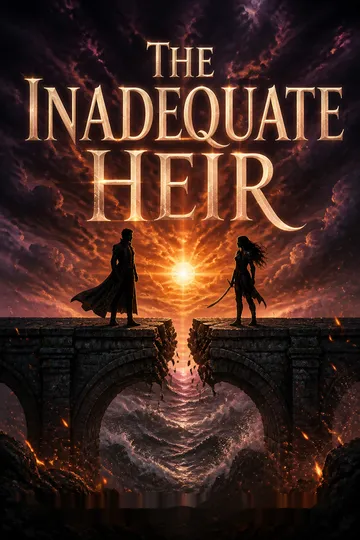
The Inadequate Heir received mostly positive reviews, with readers praising the complex characters, political intrigue, and forbidden romance between Keris and Zarrah. Many enjoyed seeing events from The Traitor Queen from a new perspective. Some critics felt the pacing was slow and disliked the repetition of previously known events. The spicy scenes were divisive, with some enjoying them and others finding them unnecessary. Overall, fans of the series appreciated the expansion of the world and characters, while eagerly anticipating the next installment.
People Also Read










Characters
Keris Veliant
The bookish crown princeKeris is the surviving heir of a dynasty that treats sons as rivals and war as an inheritance. He prefers books, climbing, and listening to people over the military role his father expects him to perform. Sarcasm lets him deflect humiliation, while apparent indifference keeps others from seeing how carefully he studies them. He is not simply a pacifist: he understands strategy well enough to recognize how easily intelligence can serve violence. His central struggle is whether refusing his father's values is enough, or whether he must risk power and complicity to change the conditions around him. His private tenderness and public evasions often pull in opposite directions.
Zarrah Anaphora
The soldier turned heirZarrah is a Valcottan commander, niece of Empress Petra, and a survivor of a childhood shaped by political violence. She has trained herself to be decisive, disciplined, and protective, measuring her worth by how many lives she can save or avenge. That sense of duty gives her strength but also makes her vulnerable to leaders who frame obedience as love. She is observant, physically courageous, and capable of revising her convictions when events expose their cost. Her growing interest in reading, conversation, and pleasure reveals that the warrior is not her whole self, even when she believes duty demands that it be.
Silas Veliant
The ruthless Maridrinian kingSilas rules through fear, family competition, and the assumption that every relationship can be made useful. He values military strength and expansion, especially control of Ithicana's bridge, and treats dissent as a threat to be crushed. His contempt for Keris is personal as well as political, since the son refuses the warrior identity Silas considers essential to rule. Silas's world view is built around control: a vulnerable person becomes leverage, a child becomes an heir or a rival, and peace is merely a pause before someone takes advantage.
Petra Anaphora
The calculating EmpressPetra is Zarrah's aunt and guardian, a formidable ruler whose warmth toward her niece sits beside a hard strategic mind. She believes that power requires discipline, patience, and a willingness to sacrifice individuals for the empire's future. Her affection gives Zarrah safety and direction, but it also makes her expectations difficult to question. Petra sees herself as the architect of Valcotta's strength and expects Zarrah to carry that vision forward. Her capacity for political calculation makes her protective, persuasive, and dangerous in equal measure.
Otis Veliant
Keris's grieving brotherOtis is Keris's younger half brother, a capable soldier and one of the few people who has consistently protected him. His loyalty is genuine, but grief over his wife's death intensifies his hatred of Valcotta and makes him receptive to those who encourage revenge. He values courage and military service, and he struggles to understand Keris's refusal to become the heir their father wants. Their affection survives frequent conflict, but their different ideas of duty create a deep fracture.
Raina
The bridge's masked guardRaina is an Ithicanian soldier assigned to escort travelers through the bridge. Practical, sharp-tongued, and skilled in combat, she enforces the rules that protect Ithicana's secrets and its people. Her exchanges with Keris reveal the tension between his outsider curiosity and her country's hard-won boundaries. Beneath her military discipline, she longs for a life not defined by service, though leaving Ithicana carries a grave cost.
Yrina Kitan
Zarrah's trusted secondYrina is Zarrah's close friend, bodyguard, and second-in-command. Raised among the militant desert tribes, she is blunt, funny, and comfortable in a fight, but her loyalty is not blind. She offers Zarrah the kind of honest companionship that duty rarely allows, questioning her choices even when she remains at her side. Yrina understands that a soldier's reasons for fighting can be more complicated than slogans about honor.
Bermin Anaphora
The blunt Valcottan commanderBermin is Zarrah's cousin and a prince of Valcotta, admired by soldiers for his size, bravery, and readiness to lead from the front. He believes force answers insult and sees restraint as a danger to Valcotta's standing. His courage is real, but his narrow focus often blinds him to the political consequences of his actions. His relationship with Zarrah combines family affection, rivalry, and a persistent contest over how a commander should protect her people.
Lara Veliant
The absent Ithicanian queenLara is Keris's younger sister, raised apart from him and later married to the ruler of Ithicana. She is intelligent, trained, and difficult to read, with a talent for plans that can alter the balance between kingdoms. Her place in both the Veliant family and Ithicanian politics makes her a source of divided loyalties and unresolved questions for Keris. She is more than the role assigned to her by either nation, though her decisions carry consequences far beyond herself.
Aren Kertell
Ithicana's stubborn kingAren is the ruler of Ithicana, a formidable fighter who carries the burden of decisions made for his people. He can be stubborn and politically imperfect, but his first concern is keeping Ithicanians alive rather than preserving his own comfort. His commitment to his wife and kingdom forces him to make painful choices about trust, leadership, and the possibility of rebuilding. He knows that liberation will demand more than courage; it will require allies and a changed understanding of what Ithicana can become.
Coralyn
The harem's iron matriarchCoralyn is the senior woman in Silas's household and a maternal figure to Keris. She has spent years protecting the harem's women and children within a system that offers them little freedom. Shrewd, unsentimental, and politically alert, she understands that survival often requires bargaining with people she distrusts. Her affection for Keris is deep, but she also has her own priorities and will act decisively to protect the family under her care.
Serin
The king's ruthless spymasterKnown as the Magpie, Serin manages the king's network of informants and uses secrets as instruments of control. He is patient, observant, and skilled at identifying the grief or ambition that can move another person to act. His methods make him dangerous even when he is not physically present, since a rumor or planted suspicion can do his work for him. He sees loyalty as a resource to exploit rather than a bond to honor.
Sara Veliant
Keris's young sisterSara is Keris's young half sister, a clever child with limited mobility who is being prepared for a life beyond the palace. She is direct about what she wants and notices more than adults assume. Her bond with Keris brings out his protective, patient side and gives him a personal reason to imagine a safer future for his family.
Lestara
A politically placed wifeLestara is a young foreign bride in Silas's household. She understands the constraints of palace life and the risks attached to favor, while maintaining her own ambitions and loyalties. Her position among the wives gives her access to the inner sanctum's social world, and she can help create openings that soldiers would not be permitted to use.
Philo
The seasoned field captainPhilo is an experienced officer in the Maridrinian garrison at Nerastis. He is practical, respected by the soldiers, and accustomed to carrying out orders even when he can see their risks. His response to Keris's leadership reflects how rank and trust are earned through decisions, not simply inherited with a title.
Jor
The Ithicanian campaign veteranJor is an older Ithicanian soldier who assists Aren with the military planning needed to reclaim Southwatch. He is blunt, skilled at reading terrain, and more comfortable with practical work than ceremony. His detailed knowledge of the island's hidden routes turns experience into a resource that can help a desperate coalition.
Tasha
Otis's lost wifeTasha was Otis's wife, remembered through the letters she sent him and the affection he preserves after her death at sea. Though she is absent from the action, her letters reveal the tenderness that exists beneath Otis's soldierly hardness. Her loss also shows how naval conflict reaches beyond armies into the private lives of families.
Aryana
Zarrah's murdered motherAryana was Zarrah's mother and Petra's younger sister. She is remembered as a woman who valued peace and personal freedom, qualities that contrast with the warrior identity Zarrah later adopts. Her death shapes Zarrah's early understanding of power, while her relationship with Petra remains central to the family's complicated legacy.
Plot Devices
The Ithicanian Bridge
A prize and invasion routeThe bridge connects Ithicana's islands and makes trade across dangerous seas possible. Its tunnels, defenses, and hidden passages make it a source of wealth as well as a military asset. Silas's desire to control it drives the invasion that entangles Keris and Zarrah, while the bridge's vulnerabilities later make a coordinated counterattack conceivable. It is not merely a setting: control of the bridge determines which nations can trade, which armies can move, and who bears the cost of their rulers' ambitions.
The Dam Crossing
A dangerous private borderThe ruined dam and its spillway form an unofficial crossing between the Valcottan and Maridrinian sides of Nerastis. Reaching it requires speed, balance, and a willingness to risk the river below. Keris and Zarrah use the crossing to meet beyond the reach of their armies, turning a physical obstacle into the boundary their relationship repeatedly tests. Its changing width also gives their meetings a practical tension: trust cannot make the leap safer, but it can make someone attempt it.
The Star Book
A language for possibilityKeris carries a book of star stories that he reads to Zarrah during their clandestine meetings. The book reconnects her with the pleasure of learning and gives them a subject outside military orders, inherited hatred, and immediate danger. It also becomes an intimate marker of their time together and a practical element in concealing her during the escape from Vencia. Its significance lies in the way a private object carries both emotional memory and material use.
The Harem Tapestry
A hidden route to freedomA worn tapestry in Zarrah's room conceals a loosened stone block, the remnant of earlier women's attempts to escape the harem. Zarrah discovers the tool hidden behind it and resumes their unfinished work. The passage gives her a way to move unseen inside the palace and makes the harem's history of confinement physically visible. Its discovery does not guarantee freedom; it gives Zarrah a narrow opportunity that still demands nerve, timing, and a willingness to risk being discovered.
The Tempest Seas
Nature's lethal constraintThe storms around Ithicana make ships a dangerous alternative to the bridge and shape the military plans of every nearby kingdom. The Tempest Seas destroy vessels, limit travel, and determine when fleets can safely move. As the typhoon approaches Eranahl, it forces Zarrah to choose between aiding Ithicana and protecting the soldiers under her command. The storms are not a convenient rescue mechanism; they magnify the consequences of political decisions and impose a limit no ruler can simply order away.
The Bridge Kingdom Series Series


About the Author
Other books by Danielle L. Jensen








Download PDF
Download EPUB
.epub digital book format is ideal for reading ebooks on phones, tablets, and e-readers.








